
Anime
Episode 7 – Red River

How would you rate episode 7 of
Red River ?
Community score: 3.5

© 篠原千絵/小学館/アニメ「天は赤い河のほとり」製作委員会
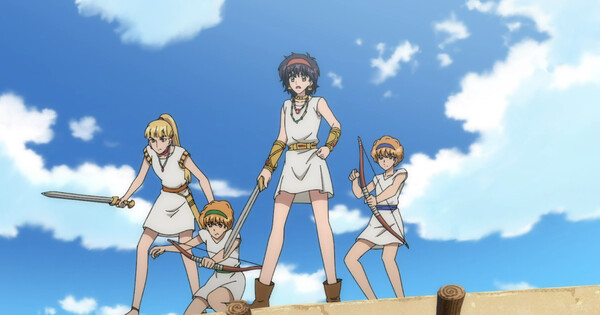
Now this is more like the Yuri I love from the manga. She’s taking decisive steps, making meaningful change, and saving people left and right without wailing about anything. It’s nice to see, and I can even, if I’m feeling charitable and particularly patient, admit that I can see why someone might have wanted to wait to bring her into her own until this point. As I mentioned last week, historically the Hittite queen some people believe Yuri is based on, Puduhepa, is from Kizzuwatna. Therefore, it wouldn’t make sense for Yuri to be widely known as Kail’s concubine and the incarnation of the goddess Ishtar until major events in Kizzuwatna occurred. Her renown coinciding with the battle for the city-state gives Red River a stronger historical leg to stand on, grounding Yuri’s widespread recognition in Puduhepa’s hometown.
For what it’s worth, I do think there’s enough to link Chie Shinohara‘s Yuri to Puduhepa, even if it’s not a one-to-one comparison. But it’s also worth remembering that a lot of what we know about the ancient world, particularly the ancient Mediterranean, comes to us through accidental preservation – writing was done on clay tablets, incidentally fired when cities were sacked and burned (or just burned). As we see this week with the war in Kizzuwatna, fire was a major destructive force in times of war, as was the indiscriminate attacking of women and children. I won’t even get into the slavery angle here, but suffice it to say, there’s plenty you can read about the subject out there. (A good starting point is Emma Southon’s Not Built in a Day.)
We don’t know how much Yuri learned about ancient warfare in school back in Japan, but we can all be glad she decided to ignore the way things are “supposed” to happen. Her declaration to the women who help her that the Hittites will not be raping and murdering is mind-blowing for them. It’s a modern statement of human rights that didn’t really exist when real-life Mitanni and Hittites fought, and when Yuri actually follows through and the Hittites tell them that there will be no widespread humanitarian crisis of that nature, it’s no wonder they view Yuri as a goddess. Ishtar may not necessarily be known for compassion (that’s more Kamrušepa’s deal), but she is one of the enforcers of divine justice. Yuri’s decree absolutely aligns her with the Kizzuwatnan women’s ideal of what that might look like. When Kail calls her Ishtar, they have all the proof they need to believe him.
This really is the first time Yuri has truly come into her own. She disrupted a battle before, but that wasn’t quite as deliberate as this, and her lack of skill on horseback undermined her feat. But this time she makes all of the decisions herself: she goes to get Kail, she saves the child, she announces that no women or children will be harmed, she and her ladies make sure that’s carried out. Her every move is intentional, and that, more than her initial decision to stay with Kail or her weepy thoughts of love, lets us know that she’s made her choice and she’s sticking with it. If Kail still needs convincing, well, that’s on him…Although I do like that he’s at least attempting to curb himself. Yuri’s gained his respect as well as his attraction, and that’s an important piece of the romance plot, plus it leads to her smacking him with a pillow, which I found entertaining.
It’s just too bad this still looks awful. There’s some really weird running and galloping this week, and I’m not sure what’s going on with everyone’s chins when they’re talking. I will say that Nakia’s smug facial expression when she thinks she’s managed to get Kail and Zannanza disinherited is very good, but it’s not quite enough to save, well, the rest of the visuals. I suppose I should take what I can get on that front.
Before I end, I feel we should all be talking more about how the ending theme seems to be a love story between Yuri and her horse. I was never a Horse Girl™, so I don’t know how that might play into it, but it says something about how the people creating this show feel about the romance plot. Sorry, Kail, I think someone thinks Yuri would be better off with Aslan than you.
Rating:
Red River is currently streaming on
Crunchyroll.
The views and opinions expressed in this article are solely those of the author(s) and do not necessarily represent the views of Anime News Network, its employees, owners, or sponsors.
>
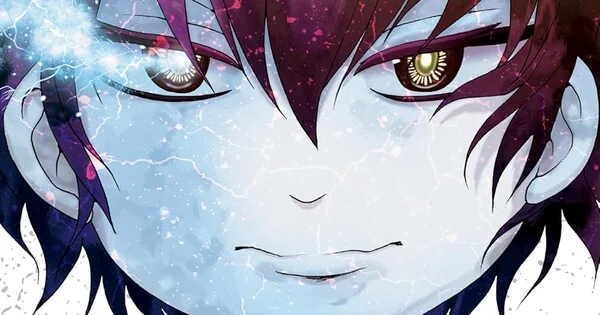

Manga creator Rensuke Oshikiri is best known in the West for ’90s video game nostalgia-packed rom-com Hi Score Girl, which was adapted into a successful anime series back in 2018. Yet his career spans several decades and many other titles, of which only two others – supernatural horror Sayuri, and the recent superpower sci-fi Geniearth, have made the transition to English-language editions. I was offered the opportunity to grill Oshikiri-san not only about Geniearth but also about his entire manga career.
Your latest manga to receive an English-language edition, courtesy of Titan Manga, is the five-volume series Geniearth, which originally ran in Weekly Shōnen Champion between 2021 and 2022. It’s comparatively very violent and action-packed compared to your previous manga Hi Score Girl. Do you ever worry that your readers may not follow your work to a different genre?
Rensuke Oshikiri: My work spans a wide range of genres — comedy, horror and romance — and I’m fortunate to be able to work across such a diverse spectrum. I have a habit of drawing whatever I feel like ‘watching’ at any given moment. You could say I’m an omnivore, you know what I mean?
Geniearth is a work in which my violent tendencies exploded to the hilt. Worried that readers might not be able to keep up? Don’t be silly. The first reader was me, followed by Mr Matsuoka, who became the editor in charge of this work. We prioritized the fact that the two of us enjoyed it first and foremost.
Hi Score Girl is a 1990s-set romantic drama with a big focus on arcade games, whereas Sayuri is a dark, intense supernatural thriller-revenge tale. Obviously these are very different from one another, and from Geniearth. Do you make a conscious decision to switch genres? How do you decide what kind of series your next series will be?
OSHIKIRI: I’m a manga artist capable of drawing in a wide variety of genres. To put it more simply, I get bored easily. There’s no way I’d draw another horror story straight after drawing one. When you’re walking, do you put your right foot forward, then put it forward again straight after? That’s exactly how much I want to try my hand at all sorts of genres.
Mind you, when I walk, I am the sort of person who puts my right foot forward, then my right foot again, and then my right foot yet again! It’s a bit of a laugh, isn’t it?
Starting my next series is a bit of a journey for me. It’s just that I’m not very good at going far — even though I’d really like to go to Yufuin in Kyushu, I end up settling for the hot springs in nearby Atami.
Compared to how I used to be, I find myself drawn only to things close at hand, so I really want to do something about this habit of taking the easy way out!

©押切蓮介/SQUARE ENIX・ハイスコアガールⅡ製作委員会
With its oppressed mutant minority with mysterious superpowers, Geniearth shares some foundational aspects with American comic classics like X-Men. Are you a fan of that kind of superhero comic? And if so, do you have any favorite story arcs or creative teams? Did you watch or enjoy any of the X-Men or other Marvel movies?
OSHIKIRI: Of course, I’ve watched almost the entire Marvel series, and I’ve also thoroughly enjoyed loads of foreign TV series featuring superpowers.
HEROES, The 4400, The Boys… the list goes on and on! I absolutely love storylines where heroes use their special powers to take on unjust villains. After all, everyone has a hero inside them. When I watch heroes in action in these shows, the hero inside me starts to stir. But don’t you think all the characters in my own work have a rather menacing look in their eyes?
They certainly don’t look much like heroes, do they! Which means that perhaps what lurks within me isn’t a hero, but a villain! Oh dear, that’s a bit of a problem!
One of Geniearth‘s main characters is a boy who accrues physical power from bad karma generated by others. In practice, this means he entices others to bully and abuse him, only for him to build up power and beat them to a pulp later. The fantasy of a victim standing up to their bullies one day is a potent one. Was this concept based on any personal experience?
OSHIKIRI: I’ve never actually been bullied myself, nor have I ever bullied anyone. But when I see bullying scenes in films or TV dramas, it really makes my blood boil, doesn’t it?
In my case, my tolerance for unreasonable evil is extremely low. That’s why I so strongly hope for a reversal of fortune in my stories. It might be a bit over the top in places, but I want my readers to relate to the plot twists that give me such a sense of catharsis.
Another of Geniearth‘s characters is a boy who can alter his body to acquire the characteristics of any herbivorous animal, such as a gazelle or an elephant. If you had this ability, what animal attributes would you most like to try out?
OSHIKIRI: Come to think of it, there was a character like that, wasn’t there!
He’s such a pure soul that he transformed himself into the herbivore he loved, but I’m a simple bloke, so I’d just transform myself into a carnivore without a second thought! That’s true… maybe a great white shark? That bloke’s really cool, both in appearance and temperament.
If I could get my hands on that massive jaw, I’d do anything. If I had to be greedy, I’d go for a Megalodon. Yeah, I might just want to be a shark.
Although you’ve had a lengthy career in the manga industry, authoring many different series, so far only three of them (Hi Score Girl, Sayuri, and Geniearth) have been translated into English. Are there any of your currently untranslated works you’re particularly keen to see receive an English-language edition?
OSHIKIRI: I’m really sorry that I’ve only been able to bring three works to you all overseas. We were just talking about bullying earlier, so perhaps Misumisō? This is also a story about a girl who’s been bullied, who coolly fends off her bullies.
If you’re looking for something as violent as Genius, then perhaps Flame Eyes or Yuyami Special Attack Squad. But the one I really want to see reach you all in English is Granba!
Like Sayuri, this is a story where an old woman plays a starring role! It’s the tale of an old woman fighting a desperate battle all on her own against hundreds of monsters in a life-or-death situation. However, Granba is a cursed work — I was actually told by a bookshop, ‘Please don’t draw such self-indulgent manga ever again.’
Hi Score Girl is the series you’re known best for in the West. I know I’m speaking for many of your fans when I say we’d love for an English-language version of your currently publishing sequel/spinoff Hi Score Girl DASH. Do you know of any plans to license this in English?
OSHIKIRI: I’m really pleased that Hi-Score Girl seems to be going down well with people overseas too!
I really hope the sequel, Hi Score Girl DASH, gets released in English as well! There doesn’t seem to be any talk of an English version at the moment, but I’m desperate for it to come out as soon as possible.
I’m still getting direct messages from overseas fans asking, ‘Aren’t you going to release a sequel to Hi-Score Girl yet?!’
I get so many that I can’t reply to each one individually, which is a real shame. Among them, there was even one passionate fan who hurled abuse at me, shouting, ‘Why haven’t you released a sequel yet, you bloody bastard!’
I was tempted to block, delete, and report them as spam, but I held back and am now earnestly hoping for an international release!
Once again related to Hi Score Girl: You feature a great many fantastic arcade games in the manga. Do you still have an interest in video games, and if so, what kind of games do you like to play now? Any recommendations?
OSHIKIRI: I’m a gaming enthusiast through and through! I’ve been holding a game controller since I was two! Honestly. And I still can’t seem to leave the world of gaming behind. Lately, I’ve been hooked on Factorio!
That’s a really good game. Then there’s Dead by Daylight, the Dark Souls series, and for fighting games, Street Fighter 6, I suppose. I’m starting to give up on SF6 because I just can’t win.
The game I bought yesterday was Reanimal! I really love horror games too; just the black packaging alone caught my eye. That’s how much I love horror games! I like them even more than the ginger pork my mom makes!

© 2015 OSHIKIRI RENSUKE, GENTOSHA COMICS INC.
Sayuri is an incredibly dark, chilling story about a family’s tragic experience in a haunted house. The second half of the story is particularly striking, as it becomes much more of a revenge-focused tale than a simple horror. The character of Granny is unique. Were there any real-life or fictional inspirations for her character? Was your own grandmother that terrifyingly formidable?
OSHIKIRI: Unfortunately, my grandmother had already passed away by the time I was born. The grandmother in Sayuri is actually based on my own mother. She was the first to express her anger when watching films where people are killed by spirits for no good reason. As my mother used to say, ‘Horror films are a lost cause’!
Don’t you think films and TV dramas from overseas tend to have characters who ultimately stand up to senseless supernatural phenomena, ghosts and demons? I absolutely love that fighting spirit! In contrast, in Japanese horror, the characters are often defeated without a chance to fight back. It’s as if the typically Japanese traits of being shy and reserved are directly reflected in the way the films unfold, isn’t it? Watching Japanese horror films end in a bad ending, as if they were stuck on a single, mindless loop, felt like I was having a nightmare!
But it was my mom who pointed out to me—who’d always taken that for granted—that ‘Japanese horror often ends in defeat’. And that’s why I set about writing Sayuri.
My mom, you say? My mom is a woman with a will as strong as a vengeful spirit, and she’s always giving me a proper telling-off. Even now, at 46, she still gets angry if my shoes aren’t lined up properly when I take them off – it’s a right pain! But it was my mom who showed me the way to live a pure life. She also taught me the strength of life. It was my mom’s teachings that led to the idea of fending off even evil spirits!
Are there any themes common to your works that are most important to you, and do you have anything in particular you’d like to impart to your fans in the English-speaking world?
OSHIKIRI: The one thing that runs through all my work is an emotional explosion! Whether it’s against unjust evil, evil spirits, or even love—it doesn’t matter. In any case, I’m always, always visualizing that emotional explosion as I draw. People—not just Japanese, but people overseas too—must be harboring bombs in their hearts, don’t they? But we can’t just let those bombs go off however we like, can we? There’s common sense, rules, and laws in the world, so we can’t just let them explode however we please.
That’s precisely why we have films and novels. And the same goes for manga. First of all, I set off a massive explosion with the bomb I’ve been holding back within my work. Then there are people who enjoy it and empathize with it. I want to keep setting off bombs in my work for their sake!
>
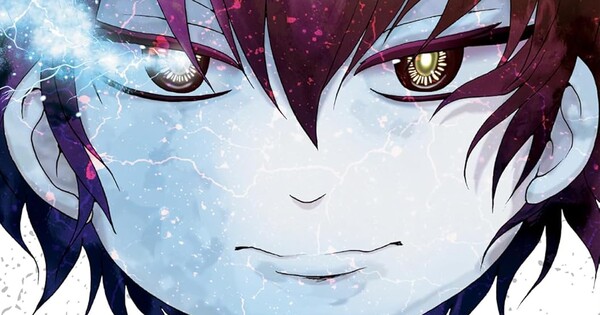
Manga creator Rensuke Oshikiri is best known in the West for ’90s video game nostalgia-packed rom-com Hi Score Girl, which was adapted into a successful anime series back in 2018. Yet his career spans several decades and many other titles, of which only two others – supernatural horror Sayuri, and the recent superpower sci-fi Geniearth, have made the transition to English-language editions. I was offered the opportunity to grill Oshikiri-san not only about Geniearth but also about his entire manga career.
Your latest manga to receive an English-language edition, courtesy of Titan Manga, is the five-volume series Geniearth, which originally ran in Weekly Shōnen Champion between 2021 and 2022. It’s comparatively very violent and action-packed compared to your previous manga Hi Score Girl. Do you ever worry that your readers may not follow your work to a different genre?
Rensuke Oshikiri: My work spans a wide range of genres — comedy, horror and romance — and I’m fortunate to be able to work across such a diverse spectrum. I have a habit of drawing whatever I feel like ‘watching’ at any given moment. You could say I’m an omnivore, you know what I mean?
Geniearth is a work in which my violent tendencies exploded to the hilt. Worried that readers might not be able to keep up? Don’t be silly. The first reader was me, followed by Mr Matsuoka, who became the editor in charge of this work. We prioritized the fact that the two of us enjoyed it first and foremost.
Hi Score Girl is a 1990s-set romantic drama with a big focus on arcade games, whereas Sayuri is a dark, intense supernatural thriller-revenge tale. Obviously these are very different from one another, and from Geniearth. Do you make a conscious decision to switch genres? How do you decide what kind of series your next series will be?
OSHIKIRI: I’m a manga artist capable of drawing in a wide variety of genres. To put it more simply, I get bored easily. There’s no way I’d draw another horror story straight after drawing one. When you’re walking, do you put your right foot forward, then put it forward again straight after? That’s exactly how much I want to try my hand at all sorts of genres.
Mind you, when I walk, I am the sort of person who puts my right foot forward, then my right foot again, and then my right foot yet again! It’s a bit of a laugh, isn’t it?
Starting my next series is a bit of a journey for me. It’s just that I’m not very good at going far — even though I’d really like to go to Yufuin in Kyushu, I end up settling for the hot springs in nearby Atami.
Compared to how I used to be, I find myself drawn only to things close at hand, so I really want to do something about this habit of taking the easy way out!
©押切蓮介/SQUARE ENIX・ハイスコアガールⅡ製作委員会
With its oppressed mutant minority with mysterious superpowers, Geniearth shares some foundational aspects with American comic classics like X-Men. Are you a fan of that kind of superhero comic? And if so, do you have any favorite story arcs or creative teams? Did you watch or enjoy any of the X-Men or other Marvel movies?
OSHIKIRI: Of course, I’ve watched almost the entire Marvel series, and I’ve also thoroughly enjoyed loads of foreign TV series featuring superpowers.
HEROES, The 4400, The Boys… the list goes on and on! I absolutely love storylines where heroes use their special powers to take on unjust villains. After all, everyone has a hero inside them. When I watch heroes in action in these shows, the hero inside me starts to stir. But don’t you think all the characters in my own work have a rather menacing look in their eyes?
They certainly don’t look much like heroes, do they! Which means that perhaps what lurks within me isn’t a hero, but a villain! Oh dear, that’s a bit of a problem!
One of Geniearth‘s main characters is a boy who accrues physical power from bad karma generated by others. In practice, this means he entices others to bully and abuse him, only for him to build up power and beat them to a pulp later. The fantasy of a victim standing up to their bullies one day is a potent one. Was this concept based on any personal experience?
OSHIKIRI: I’ve never actually been bullied myself, nor have I ever bullied anyone. But when I see bullying scenes in films or TV dramas, it really makes my blood boil, doesn’t it?
In my case, my tolerance for unreasonable evil is extremely low. That’s why I so strongly hope for a reversal of fortune in my stories. It might be a bit over the top in places, but I want my readers to relate to the plot twists that give me such a sense of catharsis.
Another of Geniearth‘s characters is a boy who can alter his body to acquire the characteristics of any herbivorous animal, such as a gazelle or an elephant. If you had this ability, what animal attributes would you most like to try out?
OSHIKIRI: Come to think of it, there was a character like that, wasn’t there!
He’s such a pure soul that he transformed himself into the herbivore he loved, but I’m a simple bloke, so I’d just transform myself into a carnivore without a second thought! That’s true… maybe a great white shark? That bloke’s really cool, both in appearance and temperament.
If I could get my hands on that massive jaw, I’d do anything. If I had to be greedy, I’d go for a Megalodon. Yeah, I might just want to be a shark.
Although you’ve had a lengthy career in the manga industry, authoring many different series, so far only three of them (Hi Score Girl, Sayuri, and Geniearth) have been translated into English. Are there any of your currently untranslated works you’re particularly keen to see receive an English-language edition?
OSHIKIRI: I’m really sorry that I’ve only been able to bring three works to you all overseas. We were just talking about bullying earlier, so perhaps Misumisō? This is also a story about a girl who’s been bullied, who coolly fends off her bullies.
If you’re looking for something as violent as Genius, then perhaps Flame Eyes or Yuyami Special Attack Squad. But the one I really want to see reach you all in English is Granba!
Like Sayuri, this is a story where an old woman plays a starring role! It’s the tale of an old woman fighting a desperate battle all on her own against hundreds of monsters in a life-or-death situation. However, Granba is a cursed work — I was actually told by a bookshop, ‘Please don’t draw such self-indulgent manga ever again.’
Hi Score Girl is the series you’re known best for in the West. I know I’m speaking for many of your fans when I say we’d love for an English-language version of your currently publishing sequel/spinoff Hi Score Girl DASH. Do you know of any plans to license this in English?
OSHIKIRI: I’m really pleased that Hi-Score Girl seems to be going down well with people overseas too!
I really hope the sequel, Hi Score Girl DASH, gets released in English as well! There doesn’t seem to be any talk of an English version at the moment, but I’m desperate for it to come out as soon as possible.
I’m still getting direct messages from overseas fans asking, ‘Aren’t you going to release a sequel to Hi-Score Girl yet?!’
I get so many that I can’t reply to each one individually, which is a real shame. Among them, there was even one passionate fan who hurled abuse at me, shouting, ‘Why haven’t you released a sequel yet, you bloody bastard!’
I was tempted to block, delete, and report them as spam, but I held back and am now earnestly hoping for an international release!
Once again related to Hi Score Girl: You feature a great many fantastic arcade games in the manga. Do you still have an interest in video games, and if so, what kind of games do you like to play now? Any recommendations?
OSHIKIRI: I’m a gaming enthusiast through and through! I’ve been holding a game controller since I was two! Honestly. And I still can’t seem to leave the world of gaming behind. Lately, I’ve been hooked on Factorio!
That’s a really good game. Then there’s Dead by Daylight, the Dark Souls series, and for fighting games, Street Fighter 6, I suppose. I’m starting to give up on SF6 because I just can’t win.
The game I bought yesterday was Reanimal! I really love horror games too; just the black packaging alone caught my eye. That’s how much I love horror games! I like them even more than the ginger pork my mom makes!
© 2015 OSHIKIRI RENSUKE, GENTOSHA COMICS INC.
Sayuri is an incredibly dark, chilling story about a family’s tragic experience in a haunted house. The second half of the story is particularly striking, as it becomes much more of a revenge-focused tale than a simple horror. The character of Granny is unique. Were there any real-life or fictional inspirations for her character? Was your own grandmother that terrifyingly formidable?
OSHIKIRI: Unfortunately, my grandmother had already passed away by the time I was born. The grandmother in Sayuri is actually based on my own mother. She was the first to express her anger when watching films where people are killed by spirits for no good reason. As my mother used to say, ‘Horror films are a lost cause’!
Don’t you think films and TV dramas from overseas tend to have characters who ultimately stand up to senseless supernatural phenomena, ghosts and demons? I absolutely love that fighting spirit! In contrast, in Japanese horror, the characters are often defeated without a chance to fight back. It’s as if the typically Japanese traits of being shy and reserved are directly reflected in the way the films unfold, isn’t it? Watching Japanese horror films end in a bad ending, as if they were stuck on a single, mindless loop, felt like I was having a nightmare!
But it was my mom who pointed out to me—who’d always taken that for granted—that ‘Japanese horror often ends in defeat’. And that’s why I set about writing Sayuri.
My mom, you say? My mom is a woman with a will as strong as a vengeful spirit, and she’s always giving me a proper telling-off. Even now, at 46, she still gets angry if my shoes aren’t lined up properly when I take them off – it’s a right pain! But it was my mom who showed me the way to live a pure life. She also taught me the strength of life. It was my mom’s teachings that led to the idea of fending off even evil spirits!
Are there any themes common to your works that are most important to you, and do you have anything in particular you’d like to impart to your fans in the English-speaking world?
OSHIKIRI: The one thing that runs through all my work is an emotional explosion! Whether it’s against unjust evil, evil spirits, or even love—it doesn’t matter. In any case, I’m always, always visualizing that emotional explosion as I draw. People—not just Japanese, but people overseas too—must be harboring bombs in their hearts, don’t they? But we can’t just let those bombs go off however we like, can we? There’s common sense, rules, and laws in the world, so we can’t just let them explode however we please.
That’s precisely why we have films and novels. And the same goes for manga. First of all, I set off a massive explosion with the bomb I’ve been holding back within my work. Then there are people who enjoy it and empathize with it. I want to keep setting off bombs in my work for their sake!
>

© Kazuto Mihara, KODANSHA/“The World Is Dancing” Production Committee.
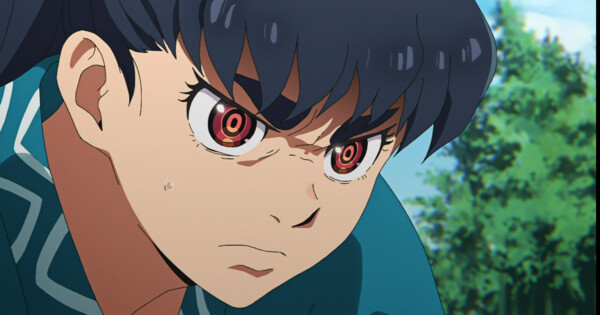
Good news, everyone: The subtitles have been fixed for the previous episode of The World Is Dancing, which means the pivotal performance of “Komachi at the Gravepost” can finally be enjoyed by those of us who have yet to get our Japanese language certifications. I’m glad it finally worked out, too, because the context of that performance really is pivotal to understanding just why Oniyasha’s performance goes over so well when it concludes here in “To the Other Side of the Bridge.” It’s one thing for the judge to explain the obvious symbolism of the stage and performance acting as a bridge to the netherworld, which is to say they both, in tandem, invite the audience to reflect on the daily struggles and everyday triumphs of mortal life. Knowing that the original dialogue is all about an old woman arguing for empathy and mercy from an overly academic and dogmatic Buddhist monk helps to make this point all the more realized.
Of course, the real message is for the Shogun himself, which Yoshimitsu begrudgingly acknowledges as a brilliant play. For all of his pride, the man cannot berate the boy for showing him the simple truth that the shogunate holds the lives of all citizens, even the lost and forgotten, in his hands. It’s a great conclusion to an all-around showstopper of a performance…but I do have some reservations. Namely, I wish we got more insight into Oniyasha’s whole creative process. For this entire season, so much emphasis has been placed on the boy discovering his creative process and forming an artistic perspective, and yet the most pivotal performance of his life arrives fully formed without giving us a look at how it all shook out. The only concession that Oniyasha gives is the admission that he relied heavily on the source material that his father developed, but that makes his victory feel more hollow, as if he himself barely realizes what he has accomplished.
At the very least, the whole ordeal gives us a much deeper look into Zojiro’s perspective, and you have to feel for the boy. Imagine witnessing a rival put on a show so incredible that it causes the doomed future of an entire art form flashing before your eyes. Since we’re omniscient time travelers viewing all of this from the comfort of our side of the fourth wall, we know full well that Sarugaku defeats Dengaku in the culture wars and goes on to shape the tradition of Noh theater. That doesn’t make things any easier for poor Zojiro, who has to shoulder the burden of his mother’s untimely death while also facing up to the shame of simply not being good enough to compete on Oniyasha’s level.
Thankfully, the Shogun defers to Oniyasha after Zojiro throws his tantrum and tries to withdraw from the whole competition, and our little genius is as gracious as you’d hope. Even more than the prospect of seeing how Zojiro uses this defeat to inspire his own growth as an artist, I loved seeing the breakthrough that caused him to seek out his rival and beg for a chance to collaborate. Great minds think alike.
Also, I can’t be the only one who was fully convinced that Oniyasha and Zojiro were going to start kissing in the middle of that dramatic rainstorm, right? Or was that just me?
Episode Rating:
James is a writer with many thoughts and feelings about anime and other pop-culture, which can also be found on BlueSky, his blog, and his podcast.
The World Is Dancing is currently streaming on
HIDIVE.
The views and opinions expressed in this article are solely those of the author(s) and do not necessarily represent the views of Anime News Network, its employees, owners, or sponsors.
The views and opinions expressed in this article are solely those of the author(s) and do not necessarily represent the views of Anime News Network, its employees, owners, or sponsors.
>

An Interview With Rensuke Oshikiri, Creator of Geniearth, Sayuri, and Hi Score Girl

Inter closing in on deal for Liverpool’s Curtis Jones

Warner Bros. Box Office Cold Streak Continues
-

 movies3 months ago
Search For Canadian TV Actor Stewart McLean Now Homicide Investigation
-

 Fashion9 years ago
These ’90s fashion trends are making a comeback in 2017
-
Fashion9 years ago
According to Dior Couture, this taboo fashion accessory is back
-
Fashion9 years ago
Model Jocelyn Chew’s Instagram is the best vacation you’ve ever had
-
Fashion9 years ago
Emily Ratajkowski channels back-to-school style
-
Fashion9 years ago
9 Celebrities who have spoken out about being photoshopped
-
Fashion9 years ago
Your comprehensive guide to this fall’s biggest trends
-
Fashion9 years ago
A photo diary of the nightlife scene from LA To Ibiza