
Tech
Google Reportedly Plans to Move All Pixel Production Out of China in 2027


China could soon disappear from Google’s Pixel manufacturing map. The company reportedly plans to move production of all Pixel phones, smartwatches, and wireless earbuds out of China starting in 2027.
Nikkei Asia reported that Google has told suppliers to prepare for the shift, with Vietnam and India expected to take on the work. Google has not publicly confirmed the plan, which would expand both countries’ roles in its years-long effort to reduce Pixel manufacturing dependence on China.
Vietnam lays the groundwork for Google’s China exit
Google has spent years expanding Pixel production outside China. Nikkei reported that the company plans to move all Pixel device production out of the country starting in 2027.
The technical groundwork accelerated in January 2026, when Nikkei reported plans to shift new product introduction work for flagship Pixel phones to Vietnam while development of the lower-cost A-series remained in China at the time. New product introduction, or NPI, includes the process development, verification, and refinement required before mass production.
Google has already mass-produced high-end Pixel phones in Vietnam, according to the January reporting. The latest report says successful development and production there, including investments in testing equipment and tooling, increased Google’s confidence that it could move additional manufacturing out of China.
Vietnam is also taking on more advanced electronics work. Samsung Display reportedly began producing foldable OLED panels in Vietnam for Apple this year, adding to the country’s role in higher-value electronics manufacturing.
Google’s relatively small Pixel volumes could make the transition easier. Nikkei reported that the company shipped about 12 million Pixel phones in 2025 and asked suppliers to prepare for an 8% to 10% increase in 2026. The report also noted that Google does not officially sell Pixel phones in China.
India’s Pixel manufacturing role is already growing
Google announced plans in October 2023 to manufacture Pixel phones in India, starting with the Pixel 8 and working with international and domestic manufacturers.
By August 2024, Google had confirmed Made-in-India Pixel 8 production was underway. India has since become increasingly important to global electronics manufacturing, with suppliers such as Tata Electronics expanding their role in device production despite operational risks highlighted by a major supplier data breach in June.
The latest reporting does not specify how Google would divide Pixel phones, watches, and earbuds between India and Vietnam. Moving final device manufacturing out of China also would not eliminate every China-linked dependency, because components and materials can still flow through regional supply chains exposed to concentration around critical hardware inputs.
For hardware procurement and supply-chain teams, the shift could reduce geographic concentration in Google’s manufacturing network without eliminating upstream exposure to China. It also reflects the growing ability of India and Vietnam to handle more strategically important electronics production rather than basic assembly alone.
Google’s confirmation is the key missing piece. Until the company details its 2027 timetable and country-by-country production plans, the move out of Chinese Pixel manufacturing remains a reported strategy rather than a confirmed schedule.
Read more: Google’s manufacturing push comes as its hardware ambitions expand with the new Pixel 11 lineup and deeper Gemini integration, raising the stakes for the supply chain behind its flagship devices.
>

Some Samsung Galaxy phones are approaching a software wall, and several former flagships are standing right at the edge.
Android 17 is already powering Samsung’s One UI 9, which entered beta on the Galaxy S26 series in May. But owners of devices such as the Galaxy S22 series, Galaxy S21 FE, Galaxy Z Fold4, and Galaxy Z Flip4 are expected to miss the upgrade because those phones have reached the end of Samsung’s major Android upgrade commitments for their generations.
Samsung has not published a definitive consumer-facing list of every Galaxy device excluded from Android 17. Eligibility, therefore, has to be pieced together from the company’s existing software support commitments and the Android versions devices were launched with.
That cutoff reveals just how dramatically Samsung changed its approach to phone longevity in only a few generations.
Which Galaxy phones are expected to miss Android 17?
Samsung officially launched the One UI 9 beta for the Galaxy S26 series in May, confirming that One UI 9 is built on Android 17.
Older devices face a different outlook. Samsung’s previous support policy promised four generations of Android OS and One UI upgrades for the Galaxy S22 series, Galaxy S21 FE, Galaxy Tab S8 family, and eligible Galaxy Z devices.
Based on those commitments and the Android versions the devices originally shipped with, these recent Galaxy models are expected to stop before Android 17:
Galaxy S series
- Galaxy S22
- Galaxy S22+
- Galaxy S22 Ultra
- Galaxy S21 FE
Galaxy Z series
- Galaxy Z Fold4
- Galaxy Z Flip4
Galaxy Tab series
- Galaxy Tab S8
- Galaxy Tab S8+
- Galaxy Tab S8 Ultra
Samsung’s current support pages show that all of these devices are receiving One UI 8, the Android 16-based release. That includes the S22 series, S21 FE, Fold4, Flip4, and Tab S8 family.
The important distinction is that Samsung has not published a master list explicitly declaring each of them ineligible for Android 17. Their expected cutoff is based on Samsung’s promised upgrade counts rather than a new exclusion announcement.
Several older Galaxy A-series devices face a similar situation. Samsung’s One UI 8 compatibility list includes phones such as the Galaxy A53 5G, placing them among older devices with limited remaining major-upgrade runway.
Owners should therefore treat Android 17 eligibility projections as informed by Samsung’s published support commitments rather than as a final rollout list until Samsung confirms individual models.
Why the Galaxy S22 cutoff stands out
The Galaxy S22 series does not feel particularly old.
Samsung launched the phones in 2022 as flagships with high-end cameras, premium displays, and hardware designed to compete with the best Android phones of the time. They also arrived with what was then an unusually strong software promise.
Samsung announced that the Galaxy S22 family would receive four generations of Android OS and One UI upgrades, along with up to five years of security updates.
The Galaxy S22 launched with Android 12. Its four-generation upgrade path therefore runs through Android 16, leaving Android 17 outside the original commitment. That does not mean a Galaxy S22 suddenly becomes unusable once major Android upgrades end. Security maintenance can continue after major OS support ends, and the phone can keep running existing apps and services.
What owners lose is access to the next generation of operating-system features and platform changes.
Google is already releasing Android 17 updates for supported Pixel devices. TechRepublic recently covered the August Android 17 update and its stability fixes, showing that Android 17 has moved beyond its initial release and into its ongoing maintenance cycle.
The Fold4 and Flip4 appear to face the same cutoff
The Galaxy Z Fold4 and Z Flip4 require a little more explanation.
Samsung launched both devices in 2022. The Flip4 shipped with Android 12, while the Fold4 used Android 12L, Google’s large-screen version of the operating system. Samsung had already announced that upcoming Galaxy Z devices would receive four generations of One UI and Android OS upgrades.
Under that original consumer support commitment, the Fold4 and Flip4 are therefore expected to reach the end of their promised major-upgrade path with Android 16 rather than Android 17. Both phones appear on Samsung’s official One UI 8 compatibility list, confirming they have made the jump to Android 16.
What Samsung has not done is publish a consumer Android 17 exclusion notice specifically naming the Fold4 and Flip4. That is why their status is best described as expected to miss Android 17, rather than definitively excluded until Samsung publishes its broader One UI 9 rollout plans.
Samsung changed the rules with the Galaxy S24
The most interesting part of the Android 17 cutoff is not simply which phones miss the update. It is how much Samsung’s own support policy changed between generations.
Beginning with the Galaxy S24 series, Samsung committed to seven generations of operating-system upgrades and seven years of security updates. That creates a sharp dividing line inside Samsung’s lineup.
A Galaxy S22 owner who bought a flagship in 2022 has reached the end of its promised major Android upgrade path. A Galaxy S24 owner who bought a flagship only two years later has years of promised operating-system support remaining.
The phones are separated by just two generations, but their expected software lifespans look very different.
Samsung is not the only Android manufacturer facing scrutiny over that gap. TechRepublic recently examined Motorola’s Android 17 eligibility list, in which more than 50 phones appeared eligible, but several conspicuous omissions highlighted the importance of long-term support policies.
For buyers, processor speed, battery size, and camera quality are no longer the only measures of how long a phone may remain useful. The software-support clock matters too.
Mobility must-reads
Which Samsung phones are expected to get One UI 9?
The outlook is considerably better for newer Galaxy flagships.
The Galaxy S23 series is expected to receive Android 17 and One UI 9. Because the S23 launched with Android 13 under Samsung’s four-generation upgrade policy, Android 17 would represent its fourth major Android generation and therefore the end of its original promised upgrade path.
Samsung has already continued to support the S23 generation with One UI 8.5. In April, the company expanded its One UI 8.5 beta to the Galaxy S23 series, as well as the Galaxy Z Fold5 and Z Flip5.
The Galaxy S24 and newer flagship generations have considerably more runway because they fall under Samsung’s longer support commitments.
Samsung has also started the Android 17 transition at the top of its lineup. The company launched the One UI 9 beta on the Galaxy S26 series in May, calling Android 17 the foundation of the new interface.
Rollout timing and final eligibility can still vary by model, country, and carrier, so owners should check Samsung’s update notices for their specific device before making an upgrade decision.
Does missing Android 17 mean you need a new phone?
Not necessarily.
A phone that stops receiving major Android versions can remain useful as long as it continues receiving security patches, supports the apps its owner relies on, and performs well enough for everyday use.
For businesses, however, the calculation can become more complicated.
IT teams managing fleets of Android devices need to consider how long security patches will continue, whether enterprise applications remain compatible with older Android versions, and how much software fragmentation they are willing to support across managed hardware.
A fleet containing devices under several generations of Samsung support policies can become harder to standardize over time.
Individual buyers should also look beyond whether a replacement phone can run Android 17 today. The more useful question is how many major upgrades remain after Android 17. That is where newer Samsung devices have a clear advantage.
The Galaxy S22 launched with a four-generation upgrade promise that looked exceptional in 2022. Two years later, Samsung stretched flagship support to seven generations. Android 17 makes that change visible.
The Galaxy phones expected to miss One UI 9 are not simply aging hardware. They show how quickly software support has become one of the most important specifications to consider when buying a smartphone.
Related reading: For Galaxy owners focused on keeping their devices protected, Samsung’s August 2026 security update patches 56 vulnerabilities across eligible phones and tablets, including critical Android flaws and Galaxy-specific security gaps.
>
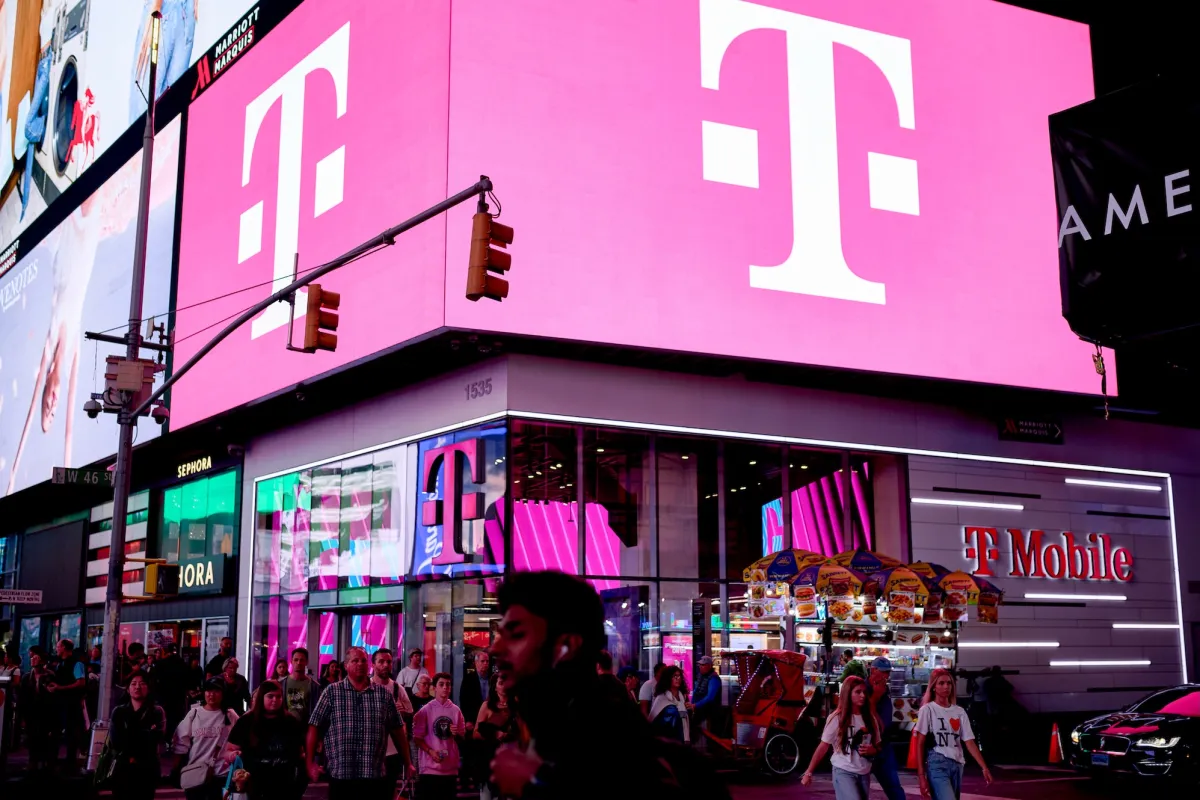
New reporting from Bloomberg revealed how cybersecurity staff at U.S. phone provider T-Mobile identified and expelled Chinese hackers from its network in 2024 during a spate of industry-wide intrusions by Beijing aimed at stealing customer data.
The hacks were carried out by a Chinese government-backed hacking group called Salt Typhoon. The campaign compromised hundreds of phone companies, internet giants, and datacenter providers with the goal of collecting phone records and information about senior U.S. government officials, including then-presidential candidates. Hacked companies included AT&T, Verizon, satellite phone network Viasat, and network infrastructure giants Charter and Windstream.
By and large, T-Mobile escaped a widescale breach of its network by catching the activity early — and resorted to physically cutting the cable to a compromised system, per Bloomberg.
The publication said T-Mobile’s cyber staff spent months looking for suspected hackers in its network without success. Eventually, the company found unusual behavior on one of its systems coming from another router belonging to a different telecom company, which T-Mobile did not name.
After identifying the breach, T-Mobile’s cybersecurity chief Jeff Simon told Bloomberg that he and three others drove to the nearby Bellevue, Washington, data center, found the compromised system, pulled out a set of scissors and snipped the cable connecting the box to the outside world.
We’ve reached out to T-Mobile for more information, and we’ll update this story if we hear back.
>
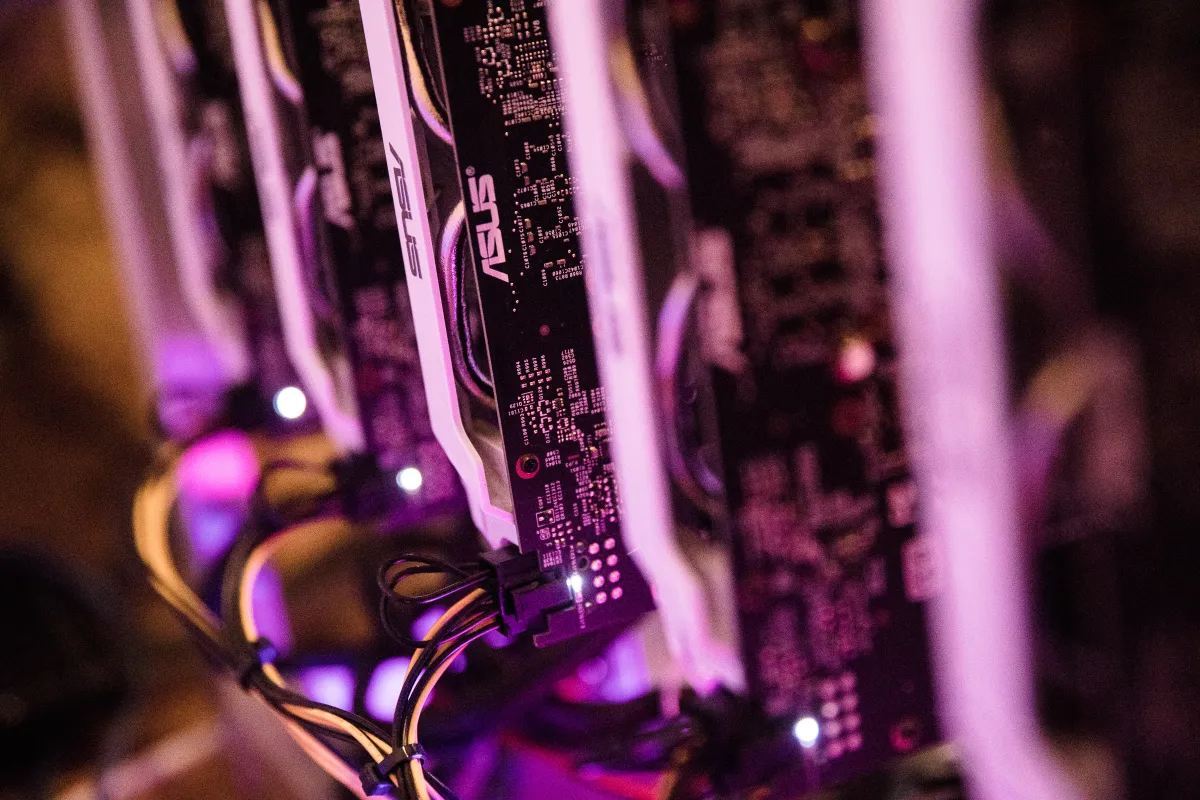
The AI buildout shows no signs of slowing. And with hundreds of billions of dollars a year going into data centers and GPUs, compute has become the single biggest cost for anyone building AI products. But for all that spending, there still isn’t a straightforward way to put a price on compute — or for firms to hedge their exposure when the price changes.
Silicon Data just closed a $30 million Series A to change that. The startup aims to become the reference price for GPU rental and an index that a Wall Street futures contract would settle against. The company plans to launch its compute futures trading on the CME October 5th, pending regulatory approval.
On this episode of TechCrunch’s Equity podcast, Rebecca Bellan is joined by Steve Hou, head of research at Silicon Data, to discuss the health of the AI buildout, and why the data is telling a different story than the doom and gloom headlines about depreciating chips and stalled data centers.
Subscribe to Equity on YouTube, Apple Podcasts, Overcast, Spotify and all the casts. You also can follow Equity on X and Threads, at @EquityPod.
>

David Krumholtz Clarifies Status of Career After Shocking Announcement

Irish Premiership: Cliftonville ‘not a plaything for TIG’ – Conor Devine

Samsung Android 17 Cutoff: These Galaxy Phones May Miss the Upgrade
-

 movies3 months ago
Search For Canadian TV Actor Stewart McLean Now Homicide Investigation
-

 Fashion9 years ago
These ’90s fashion trends are making a comeback in 2017
-
Fashion9 years ago
According to Dior Couture, this taboo fashion accessory is back
-
Fashion9 years ago
Model Jocelyn Chew’s Instagram is the best vacation you’ve ever had
-
Fashion9 years ago
Emily Ratajkowski channels back-to-school style
-
Fashion9 years ago
9 Celebrities who have spoken out about being photoshopped
-
Fashion9 years ago
Your comprehensive guide to this fall’s biggest trends
-
Fashion9 years ago
A photo diary of the nightlife scene from LA To Ibiza