Connect with us

Sports

How to watch Nationals vs. Rangers: TV channel and streaming options for August 20

Published

on

The Texas Rangers host the Washington Nationals at 8:05 p.m. ET on Thursday, with both teams hoping to win the series. Jacob deGrom (8-8, 3.95 ERA) gets the start for the Rangers, who are 62-65 this season and second in the AL West. Andrew Alvarez (2-4, 3.72 ERA) is starting for the Nationals, who are 61-67 and fourth in the NL East.

How to watch Washington Nationals vs. Texas Rangers

Nationals vs. Rangers odds

  • Favorite Moneyline: Rangers -182
  • Underdog Moneyline: Nationals +150
  • Total: 7.5
  • Total Over Odds: -105
  • Total Under Odds: -115

Injury reports

Rangers

Kyle Higashioka: 10 Day IL (Flexor tendon), Josh Jung: 10 Day IL (Calf), Jose Corniell: 15 Day IL (Elbow), Nathan Eovaldi: 15 Day IL (Elbow), Robert Garcia: 60 Day IL (Shoulder), Jack Leiter: 60 Day IL (Ankle), Jalen Beeks: 60 Day IL (Back), Michael Helman: 60 Day IL (Hand), Carter Baumler: 60 Day IL (Ribs)

Nationals

James Wood: 10 Day IL (Oblique), Drew Millas: 10 Day IL (Finger), Connelly Early: 15 Day IL (Elbow), Josiah Gray: 60 Day IL (Elbow), DJ Herz: 60 Day IL (Elbow), Ken Waldichuk: 60 Day IL (Forearm), Richard Lovelady: 60 Day IL (Tricep), Mitchell Parker: 60 Day IL (Elbow), PJ Poulin: 60 Day IL (Flexor)

Stats to know

  • Brandon Nimmo is hitting for a .271 BA, .335 OBP and .433 SLG with a 21.4% strikeout rate and a 7.8% walk rate. His OPS is .768 and he has scored 52 runs. In 510 plate appearances, he has hit 13 home runs and driven in 48 runs.
  • In 451 plate appearances, Ezequiel Duran has slashed .261/.316/.427 this season. He has hit 13 long balls and driven in 64 runs with a strikeout rate of 24.4% and a walk rate of 7.1%. He has nine stolen bases on 11 attempts. He has come around to score 55 times.
  • CJ Abrams is hitting for a .279 BA, .354 OBP and .530 SLG with a 23.2% strikeout rate and an 8.6% walk rate. His OPS is .884, which ranks 11th in MLB, and he has scored 77 runs. In 534 plate appearances, he has hit 29 home runs (10th in MLB) and driven in 91 runs (3rd in MLB). Abrams has recorded 24 steals on 29 attempts.
  • In 521 plate appearances, Daylen Lile has slashed .243/.292/.405 this season. He has hit 15 long balls and driven in 65 runs with a strikeout rate of 19% and a walk rate of 5.6%. He has stolen 12 bases on 17 attempts and has scored 62 runs.

This watch guide was created using technology provided by Data Skrive.

Betting/odds, ticketing and streaming links in this article are provided by partners of The Athletic. Restrictions may apply. The Athletic maintains full editorial independence. Partners have no control over or input into the reporting or editing process and do not review stories before publication.

Photo: Jamie Squire, Ishika Samant, Scott Taetsch, Alika Jenner / Getty Images

Connections: Sports Edition Logo

Connections: Sports Edition Logo

Connections: Sports Edition

Spot the pattern. Connect the terms

Find the hidden link between sports terms

>

Continue Reading

Sports

Caleb Williams, Chicago Bears offense up and down in joint practice vs. Bengals

Published

on

CINCINNATI — Ben Johnson wanted to make sure that the Chicago Bears’ brand of football was on display in a joint practice in Cincinnati.

“You can’t help but when you have a new face across from you, you want to go out there and make sure your identity and who you’re about, everything you’re about, shows up on tape,” he said before Thursday’s practice. “And so that’s what we’re looking for today. We talked about it this morning. We want to see our style of play transfer and translate, even though we’re on the road here.”

We saw the toughness, even if it was in a few minor kerfuffles. The run game produced a big gain from D’Andre Swift early in the session and another first-down run by Salvon Ahmed, but otherwise was mostly bottled up.

Specifically on the field where it was the Bears’ starting offense against the Bengals’ starting defense, though, things weren’t as “clean” and “concise” as Johnson hoped.

Bears continue to seek clarity at left tackle

Dan Wiederer

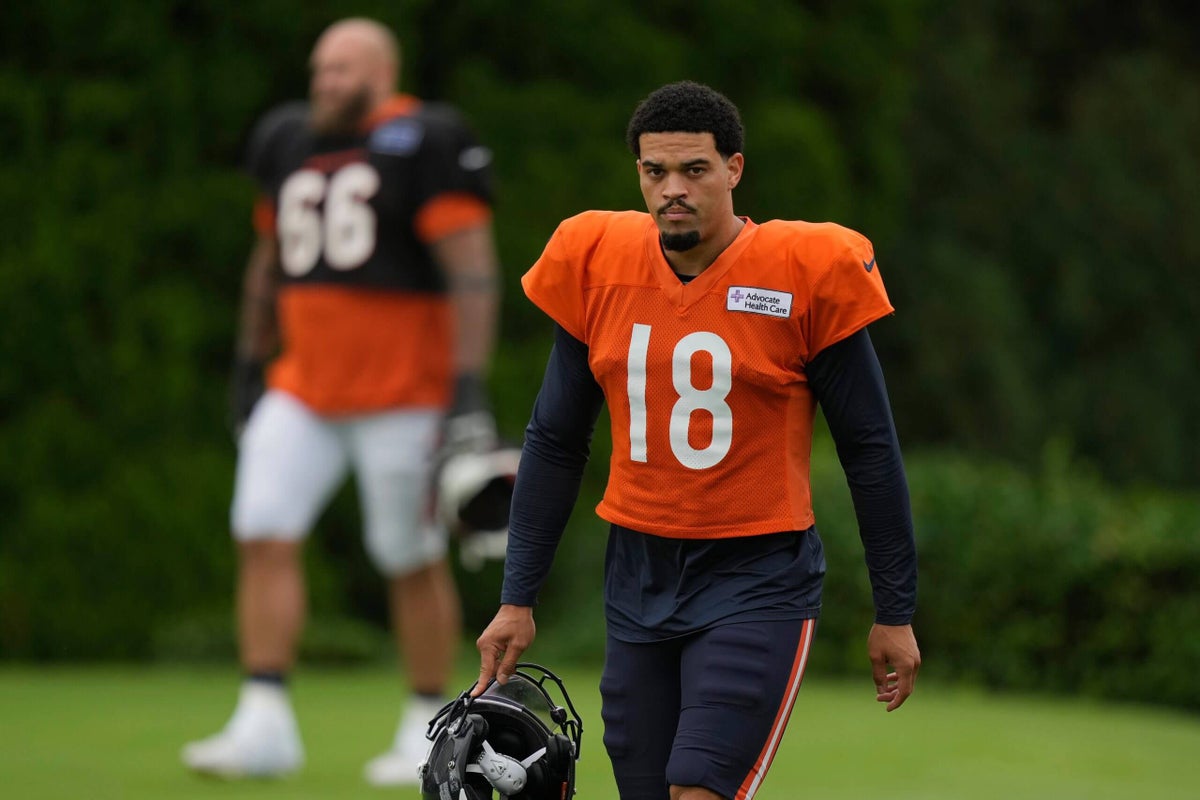
“We’ve got to clean up the penalties,” quarterback Caleb Williams said. “That was the first, I’d say, 90 percent of practice. … I haven’t been able to watch it, so don’t know for sure, but that’s how it felt at least out there.

“And then in the situations, just got to be better. Whether it’s myself and protecting the football or the front or wide receivers, all of us, it’s a combination of all of us being able to go out there and execute. It’s going to be a focus point for sure.”

Player in the spotlight: QB Caleb Williams

Williams threw three touchdown passes on his first five throws in the initial seven-on-seven drill. On the second drill, he had to scramble twice and didn’t complete a pass.

When the team drills got going, he opened things up with an out route to wide receiver Rome Odunze, who stayed in bounds and then turned upfield. Williams showed pinpoint precision on a deep out to receiver Kalif Raymond, floating it with an NBA shooter’s follow-through.

But on the second set of downs, Williams got pressured several times. He was incomplete on attempts to tight end Colston Loveland and Raymond.

This was the pattern of the morning practice. Some good, some not so much. And it ended on a low note. During a move-the-ball drill, Williams hit Raymond with a play-action strike on the first play, but after consecutive incomplete passes — one when he was under duress — his screen attempt got tipped and intercepted by All-Pro defensive tackle Dexter Lawrence.

In the first two-minute situation, Williams had to contend with Lawrence again while throwing three incomplete passes, including one on fourth down to receiver Jahdae Walker.

“He’s one of the best, if not the best, D-tackles with Chris Jones and all of them up there,” Williams said. “He’s a force to be reckoned with.”

Williams did add that, with it not being a normal game week, they didn’t necessarily prepare for Lawrence like they would during the regular season.

Then to end practice, Bengals defensive end Myles Murphy beat left tackle Theo Benedet for a sack. Williams had to scramble and step up on the next play, and his pass to Loveland was late and tipped before landing in the arms of Bengals cornerback Jalen Davis.

“I got to bring the ball down. I left it up top too much. Released it too high,” Williams said. “Trying to move. Then I got some pressure on the back side and just tried to check it down, get the drive going. … Just trying to find a way to help the back side if I can do anything in stepping up or getting the ball out faster, so we’re going to go look at that.”

Bears coach Ben Johnson, left, chats with Bengals coach Zac Taylor during joint practice in Cincinnati on Thursday. (USA Today Network)

In the red zone

Williams thrived in the red zone drill, hitting Loveland, Raymond and receiver Kaden Davis for touchdowns. The throw to Loveland was a highlight.

“I saw them rotate down into one-high, and then just knowing it’s Colston, that’s my guy, going up the seam, and the defender’s back was turned to me,” he said. “He turned around just at the end, but the ball was already going over the top. Colston ran a great route and made a great catch.”

Loveland made another big catch in that period, and Williams was his most accurate on the day.

“Just being able to get the ball out, being able to know where I’m hot from and the offensive line doing a good job down there,” he said.

Williams believes the defense has the advantage in the cramped confines of the red zone.

“So things happen faster, so it’s just being able to deliver a ball and see coverage and give the guys a shot,” he said.

Pressing question

How will the tape look for center Garrett Bradbury?

The pressure on Williams often seemed to come from the interior. That’ll happen when Lawrence is on the other side, and we don’t know who didn’t get a block or an assignment.

That’s why it’ll be interesting to see how it all looks for Bradbury, the one new piece of the Bears’ interior offensive line.

“It was a good test for us, some things to work on, for sure,” Williams said. “We spoke about them out there on the field. We had a fumbled snap on our first one, and that’s not something you want to happen in a game or practice. It’s just being able to communicate on those and figure out what happened — if I was too quick, if I was too slow — because obviously first snap you want to get moving.

“It’s just (Bradbury) and I being able to work together and communicate on those things.”

We haven’t seen or heard any indications that Bradbury is at risk of entering a competition with rookie Logan Jones just yet, and a review of the tape may show flaws across the board that led to the Bengals’ success. As the communicator up front, Bradbury has a big role in keeping Williams clean.

“What I want to see is alignment, assignment, pre-snap taken care of,” Johnson said about the quarterback-center exchange before practice. “A year ago, those joint practices, they were discombobulated, so that’s not what we’re looking for.”

Things looked good on the opening drive for the offense and then in the red zone. Coaches will have plenty to pick apart from the rest of the day.

Keep an eye on: WR Kaden Davis

The star of training camp got some run with the starting offense Thursday, which included going low to haul in a touchdown pass from Williams.

“Him being able to come in and learn the plays pretty fast,” Williams said. “Where to line up. How to line up. How to run the routes. … And then just being in the right position. He’s made plays for us so far, whether it’s in practice or in the game. He’s been explosive. He’s been fun to watch. I’m excited for him to keep growing and keep working.”

Davis has gotten a lot more attention than you’d expect for someone who has zero regular-season NFL catches and has appeared in only three games since 2022.

Luther Burden’s injury is providing more reps for receivers, and Davis had four catches for 88 yards in the preseason opener. He should get plenty of snaps Saturday night. If the Bears keep six receivers, he’ll be in that conversation.

Quote to note

Linebacker T.J. Edwards is one of the longer-tenured Bears, and coming off his own frustrating season of injuries — the first he’s had in his career — he offered some perspective on nickel corner Kyler Gordon, who remains sidelined.

“I think Kyler is one of the best nickels in the game; I really do,” he said. “I think when he is on the field, he changes the game, and, you know, his ability to blitz, his ability to stop the run, his ability to cover when needed, play the pass.

“I know he’s working his butt off, and I talk to him every single day. Man, he’s just itching to get out there, so we’ll be ready when he gets back. We know who he is when he is on the field.”

Quick hits

• Defensive end Marcus Davenport was present but not participating in practice. A first-round pick for Dennis Allen’s Saints defense, he also played two games in Detroit when Johnson was offensive coordinator. “I think he’s going to add some competition to us on the edge there,” Johnson said. “He’s still a very hungry and motivated individual and we got a plan for how we want him to come back and be able to help us out.”

• Cornerback Tyrique Stevenson returned to practice. Cornerback Terell Smith was also back out there but in a limited fashion.

• The following Bears made the trip but did not practice: Gordon, cornerback Jaylon Jones, Burden, safety Elijah Hicks, linebacker Noah Sewell, guard Luke Newman and defensive tackle Shemar Turner.

• Defensive back William Wright, linebacker Tony Fields II and offensive linemen Kyle Hergel and Wesley French also did not practice.

• Johnson said quarterback Tyson Bagent’s injury is “week to week.” He did not travel to Cincinnati, and neither did running back Kyle Monangai.

• Expect a lot of quarterbacks Case Keenum and Miller Moss on Saturday night. Johnson said earlier in the week that whether starters played in the preseason game would be dictated by the joint practice, but Bengals coach Zac Taylor said his starters aren’t playing, an indication of what Johnson might do.

>

Continue Reading

Sports

New Zealand Football CEO hopes ‘others will feel brave enough’ to go public on Infantino’s position

Published

on

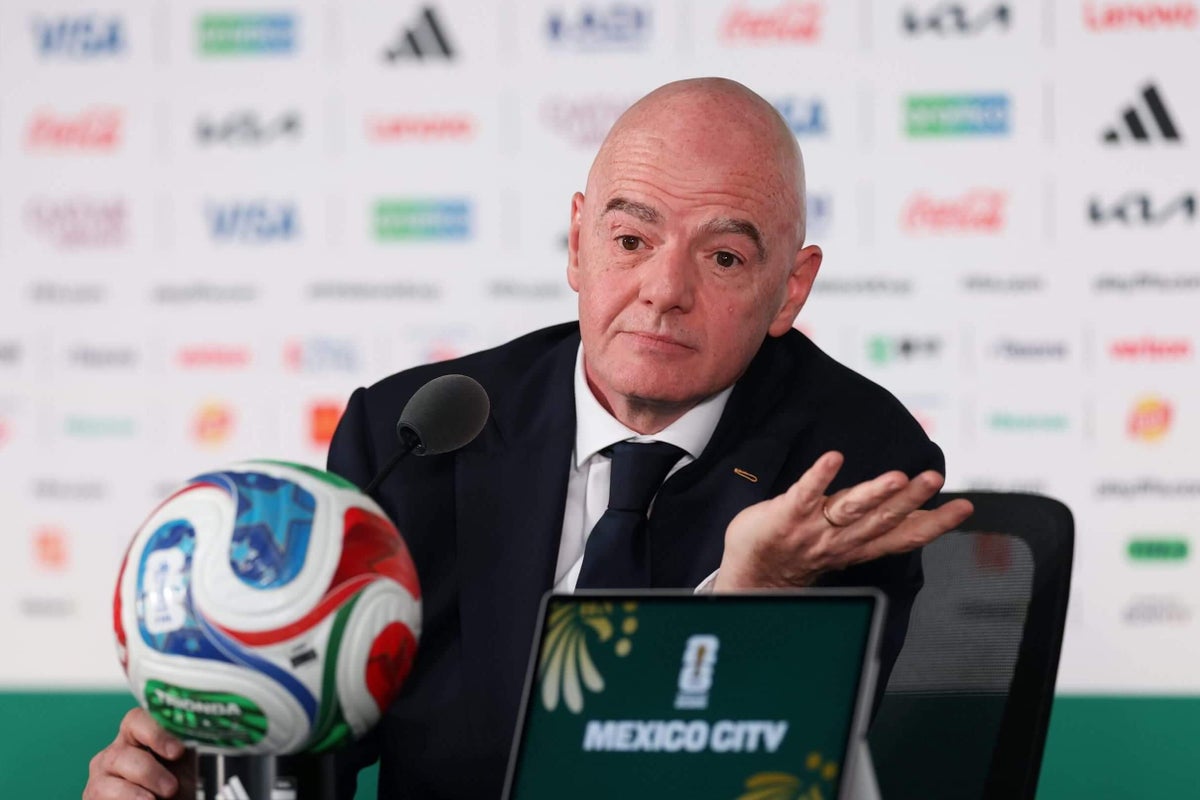
“I feel like there are a lot of people who are hedging their bets, sitting on a fence or waiting to see the way this falls,” says Andrew Pragnell, the chief executive of New Zealand Football (NZF).

Global football stands divided after the collapse of FIFA president Gianni Infantino’s proposal to sell a stake in FIFA’s commercial and event operations to private investors including Thrive Eternal, headed up by Joshua Kushner, the brother of President Donald Trump’s son-in-law Jared.

For Infantino’s long-standing critics in the sport, it proved a bridge too far and efforts are underway to force him out of office. The leadership of UEFA, the European confederation, Concacaf, the confederation of North, Central America and the Caribbean, and the Asian confederations last week joined together to release an open letter, in which they said trust had been broken in FIFA’s leadership “through deception.” A previous statement from Concacaf called for a “comprehensive reckoning with this presidency”,  while UEFA stated it had “lost confidence” in Infantino.

Early next year, FIFA will hold its presidential election and, so far, Infantino is the sole candidate. FIFA operates a one-member-one-vote system, meaning that each of its 211 member associations have equal voting rights. For now, it remains unclear how Infantino would fare should a rival contender emerge, or whether he can be compelled to resign. He appears to maintain support from South America and Africa, while Oceania has not moved against him collectively, with the confederation praising the “progress” made under Infantino.

Yet Oceania’s most successful football nation, New Zealand, last week announced it had withdrawn its support for Infantino’s candidature, following several European countries including England, Wales, Scotland, Serbia, Finland and Croatia in doing so.


As executives around the world jockey for position, most have reserved their comments for press releases. New Zealand’s Pragnell, therefore, stands out as a football executive prepared to talk at length and in detail on the matter.

“A really important part of leadership in football is being transparent and open to the general public about the decisions you take,” he told The Athletic in a telephone interview. “This issue around the FIFA Forward Enterprise (FFE) scheme has generated global concern. There needs to be more leadership speaking about it and speaking publicly about their views.”

FIFA’s lack of consultation with member federations was such that Pragnell found out about the proposal when he woke up in New Zealand to “text messages from media.” Infantino’s plans blindsided the FIFA Council. FIFA’s chief operating officer Kevin Lamour spoke out, eventually costing him his job, and described it as “one man’s” proposal. Soon after, a media release came from FIFA unveiling the plan, but only after it had been leaked to The Times and The Financial Times.

Over 24 hours later, the federations received a deck written up by J.P. Morgan, the bank which had worked with Infantino and Kushner on the secret plan, setting out the bare bones of the proposal. Yet Pragnell was among many executives around the world wondering why FIFA, an organisation which earned over $15 billion in the cycle including the 2026 men’s World Cup in North America, required external investment from private equity. He also wondered whether an enterprise value of just over $20 billion for FIFA’s commercial and events propositions may be an undervaluation.

“There were so many concerning angles,” Pragnell says. “The question was why. Why private equity? Why now? How was the valuation worked up? Why Thrive Eternal? It wasn’t clear what problem private equity was trying to fix. FIFA sits on healthy reserves, we’ve just been celebrating the incredible commercial returns of this World Cup. What did a future forecast look like for the valuation? Is this actually a fire sale?”

He continues: “It’d be fascinating to jump into the J.P. Morgan evaluation and understand how the value was determined. Not knowing the methodology, that’s potentially incredibly cheap. What are those assets worth potentially in 2034? Those are things the members needed to know.”

Infantino hoped that the 211 members would be tempted by proposed payments of $40million each over the next four years. Yet it rebounded amid suggestions — denied by FIFA — that he may have been in line for a lucrative commissioner-style role at the spin-off enterprise.

(Gabriel Aponte/Getty Images)

Pragnell says: “The concept of putting money downstream, to go into football development, is a good one. That is if there are sufficient checks and balances on how money is managed. But it should not necessarily be through private equity. That’s a debate the game should be having. That’s why we have, in my mind, the FIFA Bureau, the FIFA Council and the FIFA Congress, to discuss these things.”

Instead, the initiative was cooked up without consultation. Many member federations were opposed, but to some, it was the moment that encapsulated a pattern of leadership by Infantino, where outcomes are decided by an increasingly concentrated power base with a highly elastic interpretation of FIFA’s statutes.

Over the past year alone, Infantino single-handedly decided Trump should receive a FIFA Peace Prize, while the game’s integrity was called into question after Trump revealed he called Infantino to challenge a red card received by U.S. forward Folarin Balogun during the World Cup. A disciplinary committee, which FIFA says is independent, decided unusually to suspend Balogun’s one-game ban in the middle of the tournament.

Pragnell, it should be said, has not been a long-time public critic of Infantino. When I last interviewed him at FIFA Congress in Paraguay in May 2025, he praised Infantino’s desire to grow the game globally and redistribute wealth to developing football nations.

“The commercial growth has been incredible,” Pragnell says now. “Some of the FIFA staff that I’ve met over the years are some of the best qualified young professionals taken from around the world. That’s a particular group I’m feeling for right now, as the organisation is taking a battering. That being said, from an organisational perspective, ultimately, the FFE scheme is what drove New Zealand Football to take the view that we couldn’t support his candidature for 2027.

“I will also make some personal observations. There’s some growing disquiet around the world around how World Cups are awarded.”

Pragnell, right, at an event in 2024 with New Zealand’s general manager of high performance Keir Hansen (Hagen Hopkins/Getty Images)

Infantino has still never taken questions on the process that led the 2034 World Cup into Saudi Arabian hands. Due to FIFA’s confederation rotation principle, two tournaments must pass before a confederation can host another World Cup. In 2030, the tournament will be shared across three continents (Africa, Europe and South America) and six countries (Morocco, Spain, Portugal, Uruguay, Argentina and Paraguay). This made the 2034 tournament essentially a fait accompli for Saudi Arabia, which belongs to the Asian confederation. The rotation principle means New Zealand could theoretically be contenders to host the 2038 men’s edition, as only Oceania and Concacaf would be in play for the tournament. Many suspect Infantino favours a return to North America.

“Is it going to be competitive or is it going to be managed in the background?” he asks. “And you know what? If the Congress agree that we should prioritise harmony over (bidding battles), then perhaps that’s OK, but let’s at least have that discussion on how it should be approached.”

Pragnell continues: “The things that have been happening are driving discontent amongst leagues, clubs, players and fans. If the powers-that-be, those of us who have some of the checks and balances, don’t take note of those and don’t speak out on them, then ultimately people will lose confidence in the global game. From an organisational perspective, absolutely the enterprise scheme went too far. But it presented the evidence or talked to fears that people have; that power is too concentrated, which is exactly what the 2016 FIFA reforms were designed to avoid.”

Pragnell also concedes that, following the World Cup, some associations and some fans are now questioning the independence of FIFA’s disciplinary committee. “Obviously all members have to have full confidence in the independence (of that committee). For the game, for fans, the idea or concept that perhaps there could have been interference is grossly concerning if this impacts the on-field performance. So, while I’m not making any allegations in relation to that, obviously it casts a shadow and certainly the public confidence has been shaken.”

As for what happens next, New Zealand want a full independent review into the FIFA Forward Enterprise scheme. FIFA has suggested it will make its own review and report to the FIFA Council, but Pragnell says the terms of reference must be agreed by all six confederations and focus on how and why the plan was developed and who was involved at every stage.

“We need a qualified global institution with investigative background and strong commercial knowledge to do this type of work. It must be a party that’s contracted and can be relied on, but the scope needs to be overseen by the parties who’ve lost the trust.”

Behind the scenes, are disgruntled federations now working together and reaching out to possible allies? “We’ve got relationships with many football associations around the world,” Pragnell says. “We’re in touch with a wide range, including some in the northern hemisphere. We’re not deeply kind of enshrined in a mass of ‘What’s next?’, there is a lot of water going to the bridge. I don’t think this is done.”

Within Oceania, there is no bloc unanimity, with nations deciding they will respect one another’s independence.

“I’m really interested for when the FIFA Council will next meet and the position their members will take,” Pragnell says. “I’m hoping that for the sake of fans, clubs, leagues and anyone involved in the delivery of the game that people are clear on their position. The biggest concern is the idea that people might be too scared to take a position because of some kind of retribution or something that might happen to them — we just cannot have that. We can never have that in football. There shouldn’t be (fear) and there can’t be, and ultimately if there was, there would need to be further outcry.

“People need to step forward. We took the position as a values-based decision, that’s what we stood for, we thought the public should know what we stand for. We hope that, by taking that stance, others will feel brave enough to come forward and state their position as well.”

>

Continue Reading

Sports

USMNT midfielder Brenden Aaronson signs new three-year deal with Leeds United

Published

on

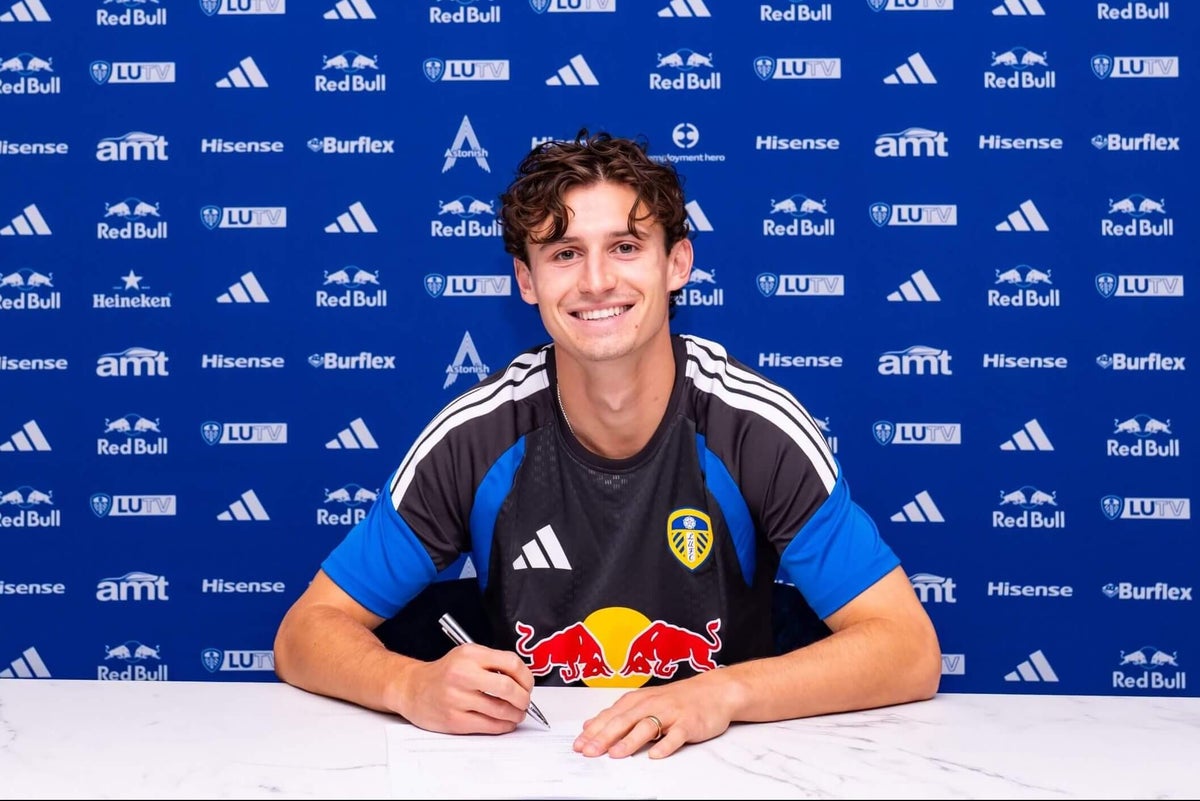
Leeds United have announced that midfielder Brenden Aaronson has signed a new three-year deal with the club.

The 25-year-old has signed new terms until 2029, which underline his rising status at Elland Road under Daniel Farke.

Aaronson signed a five-year contract when he first arrived from Red Bull Salzburg in 2022. However, when he struggled in a Leeds team which was relegated in 2023 and then jumped ship to Union Berlin on loan, few supporters would have expected to see him sign another deal in West Yorkshire.

As it is, the USMNT player has continued to surpass expectations since returning from that loan. He was booed by sections of the Leeds fanbase in the summer of 2024, but proved to be one of Farke’s most-used players en route to a 100-point title in the Championship.

Then again, after promotion, he continued to be a key player for Farke at a higher level, featuring in 37 (starting 30) of their 38 Premier League matches. After a summer of reinforcement, including the arrival of Harry Wilson, Aaronson has been given another vote of confidence with this contract.

Aaronson’s new deal follows similar announcements for team-mates Ethan Ampadu, Joe Rodon and Jayden Bogle this summer.


Analysis

Aaronson’s new contract is a lesson in persistence and hard work. When he left the club in 2023 after relegation, escaping for Berlin and the Bundesliga while everyone in Leeds faced the Championship, you would have been forgiven for writing the American off.

He had been poor in that first year in England, and it added insult to injury when he ran away from the outcome. However, unlike many of those who left on loan, he did come back, and he did face the music.

Aaronson did not cower from interviews, answering tough questions about his mentality and loyalty to Leeds. He also took his medicine when, in the opening weeks of his 2024 return, he was booed by sections of his own fanbase.

Brenden Aaronson celebrates a goal for Leeds

Aaronson has successfully worked his way back into Leeds’ fans good books. (Shaun Brooks – CameraSport via Getty Images)

Slowly, but surely, he did turn the tide, however. At an admittedly lower level, he did prove effective for Leeds in the second tier. Farke waxed lyrical about his work rate and keenness to learn and improve.

Even in the Premier League, after promotion, Farke’s consistent selection of Aaronson through October and November defined the acrimony which began to grow on the terraces as results nosedived. The attacker was eventually taken out of the firing line, but returned to the team and memorably scored an exceptional brace at Newcastle United in January.

His form did ultimately tail off again and left Leeds with a decision to make this summer. With his prior deal expiring in June 2027, they had to sell or renew this summer. They have chosen the latter, and they clearly see further potential in the 25-year-old.

>

Continue Reading

Trending

Copyright © 2017 Zox News Theme. Theme by MVP Themes, powered by WordPress.