
Anime
Newspapers: Japanese Government to Abolish Cool Japan Fund – News

Fund to promote Japanese culture abroad amassed 54 billion yen in losses since 2013
 Asahi Shimbun, Mainichi Shimbun, and other newspapers reported on Thursday that Japan’s Ministry of Economy, Trade and Industry (METI) has decided to effectively abolish the Cool Japan Fund, the public-private company that the government uses to fund projects as part of its “Cool Japan” initiative. According to these newspapers, METI is submitting a budget request for the 2027 fiscal year without money earmarked for the fund.
The government and various companies supported the “Cool Japan” initiative to promote modern Japanese culture such as anime and manga abroad. According to the initiative’s premise, Japan’s strength in business and international affairs lies in anime, manga, films, fashion, and other fields of Japanese arts and entertainment content.
The Cool Japan Fund was a major pillar of the second administration of the late Prime Minister Shinzō Abe. However, the fund accumulated 54 billion yen (about US$340 million) in losses since its 2013 launch. The financial news source Nikkei reported in 2017 that most of the fund’s investments that year underperformed. A subcommittee meeting of Japan’s Ministry of Finance discussed restructuring or abolishing the fund in 2022, particularly if it was not profitable by the 2025 fiscal year.
METI had convened an expert panel in late July to streamline the fund, but without a budget in the next fiscal year, the fund would not be able to make any new investments.
The Cool Japan initiative launched an emergency fund to help keep businesses afloat during the COVID-19 pandemic in 2020.
The fund invested US$30 million into Sentai Holdings, LLC (the parent company of Sentai Filmworks, HIDIVE, and Anime Network) in 2019, and offered another US$3.6 million to Sentai Holdings in 2020.
The fund invested in 2014 in Anime Consortium Japan, a joint venture that eventually managed the Daisuki streaming service before it shut down in 2017.
The fund planned in 2015 to invest up to 450 million yen (about US$3.7 million) in Kadokawa‘s projects to develop content creators for anime and manga outside Japan, with a particular focus in allowing Kadokawa Contents Academy Co. to expand its schools in other markets. Kadokawa Contents Academy Co. aimed to produce at least 2,000 graduates among its collective schools by 2020.
Sources: Asahi Shimbun, Mainichi Shimbun
Disclosure: Kadokawa World Entertainment (KWE), a wholly owned subsidiary of Kadokawa Corporation, is the majority owner of Anime News Network, LLC. One or more of the companies mentioned in this article are part of the Kadokawa Group of Companies.
>
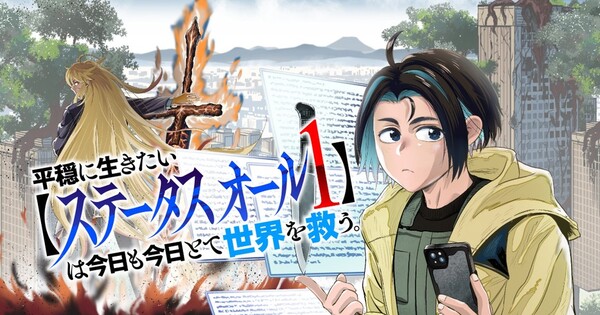
Artist Urozane launched manga on August 14 about protagonist whose status points all drop to 1
Urozane launched a manga adaptation of Nabeshiki‘s Heion ni Ikitai [Status All 1] wa Kyō mo Kyō tote Sekai wo Sukū (I Want to Live Peacefully: [Status All 1] Saves The World Day After Day) web novel on Kodansha‘s Comic Days platform on August 14.
![Manga announcement image for Heion ni Ikitai [Status All 1] wa Kyō mo Kyō tote Sekai wo Sukuu](/thumbnails/max600x600/cms/news.9/240696/hpo8g4bayaama3f.jpg)
© Nabeshiki, Urozane, Kodansha
The story follows the protagonist whose status points inexplicably drop to 1. While rushed for emergency treatment, he gains access to the mysterious Training Room. Fast-paced battles and adventures follow as he explores the Shinjuku Dungeon.
Nabeshiki serialized the web novel on the Shōsetsuka ni Narō platform from January to March 2022.
The staff for the television anime of Nabeshiki and Kawaguchi‘s I Parry Everything: What Do You Mean I’m the Strongest? I’m Not Even an Adventurer Yet! (Ore wa Subete o “Parry” Suru: Gyaku Kanchigai no Sekai Saikyō wa Bōken-sha ni Naritai) light novel series revealed in July 2025 anime will get a second season.
The first season debuted in July 2024 on the Tokyo MX and BS11 channels. HIDIVE streamed the series as it aired and also streamed an English dub.
Nabeshiki began serializing the I Parry Everything story on the Shōsetsuka ni Narō website in October 2019, where it is still ongoing. Earth Star Entertainment began releasing the series in print in September 2020 with illustrations by Kawaguchi. J-Novel Club is releasing both the light novels and their manga adaptation in English.
KRSG launched the manga adaptation of the novels on Earth Star Entertainment‘s Comic Earth Star website in September 2020.
Source: Comic Days
>

The official website for the Pop Pap Polters, a series of miniature stop-motion anime shorts by director Mozu and MOZU STUDIOS, presented the project’s full trailer and key visual on Thursday. The trailer announces the anime’s cast, additional staff members, and October 4 premiere.

©MOZU STUDIOS・シンエイ/ポップパップポルターズ
The anime combines miniatures and stop-motion animation to depict the bustling daily life of three ghost siblings living in a room of a (human) homeowner.
Atsumi Tanezaki voices the three ghost siblings Pop (youngest), Pap, and Polter (oldest), while Junya Enoki voices the homeowner. (The live-action “actor” of the homeowner is director Mozu.)
In addition to directing, Mozu produced the miniatures, and is also writing the scripts with Yuuka. Yuuka is serving as art director and character designer as well. Mascot character designer Hiroshi Yoshii (Ghost Hunt ending sequence’s 3D CG ghost production, Yans! Gans! character designer) handled the ghosts’ character 3D modeling, and Yūta Negishi handled the photography. Noriyoshi Konuma is directing the sound, and Scat Gotō is composing the music.
As previously announced, MOZU STUDIOS is credited for the original work and animation production. Shin-Ei Animation is credited for planning and production.
The anime will premiere within TV Asahi‘s “PicoAniTime” programming block on October 4 at 10:00 a.m. (October 3 at 9:00 p.m. EDT).
Sources: Pop Pap Polters anime’s website, Comic Natalie
>
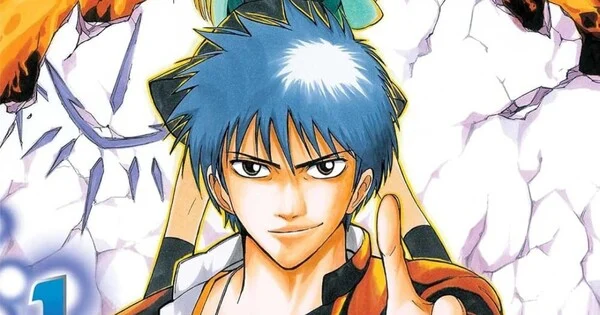
If there’s one thing that people who follow the magazine closely can agree on, it’s that the pages of Weekly Shonen Jump are a battleground every bit as fierce as their most iconic action manga. For every Naruto or Demon Slayer that manages to survive and reach untold heights of global popularity, there are series like The Hunters Guild: Red Hood or Mama Yūyū that meet an untimely end and get lost to the winds of history. The pages of JUMP run red with the blood of hundreds of canceled manga, and while most of these cancellations tend to be brief, some managed to gain an extended stay of execution, never quite finding enough popularity to earn an anime adaptation. When it comes to such JUMP titles with a noted reputation in Western circles, though, there are no examples more infamous than the tale of Psyren by Toshiaki Iwashiro.
Despite lasting a whopping three years in the magazine, it never performed well enough to get an anime adaptation green-lit during its run, and this helped to be its undoing, as without that extra blanket of security, it too was inevitably met with the sting of Shonen Jump‘s axe. Unfortunately, that blow could also be felt right into the pages of the manga itself, as its cancellation resulted in an extremely rushed finale, and while Iwashiro managed to wrap the story, this ultimately left a pretty notable mark on the manga’s overall reputation.
While the series has maintained some vocal fans clamoring for an anime adaptation (I myself being having also been one of them), and it’s even managed to appear on Anime Japan’s yearly poll of Most Wanted Anime Adaptations more than once, it’s pretty rare for a cancelled JUMP manga to be given that kind of second chance at life, so that seemed to be the end of Psyren‘s story. Yet against all odds, an anime adaptation has finally gotten greenlit courtesy of REMOW and Studio Satelight, giving the series another chance to grow its audience; with Psyren experiencing a sudden revival, it’s as good a time as any to look back and see just how well this manga holds up.
The series functions as something of a cross between GANTZ and a more straightforward battle shonen setup, as it follows a troubled teen named Ageha whose quest to find his missing classmate and childhood friend, Sakurako, leads him to investigate rumors surrounding a secret society called Psyren. However, when he finally tracks Sakurako down, he discovers that rather than simply being a cult, Psyren is a post-apocalyptic future brimming with modified lifeforms called Taboo that possess psychic powers, and that Sakurako has been traveling back and forth between this future as part of a mysterious game. Having now been locked into that game himself, Ageha decides to make it his mission to protect Sakurako from becoming another one of its casualties while the two try to learn how to prevent this dark future from coming to pass.
All of this is just the opening hook from the first volume, so it’s pretty easy to see where the series gets a lot of its appeal as it balances itself between the characters attempting to uncover the mysteries of how the future of Psyren came to be, and squaring off against all the dangers that world has to offer in flashy psychic shonen battles. Whereas a lot of the bigger Shonen Jump battle manga of its day like Naruto or Bleach were known for their largely slow-moving plots, Psyren‘s secondary status as a mystery thriller allows its story to move at a much brisker pace, and it never feels as though the series is wasting your time. While most of its overarching mysteries aren’t overly complex, they do help to add a lot of extra tension to the story. New information also tends to be drip-fed at a steady enough rate that it’s rare to go more than a few chapters without some brand-new revelation connecting Psyren to the present, which generally rewards readers for staying attentive.
That brisk pacing also extends into most of the manga’s fights, which center on the use of psychic powers called “PSI,” functionally split between physical enhancements, manipulating other people’s senses, and generating some form of psychokinesis like making fire or healing wounds. Much like the mystery side of the series, the battle system here isn’t anything terribly complicated (and does perhaps have a bit too much overlap with Ninjutsu in Naruto), but the series does manage to get some creative uses out of it, like giant scythes that can make illusions or making solid blocks out of air that are cool enough to keep the fights engaging. While some of the action paneling can be a little clunky in places, it flows enough that it’s fairly easy to digest, and the same extends to the art, which generally doesn’t stand out too much for what’s expected from a battle manga, but looks good enough to add some extra spectacle to all of the fights. The ability to comfortably shift between mystery and action works as the manga’s biggest strength, and those elements work together in tandem to give it a solid sense of momentum that makes it extremely easy to read.
As much as that constant sense of momentum works for it, though, it’s also the manga’s biggest weakness, as that pace doesn’t leave much time for its characters. Out of the central cast, Ageha and Sakurako get the most focus, and their respective arcs end up heavily intertwined. Ageha starts off the story as an aimless delinquent who plays at helping people in trouble as an excuse to satisfy the emptiness he feels through violence. Although he finds a sense of purpose in helping Sakurako to survive in Psyren, his brash attitude ends up being a double-edged sword as his battles there slowly lead him to realize that he’s a lot more comfortable with the thought of killing his opponents than he knows he should be.
Sakurako, on the other hand, deals with a lot of trauma brought about by all the lives she was unable to save during her previous trips to Psyren, and it’s mostly through Ageha coming back into her life that she starts to let go of those burdens in order to allow herself to be happy. While these are both pretty solid foundations for their characters, and allow them to have a good dynamic with each other, that relationship largely plays second fiddle to the central mystery, so despite its prominence, it’s never given enough room to breathe to feel as compelling as the story wants it to be.
The same also extends to the rest of the main cast, who have pretty simple character arcs such as a sleazy playboy named Kabuto who has to learn not to run at every opportunity, and a celebrity named Oboro who acts childish but has a dangerous side to him that causes him to view all of Psyren’s dangers as nothing but a game to amuse himself with. While they’re both given just enough focus to help keep them involved with the plot, there otherwise isn’t quite enough depth to them to make them one of the series’ better draws. The same also extends to the members of the organization W.I.S.E that serve as the manga’s main antagonists, as while they’re all entertaining enough, they otherwise don’t display much personality outside their general archetypes, and the mystery of how they managed to bring about Psyren’s future takes priority over their characterization.
This unfortunately bleeds into the quality of the fights, as the overall simplicity of the characters keeps the battles low on emotional stakes and makes it harder to get fully invested in them. This wouldn’t be too much of an issue if the battles opted to focus on being strategic instead, like with Hunter x Hunter or Jujutsu Kaisen, but the battles are extremely straightforward; that lack of a push towards either direction leads to many of the fights coming off as merely functional rather than being essential to the story or the characters. The biggest exception to this would be the battle that takes place in volume 3 between one of the main characters, Hiryu, and his childhood friend Tatsuo, who had previously gone missing in Psyren only for Tatsuo to have been turned into a Taboo. It’s given a fair amount of dramatic weight as Hiryu owes much of his current image as a tough guy to becoming someone Tatsuo could look up to since the latter spent his entire childhood unable to walk, but while those extra stakes make this fight more memorable, it’s sadly the exception rather than the rule, and it ends up being the most Hiryu has to do in these volumes as he largely fades into the ensemble afterwards.
Still, while it’s a little easy to see how these issues might have prevented Psyren from becoming a big commercial success, they aren’t anywhere near severe enough to keep it from being an extremely fun comic. Even if it doesn’t quite do enough with its characters to reach its full potential, the series does enough with its overarching mystery and explosive battles to make for an overall easy read that does just enough well to be consistently enjoyable. In that respect, it’s not hard to see why the series has maintained a loyal following even over a decade past its conclusion, and even though it doesn’t quite reach the heights of Shonen Jump‘s heaviest hitters, it’s still more than good enough to be worth a read.
>

‘The Odyssey’ Becomes Highest-Grossing R-Rated Movie Ever

Newspapers: Japanese Government to Abolish Cool Japan Fund – News

The controversial Manor Solomon chant and why West Ham have asked fans not to sing it
-

 movies3 months ago
Search For Canadian TV Actor Stewart McLean Now Homicide Investigation
-

 Fashion9 years ago
These ’90s fashion trends are making a comeback in 2017
-
Fashion9 years ago
According to Dior Couture, this taboo fashion accessory is back
-
Fashion9 years ago
Model Jocelyn Chew’s Instagram is the best vacation you’ve ever had
-
Fashion9 years ago
Emily Ratajkowski channels back-to-school style
-
Fashion9 years ago
9 Celebrities who have spoken out about being photoshopped
-
Fashion9 years ago
Your comprehensive guide to this fall’s biggest trends
-
Fashion9 years ago
A photo diary of the nightlife scene from LA To Ibiza