
Sports
New Zealand’s tour of South Africa: All Blacks come from behind to beat Lions 41-35 after huge scare in tour match | Rugby Union News


New Zealand fought back from an 18-point deficit in the second half to beat the Lions 41-35 and avoid a shock defeat at Ellis Park on Tuesday.
It means that the All Blacks have swept all four provincial teams to remain undefeated on their six-week, eight-match tour of South Africa, on top of beating the Springboks 33-16 in the first Test at the weekend.
New Zealand fielded only three players from that Saturday Test victory over South Africa on the same ground and involved five injury replacements summoned on tour – including one who arrived on Monday – as well as giving a debut to prop Saula Ma’u.
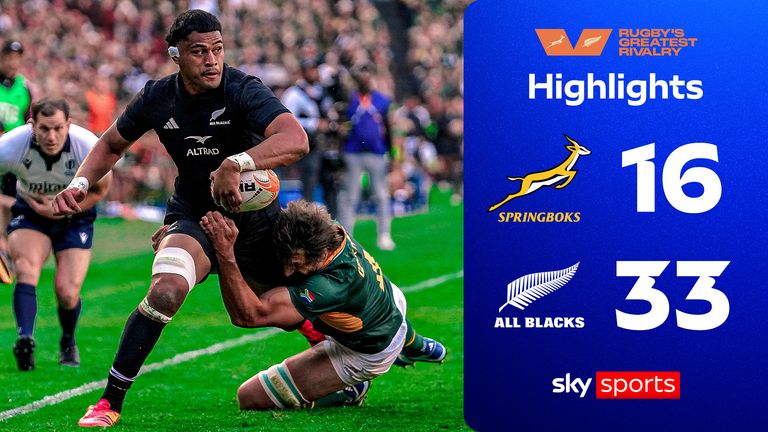
Highlights as New Zealand scored five tries to beat South Africa 33-16 at Ellis Park and take a 1-0 lead in the four-Test series of Rugby’s Greatest Rivalry
Their defence struggled and missed 19 tackles over the course of the contest that saw them trail 14-0 after seven minutes.
They were still behind at half-time and 35-17 behind in the 47th minute, as the Lions threatened to become the first South African provincial side to beat New Zealand since Orange Free State, now known as the Cheetahs, in 1976.
But like the Stormers, Sharks and Bulls who the All Blacks had already beaten, the Lions are out of season and not match fit.
Having not played since May 30 in the United Rugby Championship quarter-finals, New Zealand eventually came storming back in the last 30 minutes with four successive tries.
Rieko Ioane scored two of them, flanker Ethan Blackadder went over for a second time to earn the All Blacks the lead for the first time in the 62nd minute, while a second too by winger Emoni Narawa in the 79th finally settled the touring side’s nerves.
“The Lions came out hissing,” Blackadder said. “But we stayed composed and found a way in the end. They were quality tonight.”
Blackadder – whose father Todd was on the last traditional tour in 1996 – was one of the New Zealand standouts along with inside center Timoci Tavatavanawai, Narawa, and fly-half Richie Mo’unga, back from Japan and in a black jersey for the first time since the 2023 World Cup final.
All Blacks coach Dave Rennie thought Blackadder was phenomenal. “He’s got a massive engine and was everywhere,” he said.
Blackadder’s Test prospects also improved after Anton Segner was ruled out of the rest of the tour.
Segner was a late withdrawal from the first Test reserves due to an ankle injury that’s needed two surgeries. The injury was assessed as acute inflammatory arthritis and he won’t be replaced in the squad.
Mo’unga, like New Zealand, got better as the game got older, but he and Beauden Barrett could convert only three of the team’s seven tries.
On the other hand, Chris Smith, at home, converted all five of the Lions tries and hit the post with a long penalty.
South Africa vs New Zealand Test series schedule
All games live on Sky Sports; kick-off times UK and Ireland
- First Test (Ellis Park) – South Africa 16-33 New Zealand
- Second Test (Saturday August 29) – Cape Town Stadium (4.10pm)
- Third Test (Saturday September 5) – FNB Stadium, Johannesburg (4.10pm)
- Fourth Test (Saturday September 12) – M&T Bank Stadium, Baltimore, USA (10pm)
Watch every minute of New Zealand’s tour of South Africa, exclusively live on Sky Sports. Stream rugby and more sport contract-free with NOW
>

We blinked, and it’s almost September. You know what that means for the Los Angeles Dodgers — it’s go time.
Their rotation of aces is nearly back to full form, with Shohei Ohtani expected to return to the mound as early as Sunday. Will Smith should be back next week. There are questions about how Andy Pages (hand fracture) will heal and whether Edwin Díaz (neck inflammation) can regain a semblance of his form after a dreadful month. Still, the Dodgers know the upcoming month is about locking down a first-round bye and prepping their roster for the postseason.
With MLB rosters expanding Sept. 1, we’re about to see the first steps of that process. You had questions, and we’ve done our best to answer. Here’s our subscriber mailbag, with Part 2 coming Friday.
Editor’s note: Questions have been edited for length and clarity
How will the star rotation with Yoshinobu Yamamoto, Blake Snell, Tarik Skubal and Shohei Ohtani work to get the Dodgers to a third straight World Series title? — Brian P.
Where does Glasnow fit into the playoff pitching plan? — thonnef
Barring health, the Dodgers already know which starters they’ll ride into October. What they have not finalized (partly because both Glasnow and Ohtani are freshly on the mend) is the order and how they’ll be used.
Part of the decision is matchup-based and will depend on manager Dave Roberts’ preference to split starters by their handedness. That’s something we won’t know until just before the playoffs. If the postseason started today, it would be a safe bet to tab Yamamoto, the 2025 World Series MVP, as the Game 1 starter, with a variation of Snell and Skubal following. The biggest question heading into September is Ohtani: How much can the Dodgers ramp him up? Will he be an option as a full-fledged starter for the entire postseason?
As projected, the Dodgers believe he could be. Knee inflammation has prevented Ohtani from pitching since July 3, but he’s expected to return to the mound within the next few days — perhaps as early as Sunday’s series finale against the Detroit Tigers. If he does start Sunday, that would put him in a position to make five starts before the regular season concludes. In theory, that’s plenty of time to stretch him out to five innings or a 75-pitch threshold.
The Dodgers plan to stretch Ohtani similar to how they did last season when he was coming back from elbow surgery, but not as deliberately. Roberts said the club will be a “bit more aggressive” with his rollout. As always, health is the priority, but if Ohtani’s September goes according to the Dodgers’ plan, they’ll have their two-way star at full strength on the mound come the postseason.
That makes Glasnow fascinating to watch over the final month of the regular season. In his start Tuesday, his first since May 6, Glasnow showed some early rust against the Atlanta Braves but logged five innings of three-run ball with seven strikeouts. He’s slated for five more starts, with the Dodgers sticking to their six-man rotation. Since the Dodgers will not need five starters in the playoffs, the most logical place for Glasnow is to piggyback Ohtani, which Glasnow can do regardless of how much or how little Ohtani is stretched out. This might be the optimal plan for Los Angeles: If a combination of Ohtani and Glasnow can eat at least seven innings, it also buys most of the bullpen another day of recovery.
Keith Law on the Astros’ GM firing
Keith Law
Assuming Yamamoto, Snell, Skubal, Ohtani and Glasnow are your starters for the postseason. Who do you think makes the bullpen? — Byron B.
Even if Glasnow is relegated to the bullpen, the Dodgers will still take eight additional relievers, thanks to the extra pitcher they’re afforded due to Ohtani’s status as a two-way player.
We are well-versed in the Dodgers’ October pitching blueprint by now. Andrew Friedman will take his best 14 pitchers and assign roles from there. Pitchers that have been starters for most of the season, such as Roki Sasaki and Justin Wrobleski, will go to the bullpen. That we haven’t talked about Sasaki — who, coming into play Wednesday, held a 2.31 ERA over his six second-half starts — is a testament to the strength of the projected playoff rotation. Sasaki will miss at least two weeks due to a blister that landed him on the 15-day IL in Wednesday’s 6-5 loss, but the blister isn’t expected to impact his role come October.
Edwin Díaz will return in early September (more on him later). Tanner Scott, Alex Vesia and Jack Dreyer have held it down from the left side all year long (Scott’s woes on the current road trip aside). They’ll make for a strong group of southpaws in leverage innings, along with Wrobleski, whose ability to go multiple innings makes him even more valuable.
The right side is harder to predict. With Glasnow, Sasaki and Díaz accounted for, that leaves two spots for Brock Stewart, Evan Phillips, Edgardo Henriquez, and a (health pending) Blake Treinen. Henriquez has been the most consistent of the four and perhaps one of the most underrated Dodgers this year. Phillips has been trending in the right direction after a few rough first appearances back from Tommy John.
Health and September performances will drive these decisions. A name worth monitoring: left-hander Kris Bubic, whom the Dodgers traded for at the deadline on the off-chance he’d be able to help their bullpen in the playoffs. Bubic has spent most of the year injured but could embark on a rehab assignment as early as next week.
Dave Roberts seems to have abruptly shifted his perspective on how to help Edwin Díaz. What precipitated this change in Roberts’ thinking? — Jay O.
It was fair to expect some rust from Díaz after his April elbow surgery, but certainly not the tune of a 12.91 ERA in his nine appearances since his return. Yet Roberts kept running Díaz out for the ninth, even when it was clear the All-Star closer wasn’t right.
Part of that was the schedule. Several key relievers were on fumes, and Roberts was trying to keep his bullpen as available as possible. Fans don’t want to hear it — and the team will never publicly admit it — but Los Angeles can burn a few regular-season games to be better positioned for October. That’s true even if it costs them a win on that specific night. The Dodgers are paying Díaz $69 million to close games. They were OK affording him as much opportunity as possible in August to find his form. Once September hits, though, it’s all about riding the hot hand.
That’s why you’ll still see Scott (2.36 ERA and team-leading 19 saves) in the closer’s role once Díaz returns off the 15-day IL. That stint is expected to be around the minimum, and Díaz is on the road trip with the team. Once he’s activated, however, he’ll be placed in lower-leverage situations to work on the mechanical changes related to the significantly lower arm angle he’s sported this year without the worry of blowing a game.
In a perfect world, Díaz could use September to regain his arm slot, his confidence and the team’s trust for the ninth inning. Roberts’ thinking now is based somewhat on rosters expanding, plus an added man in the bullpen, thanks to Ohtani’s restored two-way status. More so, it’s crunch time for the Dodgers. Díaz has had plenty of opportunity to catch up.
Everyone’s talking about the rotation, but I’m still freaking out about Andy Pages and his injury. Beyond bringing back Will Smith and just working through it in general, what is the team doing to rekindle the bats? And how confident are they in an outfield without Pages? — Marcelo T.
It will be difficult to replace Pages’ range in center field, which ranks in the 95th percentile of eligible MLB outfielders this year, but you’re right to point out the concern over losing his bat. As Fabian Ardaya noted in a recent column, Pages, with his .797 OPS (and a .906 OPS vs lefties), has been the team’s most consistent right-handed hitter. The rest of the Dodgers’ righty bats have combined for a .702 OPS with a .704 mark against left-handers.
Having Will Smith back will help, and Alek Thomas has filled in well for Pages, but the Dodgers need better production from Mookie Betts. The same can be said for Teoscar Hernández, whose playing time could be cut if he doesn’t step it up. The good news is the Dodgers believe Pages will return in time for the postseason. The bad news? Given his injury (hand fracture), there’s no telling what his bat will look like if he does come back.
For now, Thomas will get most of the reps in center field. The onus is on Hernández to find some slug. If not, we could be having a conversation regarding a potential James Tibbs III promotion. He is the likeliest outfield prospect to get the call-up should the Dodgers go that route.
With Will Smith coming back, the Dodgers aren’t going to hold on to two catchers. So who is the odd man out? Ben Rortvedt or Hunter Feduccia? — O. Ogilthorpe
Will Smith started his rehab assignment Tuesday with Triple-A Oklahoma City and is on track to return to the Dodgers on Sept. 1, MLB’s roster-expansion date. Smith will gradually work up to catching every day, meaning the backup catcher will remain a prevalent role. Still, it’s unlikely the Dodgers carry three catchers, especially with Dalton Rushing trending to return in early September. However, because of his minor UCL tear, Rushing will be limited to what he can do on the field. The Dodgers are planning for Rushing as a left-handed bat off the bench.
Rortvedt doesn’t have options remaining; Feduccia does. But given the offensive production Feduccia has provided in his month back with the Dodgers, he’s the likelier of the two to stay.
>
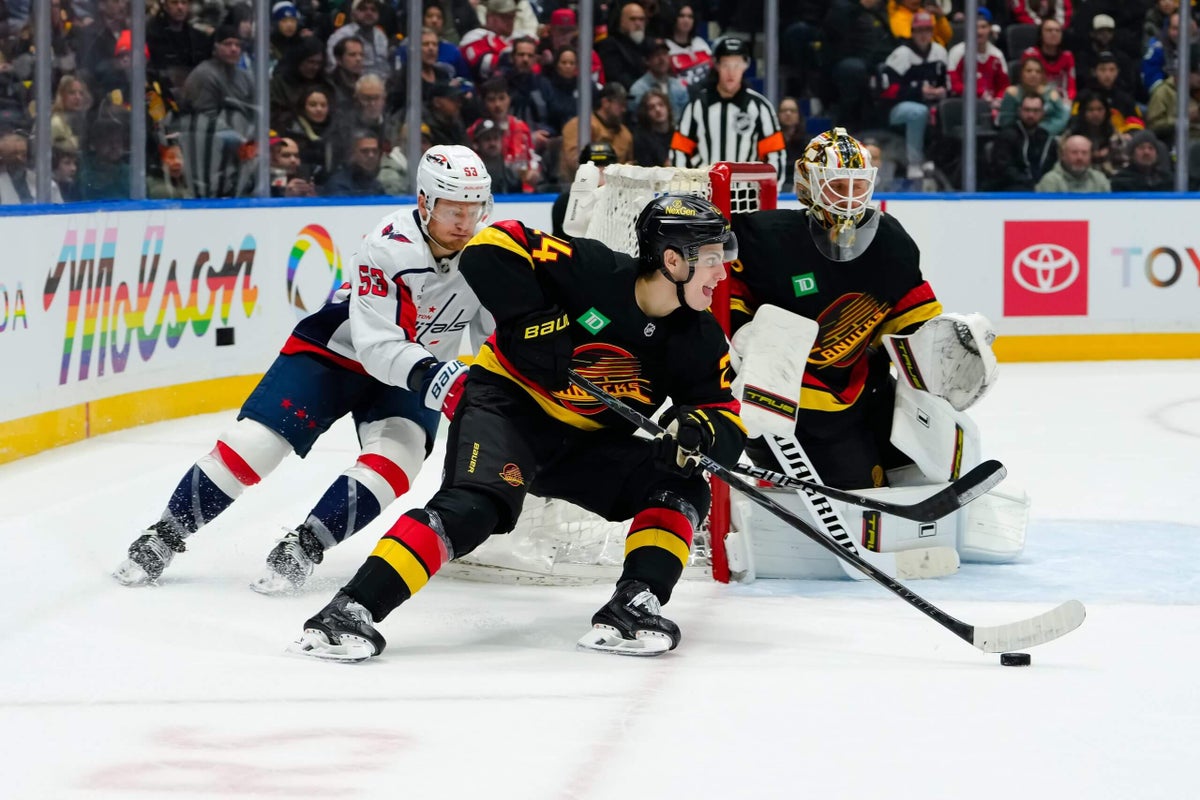
Zeev Buium was the most promising young player in the Vancouver Canucks lineup last season.
Despite his being dealt midway through his first full NHL season and logging major minutes in a sewered environment for a dysfunctional team as a rookie, Buium’s hockey IQ and skill level stood out. No matter how miserable the team’s results, Buium kept trying things and kept challenging defenders one-on-one from the blue line. Off the ice, he maintained his competitive edge. It’s commendable he never seemed to accept the results.
For all of the character and skill Buium demonstrated, and for all of the pedigree he possesses as a recent first-round pick who put together one of the most impressive resumes in recent NCAA hockey history with Denver University, Buium’s profile contains some measure of fragility the Canucks will need to be thoughtful about managing.
As promising as Buium is, he remains a somewhat undersized left-handed defenceman. The 20-year-old will need to put on some weight and add some physical heft to his 6-foot, 183-pound frame to hold up in tough minutes. Given his work ethic, however, there’s little question he’ll manage precisely that as he ages and approaches his prime.
The fragility of Buium’s profile, however, is less about the heaviness in his game and more about the player archetype he could come to represent if the Canucks aren’t thoughtful about his development path.
There are, of course, left-handed defencemen under 6-1 who represent significant value at the NHL level: Quinn Hughes, Lane Hutson, Josh Morrissey and Vince Dunn come to mind as prominent examples. Those players, however, share a key common trait — they’re top-end point producers with hard-won reputations as high-end power-play quarterbacks.
On the other side of the ledger, there’s a long list of NHL lefties under 6-1 who have been consistently undervalued around the league. The Pittsburgh Penguins’ Sam Girard, for example, is a legitimate top-four-calibre defenceman. Still, he required his former team, the Colorado Avalanche, to attach a second-round pick to offload his entirely reasonable contract with 1 1/2 seasons remaining. Matt Grzelcyk was a 40-point player in Pittsburgh during the 2024-25 season and still had to wait until fall to sign a one-year contract with the Chicago Blackhawks last offseason.
Even some high-end power-play options, such as recent Stanley Cup winner Shayne Gostisbehere, have had journeyman career paths, their professional resumes littered with Girard-like trades and one-year contracts despite consistent production and performance.
This variance in Buium’s profile must be accounted for in Vancouver’s thinking ahead of this upcoming season. It’s tricky, however, because Buium will require power-play reps if he’s ever going to hit his ceiling as an NHL player. And yet Buium struggled on the power play last season — especially relative to veteran teammate Filip Hronek, who was absolutely sensational.
Hronek played just over 150 power-play minutes during the 2025-26 season and was remarkably efficient in those minutes. In fact, he led all NHL defencemen who logged at least 150 power-play minutes last season in points per 60 with 7.94. More than just Hronek’s individual success, the calibration of Vancouver’s power play and the space he opened up as a shooting threat at the top of the Canucks’ 1-3-1 formation just clicked when he was promoted full time to the top unit.
There is no sound hockey argument to remove Hronek from the top power-play unit, and yet the path to Buium’s becoming a star-level contributor requires his development into a first-unit mainstay, which he’ll never do if he isn’t given significant run in that spot. With Hronek intent on remaining in Vancouver, there is no easy solution to this logjam, but the team is going to need a sharp, considered plan.
For Manny Malhotra and the coaching staff, how to navigate Buium’s power-play usage and carve out an opportunity to feature him offensively is easily the deployment decision with the most significant long-term ramifications of this Canucks season.
2. Will Manny Malhotra have the discipline, and options, to manage Filip Hronek’s minutes?
Hronek will turn 29 in November and has a no-move clause through the conclusion of 2027-28. For now, the top-pair Czech defenceman wants to remain in Vancouver with the rebuilding Canucks. That’s admirable on some level, and it’s also his contractually negotiated right.
There is a massive gap in quality between Hronek and the other options Malhotra will have on the back end. Especially in the wake of Marcus Pettersson’s departure, Hronek is really Vancouver’s only established top-of-the-lineup option on the blue line. You can hope the likes of Buium or Tom Willander take a significant step forward this season, but hope is not a plan, and it’s rare for 22- and 21-year-old defencemen to be capable matchup options at the NHL level.
Given Hronek’s age and Vancouver’s rebuilding future, the Canucks will need to be disciplined about managing his ice time. Last season, for example, Hronek played more than 25 minutes in 19 out of 25 games after the Olympic break. In aggregate, he logged 30 more minutes than any other defenseman after the Olympics. On a per-game basis, only Zach Werenski (whose team was in a playoff race) and Quinn Hughes (whose team was scrapping for home-ice advantage) got heavier usage than Hronek.
Hronek is a tough, efficient defenceman and can handle logging significant minutes, but he’s also missed large chunks of time as a result of shoulder injuries in two of the past four seasons. In any event, the Canucks will need to find some other options to share the load. Vancouver simply has too much asset value tied up in Hronek and too little meaningful ambition this upcoming season to risk deploying him in some of the heaviest usage in the league.
It’s incumbent on Malhotra not to give in to the temptation to overextend Hronek during a rebuilding season.
3. Can Jamie Oleksiak and Luke Schenn play well enough to flip at the trade deadline?
Luke Schenn has a full no-move clause in his one-year, $2.25 million contract. Jamie Oleksiak has a relatively team-friendly 12-team no-trade clause included in his two-year, $10 million contract.
Schenn and Oleksiak are high-character players and battle-tested in the playoffs. They have the sort of profile teams generally want to add to their lineup at the NHL trade deadline when they’re planning for a long playoff run.
Defence-minded defencemen, however, are often the players whose stock falls most precipitously when they’re logging significant minutes for overmatched teams during a rebuild. You wouldn’t have known it to watch Marcus Pettersson play last season, for example, that his five-on-five defensive impact — in terms of limiting the rate at which Vancouver surrendered goals and expected goals against — was borderline elite. You just noticed how frequently Vancouver was fishing pucks out from the back of its net when he was on the ice.
As unrestricted free agents, Oleksiak and Schenn will bring solidity to the organization. There’s no questioning the level of professionalism and defensive experience they’ll be able to contribute. Can they hold up well enough, however, to maintain or enhance their trade value ahead of the trade deadline? That’s a very different question.
4. How will young defencemen fare with the coaching change?
Buium had some sensational offensive moments. Willander was productive and, on occasion, even looked like a strong second-pair transitional defenceman. It was a different story for Elias Pettersson, who struggled mightily to replicate the defensive authority he flashed down the stretch of the 2024-25 season, but his potential as a heavy, throwback defensive blueliner is obvious.
Across the board, however, all of Vancouver’s young defencemen looked overmatched night to night last season. The defensive habits were nonexistent, and elementary mistakes — allowing a free stick in the slot, missing an assignment, keeping too loose a gap through the neutral zone — were constant.
That level of performance, however, wasn’t especially alarming. In truth, the mistakes weren’t isolated solely to the younger players. The 2025-26 Canucks were nothing short of the most disorganized, confused structural team I’ve ever covered. There was simply no sense of defensive solidity, no predictability in how they executed. It was sometimes difficult to even parcel out blame when a mistake had been made, given several players seemed unsure of their role or assignment on any given breakdown.
The context of Vancouver’s structural failings makes it difficult to evaluate exactly how their younger defencemen are tracking. Truthfully, none of them performed to the level of a good NHL blueliner last season, but that’s a data point that might reveal more about the team’s environment than it does about the individual quality, form or NHL readiness of Buium, Willander and Pettersson.
We’ll wait to see what systems Malhotra implements and how it might affect Vancouver’s young defencemen. The baseline, however, is relatively low. Structurally speaking, it simply can’t get any worse than it was last season.
5. Setting reasonable expectations for Thatcher Demko
Thatcher Demko is now a 30-year-old coming off a second hip surgery, which is virtually unprecedented for an NHL goaltender, and hasn’t been able to stay healthy since a knee tear in Vancouver’s first game of the 2024 playoffs.
At this point in his career, Demko has never put together an NHL season in which he checked off all of the following criteria: A. Start 60 games or more. B. Manage an above-NHL-average save percentage. C. Be healthy at the end of the year.
Looking even beyond a lengthy injury history, he hasn’t been the same positionally perfect, athletically dominant goaltender of yore in a few years. Demko’s save percentage across 43 appearances over the past two years checks in well below the NHL average.
For the Canucks and their fans, it’s important to sit with that. It’s unreasonable to expect Demko to perform like a conventional starter, and it’s incumbent on the organization to manage his pitch count rigidly this season. For fans, meanwhile, it’s unfair to apply “Demko could ruin the tank” expectations to a goaltender who really shouldn’t start frequently enough next season for that to be a relevant part of the dialogue.
>
Sports
Atletico Madrid’s stubborn Barcelona stance on Julian Alvarez – and what happens if he stays?
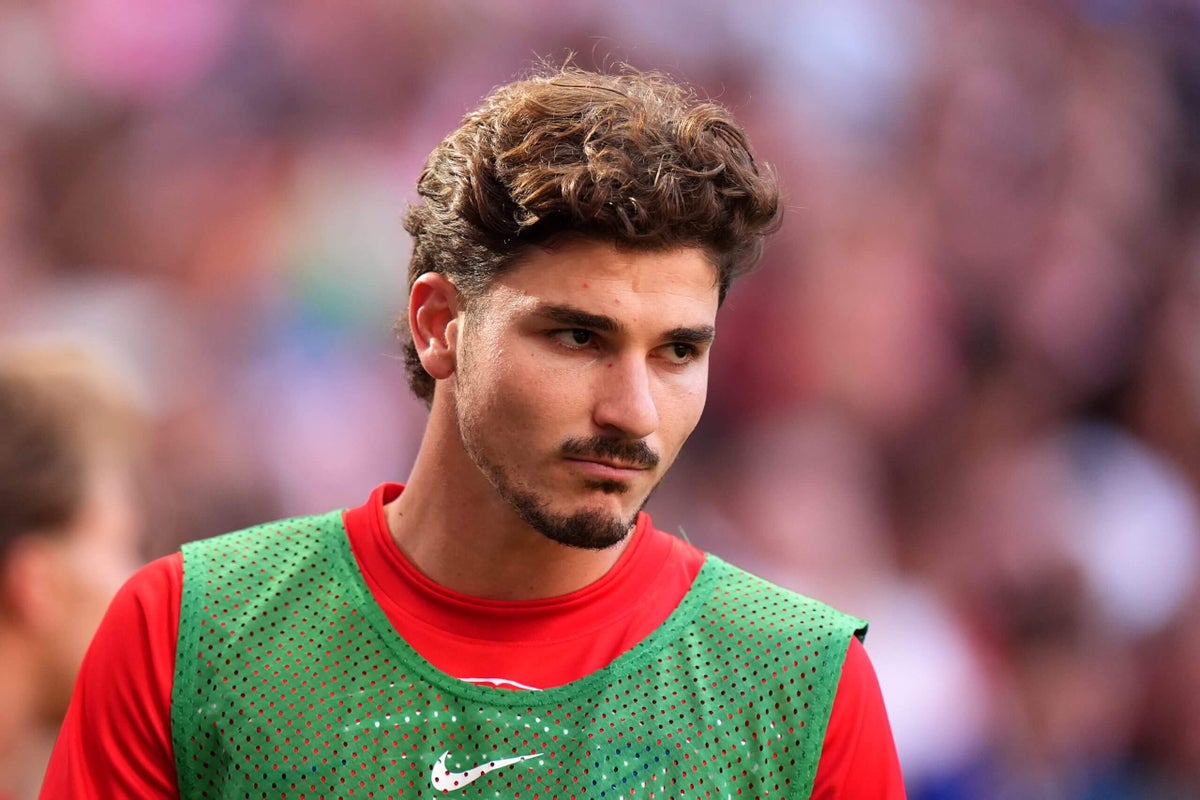
The image of Julian Alvarez walking alone off the Atletico Madrid pitch, his head bowed as his own team’s fans loudly jeered him, was the most striking yet of this summer’s biggest transfer saga.
Following Atletico’s 2-2 draw with Villarreal on Sunday, their first home game of the new La Liga season, Diego Simeone’s players went together to salute supporters behind the stadium’s south goal.
All went except Alvarez, who accepted advice from the club not to take part, after waves of anger had been sent in his direction from those upset by his publicly stated desire to join Barcelona.
The indignation from Atletico’s fans fits with a firm stance that the club’s hierarchy has taken since the end of May. That was when Barcelona said they made a €100million (£85.7m; $116.4m) offer for Alvarez. Atletico have denied receiving any such bid.
If you think that’s unusual, Atletico’s response to reports of Barca’s proposal was even more so. They posted a series of fantastical transfer news updates on their social media pages, including a swap deal for Lamine Yamal that involved Bad Bunny concert tickets and “a bag of sunflower seeds”.
Así reaccionó el Metropolitano al regreso de Julián Álvarez. 🔊🔥#LALIGAenDAZN⚽️ pic.twitter.com/KvQctofaSk
— DAZN España (@DAZN_ES) August 23, 2026
Alvarez joined Atletico from Manchester City in a deal worth up to €95million in August 2024 and is under contract at the Spanish club until 2030.
Atletico’s position all summer has been that they will not sell him to Barcelona. That did not change after Alvarez told ESPN during the World Cup that he wanted to leave.
Instead, Atletico chief executive Miguel Angel Gil Marin made the first of three telling interventions over recent months, each time insisting the 26-year-old is not going anywhere, while also criticising Barca — whom Atletico reported to the Spanish FA at the end of July.
Before the World Cup in early June, Real Madrid also claimed to have made a €150million bid for Alvarez. It came a few days after Florentino Perez promised to make a bid of that sum for a top player during his (successful) presidential election campaign. Atletico did not believe it was a serious attempt to sign the player and reacted with angrier and more scornful social media posts.
It served as another reminder of Atletico’s place in Spanish football’s hierarchy. Internally, it will have added fuel to the already communicated idea that they are the “victims” in this case — and that they have to hit back.

Alvarez came off the bench in the 66th minute of Atletico’s 2-2 draw with Villarreal on Sunday (Angel Martinez/Getty Images)
Under the 15 years of Diego Simeone’s management, Atletico have won eight trophies — including two La Liga titles and two Europa Leagues — while also twice reaching the Champions League final.
That sets Atletico well ahead of the country’s other historically important clubs such as Valencia, Athletic Club or Sevilla. Yet the Metropolitano outfit are still much smaller than La Liga’s heavyweight Clasico duo. Barca and Real Madrid both have revenues at least twice as big as Atletico’s, as well as much larger fanbases and much stronger institutional clout.
Within this situation, Atletico would like to be taken more seriously as a respected challenger, while both Madrid and Barca enjoy ramming home their superiority whenever they can.
Gil Marin and Atletico’s comments in the Alvarez case have been instructive on this point. He sees himself as defending the interests of his club against predatory behaviour.
“Barcelona have disrespected us, they believe they can brush us aside, that we’re weak or stupid,” he told news agency EFE in late June. “They try to make everyone believe they want to do an operation which in reality they cannot do. Last year they did something very similar to Nico Williams and Athletic Club.”
On Wednesday, Barcelona president Joan Laporta spoke to the club’s in-house media, insisting they had treated Atletico with “respect” and that their interest in Alvarez “followed the standards required”.
The 64-year-old said Barca had not dropped their pursuit of the striker because it appeared Atletico “want to sell the player to other clubs”. This was a reference to Arsenal.
As The Athletic has previously reported, the Premier League club were in contact with Atletico and Alvarez’s camp last week over a potential deal, but are not certain how much the player wants to move to England.
Atletico issued a statement in response to Laporta’s interview, saying there was a “zero per cent chance” Alvarez would be sold to Barca.
“This situation isn’t about money, it’s about dignity,” the statement added. “A campaign full of lies and half-truths has been created. The only ones paying the price for all this are Atletico.
“The player is being portrayed as the victim, but the only victims are us. We have been harmed both financially and socially.”
On Thursday, another Atletico statement said the club’s board of directors had “unanimously expressed” its “absolute support” for the decision to not negotiate with Barca.
It added: “Atletico Madrid trusts that our player will understand the decision and will remain focused on helping the club achieve its goals.”
Perhaps feeding into that is the fact the club is much financially stronger now than they were a few years back, with American asset management company Apollo Global Management having taken a share in their ownership in November 2025.
Alvarez, meanwhile, was absent from training on Wednesday and Thursday this week. Atletico sources — speaking anonymously, like all those cited here, as they did not have permission to comment — said this was because he was feeling unwell.

Alvarez has also attracted interest from Premier League champions Arsenal (Angel Martinez/Getty Images)
With less than a week left in the transfer window, there are no easy options for any of those involved.
For Atletico, holding on to a player who wants to leave carries obvious risk. Will Alvarez successfully be brought back into the fold? Will supporter sentiment turn around? Is the player himself fully committed?
For Barcelona, all indications are that they do not have a plan B in the transfer market for the No 9 position they identified as an absolute priority. Following the departures of Robert Lewandowski and Ferran Torres, missing out on Alvarez could leave them worryingly short up front.
Alvarez, meanwhile, can look back on previous cases of Atletico players pushing for an exit, if he is in search of solace or solidarity.
Multiple sources say his relationships with many at the club, including coach and fellow Argentine Simeone, have been damaged by what happened. However, some believe that time can heal everything, pointing to the case of Antoine Griezmann’s rollercoaster spells in the Spanish capital.
Griezmann was an Atletico hero who angered many by first publicly flirting with Barcelona in summer 2018, then joining them 12 months later when the Catalan club activated his €120million release clause.
The Frenchman never fully settled at the Camp Nou and returned to the Metropolitano, initially on loan, in 2021. He then worked extra hard to win over the team-mates and fans he upset, which included appearing in a club-produced documentary. Griezmann eventually became Atletico’s record goalscorer, and was acclaimed before leaving for MLS club Orlando City at the end of last season, aged 35.
It remains to be seen whether Alvarez, a serious and introverted character, would be able to manage such a return to favour. The anger sent in his direction last weekend is unlikely to have immediately changed his thinking about wanting to leave. Atletico’s resolve also appears to be unwavering.
With just a matter of days left until the transfer window closes on Tuesday, time is running out for Barca. For Atletico, hanging on to Alvarez will be seen as a victory, but at the moment it’s difficult to see any winners in this situation.
>

Episode 8 – Red River

Dodgers mailbag, Part 1: Predicting roster expansion candidates, postseason rotation

Ridley Scott on The Shining’s Influence on The Dog Stars
-

 movies3 months ago
Search For Canadian TV Actor Stewart McLean Now Homicide Investigation
-

 Fashion9 years ago
These ’90s fashion trends are making a comeback in 2017
-
Fashion9 years ago
According to Dior Couture, this taboo fashion accessory is back
-
Fashion9 years ago
Model Jocelyn Chew’s Instagram is the best vacation you’ve ever had
-
Fashion9 years ago
Emily Ratajkowski channels back-to-school style
-
Fashion9 years ago
9 Celebrities who have spoken out about being photoshopped
-
Fashion9 years ago
Your comprehensive guide to this fall’s biggest trends
-

 Anime3 months ago
Rurouni Kenshin: Hokkaido Arc Manga Takes 1-Issue Break – News