
Anime
Actor Tim Curry Dies at 80 – News


TMZ reported on Wednesday that actor Tim Curry died on Tuesday at his home in Los Angeles. He was 80.
Curry was born on April 19, 1946 in Grappenhall, Cheshire, England. He had a major stroke in 2012.
Curry is perhaps best known as Dr. Frank-n-Furter in the 1975 musical film The Rocky Horror Picture Show and The Rocky Horror Show musical. He also played Pennywise the Clown in the It television show, Wadsworth in the Clue film, and Rooster Hannigan in the 1982 movie of Annie.
Curry also had numerous voice roles in animation, including Nigel Thornberry in The Wild Thornberries, Darth Sidious in Star Wars: The Clone Wars, Hexxus in FernGully: The Last Rainforest, King Acorn in the Sonic the Hedgehog Saturday morning series, Evil Manta in The Little Mermaid animated series, and King Alfor and Lotor in Voltron: The Third Dimension. Curry won an Emmy Award for his role as Captain Hook in Peter Pan and the Pirates. He also voiced the Cat King in the English dub for Studio Ghibli‘s The Cat Returns anime film.
Sources: TMZ, The Hollywood Reporter
>
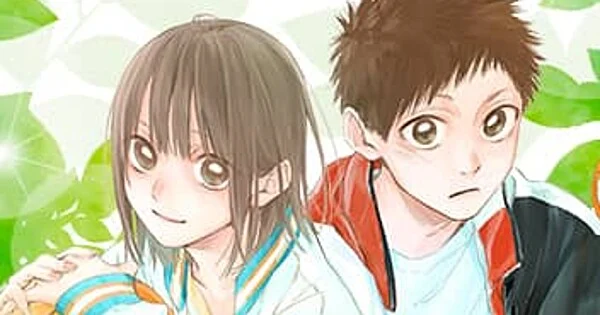
In many ways, anime can be seen as an advertisement for the source material it is based on, whether that be light novels, video games, or manga. There’s a lot of planning and effort that goes into producing an anime for this promotion, but as a result, many of these adaptations are not always able to fully realize the visions of their source materials. Sometimes an anime can’t continue because it is catching up to an ongoing manga; maybe it ends due to a lack of interest, or maybe it ends at a perfect point despite there technically being more story to tell. However, I think one of the most frustrating things to come across is an anime that stops just before things get even better, and I can’t help but wonder what is going on beyond the anime finale. Today, I want to take a moment to sit down with a couple of manga that all had really solid anime adaptations and why you should pick up the manga right where those shows left off.

©Shinichi Fukuda, Square Enix, Square Enix Manga & Books
I think the mark of a good slice-of-life story is that it has a strong romance at its core, but ultimately still feels satisfying when the show ends before that romance makes any real definitive progress. My Dress-Up Darling is a story that wears many different hats. In some ways, it is wish fulfillment; in others, it serves as a good introduction to the world of cosplay; and in others, it is a story about confronting deep-seated insecurities brought about by engaging in unconventional hobbies. The first two seasons of My Dress-Up Darling did a fantastic job of satisfying two of those three narrative beats. While I would argue it pulled off those beats well enough to feel still relatively satisfying, I can’t ignore the glaring fact that the romance between the two leads was ultimately left unresolved. Thankfully, there is more material to cover. While I am patiently waiting for season three, I can happily engage with the source material, where the romance can be the focus.
Gojo has just overcome his fear of engaging in his doll-making hobby and has finally made friends outside of Marin. Marin, who has been aggressively crushing on Gojo throughout most of the show’s run, is now left wondering when the right time would be for them to take another step forward finally. Now is the proper time for the two to really get into the throes of what type of relationship the two want to have outside of engaging with cosplay, but that doesn’t mean that the cosplay element is lessened or abandoned for the sake of this new narrative focus. The manga still focuses on introductory-level cosplay ideas and even throws in other elements that come with being a cosplay influencer online. The way social media and the pursuit of large audiences play into the larger story feels realistic, while new characters are introduced to advance those themes.
But what makes this next arc great is how it ties Marin’s cosplay journey with an actual romantic breakthrough. Seeing Marin stand up for the kind of relationship she wants, and Gojo finally reach a point where he can say he even wants a relationship, is a huge step for him, given where he started. I highly recommend people check out the rest of the manga. I do think it would only take about one more season to fully wrap everything up, but that doesn’t mean you can’t enjoy reading beyond the anime’s rough cliffhanger.
● Read My Dress-Up Darling on BookWalker

©1999 by Yazawa Manga Seisakusho/SHUEISHA Inc.
2) NANA
NANA is a very tricky manga to recommend because I don’t see any reality in which people walk away from it feeling happy. It starts fantastically, with Ai Yazawa writing about young adults as they start a new life and struggle to understand the different types of love. They are masters at writing dialogue that feels real, with the right amount of self-awareness. The relationship between the two Nanas, as well as the relationship they have with the many people that come in and out of their lives, is honestly intoxicating. I use the word “intoxicating” because not all of those relationships are good or healthy, but I still desperately want the characters to find their happy ending, and that’s why I keep coming back for more. The anime ends in an inconclusive state after some major emotional and practical life decisions are made, with Hachi moving in with Takumi, the poster child for a piece of garbage with the strangest moral compass I’ve ever seen.
The relationship between the two Nanas lies at the emotional crux of the entire series. Their friendship and chemistry are what keep the audience’s attention, even when there were constant roadblocks and uncomfortable circumstances. The fact that the anime ends with a definitive catalyst that threatens to tear apart their close bond is devastating, and the manga doesn’t pull any punches about it. There are constant teases that the characters will eventually make the best of the unfortunate circumstances. There’s always a lingering feeling that things could be so much better than they are. It’s funny that there were also a lot of grand gestures teased in the following chapters of the manga, like Ren wanting to propose to NANA, and what that kind of dynamic would do to the major bands involved. But those big gestures aren’t what draws you in; it’s the little moments when characters stare at each other. It’s about waiting for the right opportunity to say how they feel, only to never quite get that moment.
It is very unlikely that the NANA manga will ever truly finish, as it has been on hiatus for almost two decades due to Yazawa’s health issues. If you thought that a continuation from the anime would leave you with a sense of hope and optimism for the future, then I don’t know what series you thought you were getting yourself into. This has always been a character piece, exploring different sides of love, lust, and longing.
● Read NANA on BookWalker

©2021 by Kouji Miura/SHUEISHA Inc.
3) Blue Box
Blue Box is a series that perfectly balances the appeal of a sports series, a slice-of-life series, and a teen drama, all wrapped into one. While the goals of the protagonists, Taiki and Chinatsu, are typical of a sports series, it’s really how the characters balance these elements in their lives that creates its main appeal. In the first season, the anime ended by really leaning into the dramatic tension, whether it’s Taiki dealing with the fallout of a love triangle with his childhood friend or even the doubts creeping up as he prepares to go to nationals. Season one ends with him finally working up the resolve to confess his feelings to Chinatsu. The next major arc of the series focuses on developing Chinatsu as a character, leaning into the goals and aspirations behind her desire to dominate the basketball world.
Personally, I thought Chinatsu was one of the weaker elements of this series, but much of that is because both the anime and manga don’t show her perspective very often. The story is mostly told from Taiki’s perspective, but the following arcs establish Chinatsu as a secondary main character by introducing a rival who both challenges her as a player and spurs her own romantic feelings. This is the next major step in how the characters balance the various elements of their lives, as everyone around them constantly says they need to pick and choose. However, what makes Chinatsu and Taiki so special is that they want to have both. They want the freedom to choose their relationships while also having the resolve to achieve their sports dreams. At the time of this writing, season two is right around the corner, so if you were at all dissatisfied with season one and how it ended, I highly recommend checking out the manga, because I can assure you it only gets better from here.

©Take, Kadokawa
4) Uzaki-chan Wants to Hang Out!
Uzaki-chan is a strong pillar in what I like to call the “teasing genre,” a type of story revolving around an annoying young woman constantly getting on the nerves of her male co-lead, and in some ways, the audience. Uzaki-chan was one of the less egregious examples of this genre, ultimately about a young kouhai who teases her upperclassman, who is more of a loner type. Their banter was OK, but it was clear they enjoyed spending time together despite a lot of bickering. However, the series could obviously only really go in one direction, with season two finally leaning into romantic developments after a lot of meandering. Sakurai finally learns that Uzaki has feelings for him, and he comes to the same conclusion about his own feelings after trying desperately to avoid the issue. The anime ends with that classic cop out where he decides it’s not the right time to confess, but thankfully, that is not where the story ends.
The manga follows through on this plot point, with Uzaki and Sakurai eventually getting together just a few chapters later. In fact, not only do they get together, but I have to commend the series for doubling down on the teasing element of its appeal by making the intimacy of their new relationship a basis for their banter. While the series does get a bit more explicitly adult, it never loses the original charm. Those insecurities that Sakurai has towards the tail end of season two are now made manifest in this relationship. At the same time, Uzaki realizes that there’s a lot more fun to be had with this new dynamic. This is without even getting into how the side characters react to their relationship, which does yield some funny comedic potential. While I do think the era of this genre has passed, there is a lot to enjoy in this manga, and who knows, maybe some of you out there might miss these silly young adults, considering it’s been a while since the anime ended.
● Read Uzaki-chan Wants To Hang Out on BookWalker

©Misaki Takamatsu, Kodansha
Skip and Loafer was an adorable anime that I think really showed the appeal of a typical slice-of-life story. A girl named Iwakura moves to the city to start a new life at a new school, where her more innocent sensibilities clash with the cynicism of many of her classmates, leading to some interesting interactions. I liked the way her friend group formed, and the clear romance she was developing with Shima, a nice boy who has a mountain of his own issues that he doesn’t let show on the surface. However, while a good chunk of the show’s appeal was seeing Iwakura interact with the larger cast, some of the show’s most heart-wrenching moments occurred in Shima’s story and in how he dealt with his personal trauma.
The manga only continues those explorations beyond the anime, especially as Iwakura and Shima start getting closer in a more romantic way. How those insecurities and trauma affect the friendship or eventual romantic relationship between the two actually goes in a surprisingly grounded direction. How will all these teenagers who constantly overthink things contextualize the relationships they want with others? It’s not just Iwakura and Shima, either; the side characters in their friend group are also processing different issues as they navigate love and attachment. The manga avoids overly dramatic tropes like indulgent love triangles. All of this is done without the series ever losing its sense of innocent, youthful charm. If you finish the anime, I highly recommend checking out the original manga to see just how much further the story goes.
● Read Skip and Loafer on BookWalker
The views and opinions expressed in this article are solely those of the author(s) and do not necessarily represent the views of Anime News Network, its employees, owners, or sponsors.
>

Kang Song, So-hyun Kim star in series following 3rd-generation conglomerate heir who wants to avoid becoming successor to his family

© Ghost Studio
Entertainment company Ghost Studio announced on Tuesday that Kang Song and So-hyun Kim will reunite for the live-action series White Scandal, based on the webtoon/web novel of the same name.
The series follows Yi-hyeok Dan, a third-generation conglomerate heir and top actor who wants to avoid becoming the successor to his family, and Eunseol Ji, a former child star whose career fell apart following an incident. The two begin a fake relationship to deceive those around them, eventually confronting the painful secrets and wounds from their shared past.
Song will play Yi-hyeok Dan, who was born as the illegitimate son of a rich family and has spent his life trying to escape his grandfather’s expectations. Kim will portray Eunseol Ji, who now works as a manager while holding on to her dream of becoming an actress.
The work marks Song and Kim’s first reunion since the 2021 Netflix series Love Alarm. White Scandal is scheduled to begin filming soon.
The story of the webtoon reads:
Fifteen years ago, Eunseol was accused of attempting to murder her co-star, Yi-hyeok. Her career ended and she hasn’t known peace since, all because her mother made her take the fall for her brother so he could keep acting. In present time, Yi-hyeok is trying to find a way to displease his grandfather in order to change his inheritance and decides to approach Eunseol with an offer for a fake relationship. All they have to do is be convincing… so convincing that even they may start believing it.
Chae Ah Moon wrote the original story, and 1HO wrote the webtoon’s story. DENZZI and GETMEAN drew the webtoon. Tapas has been serializing the webtoon in English on since 2025, and the series ended serialization in April earlier this year.
Source: News 1 (Ah-reum Chang)
>
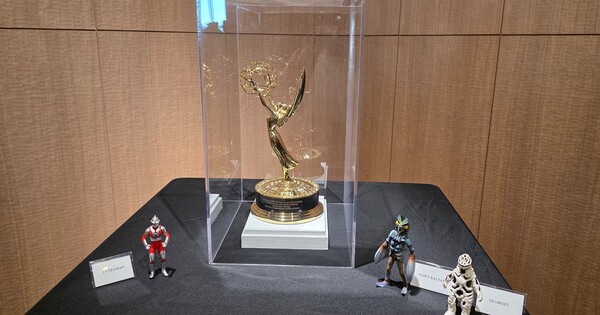

As an anime fan, you’ve probably heard of Ultraman at least once. His cross-armed Ultra Beam became a symbol of justice for Japanese children everywhere, many of whom grew up to shape the anime industry. Hideaki Anno, the creator of Neon Genesis Evangelion, submitted his own fan-film in university and essentially made TV original anime viable with his take on a darker Ultraman. I myself got into the franchise formally with Shinji Higuchi‘s Shin Ultraman, a feature-length reimagining of the original series written by Anno. But who came up with the original idea, and what made him so influential? While making the live-action adaptation of Look Back, director Hirokazu Kore-eda was tasked with finding out in an upcoming documentary by Tsuburaya shown at Japan House LA: The Origin of Ultraman.
 |
 |
Koreeda was admittedly an odd choice to head this project. He’s never done tokusatsu before, and he’s only recently dabbled with sci-fi in his recent feature, Sheep in the Box. His bread and butter has been humanistic stories exploring found family (Shoplifters), poverty (Nobody Knows), and memories (After Life). That’s why I’m personally excited for his version of Look Back, which creator Tatsuki Fujimoto has praised for being “able to bring out the atmosphere that the original had while giving it a real sense of authenticity.” But it turns out Ultraman might have instilled those values in the first place. As a kid of the 60s, he was there from the beginning, and it shaped much of his childhood. What really struck him was how the series tackled complex issues in a way kids could understand. The creators would describe this as sneaking vegetables into chocolate.
His favorite kaiju, Gomora, was actually a peaceful creature forcibly dragged out of its natural habitat to be displayed as a trophy for the Japan World Exposition. When they break free out of anger, and Ultraman has to fight, he couldn’t help feeling sorry for the kaiju. This story brought to light the Expo’s contradictory mission of representing human progress while actively polluting the earth. He would continue to follow the franchise as it got more morally complex, with his favorite entry being Ultraseven. One episode where Atlanteans get mistaken as aliens depicts humans as the invaders instead, leading to a pretty bitter victory.

Koreeda wasn’t the only one who rated Ultraseven highly: Shannon Tindle and John Aoshima (Co-Directors of Ultraman: Rising) based their protagonist Kenji Sato on Dan Moroboshi. Whereas previous Ultramen were inherently selfless, Dan had to let go of his selfishness to grasp his power. This character arc being more similar to American superhero origins made it easier to pitch in their own film, but even they didn’t expect to be offered an official entry in the franchise. While the two directors grew up watching Ultraman Tiga, they tried to write a story that was inspired of it without coming off as a rip-off. But Netflix recognized they were fans when reading their script, as they were already producing a CG Ultraman anime. With a pre-established relationship with Tsuburaya, they suggested instead making an official Ultraman film. The result was an American-Produced entry that won the franchise an Emmy.
Plenty of other famous names show up in this documentary. Hideaki Anno famously cast himself as Ultraman in his student film, and his Studio Khara incorporates his transformation sound in their logo. Unlike animation where he accepts that it’s all drawings, the way tokusatsu would create fantastical worlds physically always enamored him. This is something that also fascinated Drive director Nicolas Winding Refn. The skintight costumes, makeshift props, and pyrotechnics over miniature sets gave it a stagey appeal reminiscent of a glam rock concert. Hideo Kojima, the creator of Metal Gear Solid, links its creation to the space race and anti-war military otaku. To him, a giant astronaut that shoots lasers scratched the same itch that planes and tanks did to his parents’ generation.
But the one that gushed most was someone Koreeda talked to in person: Pacific Rim Director Guillermo del Toro. Being the one that formally introduced the term Kaiju into Hollywood, he had a lot to say regarding its role as TV’s first Kaiju franchise. What makes Kaiju fascinating as movie monsters is their depiction as forces of nature. Godzilla was famously an allegory for the atomic bomb, but the destruction caused by many kaiju was quite familiar to a country prone to natural disasters like Japan. He explains there’s something divine to a Kaiju’s towering presence. When something that large is right at your doorstep, all your daily concerns go away. So which visionaries made Kaiju the face of natural disasters, and who conceived of our alien protector? We have 3 names to thank: Eiji Tsuburaya, Tetsuo Kinjo, and Tohl Narita.
Much like Osamu Tezuka is to manga, Eiji Tsuburaya is considered the “Father of Tokusatsu”. An early adopter of film compositing and miniatures, he made a name for himself in the 50s and early 60s as the special effects director for TOHO‘s Kaiju films, including the first 3 Godzilla films. Monster movies were already a staple in Hollywood after King Kong, but they often relied on time-consuming stop motion animation. While personally a fan of the original King Kong, he knew a film industry like Japan would take years to get the same result. So instead he pioneered suitmation, where actors in rubber suits would walk on miniature sets. Rubber Dinosaur Suits had been used in early sci-fi films (One Million B.C.), but they were considered a cost-cutting measure for how goofy they looked. By filming from lower angles at a higher framerate and compositing real crowds running on sets similar to the miniatures, what was once considered a cheap effect suddenly became more convincing than any monster movie before.
For over a decade, more and more Japanese audiences would come to see what new Kaiju film was out in theaters. But even when the first Godzilla came out, TV had already become a staple of their media diet. By the 1960s, Japan became the first country to develop an HDTV system. Tsuburaya knew that if he could bring his kaiju spectacle to kids at home, it could change Japan’s entertainment industry forever. His first attempt at this was Ultra Q, a sci-fi anthology similar to The Twilight Zone. While initially committing to more supernatural stories, executives at Tokyo Broadcasting System sensed the potential to embrace a monster-of-the-week approach. The resulting series brought monsters from the movies to the silver screen. There was a new kaiju every week that children memorized and pretended to be at the playground. There was just one question: can we make the heroes just as marketable as the monsters?
This is where writer Tetsuo Kinjo comes in, pitching the idea that would later become Ultraman. It started from a more practical concern: how many times can regular folks come across monsters before it gets silly? Rather than regular people meeting monsters week to week, he suggested a disaster response team proactively seeking out kaiju threats: the SSSP (Science Special Search Party). Also since the Space Race was all the rage during the 60s, their protector would come from across the stars. An alien as tall as the kaiju would fuse with a human host, learning about humanity as one of them. The result was a more marketable Kaiju series to kids. Godzilla might fight a meaner kaiju if needed, but Ultraman was unequivocally the hero. Kids didn’t just wait for the new monsters, but also the towering defender and the cool adults by his side. So who do they have to thank for how he looked?
Enter the last member of our trio: Tohl Narita. He conceived Ultraman‘s design as a deity from outer space. His shining silver color scheme was reminiscent of astronauts: a symbol of hope during the space race. But his minimalist features feel beyond human. Kairi notes that his father found the human nose and ear to be visually unappealing, so he used a single vertical line to symbolize both. Meanwhile, his half-formed smile was inspired by both Greek and Buddhist statues: a stoic smile that emphasizes composure over enthusiasm. Part of this was also based on how Miyamoto Musashi smiled in the face of danger, but the layer of restraint in his permanent smile combined with his overall size channels the aura of religious monuments.
In contrast, Narita’s philosophy when creating kaiju was that they had to be presented as something natural rather than mutated. Children could tell when an animal looks too big or when it seems to be living in pain. So he laid out three design rules: “Don’t simply make existing animals bigger. If combining animals with humans, they mustn’t deform. And lastly, don’t make kaiju look unpleasant with blood or injuries.” The idea was to make creatures that were threatening, but also majestic. As his son, Kairi Narita, says in the documentary, “Children must be shown something real.”
The combined work of these three creatives and dozens of crew members that followed led to a franchise that’s lasted 6 decades. Hiroko Sakurai, the actress for SSSP’s sole female officer Akiko, recounted how Hajime Tsuburaya, Eiji’s eldest son, comforted her for missing out on a date for a night of shooting by saying they’ll still be celebrated 30 years from now. 60 years later, she still works at Tsuburaya Productions. That kind of enduring love isn’t created in a lab, but earned over generations. The results speak for themselves, as that love is visible in other mediums like anime. From DAN DA DAN and 20th Century Boys to Gintama and School Rumble, they all in some way repay the love they felt growing up with Ultraman through parody or basing part of their lore on it. And with Ultraman: Rising winning an Emmy, hopefully it continues to inspire future generations.
>

Dodgers mailbag, Part 1: Predicting roster expansion candidates, postseason rotation

Ridley Scott on The Shining’s Influence on The Dog Stars

Broadway Musical ‘Six’ To Close In January
-

 movies3 months ago
Search For Canadian TV Actor Stewart McLean Now Homicide Investigation
-

 Fashion9 years ago
These ’90s fashion trends are making a comeback in 2017
-
Fashion9 years ago
According to Dior Couture, this taboo fashion accessory is back
-
Fashion9 years ago
Model Jocelyn Chew’s Instagram is the best vacation you’ve ever had
-
Fashion9 years ago
Emily Ratajkowski channels back-to-school style
-
Fashion9 years ago
9 Celebrities who have spoken out about being photoshopped
-
Fashion9 years ago
Your comprehensive guide to this fall’s biggest trends
-

 Anime3 months ago
Rurouni Kenshin: Hokkaido Arc Manga Takes 1-Issue Break – News