
Cho Yeo-jeong.


Six, the Tony Award-winning Broadway musical that uses modern pop styles to retell the stories of Henry VIII’s wives from the women’s point of view, will close on January 3, 2027, after nearly six years and 2,178 performances.
The closing was announced today by producers Kenny Wax, Wendy & Andy Barnes, George Stiles, and Kevin McCollum.
The musical by Toby Marlow and Lucy Moss, co-directed by Lucy Moss and Jamie Armitage with choreography by Carrie-Anne Ingrouille, was the first new musical to open on Broadway following the 2020 Covid shutdown. With previews that began on September 17, 2021, and an opening night on Sunday, October 3, 2021, Six has become the longest running show to ever have played the Lena Horne Theatre (formerly the Brooks Atkinson Theatre).
Capitalized at an initial $5 million, Six recouped the investment in December 2021, a quick turnaround due to the relatively low capitalization, moderate weekly operating costs of an estimated and approximate $469,000 and ticket-buyers enthusiasm for a critically lauded – and decided buoyant – musical loaded with fine, fun songs and clever premise extremely well executed. (Read Deadline’s original review here.)
In recent months, though, the Broadway show’s box office has been dwindling. For the week ending August 23, the show grossed $463,638, a big drop from the $600,000-$700,000+ range of its peak last year. During that August week attendance was at just 60% of the Horne’s capacity.
After premiering at the Edinburgh Festival Fringe in 2017, Six opened in the West End in January 2019, then began performances on Broadway in February 2020 before its interruption by the shutdown. The musical returned to the then-Atkinson after the closings lifted in the fall of 2021.
The London production continues to run, as do tours in the U.S., the UK and Australia. Having previously completed runs in Amsterdam, Auckland, Barcelona, Berlin, Dublin, Düsseldorf, Frankfurt, Groningen, Las Vegas, Manila, Munich, Nagoya, Osaka, Seoul, Shanghai, Singapore, Tokyo, Toronto, Trieste and Zurich, Six returns to China later this year on a 12-week tour. A new Spanish-language production opens in Madrid this September.
A live capture film titled Six The Musical Live!, recorded at the Vaudeville Theatre, London, with the original West End cast reprising their roles, was released by Universal Pictures Content Group in the UK and Ireland last April and in the United States and Canada on August 14.
The Broadway production currently features Khaila Wilcoxon as Catherine of Aragon, Chloe Tucker Caine as Anne Boleyn, Natalie Paris as Jane Seymour, Olivia Donalson as Anna of Cleves, Aimie Atkinson as Katherine Howard, and Stephanie Jae Park as Catherine Parr.
An original Broadway cast recording was released in 2022 and earned a Grammy Award nomination for Best Musical Theatre Album.
The Broadway production was nominated for eight 2022 Tony Awards, including Best Musical, Best Original Score, Best Direction of a Musical, Best Choreography, Best Orchestrations, Best Costume Design/Musical, Best Lighting Design/Musical and Best Sound Design/Musical. The show won in the score and costume categories.
>
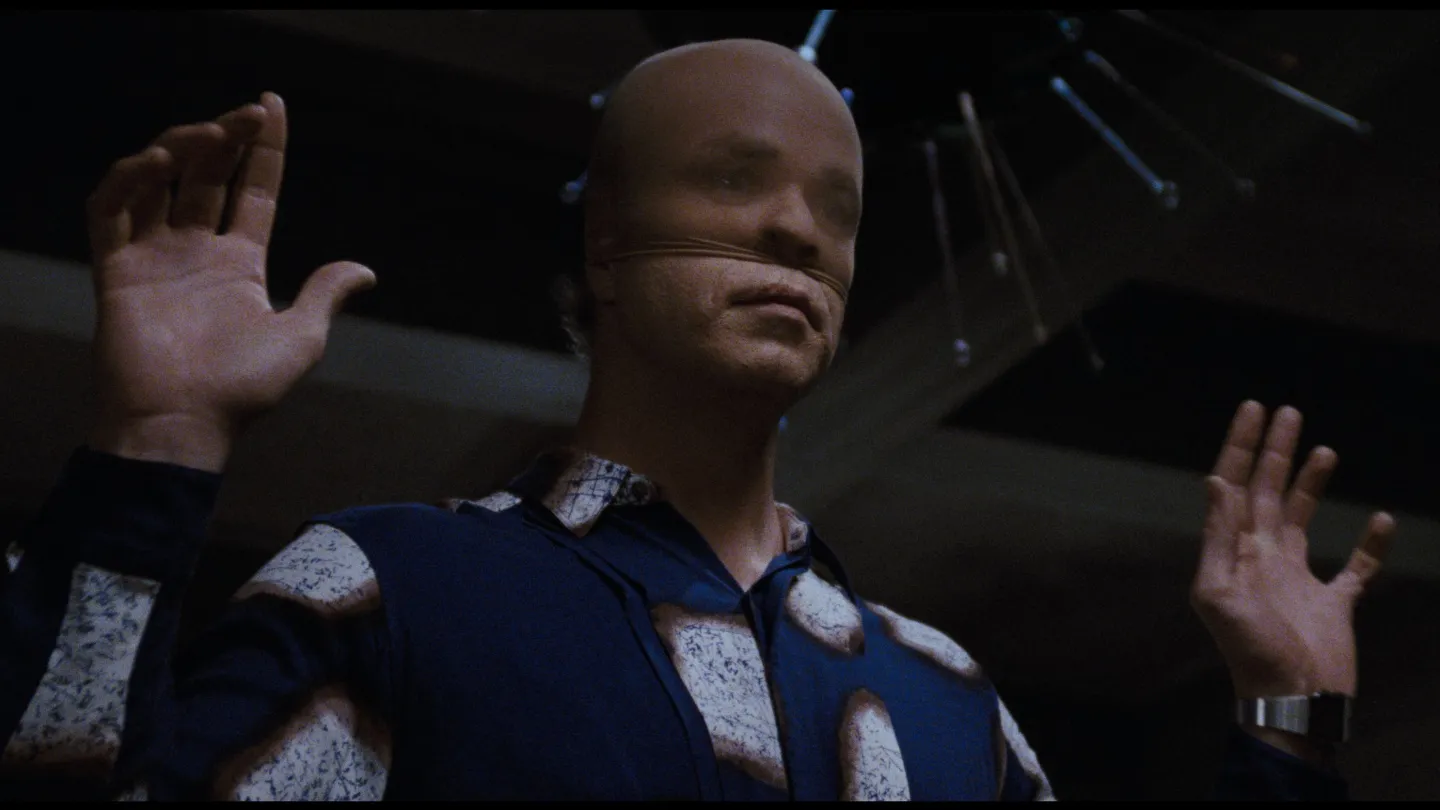
Canal Plus’ StudioCanal on Thursday unveiled the global launch of catalogue label StudioCanal Classics to further bolster “its ambitious editorial strategy across the StudioCanal catalogue, which is one of the most prestigious film libraries in the world.”
It boasts more than 18,000 titles, making it “the largest library outside the U.S., spanning 100 years of film history,” StudioCanal highlighted. “Over the past seven years, StudioCanal has invested close to 25 million euros ($29 million) into the 4K restoration of nearly 1,000 classic feature films. StudioCanal’s restoration strategy gives both longtime cinephiles and the Letterboxd generation the opportunity to experience classics as they were meant to be seen – on the big screen.”
StudioCanal also noted that its territory footprint spans the U.K., France, Germany, Italy, Benelux, Poland, Australia and New Zealand, with the company also distributing via partners in Scandinavia and South Africa.
“StudioCanal continues to unlock the full value of its world-class catalogue through a dynamic and diversified exploitation strategy,” the studio explained. “An ambitious slate of prestige restorations brings iconic films to new audiences and is regularly showcased at leading international festivals, including Cannes Classics and Il Cinema Ritrovato. Supported by a dedicated international library sales team, every title benefits from tailored distribution and commercial opportunities across all media and markets.”
Among the theatrical releases from StudioCanal Classics has been Michael Mann’s Manhunter to mark the 40th anniversary with the release of a 4k restoration, Michael Mann’s Manhunter: The Final Cut. Developed in partnership with StudioCanal, the new restoration opened in U.S. cinemas on July 24. Following its debut at The Academy Museum of Motion Pictures in the U.S. last month. The restoration opens in U.K. cinemas on Sept. 25 September.
Similarly, to mark the 35th anniversary of James Cameron’s landmark sci-fi action classic, Terminator 2: Judgment Day will return to the big screen in 2D, 3D, 4DX and D-BOX, opening in theaters worldwide beginning on Thursday, Aug. 27.
Other StudioCanal Classics titles include the likes of Apocalypse Now, Basic Instinct, Paddington, Rambo, The Graduate and The Third Man.
>
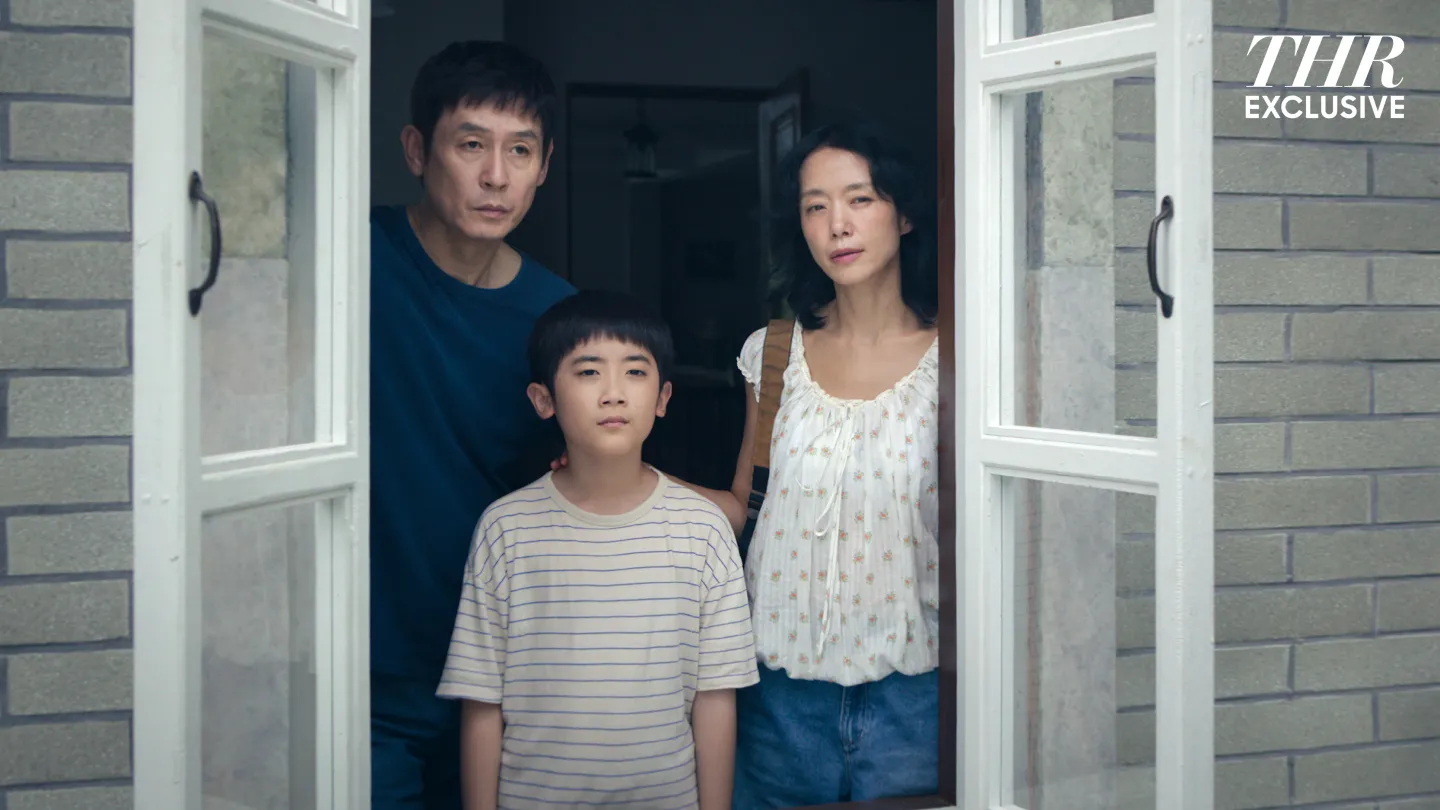
Lee Chang-dong takes his time. The lauded Korean filmmaker, approaching the 30th anniversary of his 1997 debut feature Green Fish, returns this fall with Possible Love, his first movie in eight years — the same gap between his previous two projects, 2010’s Poetry and 2018’s Burning. In his work, the wait proves not only worth it, but necessary — with character dynamics so richly, exactingly executed and the kind of narrative depth that can only come out of extensive marination. The stories sneak up on you. Like the man behind them, they’re in no rush and better for it.
Possible Love had been gestating for a decade. When Lee had the initial idea, he felt obsessed by it yet could not make the leap to actually bringing it to the screen. So far, so typical as far his methods go. But this subject posed a unique challenge to the director, one rooted in his own relationship to filmmaking — and once he figured it out, he made something unlike anything else in his oeuvre.
Cho Yeo-jeong.
The spark of Possible Love came out of a scandal of mass layoffs and their aftermath in Korea — specifically, violent state suppression of public protest. Lee saw the events foreshadowing a dark future for his country and maybe the world — changes in technology and wealth leaving workers behind. He wrote a screenplay, preemptively attaching two iconic Korean actors with whom he’s previously collaborated: Secret Sunshine’s Jeon Do-yeon and Peppermint Candy’s Sul Kyung-gu. They would reunite for this grand modern tragedy.
And then, Lee stopped. “I ended up shelving the project. I started to doubt what kind of meaning this held for me — to be showing the lives of these laborers through a dramatic film,” he says. “When it comes to the lives of people that suffer, I always ask myself: Am I worthy of telling this story? Do I deserve to tell this story? And how do I go about it so that I tell it in the right way?” The answer required him to look inward, to tell it as only he authentically could: Through the camera.
Jeon Do-yeon.
“When it comes to the pain and hurt, I believe that it has to be observed in a way that is adjacent to me as a filmmaker, for audiences to figure it out for themselves and to accept it,” Lee says. “If not, I cannot be candid.”
In this final version, co-written with Oh Jung-mi, Possible Love follows the recently laid off and traumatized Ho-seok (Sul) and his wife, the relentlessly hopeful Mi-ok (Jeon), as they encounter a filmmaker named Ye-ji (Parasite’s Cho Yeo-jeong) interested in depicting their plight for a documentary. Ye-ji embeds herself deeper and deeper into their lives, leading her and her wealthy businessman husband, Sang-woo (Zo In-sung), to develop a tenuous bond with them. (The film is not a remake of, or drawn from, Krzysztof Kieślowski’s Dekalog: Nine, as had been previously speculated. But Lee, generally inspired by the work of the Polish legend, sees them in conversation, with thematic overlap.)
Lee has expanded upon his earlier, unrealized portrait of a couple in crisis to craft a thorny study of two couples — one affected by brutal downsizing, the other leading a lavish lifestyle with seemingly everything at their disposal. It evolves into a sweeping and provocative examination of contemporary resentments, yearnings and, yes, possibilities. The movie world premieres at the Venice Film Festival next month and will be released by Netflix in U.S. theaters on October 23 before streaming November 6. It’s also been selected by as South Korea’s official submission for the best international feature Oscar.
Jeon with Sul Kyung-gu and Cho.
Netflix offered to sign on immediately after reading the script, according to Lee, and guaranteed the director artistic autonomy. “Netflix really had trust in the virtue of the screenplay as well as in myself as a filmmaker, and throughout the entire process of production and all of the steps of creating this film, I was given a near perfect amount of creative freedom,” Lee says. “This was my first time working with Netflix, but I will say that across my filmmaking career, this was the film that I felt most comfortable and most at ease with — which came as a surprise to me.”
The all-star Korean cast shares that sentiment. Here, they had the space to operate at the top of their game, and dug deep. “I have been an actor for quite a long time, and there comes a certain point in your career where you realize there are fewer projects that daunt you,” says Jeon. “Every time we were faced with a difficulty or challenge, Kyung-gu and I would look at each other and say, ‘Don’t you just love it? How often do we get these kinds of challenges nowadays? And how long will it be until we find ourselves on a production like this again?’”
Cho, Jeon and Sul.
***
Lee calls Mi-ok the heart of the movie. With her husband, Ho-seok, more reluctant to participate in interviews, she tells Ye-ji — and in turn, the audience — the story of their family, of scraping by in the aftermath of a seismic job loss. In Jeon’s radiant portrayal, however, she refuses to be defined by her struggles. “She strives to survive, and she is someone who will go to all ends to protect self-dignity,” Lee says. “She is someone who will constantly fight for her own freedom.”
“She carries an immense, very intense sense of anxiety in her,” Jeon adds. “I looked at it in the sense that it’s almost like she is constantly holding onto a ticking time bomb. We all have our own ticking time bombs, and that could lead to many different forms of expression. For Mi-ok, it’s all about hope. She wants to hold onto that hope.”
The film weaves a fascinating exploration of wealth and inequality through her vulnerability. She and Ho-seok get to know Ye-ji and Sang-woo, the disparity between their means made stark for the viewer. Mi-ok is drawn to what they have — not even materially, necessarily, but in the ease and openness they present. What is it even possible for her to want, when she looks in Sang-woo’s eyes or listens to Ye-ji’s tales of making art? It’s an intimate way for Lee to ask difficult questions — and wend his way toward an emotionally explosive climax, in a bravura single-setting final act.
Lee Chang-dong.
“I believe that our lives have exceeded that of discussing or exploring the issue of class — and I say that because we now live in a world where the gap is so extreme, so vast that it’s difficult to even call it class really,” Lee says. “The amount of wealth Sang-woo represents is something that we cannot even dare to fathom.”
When Lee returned to this project after initially shelving it, the state of labor had further deteriorated from where he started. “We are now facing a moment in time where labor itself may no longer exist,” he says. In Possible Love, the director works out how to talk about this, and what to say about such overwhelming inequality, through Ye-ji’s own arc as the movie’s storyteller. “Her attitude and her desires as a documentary filmmaker — in many ways, what we see in her is close to me,” the director says.
Yet the film’s firmest punch is packed in the despair and dignity of Sul’s performance, as a man coming to terms with how much he’s lost. The actor’s work is often silent, difficult to read, burning as slowly as a Lee Chang-dong script — which is to say, when it all clicks, watch out. “There’s guilt, there’s shame, there’s the sense of loss where you have completely lost this space where you were validated — the emotions that I had to embody as this character were very layered and complex,” Sul says. “To have those emotions explode, that was [something] that I was constantly worried about, concerned with throughout the overall process.”
Jeon with Zo In-sung.
Both Jeon and Sul describe Lee as a formative presence in their acting careers. For Jeon, there is a clear before-and-after with 2007’s Secret Sunshine, for which her wrenching turn won the Cannes Film Festival’s best-actress prize. “[Lee] allowed me to take a different path in my art,” she says. “After Secret Sunshine, I no longer approached my performances to satisfy the director or anybody else watching. I started asking myself: ‘Is this real? Is this what I really feel?’”
Sul has now worked with Lee six times — but Possible Love brought him right back to their first collaboration, and one of his first movies ever. “I’ve made many films since Peppermint Candy — I’m one of the more experienced actors in the industry in Korea,” he says. “But when we started shooting Possible Love, I found myself immediately transported to that first film of mine. I got to feel like I was a rookie again. I was back in those shoes. As actors working with Director Lee, it’s a huge challenge. However, when you see yourself on screen compared to your other projects, it’s so rewarding.”
Lee tells his actors not to worry about memorization, to “just talk,” to find the truth in every moment. He didn’t run many takes on Possible Love, though; he watched and learned as the characters came alive before him. It’s the way he’s been making movies for decades — with these very stars.
That history flows through every frame of Possible Love. “You could almost say that I created the characters with them,” Lee says. “We have this saying in Korean that roughly translates to: We shared the same heart. There were no words needed.” Only the camera. In Possible Love, that proved more true than ever.
Stay tuned for more exclusive features on this fall’s biggest festival-bound films.
>
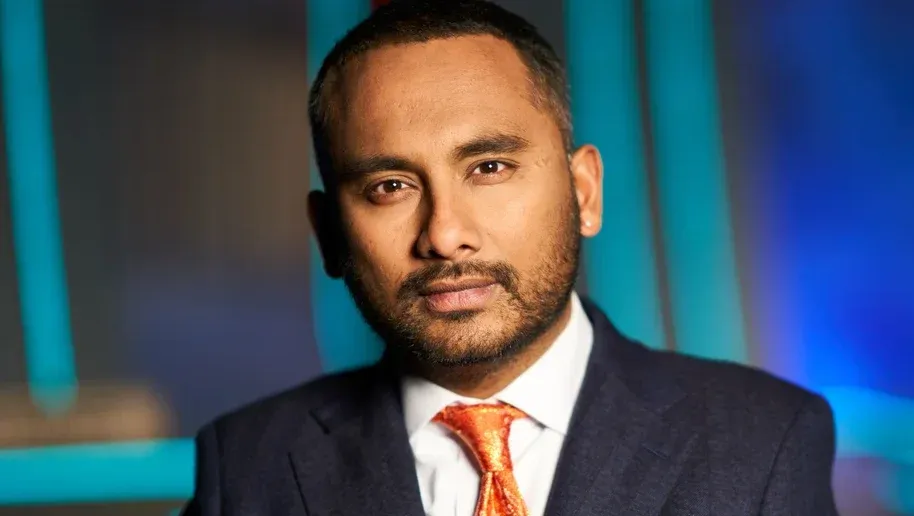
Amol Rajan, the BBC Radio 4 Today show presenter, has called for urgent action to save the UK national broadcaster from an existential emergency.
In a blistering speech at the Edinburgh TV Festival on Thursday, Rajan argued that the BBC is “screwed” unless there is a radical rethink of its funding and governance.
Rajan has worked for BBC News for a decade, but will exit the corporation next week to launch an online media venture, The Amol Rajan Connection. He will continue to host University Challenge, the long-running BBC quiz show.
In his valedictory address, Rajan attacked successive governments for mismanaging the BBC by repeatedly reviewing its operations without properly addressing the forces that are contributing to its decline.
“The phrase managed decline is far too generous,” Rajan said. “When it comes to the actions of British governments in recent years, there hasn’t even been any managing. I want everyone here, and beyond, to wake up to the reality of the BBC’s finances. This is the unvarnished truth.
“A recent Enders Analysis report showed that licence fee income has fallen by 28% in the past 15 years. The BBC has cut costs by 15%. It’s found £1.5 billion in savings, and is on target to find another £500 million. Revenues tumbling; costs rising. This equation cannot last. You cannot cut your way to growth.
“To understand how screwed the BBC is, you just have to understand compounding. Last year, 539,000 fewer people paid the Licence Fee. The year before, it was 300,000 – massive even then. What if this year, the number is 800,000?”
Rajan said this “catalogue of accelerating decline” is a “foreseeable” emergency, which is now resulting in chastening content and staff cuts.
“When it comes to the BBC, we have not had ‘benign neglect.’ We have had a kind of ‘malicious neglect,’” he said. “In the case of the BBC, the consequences are clear. These cuts are just the beginning; there is worse to come; the finances are much worse than most people even here realise.”
The former BBC News media correspondent continued: “What we need is political leadership … Make a decision. Stop dithering. This could not be more urgent.”
“I just cannot bear to watch as bureaucratic inertia, witless pablum, and unforgivable dithering and delay cause a noble institution to rot and decay, not with a bang, but a whimper. Of course the BBC makes many errors; but keep these in proportion. Of course, some journalists among the thousands at BBC News have some biases, but keep these in proportion too.”
“I can’t believe I’m saying this, but I actually have more respect – intellectually if not morally – for the Defund the BBC crowd who, though I disagree with their position intellectually, at least have a position with which to disagree.”
The BBC is currently in talks with the government over its next charter, which will establish its funding and operating model for many years to come. In other words, it is the ideal time for radical thinking about the BBC’s future.
Rajan threw his weight behind one solution: Turning the BBC into a mutual that is owned by the British public who pay a licence fee in exchange for shares in the corporation.
“Under the mutual model, it actually would belong to all of us. If run properly, like all the best mutuals, the BBC would be tasked with growing revenue. And if some portion of it was available to the right outside investors, the BBC could raise capital that could either be reinvested for the long-term, as with many endowment funds, or deployed in pursuit of growth and a return on that investment.”
Rajan noted that Lisa Nandy, the culture secretary, has herself endorsed the idea of a BBC mutual. “What is it about actually being in a position of power to do something about your plans that stops British politicians doing those things?” he asked. “What is it about government that promotes process over action?”
Rajan will present his final Today show next Wednesday.
>


Search For Canadian TV Actor Stewart McLean Now Homicide Investigation


These ’90s fashion trends are making a comeback in 2017
According to Dior Couture, this taboo fashion accessory is back
Model Jocelyn Chew’s Instagram is the best vacation you’ve ever had
Emily Ratajkowski channels back-to-school style
9 Celebrities who have spoken out about being photoshopped
Your comprehensive guide to this fall’s biggest trends


Rurouni Kenshin: Hokkaido Arc Manga Takes 1-Issue Break – News