
Tech
TechCrunch Mobility: Elon’s admission | TechCrunch


Welcome back to TechCrunch Mobility — your central hub for news and insights on the future of transportation. To get this in your inbox, sign up here for free — just click TechCrunch Mobility!
Tesla earnings came and went, and much of it fell into the “we expected this” category. Investors seemed surprised by the $1.4 billion in free cash flow, which gave shares a brief bump, and revenue met or slightly exceeded expectations, depending on which batch of analysts you reviewed.
The earnings call, however, did deliver one eyebrow-raising moment that prompted readers (including some ex-Tesla engineers and other founders in the industry) to reach out to me with some schadenfreude-tinted prose. CEO Elon Musk admitted that millions of Tesla owners will need hardware upgrades to run a future, more capable version of its Full Self-Driving software that doesn’t require human supervision.
There are financial and legal implications for Tesla. As senior reporter Sean O’Kane wrote, Tesla owners with Hardware 3 cars have spent years bugging the company and Musk for a straight answer about whether they would be able to run this advanced version of Full Self-Driving — which, it should be noted, Tesla has not yet released or even proven it is capable of releasing. Tesla sold these Hardware 3 cars between 2019 and 2023.
Now, here is the kicker and it made me guffaw. Musk said the company would need to physically upgrade each of these vehicles, a feat that would require Tesla to set up microfactories in several major cities to service potentially millions of vehicles.
Microfactories? Yes, you heard correctly. This is not going to be cheap, and it could be one of the line items in Tesla’s capital expenditures budget, which it expanded to a whopping $25 billion this year.
A little bird

Senior reporter Sean O’Kane obtained (and verified) an internal memo sent by Redwood Materials founder and CEO JB Straubel that announced layoffs and a restructuring. (Thanks to the little bird who shared it.) Straubel is a former CTO of Tesla.
Techcrunch event
San Francisco, CA
|
October 13-15, 2026
The company laid off around 135 employees, or roughly 10% of its workforce, as it restructures to better accommodate its growing energy storage business. O’Kane later learned several executives have also recently left. Chief operating officer Chris Lister is retiring, and at least three other VPs have left in recent months, with the company telling TechCrunch there has been a focus on reducing layers of management.
Last week, I shared that a new autonomous hauler startup (think a cabless autonomous big rig) backed by Eclipse was about to break cover and announce a seed round, thanks to a little bird. Welp, it happened just days later.
The San Francisco-based startup, called Humble Robotics, raised $24 million in a seed round. Eclipse led the round, which also included backing by Energy Impact Partners and RedBlue Capital, a small early-stage VC firm that is surprisingly active.
As I had been told, Humble really is chock-full of Silicon Valley elite, including founder Eyal Cohen, who previously had stints at Apple special projects, Uber ATG, Pronto, and Waabi. He also founded Spark AI, which was acquired by John Deere in 2023.
Other execs include Drew Gray, who has a similarly AV-heavy résumé, including early days at Cruise, before jumping over to self-driving trucks startup Otto, which was acquired by Uber. After leaving Uber, he became CTO at Voyage, which was then acquired by Cruise.
A full-circle moment, cemented by this fun fact: Humble Robotics is in the same building Cruise was in right after the startup moved out of founder Kyle Vogt’s garage. I know, we keep circling back to 2016.
Except it’s not 2016, and Cohen and Gray talked to me about how much has changed since then, why this is the time to launch an AV startup, and where the industry is headed. Stay tuned for that story next week.
Got a tip for us? Email Kirsten Korosec at kirsten.korosec@techcrunch.com or my Signal at kkorosec.07, or email Sean O’Kane at sean.okane@techcrunch.com.
Deals!

Lyft stuck to the North American market for much of its history, while Uber took a global, expand-at-all-costs strategy. Lyft has been trying to catch up since last year when it bought German multi-mobility app Freenow from BMW and Mercedes-Benz Mobility for about $197 million in cash.
Now it’s acquiring ride-hailing app Gett’s U.K. business. Lyft says the deal will give it the majority of registered black cab drivers across Greater London on the Lyft platform. The company didn’t disclose the terms, but Calcalist reported it was $55 million.
The company is also building out other means of transport in the region, including its recently renewed partnership with Serco to provide the bikes and stations for Europe’s bike-share system Santander Cycles. Lyft is also planning to start testing autonomous rides in London with Baidu later this year.
Other deals that got my attention …
A&K Robotics, a Vancouver, Canada-based maker of autonomous vehicles for airports, raised an $8 million CAD Series A round led by BDC’s Industrial Innovation Venture Fund and Vantage Futures.
Decade Energy, which provides power infrastructure at logistics depots, raised €22 million in funding led by Eiffel Investment Group and SET Ventures, along with existing investors.
Reliable Robotics, a Silicon Valley startup developing autonomous systems for aircraft, raised $160 million in a round led by Nimble Partners, existing backers Eclipse, Lightspeed, Coatue, and Pathbreaker Ventures, and new investors Island Green Capital, Socium Ventures, AE Ventures (a strategic partner of the Boeing Company), RTX Ventures, Presidio Ventures (Sumitomo Corporation), UP.Partners, KAS Venture Partners, What If Ventures, Calm Ventures, Gaingels, and Mana Ventures. History lesson: Co-founder and CEO Robert Rose had a brief stint at Tesla where he was senior director of Autopilot and helped ship that first iteration in 2015.
PlusAI and blank-check company Churchill Capital Corp IX terminated its SPAC merger deal due to market conditions.
Porsche is selling its stake in the Bugatti Rimac joint venture, which it formed in 2021, as well as electric-vehicle maker Rimac Group. Porsche, which holds a 20.6% stake in Rimac and a 45% stake in the joint venture, is selling to HOF Capital. Financial terms weren’t disclosed.
Notable reads and other tidbits

Einride is adding 75 of its electric heavy-duty trucks to Amazon’s Relay freight network as part of a deal that gives the Swedish startup a toehold in the e-commerce giant’s operations.
Ford and Chinese automaker Geely reportedly held talks about extending a European tie-up into the U.S., the Wall Street Journal reported. The implications, of course, would be Chinese vehicles entering the U.S. market. But it sounds like talks have stalled, leaving this consequential deal in limbo. Bloomberg reported that Ford has denied these claims.
Porsche is adding another EV to its lineup. The Cayenne electric coupe will come to market in late summer. There’s some interesting data in my article on why this one might be a winner for Porsche.
The first customer-ready Rivian R2 SUVs rolled off the production line at its factory in Normal, Illinois, just days after it was hit by an EF-1 tornado that tore off part of the roof. Founder and CEO RJ Scaringe said Rivian doesn’t anticipate any delays to the R2, which are expected to reach customers in June.
One more thing …

As diligent readers of this newsletter know, I test-drive a fair number of vehicles, and sometimes they are not EVs. Take the Aston Martin Vantage Roadster, for instance. I was anxious to get into the roadster, not just because this $205,000 chiltern-green machine is sleek, powerful, and a convertible. I wanted to test the Apple CarPlay Ultra, the next-generation infotainment system that projects iPhone content to the vehicle’s screens (including the instrument cluster) and integrates vehicle controls like the radio, performance settings, and climate. CarPlay Ultra first launched in the Aston Martin, which isn’t exactly easy to get my hands on.
My first experience with Apple Ultra CarPlay last summer was mixed. It was great — when it worked, but it often didn’t. The problem seemed to be tied to a bug that showed two versions of the vehicle in the Bluetooth settings.
This time around, the setup was instant and it never glitched. Hooray. And it always worked. This really matters for Aston Martin, which for years was stuck with Mercedes-Benz’ old COMAND system. (Mercedes ditched that system in 2018 for its new MBUX one).
When you purchase through links in our articles, we may earn a small commission. This doesn’t affect our editorial independence.
>
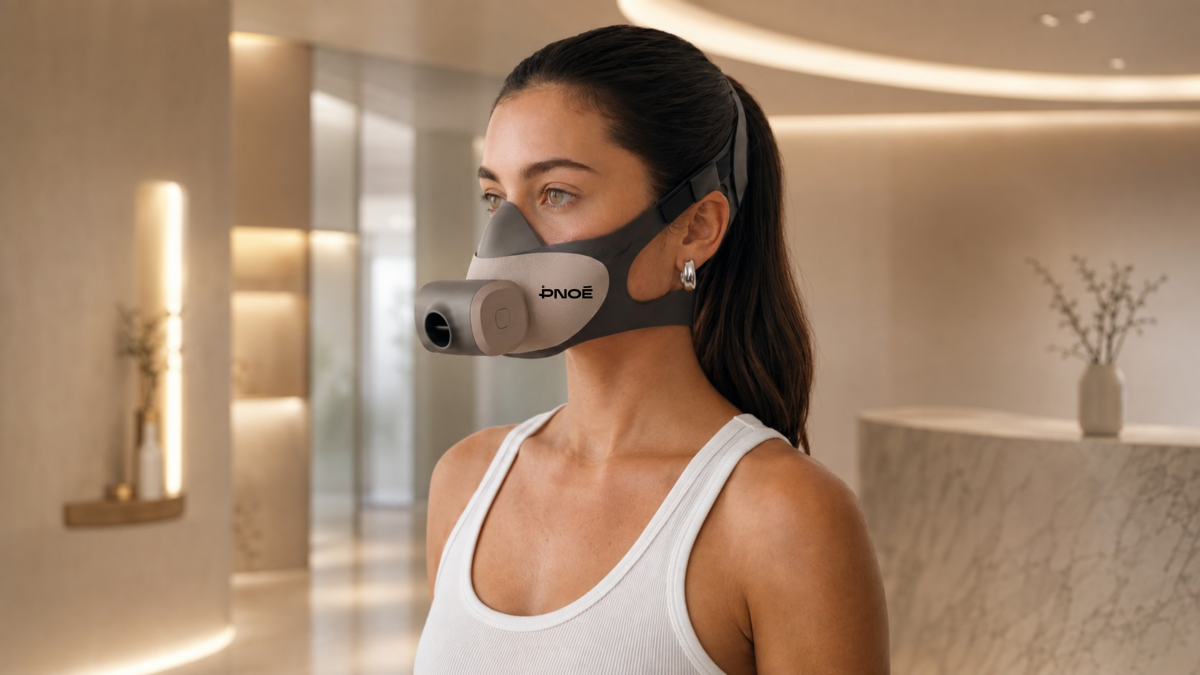
At first glance, the newest device from PNOĒ looks like something a comic-book villain might wear. The mask, which covers the nose and mouth and straps around the back of the head, bears more than a passing resemblance to the one worn by Bane, Batman’s hulking nemesis. But its purpose is far more benign; it measures how much oxygen you consume and how much carbon dioxide you exhale, then turns that data into advice about how to eat, train, and, the company hopes, live longer.
PNOĒ, which is based in Malden, Massachusetts, and has operations in Athens, Greece, is preparing to launch the PNOĒ 2.0 on October 1. The big change from its current device is that users can administer the test themselves. According to co-founder and CEO Apostolos Atsalakis, someone can walk into a gym, “just wear the mask, push the button, sit down,” and breathe for eight minutes. “That’s it. It’s that easy,” he said recently, talking with this editor over a Zoom call from the company’s Athens location.
That matters because PNOĒ’s current device requires a trained operator, which limits where it can be used. A self-serve version could open the door to fitness centers without dedicated staff and potentially even pharmacies, Atsalakis said.
The science behind PNOĒ isn’t new. Metabolic testing, which analyzes the gases in a person’s breath to gauge how their body produces energy, has been around for more than a century. For decades, it has been the gold standard for measuring VO₂ max, the maximum amount of oxygen the body can use during exercise and a widely used measure of cardiorespiratory fitness. But the tests have traditionally required bulky, expensive equipment found mainly in sports labs and hospitals, which is why they’ve largely been the province of elite athletes and executive wellness programs.
What 10-year-old PNOĒ promises is the same accuracy in a portable package, paired with software that translates the results into recommendations. “We made it accessible to everyone,” Atsalakis said.
The company says its test captures 23 biomarkers, including (beyond measuring VO₂ max) one’s resting metabolic rate (how many calories the body burns at rest), and metabolic flexibility (how well the body switches between burning fat and carbohydrates). Atsalakis argues that these metrics answer questions that blood tests can’t, such as how many calories a person needs or how they should train.
The timing is good for PNOĒ. VO₂ max has become a buzzword among longevity enthusiasts, thanks in part to research linking higher cardiorespiratory fitness to lower mortality. Atsalakis calls VO₂ max the strongest predictor of human longevity, and he sees his company’s data as a kind of scorecard for the booming wellness industry.
The new device is smaller and more compact than its predecessor, with fewer parts, which Atsalakis said makes it more reliable. It was designed with Milan-based Design Group Italia over what Atsalakis described as “a lot, a lot, a lot of iterations,” since a self-administered metabolic testing device hadn’t been done before.
It also addresses a question that post-pandemic users are likely to ask: who wore it last? The answer: it doesn’t matter, as the electronics detach from the silicone mask and straps, so multiple people can share the costly hardware while each user keeps their own mask.
For all its clinical ambitions, PNOĒ is careful about what it claims. The device isn’t cleared by the U.S. Food and Drug Administration, and Atsalakis said that “we do not provide medical recommendations.” Instead, PNOĒ considers itself a wellness device. “It’s like a body composition device, like a scale,” he said. “A doctor cannot prescribe medication based on our results.”
That could change down the road. Researchers have long explored whether compounds in human breath can signal diseases such as cancer, and Atsalakis believes the company’s growing trove of data could eventually help it flag health issues. But he acknowledged that full diagnoses are “definitely a couple of years away,” with regulatory hurdles likely stretching that timeline further. “We’re not there yet,” he said.
PNOĒ traces its roots to Atsalakis’s PhD work in sensing technologies at the University of Cambridge, when wearables were taking off and he became fascinated by what the breath could reveal about the body. He co-founded the company with Panos Papadiamantis, a childhood friend who is now the company’s chief product officer.
The startup went through Y Combinator’s Winter 2019 batch, back when “longevity” was not yet the industry it is today. It has since raised about $22 million, including a recently closed $11 million round, from investors including 50 Years and Google Maps co-founder Lars Rasmussen, who is himself now based in Athens.
PNOĒ sells only to businesses, which then offer the test to their customers. Its clients include Equinox, where it’s available at almost all clubs, said Atsalakis, as well as Four Seasons hotels, Red Bull, the NBA, the Mount Sinai Health System, and the med spa chain Restore Hyper Wellness.
About 85% of its business comes from the U.S., which Atsalakis described as “by far the most advanced market globally” for longevity. The company is now expanding in Europe and, through partners, in Latin America and Asia.
Businesses pay a subscription ranging from $400 a month to more than $1,000, which covers the hardware, software, training, and marketing materials, a package Atsalakis calls a “business in a box.” PNOĒ also links its results to the services a business sells, so a gym or spa can recommend specific offerings based on a customer’s test. Many clients use the test during onboarding, Atsalakis said, positioning it somewhere between a full clinical workup and the estimates people get from their smartwatches.
That middle ground is increasingly crowded. Apple, Garmin, and Whoop all estimate VO₂ max from heart-rate data, while consumer devices like Lumen analyze breath to gauge fat and carb burning. At the high end, traditional metabolic carts remain the standard in labs and hospitals.
PNOĒ, which employs 110 people, says it recently turned profitable, while growing more than 100% a year. Atsalakis said the company plans to raise a Series B within the next six to 12 months as it tries to put its mask — Bane comparisons and all — in front of more faces.
When you purchase through links in our articles, we may earn a small commission. This doesn’t affect our editorial independence.
>
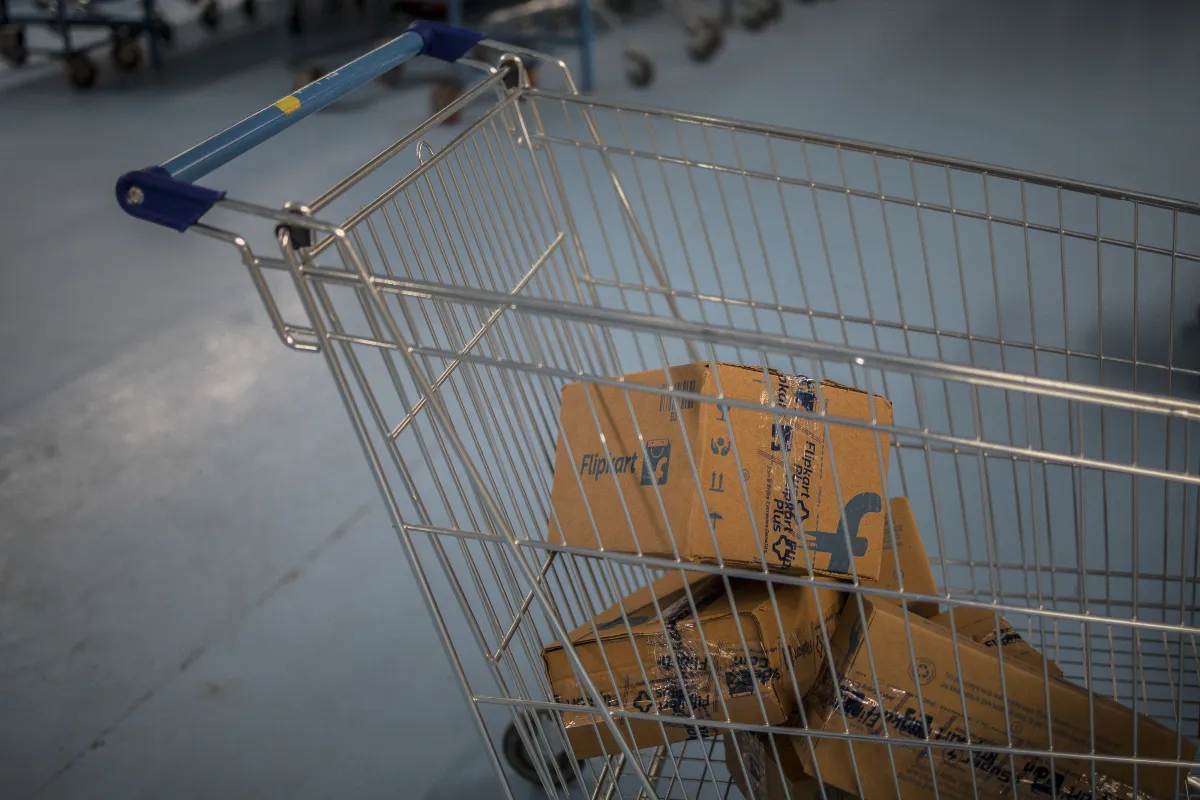
Google has started testing a way for shoppers in India to buy products from Walmart-owned Flipkart directly through Gemini and AI Mode, as the search giant looks to expand its AI services from product discovery into transactions.
Users in the test see a “Buy” button on select Flipkart product listings appearing in Gemini and Google’s AI Mode, which takes them directly to a Flipkart checkout flow without leaving the AI interface, according to people familiar with the matter and an experience seen by TechCrunch.
The early test is limited to some users and a small selection of products, including smartphones, electronics, and mobile accessories, the people told TechCrunch. Other users continue to see regular product listings from Flipkart in Gemini and AI Mode without the option to buy them directly from the AI interface.
Google plans to roll out the experience more broadly later in October, ahead of India’s festive shopping season, one of the people said.
The test comes as Google and rivals including OpenAI are adding commerce capabilities to their AI offerings, striving to move beyond answering shopping queries and recommending products to playing a more direct role in online purchases.
Asked about the Flipkart test, a Google spokesperson told TechCrunch the company is “always testing new features and experiences to help people discover and connect with businesses more easily.” The company regularly runs experiments and has no further details to share, the spokesperson added.
Google has separately been building technology aimed at making purchases possible through its AI services. Earlier this year, it introduced the Universal Commerce Protocol (UCP) as an open standard designed to let AI agents interact with retailers across the shopping journey, including checkout. Google said at the time that the technology would allow shoppers to buy eligible products through Gemini and AI Mode using a Google-hosted checkout experience. The company has since expanded UCP with other capabilities, including allowing shoppers to transfer items to a retailer’s site to complete a purchase.
The Flipkart test seen by TechCrunch appears different from the Google-hosted checkout experience the Gemini maker demonstrated earlier. It brings up a Flipkart-branded checkout flow when a user taps the Buy button. It is not clear what technology powers the test.
Earlier this month, Google said Flipkart was among the merchants partnering with it to bring what it calls “agentic” shopping experiences to consumers in India, but it had not disclosed details of the test or its rollout timeline.
Notably, Google has a financial relationship with Flipkart — alongside its technology partnership with the e-commerce company. It invested about $350 million in the e-commerce company in 2024 as part of a funding round led by the U.S. retailer, taking a minority stake.
India, the world’s second-largest internet market with more than a billion internet subscribers, sees Flipkart and Amazon compete fiercely for online shoppers. That competition intensifies further during the country’s festive season, when e-commerce companies roll out some of their biggest sales and promotions of the year.
For now, the Buy option is not appearing across all retailers surfaced by Google’s AI services. In the experience seen by TechCrunch, listings from rivals including Amazon appeared alongside Flipkart products but did not offer the option to purchase directly through the AI interface.
Flipkart did not immediately respond to an email requesting for comment.
When you purchase through links in our articles, we may earn a small commission. This doesn’t affect our editorial independence.
>

Hospitals’ use of artificial intelligence tools as they submit insurance claims led to an additional $942 million in healthcare spending over a two-year period, according to an analysis by the Blue Cross Blue Shield Association.
The BCBSA analysis found “a sharp increase in patients being documented as having complex conditions,” but argued there is a “clear disconnect between [medical] coding and treatment,” as there’s “no evidence of corresponding change in care delivered.”
The New York Times pointed the analysis as just the latest sign that AI is contributing to an increase in healthcare costs. While battles between hospitals and insurers over treatments and payments are nothing new, the NYT said the use of AI on both sides seems to be making it worse.
Dr. Shiv Rao, founder of AI startup Abridge, acknowledged that the use of AI could lead to “a horrible dystopic future nobody wants to live in,” with “bots fighting bots, agents fighting agents.” But Rao said it might also reduce tensions and cut costs.
And the BCBSA’s senior vice president Luke Chalker resisted characterizing the situation as a battle, claiming, “It’s not a war. It’s a completely one-sided blood bath,” with insurers on the losing side.
>
How to watch Reds vs. Blue Jays: TV channel and streaming options for September 27
Linda Nosková and Karolína Muchová build on a Czech tennis legacy, at Wimbledon and beyond

Craig Bellamy scores 1998 winner for Wales against Denmark
-

 movies4 months ago
Search For Canadian TV Actor Stewart McLean Now Homicide Investigation
-

 Fashion9 years ago
These ’90s fashion trends are making a comeback in 2017
-
Fashion9 years ago
According to Dior Couture, this taboo fashion accessory is back
-
Fashion9 years ago
Model Jocelyn Chew’s Instagram is the best vacation you’ve ever had
-
Fashion9 years ago
Emily Ratajkowski channels back-to-school style
-
Fashion9 years ago
9 Celebrities who have spoken out about being photoshopped
-

 Anime4 months ago
Rurouni Kenshin: Hokkaido Arc Manga Takes 1-Issue Break – News
-

 Anime3 months ago
HIDIVE to Stream English Dubs for The World Is Dancing, The Forsaken Saintess and Her Foodie Roadtrip in Another World, The Dangers in My Heart: The Movie Anime – News