
movies
Barry Diller Drops Bid To Acquire Full Control Of MGM Resorts

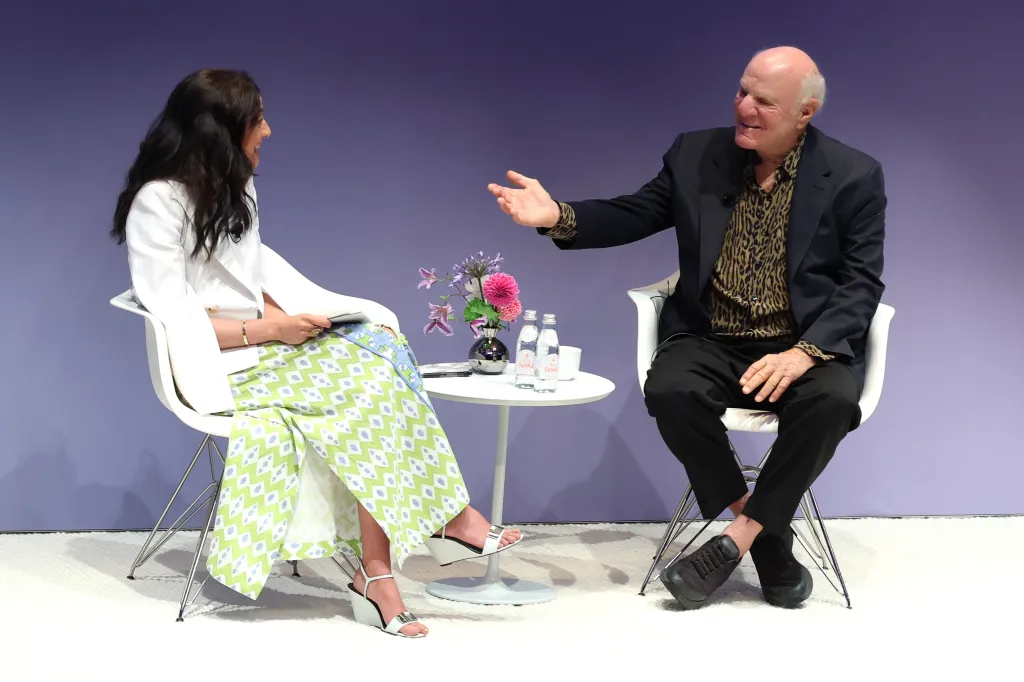
People Inc. Chairman Barry Diller has withdrawn a proposal to acquire full ownership of MGM Resorts.
The media company will retain its 27% stake in the casino operator, he said in a statement Wednesday, though it remains “open and interested” in potential strategic alternatives to the original transaction.
“There are lots of ingredients that go into a proposal of this kind on its way to completion,” Diller said. “We didn’t feel the mix was coming together in the way we had hoped and have decided not to pursue taking the company private at this time. What is undimmed is our belief in the future of MGM Resorts.”
As a minority investor, he added, People has “total confidence in both the management and the company’s prospects.”
Last June, Diller announced the bid, writing in a letter to the MGM Resorts board of directors that its shares were undervalued. Acquiring full ownership represented “a compelling opportunity to support MGM’s next phase of growth and help unlock its full value,” Diller said at the time.
Diller, who had significant tours of duty in Hollywood at Paramount and Fox before entering the digital media business, made an offer to buy Paramount before Skydance ultimately acquired it in 2025. He has indicated a willingness to buy CNN, which Paramount will soon control, though the network is not leaving the portfolio as of now.
People Inc. became the corporate name of what had been IAC (InterActive Corp.) earlier this year. IAC had acquired People magazine as part of a larger deal for Meredith, its corporate parent, which had bought the title when Time Warner was selling off its publishing business.
>
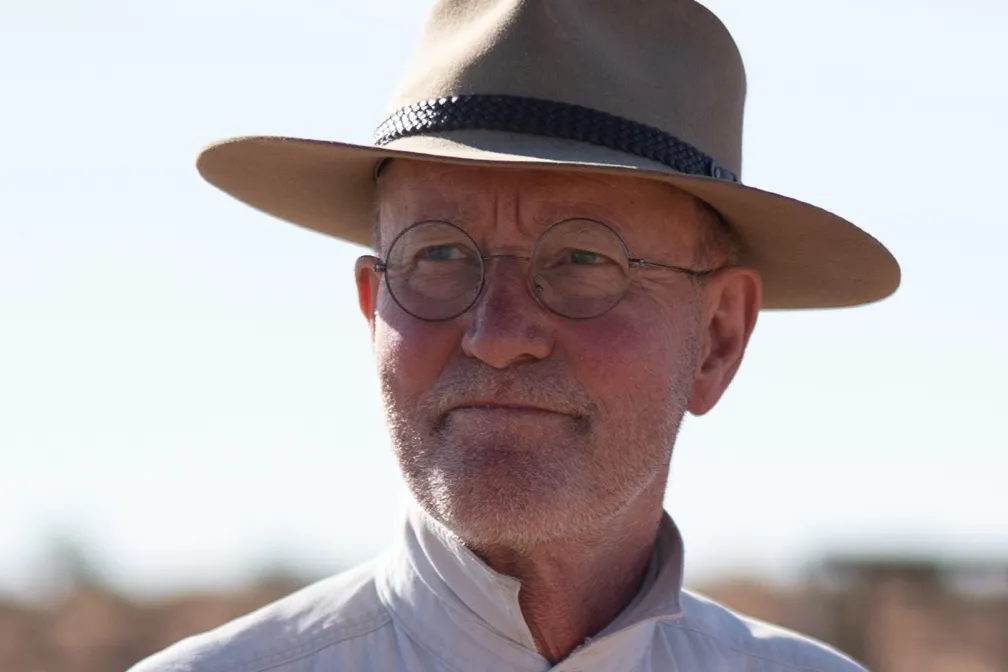
Tokyo International Film Festival (TIFF) has announced that Australian director Rolf de Heer will serve as president of the International Competition jury at this year’s edition of the festival.
De Heer’s 2022 film The Survival Of Kindness, which was selected for competition at the Berlinale, will screen in Tokyo as part of an Australia Spotlight, a special showcase of Australian cinema presented in cooperation with the Australian Embassy in Japan.
Based in Tasmania, de Heer has a career spanning more than 40 years and widespread international acclaim, starting with Bad Boy Bubby (1993), which won the Special Jury Prize and FIPRESCI Prize at Venice. Other early career highlights include Dingo (1991) with Colin Friels and jazz legend Miles Davis; The Quiet Room (1996) and Dance Me To My Song (1998), both selected for Competition at Cannes.
In total, four of his films have screened in Official Selection at Cannes Film Festival, including Ten Canoes (2006), which won the Special Jury Prize in Un Certain Regard.
Mid-career highlights also include The Tracker (2002), which also played in Venice competition and marked de Heer’s first collaboration with Australian Indigenous actor David Gulpilil; Alexandra’s Project (2003), which won best actress at San Sebastian for Helen Buday’s performance; The King Is Dead! (2012); and Charlie’s Country (2013), which won Gulpilil a Best Actor award at Cannes.
De Heer said: “For any of us attending the Tokyo International Film Festival, it is a privilege. For me, as a filmmaker, it is even more so. The more films I manage to make, the fewer films I manage to see, especially on the big screen.
“But as a part of this jury, I have the duty, the obligation, to see at least 15 films and talk about them with other filmmakers! And not just any old 15 films, but the 15 films in Competition, drawn from films made all over the world by all sorts of extraordinary filmmakers! And to do this in a city that plays host to one of the most formidable film cultures in the world! Can life ever get much better than this?”
Tokyo Festival Director Takeo Hisamatsu said: “We are delighted to welcome Rolf de Heer as President of the International Competition jury at the 39th Tokyo International Film Festival. With his distinctive perspective and unwavering commitment to filmmaking, de Heer has spent decades opening up new possibilities in cinema. We look forward to the fresh dialogue and discoveries that his wealth of experience and deep insight will bring to this year’s Competition and its diverse selection of films.”
Tokyo International Film Festival will take place October 26 to November 4, with the TIFFCOM contents market running October 28-30.
>
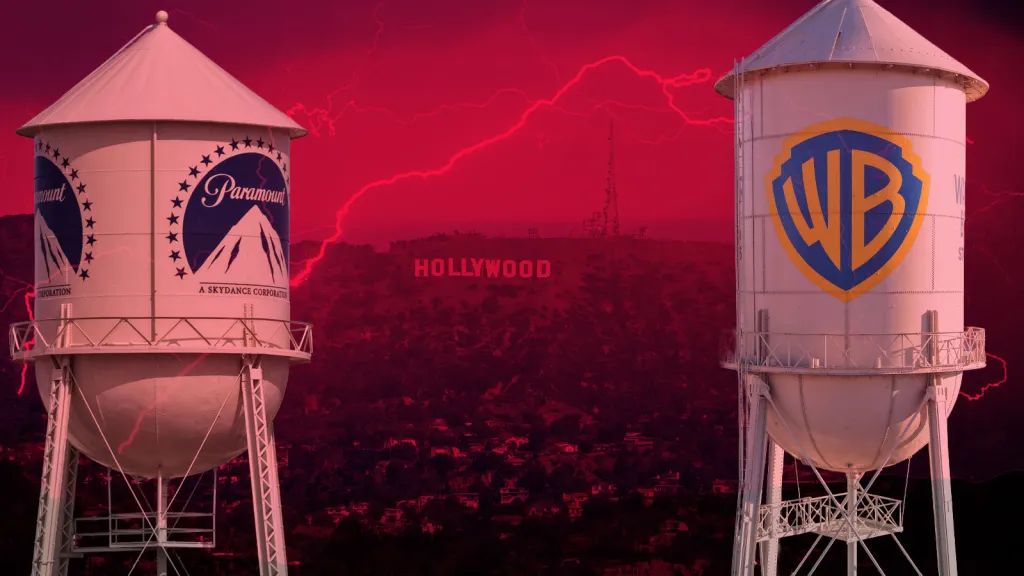
A Zoom call today with 500 senior Warner Bros. staffers about the Paramount-AGs settlement did little to dissipate the Mordor-like gloomy clouds over the Burbank, CA lot, to use a Lord of the Rings reference.
Today’s Zoom, which has been routine since Paramount won the bid for Warner Bros. Discovery, was led by WBD Studios Chief Operating Officer Simon Robinson, who is running point on the merger integration, as well as Chief Legal Officer Priya Aiyar, WBD Chief Comms Robert Gibbs and HR Boss Amy Girdwood. The four conceded that they didn’t have that much visibility into Paramount’s plans for the new company but indicated that the anticipation is for the deal to close in about 10 days, in line with Paramount CEO David Ellison‘s two-week timeframe provided on Monday.
The name and the leadership structure of the new company would likely be announced ahead of close, the executives reportedly said, though they weren’t clear as to when exactly that would be. We heard that Girldwood told leaders to take a moment to reflect on the great work accomplished during their tenures.
“It feels like a scramble,” one source said.
To say staffers were surprised by the attorneys general settlement Monday doesn’t really cover it.
“It was a big shock,” one person said. “If you were riding the rollercoaster, you felt like things were not progressing.”
Still, even if the settlement and its timing came as a surprise, the ultimate result seemed inevitable as WBD CEO David Zaslav has been hellbent on selling the studio. David Ellison’s takeover of the Albert, Harry, Sam and Jack Warner founded cinematic institution “was always bound to happen,” one insider exclaimed.
Zaslav, who is likely to walk away with more than $600M from the $110B merger, was not on today’s Zoom, we’re told.
The Ellison-run Paramount has said that the Warner Bros. acquisition will yield $6B in synergy savings, and that doesn’t necessarily translate into job cuts, rather inefficiencies in other structural areas (i.e. real estate portfolio, data servers).
But Warner Bros staffers aren’t buying that.
“We’ve been here before. We know what it looks like,” said one insider about the changeover in ownership of Warner Bros. over the last decade. It was only four years ago that AT&T dumped Warner Media into the hands of Discovery.
Myriad people inside Warner Bros. are cynical about the capping of severances and the fact that only a few at the top are bound for a windfall. There’s also ire over the pausing of contract renewals due to the merger, as well as irritable infighting between departments about theatrical failures this year; No one title has cleared $100M at the domestic box office — the highest-grossing movie stateside is Wuthering Heights at $84M. Home entertainment and data analytics divisions were none too happy about DC’s Supergirl tanking. With its $186M net production cost and a global gross of $126.3M, key staffers believe that DC chose the wrong comic-book character to adapt.
On the immediate horizon as the Paramount-Warner Bros. marriage comes together is the $125M Tom Cruise starring, Alejandro Iñárritu directed, Legendary-produced Digger, opening on Oct. 2. While domestic debut prospects are around $20M, Warners is hoping to get past any sour headlines about box office-to-cost ratios on the film, much like they did on One Battle After Another, as the 4x Oscar winning filmmaker’s latest Doctor Strangelove-like epic is being primed as an awards season contender; a chip that Paramount really doesn’t have on its year-end schedule.
The new Paramount could also inherit another awards contender and its first billion dollar grossing title since Skydance took over the Melrose Ave lot in Legendary/Warner Bros’ Dune: Part Three. That opens on Dec. 18.
At Paramount, the epic would fall into the arms of global marketing and distribution guru — and former WB senior ranking theatrical suit — Josh Goldstine, who led the Dune franchise across two movies to a $1.12B global gross and eight Oscar wins.
We’ve heard on the Paramount side, that it’s still TBD in regards to how the merger will handle duplications in marketing and distribution.
“There could be more fear on the Paramount side,” says one source in the know when it comes to marketing. How’s that? Goldstine will be back together with the team he built at Warners, meaning Dana Nussbaum and Christian Davin in global marketing and Creative Advertising EVP John Stanford.
There’s also a thick fog around those staffers who were bound to decamp from Warner Bros. proper in the previously planned Gunnar Wiedenfels led spinoff Global Networks.
Yes, Warner Bros. staffers are already putting themselves out there for other jobs. Some of them have already found new gigs — read: Former EVP of Comms Katie Martin Kelly. Prized by De Luca and Abdy, Martin Kelly high-tailed it for Netflix as VP of Comms as her contract ended, rather than wait for the Russian roulette the new conglomerate could bring. Former HBO Max EVP Originals Marketing Pia Barlow found a new job at Amazon MGM Studios as their Series Marketing VP, a gig that triggered WBD to sue the shooting site/streamer for poaching.
The deal closing would likely trigger more voluntary departures as many WBD executives had been waiting to cash out stock options post-transaction and had been bound by contracts that typically provide a way out in case of change of ownership.
“Since David Zaslav took control of Warner Bros, there’s just been thousands of jobs lost,” one former Turner publicist emphatically told us. “Those are jobs that the entertainment industry is never going to get back.”
And therein lies the ultimate piercing wound for any Warners or Paramount employee in the danger zone: The fact that there are not a lot of jobs out there is a big deal.
What’s more, adds a source, “People are very concerned about the survival of the Warner Bros. brand.”
Counters a senior ranking insider at the conglomerate to us: “There’s a feeling of relief from senior executives to junior staff about the possibilities that the new company can bring. They were very excited by David Ellison’s note.”
For now, Paramount is inheriting at least 39 Warner Bros. theatrical releases on the calendar dated between Oct. 2 this year and the end of 2028. That output reps 56% of what will be a current combined 70 features between the two studios. During the agita of Netflix and Paramount courting Warner Bros., the studio’s greenlighting of productions has been at a loud hum. Assumptions were made by some that Warner Bros. Motion Pictures would be in purgatory during the merger talk time, that filmmakers and reps would be wary of taking projects to them. That’s not really an option for content creators at a time when it’s a miracle for any major motion picture to get off the ground.
Something to look forward to: While a Barbie sequel hasn’t been greenlit yet due to constant talks with top tier talent such as director Greta Gerwig and stars Margot Robbie and Ryan Gosling, expect that to be one of the first orders of business in the new David Ellison-owned Paramount-Warner Bros.
Beams one optimistic Warner exec, “The new merger gives us the all the financial resources to compete on a level with the big streamers.”
>
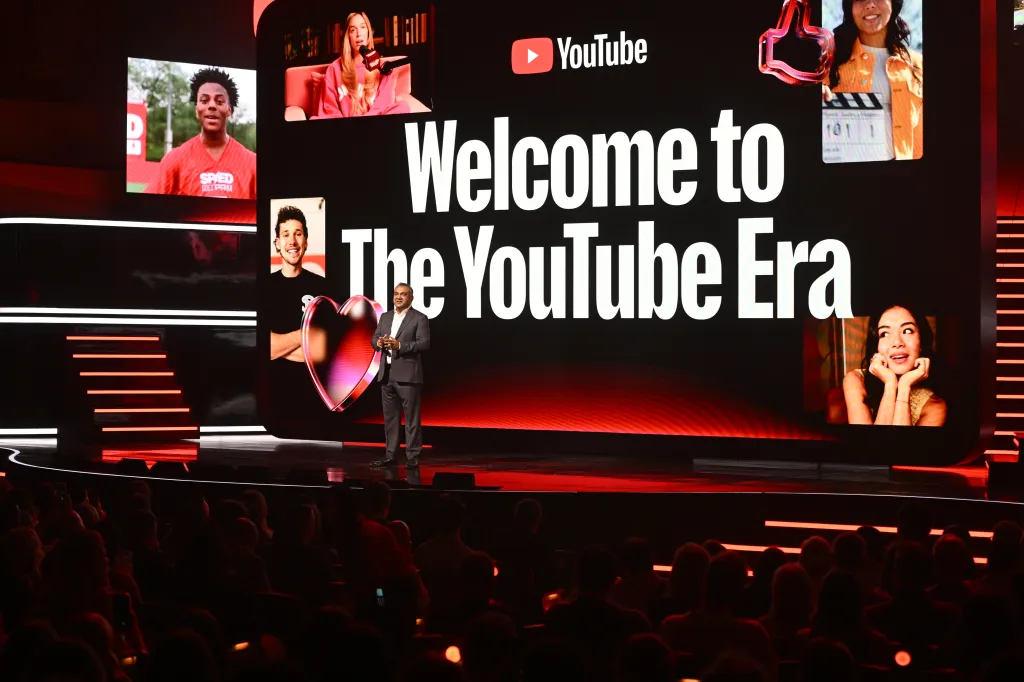
It’s been clear for a while that YouTube‘s biggest screen in terms of viewing is the TV – but don’t expect the tech giant to just sit back on the couch. On the contrary, it is embracing the idea of adding more and more counter-intuitive features to the living room experience.
At its annual Made on YouTube event Wednesday, the company unveiled nearly three dozen new features for creators, viewers and brands, the latest of what CEO Neal Mohan said were 3,000 new product updates in 2026 to date. Viewers on TVs can now post comments; view “posts” (still images and texts posted to channels by creators); and watch series on YouTube Shorts.
These interactive elements are a key reason why YouTube has topped the Nielsen charts for three years straight with, as of July, 14.2% of all viewing via a TV in the U.S., executives say. (Of course, being available for free doesn’t hurt either.)
“Consumption is moving away from being passive, and people want to be engaged,” Kurt Wilms, senior director of product management, YouTube on TV, told reporters after the New York event.
Asked to elaborate, he clarified, “I wouldn’t call it passive. I would call it, like, lean back. I’m watching it. Something maybe happens in the show. And then I’m like, ‘Oh, well, I want to read the comments, or I want to leave a comment myself, or, wait, what did she just talk about a different video? I wanna go to her channel and see.’ So now, instantly I become a leaned-in viewer. And so I think it flows, ebbs and flows between two. We don’t think of them as a hard line.”
Though its presence on landscape televisions seems counterintuitive, Shorts has been a runaway hit in the living room, with viewers watching more than 2 billion hours of its programming on TVs each month.
Even inside the company, the reaction to the notion of adapting features from the mobile and web experience is often, “Is this meant for the TV?” Wilms said. “But we’re hearing viewers ask for it and creators ask for it.”
The rollout of expanded capabilities is rooted in a mission to preserve the DNA of the first iteration of the site, which launched in 2005. (The first comment posted on “Me at the Zoo,” the first video ever uploaded, the company breezily noted on Wednesday, was a succinct “Lol.”)
“We didn’t want it to feel broken,” Wilms said of the app when it is viewed on a TV.
Although Shorts seems like a left-field stunner, in retrospect its success made perfect sense. “The first thing everyone was telling me about Shorts on the TV is there was no good way to watch this content with friends or family,” Wilms said. “The TV unlocked communal viewing for Shorts in a way that just wasn’t possible before.”
The strategy of “bringing all these content formats that you might not think would resonate with viewers on the TV” has been a particular focus over the past two years, Wilms said, citing gaming videos, podcasts and shorts. “We saw it again actually around the same time with video comments,” he recalled. Viewers told the company, “‘I want to read the comments on TV,’ and we were thinking, ‘Really?! You want to read the comments on the TV?!’”
While YouTube has not put numbers to it, Wilms estimated that the amount of viewers reading comments on TVs rivals the number doing so on the web. Similar to Shorts and comments, the Posts functionality resulted from consumer and partner research.
“It’s all born out of creator and viewer feedback,” he said. “And we’ve seen time and time again when we bring [features] to the big screen, they’re successful.”
Rather than bucketing viewers according to those who lean back and those who interact, Wilms says the company’s research shows a more blended experience.
“One of the things when we talk to viewers that we hear about a lot is, we call it modes – like, a viewer is in a mode,” Wilms said. “It might be, at night you want to use YouTube on your television as your home stereo and use it for music. Another mode might be you’re with your family and your kids, and you want to use YouTube as a way to watch with them. And so another mode that we’ve heard about is, ‘Oh, I don’t know totally what I want to watch, but I want to sit down and kind of get some quick bites, and so I go into this Shorts mode.”
Enter microdramas, the booming sector that has spawned a host of startup studios along with optimism that the major component of the Asian entertainment ecosystem will gain similar adoption elsewhere.
Microdramas “have been incredibly successful on YouTube,” Wilms said. “There are more than 6.5 billion views of this content on YouTube already this year. On TV screens specifically, microdramas are growing 90% year over year.”
Execs see more upside ahead. “Microdramas in particular, they’re fast paced, they’re action packed, they’re quick, and so in the industry as a whole, I think viewers are resonating to this type of content, so I assume it’s gonna continue to grow,” Wilms added. Overall, we see a lot of success of bite-sized content that could be personalized to your taste. …. People are seeing it as a place to spend breaks in their day.”
>

Henry Pollock: Northampton chief expects more players to work with promoters like Eddie Hearn as he lifts lid on negotiations | Rugby Union News

Drag Race’s Alyssa Edwards Claps Back at Ken Paxton for James Talarico Campaign

Chelsea Women 1 – 0 Austria Wien Women
-

 movies4 months ago
Search For Canadian TV Actor Stewart McLean Now Homicide Investigation
-

 Fashion9 years ago
These ’90s fashion trends are making a comeback in 2017
-
Fashion9 years ago
According to Dior Couture, this taboo fashion accessory is back
-
Fashion9 years ago
Model Jocelyn Chew’s Instagram is the best vacation you’ve ever had
-
Fashion9 years ago
Emily Ratajkowski channels back-to-school style
-
Fashion9 years ago
9 Celebrities who have spoken out about being photoshopped
-

 Anime4 months ago
Rurouni Kenshin: Hokkaido Arc Manga Takes 1-Issue Break – News
-

 Anime3 months ago
HIDIVE to Stream English Dubs for The World Is Dancing, The Forsaken Saintess and Her Foodie Roadtrip in Another World, The Dangers in My Heart: The Movie Anime – News