
Entertainment
‘Dateline’ at 35: How the True Crime Sensation Became an Always-On Franchise

For some younger true crime fans, “Dateline” is not a television show that became a podcast. It is a podcast that happens to have a television show attached.
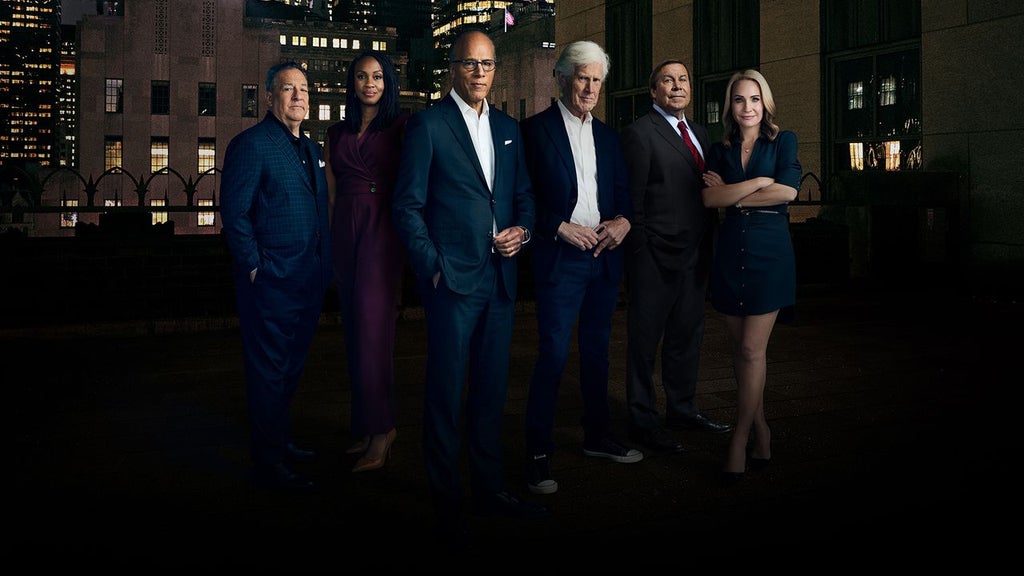
That reversal captures how far NBC’s newsmagazine has traveled as it enters its 35th season. The franchise that once depended on viewers showing up to NBC at a scheduled hour now reaches audiences through a showcast feed (an audio version of the episodes) that recently surpassed 2 billion lifetime downloads, a dedicated 24/7 streaming channel, syndication and licensing, social platforms and live events.
True crime itself is having a cultural moment, from the national attention surrounding the Lindsay Clancy trial to Netflix’s hit “Monster” anthology, and “Dateline” is finding new ways to meet that appetite across audio, streaming and social media.
The franchise’s multiplatform growth shows how the future of a legacy TV property may be determined not only by who wins the broadcast hour, but by whether it can build younger audiences and new revenue streams beyond television. That has become increasingly important as ABC’s “20/20” has led “Dateline” in total viewers for four consecutive seasons.
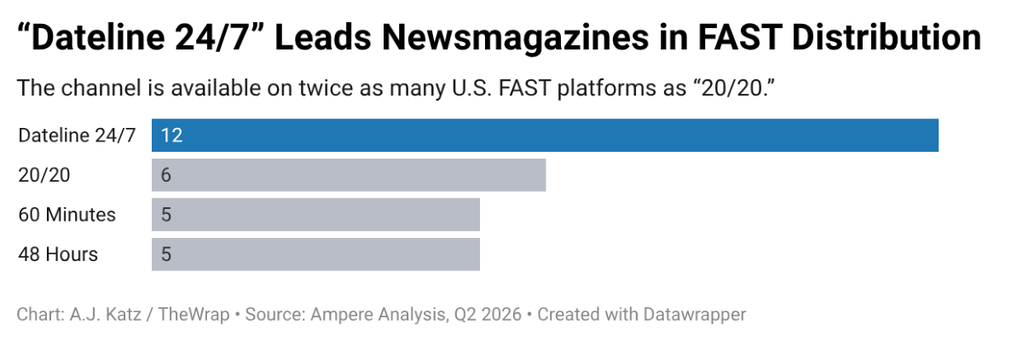
On free ad-supported streaming, however, the venerable NBC newsmagazine has leapt ahead. “Dateline 24/7” was available on 12 U.S. FAST platforms in the second quarter, making it the country’s most widely distributed channel devoted to a single television property, according to exclusive Ampere Analysis data provided to TheWrap. That was twice the reach of ABC’s “20/20” channel and more than double the five platforms carrying channels devoted to CBS’ “60 Minutes” and “48 Hours.”
The goal is not necessarily to steer every listener or streamer back to NBC, but to make “Dateline” a destination wherever true crime audiences already spend time.
“We want to be anywhere people want to consume this kind of journalism and storytelling,” “Dateline” executive producer Liz Cole told TheWrap. “The fact that we’re on broadcast television, cable, streaming, audio — it just gives us a much broader reach.”
A new front door to “Dateline”
The clearest evidence of that reach is audio. During the 2025-26 season through Aug. 31, the “Dateline” showcast and original podcasts generated more than 156 million combined downloads, while original podcasts were pacing 19% ahead of the previous season. Podtrac ranked the showcast among the five largest podcasts across all categories during the period, according to NBC.
The feed also functions as an entry point for younger audiences to a franchise that began on television in 1992. Cole said the podcast audience generally skews younger than the television audience, and that she and fellow executive producer Paul Ryan routinely encounter listeners who know “Dateline” through audio but are surprised to learn it began on television.
“We are finding younger people are coming into contact with ‘Dateline,’ many of them for the first time, through audio,” Cole said.
NBC cannot measure with precision how often those listeners later watch the show on television or Peacock. Ryan said some listeners are additive consumers who prefer audio because it fits into a commute, workout or household routine. “I think they’re audio-first, some of them,” he said.
Bryan Barletta, a partner at podcast-industry trade association Sounds Profitable and president of industry events organization Podcast Movement, said the inability to trace every listener back to television does not diminish the strategy. True crime reaches roughly 42 million American adults each month, or about 16% of the adult population, according to Sounds Profitable research.
“If someone listens to ‘Dateline’ every week but never watches an episode on NBC, they’re still a ‘Dateline’ consumer,” Barletta told TheWrap. “They’re spending time with the brand and they’re monetizable through podcast advertising. That’s real value on its own.”
Barletta called 2 billion downloads “astounding,” but said the audience composition matters more than the raw total.
“The best extension of an established media brand isn’t one that just moves the same audience from one platform to another,” he said. “It’s one that creates an entirely new point of entry into the franchise.”

The true crime genre is particularly suited to that migration. Sounds Profitable found that two-thirds of true crime listeners value podcasts for the companionship they provide. Triton Digital found that half of true crime podcast consumption remained primarily audio, placing it among the genres most oriented toward listening.
“The fundamental product isn’t really the pictures or images on the screen,” Barletta said. “It’s the storytelling.”
A library built for FAST
The same decades-long archive that supplies the showcast has made “Dateline” unusually well suited to free ad-supported streaming television. Its 24/7 channel combines the advantages of a recognizable single-program channel with the appeal of a broader true crime destination.
Ampere counted 521 single-IP FAST channels in the United States in the second quarter of 2026, up 24% from a year earlier. “Dateline 24/7” reached 12 tracked platforms, twice the distribution of “20/20.”
“‘Dateline 24/7’ essentially is both: an existing well-known IP which also curates true crime specials and series,” Ampere senior analyst Christen Tamisin told TheWrap. “This results in the library being prime for FAST distribution.”
Single-IP documentary channels — the category in which true crime services typically sit — remained on tracked platforms for an average of 18.5 months during the two years that ended June 2026, the longest lifespan outside news channels, according to Ampere. Tamisin said oversaturation is difficult in today’s fragmented media market because each additional outlet can expose the franchise to a different audience.
NBC said “Dateline 24/7” was pacing toward its seventh consecutive record season. The company did not disclose viewing hours or revenue for the channel, but Cole said the franchise’s expansion has made its business “far more diversified” at a moment when the television industry is changing rapidly.

That distribution extends well beyond FAST. NBC said the number of “Dateline” hours licensed or syndicated across broadcast and cable rose 29% to 189. The franchise also launched “Dateline en Español,” an always-on streaming channel hosted by Noticias Telemundo and “Weekend NBC Nightly News” anchor José Díaz-Balart.
NBC said the franchise reached 151.2 million linear viewers across broadcast, licensing and syndication during the season, up 4%, using a one-minute viewing threshold.
The Friday night split decision
ABC’s “20/20,” which is entering its 49th season, averaged 3.7 million total viewers this past season — 17% more than “Dateline,” according to Nielsen data provided to TheWrap. Its lead widened from 34,000 viewers in 2024-25 to 543,000.
“20/20” grew 7% in total viewers and 1% among adults 18-49. The franchise has also expanded in audio through “20/20: The After Show” and a slate of true crime podcast series, although ABC did not provide download totals comparable to NBC’s “Dateline” figures.
The picture differs in the key demographics. Under NBC’s L+35 Most Current measure, which excludes retitles, repeats and specials, “Dateline” averaged 517,000 adults 18-49 and 741,000 adults 25-54 on Fridays, ahead of “20/20” at 460,000 and 662,000, respectively. Because the networks’ reported averages use different inclusion rules, their broader ratings claims are not directly comparable.
Taken together, the figures show a split Friday night race: “20/20” attracts the larger overall audience, while “Dateline” leads among adults 18-49 and 25-54 under NBC’s methodology.
Beyond television, “Dateline” counted 5.4 million followers across Facebook, TikTok, Instagram and X, compared with 4.9 million for “48 Hours” and 3.5 million for “20/20.”
Cole said the “Dateline” team treats those followers as a community rather than simply an audience for promotional clips, interacting with viewers and extending those relationships into live events.
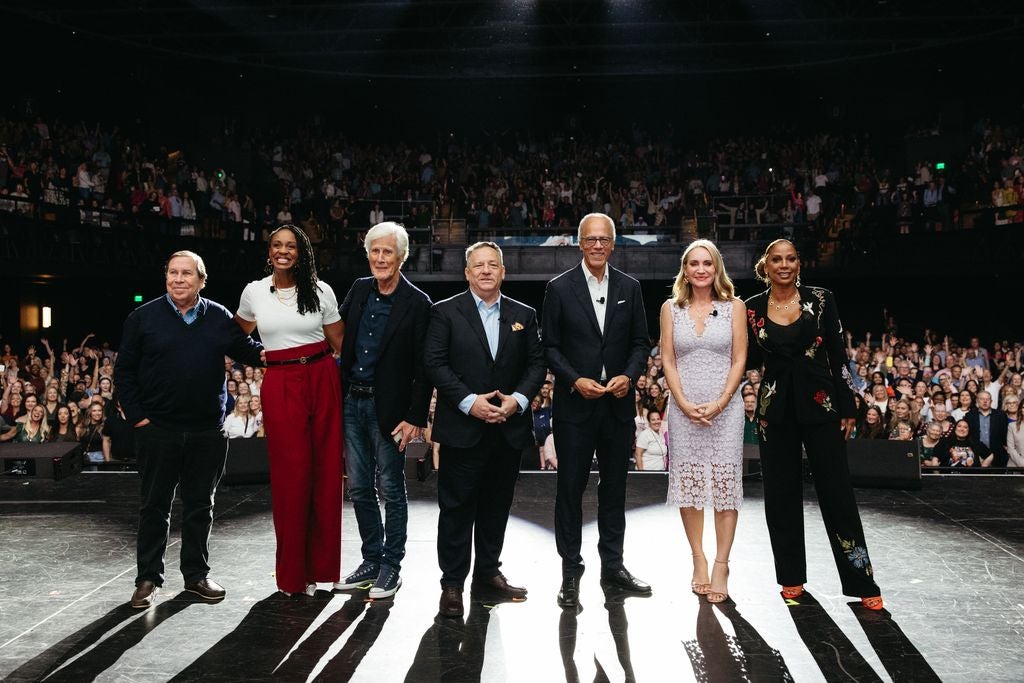
The franchise staged its first live event in Nashville last year. Cole described it as an extension of a connection that had already been built through social media.
One story in many forms
The multiplatform operation has also changed which stories “Dateline” can pursue and how they are developed. “We kind of expect projects to work on all platforms, if possible,” Ryan said, though some concepts are designed for a particular medium from the beginning.
A story that cannot sustain a two-hour NBC broadcast might work as a one-hour episode, a digital series or a podcast. A narrative with enough material for several chapters may be developed first for audio. Cole pointed to one of the franchise’s new Lester Holt podcasts as a project conceived around conversation and the intimacy of listening, even though portions also exist on video.
During the past season, the franchise launched Holt-hosted podcasts “The Last Appeal” and “Before & After,” Keith Morrison’s “Five Miles From Home” and “Something About Cari,” another season of Josh Mankiewicz’s “Missing in America” and Mankiewicz’s “Trace of Subscription.”
“The fact that we’re in so many places gives us ultimate flexibility about what story we’re able to do,” Cole said.
That flexibility will extend to even shorter formats during Season 35. Cole said the team is experimenting with how to compress a “Dateline” story into a roughly 60-second episode for audiences who may never tune to NBC. The exercise sounds almost antithetical to a franchise known for slowly unfolding two-hour mysteries, but it follows the same principle that drove the show into podcasting and FAST: preserve the storytelling voice while adapting the package to the audience’s habits.
For a 35-season television program, longevity no longer means persuading each new generation to inherit the viewing patterns of the last one. It means giving that generation another door in.

>
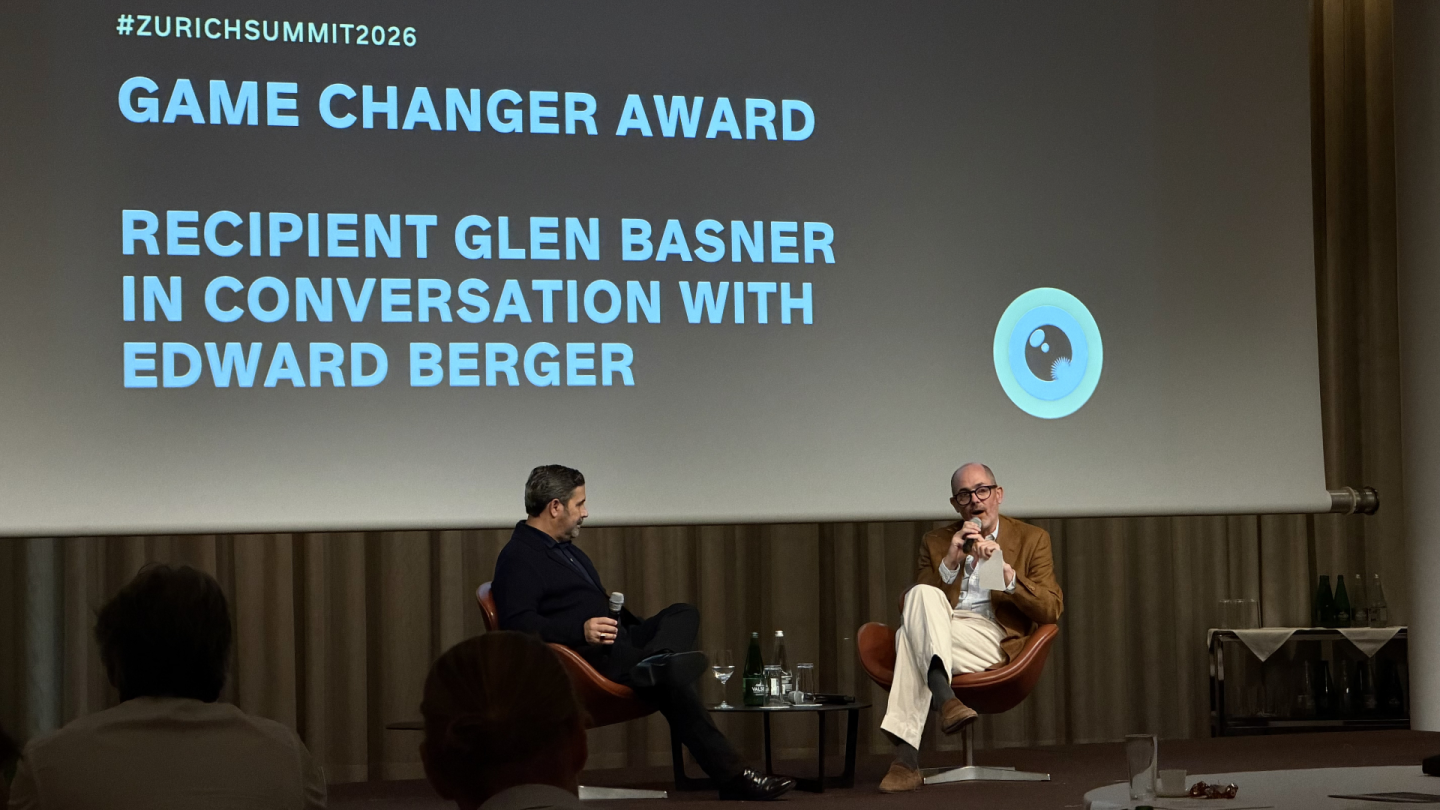
Quite the bromance unfolded on stage at the Zurich Film Festival Summit as Oscar-winning filmmaker Edward Berger held a session with FilmNation Entertainment founder and CEO Glen Basner, who is this year’s Game Changer award recipient.
Basner, being honored for what the festival described as his “outstanding achievements, excellent cinematic taste, and significant contributions within the film industry,” has helped make FilmNation one of the dominant players in the independent film business, backing awards-season and commercial hits including Anora, Promising Young Woman, Arrival, The Big Sick, and, crucially, Berger’s Academy Award-nominated Conclave.
“Glen, I’m so proud to have had the opportunity to make a film with you. I’m so happy to know you. I’m so happy to call you a friend, and I want to congratulate you on your wonderful career, for all the great movies, for all the filmmakers that you’ve inspired, that you’ve instilled confidence in,” said Berger after an hour-long discussion in which the two reflected on their time together, a chaotic film climate, and why great storytelling will always be at the heart of Basner’s work.
At this year’s Zurich Film Festival, Basner is producing three movies in the lineup: Florian Zeller’s Bunker with Javier Bardem and Penélope Cruz, A Talent for Murder with Helen Mirren and I Play Rocky, which proved a real crowd-pleaser at TIFF.
Mostly, however, the two creative partners — both of whom worked at indie production and sales company Good Machine early on in their respective careers — focused on the making and success of Conclave. Berger’s 2024 masterpiece starred Ralph Fiennes as Cardinal Thomas Lawrence, the dean of the College of Cardinals, who is tasked with overseeing the election of a new pope at a time when he is personally experiencing a crisis of faith.
Berger shared an anecdote about feeling “in a real panic” when the film had sold in most territories apart from the U.S. in Cannes a few years back. He then recalled, after nearly finishing the film, that he desperately wanted it to go to the Venice Film Festival. “Or at least show them the movie and see if they’d show it,” said the Swiss-Austrian. “This was in May and Glen, we got on the phone — and I hated Glen — he said, ‘I don’t know. I’m not sure the movie’s ready. Don’t rush it.’ And then: ‘Is it going to be expensive? We don’t have American distribution in place yet.’”
But Berger really wanted to hit the Lido with Conclave (the film would later earn its world premiere in Telluride). “Glen said, ‘Okay, let’s test the movie. Let’s show it to a few people, to friends and family, and see how it does. And if it does really well, let’s just finish it.’ And Tessa [Ross, of House Productions] was of the same opinion, by the way. Tessa also said, ‘I think you’re still missing something, and I don’t know what it is.’ And no one could really formulate it,” Berger explained.
They tested the movie, and it “tested just okay,” he continued. “It was an argument to say, ‘Okay, why don’t we just sit on it and wait a little bit?’ And those really are professorial decisions and creative decisions that made me, that pushed me. And this is going back to Good Machine. This is what I really took from Good Machine: You can always do better,” Berger told Basner. “We make mistakes as filmmakers. We make mistakes as producers, as financiers, [in] sales. We oversell it. We undersell it. Movies fail. […] So I really learned: ‘Let’s look at it again.’ Maybe it can be better. Maybe we can do better. Whether it’s a budget, whether it’s a contract, or whether it’s a cut of the movie.”
“[I had] absolute gratitude to you,” Berger continued. “You were right, I was wrong.” Basner quipped back: “The film was finished… We technically could have been ready for Venice that year.”
Basner said his decision-making dates back to their time at Good Machine. “We always talk about how we want to work on films that inspire us and that we think we understand. And if the marketplace doesn’t get it yet, that’s okay. We’re going to move forward, and we’re going to let them understand why this film is so exciting at a later time. But after that, we’re then going to work like hell to create the environment where that filmmaker can really go and achieve their vision in the purest sense.” He continued about Conclave, demonstrating an impressive knack for knowing when to give directors the appropriate space: “We don’t know if we knew how to unlock it, [otherwise] we would have suggested it. We didn’t know that it was definitely going to be unlocked the way that you ended up doing so, but we knew that we just needed to give you a little bit of time and space to work through and get it to the great place that it did.”
They even had a “few hundred thousand dollars” left over, per a self-proclaimed “frugal” Berger. Basner insisted that the money be spent on improving the film. “It was really inspiring to get that call from you and have the opportunity to make the movie better again, just for being better,” Berger said.
The men touched on why Focus Features became the right home for Conclave in the U.S., with Berger explaining that he was terribly nervous about theatrical distribution there and what that path would look like. “I was so close to the film for so long,” he said. “You were championing Focus […] you were confident that they would be the right partner. And I really kept thinking, ‘Well, what about the streamers? Maybe it’s safer there,’” said Berger. “What gave you the confidence? Again, I’m super grateful for that as well.”
Basner simply told him that “the first thing you learn over time [is] we’re never really exposed the same way that a director is exposed when the movie goes out there. If we make a film that doesn’t succeed, the press aren’t writing about, ‘It’s another shitty film from FilmNation!’ They’re talking about the filmmaker and the actors, and with that understanding comes real responsibility and humility, where these are important decisions in terms of the success and what happens for that filmmaker going forward.”
“But there are sme films that when you watch it,” said Basner, “they’re just undeniable. And Conclave is a fucking amazing movie. We knew it, and we believed and Focus believed that it would have the greatest impact.”
Conclave proved an audience hit as well as an award darling, generating over $125 million at the global box office on a $20 million budget. Its popularity furthered when the real-life Pope Francis died in 2025.
Aside from Conclave, Berger and Basner reflected on the evolution of FilmNation over the last 20 years. They discussed what’s stayed consistent as the company has continued to expand globally, what helps him bolster buyer confidence in a risk-averse industry — and why a film’s budget never equates to its value.
Basner lauded the films he’s in Zurich with, including the “nostalgic” I Play Rocky, which he believes will inspire audiences heading to the theater, and the upcoming FilmNation slate. “This year we will make four films and a television series, and we already have four films in pre-production and hope to make another three. So right now it’s about maintaining the same high-quality standards, but it’s really about more, and with that, being very much okay with taking more risk than maybe we would have some years ago,” beamed Basner.
Earlier at the Zurich Summit, Backrooms director Kane Parsons reflected on helping to save the summer box office, while AMPAS CEO Bill Kramer doubled down on that big YouTube move.
The 22nd Zurich Film Festival runs Sept. 24-Oct. 4.
>
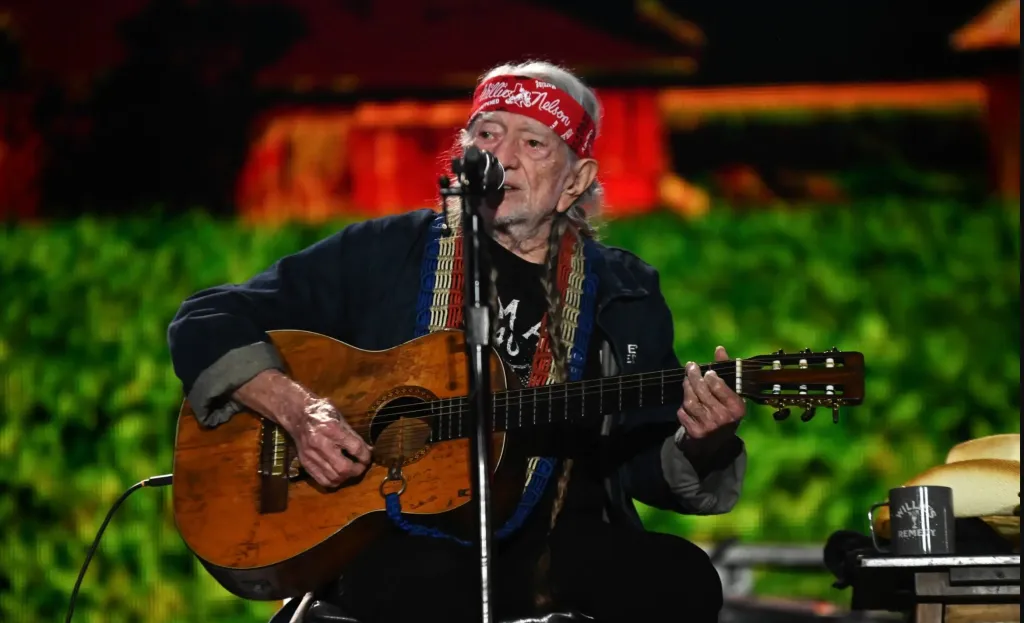
Farm Aid, the annual music festival to raise funds and awareness for American family farms, will be broadcast tonight on CNN from 7-11 pm/ET, 4-8 pm/PT. The benefit concert marks the second consecutive partnership with CNN.
Performers expected to play at the Virginia Beach fest are Willie Nelson & Family, Neil Young and the Chrome Hearts, John Mellencamp, Dave Matthews & Tim Reynolds, Margo Price, Nathaniel Rateliff, Turnpike Troubadours, Lukas Nelson, Ty Myers, Mike Campbell & The Dirty Knobs, Jesse Welles, Sierra Ferrel, Mon Rovîa, I’m With Her, Amythyst Kiah, Lily Meola and Chris Pierce.
CNN Anchors John Berman and Laura Coates will co-anchor tonight’s special coverage and CNN Chief Climate Correspondent Bill Weir will provide on-the-ground reporting.
Other ways of watching are:
- You can watch the already-in-progress, pre-primetime streaming live webcast at the Farm Aid site here.
- Fans around the world can watch Farm Aid 2026 live for free on nugs via the nugs mobile app, at nugs.net, or on the official nugs YouTube channel starting at 11:30 a.m. ET. nugs All Access subscribers will also be able to stream the festival on the big screen through Roku and Apple TV.
- Beginning at 12 p.m. ET, SiriusXM subscribers will be able to listen to the full Farm Aid 2026 festival on SiriusXM’s Willie’s Roadhouse (channel 61) and Dave Matthews Band Radio (channel 30) via SiriusXM radio and on the SiriusXM app. The live coverage will also include backstage interviews with artists and family farmers, hosted by SiriusXM’s Dallas Wayne and Joey Black. All coverage will feature an inside look at Farm Aid 2026 and the organization’s year-round work to strengthen family farm agriculture. This marks the 17th year that SiriusXM has carried the festival on satellite radio.
>
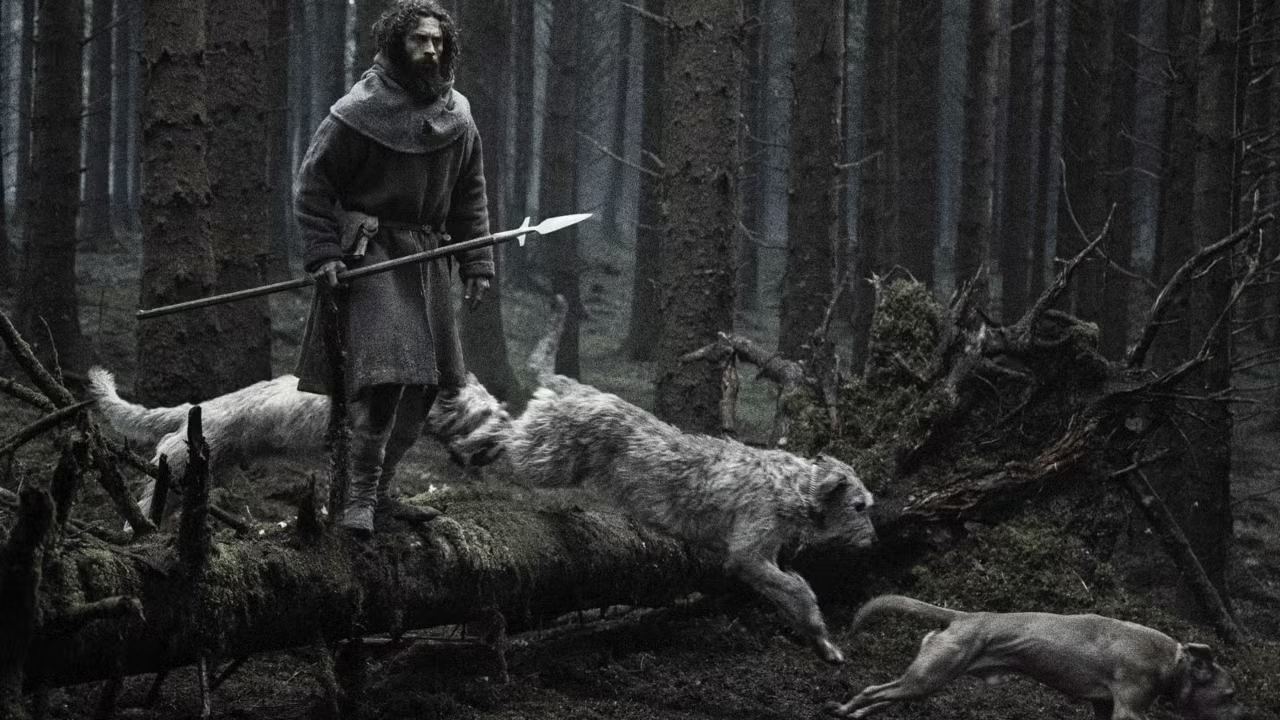
Focus Features has released a new trailer for Werwulf, and it looks like it’s going to be another gothic Christmas for Robert Eggers‘ fans.
Directed by Eggers (The Witch, The Lighthouse, Nosferatu), Werwulf stars Aaron Taylor-Johnson as a man who transforms into a monstrous creature, while Lily-Rose Depp plays his wife and Willem Dafoe portrays a knight tasked with ridding the countryside of wolves. Set in 13th-century England, the medieval horror film also features period-appropriate language.
“Every wolf shall die!” Dafoe’s character declares in the trailer.
Depp’s character pleads for help to save her husband from his curse.
“My husband… he is a good man. For the love, I bear him,” she says. “Please, make him safe from his cursedness.”
The trailer ends with Taylor-Johnson shaking and looking toward the sky as his transformation into a wolf appears to approach.
The trio of actors are reuniting for the werewolf-centered film after previously starring together in Eggers’ vampire-centered Nosferatu, released in 2024, also on Christmas Day. The film grossed $180 million worldwide and received four Oscar nominations in craft categories.
The first footage from Werwulf was shown during Universal’s presentation at CinemaCon in April, where the film was billed as Eggers’ “most terrifying motion picture yet.”
Eggers also co-wrote the film with Sjón, whom he worked with for 2022’s The Northman.
Producers include Eggers, Tim Bevan, Eric Fellner, Garrett Bird and Sjón, while Chris Columbus, Eleanor Columbus and Bernard Bellew serve as executive producers.
Werwulf hits theaters Christmas Day.
Watch the new trailer below.
>

Zurich Summit Game Changer Glen Basner and Edward Berger Reminisce
Is the Maple Leafs' new goaltending situation better than it was last season?

How To Watch Farm Aid 2026
-

 movies4 months ago
Search For Canadian TV Actor Stewart McLean Now Homicide Investigation
-

 Fashion9 years ago
These ’90s fashion trends are making a comeback in 2017
-
Fashion9 years ago
According to Dior Couture, this taboo fashion accessory is back
-
Fashion9 years ago
Model Jocelyn Chew’s Instagram is the best vacation you’ve ever had
-
Fashion9 years ago
Emily Ratajkowski channels back-to-school style
-
Fashion9 years ago
9 Celebrities who have spoken out about being photoshopped
-

 Anime4 months ago
Rurouni Kenshin: Hokkaido Arc Manga Takes 1-Issue Break – News
-

 Anime3 months ago
HIDIVE to Stream English Dubs for The World Is Dancing, The Forsaken Saintess and Her Foodie Roadtrip in Another World, The Dangers in My Heart: The Movie Anime – News