
Tech
Stealth Satellite TV Defeats Iran’s Internet Blackout


On 8 January 2026, the Iranian government imposed a near-total communications shutdown. It was the country’s first full information blackout: For weeks, the internet was off across all provinces while services including the government-run intranet, VPNs, text messaging, mobile calls, and even landlines were severely throttled. It was an unprecedented lockdown that left more than 90 million people cut off not only from the world, but from one another.
Since then, connectivity has never fully returned. Following U.S. and Israeli airstrikes in late February, Iran again imposed near-total restrictions, and people inside the country again saw global information flows dry up.
The original January shutdown came amid nationwide protests over the deepening economic crisis and political repression, in which millions of people chanted antigovernment slogans in the streets. While Iranian protests have become frequent in recent years, this was one of the most significant uprisings since the Islamic Revolution in 1979. The government responded quickly and brutally. One report put the death toll at more than 7,000 confirmed deaths and more than 11,000 under investigation. Many sources believe the death toll could exceed 30,000.
Thirteen days into the January shutdown, we at NetFreedom Pioneers (NFP) turned to a system we had built for exactly this kind of moment—one that sends files over ordinary satellite TV signals. During the national information vacuum, our technology, called Toosheh, delivered real-time updates into Iran, offering a lifeline to millions starved of trusted information.
How Iran Censors the Internet
I joined NetFreedom Pioneers, a nonprofit focused on anticensorship technology, in 2014. Censorship in Iran was a defining feature of my youth in the 1990s. After the Islamic Revolution, most Iranians began to lead double lives—one at home, where they could drink, dance, and choose their clothing, and another in public, where everyone had to comply with stifling government laws.
 Iran’s internet infrastructure is more centralized than in other parts of the world, making it easier for the government to restrict the flow of information. Morteza Nikoubazl/NurPhoto/Getty Images
My first experience with secret communications was when I was five and living in the small city of Fasa in southern Iran. My uncle brought home a satellite dish—dangerously illegal at the time—that allowed us to tune into 12 satellite channels. My favorite was Cartoon Network. Then, during my teenage years, this same uncle introduced me to the internet through dial-up modems. I remember using Yahoo Mail with its 4 megabytes of storage, reading news from around the world, and learning about the Chandra X-ray telescope from NASA’s website.
That openness didn’t last. As internet use spread in the early 2000s, the Iranian government began reshaping the network itself. Unlike the highly distributed networks in the United States or Europe, where thousands of providers exchange traffic across many independent routes, Iran’s connection to the global internet is relatively centralized. Most international traffic passes through a small number of gateways controlled by state-linked telecom operators. That architecture gives authorities unusual leverage: By restricting or withdrawing those connections, they can sharply reduce the country’s access to the outside world.
Over the past decade, Iran has expanded this control through what it calls the National Information Network, a domestically routed system designed to keep data inside the country whenever possible. Many government services, banking systems, and local platforms are hosted on this internal network. During periods of unrest, access to the global internet can be throttled or cut off while portions of this domestic network continue to function.
The government began its censorship campaign by redirecting or blocking websites. As internet use grew, it adopted more sophisticated approaches. For example, the Telecommunication Company of Iran uses a technique called deep packet inspection to analyze the content of data packets in real time. This method enables it to identify and block specific types of traffic, such as VPN connections, messaging apps, social media platforms, and banned websites.
The Stealth of Satellite Transmissions
Toosheh’s communication workaround builds on a history of satellite TV adoption in Middle Eastern and North African countries. By the early 2000s, satellite dishes were common in Iran; today the majority of households in Iran have access to satellite TV despite its official prohibition.
Unlike subscription services such as DirecTV and Dish Network, “free-to-air” satellite TV broadcasts are unencrypted and can be received by anyone with a dish and receiver—no subscription required. Because the signals are open, users can also capture and store the data they carry, rather than simply watching it live. Tech-savvy people learned that they could use a digital video broadcasting (DVB) card—a piece of hardware that connects to a computer and tunes into satellite frequencies—to transform a personal computer into a satellite receiver. This way, they could watch and store media locally as well as download data from dedicated channels.
 Many Iranian citizens have free-to-air satellite dishes, like the ones on this apartment building in Tehran, and can thus download Toosheh transmissions, giving them a lifeline during internet blackouts.Morteza Nikoubazl/NurPhoto/Getty Images
Toosheh, a Persian word that translates to “knapsack,” is the brainchild of Mehdi Yahyanejad, an Iranian-American technologist and entrepreneur. Yahyanejad cofounded NetFreedom Pioneers in 2012. He proposed that the satellite-computer connections enabled by a DVB card could be re-created in software, eliminating the need for specialized hardware. He added a simple digital interface to the software to make it easy for anyone to use. The next breakthrough came when the NFP team developed a new transfer protocol that tricks ordinary satellite receivers into downloading data alongside audio and video content. Thus, Toosheh was born.
Satellite TV uses a file system called an MPEG transport stream that allows multiple audio, video, or data layers to be packaged into a single stream file. When you tune in to a satellite channel and select an audio option or closed captions, you’re accessing data stored in different parts of this stream. The NFP team’s insight was that, by piggybacking on one of these layers, Toosheh could send an MPEG stream that included documents, videos, and more.
 HOW TOOSHEH WORKS: At NetFreedom Pioneers, content curators pull together files—news articles, videos, audio, and software [1]. Toosheh’s encoder software [2] compresses the files into a bundle, in .ts format, creating an MPEG transport stream [3]. From there, it’s uploaded to a server for transmission [4] via a free-to-air TV channel on a Yahsat satellite that’s positioned over the Middle East to provide regional coverage [5]. Satellite receivers [6] directly capture the data streams, which are downloaded to computers, smartphones, and other devices, and decoded by Toosheh software [8].Chris Philpot
A satellite receiver can’t tell the difference between our data and normal satellite audio and video data since it only “sees” the MPEG streams, not what’s encoded on them. This means the data can be downloaded and read, watched, and saved on local devices such as computers, smartphones, or storage devices. What’s more, the system is entirely private: No one can detect whether someone has received data through Toosheh; there are no traceable logs of user activity.
Toosheh doesn’t provide internet access, but rather delivers curated data through satellite technology. The fundamental distinction lies in the way users interact with the system. Unlike traditional internet services, where you type a request into your browser and receive data in response, Toosheh operates more like a combination of radio and television, presenting information in a magazine-like format. Users don’t make requests; instead, they receive 1 to 5 gigabytes of prepackaged, carefully selected data.
Access to information is not only about news or politics, but about exposure to possibilities.
During this year’s internet blackout, we distributed official statements from Iranian opposition leader Crown Prince Reza Pahlavi and the U.S. government. We provided first-aid tutorials for medics and injured protesters. We sent uncensored news reports from BBC Persian, Iran International, IranWire, VOA Farsi, and others. We also shared critical software packages including anticensorship and antisurveillance tools, along with how-to guides to help people securely connect to Starlink satellite terminals, allowing them to stay protected and anonymous as they sent their own communications.
How to Combat Signal Interference
Because Toosheh relies on one-way satellite broadcasts, it evades the usual tactics governments use to block internet access. However, it remains vulnerable to satellite signal jamming.
The Iranian government is notorious for deploying signal jamming, especially in larger cities. In 2009, the government used uplink interference, which attacks the satellite in orbit by beaming strong noise in the frequency of the satellite’s receiver. This makes it impossible for the satellite to distinguish the information it’s supposed to receive. However, because this type of attack temporarily disables the entire satellite, Iran was threatened with international sanctions and in 2012 stopped using the method .
 A graph of network connectivity in Iran shows that on 9 January 2026, internet access dropped from nearly 100 percent to 0. Samuel Boivin/NurPhoto/Getty Images
The current method, called terrestrial jamming, uses antennas installed at higher elevations than the surrounding buildings to beam strong noise over a specific area in the frequency range of household receivers. This attack is effective in keeping some of the packets from arriving and damaging others, effectively jamming the transmission. But it’s short-range and requires significant power, so it’s impossible to implement nationwide. There are always people somewhere who can still watch TV, download from Toosheh, or tune into a satellite radio despite the jamming. Even so, we wanted a workaround that would keep our transmissions broadly accessible.
NFP’s solution was to add redundancy, similar in principle to a data-storage technique called RAID (redundant array of independent disks). Instead of sending each piece of data once, we send extra information that allows missing or corrupted packets to be reconstructed. Under normal circumstances, we often use 5 percent of our bandwidth for this redundancy. During periods of active jamming, we increase that to as much as 25 to 30 percent, improving the chances that users can recover complete files despite interference.
From Crisis Response to Public Access
Toosheh initially came online in 2015 in Iran and Afghanistan. Its full potential, however, was first realized during the 2019 protests in Iran, which saw the most widespread internet shutdown prior to the blackout this year. Wired called the 2019 shutdown “the most severe disconnection” tracked by NetBlocks in any country in terms of its “technical complexity and breadth.” Our technology helped thousands of people stay informed. We sent crucial local updates, legal-aid guides, digital security tools, and independent news to satellite receivers all over the country, seeing a sixfold increase in our user base.
When that wave of protests subsided, the government allowed some communication services to return. People were again able to access the free internet using VPNs and other antifilter software that allowed them to bypass restrictions. Toosheh then became a public access point for news, educational material, and entertainment beyond government filtering.
Toosheh’s impact is often personal. A traveling teacher in western Iran told NFP that he regularly distributed Toosheh files to students in remote villages. One package included footage of female athletes competing in the Olympic Games, something never broadcast in Iran. For one young girl, it was the first time she realized women could compete professionally in sports. That moment underscores a broader truth: Access to information is not only about news or politics, but about exposure to possibilities.
The Cost of Toosheh
Unlike internet-based systems, Toosheh’s operational cost remains constant regardless of the number of users. A single TV satellite in geostationary earth orbit, deployed and maintained by an international company such as Eutelsat, can broadcast to an entire continent with no increase in cost to audiences. What’s more, the startup cost for users isn’t high: A satellite dish and receiver in Iran costs less than US $50, which is affordable to many. And it costs nothing for people to use Toosheh’s service and receive its files.
We aim not just to build a tool for censorship circumvention, but to redefine access itself.
However, operating the service is costly: NetFreedom Pioneers pays tens of thousands of dollars a month for satellite bandwidth. We had received funding from the U.S. State Department, but in August of 2025, that funding ended, forcing us to suspend services in Iran.
Then the December protests happened, and broadcasting to Iran became an urgent priority. To turn Toosheh back on, we needed roughly $50,000 a month. With the support of a handful of private donors, we were able to meet these costs and sustain operations in Iran for a few months, though our future there and elsewhere is uncertain.
Satellites Against Censorship
Toosheh’s revival in Iran came alongside NFP’s ongoing support for deployments of Starlink, a satellite internet service that allows users to connect directly to satellites rather than relying on domestic networks, which the government can shut down. Unlike Toosheh’s one-way broadcasts, Starlink provides full two-way internet access, enabling users to send messages, upload videos, and communicate with the outside world.
In 2022, we started gathering donations to buy Starlink terminals for Iran. We have delivered more than 300 of the roughly 50,000 there, enabling citizens to send encrypted updates and videos to us from inside the country. Because the technology is banned by the government, access remains limited and carries risk; Iranian authorities have recently arrested Starlink users and sellers. And unlike Toosheh’s receive-only broadcasts, Starlink terminals transmit signals back to orbit, creating a radio footprint that can potentially be detected.
 The internet shutdown in Iran continued after the attacks by Israel and the United States began in late February, preventing Iranians from communicating with the outside world and with one another.Fatemeh Bahrami/Anadolu/Getty Images
Looking ahead, we envision Toosheh becoming a foundational part of global digital resilience. It is uncensored, untraceable, and resistant to government shutdowns. Because Toosheh is downlink only, it can sometimes feel hard to explain the value of this technology to those living in the free world, those accustomed to open internet access. Yet, people living under censorship have few other choices when there’s a digital blackout.
Currently, NFP is developing new features like intelligent content curation and automatically prioritizing data packages based on geographic or situational needs. And we’re experimenting with local sharing tools that allow users who receive Toosheh broadcasts to redistribute those files via Wi-Fi hotspots or other offline networks, which could extend the system’s reach to disaster zones, conflict areas, and climate-impacted regions where infrastructure may be destroyed.
We’re also looking at other use cases. Following the Taliban’s return to power in Afghanistan, NetFreedom Pioneers designed a satellite-based system to deliver educational materials. Our goal is to enable private, large-scale distribution of coursework to anyone—including the girls who are banned from Afghanistan’s schools. The system is technically ready but has yet to secure funding for deployment.
We aim not just to build a tool for censorship circumvention, but to redefine access itself. Whether in an Iranian city under surveillance, a Guatemalan village without internet, or a refugee camp in East Africa, Toosheh offers a powerful and practical model for delivering vital information without relying on vulnerable or expensive networks.
Toosheh is a reminder that innovation doesn’t have to mean complexity. Sometimes, the most transformative ideas are the simplest, like delivering data through the sky, quietly and affordably, into the hands of those who need it most.
This article appears in the May 2026 print issue as “The Stealth Signals Bypassing Iran’s Internet Blackout.”
From Your Site Articles
Related Articles Around the Web
>
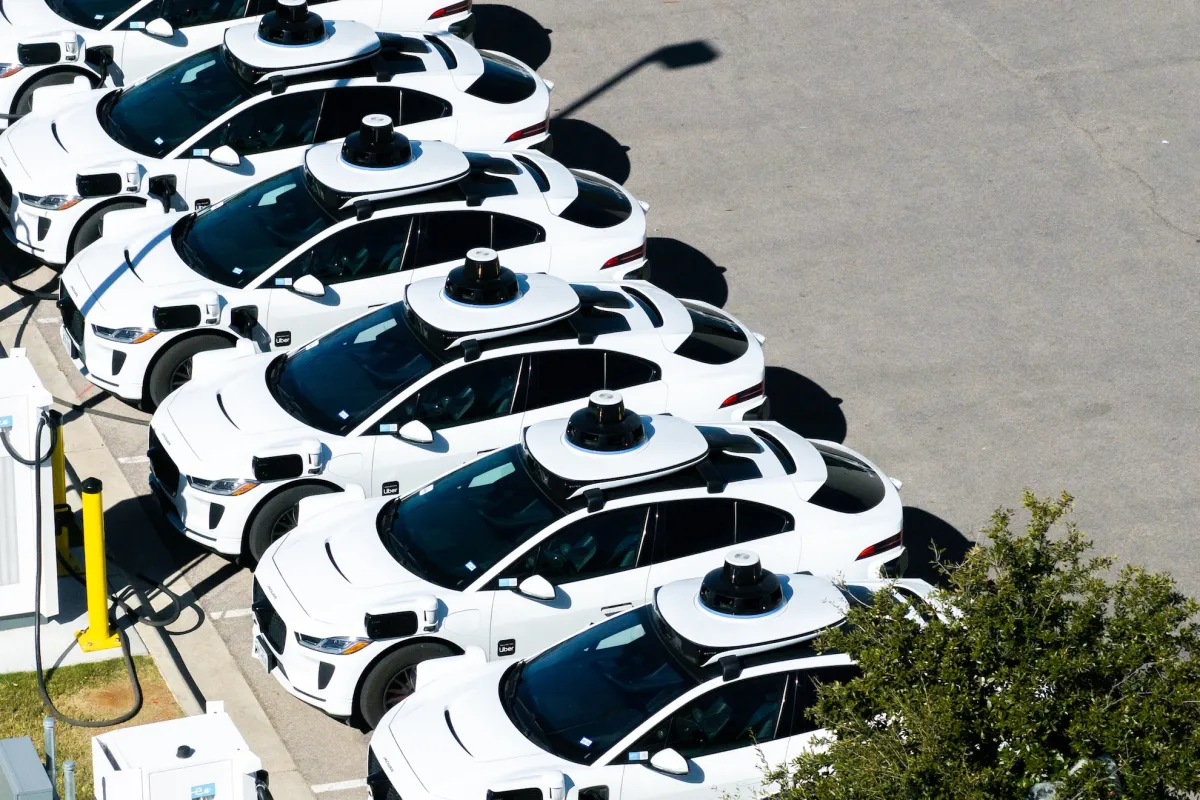
Waymo’s commercial robotaxi ramp-up looks expansive, both in geographic reach and in ridership. And by almost every measure, it is — until you pay attention to where the bulk of those robotaxis are actually showing up.
The numbers over the past two years reflect the kind of commercial rollout you’d expect from a deep-pocketed company like Waymo, which spun out of Google and still counts Alphabet as its majority owner. In September 2024, Waymo was operating in just three cities — Phoenix, Los Angeles, and San Francisco. Today, it offers robotaxi service in 15 U.S. cities, with most of those commercial launches occurring in the past year. Ridership has skyrocketed, too with Waymo now averaging 500,000 paid robotaxi rides every week.
But a closer look at its fleet shows a company concentrating its efforts in just two states. About 80% of Waymo’s roughly 4,000 robotaxis are in California and Texas, and Texas is where the action is now: Waymo’s fleet there has grown by nearly half in the past three weeks, fueled by a new Chinese-built minivan the company is betting will help it scale, even as tariffs drive up its costs.
The other 800 or so vehicles are spread across cities in other states, including Arizona and Florida, another burgeoning hotspot. Most are the familiar white Jaguar I-Pace electric SUVs, but a growing share are that new minivan — a modified Zeekr RT that Waymo has branded “Ojai.”
Waymo’s focus on California is no surprise. It is headquartered in Silicon Valley, and much of its early testing and development work was conducted there. Plus, a segment of the population there is inclined to adopt tech at its earliest stages.
The recent growth in Texas is more interesting. Waymo has increased its Texas fleet by 49% in the past three weeks, according to state vehicle registrations and data from the Texas Autonomous Vehicle Fleet Tracker. As of September 24, Waymo had 1,102 autonomous vehicles registered in the state.
Waymo first launched in commercial service in Austin through a partnership with Uber in March 2025, letting riders hail its robotaxis through the uber app. Since then, the company has expanded its robotaxi services in Dallas, Houston, and San Antonio.
Waymo’s Texas fleet remained relatively static for most of the summer, inching up from about 600 vehicles in June to more than 700 by the end of August. Then came September, when the he fleet surged, driven by an influx of new Ojai minivans, which now make up about a third of Waymo’s Texas fleet.
Expect that share to grow.
The Ojai robotaxi, equipped with Waymo’s sixth-generation self-driving system, is supposed to help Waymo reach mass scale. Its interior is built to withstand heavy use, and it comes with an upgraded rider interface and Google’s Gemini AI, which acts as an in-car assistant for riders.
Strip away that technology, though, and the Ojai is a minivan made by Zeekr, a brand owned by China’s Geely Holding Group (which also owns Volvo). The Ojai is built on Zeekr’s SEA-M platform, a shared vehicle platform designed for uses like robotaxis and delivery vans. The base Zeekr vehicles are shipped to the U.S. without any Chinese connected-car technology on board. Once they arrive, the vehicles are sent to Waymo’s Arizona factory, where they are outfitted with Waymo’s self-driving system.
The Ojai is supposed to drive down costs and ultimately help Waymo reach profitability. For now, though, tariffs are cutting any savings. Under current U.S. trade policy, vehicles built in China face steep import tariffs, raising Waymo’s costs for every Ojai it brings into the country.
Waymo appears willing to absorb that cost. New York-based research firm MoffettNathanson, which tracks Ojai imports using detailed shipping records, said in its September report that Waymo is on track to bring 5,100 of the vehicles into the U.S. by the end of the year.
Where will all those Ojai vehicles go? Texas is certainly on the list. But Florida, where Waymo operates in three cities, and newer markets like Las Vegas will likely see an influx as well.
When you purchase through links in our articles, we may earn a small commission. This doesn’t affect our editorial independence.
>
Lindsey Elliott is big into bolts. At last year’s Bolting Symposium — the 13th annual — she said the highlight was playing “Bolting Bingo” against the many self-proclaimed “torque dorks” who were in the room.
A former engineer and planner at ExxonMobil, Elliott has spent years thinking about how to improve the infrastructure that moves oil, gas, and petrochemicals. Bolts are what she landed on. Specifically, the bolts that connect sections of pipe (technically called “bolted flange joints”). These bolts require hard, physical work to loosen and tighten, and are the source of many pipefitters’ injuries. Like many trade industries, there’s also a labor shortage.
“Those people get really tired when they’re asked to work 12 hours a day for three months in a row,” she told TechCrunch. “I’ve talked to pipefitters across the U.S. across Canada, and just repeatedly have been told North American pipefitting productivity is notoriously low.”
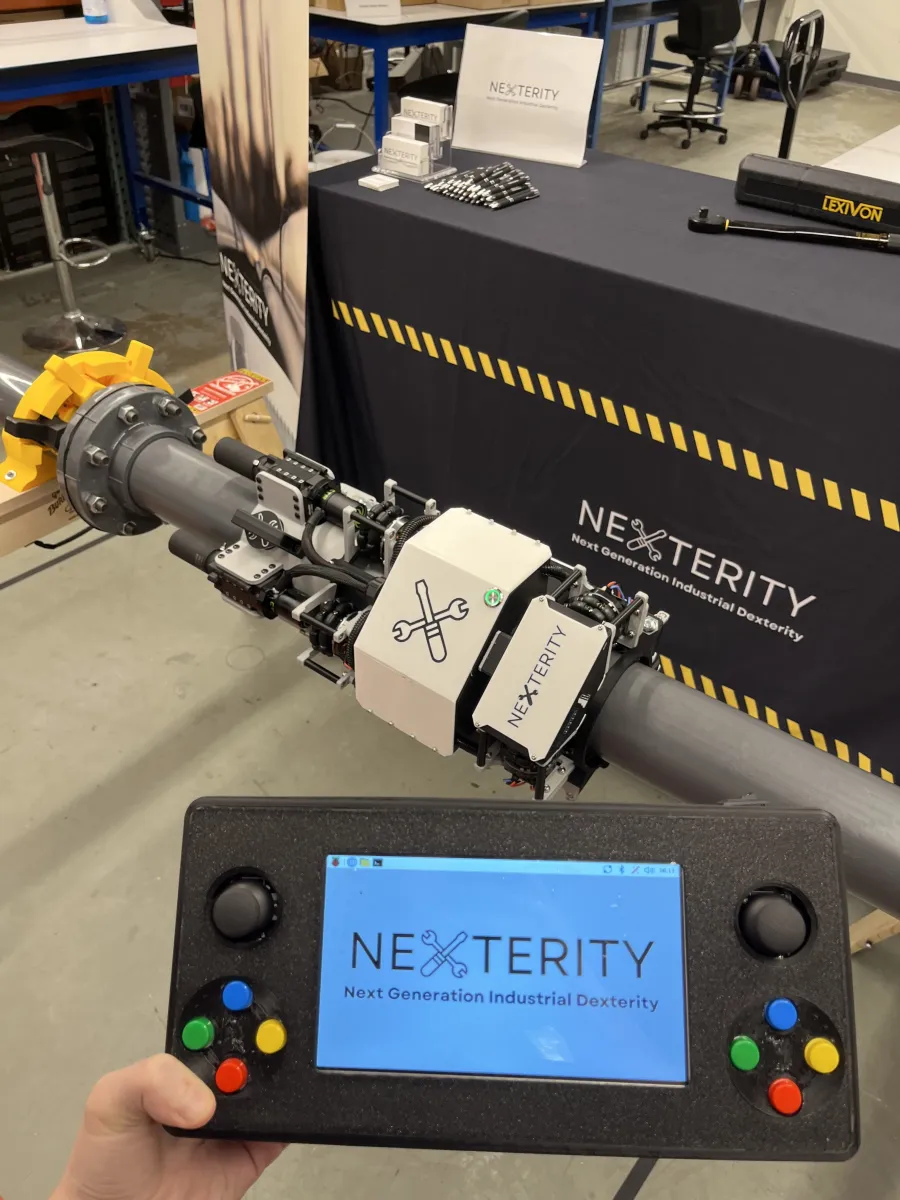
The solution Elliott came up with at her startup Nexterity, which is one of the Startup Battlefield 200 selected to participate in TechCrunch Disrupt, is a remote-controlled robot that can handle this part of the job. It’s the kind of idea that could fundamentally change this particular blue collar job if widely adopted, making the workers safer and more productive.
Think: more dork, less torque.
The robot comes in two main pieces that fit around a pipe. Powered by batteries, the robot can slide across the pipe once it’s attached and quickly loosen and tighten four bolts at a time.
Elliott said Nexterity has developed a few different configurations of the robot to fit different standard pipe sizes, but they’re all small enough to fit in a Pelican case and be carried by a single worker. That makes them easy to deploy to new sites — flexibility that is crucial to Nexterity’s business model of treating the robot like rental construction equipment.
Elliott said she arrived at this particular design as a result of conversations she’s had over the last few years — not just at the Bolting Symposium, but also with members of the Pressure Vessels & Piping Division of the American Society of Mechanical Engineers.
“What I learned from the people, the torque dorks per se,” she said, “is that 80% of our pipes are between two to eight inches in diameter, or what they call NPS2 to NPS8. And so when you have that much repeatability, you have a fantastic candidate for automation.”
It’s a pretty straightforward idea, but one that Elliott believes has a lot of upside.
“I think it would shock a lot of people just how big this market is,” she said. “I mean, day to day, most of us don’t think about piping infrastructure, but even water, wastewater, water treatment, food and beverage, mining, nuclear, any kind of green and sustainable manufacturing facility — they all use the same kind of piping.”
When you purchase through links in our articles, we may earn a small commission. This doesn’t affect our editorial independence.
>

In Guadalajara, Mexico, many high schools have motivated teachers and talented students with an interest in science, technology, engineering, and mathematics, but they lack access to advanced tools such as robotics laboratories. The resources shortfall limits the students’ opportunities for hands-on learning on cutting-edge applications.
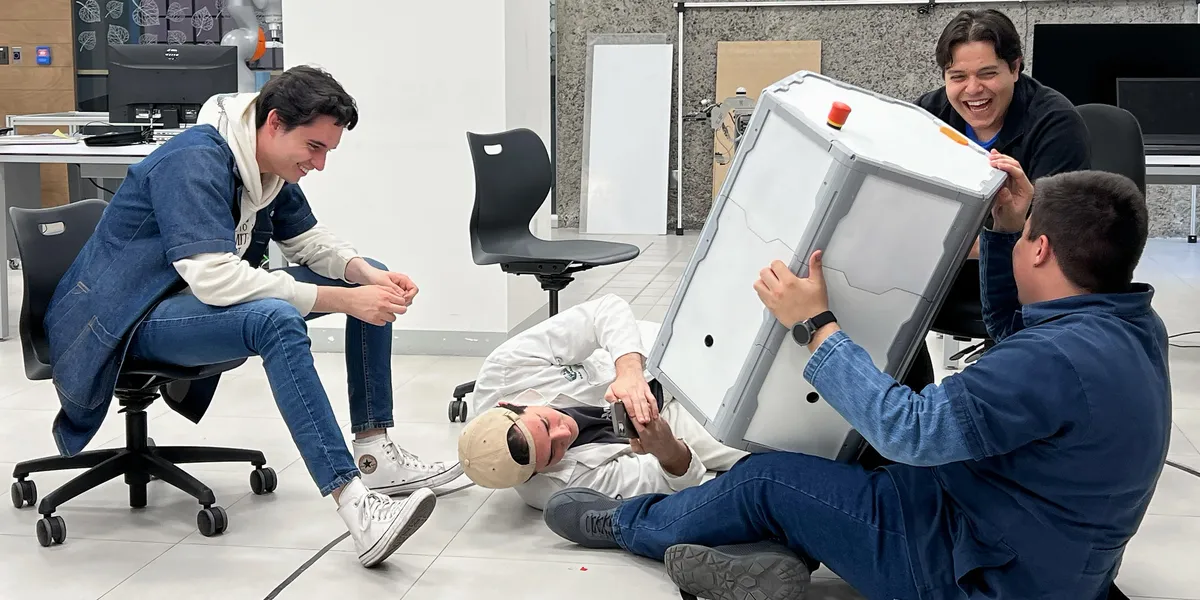
A team from ITESO, Universidad Jesuita de Guadalajara, is working to change that. Through the EPICS in IEEE initiative, a multidisciplinary group of 15 engineering students, faculty advisors, and IEEE Guadalajara Section volunteers developed RoboMeshA. The portable, self-contained educational platform brings robotics and AI experiences into classrooms.
EPICS is administered by IEEE Educational Activities and funded by the IEEE Robotics and Automation Society.
A mobile laboratory
Rather than requiring a school to build a dedicated computer lab or install complex software, RoboMeshA operates as an all-in-one mobile learning network.
“RoboMeshA brings robotics and AI to students who don’t have access to specialized facilities or preinstalled software,” says team member Fernando Vidal Luna, an IEEE student member and a mechatronics engineering major at ITESO.
Students connect directly to the platform from a user-friendly web browser. They can interact with the robot manually or use its control modes to watch it move and detect and avoid obstacles.
“The project combines mechanical design, embedded systems, control engineering, computer vision, and AI into a single robotic system that functions as a mobile learning laboratory,” says faculty advisor Jorge A. Lizarraga.
The team says young students are interested in technology, programming, and robotics but don’t have an opportunity to work with systems that combine mechanics, electronics, software, and control.
“RoboMeshA allows students to see how all these disciplines work together in a tangible and understandable way,” says team member José S. González, who also is studying mechatronics engineering.
The team has built two units and is developing a modular coupling framework to expand the system’s capabilities for research and classroom demonstrations. The structured system design approach connects independent software components while minimizing internal dependencies, enabling four RobotMeshA robots to operate together.
Overcoming design challenges
The team faced significant hurdles while designing the project.
“One key challenge involved the robot’s structural design,” Luna says. “It wasn’t only about making a chassis where all the components fit and the design had sufficient stability, rigidity, and weight distribution. It was also about ensuring that the electronics were protected while still being accessible for maintenance, testing, and modifications.”
“It was also challenging to design a platform that could be used by students with different levels of experience,” González adds.
“When students realize the technology they develop can inspire others and improve lives, engineering becomes far more meaningful.” —Luis Fernando Luque-Vega
The team partnered with the CETI Colomos and Prepa ITESO high schools to validate the platform in classroom settings.
“We wanted the first interactions with the robot to be simple and intuitive,” González says, “such that students could simply power the robot, connect to its network, and begin interacting with it, rather than having to deal with software installation, extensive configuration, or troubleshooting.”
Engineering with social impact
Many of the students who participated were from ITESO’s applied professional projects program. The experience offered them practical training in project management, system integration, and user-centered design.
The team also presented a research paper and a project poster in May at the Engineering Congress of the Jesuit University System.
“Seeing a design move from a digital model to a physical system was invaluable,” González says. “Working with students from different backgrounds taught us to listen to end users and design for their actual needs.”
Project lead Luis Fernando Luque-Vega, an IEEE member, says he’d like the venture to serve as a blueprint for engineering education.
“I hope RoboMeshA is adopted by schools, universities, and IEEE student branches across Mexico and internationally as a model for integrating technical innovation with community engagement,” Luque-Vega says.
By pairing engineering talent with community service, initiatives such as EPICS in IEEE demonstrate how targeted support can turn academic concepts into real-world solutions.
“When students realize the technology they develop can inspire others and improve lives, engineering becomes far more meaningful,” Luque-Vega says.
For more information on service-learning opportunities, visit the EPICS website.
From Your Site Articles
Related Articles Around the Web
>
How to watch the men's Chengdu Open: Streaming options for the Round of 16
How to watch Nebraska vs. Michigan State: TV channel and streaming options for September 26

‘Big Brother’ Season 28, Week 11 Eviction Results: Final 3 Houseguests Revealed
-

 movies4 months ago
Search For Canadian TV Actor Stewart McLean Now Homicide Investigation
-

 Fashion9 years ago
These ’90s fashion trends are making a comeback in 2017
-
Fashion9 years ago
According to Dior Couture, this taboo fashion accessory is back
-
Fashion9 years ago
Model Jocelyn Chew’s Instagram is the best vacation you’ve ever had
-
Fashion9 years ago
Emily Ratajkowski channels back-to-school style
-
Fashion9 years ago
9 Celebrities who have spoken out about being photoshopped
-

 Anime4 months ago
Rurouni Kenshin: Hokkaido Arc Manga Takes 1-Issue Break – News
-

 Anime3 months ago
HIDIVE to Stream English Dubs for The World Is Dancing, The Forsaken Saintess and Her Foodie Roadtrip in Another World, The Dangers in My Heart: The Movie Anime – News