
Tech
IEEE Connects Hardware Startups With Investors

Roughly 90 percent of hard tech startups fail due to funding constraints, longer R&D timelines for developing hardware, and the complexity of manufacturing their products, according to a number of studies.
Generally, these startups require up to 50 percent more investor financing than software ones, according to a Medium article. Typically, they need at least US $30 million, according to a Lucid article. That’s double the funding needed by software companies on average.
To help them connect with investors, IEEE Entrepreneurship in 2024 launched its Hard Tech Venture Summits. The two-day events connect founders with potential investors and other entrepreneurs. Attendees include manufacturers, design engineers, and intellectual property lawyers.
“Even though there are a lot of startup investor conferences, it’s hard to find those focused on hard tech,” says Joanne Wong, who helped initiate the program and is now the chair. She is a general partner at Redds Capital, a California-based venture capital firm that invests in global early-stage IT startups.
The IEEE member is also an entrepreneur. She founded SciosHub in 2020. The company’s software-as-a-service and informatics platform automates the data-management process for biomedical research labs.
“Many investors are focused on AI software—which is good,” she says. “But for hard tech companies, it is still hard to find support.”
The summit also includes a workshop to help founders navigate manufacturing processes and regulatory compliance. The event is open to IEEE members and others.
IEEE is a natural fit for the program, Wong says, because hard tech is synonymous with electrical engineering.
“Some of the domains we’re covering are robotics, semiconductors, and aerospace technology. IEEE has societies for all these fields,” she says. “Because of that, there are many resources within the organizations for startups, whether it be mentors or guides on how to commercialize products.”
There are several venture summits planned for this year. Two are scheduled in collaboration with the IEEE Systems Council: this month in Menlo Park, Calif., and in October in Toronto.
On 10 and 11 June, a third summit is scheduled to take place in Boston at the IEEE Microwave Theory and Technology Society’s International Microwave Symposium.
More events are being planned for next year in Asia, Europe, Latin America, and North America.
Networking and a pitch competition
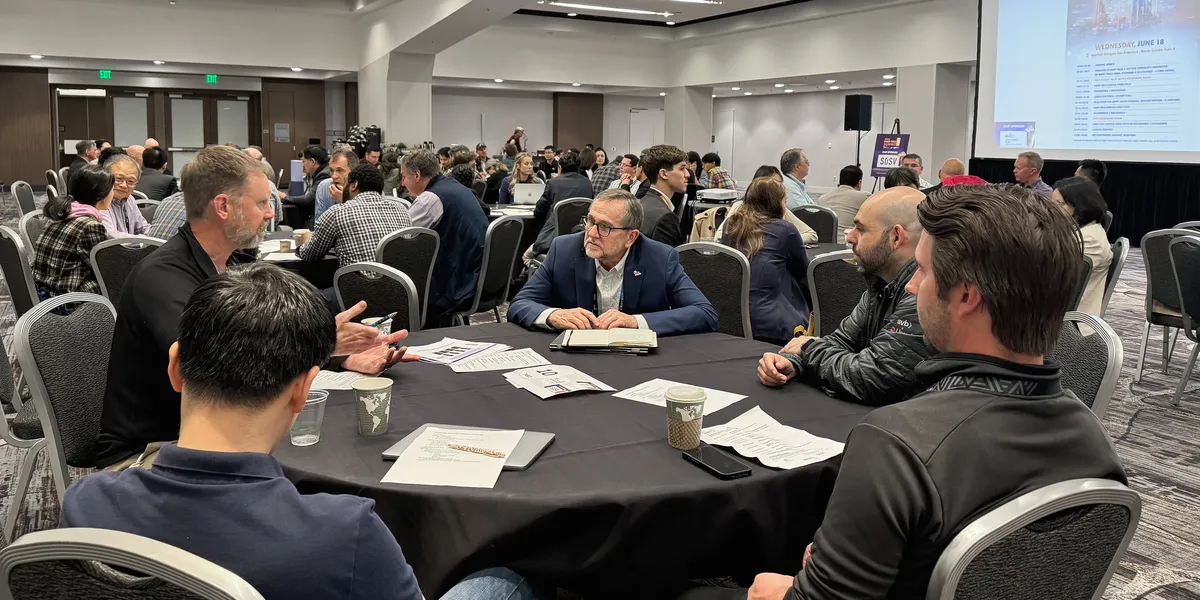
Each summit includes keynote speakers, followed by networking roundtables. Each table is composed of people from three to five startups, one or two investors, and a service provider.
That arrangement helps founders build relationships, which is the summit organizers’ priority, Wong says. Investors at past events have included i3 Ventures, Monozukuri Ventures, and TSV Capital.
“The connection with the community was fantastic, especially investors and founders in robotics.” —Mark Boysen, founder of Naware
Startups present their pitch, which a number of investors evaluate before ranking the business plan and product. The top 10 startups pitch their business to all the investors.
On the second day, the startup founders participate in a half-day engineering design–to–manufacturing workshop, at which manufacturing engineers teach them how to navigate the process and meet regulations.
In an exhibition area, participants can see demonstrations from the startups and connect with service providers.
 The 2025 event’s half-day engineering design–to–manufacturing workshop was led by Liz Taylor, president of DOER Marine. The company manufactures marine equipment.Larissa Abi Nakhle/IEEE
Positive feedback from attendees
In a survey of past summit attendees, startup founders said the event connected them not only with investors but also with other entrepreneurs having similar struggles.
“The connection with the community was fantastic, especially investors and founders in robotics,” said Mark Boysen, who founded Naware. The company, based in Edina, Minn., developed a robot that uses AI to detect and remove weeds from golf courses, parks, and lawns.
“I loved getting the investors’ perspectives and understanding what they’re looking for,” Boysen said.
Jeffrey Cook, who attended a summit in 2024, said he met “a lot of great contacts and saw what the hard tech venture climate is like.”
Attendees of the Hard Tech Venture Summit spend the first day networking and presenting their pitch to investors. IEEE Entrepreneurship
“Those in the community would benefit from coming to the summit,” said Cook, who founded Gigantor Technologies in Melbourne Beach, Fla. It develops hardware systems for AI-powered devices.
More than 90 percent of attendees at the 2025 event in San Francisco said they would highly recommend the summit to others, according to a survey.
Investors and service providers also have found the events successful.
Ji Ke, a partner and the chief technology officer of deep tech VC firm SOSV, attended the 2025 summit.
“I met a lot of young entrepreneurs tackling some big challenges,” he said. “This is one of the best events to meet some very-early-stage companies.”
Making important connections in hard tech
Startup founders who want to attend a summit must apply. Applications for this year’s events are open. Participants must be founders of preseed, seed, or Series A startups.
Preseed founders are seeking small investments to get their businesses off the ground. Those in the seed stage have already secured funding from their first investor. Series A startups have obtained funding and are developing their product.
Applicants are reviewed by a committee of investors to ensure the startups would be a good fit. Those who are approved are matched with investors and service providers based on their specialty.
“The journey for a hard tech startup is very long and arduous,” Wong says. “Founders need to meet as many investors as possible and other people who support hard tech systems so that they’re able to reach out to them for advice or help.”
Those interested in learning more about an upcoming event can send a request to entrepreneurship@ieee.org.
From Your Site Articles
Related Articles Around the Web
>
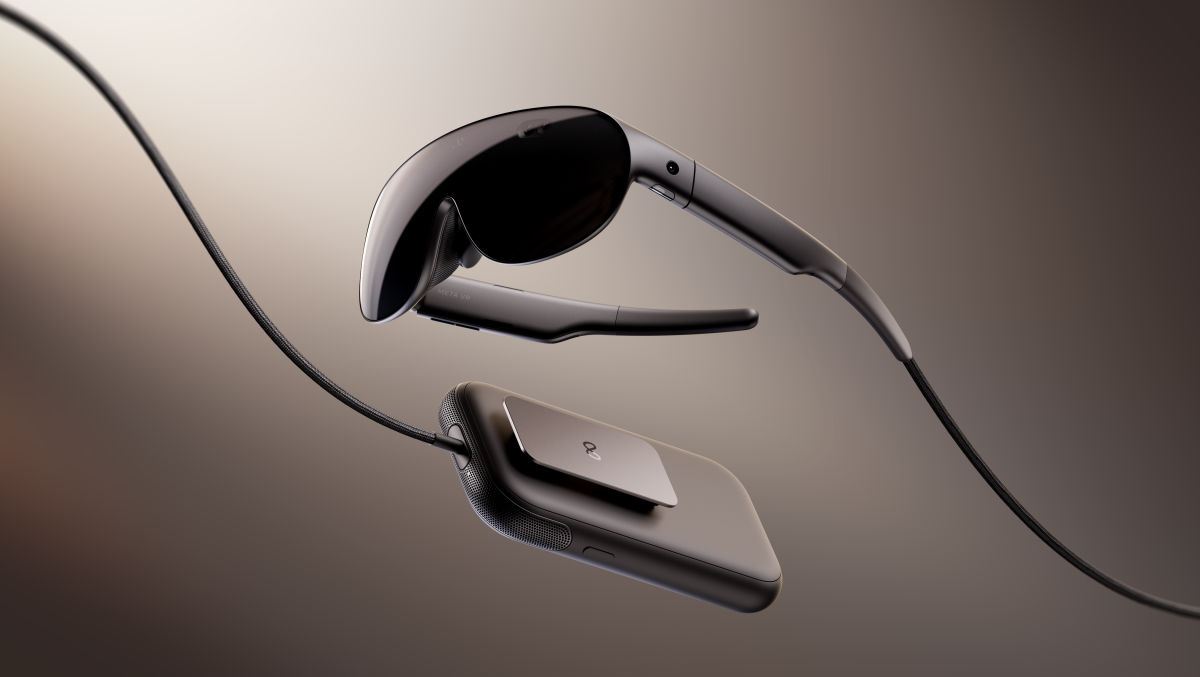
Meta is renewing its quest to make virtual reality a thing. At Connect on Wednesday, the company announced Meta VR Glasses, its newest entry into the VR market. These glasses actually seem quite promising given their substantially lighter form factor and a host of new entertainment integrations — including (allegedly) IMAX compatibility.
The company says that the glasses are five times lighter than the Meta Quest 3 — and they look much more like normal glasses than the bulky headsets that Meta previously released. Made of magnesium alloy, the glasses are powered by Qualcomm’s Snapdragon Reality Elite processor. They are powered by a computing puck, which also acts as their battery. Presumably, a user can just slip the puck into their pocket, which allows the glasses to be used on the go.
The glasses are largely entertainment-focused and come with micro-OLED panels built into the lenses, which provide a 5K Infinite Display with 37 pixels per degree, as well as Dolby Vision and support for Dolby Atmos audio. Users will be able to download and watch movies.
Perhaps one of the more unique features of the glasses, however, is that Meta is pitching them as a great way to enjoy IMAX-captured films.
Indeed, the company calls the glasses the “first IMAX Enhanced certified VR device ever.” What does that mean? Meta maintains that their glasses will be one of the only ways to experience the expanded aspect ratio that defines the distinct high-resolution viewing experience.
The glasses are also compatible with 3D experiences — and even movies that integrate a user’s physical space is integrated into their viewing experience. Meta says that it has teamed up with Disney and that, in November, Disney+ users will be able to stream specific movies — including certain Marvel movies — in 3D.
Meta says that users will be able to watch specific movies and have their surroundings “transformed with immersive environments, dynamic effects, stunning 3D visuals, and spatial audio” — essentially converting the movie into a VR gaming-type experience.
The glasses will also come with Meta AI — its automated virtual assistant — built in, which means that users will be able to talk to the glasses and automate various tasks via voice command. For instance, Meta says you’ll be able to start a movie just by asking your glasses to do so. Other ways to issue commands include hand gestures.
Meta says the glasses will be available next spring with a starting price of $1299.99.
When you purchase through links in our articles, we may earn a small commission. This doesn’t affect our editorial independence.
>
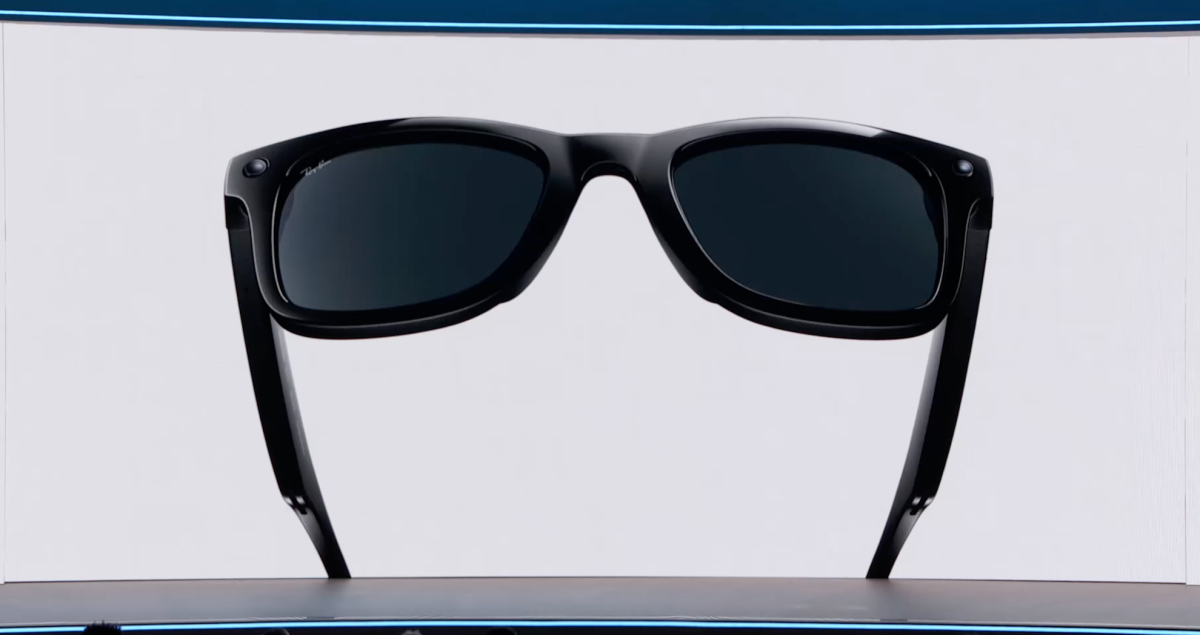
Confirming earlier reports, Meta announced its first pair of camera-free AI glasses, the clunkily named Ray-Ban Meta Audio, at its Connect 2026 conference on Wednesday. Designed to combat criticism around the more malicious use cases for AI glasses, which saw them nicknamed “pervert glasses” by some, the new devices will be audio-only, offering the ability to listen to music and podcasts, take calls, translate speech, and communicate with Meta’s AI assistant, Muse.
The glasses are designed by Meta’s partner in its AI hardware efforts, EssilorLuxottica, and will start at $349.
While Meta today offers a range of AI glasses in a variety of styles, colors, and capabilities, the audio-only glasses could help the brand recover from some of the reputational damage after critics pointed out how people, often men, were using AI glasses to record videos without subjects’ consent. Meta attempted to mitigate this issue with an update that would disable the camera if the LED light that indicated the glasses were recording was ever tampered with. However, the creepiness factor remained.
This latest device could prove to be more popular for that reason, while also providing an answer to something like Apple’s Siri-powered AirPods.
“Once you get used to high quality audio, it’s just a thing that you want all the time, right?” Meta CEO Mark Zuckerberg said during a keynote Wednesday, adding that the company after working on the idea realized it could design a whole new category of glasses around audio glasses.

Because they don’t have to house cameras, the glasses are slimmer than Meta’s other models and weigh only 43 grams. They also have adjustable temple tips, swappable nose pads, overextension hinges, and battery life of up to 12 hours on a single charge, Meta claims. With the included charging case, that battery life extends to up to 48 hours.
They’ll also come in a variety of colors and options — 23 color and lens combinations in total — and in two new styles, a retro-inspired “Clubmaster” Ray-Ban style and “Burbank,” described as more of a “classic, timeless, rectangle shape.” Like other Meta glasses, you can order them with your optical prescription as well, if needed.
The glasses will be available for preorder on October 13, the company noted.
Alongside the glasses, Meta announced its next-generation AI glasses (the ones with cameras), the Ray-Ban Meta (Gen 3). In addition to the Ray-Ban Meta Wayfarer, there will also be two new styles, the Aviator and Zena — the latter offering more of a cat-eye frame shape. These will have a 12 MP camera that supports 3K Ultra HD video, a six-mic array, and up to nine hours of battery life.
The glasses Meta launched with EssilorLuxottica will also see an expanded lineup of styles and colors as well as a new partnership with singer Lisa, which follows the company’s earlier brand partnership with Kylie Jenner. The glasses will also be roll out to more countries globally, Meta said.
All of Meta’s AI glasses will, of course, feature access to its newer personal AI assistant, Muse.
The company also teased other coming updates, including support for Dolby Atmos Capture, a feature that picks the best photo from multiple frames, an option to choose landscape or portrait modes, hearing enhancements for those with hearing loss, more detailed responses, different audio modes, customizable controls, and something called “private processing” that Meta claims will prevent the company from seeing your data.
When you purchase through links in our articles, we may earn a small commission. This doesn’t affect our editorial independence.
>
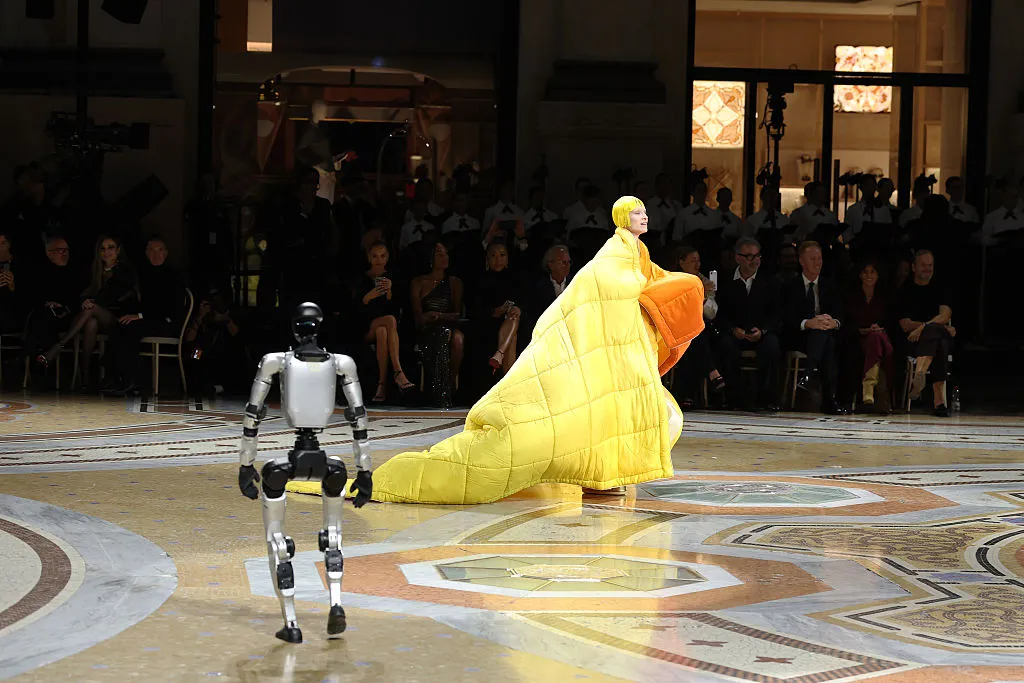
Vogue World closed its Milan edition this week with a troupe of robots — perhaps a preview of what’s coming when the event descends on San Francisco next year.
Vogue World is the magazine’s annual traveling spectacle, now in its fifth year: part runway show, part celebrity showcase, part variety hour, part ad-sales opportunity, staged in a different city each time. It has run through New York, London, Paris, and Hollywood. This year’s Milan edition was marketed as a tribute to Italian craftsmanship and “the human touch” in an age of technology, which makes what happened next a little strange.
During the act titled The Age of Intelligence, humanoid robots made by the Chinese firm Unitree walked into the Galleria to Gigi D’Agostino’s “L’Amour Toujours.” They waved their arms in the arm, imploring onlookers to clap. One did a lasso. They were not wearing clothes. The pained expression of Alessandro Michele, the creative director of Valentino, quickly went viral.
I haven’t seen a single thing about the actual fashion that was presented at Vogue World Milan. Instead, everyone is talking about the robots. (These same robots have been making headlines worldwide for their dance moves, and for falling and breaking.) Similar robots turned up on the runway at London Fashion Week, which is happening now.
Vogue turned heads earlier this year when it announced that the next edition will be in San Francisco, arguably one of the least stylish cities in the United States. The timing isn’t coincidental. Anna Wintour has aligned herself ever more closely with the tech barons of our time, and Vogue World Milan was itself sponsored in part by Meta Glasses, with additional support from OpenAI.
It was one of those moments that reveals how thoroughly tech exists in a bubble, and that not everyone is happy with the rapid adoption of new technology, or by Vogue cozying up to the symbols of the insanely rich — and only getting richer — tech titans during a cost of living crisis. That’s before you get to AI, mass surveillance, the displacement of labor, and the energy crisis, all of them overseen by the same titans. For some, a robot on a runway is further proof of what is going wrong in the world right now.
“I’m annoyed by the celebrities cheering the whole thing,” one tech founder wrote me on Instagram. “It’s sick and gloom. People are literally losing jobs and livelihoods because of these things. They need to stop encouraging it. What’s it even modeling? Headphones?”
One fashion reporter friend simply said “No,” when I asked for thoughts on the robots and Vogue World San Francisco. Jason Johnson, founder of Culture Impact Agency, noted that Vogue has been trying to build a relationship with Silicon Valley for at least the past decade, highlighting when Jony Ive co-hosted the Met Gala back in 2015. The dancing robots at Vogue World Milan were inevitable, then, as is Vogue World San Francisco and as was Jeff Bezos and his wife, Lauren Sanchez, getting the splashy Vogue wedding cover and co-hosting the 2026 Met Gala.
“Publications are figuring out new ways to make money and tech has money,” he told me. “Vogue has the cultural influence and access that those tech people want.” Both sides win in the end, he said.
Still, something about the way Vogue is going about this feels unnatural.

Muna Ikedionwu, founder of MKEDI, a strategy firm for early-stage startups, said what she found most interesting about the robots is that they don’t fully represent the innovation and progress that’s actually happening in the creative technologist space. “I’ve seen such incredible examples of engineering and AI being used to influence fashion, being used to influence design and art,” she told me, adding that robots walking down the runway doesn’t even scratch the surface of what is happening right now at the intersection of fashion and tech.
She points to the artist duo AA Murakami, who created Olympian Eileen Gu’s dress of bubbles at this year’s Met Gala. They are fashion designers but also engineers, Ikedionwu said, noting a presentation she saw them give recently about how to create an “everlasting bubble.” They are helping to pioneer “emphemeral technology,” she said, “this idea of technology and innovation that speaks to the ephemeral nature or the temporariness of art and humanity and the soul.”
Sure, I guess when you compare it to this, the robots did seem quite boring. Whenever I think about the intersection of fashion and technology, I think about that Spring 2024 Schiaparelli collection, which unveiled a robot baby crafted with Swarovski crystals and a dress made with vintage tech like PC microchips. (I once threatened to wear that dress to Disrupt; see image above.)
Ikedionwu wonders whether this robot performance was a way to make the general public more comfortable with technology and fashion overlapping, a merger that has been underway behind the scenes for years. If so, it didn’t work. But maybe Vogue World is saving all the good stuff for San Francisco.
When you purchase through links in our articles, we may earn a small commission. This doesn’t affect our editorial independence.
>

Henry Pollock: Northampton chief expects more players to work with promoters like Eddie Hearn as he lifts lid on negotiations | Rugby Union News

Drag Race’s Alyssa Edwards Claps Back at Ken Paxton for James Talarico Campaign

Chelsea Women 1 – 0 Austria Wien Women
-

 movies4 months ago
Search For Canadian TV Actor Stewart McLean Now Homicide Investigation
-

 Fashion9 years ago
These ’90s fashion trends are making a comeback in 2017
-
Fashion9 years ago
According to Dior Couture, this taboo fashion accessory is back
-
Fashion9 years ago
Model Jocelyn Chew’s Instagram is the best vacation you’ve ever had
-
Fashion9 years ago
Emily Ratajkowski channels back-to-school style
-
Fashion9 years ago
9 Celebrities who have spoken out about being photoshopped
-

 Anime4 months ago
Rurouni Kenshin: Hokkaido Arc Manga Takes 1-Issue Break – News
-

 Anime3 months ago
HIDIVE to Stream English Dubs for The World Is Dancing, The Forsaken Saintess and Her Foodie Roadtrip in Another World, The Dangers in My Heart: The Movie Anime – News