
Tech
Efficient Design and Simulation of LPDA-Fed Parabolic Reflector Antennas



More Information
Log-Periodic Dipole Array (LPDA) fed parabolic reflector antennas serve high-gain broadband applications such as satellite communication, radio astronomy, and wideband radar, where constant performance over wide frequency ranges is essential. Despite nearly seven decades of research since the pioneering work of DuHamel and Ore in 1958, the synthesis and analysis of these antennas remain complex, requiring the tuning of many parameters across broad bandwidths. Traditional simulation approaches — combining Method of Moments for the LPDA with physical optics for the reflector — cannot account for mutual coupling between the feed and dish, and break down when support struts or electrically large reflectors are involved. This white paper presents an advanced full-wave simulation methodology using higher order basis functions that reduces unknowns by an order of magnitude compared to conventional MoM, demonstrates a practical three-step design strategy from stand-alone feed optimization through full antenna integration, and provides validated results for reflector diameters ranging from 24.2 λ to 242 λ with bandwidth ratios of 10:1 — all executed on standard desktop hardware with CPU/GPU acceleration.
>
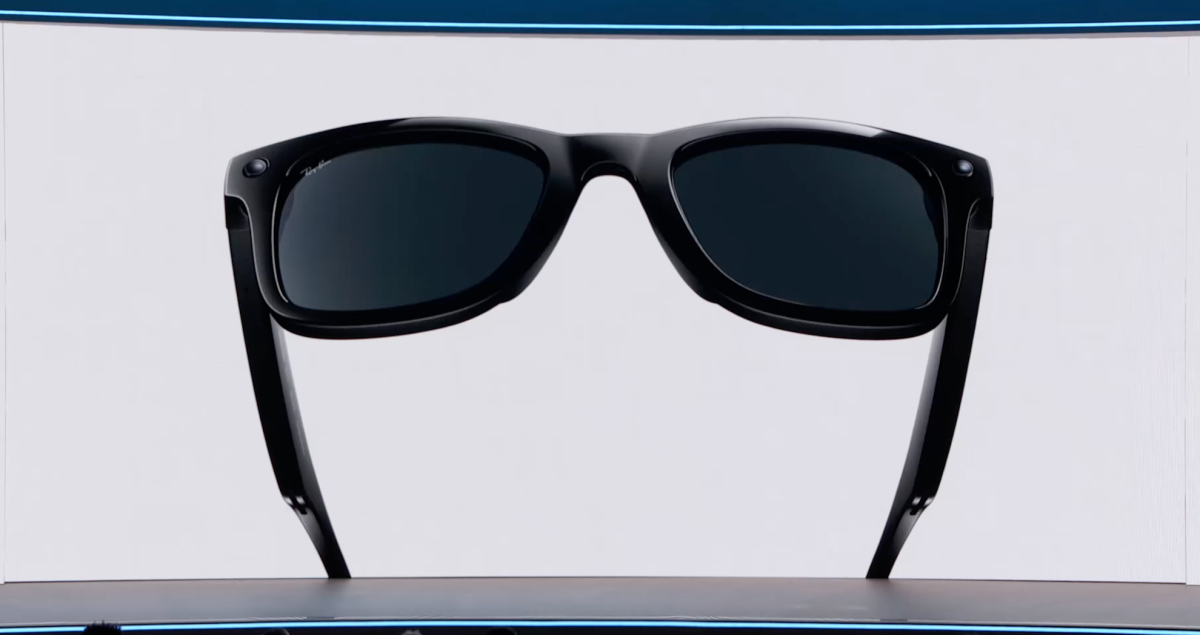
Confirming earlier reports, Meta announced its first pair of camera-free AI glasses, the clunkily named Ray-Ban Meta Audio, at its Connect 2026 conference on Wednesday. Designed to combat criticism around the more malicious use cases for AI glasses, which saw them nicknamed “pervert glasses” by some, the new devices will be audio-only, offering the ability to listen to music and podcasts, take calls, translate speech, and communicate with Meta’s AI assistant, Muse.
The glasses are designed by Meta’s partner in its AI hardware efforts, EssilorLuxottica, and will start at $349.
While Meta today offers a range of AI glasses in a variety of styles, colors, and capabilities, the audio-only glasses could help the brand recover from some of the reputational damage after critics pointed out how people, often men, were using AI glasses to record videos without subjects’ consent. Meta attempted to mitigate this issue with an update that would disable the camera if the LED light that indicated the glasses were recording was ever tampered with. However, the creepiness factor remained.
This latest device could prove to be more popular for that reason, while also providing an answer to something like Apple’s Siri-powered AirPods.
“Once you get used to high quality audio, it’s just a thing that you want all the time, right?” Meta CEO Mark Zuckerberg said during a keynote Wednesday, adding that the company after working on the idea realized it could design a whole new category of glasses around audio glasses.

Because they don’t have to house cameras, the glasses are slimmer than Meta’s other models and weigh only 43 grams. They also have adjustable temple tips, swappable nose pads, overextension hinges, and battery life of up to 12 hours on a single charge, Meta claims. With the included charging case, that battery life extends to up to 48 hours.
They’ll also come in a variety of colors and options — 23 color and lens combinations in total — and in two new styles, a retro-inspired “Clubmaster” Ray-Ban style and “Burbank,” described as more of a “classic, timeless, rectangle shape.” Like other Meta glasses, you can order them with your optical prescription as well, if needed.
The glasses will be available for preorder on October 13, the company noted.
Alongside the glasses, Meta announced its next-generation AI glasses (the ones with cameras), the Ray-Ban Meta (Gen 3). In addition to the Ray-Ban Meta Wayfarer, there will also be two new styles, the Aviator and Zena — the latter offering more of a cat-eye frame shape. These will have a 12 MP camera that supports 3K Ultra HD video, a six-mic array, and up to nine hours of battery life.
The glasses Meta launched with EssilorLuxottica will also see an expanded lineup of styles and colors as well as a new partnership with singer Lisa, which follows the company’s earlier brand partnership with Kylie Jenner. The glasses will also be roll out to more countries globally, Meta said.
All of Meta’s AI glasses will, of course, feature access to its newer personal AI assistant, Muse.
The company also teased other coming updates, including support for Dolby Atmos Capture, a feature that picks the best photo from multiple frames, an option to choose landscape or portrait modes, hearing enhancements for those with hearing loss, more detailed responses, different audio modes, customizable controls, and something called “private processing” that Meta claims will prevent the company from seeing your data.
When you purchase through links in our articles, we may earn a small commission. This doesn’t affect our editorial independence.
>
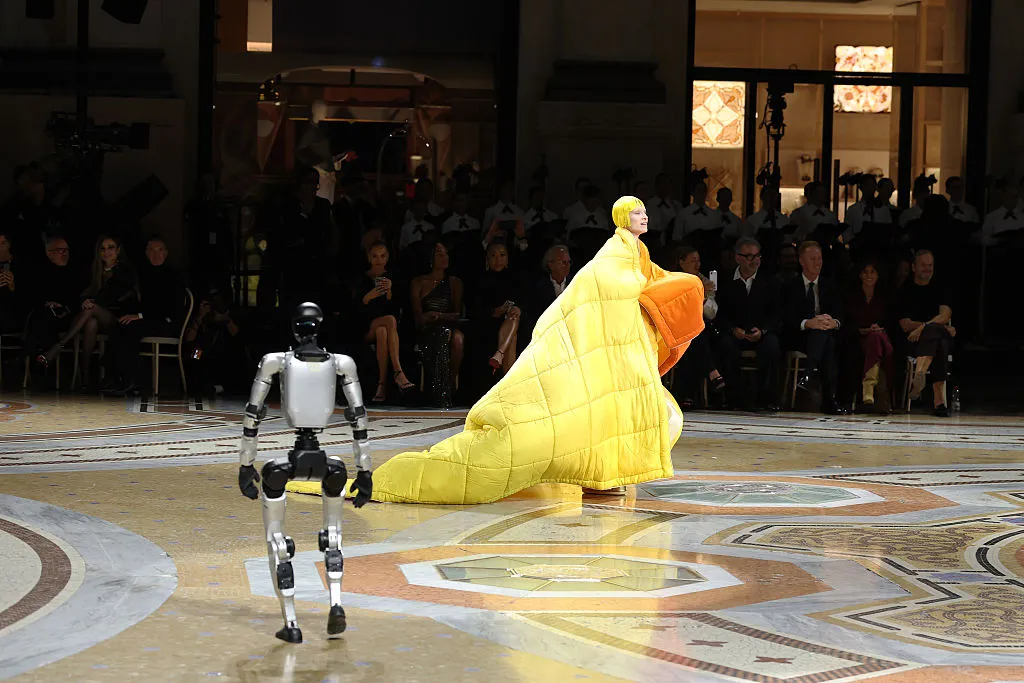
Vogue World closed its Milan edition this week with a troupe of robots — perhaps a preview of what’s coming when the event descends on San Francisco next year.
Vogue World is the magazine’s annual traveling spectacle, now in its fifth year: part runway show, part celebrity showcase, part variety hour, part ad-sales opportunity, staged in a different city each time. It has run through New York, London, Paris, and Hollywood. This year’s Milan edition was marketed as a tribute to Italian craftsmanship and “the human touch” in an age of technology, which makes what happened next a little strange.
During the act titled The Age of Intelligence, humanoid robots made by the Chinese firm Unitree walked into the Galleria to Gigi D’Agostino’s “L’Amour Toujours.” They waved their arms in the arm, imploring onlookers to clap. One did a lasso. They were not wearing clothes. The pained expression of Alessandro Michele, the creative director of Valentino, quickly went viral.
I haven’t seen a single thing about the actual fashion that was presented at Vogue World Milan. Instead, everyone is talking about the robots. (These same robots have been making headlines worldwide for their dance moves, and for falling and breaking.) Similar robots turned up on the runway at London Fashion Week, which is happening now.
Vogue turned heads earlier this year when it announced that the next edition will be in San Francisco, arguably one of the least stylish cities in the United States. The timing isn’t coincidental. Anna Wintour has aligned herself ever more closely with the tech barons of our time, and Vogue World Milan was itself sponsored in part by Meta Glasses, with additional support from OpenAI.
It was one of those moments that reveals how thoroughly tech exists in a bubble, and that not everyone is happy with the rapid adoption of new technology, or by Vogue cozying up to the symbols of the insanely rich — and only getting richer — tech titans during a cost of living crisis. That’s before you get to AI, mass surveillance, the displacement of labor, and the energy crisis, all of them overseen by the same titans. For some, a robot on a runway is further proof of what is going wrong in the world right now.
“I’m annoyed by the celebrities cheering the whole thing,” one tech founder wrote me on Instagram. “It’s sick and gloom. People are literally losing jobs and livelihoods because of these things. They need to stop encouraging it. What’s it even modeling? Headphones?”
One fashion reporter friend simply said “No,” when I asked for thoughts on the robots and Vogue World San Francisco. Jason Johnson, founder of Culture Impact Agency, noted that Vogue has been trying to build a relationship with Silicon Valley for at least the past decade, highlighting when Jony Ive co-hosted the Met Gala back in 2015. The dancing robots at Vogue World Milan were inevitable, then, as is Vogue World San Francisco and as was Jeff Bezos and his wife, Lauren Sanchez, getting the splashy Vogue wedding cover and co-hosting the 2026 Met Gala.
“Publications are figuring out new ways to make money and tech has money,” he told me. “Vogue has the cultural influence and access that those tech people want.” Both sides win in the end, he said.
Still, something about the way Vogue is going about this feels unnatural.

Muna Ikedionwu, founder of MKEDI, a strategy firm for early-stage startups, said what she found most interesting about the robots is that they don’t fully represent the innovation and progress that’s actually happening in the creative technologist space. “I’ve seen such incredible examples of engineering and AI being used to influence fashion, being used to influence design and art,” she told me, adding that robots walking down the runway doesn’t even scratch the surface of what is happening right now at the intersection of fashion and tech.
She points to the artist duo AA Murakami, who created Olympian Eileen Gu’s dress of bubbles at this year’s Met Gala. They are fashion designers but also engineers, Ikedionwu said, noting a presentation she saw them give recently about how to create an “everlasting bubble.” They are helping to pioneer “emphemeral technology,” she said, “this idea of technology and innovation that speaks to the ephemeral nature or the temporariness of art and humanity and the soul.”
Sure, I guess when you compare it to this, the robots did seem quite boring. Whenever I think about the intersection of fashion and technology, I think about that Spring 2024 Schiaparelli collection, which unveiled a robot baby crafted with Swarovski crystals and a dress made with vintage tech like PC microchips. (I once threatened to wear that dress to Disrupt; see image above.)
Ikedionwu wonders whether this robot performance was a way to make the general public more comfortable with technology and fashion overlapping, a merger that has been underway behind the scenes for years. If so, it didn’t work. But maybe Vogue World is saving all the good stuff for San Francisco.
When you purchase through links in our articles, we may earn a small commission. This doesn’t affect our editorial independence.
>

Last week, Anthropic confirmed that it was operating a wet biology lab in the Bay Area where it uses its AI models to run physical experiments. This week, the AI giant announced that this lab has already made what it believes is a big discovery: a new enzyme “system” that has certain “properties reminiscent of CRISPR,” as Anthropic describes it.
CRISPR is a natural immune system used by bacteria to fight off viruses that has become a gene-editing technology widely used by researchers.
Essentially, what Anthropic says it found is a previously unknown enzyme system hidden in the DNA of bacteriophages, which are viruses that infect and replicate within bacteria. Anthropic’s researchers say this system behaves similarly to CRISPR in that it can “perform operations like cutting, copying, and pasting DNA.”
It will be up to the broader research community to validate how big, or new, this discovery actually is. Anthropic CEO Dario Amodei acknowledges that the discovery was based on the previous work of others and that a team from Stanford previously discovered a system “that is in some ways similar to the one Claude found,” he wrote on X.
But Amodei and Anthropic are not just emphasizing the discovery. They are touting it was found “mostly, though not entirely, by Claude,” the CEO wrote.
On the one hand, that is astounding. This lab was only established this spring, (though Anthropic declined to be more specific about how many months it has been open). A discovery in just a few short months would be speedy enough work, but the team said it actually only took Claude 21 hours of concerted effort. Claude searched through data using about 950 agents that burned through 210 million tokens.
Still, the revelation that Anthropic has been conducting biology experiments comes right after AI CEOs, including Amodei, publicly admitted that models have become so capable, and so potentially dangerous, that the industry must slow down and develop safety-testing procedures. This after a couple of his employees publicly said earlier this month that there’s a risk AI could kill us all.
Amodei himself has said one of the things he fears most its that AI could be used for bioterrorism. But he also believes AI will “cure most diseases in 5-10 years,” he wrote. So Anthropic has clearly decided the rewards are worth the risks.
Given that, perhaps the biggest reveal in this news isn’t the discovery itself, but that the biology lab hasn’t let Claude loose. The physical experiments were done by humans.
“Our lab, located in the Bay Area, looks like a typical molecular biology lab. We do research that involves only the lower-levels of the biosafety risk level (BSL-1 and BSL-2) and we do not handle pathogens that can infect humans. All of the lab work is performed by human scientists.”
It’s also true that AI-powered biological research is hardly unique to Anthropic. Researchers from Stanford just published a paper on the work they are doing with LLMs and CRISPR. Researchers at UC San Francisco used AI to design enzymes from scratch. Google launched its first AI-powered biology research tool, AlphaFold, back in 2020. So AI has clearly arrived in biological research beyond the AI labs pursuing it themselves.
Yet, Amodei hasn’t ruled out a fully automated biology lab in the future. “Eventually it may even be possible for Claude itself to safely perform the experiments by autonomously controlling lab equipment, with appropriate safeguards in place, but we aren’t doing that today,” he said.
.
When you purchase through links in our articles, we may earn a small commission. This doesn’t affect our editorial independence.
>

Man Utd: Antonio Conte lined up for sensational Premier League return as replacement for Michael Carrick – Paper Talk | Football News

Meta introduces camera-free AI glasses

Warner Bros Gloom Sets In At Studio Amid Paramount Merger
-

 movies4 months ago
Search For Canadian TV Actor Stewart McLean Now Homicide Investigation
-

 Fashion9 years ago
These ’90s fashion trends are making a comeback in 2017
-
Fashion9 years ago
According to Dior Couture, this taboo fashion accessory is back
-
Fashion9 years ago
Model Jocelyn Chew’s Instagram is the best vacation you’ve ever had
-
Fashion9 years ago
Emily Ratajkowski channels back-to-school style
-
Fashion9 years ago
9 Celebrities who have spoken out about being photoshopped
-

 Anime4 months ago
Rurouni Kenshin: Hokkaido Arc Manga Takes 1-Issue Break – News
-

 Anime3 months ago
HIDIVE to Stream English Dubs for The World Is Dancing, The Forsaken Saintess and Her Foodie Roadtrip in Another World, The Dangers in My Heart: The Movie Anime – News