

movies
Box Office: ‘Devil Wears Prada 2’ Banking $10M+ U.S. Previews, $50M+ WW


FRIDAY AM UPDATE, AFTER EXCLUSIVE: Disney is reporting $10M in Thursday night U.S. previews for 20th Century Studios‘ The Devil Wears Prada 2. But global is up to $50.5M already. Wowza. The global opening forecast for chapter 2 is close to $180M worldwide.
The $100M feature production bowed in 35 markets yesterday including Germany, Spain, Australia, China, Brazil and Mexico, taking the full total to 45 markets to date. The first two days have strutted $40.5M at the overseas B.O.
The Devil Wears Prada 2 has posted the highest opening day of 2026 to date in Brazil, Italy, Korea and Australia as well as Belgium, Bulgaria, Saudi Arabia, UAE, Greece, Ukraine, New Zealand, Taiwan and the Philippines. The sequel opened at No. 1 or top non-local in all markets except for Netherlands, Ecuador and Bolivia.
The individual territories are shaping up as follows: Italy ($5.9M), Brazil ($3.2M), Germany ($3.1M), Mexico ($3M), Australia ($2.7M), France ($2.7M), China ($2.4M), Korea ($1.5M), Argentina ($1M), Spain ($1M) and all others ($14M).
The U.S. Rotten Tomatoes audience score stands at 88% versus the first pic’s 76%. The Wendy Finerman production is booked at 4,150 theatres including 1,000 Premium Large Format screens, 200+ DBOX/Motion screens, and 100 ScreenX screens.
EXCLUSIVE: 20th Century Studios’ The Devil Wears Prada 2 is sashaying in tonight with $10M previews which began at 2PM today according to sources.
Heck, yes, that’s a great start. At that level, Devil Wears Prada 2 is under last summer’s kickoff, Disney/Marvel Studios’ Thunderbolts* ($11.5M previews, $74.3M opening), right near Disney’s Little Mermaid ($10.3M previews, $95.5M opening) from 2023, and just under 2017’s Wonder Woman ($11M previews, $103.2M). A week ago, Lionsgate’s Michael posted overall previews (Thursday and Wednesday fan Imax shows) of $12.6M which led to a $97.2M North American start. Devil Wears Prada 2 is booked at 4,150 theaters and has all the PLF screens, while the King of Pop holds onto Imax.
Presales were quite sexy heading into the weekend with $20M for the David Frankel-directed sequel, which arrives in theaters close to 20 years after the first pic. That presales figure was on par with Project Hail Mary ($80M) and Dune: Part Two ($82.5M). Granted those are both male-skewing movies versus Devil Wears Prada 2 which is female, meaning attendance could be frontloaded for the sequel this weekend. Tracking has Anne Hathaway, Meryl Streep, Emily Blunt and Stanley Tucci sequel between $73M-$80M. Word of mouth bodes well with reviews now at 78% certified fresh on Rotten Tomatoes, higher than the original 2006 film which was 75% certified fresh. RelishMix reports on their social media buzz meter, Devil Wears Prada 2 is at a high 7.2 (versus The Breadwinner‘s 3.9M and Star Wars: Mandalorian and Grogu‘s 5.3.
The Devil Wears Prada 2 opens everywhere overseas this weekend. A $180M global start is expected or $100M overseas. In China, Prada 2 is tracking to $2.5M on Friday. Thursday was $2.4M.
The first Devil Wears Prada posted a Friday of $9.4M, a 3-day of $27.5M and finaled at $124.7M domestic, and $326.5M worldwide.
Exhibitors, likewise, were also seeing robust advance ticket sales for part 2.
Alamo Drafthouse crossed $1M in presales on The Devil Wears Prada 2 which tracks similar to Deadpool & Wolverine for the dine-in exhibitor.
“Presales for Devil Wears Prada 2 are super-strong, with a lot of group buyouts coming in,” said Traci Hanlon, CMO of Dallas luxe circuit Cinergy Entertainment. “We’re seeing real demand for the Prada-themed experiences, especially our dress-to-impress Prada Brunch and Couture Night events. We expect the popcorn purse bags to sell out quickly, and we’re really excited about our ‘human crane’ giveaway game with an actual Prada bag…all of our movie-themed in-theatre promos are getting a lot of moviegoer attention.”
Cinergy held a premiere night tonight for moviegoing members with a red carpet, prosecco greeting, paparazzi-style photos, and guests in full runway looks. The chain is literally putting actual designer bags, we’re talking Prada and Coach, inside a life-size “Human Crane” game which will be at their Midland, TX theater throughout the weekend until the bags are gone.
Separately, the Boxoffice Company reports that 28% of all scheduled weekend showtimes in the United States are being designated to Devil Wears Prada 2 followed by Michael (19%), The Super Mario Galaxy Movie (11%), and Project Hail Mary (7%).
>
Continue Reading
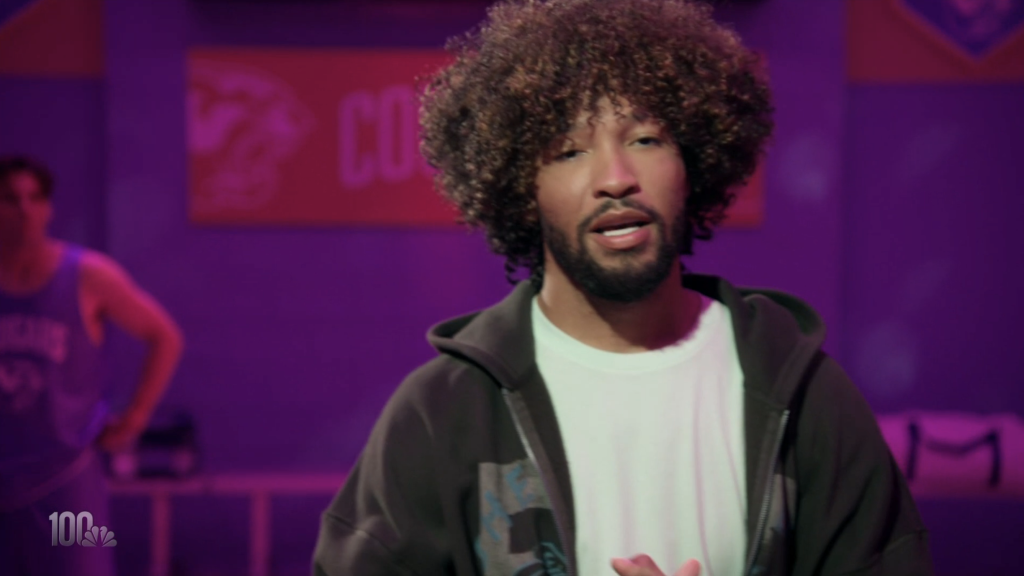
Following the Knicks’ big win at Madison Square Garden, Jalen Brunson took the stage at 30 Rockefeller Center for his Saturday Night Live hosting debut.
On Saturday’s Season 52 premiere, the NBA Finals 2026 MVP showed off some comedic chops in an otherwise business-as-usual episode of the NBC sketch comedy show, which featured Katseye as its musical guest.
Introducing new cast members Grace Reiter and Saidah Belo-Osagie, Katseye returned to a parody season of The Debut: Dream Academy to crown a new girl group. The quartet also performed in a mini music video with the awkward group of ladies, also featuring Jane Wickline and Veronika Slowikowska.
The next sketch was a support group featuring Brunson as one of several men whose spouses were grinded on at Usher and Chris Brown’s The R&B Tour.
“When I spent $1,200 on that meet-and-greet, I never expected her to actually greet his meat,” said Brunson as the other group members comforted him.
Katseye on ‘Saturday Night Live’
Jeremy Culhane and Jalen Brunson in ‘Saturday Night Live’
Jalen Brunson, Jeremy Culhane and Ben Marshall on ‘Saturday Night Live’
Brunson also starred in the parody sketch High School Musical: The New Generation as an athletically gifted new student who hilariously keeps dunking on the new Troy Bolton stand-in (Jeremy Culhane) and steals his girlfriend (Slowikowska).
As Shark Tank judge Daymond John, Brunson asked if the invention Respectacles, a pair of glasses that sounds an alarm when the wearer looks at breasts, “works for ass.” The inventors’ (Culhane and Ben Marshall) presentation keeps getting interrupted as they check out Lori Greiner.
Saturday Night Live kicked off its 52nd season this weekend on NBC with host Brunson and musical guest Katseye. The season continues with guest hosts Dakota Johnson, Shane Gillis and Inde Navarrette, along with musical guests Turnstile, Rosalía and Gracie Abrams.
>
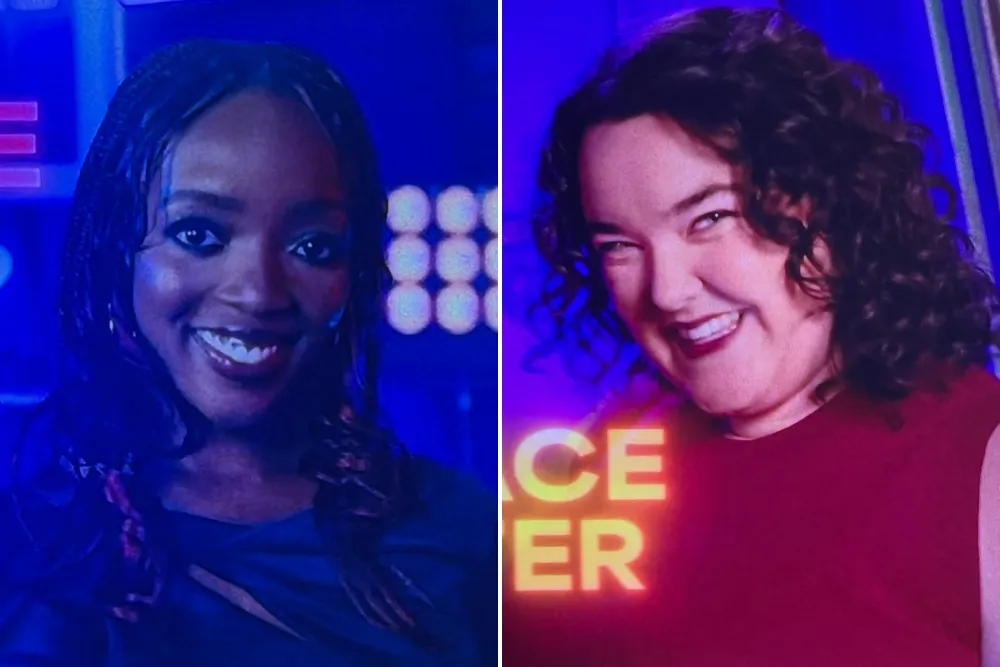
For those wondering how SNL‘s new cast members factored into tonight’s season premiere, the answer is: not much.
The two new featured players, Saidah Belo-Osagie and Grace Reiter, were introduced together, as part of an early sketch on the search for reality competition The Debut: Dream Academy‘s next breakout girl group.
Belo-Osagie played Neelsa Boyce, a 17-year-old entrant who sought to become a pop star after playing Young Nala in The Lion King on Broadway when she was a kid.
Reiter got more screen time as Margle, who “only wear [s] flip flops because I keep passing out when I try to tie my shoes.”
After she’s first introduced onscreen, Margle shows up fully nude to a dance choreography session. We later learn that she and another eccentric contestant on the series named Duff (Jane Wickline) were only invited to participate after witnessing an executive behind the show, played by Ashley Padilla, committing a hit and run.
Margle is surprised to learn what Dream Academy is actually about, as a show: She says she thought it was a “show where you learned to control dreams.”
Subsequently, she pitches “Moose Knuckle” as a band name and the line “Newton’s Cradle, come and get it” during a songwriting exercise.
The sketch culminates with a performance by the final girl group, featuring Margle, who performs the hot new single “Newton’s Cradle” alongside The Debut Season 1’s KATSEYE (who happened to be the SNL season premiere’s musical guest).
Reiter made one other appearance tonight in the night’s final sketch, which opens on host Jalen Brunson (of the recent NBA Finals-winning New York Knicks) in the locker room. He won’t be meeting with reporters after tonight’s game, he says — though he’s visited regardless by a grey-haired Kenan Thompson, who reveals himself to be the NBA star’s third-grade coach — you know, the one who had a “really bad drinking problem”?
Coach Dennis has come around seeking a “small loan” and in hopes of getting Brunson to read his porno screenplay. Thompson introduces Reiter as Tonya, an immigrant who came to the U.S. eight years ago with a dream, who he hopes to rope into his porn. Kam Patterson also features in the sketch, which culminates in his, Reiter and Thompson’s characters stealing jerseys from the empty locker room and running away.
That was all the night had in the cards for Belo-Osagie and Reiter. Often, SNL will use its Weekend Update segment to help break in its new talent, though special segments of tonight’s presentation were instead devoted to special panelists Dario Amodei (played by Wickline) and Tucker Carlson (played by Jeremy Culhane).
Before returning for the new season, SNL said goodbye to Chloe Fineman and writer-performer Martin Herlihy, who was first introduced on the show as part of the trio Please Don’t Destroy. Other returning cast includes Kenan Thompson, Michael Che, Colin Jost, Mikey Day, Sarah Sherman, Marcello Hernández, James Austin Johnson, Andrew Dismukes, Ben Marshall, Tommy Brennan, Kam Patterson and Veronika Slowikowska.
Jalen Brunson, point guard for the 2026 NBA Finals-winning New York Knicks, hosted the kickoff episode for Season 52. Upcoming episodes will pair Dakota Johnson & Turnstile (October 3), Shane Gillis & Rosalía (October 10) and Inde Navarette & Gracie Abrams (October 31).
>
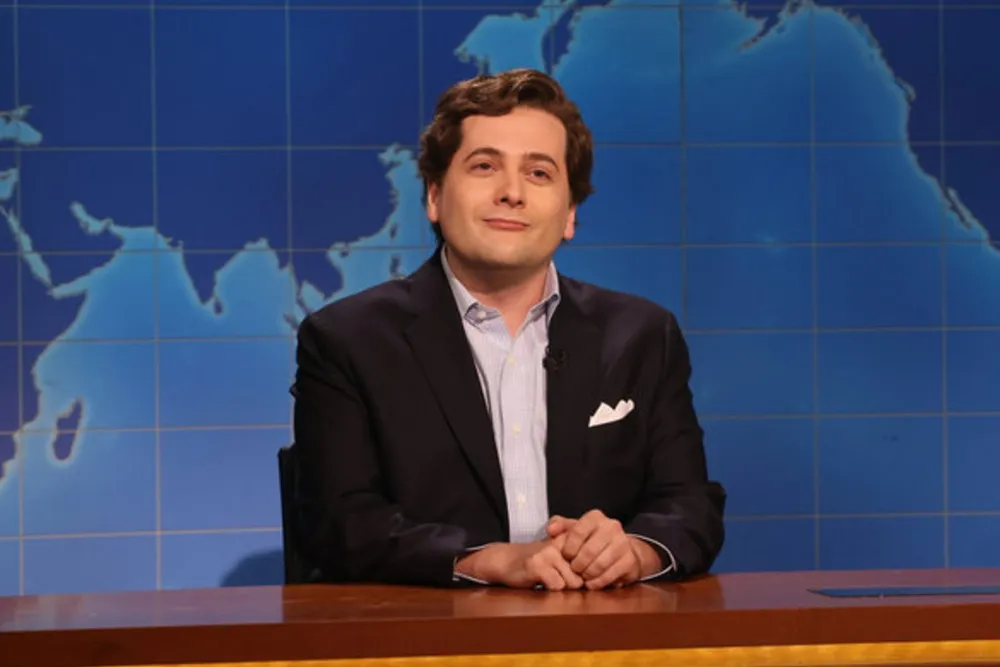
Saturday Night Live’s Weekend Update was back and focused on the movie business.
Jeremy Culhane returned as Tucker Carlson and he was giving his thoughts on the summer’s slate of blockbusters.
“It’s movie time, let’s find our seats, silence our cell phones and abandon Christian values,” he opened. “Of course, I’m talking about Paw Patrol: The Dino Movie. Let me get this right: Jesus didn’t live at the same time as the dinosaurs but Paw Patrol did? What are we doing? What’s going on?”
Other kids movies in the spotlight were Toy Story 5 and Minions and Monsters.
“It was also a big summer for Minions and Monsters and no I’m not talking about the children’s film, I’m talking about the Trump cabinet. That’s right, I’ve turned on Trump, I’m so brave,” he said.
On the fifth installment of Disney’s Tom Hanks-narrated film, he added, “Let me understand this, you’ve got a friend in me and his name is Woody?”
It wasn’t just the kids slate that took a hit. Culhane’s Carlson also had some words for Christopher Nolan’s The Odyssey, Spider-Man: Brand New Day and Obsession.
“The Hollywood cabal shoots its filth with millimeters, or what I like to call it, the gay edge. I like The Odyssey, it’s so nice to see Greek people do something other than make women feel uncomfortable,” he said.
On Tom Holland’s superhero flick, he said, “Everybody Loves Spider-Man: Brand New Gender. Spider-they, Spider-them, uses whatever bathroom it feels like.”
On Curry Barker’s horror movie, he added, “Obsession, the left’s idea of a horror movie is that a woman is forced to love a man. Oh no, help, I’m being chased by a heterosexual relationship.”
All of this came after Weekend Update anchor Michael Che took aim at David Ellison’s Paramount+ and Taylor Sheridan.
“The White House responded to major news networks canceling coverage of President Trump by launching a live stream called Trump TV. But if that’s Trump TV, what the hell is Paramount+?,” joked Che.
The shows on screen? Sheridan’s Yellowstone, prequel 1883, spinoff Dutton Ranch and Sylvester Stallone-led Tulsa King.
>
Sports2 minutes ago
A scary night in L.A., plus pennant races down to the wire

Anime8 minutes ago
We Are Aliens Film, Eri Short Anime, Candy Caries Win at Ottawa Int’l Animation Festival – News
Sports9 minutes ago
Liverpool forward Alexander Isak leaves Sweden camp due to 'minor injury'
-

 movies4 months ago
Search For Canadian TV Actor Stewart McLean Now Homicide Investigation
-

 Fashion9 years ago
These ’90s fashion trends are making a comeback in 2017
-
Fashion9 years ago
According to Dior Couture, this taboo fashion accessory is back
-
Fashion9 years ago
Model Jocelyn Chew’s Instagram is the best vacation you’ve ever had
-
Fashion9 years ago
Emily Ratajkowski channels back-to-school style
-
Fashion9 years ago
9 Celebrities who have spoken out about being photoshopped
-

 Anime4 months ago
Rurouni Kenshin: Hokkaido Arc Manga Takes 1-Issue Break – News
-

 Anime3 months ago
HIDIVE to Stream English Dubs for The World Is Dancing, The Forsaken Saintess and Her Foodie Roadtrip in Another World, The Dangers in My Heart: The Movie Anime – News