
Sports
Arsenal beat Fulham to move six points clear of Man City


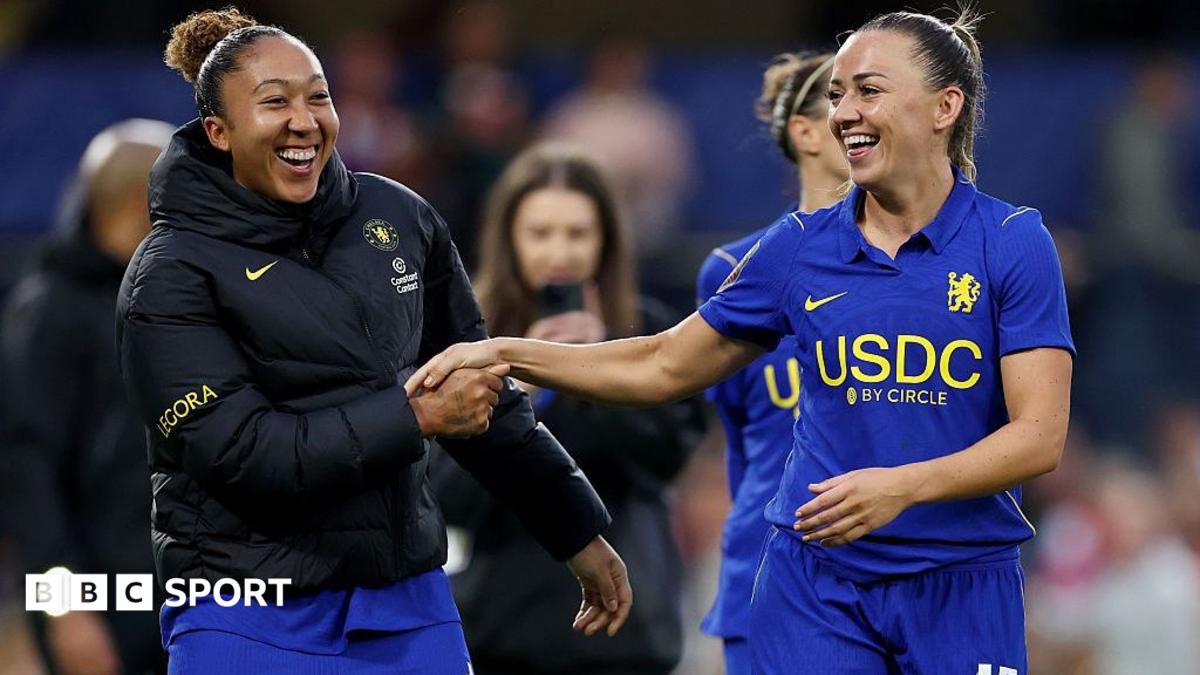
It is a result that could be the catalyst Chelsea needed to push on and put pressure on Manchester City, who face Arsenal next in the WSL (Sunday, 16:30 BST).
Chelsea’s match-winner Alyssa Thompson said their victory over the Gunners was “amazing for team morale”.
Even Bompastor admitted Chelsea are “a different team from last season” and there are tangible examples of their improvements.
England midfielder Keira Walsh was a standout performer against Arsenal and it was her strike which was parried into the path of Thompson for the only goal.
Her new parternship with 20-year-old Lexi Potter is flourishing and has allowed Walsh to get further up the pitch and play with more freedom.
Bompastor said the 29-year-old was “a boss on the pitch” when she reaches those levels and it helps the team have “better foundations”.
Goalscorer Thompson has consistently delivered up front, while the arrival of summer signing Melvine Malard from Manchester United has given them an outlet.
The French striker missed their opening two matches with a minor injury but scored on her debut against Birmingham City and caused havoc against Arsenal.
“She’s massive for us. She puts in work off the ball and sets off the press,” said team-mate Walsh.
“Her awareness of people around her and her ability… She’s an incredible striker and she will be very good for us.”
That press, led by Malard, has moved higher up and teams have struggled to break through, while full-back Ellie Carpenter continues to overlap dangerously.
Katie McCabe, who switched from Arsenal to Chelsea this summer, has brought leadership and bite – an aggression that was lacking at times last season.
Most of all, the Blues look like a team who believe they should be champions and are willing to work for it.
It was in contrast to toothless Arsenal, who have one victory in their first four WSL games and scored just twice.
“We’ve got both sides to our game and we showed that tonight in spells. Everyone was fighting for each other. Every first and second ball was ours,” added Walsh.
>
Field condition concerns at Maracana Stadium have been based more on player footing and performance than safety.
>
The Athletic’s Corey Pronman and Harman Dayal provide analysis of the most intriguing players placed on waivers during preseason.
>

Chelsea: Resilience is back so can Blues regain the WSL title this season?

Bill Gates Warns AI Could “Cause A Billion Deaths”
Ravens, Cowboys test field conditions, different cleats before kickoff in Brazil
-

 movies4 months ago
Search For Canadian TV Actor Stewart McLean Now Homicide Investigation
-

 Fashion9 years ago
These ’90s fashion trends are making a comeback in 2017
-
Fashion9 years ago
According to Dior Couture, this taboo fashion accessory is back
-
Fashion9 years ago
Model Jocelyn Chew’s Instagram is the best vacation you’ve ever had
-
Fashion9 years ago
Emily Ratajkowski channels back-to-school style
-
Fashion9 years ago
9 Celebrities who have spoken out about being photoshopped
-

 Anime4 months ago
Rurouni Kenshin: Hokkaido Arc Manga Takes 1-Issue Break – News
-

 Anime3 months ago
HIDIVE to Stream English Dubs for The World Is Dancing, The Forsaken Saintess and Her Foodie Roadtrip in Another World, The Dangers in My Heart: The Movie Anime – News