
Tech
Cloudflare says AI made 1,100 jobs obsolete, even as revenue hit a record high


Cloudflare on Thursday joined a growing list of tech companies — including Meta, Microsoft, and Google — that have reported increased revenue alongside and massive layoffs, attributing both trends to their use of AI.
Cloudflare, which provides internet security and performance services to millions of websites worldwide, announced it was cutting its workforce by approximately 20%, which equates to 1,100 people, it said as part of its first quarter 2026 earnings report on Thursday.
“We’ve never done something like this in Cloudflare’s history,” co-founder and CEO Matthew Prince said Thursday on the quarterly conference call, marking the first mass layoff in the company’s 16-year history. The company is cutting people from all teams and geographies except for salespeople who carry revenue quotas, CFO Thomas Seifert detailed on the call.
The news of the workforce cuts came as the company reported quarterly revenues of $639.8 million, a 34% year-over-year increase and the highest single quarter in the company’s history. However, this was coupled with a loss of $62.0 million compared with losing $53.2 million in the year-ago quarter.
That widening loss, even as revenue surged, highlights a familiar paradox in Cloudflare’s story: the company is growing fast but has yet to turn a consistent profit. But the loss was a smaller percentage of revenue, and the quarter was coupled with a lot of other positive indicators. For instance, Cloudflare reported that it had over $2.5 billion in “remaining performance obligations,” a year-over-year growth of 34%. RPO is the favorite metric these days to indicate revenue under contract but not yet delivered.
Hence, Prince insisted, the 20% cuts were not to reduce expenses but were strictly because of its use of AI.
“Today’s actions are not a cost-cutting exercise or an assessment of individuals’ performance; they are about Cloudflare defining how a world-class, high-growth company operates and creates value in the agentic AI era,” Prince and Cloudflare co-founder and COO, Michelle Zatlyn, wrote in a related blog post about the layoffs.
Techcrunch event
San Francisco, CA
|
October 13-15, 2026
Prince acknowledged on the call that even though Cloudflare has been selling AI-powered products, it was at first cautious about adopting AI itself.
“Internally, the tipping point was last November. At that point, across our teams, we began to see massive productivity gains, team members that were two, 10, even 100 times more productive than they had been before. It was like going from a manual to an electric screwdriver,” he described.
“Cloudflare’s usage of AI has increased by more than 600% in the last three months alone,” he added.
Prince highlighted the internal use of AI coding, saying that virtually the entire R&D team is now using the company’s own Workers platform — a tool that lets developers build and run software directly on Cloudflare’s global network — including its vibe coding feature. He also noted that 100% of the code produced this way and deployed for use in Cloudflare’s products is “now reviewed by autonomous AI agents.”
But it’s not just developers who are using AI internally, he said. “Employees across the company from engineering to HR to finance to marketing run thousands of AI agent sessions each day to get their work done.”
As a result, these highly productive, AI-powered employees require fewer support staff, he argued.
“A lot of the support people that provide support behind them, those roles aren’t going to be the roles that, you know, drive companies going forward,” Prince said.
Interestingly, Prince says that Cloudflare “will continue to hire people, and we’ll continue to invest in them because the people that are embracing these tools are just so much more productive than we’d ever seen before. I would guess that in 2027 we’ll have more employees than we did at any point in 2026.”
Cloudflare said it ended its first quarter before layoffs with a headcount of about 5,500.
The pattern Prince described — deploying AI gains as justification for workforce reductions even during a period of strong revenue growth — is fast becoming a familiar script across the tech industry. Whether it reflects true structural transformation or acts as convenient cover for cost discipline is a question that investors and employees will be wrestling with for some time to come.
When asked by an analyst on the call why the company needed to cut so deeply after such a good quarter, Prince said, “Just because you’re fit doesn’t mean you can’t get fitter.”
When you purchase through links in our articles, we may earn a small commission. This doesn’t affect our editorial independence.
>
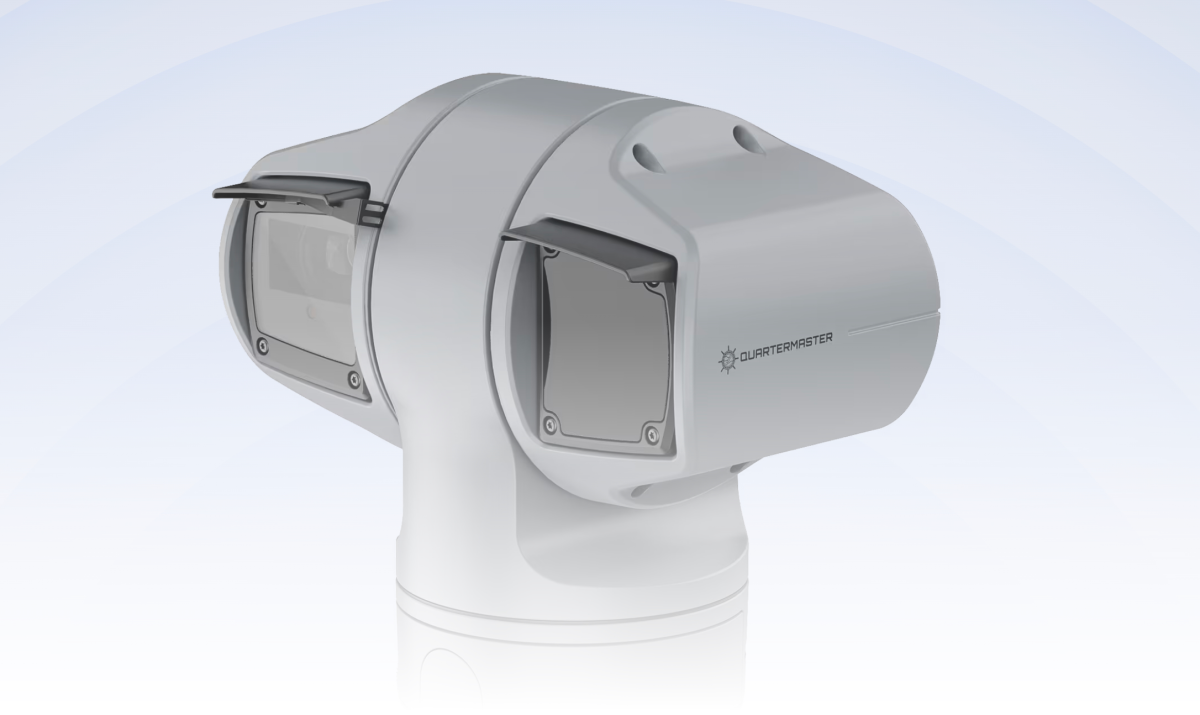
Arlington, Virginia-based startup Quartermaster in May closed a $43 million Series A around its idea of using weather-hardened sensors to capture data and generate insights about maritime activity. That idea has proven popular, because Quartermaster has already closed a much larger Series B, bringing in $140 million this time.
Founder and CEO Neil Sobin said the round was preempted by software-focused venture firm Insight Partners, and the interest in what Quartermaster is building was helped by the war in Iran and the shipping chaos it’s caused.
“I think we we’ve gained huge amounts of conviction in the core thesis,” Sobin said in an exclusive interview. “A big part of the story for us this year was, events in the world drive that clarity and drive that conviction and urgency, and when you see that, you gotta seize the opportunity.”
About $100 million of the Series B came from Insight and new investor, defense-focused firm Overmatch Ventures, as well as existing backers like First Round Capital. The remaining $40 million came in the form of a debt facility from investment bank Stifel.
“Quartermaster is building a distributed network for the ocean, where reliable, real-time data has been difficult to come by,” Nick Sinai, managing director at Insight Partners, said in a statement to TechCrunch. “The team’s execution and the strong demand for maritime data and awareness made this an investment we wanted to lead, and we’re proud to back Neil and the team as they scale to meet the opportunity with commercial fleets.”
Quartermaster’s hardware, which it calls “SmartMast,” is a fairly straightforward setup. The startup integrates cameras and radios into a package that’s mounted on a ship’s mast, and can capture and relay real-time maritime data. This allows governments, shipping companies and insurance providers to know far more than the current standard of AIS, or the “automatic identification system,” which is more or less just a series of location pings.
This real-time awareness data creates all kinds of opportunities for what Quartermaster calls the “largest blind spot on Earth.” Everything from helping ships avoid collisions, to better understanding congestion in shipping lanes, to rescuing lost mariners is on the table. Sobin said each SmartMast records tens of gigabytes per day, and the startup and its customers are still finding new uses for the data being captured.
“There isn’t a lot of prior art in maritime AI, and so it’s been exciting to, one, have our own source of data,” he said. “But two, there’s just so much low hanging fruit that we’ve been knocking down this summer in what you can start to build and then deliver value for our customers on.”
Sobin said the startup spends a lot of time engaging with people across the maritime industry — and not just vessel owners and operators — in order to find out what they want out of this technology.
“This is an ignored field. Mariners around the world have been ignored by technology for a really long time, and so when they meet us, they’re so excited, because they’re like: ‘Oh, I have so many ideas, let’s work on them’,” he said.
More than 650 vessels are now equipped with SmartMast in 25 countries, Sobin said, and the startup has shipped over 800 to customers. That gap is largely driven by the fact that Quartermaster is about to start deploying the SmartMast system to entire fleets, a sign that early adopters are really buying into the idea.
Quartermaster has had to hustle to keep up with demand, Sobin said. The startup has doubled its manufacturing capacity and continues to tweak its design so its hardware can be manufactured at a quicker clip.
“We know we can do this, and we are seeing a lot of proof that tells us we’re really onto something massive and important in the world,” Sobin said. “So, what do you do when you have that position? You run faster and you move faster and you double down on that strategy.”
When you purchase through links in our articles, we may earn a small commission. This doesn’t affect our editorial independence.
>
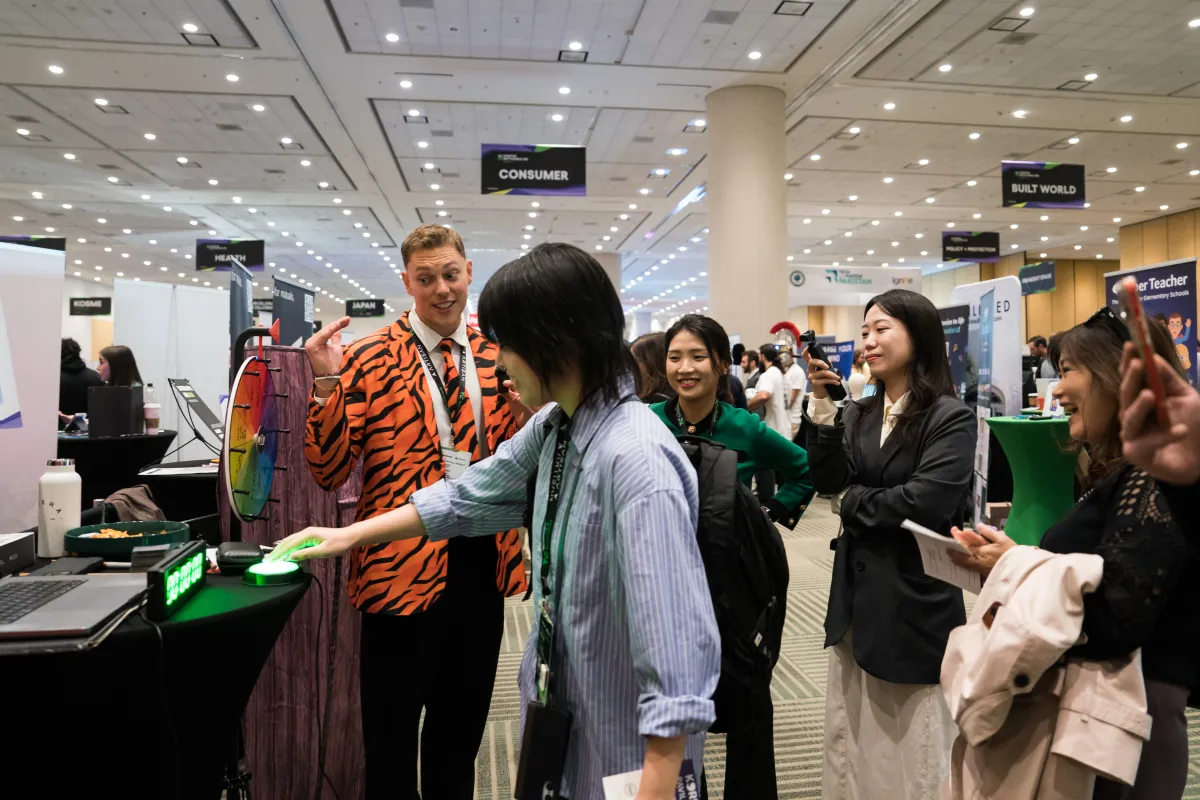
This is the last week and your final opportunity to book your TechCrunch Disrupt 2026 exhibit table. Book your exhibit table by this Friday, October 2, at 11:59 p.m. PT. After that, all exhibit table bookings close for good. If you missed the original deadline, this is your final opportunity to put your startup on the Expo Hall floor, the center of the event.
Disrupt takes place October 13–15 at Moscone West in San Francisco, bringing together 10,000+ founders, investors, operators, and tech leaders looking for the next breakthroughs and startups to back, products to use, and companies to partner with. This is your chance to demo your breakthrough in the heart of the global startup ecosystem. Book your table now before your competitor does.

Spotlight your brand at the heart of the global startup ecosystem
The Expo Hall gives your startup three days to get in front of the people who can move your business forward. Put your product on display, start conversations, and make your company one of the startups tech leaders remember.
With an exhibit table, you can:
- Demo your product to potential investors, partners, and decision-makers
- Meet VCs actively looking for their next startup to add to their portfolio
- Capture leads through the Disrupt mobile app and invaluable conversations
- Start customer and partnership conversations face-to-face
- Build global visibility alongside hundreds of other startups
Your exhibit package includes a 6′ × 30″ branded table for all three days, 10 team passes, lead-generation tools, website and app branding, press-list access, Silver Tier sponsor branding, and more. On-site branding is included when you book by Sept. 30. Founders can also access deal flow opportunities, such as investor-founder meetings in a quieter space in the Deal Flow Café.
The opportunity is here. The deadline is October 2. Don’t wait until the Expo Hall is full to wish you’d secured your spot.

This is the final window to get on the floor
Exhibit tables are open until October 2 at 11:59 p.m. PT. Tables are limited and first come, first served. Get your startup in early, get noticed, and make the most of the Disrupt experience while the opportunity is still yours. Book your exhibit table now.
Not exhibiting? Don’t miss Disrupt.
You can still get in the room at TechCrunch Disrupt 2026 on October 13–15. Hear from 250+ top-tier tech leaders across 200+ sessions on six industry stages, roundtables, and breakouts that give you practical insights for building, funding, and scaling, and use AI-powered matchmaking and interactive sessions to make more relevant connections. Explore 300+ startups and witness Startup Battlefield 200, the ultimate pitch competition, to discover potential products, partners, and investment opportunities. Get your Disrupt ticket and be part of the conversations shaping what comes next.

When you purchase through links in our articles, we may earn a small commission. This doesn’t affect our editorial independence.
>

Vishal Sankhala led product at a digital life insurance distributor Ethos before it went public earlier this year. In late 2023, the seasoned engineering executive, who had previously worked at Facebook and Uber, left Ethos and launched Outmarket, a startup that uses AI to help insurance agencies and brokers automate all their tedious paperwork.
“Ninety-five percent of insurance in the U.S. and worldwide is still sold through [human] agents, and when you look at sort of like how the process is today, it’s very manual,” Sankhala told TechCrunch. “This is a huge opportunity given how massive this industry is.”
Outmarket focuses on commercial insurance because these policies involve deep nuances and custom tailoring for every business. Companies must navigate a complex mix of coverage options, ranging from general liability and workers’ compensation to directors and officers (D&O) liability.
“There are over 250 different types of coverages that are out there, depending on what business you are and what risk you have and what you want to cover,” Sankhala said. “For each of those, the process is very different. The application forms you need to fill out, the documents you need to read.”
Outmarket’s AI automates those time-consuming administrative tasks, helping brokers (namely, organizations like Marsh and Aon that sell insurance) quickly evaluate and recommend the best policies, so they can focus on work that requires a human touch, such as responding to customers during emergencies.
That value has attracted over 300 insurance agencies, including 25% among the top 100, as Outcast’s customers since launching a new product 14 months ago. “For insurance, which is typically not a fast-moving industry, it’s quite fast growth,” Sankhala said.
Investors have been impressed with the company, too.
Outcast is set to announce that it raised a $34.5 million Series B led by SignalFire, with participation from Fika Ventures, Permanent Capital Ventures, TTV Capital and Dash Fund. The new round, which comes four months after the startup’s $17 million Series A, valued the company at $355 million, according to a person familiar with the investment.
The startup is not alone in building an AI operating layer for insurance brokerages. Other startups trying to help insurance brokers include Fulcrum AI and Further AI.
But with the U.S. property and casualty insurance market alone over a trillion dollars in annual premiums, Sankhala believes that Outmarket has plenty of room to grow by helping agencies work faster and smarter.
When you purchase through links in our articles, we may earn a small commission. This doesn’t affect our editorial independence.
>
Happy 17th birthday, Cavan Sullivan. Here are nine things you need to know about him – The Soccer Weekender

Maritime intelligence startup Quartermaster raises another $140M

Topco Media Rebrands as Ankey AX, Expanding Webtoon IP Business Into AI – News
-

 movies4 months ago
Search For Canadian TV Actor Stewart McLean Now Homicide Investigation
-

 Fashion9 years ago
These ’90s fashion trends are making a comeback in 2017
-
Fashion9 years ago
According to Dior Couture, this taboo fashion accessory is back
-
Fashion9 years ago
Model Jocelyn Chew’s Instagram is the best vacation you’ve ever had
-
Fashion9 years ago
Emily Ratajkowski channels back-to-school style
-
Fashion9 years ago
9 Celebrities who have spoken out about being photoshopped
-

 Anime4 months ago
Rurouni Kenshin: Hokkaido Arc Manga Takes 1-Issue Break – News
-

 Anime3 months ago
HIDIVE to Stream English Dubs for The World Is Dancing, The Forsaken Saintess and Her Foodie Roadtrip in Another World, The Dangers in My Heart: The Movie Anime – News