
Tech
Ana Inês Inácio: TNO Researcher Advancing Wireless Tech


When Ana Inês Inácio goes to work at the Netherlands Organization for Applied Scientific Research (TNO) in The Hague, she thinks about signals most people never notice: radio waves moving between satellites, sensors, and future wireless networks.
The integrated circuits the research scientist designs lay the foundation for next-generation RF sensor systems critical to advancing radar technologies.
Ana Inês Inácio
EMPLOYER
Netherlands Organization for Applied Scientific Research, TNO
TITLE
Scientist
IEEE MEMBER GRADE
Senior member
ALMA MATER
University of Aveiro, in Portugal
Those invisible RF signals are only part of what earned the IEEE senior member her global recognition.
Inácio recently received the IEEE–Eta Kappa Nu Outstanding Young Professional Award for “leadership in IEEE Young Professionals, fostering innovation and inclusivity, and pioneering advancements in RF sensor systems, bridging technical excellence with impactful community engagement.”
The recognition from IEEE’s honor society reflects a career built along two parallel paths: advancing RF circuit design while helping engineers worldwide build professional communities.
“I’ve always liked building things,” Inácio says. “Sometimes that means circuits; sometimes it means helping people connect and grow together.”
That blend of technical innovation and global leadership gives her work impact far beyond the laboratory.
EE lessons at the kitchen table
Inácio grew up in Vales do Rio, a rural village near Covilhã in central Portugal.
The region was known for farming and textiles, she says. Many residents worked in the textile industry, including her grandfather, who repaired machinery such as industrial looms. He became her first engineering teacher without ever holding the formal title.
Through correspondence courses delivered by mail, he taught himself electrical systems. At home, he explained electricity to his granddaughter while he repaired the household’s appliances and wiring.
“He would show me why something broke and how we could fix it,” she recalls. It sparked her curiosity.
Her mother was a tailor who later managed other tailors. Her father left his factory job to attend culinary school and now cooks at an elder-care facility. Curiosity was a trait that ran through the family.
By high school, Inácio was drawn equally to mathematics and physics and to biology and geology, she says. Encouragement from teachers and an uncle, an engineer, ultimately steered her toward electronics engineering.
Conducting research on integrated circuits
In 2008 she enrolled in an integrated master’s degree program in electrical and telecommunications engineering at the Universidade de Aveiro in Portugal, a five-year degree that combined undergraduate and graduate studies.
An opportunity to study abroad changed her path. In 2012 she moved to the Netherlands to study at Eindhoven University of Technology (TU/e) through a six-month European exchange program with UAveiro.
A professor encouraged her to stay on, so she completed her final year of masters in the Netherlands. She focused on techniques to improve the linearization of RF power amplifiers at Thales. The company, based in Hengelo, Netherlands, designs and produces electronics for defense and security.
She earned her master’s degree from UAveiro in 2013. After graduating, she joined the integrated circuit design group at the University of Twente, in The Netherlands, conducting collaborative research as part of a nationally funded program on linearization techniques for RF front-end systems. The experience introduced her to international research culture and persuaded her to pursue a career abroad, she says.
Engineering the future of wireless
Inácio joined TNO in 2018 as a junior scientist and innovator: her first professional industry job. Today she designs integrated RF front-end systems—the circuits that allow devices to transmit and receive wireless signals.
The components sit at the core of modern communications, enabling sensor networks, satellite links, and emerging 6G technologies.
Her work aims to tackle a central challenge: getting greater performance from smaller chips.
“As communication evolves, we need more bandwidth to transfer more data at higher speeds,” she says. “The question is how much complexity you can integrate into one system while keeping it efficient.”
Unlike commercial lab environments, which reuse established designs, research projects often start from scratch. Each transmit-receive chain—the signal path that converts digital data to radio waves and back again—is tailored to specific requirements.
Her work focuses on improving key circuit characteristics including linearity (ensuring that the signals that go out of the antenna are not distorted) as well as noise reduction (so design blocks can be optimized). Advanced design techniques help devices communicate more reliably while consuming less energy, a critical need for large sensor networks such as the Internet of Things, she says.
Artificial intelligence is beginning to influence her field, she says: “AI is already helping us work faster. The real challenge is learning how to use it to make better designs, not just quicker ones.”
A parallel vocation with IEEE
While her technical career flourished in research labs, an additional journey unfolded through IEEE.
Inácio joined the organization in 2009 as a student after discovering UAveiro’s student branch. What began as curiosity evolved into a long-term leadership path.
She advanced through roles within Region 8—covering Europe, Africa, and the Middle East—one of the organization’s most culturally diverse regions. She was the student branch’s vice chair, and the region’s student representative for more than 22,000 IEEE members. She also served as the Young Professionals Affinity Group chair for the IEEE Benelux Section, which encompasses Belgium, the Netherlands, and Luxembourg.
Currently, she serves as the immediate past chair of the Region 8 Young Professionals Committee, and vice chair and IEEE Member and Geographical Activities representative on the IEEE Young Professionals Committee. In those roles, she represents close to 135,000 IEEE members.
In addition, she is an active member of the IEEE Microwave Theory and Technology Society, currently serving as its Young Professionals liaison.
Her involvement with IEEE has boosted her professional confidence, she says.
“IEEE didn’t directly give me promotions at my day job, but it gave me leadership skills, networking opportunities, and the ability to work with people from everywhere,” she says.
Those experiences now shape her collaborations at TNO, where international teamwork is essential.
The IEEE-HKN Outstanding Young Professional Award recognizes that combination of technical excellence and community impact, she says.
Looking back, Inácio sees a clear thread connecting her childhood curiosity, her international career, and her IEEE leadership: Engineering, she says, is ultimately about people as much as it is about technology.
From Your Site Articles
Related Articles Around the Web
>

After more than a decade building a caller ID business serving over 500 million users, Truecaller is now taking the scam intelligence it gathered along the way to the open web, with no app or sign-in required.
The Swedish company on Sunday launched Scam Checker, a new web and Android service that lets users paste in a suspicious phone number, link, or message to find out if it’s fraudulent. To work, the service surfaces related reports from Truecaller’s community, ScamFeed. However, more detailed information about a phone number, including the name associated with it, remains available only through Truecaller’s existing service, which requires a sign-in.
The free-to-access tool will initially be available in India and is set to expand to Latin America, the Middle East and Africa, and Southeast Asia, the company said.
In addition to serving as lead generation for its app, the community reports can give Truecaller a better view of the scams circulating at a given time. This could also help the company with its fraud and risk products sold to enterprises through Truecaller for Business, although Jhunjhunwala said Scam Checker itself is aimed at consumers.
To work, Truecaller’s Scam Checker checks the link the user submits, expanding shortened URLs and following redirects to the final destination. It then checks these against its proprietary risk database and other fraud signals. Users can also paste a suspicious message, allowing the service to pick out a phone number or link and surface related reports from the Truecaller community.

The launch comes as scams have grown well beyond phone calls to text messages, messaging apps, and web links. In a 2025 GSMA survey of Indian adults (PDF), 46% of those who reported being scammed said they were approached through messaging apps, while 37% via SMS and 32% through voice calls.
Truecaller estimates that people make about 14 million web searches a month to check suspicious links and phone numbers, based on its analysis of search volumes and traffic to existing verification services. That behavior helped shape Scam Checker, CEO Rishit Jhunjhunwala told TechCrunch.
“When you need it, you’re usually somewhere else. The link shows up on WhatsApp. Your mum gets a message about a traffic fine. A friend forwards you a screenshot and asks, ‘Is this real?’” Jhunjhunwala said. “What people do in that moment is search.”
Truecaller’s community is becoming a crucial piece of its scam-detection effort. The company told TechCrunch that about 20,000 scam reports are live on ScamFeed, its crowdsourced feed where users can post and discuss scams, in India, with around 1,300 new reports added each week. Between September 14 and 20, the company also said it evaluated 12.9 billion messages globally and flagged 20.3 million as fraudulent.
In the near future, Truecaller says it plans to broaden the types of scams Scam Checker can detect and add screenshot uploads for further analysis.
The company’s push beyond caller ID comes as its core business faces new pressures in India, its largest market with more than 350 million users. Telecom operators are rolling out the federal government-backed Calling Name Presentation service, while Apple and Google have added their own caller identification and spam-protection features. Last week, India’s telecom regulator also ordered caller-ID apps to share user-submitted spam reports with telecom operators, a move Truecaller criticized as a “one-way exchange.”
As a result, Truecaller’s focus is evolving beyond caller ID.
“Caller ID was the first problem we solved, and it’s still how most people find us,” he said. “But scams moved to a more multi-channel approach with links and messages, and increasingly to voice and video. Our protection has to follow the scammer.”
When you purchase through links in our articles, we may earn a small commission. This doesn’t affect our editorial independence.
>

Anthropic CEO Dario Amodei seems to be everywhere this weekend: He was lampooned on the season premiere of Saturday Night Live, and tonight, he’s set to have dinner with President Donald Trump at the White House.
Axios first broke the news of Amodei’s dinner plans, which were subsequently confirmed by other publications.
This will be the first one-on-one meeting between the two men, who recently found themselves on opposite sides of the AI safety debate. Amodei released a plan to slow AI development (or at least proceed with more caution), while Trump has insisted, without evidence, that the AI backlash is a Democratic hoax; he also wants to rebrand the technology as “super intelligence.”
Even before the current back-and-forth, Amodei and Anthropic have to had a fraught relationship with Trump’s administration. Earlier this year, the Pentagon designated Anthropic a supply-chain risk in response to the company’s attempt to put guardrails around the use of its technology (Anthropic has been fighting the designation in court), although other administration officials have been friendlier.
>
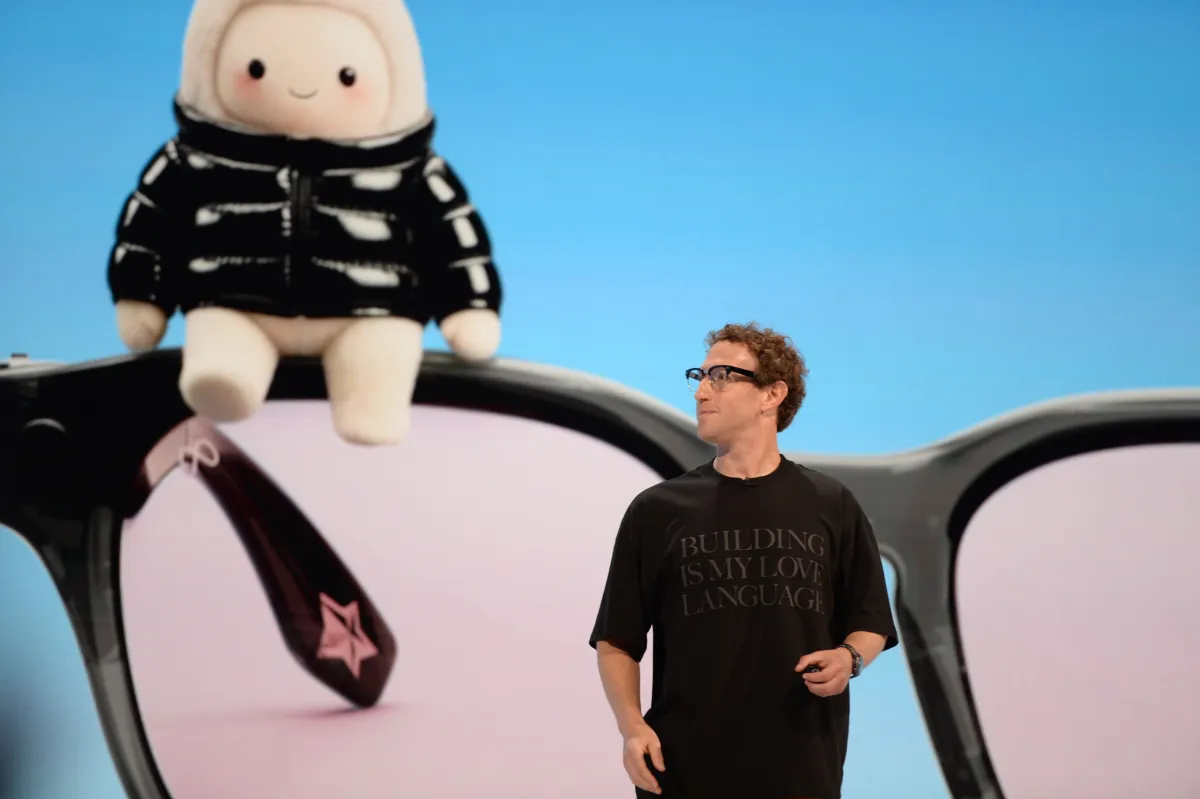
Meta’s new AI agent Muse took the spotlight at the company’s annual Connect event, where CEO Mark Zuckerberg made it clear that Facebook’s parent company plans to push AI features everywhere.
On the latest episode of TechCrunch’s Equity podcast, Kirsten Korosec, Sean O’Kane, and I discussed Meta’s AI announcements seemed to steal the spotlight during a week of new model launches from OpenAI and Anthropic.
With other big AI companies focused on coding and enterprise tools, it was a little surprising to see Meta move in the opposite direction, with a consumer focus and a cute, Tamagotchi-style AI device that Meta insists is for adults only. But as Kirsten noted, this could be playing to Meta’s strengths.
Sean tried Muse for himself, and while he was pleased that the agent actually found him some unclaimed money, he described the feature as more “a party-trick type thing,” rather than something that will drive ongoing usage. Plus, there’s the question of whether users can trust Meta’s AI with sensitive information.
“Meta’s business is to sell you ads,” Sean said. “And yes, they’ll make the argument that the more they know about you, the more accurate and interesting the ads will be — wake me up when we get to that fever dream.”
Keep reading for a preview of our full conversation, edited for length and clarity.
Kirsten Korosec: So how do you put Muse, which is this new personal AI agent that’s just been released by Meta and [is] clearly a bet on consumer — how does that fit into what you just described, at least with other frontier AI model companies seeing opportunity and business within enterprise? Because Meta Connect, which is their big annual event, just happened, and they are all-in on Muse, that is very clear.
Anthony Ha: That was definitely very head spinning for me, because it certainly feels like what we’ve been talking about has been this shift towards enterprise — not exclusively, but certainly that’s where the money, the attention is going.
Maybe some of that is because of the relative position of these different companies — OpenAI and Anthropic are in the lead in a lot of ways, but also, they’re planning to go public either this year, or next year in the case of OpenAI. And so there’s this feeling of, “I think we’ve got to actually make money now.” Not to say that they’re not making money [already], but because the costs are so high and the valuations are so high, they have to make money on this scale that’s essentially unprecedented. And I think they’re seeing enterprise as the way to do that.
And I wonder if Meta, for a variety of reasons, sees a different opportunity. There’s a part of me that’s like, “Wait, did they not get the memo?” But I think more charitably, you could say, “Well, if that’s where OpenAI and Anthropic are going, then maybe there is more of an opportunity for Meta to make the more consumer-friendly [version and] continue advancing AI on the consumer side.”
Kirsten: I mean, we can complain about or criticize or critique Meta all day long, but they’re very good and have [an] established track record of embedding themselves in everyday people’s lives. I mean, there’s a reason why Facebook has so many users — Instagram, WhatsApp. And I’ve never really thought of them as an enterprise product anyway. So I think it’s smart for them to continue to push on the consumer piece.
Sean, you’ve already tried Muse, which has already been out for a couple weeks. And I’m wondering if you see what your impression is, and if you see it being successful in the bid to become part of every part of your life.
Sean O’Kane: I mean, not really. I understand why some people think that is going to be the case. I’m sure a lot of people understand this, but this is roughly Meta’s kind ground-up version of an on-your iPhone, or on your Android, app of OpenClaw, which we talked about a couple months ago, which Meta went out and basically bought and integrated those folks’ work. It was the first big explosion of like, “Holy smokes, these agents can do all this stuff for me while I’m out and about, and I can just text with it and let it control my whole computer.” There’s a lot of the same elements of that at play. And having it in your hand, on an app that works like a relatively good chatbot as the interface, it does seem pretty powerful.
One of the first things that I did with it was — because it makes a bunch of suggestions for you, as to things that it can do, and one of them was, “I’ll scan to see if you have any unclaimed funds,” this thing that I think no one ever really thinks about and often is going to completely miss, because there’s just not a lot of unclaimed property funds out there in your name. Surprise, surprise, there were some for me.
It helped me make some money on my first day, and that was pretty cool. I wouldn’t have done that if I hadn’t been prompted by this thing to do it. And there’s a check on its way to me in the mail. Fantastic. [But] that ends pretty quickly, right? That was a one-time shot, but it’s not a thing that’s repeatable. That’s more like a party trick-type thing.
Kirsten: I mean, you just killed your own argument. I don’t see how that wouldn’t become wildly popular.
Sean: The more sustainable version of that, and the thing that Meta’s talked up a lot over the last couple of days, is taking that idea and applying it to your real, true everyday financials, like giving it your information for your credit card, your Gmail account, all this other stuff, do things that we’ve seen other companies do, like Rocket Money or whatever, where it’ll go cancel subscriptions that you’re not using or identify double charges, things that frankly the credit card company should be doing already.
And at that point you just run into that trust wall with Meta. I think one of the reasons that I was willing to explore this and was curious to stick with it a little bit — even through to today — is that somewhat shockingly, when I downloaded it, I just assumed that it would like really instantly prompt me and like plug me right into Threads, Instagram, Facebook, which I don’t really use ever, and pull up that context immediately.
But it didn’t. And it was working with me like I was a stranger at first, which made me more willing to use it, because I didn’t feel like Meta had everything on me already. But you can see, as you start to use it, it really tries to grab you and pull those things into the system, so that it can learn all this stuff about you.
I don’t know that I will ever trust Meta the same way. I think it’s an interesting timing for me, having just upgraded my iPhone and getting onto the new iOS with the new Siri that actually works and can do some controls on your phone in a way that is surprising and helpful, that it’s never been able to do. [I’ve been] thinking about how much I’ve been using that over the last week and how much more how much more willing I would be to have the Siri version of Muse take that information, because I just trust Apple more with that really sensitive information and not only trust it with the information from a cybersecurity perspective, but from the fact that its business is not to sell me a bunch of crappy ads.
Meta’s business is to sell you ads. And yes, they’ll make the argument that the more they know about you, the more accurate and interesting the ads will be — wake me up when we get to that fever dream.
And beyond the one-time money lever that I got, which was great, I don’t feel like I’ve found anything else that’s really all that useful — other than the fact that it is, to Anthony’s point, really tailored at keeping it sort of consumer-y in your interactions with it, with which I do think helps it and is why people are talking about it so much.
When you purchase through links in our articles, we may earn a small commission. This doesn’t affect our editorial independence.
>

Synduality Echo of Ada Game to End Online Service in 2027 – News
Commanders to sign veteran RB Austin Ekeler to 53-man roster: Source

Voice Actress Asami Yaguchi Dies at 47 – News
-

 movies4 months ago
Search For Canadian TV Actor Stewart McLean Now Homicide Investigation
-

 Fashion9 years ago
These ’90s fashion trends are making a comeback in 2017
-
Fashion9 years ago
According to Dior Couture, this taboo fashion accessory is back
-
Fashion9 years ago
Model Jocelyn Chew’s Instagram is the best vacation you’ve ever had
-
Fashion9 years ago
Emily Ratajkowski channels back-to-school style
-
Fashion9 years ago
9 Celebrities who have spoken out about being photoshopped
-

 Anime4 months ago
Rurouni Kenshin: Hokkaido Arc Manga Takes 1-Issue Break – News
-

 Anime3 months ago
HIDIVE to Stream English Dubs for The World Is Dancing, The Forsaken Saintess and Her Foodie Roadtrip in Another World, The Dangers in My Heart: The Movie Anime – News