

‘Rescue’
Troels N´Koya Jensen


In a nod to his longtime friend, Jimmy Kimmel will air a repeat episode on Thursday, May 21, during Stephen Colbert‘s final episode as host of his CBS late-night show.
ABC’s Jimmy Kimmel Live! will air new episodes Monday through Wednesday of that week, but will go dark on Thursday “out of deference to Colbert’s sendoff,” per LateNighter.
It’s not a first for Kimmel. He also aired a rerun on the night of David Letterman’s final Late Show on May 20, 2015, out of respect for a comedian he idolized. “I have too much respect for Dave to do anything that would distract viewers from watching his final show,” Kimmel said at the time. Kimmel took over The Late Show from Letterman and is now wrapping up his eleventh year as host.
During Colbert’s run the show has earned numerous honors, including several Emmys, including Outstanding Talk Series, and a Peabody award.
In a shocking move, CBS announced in July 2025, that it was ending The Late Show franchise in 2026. At the time CBS said it was “purely a financial decision against a challenging backdrop in late night” and “is not related in any way to the show’s performance, content or other matters happening at Paramount.” The “other matters” likely were CBS’ parent company Paramount’s efforts to complete a merger with David Ellison-owned Skydance.
The cancellation also coincides with Colbert’s contract coming up at the end of 2026, and it came days after Colbert called Paramount Global’s $16M settlement of Donald Trump’s lawsuit a “big fat bribe.”
>
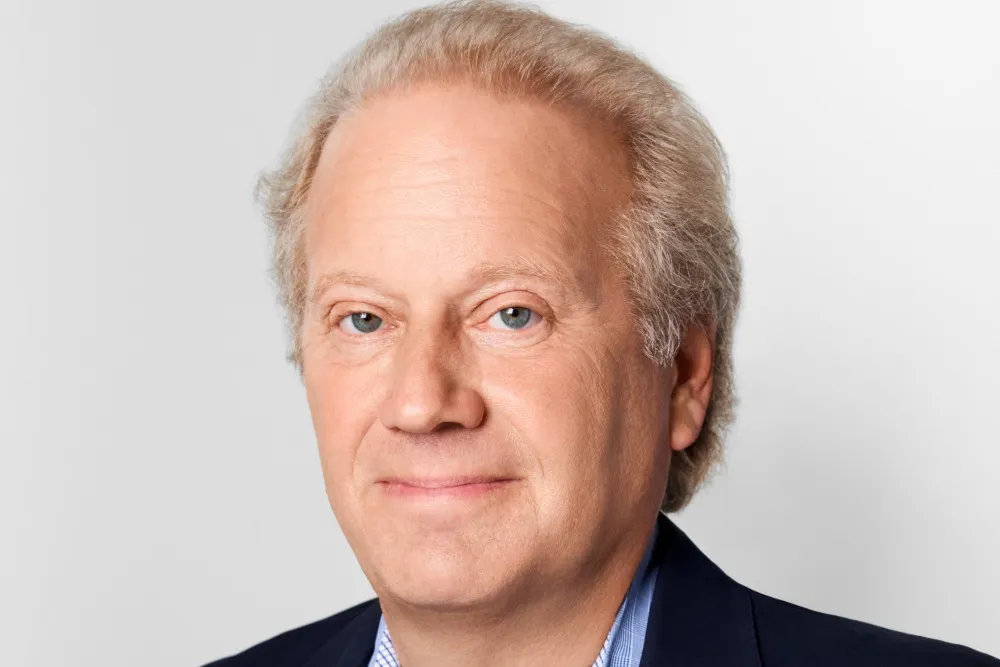
Black Bear, the company behind movies such as Train Dreams and Sing Sing, has a new head of television distribution.
The company, founded by Teddy Schwarzman, has hired former Paramount exec Dan Cohen in the role. It comes just over a year after Cohen left the studio ahead of its takeover by David Ellison’s Skydance.
Cohen, who was Chief Content Licensing Officer at Paramount and President of Republic Pictures, will oversee post-theatrical distribution of its movies, which including upcoming titles such as Wicker, Wife & Dog, Jason Statham Stole My Bike and A Woman in the Sun.
Recent deals for the company include Tuner, starring Leo Woodall and Dustin Hoffman, on Paramount+, and Ric Roman Waugh’s Shelter and Guy Ritchie’s In The Grey with Starz.
The company is also launching Black Bear Digital Networks, which will help independent content owners monetize across FAST and AVOD networks. It is working with companies such as Sinclair Networks, Tubi, CJ Enm and The National Wrestling Alliance.
“Dan brings an exceptional combination of licensing expertise, industry relationships, and strategic vision,” said Black Bear CEO Teddy Schwarzman. “His experience will be invaluable on multiple fronts, as we continue to invest in our U.S. distribution business, expanding our reach across the post-theatrical marketplace, and as we open doors for other media entities to connect with audiences across the digital landscape.”
“Black Bear has built an excellent brand over the past 15 years, with a strong track record of championing original stories that connect with both critics and audiences,” added Cohen. “I have immense confidence in what they’re building for the future. There’s a great opportunity to expand the ways Black Bear films reach audiences while also creating new avenues for third-party content owners through Black Bear Digital Networks. I look forward to helping grow both businesses and finding new ways to bring great content to audiences.”
>
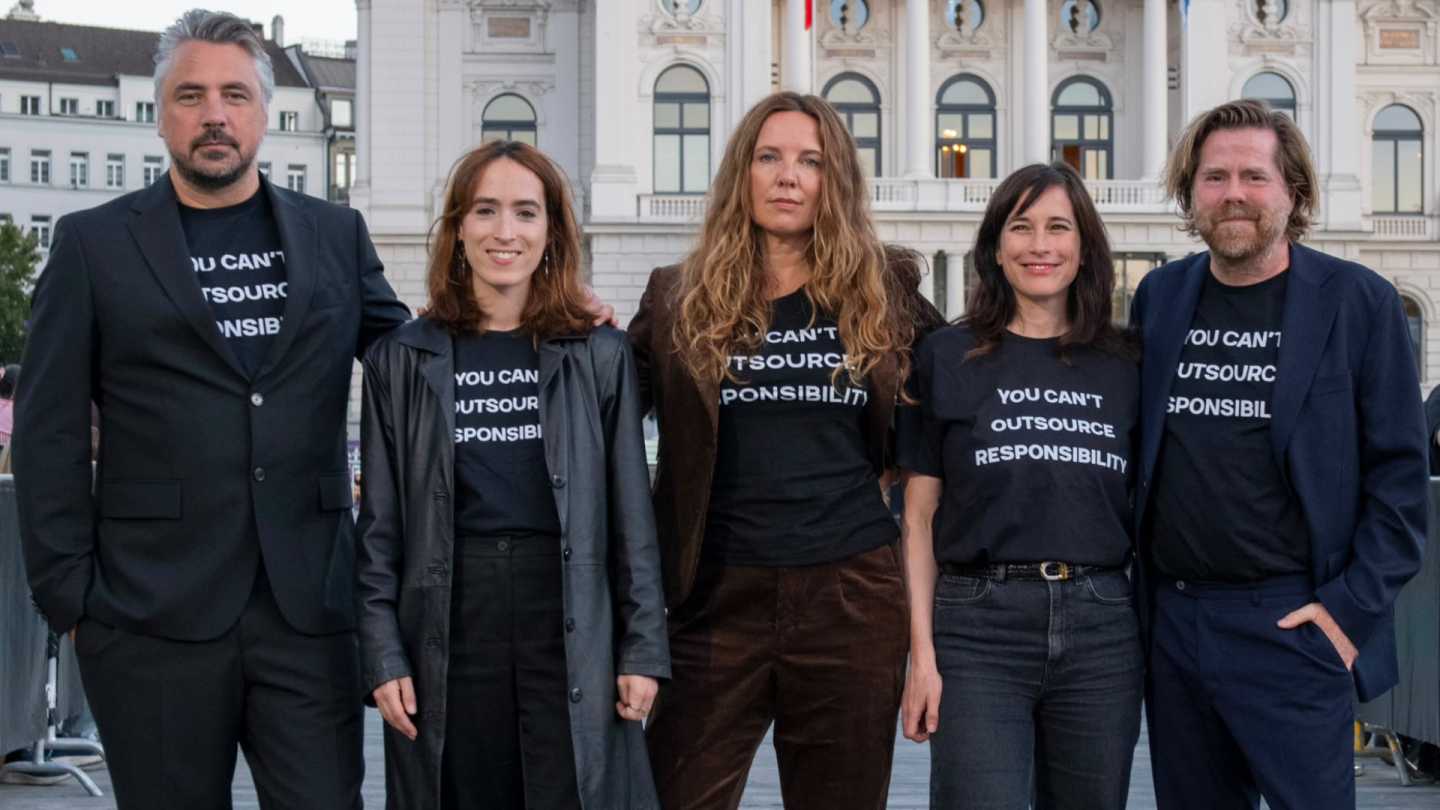
Hot on the heels of its world premiere at TIFF, Danish filmmaker Sine Plambech’s harrowing migrant tale Rescue has given European audiences food for thought at the Zurich Film Festival this week.
Also an anthropologist for nearly 20 years, the filmmaker was last here at the Swiss film festival with 2018’s Heartbound, another immigration story following the cross-cultural marriage between Thai women and Danish fishermen. After winning the prestigious Golden Eye, Plambech returns with another searing analysis of the immigrant experience. She also heads up Zurich’s documentary competition jury, and her relationship with this festival has never been stronger.
With Rescue, however, Plambech has admittedly never received so much social media hate. The doc opens off the Libyan coast, where a dinghy overcrowded with refugees is spotted by the crew of the Doctors Without Borders-operated rescue ship Geo Barents. During the rescue operation, Libyan militiamen intervene and abduct several people, including a woman, Roro, and her two young children. For months, Plambech follows Roro’s husband, Hani, and his struggle to reunite his family. It shines a glaring light on the EU-funded system in which North African countries are paid billions to seal off migration on the Northern shores.
“I felt very strongly that my job was to document whatever I was witnessing, but I didn’t know we were going to witness such a huge human rights violation in front of our camera,” says Plambech to The Hollywood Reporter following the film’s premiere in Zurich. A warning: Rescue is a distressing watch. Roro is beaten and raped for seven months while trapped by the Libyan militia. The ordeal suffered by her, her young baby and son is chronicled through videos Roro sent through Hani, with whom Plambech developed a close relationship. “Even though he was in such a distressed situation, he was like, ‘I want to tell my story,’” Plambech says of the Yemeni man.
The film is written by Plambech and Janus Metz, and produced by Elk Film’s Andreas Dalsgaard, Sofie Husum Johannesen, and Tereza Šimíková. Plambech hopes she’s continuing an urgent conversation by taking Rescue on the festival circuit — and is buoyed by the nearly 3,000 Euros raised so far for Hani and Roro’s family upon its premiere — but it is, in her words, hard not to become an activist witnessing the work of the rescue teams out on the water. “I did have nightmares,” admits the director.
Rescue also pulls into sharp focus Europe’s worsening migrant crisis, exacerbated by the EU’s “externalization” of migrant control to North Africa. “[Europe] has decided that we will let other countries do our dirty laundry,” says Plambech. With the discourse on immigration at boiling point and far-right politicians weaponizing the issue to wield power, the narrative has never been so fraught. It doesn’t help that the EU regularly detains Geo Barents for up to 60 days at a time, meaning the life-saving work they do in international waters is often halted.
Below, Plambech dives into the impossibly challenging Rescue and heading up Zurich’s doc jury. She reveals that she has never received so much hate as she did when posting about this film, and why it exposes a deep-rooted shift in our collective empathy: “Some people consider rescue ships an ambulance, but some consider them a taxi. I think these two images of the taxi and the ambulance tell us a lot about where we are in European politics.”
What is it that’s pulled you back to this theme time and time again?
There [are] always so many new aspects of migration to explore. It’s one of the most important topics of our time. It involves so many policies and people and emotions and discussions and violence. So it has just continued to be part of my thinking. But then, as an anthropologist and as a filmmaker, I always wanted to understand what that looked like from the refugees’ or migrants’ perspective, and in particular from the women’s perspective. So it’s trying to use the camera to tell the stories that we don’t hear so often, and get a more intimate understanding. And that was why I decided to have Roro as a main character, even though she was in captivity. It’s the first time I’m making a film about a woman who was actually in captivity that I hadn’t met.
[It’s] what continues to drive me, and of course now with the political situation… I mean, we had what we call the migration crisis 10 years ago, but now the situation is different because, as you see in the film, Europe is paying North African countries to keep migrants away.
‘Rescue’
Troels N´Koya Jensen
What was your way into this story? How did you find Hani and Roro?
There were certain things that I knew I wanted. I knew that I wanted a story that combined the political with an intimate human story, and I also knew that I wanted to go on land. With the ship, you don’t know who you’re going to meet because right now people are crossing from all over the world: Bangladesh, Afghanistan, Sudan, Syria, Yemen. Everyone has a story to tell, and you don’t know what story you’re going to find. We were out several times on the rescue ship, and the first time was more what is called a “normal rescue.” It doesn’t look normal, but they are so experienced, so it just [means] there weren’t people in the water. People were rescued directly from the ship. There were no life-threatening situations.
On that day when we were going to film, we had the visual and we saw the boat in distress in front of our camera. I told our [DP], “When you go out now, just follow on one person who comes into your the rescue boat and see what his story is.” And then Hani came and was like, “My baby, my baby.” And bless my [DP] for being like, “Okay, I think this is what my director needs. I’m following this person.”
And you were back on Geo Barents?
They came back to the mothership where I was filming. I was standing on the bridge filming the kidnapping, and I was just thinking, ‘What is it my people are facing there? Is my photographer able to document the situation?’ Because twice we have experienced that the [cameramen] have to put down the camera and rescue people, because that’s one of the conditions when you go out with the rescue ships — the rescue is more important than making the film. So I didn’t know what he would come back with. But then he came on board and he said, “I think we should follow this man.”
How was Hani at that point?
From the very start, Hani was very welcoming. Even though he was in such a distressed situation, he was like, “I want to tell my story.” Many people are telling their stories [now.] They are even saying, “I want the world to know my story.” I have never really been in a situation where so many want their stories to be told in front of the camera. So this whole idea of people wanting to be anonymous, that was not really an issue because they were like, “I want people to know what’s happening in Libya.” So then, I decided to go on land with Hani and follow him up to the refugee center in Italy. After some weeks, he said that Roro is sending these videos. I didn’t consider it material for the film because it was filmed so roughly. I thought my film would be about a Muslim man from Yemen, seeing the world from his perspective. But then all this material continued to come, and he just forwarded it to me. And then one day I was on a call with him, and Roro came on the call as well. And then I began to connect with her, and we were trying to help her for all these months, to get her out of Libya. When we were in the editing process […] I agreed with Roro and Hani, “Okay, let’s focus on Roro.”
A practical question: How do you get access to Geo Barents? Because that is such a dangerous situation. The other boat had weapons.
Yeah. It started with Doctors Without Borders contacting me because I [was] working as a researcher. They had some questions about what [my] research was saying about the situation in the Mediterranean, and maybe they could use that for a campaign. And then, because I have worked with migration for so many years and followed the routes from West Africa and in many places, but I hadn’t been at sea. As an anthropologist and filmmaker, I wanted to be able to see: What does it feel like in the middle of the night? With the waves, and the only light is the moon? So I asked if I could get permission to go there, and it’s not uncommon that they bring journalists or documentaries [on board], but with the rescue ships they wanted us to come and document the human rights violations.
And get the story out there.
I felt very strongly that my job was to document whatever I was witnessing, but I didn’t know we were going to witness such a huge human rights violation in front of our camera. That was something no one could have known. I got special access because we were allowed to come on board several times rather than just once. But of course, it’s also something you have really to be careful. I didn’t want to make an activist film, even though it’s very difficult to make a film about migration and not be seen as an activist. Also, witnessing the crimes going on, it’s very difficult not to become an activist. So all that balancing is something we’re still working on.
How do you — not as an anthropologist and not as a filmmaker, but as a human — steady yourself through witnessing something like this?
I did have nightmares. The good thing now is the Danish Film Institute made sure that we have psychological debriefings. Like 10 years ago, when I wrote documentaries, that was not part of the funding, but it’s actually [enforced] now. But when [Roro] was captured and I was back in Copenhagen and Hani was in the refugee camp in Italy, I had these nightmares where I was seeing her going back at sea, and then drowning, and there was no one to pick her up because the ship was not out; it was in detention.
So it’s definitely the project that has followed me the most emotionally as well. And also my cameraman. I mean, the guys who had to put down their camera and rescue people… But also, just editors sitting with that material for hours and hours and hours. It’s difficult because it’s always worse for all the survivors and the rescuers. They witness this every day. So I also don’t want to be the film team to [say], “Oh, I’m watching these different things, and I’m traumatized.” But of course, when you document these atrocities, brutalities, you are a human more than you are a filmmaker.
I was thinking, when the ship was in detention, [the rescuers] must feel so powerless. What kind of conversations are you hoping this prompts out of Zurich, but also when it’s released more widely? Because this is EU-funded, these atrocities.
There are two or three main things that I hope we can discuss in the wake of the film’s premiere. Definitely the lack of accountability for the money that is being sent to North Africa , not only to Libya. I mean, even the Libyan population is suffering from this. There’s just no accountability in terms of how the money is spent and all the violence that this produces. So that’s a conversation we’re going to have over the next year, where the EU in June next year will renegotiate the deal with Libya. And we have this campaign [too]. At the premieres, we all wore this T-shirt that says, “You Can’t Outsource Responsibility.”
That’s one of the conversations we want to have, and use the film for that. We’re launching it with Think-Film producers to have a screening at Parliament, because a lot of the people crossing the sea are men.
That was really apparent watching the film.
Yeah, that breaks a lot of people’s emotions. Not necessarily in our audience, because they come and they want to see a film about it. But politically, the image of so many able men, [there is] the idea that they should stay in their home country and build up their home country rather than escaping to Europe. It’s a strong narrative around the rescue ships. So that’s also why I want to talk about a refugee family who is coming from a place of war […] and I also wanted to focus on a woman, because you can see she gets pregnant, she’s suffering from all kinds of sexual violence, all kinds of issues that are connected to women’s migration and women as refugees. Between 80 and 100 percent of women in Libya are being raped before they cross to Europe. So Roro’s story is one among many.
How do you think the conversation around the migrant crisis has changed in recent years as we hit this peak of right-wing politicians weaponizing the issue? People are literally being elected on the basis of their immigration stance. Are we at a boiling point?
I think we are at a very tough point, and I have followed this for 20 years. First of all, [Europe] has decided that we will let other countries do our dirty laundry and keep people out of Europe. Even when we had the previous refugee crisis, Europe had a shared rescue flotilla, and then they decided to let go of that and consider migrants and refugees as [people] who should be stopped. That’s why we now have the NGO. So that whole change from a refugee being someone that we are going to rescue and take care of in our European ideal of humanity, to being someone who needs to be stopped. And there will be collateral damage, with people drowning. That’s definitely something we are seeing culminating right now. Even when Hani was trying to come to Germany, 90 percent of people from Yemen would get asylum. Now it’s down to 15 percent. The whole narrative of asylum and refugees as being someone that we could handle and take care of [has changed] to stopping them on the northern shores before they even come here.
I use social media quite a lot to communicate about my work, and I said I’m going to do a film and follow this rescue ship. I have communicated with media and journalists for the past 20 years on this topic, but going on a rescue ship is definitely the post that got me the most hate, and I was not even going to rescue anyone. I was just going to document it, and they were like, “You are a traitor to the European ideals,” and “Do you know that you will be part of bringing in rapists into Europe?” That’s what rescuers and rescue ships are facing every day. Some people consider rescue ships an ambulance, but some consider them a taxi. I think these two images of the taxi and the ambulance tell us a lot about where we are in European politics.
It’s hard not to feel really cynical about the state of the world.
But I would say audiences are different. I mean, we started a GoFundMe campaign for Roro and Hani at our [Zurich] premiere to support the legal situation and medical costs. And we had one screening and we’re already at 3,000 Euros [$3,400]. There is hope.
How do you find balancing this with your duties as head of the documentary jury? You obviously have a wonderful relationship with the Zurich Film Festival.
What I really like about it is not only, of course, that they invite my films to have European premieres, and we won the Golden Eye [with Heartbound], but also that the festival really understands my work as an anthropologist and a filmmaker. I feel very understood and welcomed here.
What are you looking for in the doc lineup this year?
I’m looking for a personal story with a global perspective. Intimate stories that are going to tell [us] something more than just the environment we are in in that film. There [are] so many horrible and important and crucial things going on in our world. So I think our documentaries should reflect that through human stories […] that are representative of certain communities that we don’t have access to.
The 22nd Zurich Film Festival runs Sept. 24-Oct. 4.
>
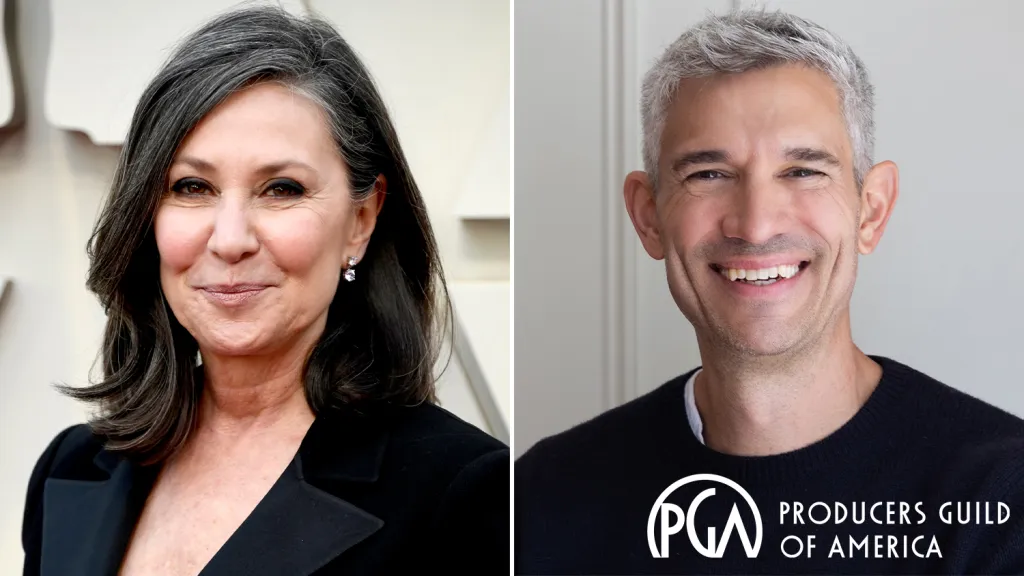
The Producers Guild of America said Tuesday that Oscar-winning Shakespeare in Love producer Donna Gigliotti and Emmy-winning Weird: The Al Yankovich producer Mike Farah as its new presidents.
The pair succeed Donald De Line and Stephanie Allain, who have been the guild’s presidents since 2022.
“It is an incredible honor to serve as presidents of the Producers Guild of America at such a pivotal moment for our industry,” said Gigliotti and Farah in a press release today announcing the news. “We are deeply grateful to Donald and Stephanie for their leadership and dedication to the guild, particularly as they helped guide our members through a period of profound change. The PGA has created a community that supports one another and a Mark that validates the work of a producer at the highest level. The PGA is dedicated to embracing new opportunities for producers while maintaining a commitment to the core principles of producing: tenacity, perseverance and dedication to all aspects of the work.”
Gigliotti became the third woman in Oscar history to win the Academy Award for Best Picture, winning in 1998 for producing Shakespeare in Love. She has since scored three more Best Picture noms for Hidden Figures, Silver Linings Playbook and The Reader.
She earned an Emmy nomination in 2019 for producing the Academy Awards telecast for ABC and received a second nomination in 2023 for the documentary Wuhan Wuhan. She also served a full six-year term on the Board of Governors of the Academy of Motion Picture Arts and Sciences, where she held leadership roles including Governance Chair and Finance Chair.
Farah is a three-time Emmy-winning producer who once worked as Allain’s assistant. He began at Funny Or Die as its first producer in 2008 and eventually ascended to CEO of the comedy platform. His credits include winning a pair of Emmys for producing Between Two Ferns, Billy on the Street and American Vandal. His later credits include Weird: The Al Yankovic Story and late-night’s @fter Midnight. He won Outstanding Television Movie for Weird: The Al Yankovic Story in 2023.
>


Search For Canadian TV Actor Stewart McLean Now Homicide Investigation


These ’90s fashion trends are making a comeback in 2017
According to Dior Couture, this taboo fashion accessory is back
Model Jocelyn Chew’s Instagram is the best vacation you’ve ever had
Emily Ratajkowski channels back-to-school style
9 Celebrities who have spoken out about being photoshopped


Rurouni Kenshin: Hokkaido Arc Manga Takes 1-Issue Break – News


HIDIVE to Stream English Dubs for The World Is Dancing, The Forsaken Saintess and Her Foodie Roadtrip in Another World, The Dangers in My Heart: The Movie Anime – News