
Tech
TikTok launches an ad-free subscription plan in the UK


TikTok is introducing an ad-free subscription plan in the U.K. that costs £3.99 (about $5.44 USD) per month. The new offering is rolling out over the coming months and will be available to users 18 and over. Users who sign up for the plan won’t see ads on TikTok, and their data won’t be used for advertising purposes.
The launch was likely driven by the U.K.’s General Data Protection Regulation (GDPR), which prohibits companies from collecting users’ personal data for advertising purposes without their consent.
“Choice for our community and growth for UK businesses go hand in hand on TikTok,” said TikTok’s UK Managing Director, Kris Boge, in a press release. “Advertising on our platform is already helping thousands of British businesses reach new customers, increase sales, and create jobs, while our new ad-free option gives people greater control over their experience.”
TikTok first began testing the ad-free plan in 2023. It’s unknown if the social media giant plans to bring the offering to the U.S.
>
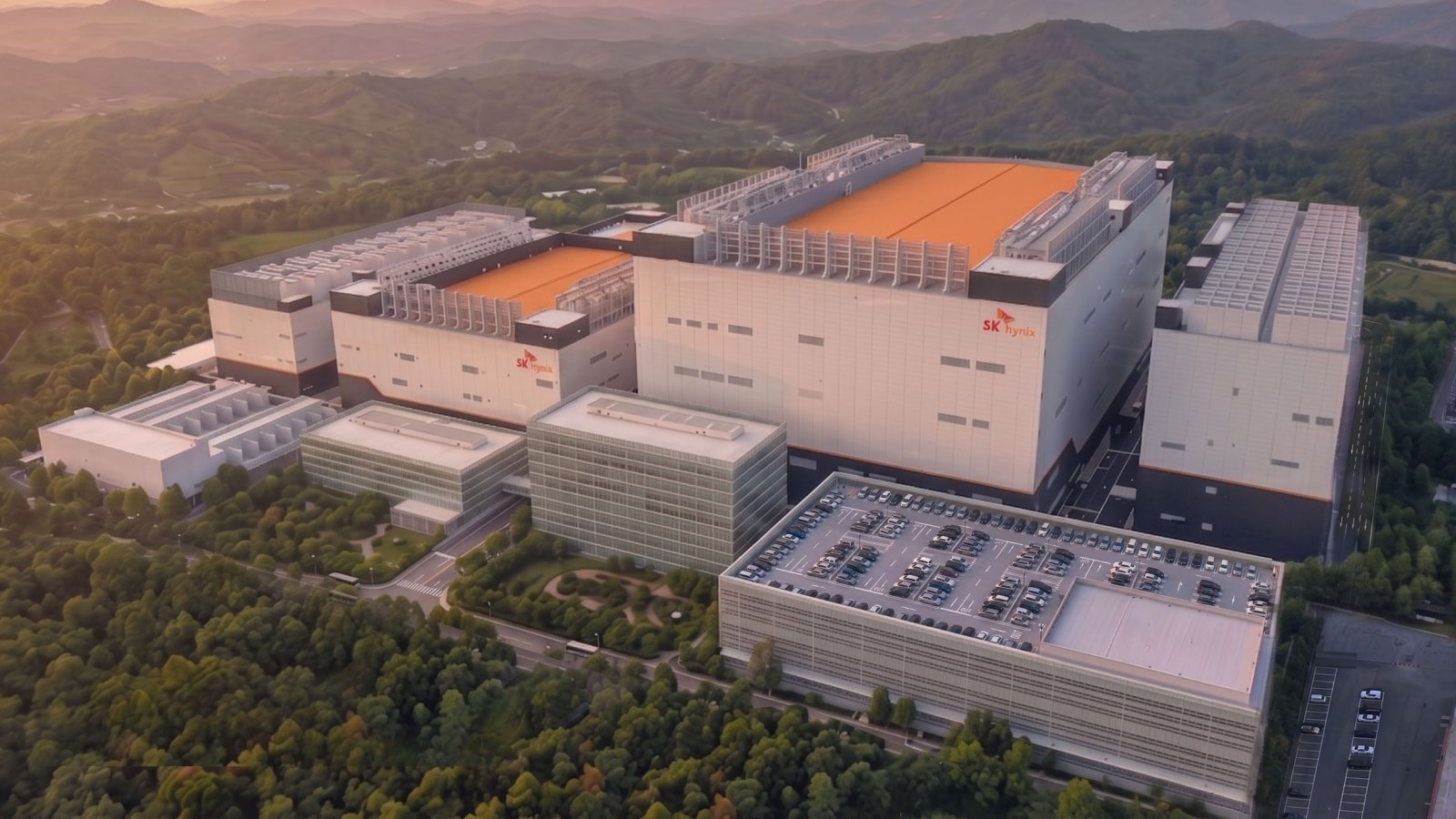
AI’s memory hunger is pushing SK hynix into a massive expansion, with the chipmaker committing about $38.1 billion to two new factories in South Korea.
SK hynix said its board approved 54.3 trillion won (approx. $38.1 billion) for two new semiconductor fabrication plants, as demand for memory chips used in AI infrastructure continues to climb.
The company will spend 35.2 trillion won (approx. $24.8 billion) on the Y2 fab in Yongin and 19.1 trillion won (approx. $13.5 billion) on the M17 facility in Cheongju. The investment is part of SK hynix’s longer-term plan to expand production capacity as AI data centers consume increasing amounts of advanced memory.
Market research firm Omdia expects global demand for both DRAM and NAND memory to grow at a compound annual rate of 19% from last year through 2030, according to SK hynix. The company said the investment followed a detailed review of market demand.
HBM and NAND take center stage
The Yongin Y2 facility will focus on DRAM, including high-bandwidth memory (HBM), which is critical to AI accelerators and data center systems. Construction is scheduled to begin in July 2027, with the first cleanroom expected to open in June 2029.
On the other hand, the Cheongju M17 fab will manufacture NAND memory, which is increasingly being used in enterprise solid-state drives and AI infrastructure. Construction is expected to begin in February 2027, with the first cleanroom targeted for December 2028.
SK hynix selected Cheongju partly because its existing M11, M12 and M15 fabs provide established power and water infrastructure, allowing the company to build out production more quickly. The company is also accelerating development of its Yongin Semiconductor Cluster. It plans to complete four fabs there by 2033, 12 years earlier than the original 2045 target.
A bet on a longer AI boom
The scale and timing of the investment suggest that SK hynix expects the AI-driven memory surge to be a long-term shift rather than a short-lived cycle.
That is a significant bet. The new fabs will not add substantial capacity immediately, meaning they are unlikely to ease the current supply pressure. Counterpoint Research’s Neil Shah told CNBC that the expansion is intended to serve demand from 2029 onward, while memory prices could remain elevated through 2028 if demand continues to outpace planned capacity.
At the same time, SK hynix faces growing competition. Samsung reclaimed the top position in the DRAM market during the second quarter, according to Counterpoint Research, while Samsung, Micron and China’s CXMT are also expanding capacity.
SK hynix said it plans to build the facilities according to its master schedule but add cleanroom space and production equipment progressively as customer demand develops.
What it means for AI and consumers
For AI companies, the expansion should eventually provide more capacity for HBM and other advanced memory products. That could help chipmakers and data center operators secure the components needed to expand AI computing infrastructure.
For consumers, however, the near-term picture is less encouraging. Strong AI data center demand is directing investment and manufacturing resources toward higher-value memory products, while new capacity will take years to arrive. That could keep pressure on memory prices for PCs, smartphones, and other electronics.
Read more: SK hynix Fuels Trillion-Dollar AI Memory Chip Rally in Asia-Pacific examines how surging AI memory demand has boosted SK hynix and other semiconductor companies across the region.
>

Your smartphone doesn’t need to break your concentration to affect your body… it may only need you to keep holding it.
Smartphones have turned hours of looking down, gripping a small device, and repeatedly moving a thumb into ordinary daily behavior, and researchers are finding measurable physical consequences. Prolonged phone use has been associated with neck and upper-body discomfort, while repetitive hand movements can place additional stress on the fingers, thumbs, and wrists.
The science, however, does not justify blaming smartphones for every modern physical problem.
Neck strain and posture have stronger evidence behind them, while claims involving spinal degeneration and grip strength need to be separated from what the research can actually establish.
The cost of always looking down
Using a smartphone typically means looking down at a relatively small screen. That pushes the head forward and increases the work required of the muscles around the neck and shoulders to maintain that position.
A study on smartphone use and cervical spine stability found that maintaining a roughly 30-degree forward head tilt while using a smartphone for 30 minutes caused mild to moderate neck and upper-body discomfort but did not significantly change measures of cervical spine stability.
That helps explain why prolonged phone use can cause neck and shoulder discomfort.
It also provides some of the evidence behind the “phone body” concerns that spine surgeon K. Daniel Riew raised in an Inc. article. Riew argues that repeatedly placing the cervical spine under this kind of load could contribute to longer-term disc problems.
The research supports the change in posture and muscle activity, but it does not establish that smartphone use directly causes cervical degeneration. Neck discomfort during prolonged phone use is not the same thing as evidence of permanent spinal damage.
Your hands feel it too
For many, the side effects of using a smartphone mean shorter attention span, addiction, less sleep, and, as noted above, neck pain. The neck, however, is not the only part of the body working harder during prolonged smartphone use.
While the head remains tilted toward the screen, the hand holding the device may be supporting it for extended periods. The thumb and fingers are also repeatedly tapping, swiping, and typing.
Here, the evidence points more clearly toward pain and repetitive strain than permanent changes in hand strength.
A 2026 systematic review of smartphone use and hand pain found an association between smartphone use and hand pain.
But studies looking specifically at grip strength have produced less consistent results. An observational study of smartphone screen time and grip strength found a weak association between longer daily smartphone use and weaker grip strength, while a SCAMP study of mobile phone use and grip strength found no negative effect.
So the stronger claim is not that smartphones are permanently weakening people’s hands. It is that repeated smartphone use can place physical demands on the hand, and research has found an association with pain.
That distinction becomes important as more of everyday work, communication and entertainment moves onto a device people may hold for hours at a time.
What the research does and doesn’t show
Riew argues that the human body wasn’t evolved for phone use, let alone extended phone use.
That does not mean every physical change associated with smartphones is permanent, or that the device itself is uniquely harmful. It does, however, raise a more useful question: how much of the strain comes from the phone itself, and how much comes from the way we have incorporated it into everyday life?
None of these suggest we should dump our phones outright. For most people, phones have become an indispensable part of their lives, and in some cases, a revenue-generating asset.
The issue is not necessarily that a smartphone changes the human body simply because we use it. It is that a device designed to sit in our hands and demand our visual attention can also encourage us to remain in the same position for much longer than the body would otherwise require.
Also read: Questions about compulsive screen use are also playing out in court after Meta avoided a landmark social media addiction trial when the remaining claim was dropped days before proceedings.
>
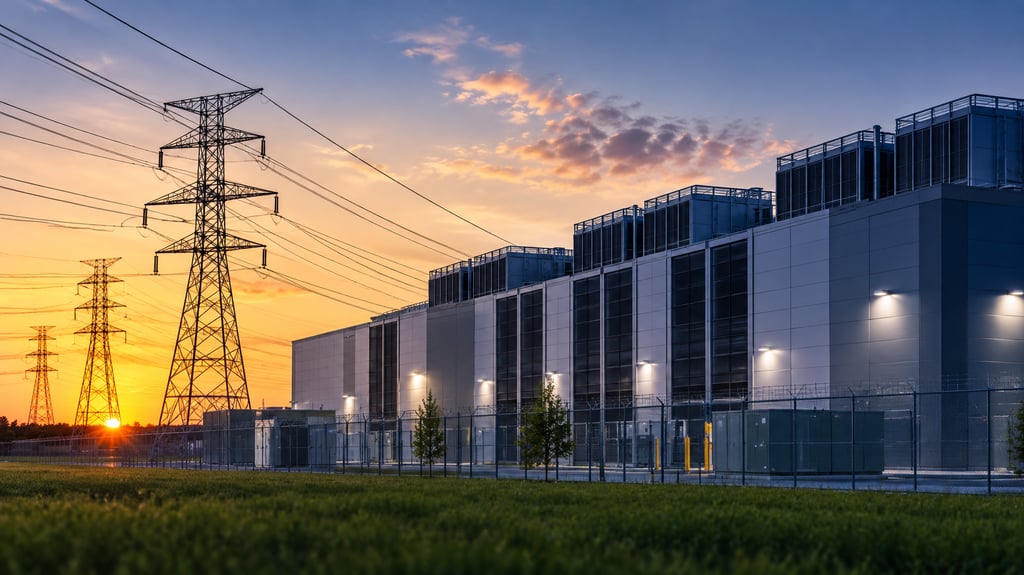
AI data centers are consuming electricity at a blistering pace, but US grid data does not show AI simply exhausting the country’s power supply.
The more immediate problem is local. New data centers can arrive faster than power plants, transmission lines, and grid connections, creating capacity bottlenecks in individual regions even when national electricity generation remains sufficient.
US grid data points to local capacity bottlenecks
The International Energy Agency says global data center electricity demand grew 17% in 2025, while consumption at AI-focused data centers jumped 50%. The agency projects total data center use rising from 485 TWh in 2025 to 950 TWh in 2030, with AI-focused consumption tripling over the same period.
Those figures measure annual electricity use. Grid adequacy also depends on gigawatts: how much reliable power is available at a particular moment and location.
RAND estimates that the US has plans for 151 GW of front-of-the-meter and 149 GW of behind-the-meter nameplate capacity by 2030. After accounting for completion rates, retirements, reliability, and other adjustments, those additions translate to about 82 GW of net available capacity: 33 GW from grid-connected resources and 49 GW from behind-the-meter resources that can reduce peak grid demand.
That 82 GW is not “power left over for AI.” RAND is estimating additional deliverable capacity, while future AI demand is uncertain and geographically concentrated. The study also assumes data center loads are firm and inflexible.
Location is the bigger warning. RAND found most planned front-of-the-meter additions concentrated in ERCOT, while other regions could see little or negative net growth after retirements. Harvard’s Belfer Center separately notes that a July 2024 voltage disturbance in Northern Virginia disconnected 60 data centers at once, creating a 1,500 MW surplus that required emergency grid adjustments.
That incident was a concentrated-load stability problem, not evidence that US generation had already fallen short.
Flexibility could ease the grid crunch
The IEA says non-firm connections and demand-response programs could let data centers connect sooner if operators agree to reduce consumption during grid stress. It also projects data centers could deploy 20 to 25 GW of battery storage globally by 2030.
Those measures can reduce peak strain, but they do not create transmission capacity or erase annual electricity demand. RAND’s model assumes large data center loads remain inflexible, so a future in which some AI workloads can be shifted or curtailed could change the capacity picture.
The same distinction applies outside the US. In Australia, grid modeling has already raised concerns about concentrated data center loads, but APAC does not have one market structure that maps neatly onto RAND’s US model.
For technology buyers, announced capacity should therefore be treated as a starting point rather than a guarantee. Before committing to an AI facility or cloud region, buyers should verify the connection date, whether the supply is firm or interruptible, what happens during curtailment, and whether the quoted capacity applies to that specific site.
The evidence points to a timing and location problem before it points to a nationwide electricity shortage. AI can put individual grids under serious pressure long before the US runs out of power overall.
Also read: SpaceX spent $329 million on Tesla Megapack battery systems in the first half of 2026 as its AI data center infrastructure expanded.
>

How to watch Tempo vs. Dream: TV channel and streaming options for August 10

Cardinals to retire Larry Fitzgerald’s No. 11, induct him into team’s Ring of Honor

O-T Fagbenle Signs With Artists First (EXCLUSIVE)
-

 movies3 months ago
Search For Canadian TV Actor Stewart McLean Now Homicide Investigation
-

 Fashion9 years ago
These ’90s fashion trends are making a comeback in 2017
-
Fashion9 years ago
According to Dior Couture, this taboo fashion accessory is back
-
Fashion9 years ago
Model Jocelyn Chew’s Instagram is the best vacation you’ve ever had
-
Fashion9 years ago
Your comprehensive guide to this fall’s biggest trends
-
Fashion9 years ago
9 Celebrities who have spoken out about being photoshopped
-
Fashion9 years ago
Emily Ratajkowski channels back-to-school style
-
Fashion9 years ago
A photo diary of the nightlife scene from LA To Ibiza