
movies
LA-Based AK Studios Launches Slate Headed By Vijay Jayapal’s ‘An Idiot’


EXCLUSIVE: Los Angeles-based production house AK Studios, founded by producer and distribution veteran Awadhesh Kumar, is launching a slate of South Asian films here in Cannes, headed by a new project from Nirvana Inn director Vijay Jayapal and Samman Roy’s gothic horror The Undying.
Vijay Jayapal, whose 2019 drama Nirvana Inn premiered at Busan International Film Festival, has directed absurdist political comedy An Idiot for the new outfit.
Starring Abhinav Jha (Gamak Ghar, Trial By Fire) and Tamil actress Anupama Kumar (Ishqiya), the dialogue-free film explores the psychology behind hate crimes and is loosely inspired by the 2017 assassination of activist journalist Gauri Lankesh.
Blending a tense crime thriller structure with absurdist, deadpan humor, the film follows a right-wing zealot who travels to a sleep rural town to assassinate a progressive woman journalist – but runs into a series of darkly comic encounters along the way.
Jayapal previously directed two well-received features that premiered at Busan – Revelations (2016), which Netflix acquired for worldwide distribution, and Nirvana Inn (2019), which after its Busan premiere won Best Actor for Adil Hussain at Indo German Film Week. His directing credits also include a segment of Tamil anthology film Aneedhi Kadhaigal, presented by Vetri Maaran.
Meanwhile, Samman Roy has directed The Undying, an adaptation of a short story by Nobel Prize-winning Bengali writer Rabindranath Tagore. Set in 19th century rural Bengal, the slow burn gothic horror follows a widow who is pronounced dead and laid out for cremation, only to awaken and return to her village.
The cast is headed by Bengali actors Sree Bhattacharyya, Arpita De and Biswajit Das. Roy previously directed folk horror The Exile for AK Studios, which was picked up for the worldwide distribution by Buffalo 8.
An Idiot and The Undying are both in post-production and being lined up for festival premieres later in the year.
AK Studios was recently launched in Santa Monica by Awadhesh Kumar – former Global Head of Distribution at India’s National Film Development Corp (NFDC) – to showcase original, authentic voices from South Asia. The company plans to leverage international co-production, festival play and international sales to bring these stories to global audiences.
In addition to The Exile, AK Studios’ previous credits also include Thinesh Kumar’s satirical comedy Hucch, which was also picked up by Buffalo 8.
The company is also in post-production on Ponselvam Karthi’s debut feature Adrift, a contemplative drama about a young man who after escaping a strict Christian orphanage finds himself mocked, exposed and finally broken by the community he returns to. AK Studios is co-producing the Tamil-language film with India’s Yellow House Pictures and Raging Films, and Rakasree Basu’s UK-based Momentum Films.
In development are English-language psychological thriller Dead Butterflies, which will mark the directing debut of cinematographer Karthik Muthukumar (Biriyaani), and Nilavazhagan Subbiah’s Tamil-language drama Absence, which is being set up as a US-Germany-India co-production.
Billed as the first thriller set in Bhutan, Dead Butterflies tells the story of a celebrated artist who has been secretly killing women and using them as subjects, until he is confronted by the sister of a victim.
“AK Studios exists to find the most compelling voices from the South Asian subcontinent and launch their stories onto the world stage,” said AK Studios founder Kumar, who is in talks with sales agents, festivals and distributors for the company’s initial slate.
“We back ambitious first and second-time filmmakers and bring their work to global audiences through top-tier festivals, international co-productions, and multi-platform global distribution. With shifting market dynamics, there is a compelling case for high-quality features built on smart money, bold stories, and lean production. The days of indie films are back, and we intend to be at the forefront of it.”
>

Another hockey book adaptation has entered the chat.
Netflix is currently building out its cast for the series adaptation of Hannah Grace’s Icebreaker book that kicks off the Maple Hill series. This in addition to their show The Sticks that is also currently in the works.
For everything we know about Netflix’s Icebreaker book adaptation so far, read on.
When will Netflix’s Icebreaker series adaptation come out?
A release date has not yet been set. The show has begun to assemble its cast.
Who will lead the Icebreaker show at Netflix?
Daisy Jelley (Poser, How To Have Sex) will portray Anastasia “Stassie” Allen, and Connor Simos (Subversion) will portray Nate Hawkins in the college hockey drama series.
Who else is in the cast of Netflix’s Icebreaker adaptation?
Gabriel Tierney (Rivals, Enola Holmes 2), Auliʻi Cravalho (Moana), newcomer and professional athlete Peter Berry, Chaneil Kular (Best of the Best, Sex Education), Devin Craig (Sex Lives of College Girls, Maize) and Aidan Shaw (We Were Liars, Heated Rivalry, Finding Her Edge) have joined the ensemble cast.
Tierney will play Aaron; Cravalho will portray Lola; Berry is Robbie; Kular will play JJ; Craig will portray Henry and Shaw is Russ.
What is Hannah Grace’s Icebreaker book about?
Stassie is a transfer athlete gunning for Olympic gold. Nate is the campus star chasing the NHL. When an accident forces their teams to share one rink, Anastasia Allen and Nate Hawkins collide—and discipline gives way to obsession, because the only thing more dangerous than wanting to win is wanting each other.
Who else is behind Netflix’s Icebreaker series?
Jade Halley Bartlett (Road House, Doctor Strange in the Multiverse of Madness, Miller’s Girl) created and executive produced the series. Amanda Lasher (Gossip Girl, The Bold Type, Togetherness) serves as showrunner, writer and excutive producer. Grace also executive produces along with Alex Cooper, Matt Kaplan and Mina Lefevre for Cooper’s Unwell Productions.
>
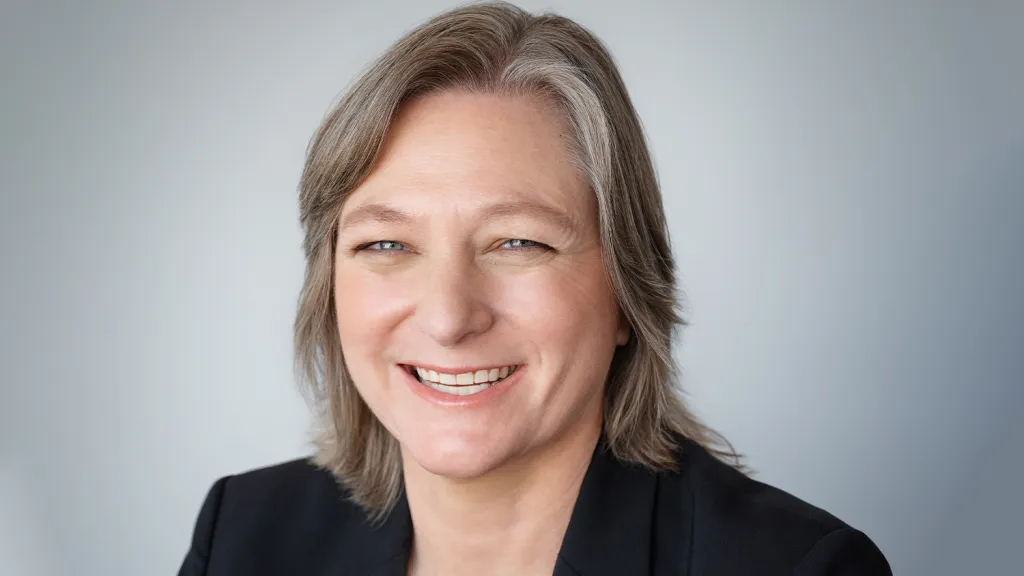
One of the biggest executive questions about Paramount following its pending acquisition of Warner Bros. Discovery — who will lead streaming — may have been answered.
Cindy Holland is leaving Paramount where she was Chairman of Direct-To-Consumer since the Skydance-Paramount merger having served as an advisor to Skydance CEO David Ellison prior to that. She announced her departure in a company memo, which you can read below.
The move leaves HBO’s Casey Bloys as the likely streaming head of the combined Paramount-WBD.
“Cindy is one of the most exceptional executives in our industry — a force of nature whose impact on Paramount over the past year has been significant,” Paramount CEO David Ellison said. “Under her leadership, P+ reached new heights, Pluto TV underwent its most significant transformation in a decade, and we strengthened our content and sports portfolio – all while the business exceeded the ambitious goals we set. Just as importantly, she built an exceptional team and a strong foundation for the future. Cindy has been a trusted partner to me and so many others, and I couldn’t be more grateful for her leadership, her relentless drive and everything she’s done for our company.”
Here is Holland’s memo:
When I joined David’s team in January 2025, we proceeded to set three goals: i) advise on the Warner Bros. Discovery acquisition, ii) integrate and transform Paramount+ & revive Pluto TV, and iii) build an unparalleled team in this industry. In just over 12 months, I’m proud to say we accomplished all three and it’s been a joy to work closely with all of you.
Together with the Product team, we drove significant strategic and organizational change across DTC — building a new foundation for growth on both services, while investing in greater depth and breadth of programming and delivering strong revenue, profit, and subscriber growth for the division.
As David readies for the next phase of his vision, we’ve discussed my role and the future of the combined businesses. David is optimizing for HBO stability as we move into this next chapter, and I fully support that. I know this team has the leadership and expertise to manage through the transition and the next phase of the company, and to this end today will mark my last day here.
As I reflect on my time here and all that we’ve built together in this short time, what stands out most to me is this team. I have never been more proud of a group of people. What we’ve accomplished together is remarkable — landing quarter after quarter while navigating extraordinary uncertainty and change with resilience, focus and ambition. We grew Paramount+ to an all-time subscriber high, delivered the best retention in the service’s history, and drove double-digit growth in both engagement and revenue. We built an extraordinary content pipeline, greenlighting more than 40 new and returning series and setting all-time records with Landman, the most-watched series in Paramount+ history, and Dutton Ranch, the service’s biggest original series debut ever. We transformed live sports into a powerful streaming growth engine, securing landmark agreements with UFC and Zuffa Boxing and expanding our WNBA and UEFA Champions League rights – with UFC Freedom 250 becoming the largest-ever audience for an exclusive live event on Paramount+ and UFC 329 setting a new platform record for peak concurrent streams for an exclusive live event. And we undertook Pluto TV’s biggest product transformation in a decade, dramatically increasing registered viewing and VOD consumption while delivering strong financial performance across the business. These are extraordinary accomplishments – but what makes me proudest is how we achieved them: together, with an unwavering commitment to our audiences, our creative partners and one another.
I joined Paramount because I believe in these businesses, and because I believe wholeheartedly that the combination of Paramount and Warner Bros. Discovery serves the best interests of artists and audiences worldwide. I’m looking forward to seeing what you all accomplish together in this next, momentous chapter.
Cindy
>

While President Trump was holding a press conference at the White House this morning and extolling the AI-related work of Meta’s Mark Zuckerberg, Nvidia CEO Jensen Huang, Anthropic’s Dario Amodei and SpaceX’s Elon Musk, a promo for tomorrow night’s South Park episode dropped. It was less salutary.
Here’s the logline for Episode 6 of Season 29: “Butters is unhappy with the data centers that the billionaires are building in our backyards.”
The clip opens with an X-Pest exterminator guy ringing the doorbell at Butters’ home.
“I understand you’ve got some billionaires in your back yard,” he says.
“Yeah, there’s more of these stupid billionaires every day!” replies Butters.
The first image from the episode (see it above) shows Butters in what appears to be his back yard with the X-Pest exterminator guy, who has strapped on his tank of poison and has his sprayer wand at the ready.
The topic of data centers is a hot one across the country and especially in Hollywood, where unions and workers worry about job displacement and writers and directors express concern over what it might do to their art.
Among the biggest players in the data center land rush is, of course, Oracle CEO and Paramount-WBD deal financier Larry Ellison. South Park airs on Comedy Central, which is owned by Paramount. As in the past, the show’s creators are seemingly not afraid to bite the hand that feeds them.
Mark Ruffalo and others have decried the introduction of “really profoundly scary technology” into Hollywood and how AI might impact media outlets soon to be owned by Ellison and his son David.
“Larry is a classic Oligarch,” wrote Ruffalo. “They are crushing workers and consolidating the wealth of the world for their own power and concentrated dominance.”
Paramount, for its part, responded by accusing Ruffalo of using “antisemitic tropes” in his argument, especially when linking the Ellisons’ studio acquisition to Oracle’s work with the Israeli military.
>

Van Veen: MvG's early World Grand Prix exit 'not as much of a shock'

Creators: AI Is the Future. We Need to Be Transparent About Using It

Scotland 0 – 3 Switzerland
-

 movies4 months ago
Search For Canadian TV Actor Stewart McLean Now Homicide Investigation
-

 Fashion9 years ago
These ’90s fashion trends are making a comeback in 2017
-
Fashion9 years ago
According to Dior Couture, this taboo fashion accessory is back
-
Fashion9 years ago
Model Jocelyn Chew’s Instagram is the best vacation you’ve ever had
-
Fashion9 years ago
Emily Ratajkowski channels back-to-school style
-
Fashion9 years ago
9 Celebrities who have spoken out about being photoshopped
-

 Anime4 months ago
Rurouni Kenshin: Hokkaido Arc Manga Takes 1-Issue Break – News
-

 Anime3 months ago
HIDIVE to Stream English Dubs for The World Is Dancing, The Forsaken Saintess and Her Foodie Roadtrip in Another World, The Dangers in My Heart: The Movie Anime – News