
Tech
OpenAI says Codex is coming to your phone


Codex is going mobile. The coding tool — which OpenAI launched approximately a year ago — has now been integrated into the ChatGPT app, allowing users to monitor and manage their development workflows remotely.
The new function allows users to see their Codex live environments in any devices where it is running. The company announced the changes Thursday; the update, which is currently in preview, is now available to all plans on iOS and Android.
“This is more than the ability to remotely control a single task or dispatch new tasks to your computer,” OpenAI said in a statement. “From your phone, you can work across all of your threads, review outputs, approve commands, change models, or start something new.”
Last month, OpenAI also gave Codex the ability to run in the background in desktop environments — empowering the tool to take care of various tasks autonomously. Earlier this month, the company also introduced a Chrome extension that allows the agent to work in live browser sessions.
In February, Anthropic released a similar feature — Remote Control — which allows users to remotely monitor Claude Code’s work from afar.
The flurry of feature releases from both OpenAI and Anthropic speaks to the tense competition between the two over whose agentic coding tool will become the most widely used. Over the past year, Anthropic’s Claude Code has gained in popularity among businesses and tech professionals alike, although both tools continue to be widely used.
>

Meta’s Muse, a personal AI agent that books travel, fills out forms, and shops on a user’s behalf, has already proven popular with the masses, but a new side project could be particularly alluring to tinkerers and hackers.
On Friday, the company introduced Muse Gadgets, an open-source project that lets developers build their own hardware that connects to Muse.
Meta is providing open-source firmware (the low-level software that runs a device), and a Linux software development kit (SDK), along with a few project ideas to get users started. These include giving Muse a color e-ink display or loading it onto a stick that plugs into a TV’s HDMI port.
There don’t appear to be many limits, either. Users can set up a low-cost hobbyist computer like a Raspberry Pi or an off-the-shelf ESP32 board, and then connect Muse “to your displays, buttons, sensors, actuators, and whatever else you’ve got lying on your workbench,” Meta notes.
The company has also set up a Discord channel to support users.
Meta has already tried the code itself, naturally. Nat Friedman, head of product at Meta’s Superintelligence Labs, said in a post on X that the company built a gadget called Muse Home Link. The USB-C-powered device lets Muse connect to a home network and talk to the smart devices on it, including speakers and smart TVs.
Meta made 5,000 of these Home Links, in fact, and is giving them away for free to Muse subscribers while supplies last, according to Friedman. Considering Friedman’s post about Home Link received nearly 30,000 views in a few hours, we’re guessing those freebies have been claimed. Friedman said Home Link would be ready to ship a few weeks.
Muse Gadgets may not have wide appeal, but it fits nicely into Meta’s all-in strategy to make Muse more than a standalone chatbot. Meta isn’t content to push Muse on everyday consumers; it’s also trying to woo small businesses and enterprises.
The company earlier this week introduced Muse for Small Business, which is free with usage limits and connects Muse to tools such as Shopify, Dropbox, and Slack. It has also launched a new business unit, Meta Enterprise Platform, to help it push its AI offerings to businesses and corporate customers.
When you purchase through links in our articles, we may earn a small commission. This doesn’t affect our editorial independence.
>
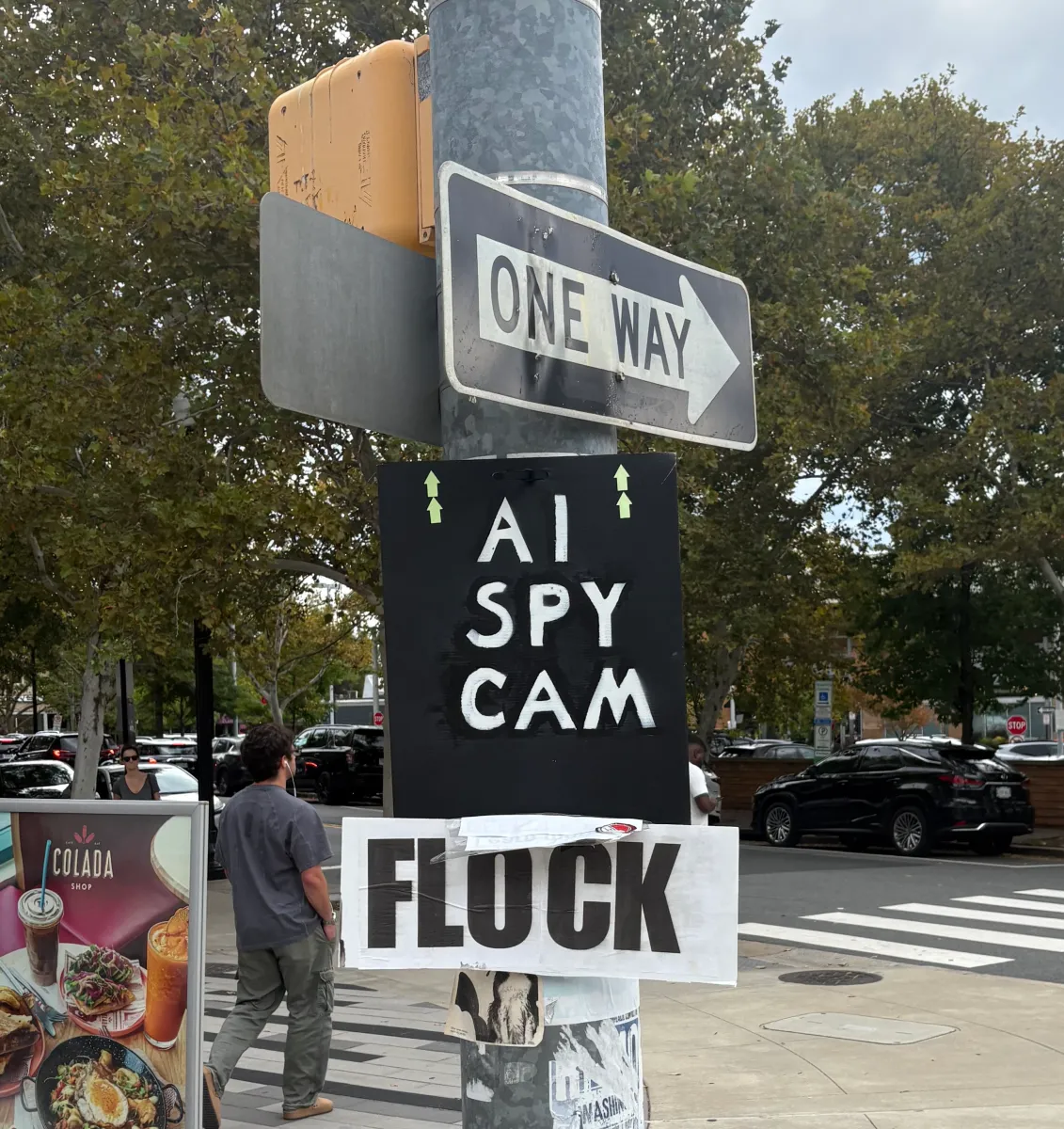
Flock, whose cameras scan license plates across the country, continues to draw public anger, and now Senator Bernie Sanders wants the federal government out of the business altogether.
Sanders (D-Vermont) on Friday introduced the Ban Flock Act, which would bar federal agencies from using automatic license plate readers (ALPRs) or tapping into data collected by readers run by local police and private companies. Despite its title, the bill doesn’t call out Flock in the text and covers any and all ALPR systems.
The bill allows exceptions only for toll collection and for uses that Congress approves in future legislation, which would have to limit data retention to no longer than 48 hours.
State and local governments would be dinged financially for not complying if the bill became law. (Like most bills, this one faces long odds.) Starting the first fiscal year after enactment, they would lose grants from five federal departments, including the Justice Department and the Department of Homeland Security, unless they ban the tech.
Americans could also sue the federal government over violations, and state attorneys general could enforce the law.
Flock is the largest ALPR vendor in the U.S., according to Sanders, with more than 120,000 cameras. In a blog post back in February, the company said its network processes more than 20 billion vehicle reads each month.
Under increasing pressure from communities that are protesting the product, suspending their use, and, at an escalating rate, canceling their contracts, Flock has tightened its rules. In August, CEO Garrett Langley, who’d previously said that how police use the cameras is up to local agencies, announced a new default data retention period of seven days, down from 30.
Customers must also now use an audit tool that locks officers out pending review when it flags unusual searches. In one of the highest-profile cases of an officer abusing Flock’s platform, a former Milwaukee officer pleaded guilty to misconduct after searching for his then-partner and her ex 179 times, listing the reason as “investigation.” (During a recent podcast interview, investor Jason Calacanis suggested a “double-key” system in which two people must approve a search, and Langley said the idea is “on the whiteboard.”)
Representative Alexandria Ocasio-Cortez (D-N.Y.) and Senator Jeff Merkley (D-Ore.) are co-sponsors.
We’ll be sitting down with Langley at our upcoming Disrupt event, October 13-15 in downtown San Francisco.
When you purchase through links in our articles, we may earn a small commission. This doesn’t affect our editorial independence.
>

Sean Parker, the Napster co-founder, has jumped back into the music industry, and he tells The Information that he’s playing by the rules this time. (Asking for forgiveness rather than permission didn’t work out so well last time around, he readily concedes.)
Two years ago, he joined an $80 million rescue of Stability AI, the image-generator startup that nearly collapsed after overspending and internal turmoil led to founder Emad Mostaque’s ouster. Now Parker and his longtime friend Prem Akkaraju, who became CEO, are taking the wraps off what they’ve been building.
The big idea, Parker says, is to turn Stability into the go-to AI toolmaker for music professionals. Toward that end, in late August, the company announced $76 million in funding from, among others, Sony, Warner, and Universal, which also licensed their catalogs for training as part of the deal. Stability has since released three new audio models and AI music-editing software. The AI can generate whole instrumental tracks or short snippets from text prompts. Parker says an upcoming update will let users hum a melody or beatbox a drum pattern to steer it.
>
What's it like to be a Catholic priest rooting against the White Sox, Pope Leo XIV's favorite team?

Too quiet for too long, can McGinn recapture best for Scotland?

UFC 332: Wang Cong says Joker persona helps her ‘feel the fear’ in opponents
-

 movies4 months ago
Search For Canadian TV Actor Stewart McLean Now Homicide Investigation
-

 Fashion9 years ago
These ’90s fashion trends are making a comeback in 2017
-
Fashion9 years ago
According to Dior Couture, this taboo fashion accessory is back
-
Fashion9 years ago
Model Jocelyn Chew’s Instagram is the best vacation you’ve ever had
-
Fashion9 years ago
Emily Ratajkowski channels back-to-school style
-
Fashion9 years ago
9 Celebrities who have spoken out about being photoshopped
-

 Anime4 months ago
Rurouni Kenshin: Hokkaido Arc Manga Takes 1-Issue Break – News
-

 Anime3 months ago
HIDIVE to Stream English Dubs for The World Is Dancing, The Forsaken Saintess and Her Foodie Roadtrip in Another World, The Dangers in My Heart: The Movie Anime – News