
Tech
Flipper unveils a Linux-powered networking gadget built for hackers and tinkerers

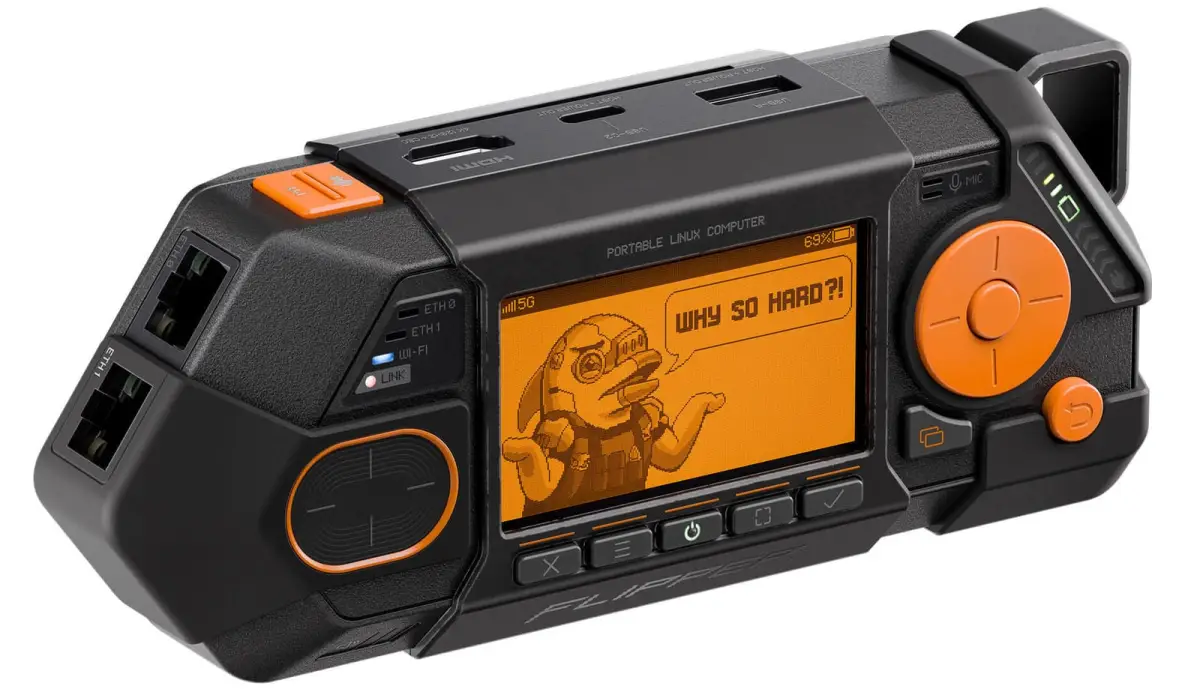
Flipper Devices, maker of the Flipper Zero hacking device, today announced a new gadget called Flipper One that has multiple network connectivity chops and can act as a Linux PC (is this the year?). The company has sold over a million Flipper Zero units and has generated over $150 million in sales. However, the new device is not a successor as it operates on a different layer than the Flipper Zero, the company said.
The Flipper Zero device is popular in the hacker community, which can connect to radios like Bluetooth, RFID, NFC, a sub-1GHz transceiver, and Infrared. The device could act like a key fob or an entry pass, but could also be used in cases like spamming nearby iPhones.
Meanwhile, the new Flipper One device relies on network connectivity through 2x Gigabit Ethernet, USB Ethernet (5 Gbps), and Wi-Fi 6E (2.4/5/6 GHz). What’s more, the device has an M.2 port, which can be used to connect a modem for 5G connectivity or other devices like SDR modules, AI accelerators, SSDs (NVMe or SATA), and Wi-Fi cards via adapters. The device is still in development, and the company is merely announcing the project at the moment.
The device will run two processors along with an 8GB RAM. The first is an eight-core RK3576 chip that runs open Linux along with a Mali-G52 GPU and an NPU to run local AI models.

The company said that it worked with open-source software consulting firm Collabora to push this chip’s support into the mainline Linux Kernel, so anyone can download it from Kernel.org and tinker with it.
The second chip is a two-core Raspberry Pi RP2350 microcontroller. This powers display, buttons, and touchpad, LEDs, and the power subsystem, so even when the Linux part of the device is turned off, users can operate the device.
Flipper Devices CEO Pavel Zhovner said that the company is also developing its own Linux-based flavour. He said in a blog that while Raspberry Pi OS is fluid and he enjoys using it, it is hard to do a clean factory reset after installing packages unless you re-flash the SD card for a new project. The Flipper OS, which is currently in a concept stage, will allow users to access profiles with different pre-configured packages and settings. By doing this, users can play around with software and go back to a clean copy without swapping or flashing SD cards.
As part of the development, the company is also making a FlipCTL interface to control small screen LCDs on devices like Flipper One with D-pad and touch controls.

The company said that with network connection drivers, users can use Flipper One as a router, a VPN gateway, or a bridge between. Plus, they can plug in a monitor, along with a keyboard and a mouse through a USB Hub to make for a Linux desktop or use it as an on-the-go media box through its HDMI 2.1 port with support for 4K streaming at 120Hz. Users can also run local AI models to operate the device, generate configs, and get useful tips without an internet connection.
Flipper Devices has just announced the device and overall roadmap of how it could be used. There are still a lot of missing software pieces to enable all the mentioned features. For instance, NPU for AI and hardware video decoding lacks mainline kernel support. Both FlipperOS and FlipperCTL are concepts at the moment. The team has yet to train offline LLMs that would help users with configs.
The company is inviting developers to join the community and develop parts of the software that could be used to ship the final device. It said that the final details of the consumer launch would be announced in the future, but the device is likely to cost less than $350 for the base configuration without cellular modules.
When you purchase through links in our articles, we may earn a small commission. This doesn’t affect our editorial independence.
>
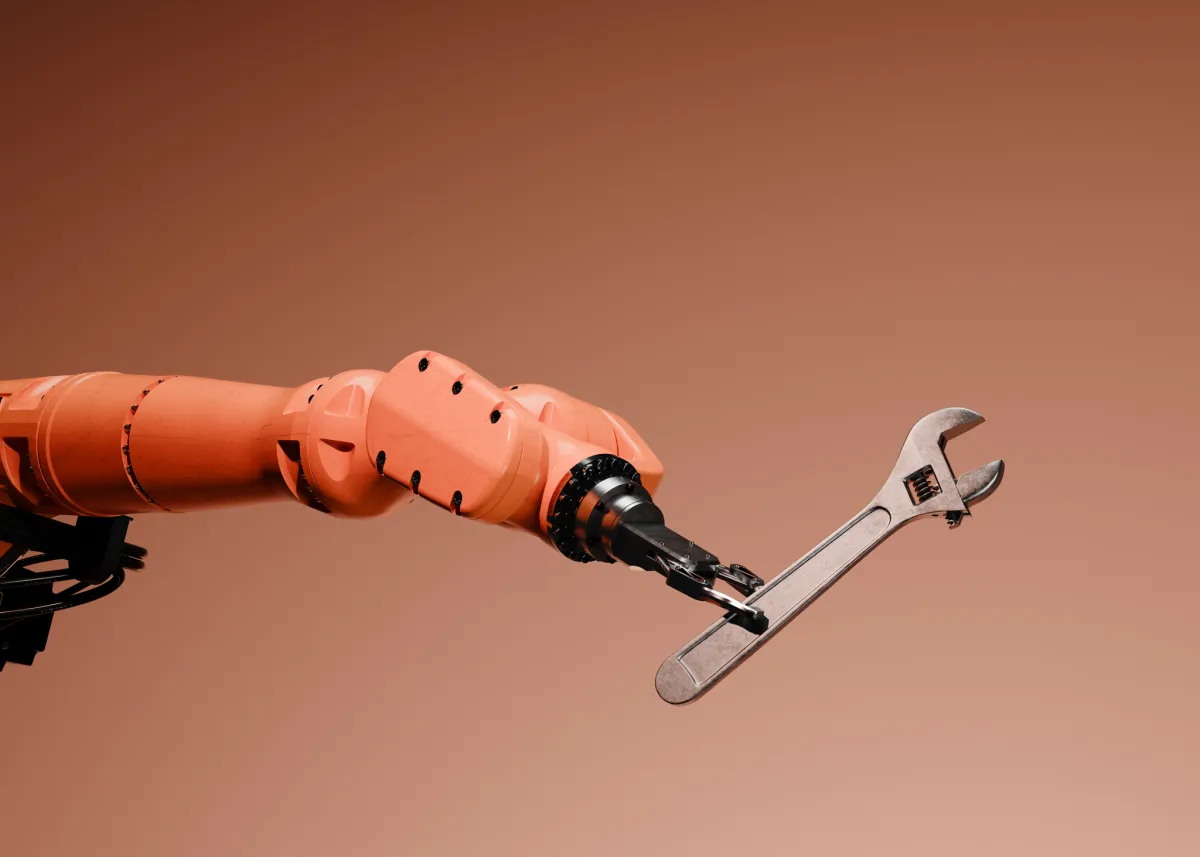
Mecka AI, a startup that collects and analyzes human motion data to train humanoid robots and other kinds of robots, announced it has raised a $60 million Series B round led by Sequoia, with participation from Nvidia, Microsoft’s venture fund M12, and others. TechCrunch had previously reported that the startup was nearing a new funding round at a $500 million valuation.
Founded in 2024, the startup intends to do for robotics what Scale AI, Mercor, Surge, and other data-labeling companies have done for LLMs. Those companies supply the human-generated data these systems learn from. Mecka pays people to record themselves doing everyday tasks, like making coffee or fixing cars, while wearing body sensors and using smartphones.
Other startups that collect real-world data for robot training include XDOF, which was in talks to raise a Series B round at a $1.2 billion valuation according to TechCrunch’s previous reporting. Human-data platforms that began with LLMs are also expanding into robotics, such as Scale AI and Micro1.
>
Endeavor Catalyst has closed its fifth fund with $320 million in capital commitments, bringing the firm’s total assets under management to more than $850 million. The raise is good news for founders outside the Bay Area who risk getting overlooked as more funds focus squarely on AI companies in Silicon Valley.
Catalyst is the venture arm of Endeavor, a New York-based global nonprofit that has spent 30 years supporting founders outside major tech hubs. (It calls all those other places “elsewhere” throughout its marketing materials.)
The fund is run by managing partner Allen Taylor, a 20-year veteran of the organization, and managing director Jackie Carmel, who joined Endeavor 12 years ago, along with a 16-person team. The official general partner, though, is Endeavor itself. What that means, says Linda Rottenberg, who co-founded Endeavor and helped start Endeavor Catalyst in 2012, is that “half of the fund’s profits go back to Endeavor, so every investment helps the next generation of founders who are building elsewhere.”
The bar for those founders is pretty high. A person first has to get into Endeavor’s network, where he or she can access Endeavor’s mentoring and extensive network, and that’s hard. Last year, the group says it screened more than 10,000 candidates and picked 88. The network now has more than 3,100 entrepreneurs in over 50 countries.
When one of those founders’ companies raises at least $5 million in a round led by another institutional investor, Catalyst can join in on the same terms as that lead. The team tells TechCrunch that checks usually run $1 million to $3 million but can’t exceed 10% of the round.
Over the next few years, they plan to make 40 to 50 investments annually, investing in up to 150 companies altogether with this new fund, they say.
Taylor wouldn’t share numbers on cash-on-cash returns tied to its earlier funds, but he did point to some impressive-sounding numbers. Across all five funds, he says, Endeavor Catalyst has backed 437 companies in 44 markets. Eighty-three of those startups are currently valued at $1 billion or more, he says, and the unit has seen 39 exits and 11 IPOs.
Some of the venture arm’s most valuable holdings right now include four-year-old ElevenLabs, the maker of AI voice tools that was recently valued at $22 billion in a secondary sale (it was founded in Poland originally), and Bending Spoons, the 13-year-old Italy-based conglomerate that went public in July and which currently boasts a $26 billion market cap.
Other holdings include New York-based Reflection AI (founded by two former Google DeepMind researchers — one of whom was born in Greece) that is now valued at $25 billion; Checkout.com, whose founder is Swiss and that was valued last year at $12 billion; the African payments infrastructure company Flutterwave, valued this summer at $3.2 billion; and Replit, co-founded by Amjad Masad, who is Palestinian-Jordanian. Replit snagged a $9 billion valuation earlier this year.
Endeavor, the nonprofit, has especially well-connected people associated with it, including board members Reid Hoffman; Nick Beim, a career VC who has spent the last 25 years at Matrix Partners, then Venrock; and Edgar Bronfman Jr., the former head of Warner Music and Seagram, who chairs Endeavor Global’s board.
Greek Prime Minister Kyriakos Mitsotakis is a longtime friend of Endeavor, too, including appearing routinely at Endeavor events. (Late last month in San Francisco, I sat down with him during a rare visit to the Bay Area meet with tech founders and Greek expatriates.)
Altogether, Endeavor Catalyst’s newest fund includes 400 limited partners, including Hoffman, famed hedge manager Bill Ackman, and the Dutch investment group Prosus. According to Taylor, roughly 30% of those backers are Endeavor founders themselves, including founders of Nubank, Revolut and Checkout.com.
While so much attention is paid to what’s happening in San Francisco and its immediate environs right now, the bets of Endeavor Catalyst suggest what other investors may be missing, and Endeavor, with local teams and mentors in dozens of countries, seems particularly well positioned to see it.
Indeed, about 90% of the venture arm’s investments are outside the U.S., it says. Europe is its fastest-growing region, with 12 new investments in the first half of 2026 compared with 14 in all of last year, though Latin America is still the largest.
Repeat founders are also becoming a bigger part of the mix. Taylor tells TechCrunch that roughly 14% of Endeavor Catalyst’s fourth fund went to second companies started by Endeavor founders at the seed or Series A stage. With this new fund, the team expects that number will reach 20%
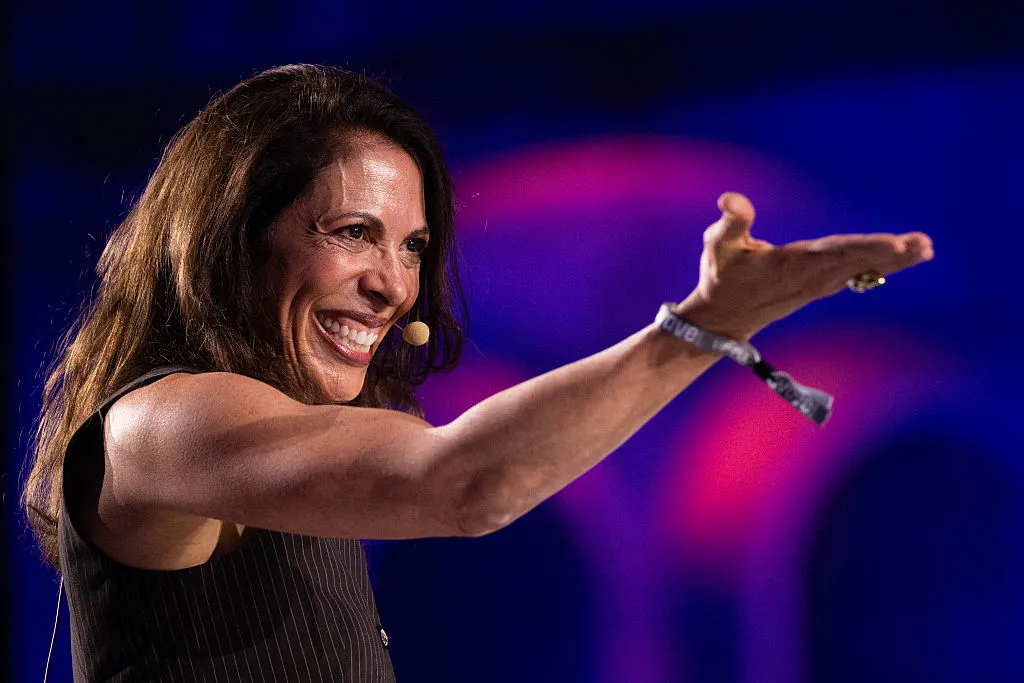
Pictured above: Endeavor co-founder Linda Rottenberg on stage in Turin, Italy, earlier this month.
When you purchase through links in our articles, we may earn a small commission. This doesn’t affect our editorial independence.
>
Google Docs can now edit Markdown files natively, narrowing the gap with Obsidian for teams that write, review, and collaborate on .md files.
The post Google Docs Can Now Edit Markdown Natively — Can It Replace Obsidian? appeared first on TechRepublic.
>
Kentucky State basketball player detained by ICE released

Toyota Demos Initial D’s Drifting Without Spilling Water Cup in Real Life – Interest
The Guardians broke character and bought at the deadline. Now they’re cashing in
-

 movies5 months ago
Search For Canadian TV Actor Stewart McLean Now Homicide Investigation
-

 Fashion9 years ago
These ’90s fashion trends are making a comeback in 2017
-
Fashion9 years ago
According to Dior Couture, this taboo fashion accessory is back
-
Fashion9 years ago
Model Jocelyn Chew’s Instagram is the best vacation you’ve ever had
-
Fashion9 years ago
Emily Ratajkowski channels back-to-school style
-
Fashion9 years ago
9 Celebrities who have spoken out about being photoshopped
-

 Anime4 months ago
Rurouni Kenshin: Hokkaido Arc Manga Takes 1-Issue Break – News
-

 Anime3 months ago
HIDIVE to Stream English Dubs for The World Is Dancing, The Forsaken Saintess and Her Foodie Roadtrip in Another World, The Dangers in My Heart: The Movie Anime – News