
Tech
Scammers are abusing an internal Microsoft account to send spam links


For months, scammers have been taking advantage of a loophole that allows them to send spammy emails from an internal Microsoft email address typically used for sending legitimate account alerts.
It’s not clear how the scammers are abusing the system, but they have been able to set up new Microsoft accounts as if they are new customers, and use that access to send out emails purportedly from the tech giant itself, potentially tricking people into thinking that these emails may be genuine.
Microsoft doesn’t yet appear to have gotten a handle on the issue.
Last week, I received several, similarly structured emails containing subject lines and web links to scammy sites from Microsoft across different email accounts. These crudely made emails were sent from msonlineservicesteam@microsoftonline.com, an email account that Microsoft uses to send important notifications to users, such as two-factor authentication codes and other critical alerts about their online account.
Some of these emails’ subject lines resembled official emails that would alert users to fraudulent transactions, while other emails claimed to have a private messaging waiting for the recipient at a web address mentioned in the email body.

In a social post on Tuesday, anti-spam non-profit, The Spamhaus Project, said it had also seen Microsoft’s account notification email address being abused to send spam, and that the activity dated back “several months.”
“Automated notification systems should not allow this level of customization,” wrote Spamhaus. The non-profit added that it has notified Microsoft of the issue.
When contacted by TechCrunch earlier this week, a Microsoft spokesperson acknowledged our inquiry, but has not yet commented or said if the company has stopped the abuse of its account notification email.
This is the latest in a rash of incidents in which hackers or scammers have abused company systems to trick unsuspecting customers in recent months. Earlier this year, hackers broke into a platform used by fintech firm Betterment to send out fraudulent notifications that purported to triple the value of any crypto users send in — a widely known scam used to steal people’s cryptocurrency.
Back in 2023, hackers similarly abused access to an email account run by Namecheap to send out phishing emails aimed at stealing people’s credentials.
Other users commenting on social media say that other companies’ email addresses are also being used to send out spam, suggesting the issue is not limited to Microsoft.
When you purchase through links in our articles, we may earn a small commission. This doesn’t affect our editorial independence.
>
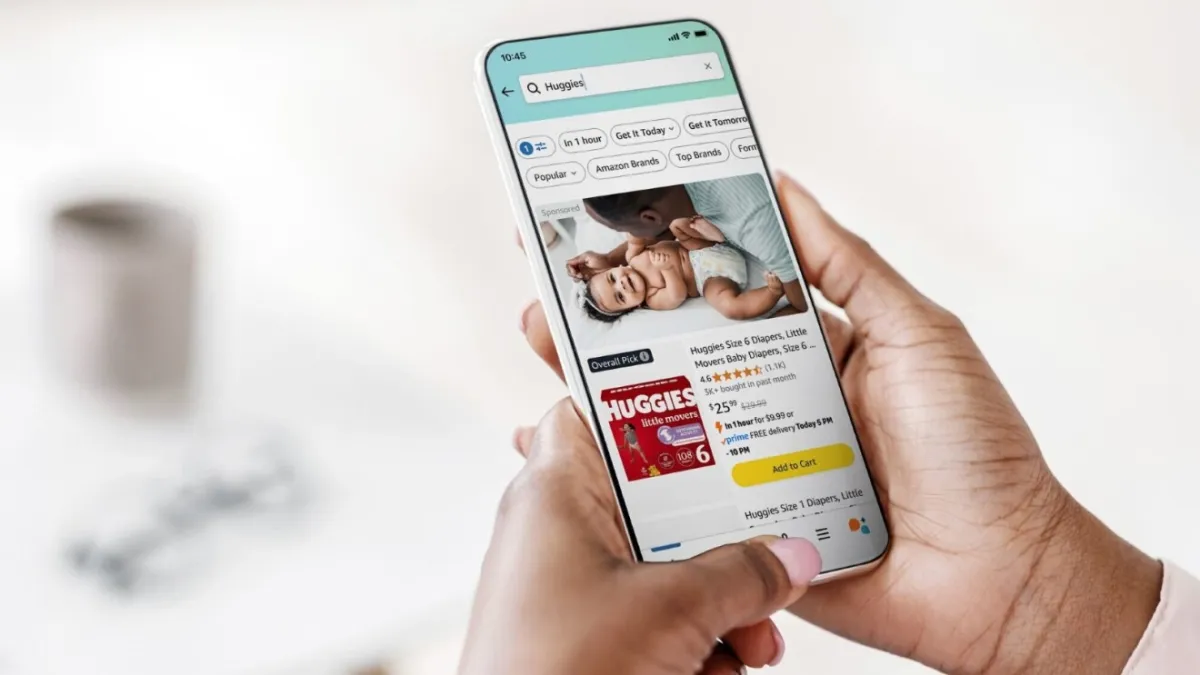
It shouldn’t come as a surprise that Amazon collects data about you based on what you buy. If you buy a lot of cat litter, Amazon will probably infer that you have cats, or if you buy a lot of anti-acne skin products, then Amazon might guess you’re prone to breakouts. Even if we know that Amazon customizes our shopping experiences based on our purchase history, it still comes as a surprise to see all of these personal details laid out in a convenient list. Especially when those details get uncomfortably intimate.
One Threads user came across this section of her Amazon settings, where you can see who the shopping giant thinks you are, and alongside more benign assumptions like “Shops from women’s departments” and “Probably owns a Shark robot vacuum,” she found that Amazon assumes she “has flat buttocks.”
“I stumbled upon a page of assumptions that Amazon has made about me based on my purchases and I’m literally speechless,” an Amazon customer, @fangirlinmegan, wrote on Threads. “I mean it ain’t wrong but damn did you have to call me out like that?”
In less than a day, the post garnered over a million views, including many from users who were curious what their own Amazon profiles might reveal. Here’s how you find out.
On desktop, you can find this page by hovering over where Amazon says “Hello, [your name]” in the upper right corner. Then click “Account” under the “Your Account” section. Under the “Ordering and shopping preferences” section, click “Your Shopping preferences.” From here, you can add in information of your own, like your shoe size, interests, and dietary preferences. But we’re not here to tell Amazon that it should stop selling you beef jerky since you’re a vegetarian. We’re here to see if Amazon thinks you have “flat buttocks.” When you scroll to the bottom of the page, you’ll see a blue hyperlinked option that says “Manage your information.” Once you click that, you’ll see what dirt Amazon has on you.
On the mobile app, you can get here by clicking the hamburger icon from the bottom menu bar, then navigating to “Account” > “Shopping preferences” > “About you.”
For me, Amazon has gleaned that I am someone who “practices photography,” “plays collectible card games,” and is “invested in the Apple ecosystem.” This is all true. Amazon has even flattered me by noting that I “read diverse non-fiction,” to which I say — why yes, I am indeed an open-minded intellectual with a thirst for knowledge. Thank you for noticing.
Other colleagues of mine found that Amazon correctly noted their interests in vinyl records and ceramics, as well as a penchant for “natural materials” in home decor and clothing that “prioritizes comfort.” None of us had anything as affronting as “has flat buttocks,” but the Threads user noted that this was likely because she had purchased “butt scrunch leggings.”
Tech companies know too much about us, and it’s jarring to realize just how closely they’re paying attention to how we use their platforms. We live in a world of alarming surveillance, but at least I know that Amazon doesn’t think my butt is flat.
When you purchase through links in our articles, we may earn a small commission. This doesn’t affect our editorial independence.
>

Apple is working on a new ecosystem of smart home devices via a partnership with LG, Bloomberg has reported.
The new devices — which include a smart lock, a thermostat, and a doorbell — are designed to integrate with the company’s smart home hub, another upcoming product that will reportedly launch on Oct. 13th. That hub is expected to include a 6-inch square display that can be placed on a countertop or mounted on a wall.
The two companies are also working on a slate of security cameras, including models for indoor, outdoor and a floodlight. The LG devices are expected to be announced, if not formally released, next week, too. TechCrunch reached out to Apple for more information.
Interestingly, the devices will reportedly carry the LG brand — despite being developed by both companies.
The new products could aptly be read as a swipe at Amazon’s smart home offerings, which currently offers a variety of similar products, including its Ring home security cameras.
Apple has sought to push into new territory with its recent hardware releases. One of those new territories is an expanded smart home presence.
>

Melius, an AI platform for generating ad campaigns, images, and videos, announced on Tuesday that it raised a total of $25 million in funding, including a $20 million Series A led by CRV and a $5 million seed round led by General Catalyst.
While the startup claims to have hit more than $1 million in annualized revenue within two months of coming out of stealth in July, co-founder Joowon Kim (pictured on right) admits that Melius didn’t hit it out of the park initially.
When the New York-based company first launched over a year ago, Kim and his co-founders, Young Kim (pictured on left) and Arnav Ramu (pictured center) set out to build an AI-powered performance marketing tool. The three knew each other from working as engineers at Ramp, the corporate spending and finance software company.
More than six months after building the product, the co-founders decided their original idea didn’t “have legs,” Joowon Kim told TechCrunch.
Instead of helping marketers manage and optimize ad spend, the team chose to focus on what it saw as a much larger opportunity: building the tools that generate the creative assets and campaigns themselves.
“We scrapped the entire codebase; we burned all of it,” Kim said. Melius quickly went to work on an entirely new product. Nearly a year after its initial launch, it revealed a platform that it describes as an “agents lab for creative work.”
Melius is far from the only startup helping ad agencies, marketers, and brands generate creative assets and campaigns with AI. Competitors include rapidly growing Higgsfield, which was valued at $5.4 billion in August, as well as other small startups, including Krea and Flora AI.
Kim isn’t concerned about the competition.
He acknowledged that Higgsfield, a three-year-old that has hit over $700 million in annualized revenue, “is growing like mad,” but according to Kim, the size of the market is so large that it can support multiple competitors.
“There are a lot of players, which is pretty exciting,” he told TechCrunch. “That means there are customers to be won and there is demand in this space.”
As for why former Ramp engineers are building an ad generation product, Kim, who describes himself as a social media influencer, says he has been passionate about making short videos since elementary school and once dreamed of becoming a famous YouTuber.
“I tried my best to make vlogs,” he said. “My dad was great at using FinalCut Pro, but I wasn’t.”
Those early vlogs never quite took off, but his fascination with making digital media remained.
Now, with Melius, he’s building the tool he always wanted: a platform where anyone, including seasoned creative directors, can turn their ideas into reality using plain language.
When you purchase through links in our articles, we may earn a small commission. This doesn’t affect our editorial independence.
>

Skydance Co-CEOs Insist Its Massive Debt Is Manageable

Premier League predicted and xG table 26/27 – latest Sky Sports supercomputer standings for title, top four, relegation | Football News

‘Abbott Elementary’ To Film 100th Episode At Disneyland
-

 movies5 months ago
Search For Canadian TV Actor Stewart McLean Now Homicide Investigation
-

 Fashion9 years ago
These ’90s fashion trends are making a comeback in 2017
-
Fashion9 years ago
According to Dior Couture, this taboo fashion accessory is back
-
Fashion9 years ago
Model Jocelyn Chew’s Instagram is the best vacation you’ve ever had
-
Fashion9 years ago
Emily Ratajkowski channels back-to-school style
-
Fashion9 years ago
9 Celebrities who have spoken out about being photoshopped
-

 Anime4 months ago
Rurouni Kenshin: Hokkaido Arc Manga Takes 1-Issue Break – News
-

 Anime3 months ago
HIDIVE to Stream English Dubs for The World Is Dancing, The Forsaken Saintess and Her Foodie Roadtrip in Another World, The Dangers in My Heart: The Movie Anime – News