
Fred Hechinger in ‘A Long Winter.’


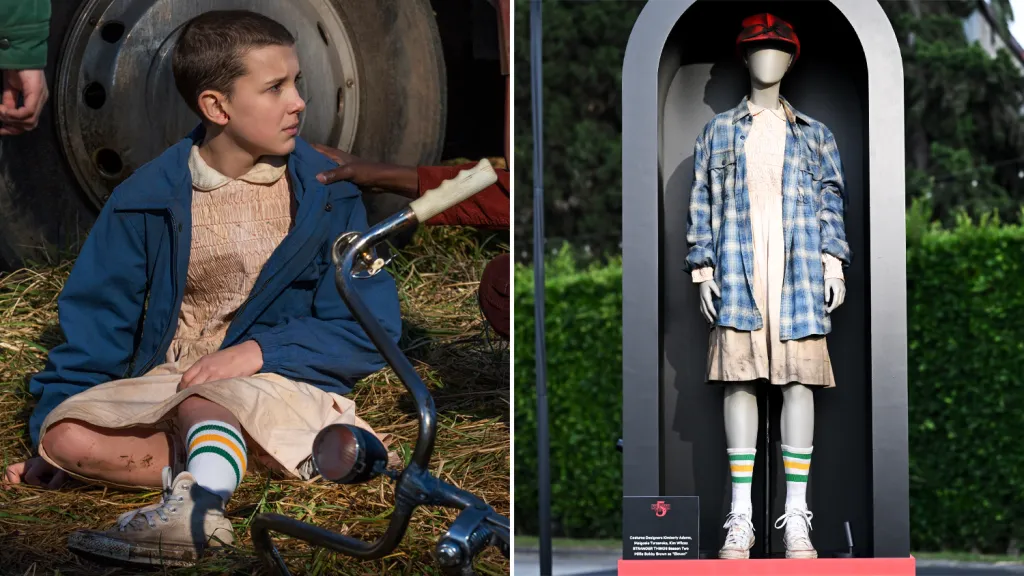
Stranger Things has marked a lot of firsts: it became the first Netflix original series to become a global hit and cultural phenomenon and the first series owned by the streamer to be turned into a licensing bonanza with a slew of consumer product deals. Now the series, which wrapped its five-season run on New Year’s Eve, also has become Netflix’s first series with a presence at the Smithsonian.
It will be represented by Eleven’s (Millie Bobby Brown) signature outfit built around her iconic pink dress from Season 1. Ryan Lintelman, entertainment curator, Smithsonian’s National Museum of American History, announced the donation at a Netflix FYC event for the series at the Hollywood Forever Cemetery Thursday night attended by Stranger Things cast and crew, including creators/executive producers/directors Matt and Ross Duffer, director/executive producer Shawn Levy and stars David Harbour, Natalia Dyer, Jamie Campbell Bower and Noah Schnapp.
“This is amazing, thank you so much,” Matt Duffer exclaimed as he, Ross Duffer and Levy walked on stage to sign the deed of gift. (You can watch the signing video below.) Levy has his own history with the Smithsonian having directed and produced the 2009 feature Night at the Museum: Battle of the Smithsonian starring Ben Stiller, which is set there.
In his speech, Lintelman noted that Stranger Things “told a compelling and complex story with themes that resonate now and will stand the test of time: The deeply American skepticism of authority and established wisdom – especially the federal government and unethical activities in the pursuit of science and security,” before ad-libbing, almost apologetically, about his own status of a federal government representative to a big laugh from the audience.
The other themes from the show Lintelman highlighted as exemplified by Eleven’s costume include “The belief that a group of committed individuals can change the world, the idea that young people have a unique ability to see the truth that others can’t, and the power of friendship, courage, and love to overcome any obstacle.”
Lintelman also underlined the significance of the costume, designed by Kimberly Adams and Malgosia Turzanska, which will be part of the national collection at the Smithsonian.
“This costume so brilliantly illustrates Eleven’s journey to discover herself and claim her power,” he said. “Until this point in the series, Eleven had only worn hospital gowns and hand-me-downs, suggesting her lack of autonomy and individuality; when she first puts on the dress and a blonde wig, Eleven remarks that she looks pretty, a major step on her journey to self-awareness and empowerment.”
Lintelman also mentioned the dress’s cultural zeitgeist impact as one of the most sought-after costumes of the 2016 Halloween season.
Halloween costumes was the first area Stranger Things expanded into as a brand, followed by dozens of others, from toys and games to live experience to clothing and other consumer products.
>
Following the release of his latest film, All of Us Strangers, Andrew Haigh found himself presented with options like never before. The British director, previously best known for gay cult faves like his breakout feature Weekend and HBO’s Looking, met widespread critical acclaim for the wrenching queer drama starring Andrew Scott, leading to his first BAFTA nominations for best screenplay and directing. It became his highest-grossing movie ever at the box office, pushing past $20 million globally. The opportunity to scale up, beyond the intimate character studies with which he’d made his name, couldn’t be ignored.
“When you have a thing that breaks through a little bit, you have to take advantage of it. It does make you take a lot more meetings afterwards, with lots of people sending you things — which is both good and then slightly exhausting,” Haigh says. “Part of me was like, ‘Should I go bigger? I could now go and do this thing over here that’s big and shiny and might get me more visibility.’ But I don’t necessarily need lots of visibility. The slightly more success you get, the harder it becomes to make those choices.”
And so Haigh looked inward. He did not go bigger. Instead, he turned toward the project he’d been trying to make for nearly 20 years — as tender, nuanced and subtle as anything in his oeuvre. A Long Winter feels, first and foremost, like an Andrew Haigh film.
Now 53, Haigh first read Colm Tóibín’s short story “A Long Winter” right around its 2006 publication, before he’d helmed a single movie. The tale follows 20-something Miquel, who lives with his father in a remote snowy village. His brother has just left on military service and his mother has suddenly walked out on the family. Miquel desperately searches for her in the freezing conditions, plumbing new depths of self-discovery in the process.
“Within that story was everything I wanted to make films about — I remember reading it and thinking, ‘This is the perfect manifestation of what I care about,’” Haigh says. This was roughly two decades ago. Then an aspiring filmmaker, Haigh convinced the prize-winning Irish author to grant him the rights to “A Long Winter.” As he built his career, he tried to make the movie, over and over — initially working off of a script set in Spain, as the original text was. “No one wanted to make it,” Haigh says. “I made it harder because I can’t speak Spanish and yet I was saying, ‘I want to shoot it in Spain.’”
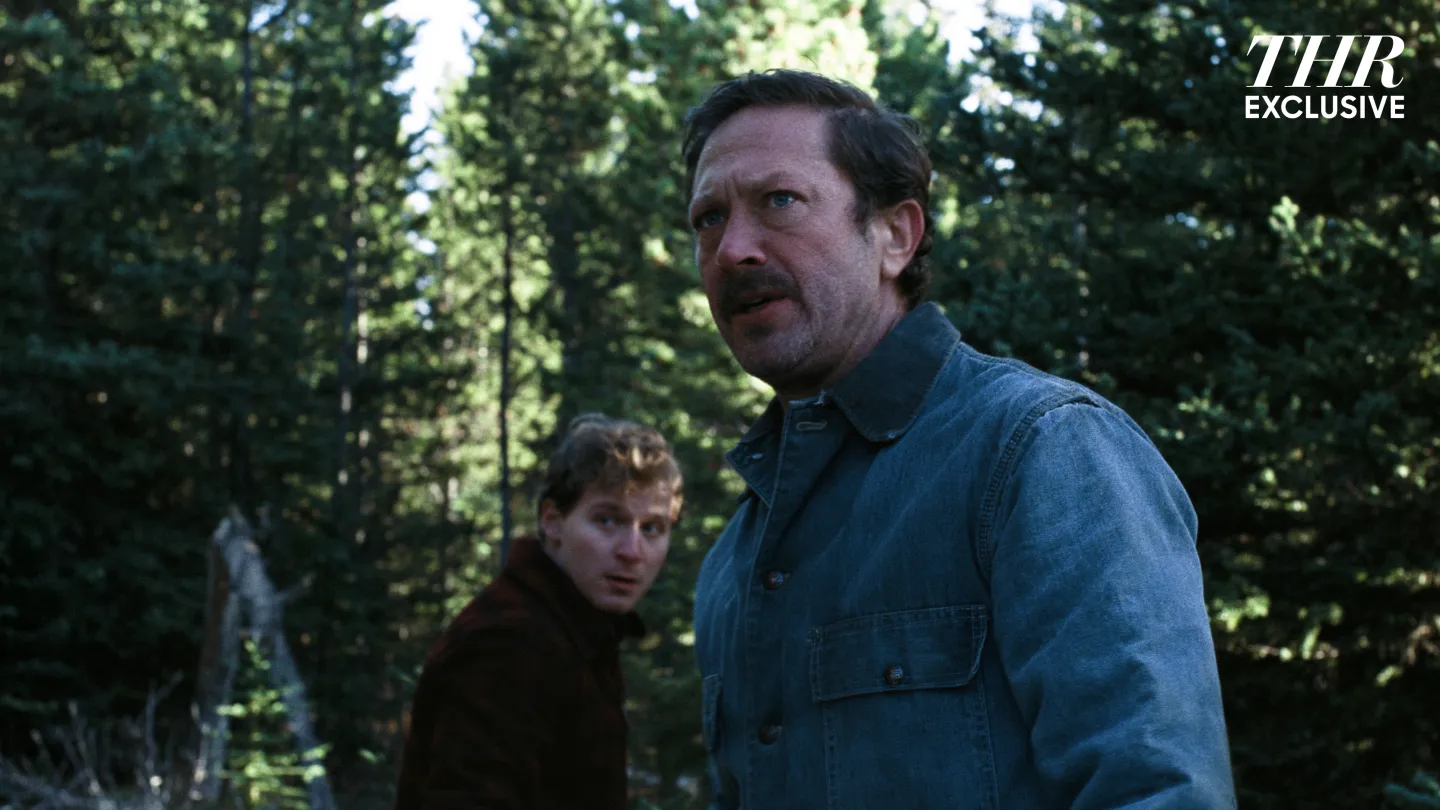
Fred Hechinger in ‘A Long Winter.’
And so the moment finally arrived, in the wake of Strangers’ lauded run and with a revamped adaptation. Haigh’s ultimate film of A Long Winter is slated to screen at the Toronto and New York film festivals before hitting theaters via MUBI later this year. It’s set deep in the Rockies of ‘50s Colorado, with young Mike (Fred Hechinger) navigating a complex relationship with his lonely father, Lester (Ebon Moss-Bachrach), after his brother (Kit Connor) leaves for Korea and his mother (Caitríona Balfe) disappears, running away from a life she’d found unbearably isolating.
“If you look at all of the movies I’ve made, there are these themes bubbling under: longing and trying to deal with loss and trying to understand who you are in the world and how to fit into the world that doesn’t make sense to you,” Haigh says. “Those themes are very inherent in the story, but told in a [similar] way to what I’ve always tried to do with my filmmaking: Excavate the complicated emotions beneath the surface and find a way to get them onto the screen.”
It’s a visually ambitious film for Haigh, the haunting elements of Strangers extending to this rich family portrait. “It’s not a big movie, but we had big ambitions,” the director says. “It’s definitely moving away from the more naturalistic, realistic base that some of my earlier work lived in and finding this more metaphorical place.” As he’s committed to doing lately, Haigh shot on film — “There was no debate about that,” he says — and worked with D.P. André Turpin to execute a more subjective cinematic style.
“The camera follows the awakening of Mike. If you look at the film, it’s a lot more static at the beginning and it starts to breathe,” Haigh says. “The camera starts to open up. It starts to move independently. It starts to move without a character leading it across the frame. To me, the film was about breathing differently. It was about opening your eyes differently.”
A Long Winter shot up in Canada, a little over an hour outside of Calgary — Colorado was “too expensive,” Haigh concedes — and you can feel the intensity of the elements. The family home was an original construction in the woods, overseen by production designer Emmanuel Fréchette, following an extensive location scout. “I can stand in the kitchen window and I can look out and see the mountains — they’re above me, they’re below me,” Haigh says. “It’s still there now six months later, somewhere on the mountainside, surviving the extremes.
“We built that house up on the mountain, inside and out, no studio work, all up in 100-mile-hour winds and the snow,” Haigh continues. “It’s where they shot The Revenant, actually. So this is my version of The Revenant — a slightly more delicate version.”
Caitríona Balfe and Ebon Moss-Bachrach in ‘A Long Winter.’
**
Haigh has been working with his casting director Carmen Cuba for well over a decade, going back to Looking. For the past several years, Cuba has been telling him to cast Hechinger in something. “Since seeing him in The White Lotus’s first season — from that day onward it’s been, ‘You’ve got to work with Fred,’” Haigh says. “She adores him, and I understand why. She sees him as a young, Dustin Hoffman-type of actor.”
Several actors put themselves on tape for the part of Mike, and Hechinger won the lead role. His moving, intricate performance serves as a showcase of what he can do as a lead, following auspicious supporting turns in films like Thelma and Nickel Boys. “If you watch him at the beginning of the film and see him at the end, he even looks like a different person,” Haigh says. “It’s not an easy performance.”
It’s the consistent hallmark of Haigh’s work — the landscape for his characters to grow and change feels immense, even as the script hews to the tighter conventions of real life. Mike begins the film feeling relatively comfortable in the family’s isolated cabin bubble, if only because what lies beyond it feels so alien. His contentment is rocked by his mother’s absence — her yearning for something better. He must now look his devastated father in the eye each morning, seeing all of his pain and resentments and fears. He must consider what led his mother to risk her death to find something different for herself. And he must confront what he himself wants — particularly when a mysterious young man (Reservation Dogs’ D’Pharaoh Woon-A-Tai) begins living with the family to help out around the house.
As in Tóibín’s story, Mike is queer — but Haigh, known for his vividly realistic sex scenes from Weekend through to Strangers, communicates this onscreen with a surprising, impressionistic approach.
“What I love about Mike, and especially how Fred plays him, is he’s this sensitive soul within this world that isn’t sensitive — his sexuality for me is wrapped up in a different way of feeling about the world and seeing the world,” Haigh says. “He needs someone to understand how he sees the world. I’ve put sex in a lot of the films that I’ve done, and I wanted this to be different. Sometimes queerness is framed only within sexual desire and not within something else. But obviously when you are queer, you know that it’s not just about sexual desire itself. It’s more than that.”
Hechinger in ‘A Long Winter.’
In these subtle but intent pushes, Haigh arrived at what felt like the ending of a chapter in his life and career. “I think of this film as a bookend to a lot of things I’ve been exploring over the last 15 years of making films,” he says. “As I’ve grown up and my life has changed — all of these stories that have been me trying to understand my own background, my life, my childhood, absences in my own life and certain losses — I’ve come to terms with a lot. So I feel like this is an endpoint.”
As for what his next chapter might look like? Haigh politely demurs with a laugh: “Well, let’s see what happens.”
Just don’t expect his next era to go the way of tentpoles and blockbusters. Haigh can claim the rare feat of making modestly budgeted, emotionally driven, critically hailed dramas at a steady clip for the entirety of his career — during which time the very future of independent film has been put under existential threat. It has never been easy for Haigh to get his movies made. But this moment, he concedes, feels different — scarier than ever.
“It is a very, very challenging time, and everything is much more expensive. Making a film is so much more expensive than it used to be,” he says. “My first movie, I made it for $65,000. 45 Years was only $1.5 million. You couldn’t make that film now for $1.5 million — it would cost so much more. When I speak to younger filmmakers, it’s a terrible situation for them. It’s even harder for them.”
And yet: “I’m quite happy existing within this budget range. I like to tell these stories. I like to have control of how I tell my stories,” Haigh says. “I can’t be someone else. I can’t make films like other people. I can only make films like I can make them. And so when I tell myself I never want to do this again because it’s too difficult, I remind myself of that. It’s a pretty incredible thing that I’ve been able to do.”
Stay tuned for more exclusive features on this fall’s biggest festival-bound films.
>
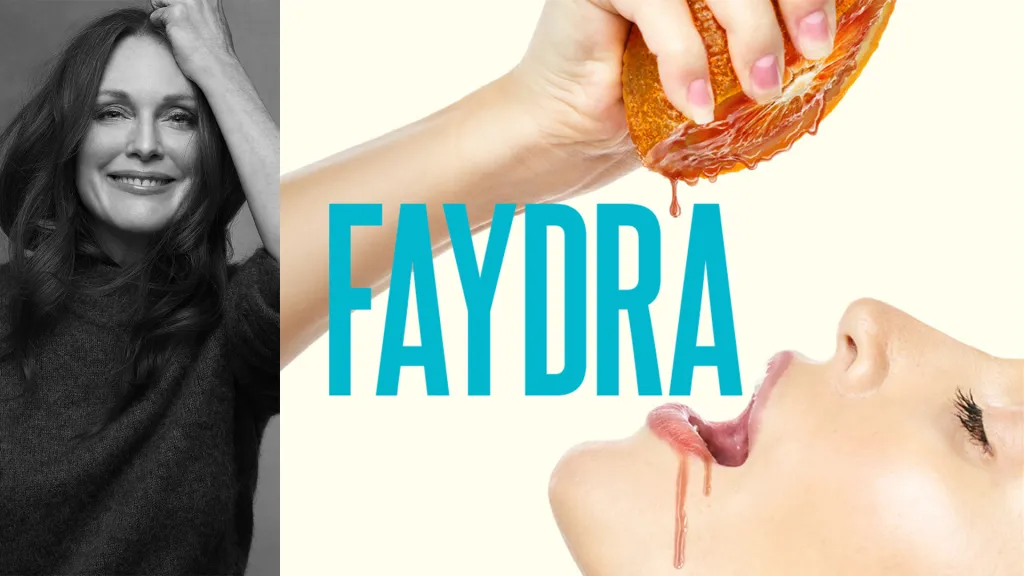
Oscar and Emmy winner Julianne Moore is set to play the title role in Faydra, a lusty new play by In the Next Room Tony nominee Sarah Ruhl that will have its world premiere Off Broadway next year.
Per the logline of the modern take on the Ancient Greek myth of Phaedra: Aphrodite aims her bow at Faydra and lets an arrow of love fly. Nothing is ever the same. Mostly because the object of Faydra’s sudden, all-devouring lust is her soon-to-be stepson. Faydra explores the impossibility of reconciling logic and longing — especially for a woman unwilling to deny desire.
Les Waters directs Faydra, which begins previews on February 2 at the Manhattan Theatre Club ahead of its February 25 opening. Other castings are TBA.
Moore won an Oscar for her lead role in 2014’s Still Alice and has been nominated four other times — twice as Lead Actress for Far from Heaven (2002) and The End of the Affair (1999) and twice for Supporting in The Hours (2002) and Boogie Nights (1997). Her big-screen credits also include The Room Next Door, May December, The Big Lebowski and many others. She won a Primetime Emmy for the 2011 telepic Game Change and a Daytime Emmy for As the World Turns in 1988. She next stars in writer-director Jesse Eisenberg’s The Debut, which will close the London Film Festival in October before hitting theaters December 11 via A24.
Two-time Pulitzer nominee Ruhl and Waters have a long shared history, collaborating on the 2010 Best Play Tony nominee In the Next Room (or the vibrator play) along with Eurydice, For Peter Pan on Her 70th Birthday and others.
“Sarah Ruhl’s bold, funny and devastating reimagining of this classic tale will draw the immensely gifted Julianne Moore back to the stage and mark Les Waters’ return to MTC after three decades,” MTC Artistic Director Nicki Hunter said in a statement.”
>
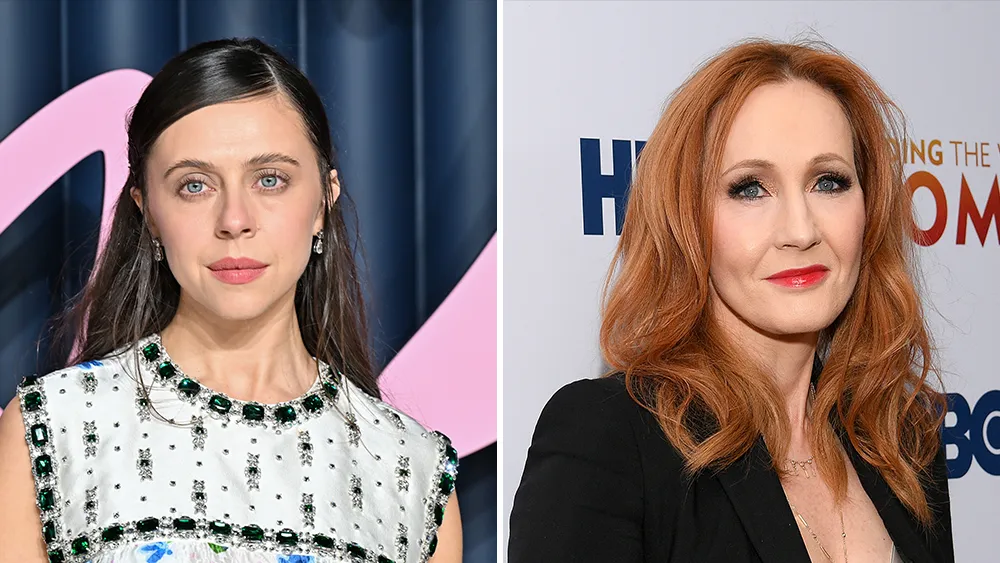
Bel Powley, who plays Petunia Dursley in the upcoming Harry Potter and the Philosopher’s Stone TV series, is not holding back her thoughts on author J.K. Rowling‘s anti-trans views.
“I strongly disagree with J.K. Rowling’s views on gender,” she told The Telegraph. “I think that the trans community deserve safety and dignity and respect and total acceptance. But I love Harry Potter. I grew up with the books. I am from that first generation of readers and, again, I love magic and spookiness.”
Rowling has long been outspoken about her views, and has been at odds with many actors in the Harry Potter franchise, such as Emma Watson and Daniel Radcliffe, who have openly opposed her rhetoric.
Powley’s Petunia Dursley is Harry’s maternal aunt in the upcoming series. Per the logline: There is nothing special about Harry Potter — at least that’s what his Aunt Petunia always says. On his 11th birthday, a letter of admittance to Hogwarts School of Witchcraft and Wizardry opens up a hidden world for Harry: one of fun, friendship and magic. But with this new adventure comes great risk as Harry is forced to face a dangerous enemy from his past.
The series also stars Arabella Stanton as Hermione Granger, Alastair Stout as Ron Weasley, John Lithgow as Albus Dumbledore, Janet McTeer as Minerva McGonagall, Paapa Essiedu as Severus Snape, Nick Frost as Rubeus Hagrid, Rory Wilmot as Neville Longbottom, Lox Pratt as Draco Malfoy, Leo Earley as Seamus Finnigan, Elijah Oshin as Dean Thomas, Tristan Harland as Fred Weasley, Gabriel Harland as George Weasley, Ruari Spooner as Percy Weasley, Alessia Leoni as Parvati Patil, Sienna Moosah as Lavender Brown, Finn Stephens as Vincent Crabbe, William Nash as Gregory Goyle, Warwick Davis as Filius Flitwick and Sirine Saba as Pomona Sprout.
Harry Potter and the Philosopher’s Stone will debut Christmas Day on HBO and will be available to stream exclusively on HBO Max where it’s available, including recent launch markets Germany, Italy, and the UK & Ireland.
>


Search For Canadian TV Actor Stewart McLean Now Homicide Investigation


These ’90s fashion trends are making a comeback in 2017
According to Dior Couture, this taboo fashion accessory is back
Model Jocelyn Chew’s Instagram is the best vacation you’ve ever had
Your comprehensive guide to this fall’s biggest trends
9 Celebrities who have spoken out about being photoshopped
Emily Ratajkowski channels back-to-school style
A photo diary of the nightlife scene from LA To Ibiza