
Jessica Chastain in ‘Other Mommy‘
Universal Pictures/Everett Collection


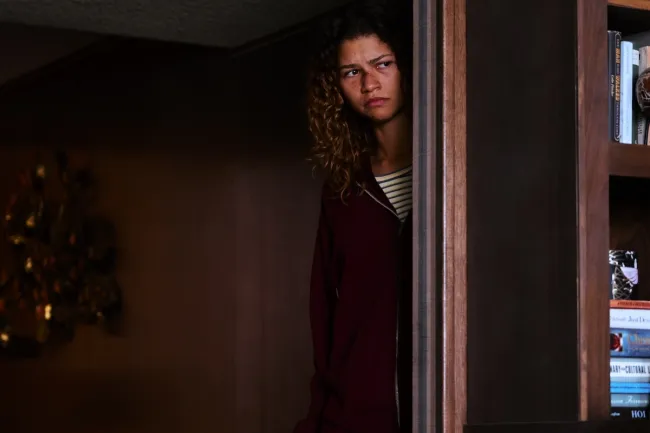
[Editor’s note: The following review contains spoilers for “Euphoria” Season 3, Episode 8, “In God We Trust” — the finale — including the ending.]
Near the midway point of “Euphoria‘s” series finale, when Rue (Zendaya) sees her mother, Leslie (Nika King) for the first time in years, a look flashes across her face so happy it’s heartbreaking. Director of photography Marcell Rev’s soft lighting accents her teary-eyed smile, drawing out her hope to return to a place she feared was forever out of reach. The moment is the direct culmination of Rue being kept out of her teenage bedroom and that haunted hallway throughout Season 3. From time to time, Rue would say she wanted to go back, but even without the exposition, her world outside of those walls is horrific enough to make them feel like salvation.


But then Leslie raises her hand, and it’s clear salvation is already out of reach. Leslie sitting alone in the dark reading the Bible is strange enough staging, even before Rue comes around the corner, but the way she silently responds to her daughter’s long-awaited yet complicated arrival is simply too hokey to believe. No wonder, seconds later, the scene cuts to what’s really going on: Rue is back on Ali’s (Colman Domingo) couch, overdosing on Percocet left for her on purpose by Alamo Brown (Adewale Akinnuoye-Agbaje) and having a vision of the peaceful reunion she’ll never obtain.
Zendaya has always been great at these scenes. Her smile in the fantasy is one of relief and clarity, which cuts so hard after watching the dread pile up before Leslie notices her. Then her smile on the couch is goofy and childlike, as if she’s only experience a level of happiness totally disconnected from reality. As it sets in that Rue is about to die, the euphoria she feels is simultaneously pure and tainted — a contradiction forced upon her by the drug that was Rue’s undoing.
To say that’s where “Euphoria” should’ve ended would be both true and insufficient. Yes, the one through-line across creator, writer, and director Sam Levinson‘s salacious HBO drama is death: Rue is constantly on the edge, be it back when she was doing hard drugs at high school parties in the early days or running drugs across the border in more recent episodes. As an addict, she’s trapped in a loop, and there’s no clean way out.
Except… that’s not enough. Pointing out the cycle of addiction while making vague gestures toward the systems that support widespread Fentanyl use doesn’t mean the surrounding story has a point of its own. That’s not a reason to spend all this time — especially a bloated, boring third season that ended with a bloated, boring finale (that still somehow only found time for a single, silent scene with Jules?) — watching young people suffer. It’s not enough to prop up a season (and arguably, a series) that has nothing to contribute to the issue other than fury and pessimism.
And it sure feels like Levinson knows it’s not enough after those ridiculous final 40 minutes.

“Euphoria’s” perspective leaps from Rue to Ali (aka Martin) when she dies, and he gets to give two revealing speeches about what it all might mean. (If you’re going to go this route, you better hire Domingo to sell it.) The first, at his last Narcotics Anonymous meeting, sees him admitting, “I used to believe the world would be a better place if people could empathize with addiction. … Maybe empathy isn’t all that helpful after all. … Maybe the real disease is that people no longer know the difference between right and wrong. I don’t care what your struggles may be. If you poison kids for money, you’re evil. Plain and simple.”
This sure sounds like the “anger” phase of grief, huh? Well, ol’ Martin here decides the best way he can be of service is to put on his old military uniform, saw off a shotgun, and head to the Silver Slipper. Therein, Levinson’s awkward Western motif comes to its inevitable conclusion with a standoff between Black Hat and no hat, evil and used-to-be-good, Ali and Alamo. Who wins is never really in doubt, nor does Levinson milk much tension out of the extended sequence (despite multiple armed guards surrounding Ali pretty much the whole time). So when Alamo meets his maker, the real question is what does it mean for Ali to be the one who introduced them?
Turns out, not much. He goes to visit the Miller family — the farmers who Rue crashed with in the Season 3 premiere — and says he’s there on behalf of his daughter. Mr. Miller invites him inside to talk a while, and then asks Martin to say grace for their shared meal. “I pray today for those whose eyes have grown weak with sorry, whose soul and body are weighed down by grief, and whose strength is failing,” Martin says. “Lord, pour out your mercy upon them. Let your face shine upon them, and save them, in your unfailing love. Thank you, Rue. Let her memory be a blessing.”
And then, the symbolically empty chair at the end of the table is filled with Rue’s literal ghost. “Amen,” she says, that famous smile spreading across her face.
So, what does this ending tell us? Had Martin gone straight to the Millers after relapsing (he admits to having a drink after Rue’s death), the closing scene would’ve made a little more sense. Everyone stumbles. Everyone needs help sometimes. Everyone will ask for help, or needs to ask for help, and all we can do is give back whatever we can. He’d be on a pilgrimage to reinvigorate the empathy he lost after writing Rue’s name in his book of the dead.
Except… there’s no indication Martin is repenting for his murderous vigilante rampage. There on that ugly little desert farm, is he once again humbling himself before a higher power, or is he going to keep hunting down anyone who poisons kids for money and is, therefore, evil? Is he trying to find peace in the place Rue described as the most peaceful place on Earth, or is he trying to make peace with the exception he’s carved out for himself in the Ten Commandments? “Thou shalt not kill unless you think they’re really, truly evil?”

I am not here to defend Alamo Brown, nor to argue in favor of always turning the other cheek. The bad man had to go, and I’m glad the bad man is gone. But what “Euphoria” tries to do in its spectacular failure of a finale is have its cake and eat it, too. On the one hand, there is the empty but “honest” portrayal of Rue’s most likely fate. On the other, there is the overwrought but far-fetched revenge for her death. Are we really supposed to invest equally in both outcomes? Are we even supposed to believe both outcomes are part of the same show? These scenes are diametrically opposed in style and content, only capable of sitting together if the outlandish latter moment also ended with a twist, or at least the possibility of one — where Martin’s big shootout was a fantasy, too.
Such an admission never comes, and we’re left to believe that’s what really happened to Alamo, Bishop (Darrell Britt-Gibson), and Maddy (Alexa Demie). (I do like the latter two as a couple.) We’re left with Cassie (Sydney Sweeney) all alone in her modern-day brothel, and Lexi (Maude Apatow) once again taking the moral high ground without fully grasping why. (Side note: The contempt shown for these two women is ridiculous, and their closing conversation about the Bible is the final straw. “That’s the heart of it, I think,” Lexi says. “Bad things happened. So why have anxiety about it? What good does it do? No matter what you have to keep going. That’s the point of it, I think.” …what? Her takeaway from what I can only assume was a light skim of the Good Book is that God endorses nihilism? And Cassie can’t even follow along! “What does this have to do with the Bible?”)
These character endnotes, whether they’re read as youthful naiveté or an insulting interpretation of youthful naiveté, contribute to the finale’s bitter aftertaste. While the ending hopes you mistake the lingering foulness for sorrow over the main character’s passing, the feeling is more likely rooted in disappointment. After three seasons and a four-year wait for the final episodes, “Euphoria” can’t even muster the courage to commit to its own honest ending. Instead, it admits to one fantasy while trying to sell you on another.
What a hustle.
“Euphoria” Season 3 is available on HBO and HBO Max.
>

The China release of Sony/Constantin’s Resident Evil propelled the move not only to the top of the global weekend box office in its fourth frame with an overall $62.7M WW , but the pic also became Zach Cregger’s highest grossing movie ever (as we first told) with $320.2M. That beats the previous high of his Oscar winning Weapons ($270M WW) last year.
China delivered $40.6M, which repped the best opening for a horror film in the last two years.
Resident Evil invaded its native country of Japan with a $3.6M opening. Other top per performing market cumes are UK $17.0M, Mexico $11.8M, Australia $8.5M, France $8.5M, Germany $7.3M, Spain $7.1M.
Overall international cume on Resident Evil is $181.7M on 38,150+ screens in 67 offshore markets.
Jessica Chastain in ‘Other Mommy‘
Universal Pictures/Everett Collection
And, wow, Universal/Blumhouse Atomic Monster’s Other Mommy with a $45.1M global opening from 51 territories with $27.5M domestic and $17.6M abroad.
Why wow? For a horror movie with a D+ CinemaScore and awful reviews (Uni held critics at bay) to over perform in a marketplace where many are precious about what they want to see, is quite commendable and this Rob Savage directed matriarch doppelgänger film only cost $19 net before global P&A. It just speaks to the continued staying power of genre. The weekend result is above M3GAN, Evil Dead Rise, The Black Phone, Smile, and Evil Dead Burn, in the same markets.
Stateside that’s Jessica Chastain’s sixth highest opening after It:Chapter Two ($91M), The Martian ($54.3M), Interstellar ($47.5M), X-Men Dark Phoenix ($32.8M) and Mama ($28.4M), which was another solo horror vehicle for here. You want to be technical about it, most of these films were ensembles, hence, Other Mommy can be argued as her second highest solo start stateside. Point is audiences clearly flocked to see Chastain in a spooky movie.
Other Mommy was No. 1 in UK/Ireland, Italy, Mexico, U.A.E., Other Middle East, Taiwan, Malaysia, Indonesia, Argentina, Central America, Chile, Greece, Turkey, Israel, Norway, Singapore, Ecuador, Venezuela, Uruguay, Lebanon, Trinidad, Pakistan and Iceland. The spiritual scary nature of the film is the reason for its rally in Catholic countries, specifically Latin America.
Chastain counted $2.6M at 625 screens in UK & Ireland, surpassing the lifetime box office of The Boogeyman to become Rob Savage’s highest-grossing theatrical release. The weekend result is above Exorcist: Believer, Evil Dead Rise, Smile, Speak No Evil, and more than double Black Phone.
Italy was molto bene with $2.2M at 315 screens, repping 31% of the weekend’s marketshare. The weekend result is above Five Nights at Freddy’s 2, Backrooms, Resident Evil, Scream 7, Exorcist: Believer, more than double Evil Dead Rise, M3GAN, and Insidious: Out of the Further, more than 5x Smile, and more than 8x The Black Phone.
Other Mommy counted $1.9M in Mexico for 24% of the weekend marketshare, a result that’s above Evil Dead Rise, M3GAN, and Smile.
Australia’s $1.1M for the Savage pic ranked No. 2 at 246 screens, with a healthy 14% market share. The weekend result is above Black Phone, Exorcist: Believer, Insidious: Out of the Further, Smile, and Evil Dead Rise.
Spain opened to a near $1M, ranking No. 2 behind local hit La Bola Negra. The weekend result is in line with Exorcist: Believer and Evil Dead Rise, above M3GAN, Black Phone, and Smile.
Brazil’s $800K at 726 screens ranked 3rd in the country behind Verity and local film Minha Amiga, with a healthy 13% share of business. The weekend result is in line with Black Phone, and above Smile.
U.A.E.’s great $700K No.1 was above Black Phone, Exorcist: Believer, Smile, Evil Dead Rise, and more than double M3GAN.
Saudi Arabia had an excellent start with $600K, above Evil Dead Burn, Exorcist: Believer, Evil Dead Rise, Insidious: Out of the Further, and M3GAN. Others Middle East was strong at $500K, taking the total for the Middle East region to an excellent $1.7M. Great starts in Southeast Asia with the region counting $2.2M from openings in Indonesia ($476K), Taiwan (+$424K), Malaysia ($416K), India ($327K), Philippines ($248K), and Vietnam ($217K). The opening result across the region is above M3GAN, more than double Black Phone and Smile.
Dakota Johnson stars as Lowen Ashleigh in VERITY
Alisha Wetherill
Amazon/MGM Studio’s Verity is third with $30.1M second global weekend ($11.5M domestic, $18.6M int’l at 76 territories). Domestic of $53.9M and international B.O. of $60.1M put this Dakota Johnson, Anne Hathaway, Josh Hartnett thriller at $114M WW.
THE SOCIAL RECKONING, Jeremy Strong as Mark Zuckerberg, 2026. ph: Leah Gallo / © Columbia Pictures / courtesy Everett Collection
If it’s a bomb here, then typically it’s a bomb in the rest of the world, and it was clear going into this weekend that Aaron Sorkin’s sequel to his Oscar winning written The Social Network, The Social Reckoning, would have no friends with a $9M WW opening ($5.5M stateside, $3.5M overseas which is lower than the $6M hoped for ala the start of Lionsgate’s Bombshell in like-for-likes). The Mikey Madison and Jeremy Allen White movie was booked in 29 foreign territories on 4,100 screens. Why did it tank? The movie isn’t prescient enough in its recap of the Jan. 6 riots and why Facebook is bad for teens. Everyone nowadays wants to know if A.I. will kill them in a decade, which gives Luca Guadagnino’s upcoming Artificial more of a pulse.
Just a bit higher than Social Reckoning is the second weekend of Tom Cruise’s disastrous, Digger, with $9.6M WW ($3.2M domestic, $6.4M abroad) for a running global cume on the $160M+ net production of $35.3M ($20.9M int’l, $14.4M domestic). At $50M WW, Digger loses $150M. Social Reckoning was much cheaper, around $40M, so the red ink won’t be so bad.
More..not done yet.
>
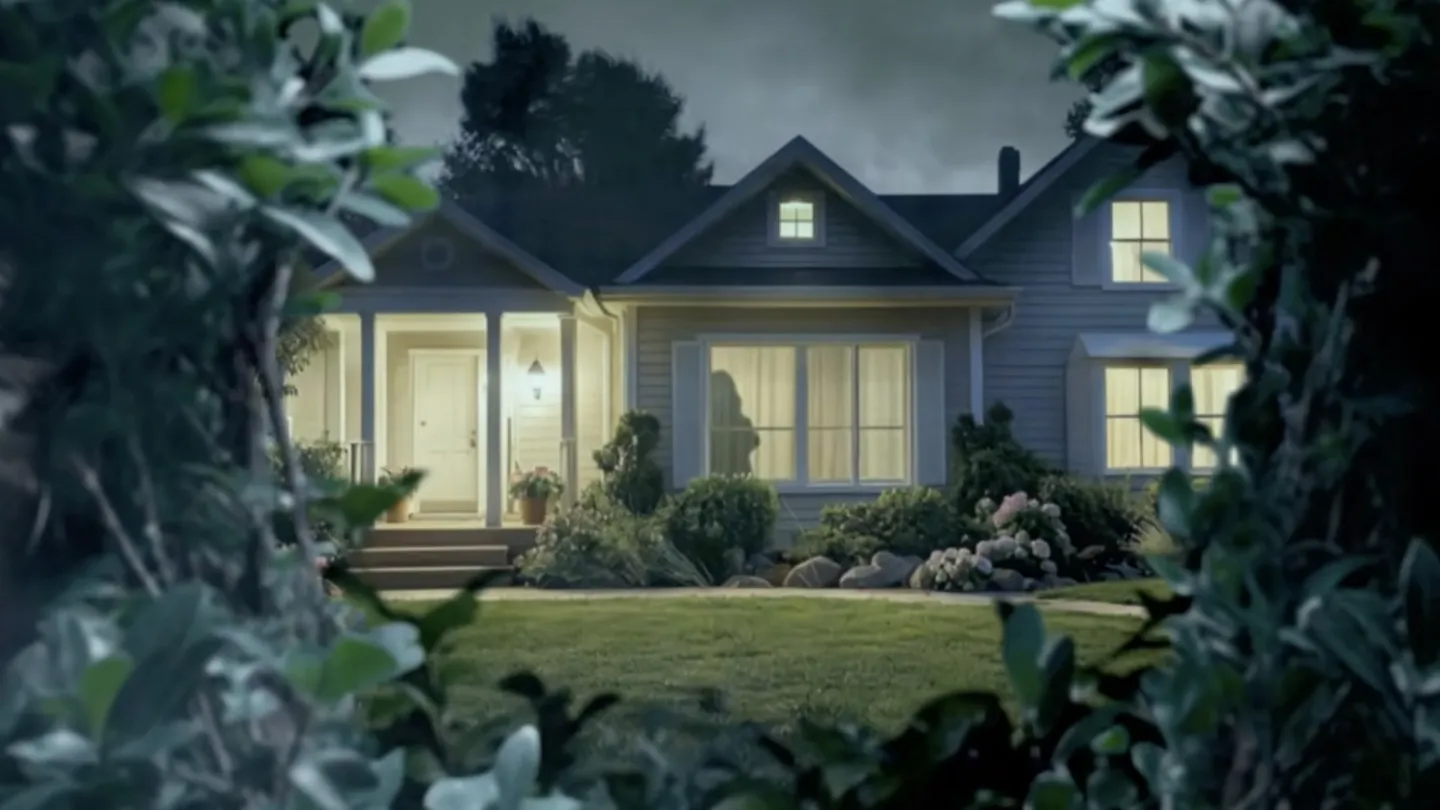
Tubi’s next Final Girl is here.
The streamer is set to release a live action adaptation of The Babysitter, based on the popular series of R.L. Stine novels first published in 1989, in 2027. The film’s announcement comes just two days after the Oct. 9 release of Pumpkinhead 2, and ahead of the streamer’s New York Comic Con panel, where Stine appeared alongside Tubi’s Chief Content Officer Adam Lewinson, Pumpkinhead writer-director Jem Garrard, and RuPaul’s Drag Race All Stars’ contestant and Afraid of Clowns star Jimbo.
The film follows a 16-year-old babysitter, Jenny, who is so desperate to earn enough money for a prestigious writing program that she takes the job despite a prowler terrorizing girls across town. But when she starts receiving threatening phone calls and a dangerous fugitive surfaces in town, Jenny’s suspicion of those around her grows. Meanwhile, danger begins closing in.
Produced by Blue Ice, Garrard will write and executive produce the film, which Trevor Calverleya will direct. The Babysitter will be executive produced by Lance Samuels, Joan Waricha, Jane Stine and Garrard. Producers include Dan Bernard, Yvonne Bernard, Tebogo Maila, Darren Cameron and Adam Friedlander.
“R.L. Stine has an incredible ability to tell stories that are scary, fun and endlessly entertaining, and that combination continues to connect with Tubi viewers,” said Adam Lewinson, Chief Content Officer, Tubi. “With The Babysitter, one of R.L. Stine’s most iconic novels, we’re delivering a fresh, fun thrill ride for longtime fans and a whole new generation.”
The Babysitter not only marks the fourth film in an ongoing partnership between the streamer and the prolific children’s horror author, but also the first not based on a short from Stine’s Nightmare Hour or Haunting Hour anthologies. Check out the teaser, which The Hollywood Reporter can exclusively share, below.
First published in 1989, The Babysitter and its three sequels — The Babysitter II (1991), The Babysitter III (1993), and The Babysitter IV (1995) — were pivotal in defining Stine as a preeminent horror and children’s author. The original book followed the same 16-year-old Jenny, who begins receiving threatening calls and notes after taking on a babysitting gig, before she discovers the threat is coming from inside the house.
The second and fourth books follow Jenny as she attempts to recover in the immediate aftermath of the first book’s events, and years later as she faces her disturbing past and another terrorizing babysitting experience. The third installment pivots slightly, focusing more on the experiences of Debra, who is haunted and hunted in the same way as her cousin, Jenny.
Tubi also recently announced a third Stine adaptation, Afraid of Clowns, based on The Nightmare Hour short and previously developed as a Haunting Hour (2010) episode. Written and directed by Garrard, the film, also set to release in 2027, stars Frankie Honey, Ava Ferrer, Azriel Dalman, Joe Moore and RuPaul’s Drag Race All Stars winner Jimbo, and is teased at the end of Pumpkinhead 2.
The next entry in the Redhaven saga, Afraid of Clowns, sees the arrival of a mysterious clown troupe led by Ringmaster Rollo. A young resident, Frankie, begins to suspect they’re connected to the disappearance of a child years earlier, and in an effort to protect her brother, works to convince her friends to help stop the clowns before her sibling vanishes forever.
Pumpkinhead 2 is currently streaming on Tubi.
>

In 2010, “The Social Network” arrived in theaters on a wave of anticipation. Two of the biggest names in movies, director David Fincher and writer Aaron Sorkin, were joining forces to explain the age of interconnectedness.
The timing was perfect. Twitter was gaining steam, YouTube was transforming the way people watched stuff, and Facebook, the subject of “The Social Network,” had established itself as a social media juggernaut, leaving MySpace and other pretenders in the dust. But six years after it launched, Mark Zuckerberg, Facebook’s geeky, 20-something founder, remained an enigma, one that Fincher and Sorkin were determined to unravel.


And the film‘s marketing campaign could not be ignored. Its initial teaser, set to a choir mournfully singing Radiohead’s “Freak” as dozens of Facebook profiles flashed across the screen, is still startlingly innovative, as is its poster, a shot of Jesse Eisenberg (as Zuckerberg) with the words “You Don’t Get to 500 Million Friends Without Making a Few Enemies” superimposed on his face (today, Facebook has 3 billion users).
The film delivered on its promise. Fincher’s cool, penetrating camera captured the shadowy, morally compromised world of Silicon Valley and Harvard’s old-money elitism, while Sorkin’s crackling dialogue kept the film’s deposition-heavy plot humming. And the script grounded the story in themes that were immediately recognizable, despite its exotic settings.
“What attracted me to [the film] had nothing to do with Facebook,” Sorkin explained in an interview with the Writers Guild of America. “The invention itself is as modern as it gets, but the story is as old as storytelling; the themes of friendship, loyalty, jealousy, class and power.”
“The Social Network” was a box office and success, as well as Oscar winner and it is considered to be one of the greatest films of the 21st century. That won’t be the fate of its follow-up, “The Social Reckoning,” which bombed in its opening weekend, collecting a mere $5 million. Its predecessor earned $22.1 million in its debut and closed out its run with $225 million globally. Sony wisely kept “The Social Reckoning’s” budget at $30 million, meaning it won’t face losses on the scale of a “Digger” (ousted Warner Bros. chiefs Michael De Luca and Pamela Abdy probably should have taken a page from Sony’s Tom Rothman, who greenlights ambitious movies while keeping costs low).
“The Social Reckoning” isn’t just a financial failure, it’s a critical one too. The reviews were blistering, with many critics bemoaning the fact that Fincher had passed on directing the film, leaving it to Sorkin to slide behind the camera.
“Sorkin doesn’t look beyond the words on the page, and the film itself appears made with heads down,’ The New Yorker’s Richard Brody lamented.
Eisenberg also opted to sit this one out, reportedly because he was worried about glamorizing the tech mogul. He’d become disturbed after fans approached him quoting lines of dialogue from “The Social Network” or asking him to sign cards that read “I’m the CEO bitch.” Instead, he was replaced by Jeremy Strong. That made the film more difficult to market. With only one member of its creative team was returning, Sony Pictures shied away from selling it as a sequel, but the studio still sprinkled bits of “The Social Network’s” DNA into promotional materials. There was the title, an obvious nod to the first Zuckerberg film, and ads used bits of Trent Reznor and Atticus Ross’s score. Posters also referenced the “The Social Network’s” marketing campaign, noting “We’re Way Past Making Friends” in similar, blocky script.
But there wasn’t the same urgency in the story being told. “The Social Reckoning” focuses less on Zuckerberg, and more on data engineer Frances Haugen’s decision to blow the whistle on how Facebook’s algorithms were promoting political content that radicalized users, as well as the company’s awareness of how its products were contributing to a rise in bullying and teen suicide. Haugen’s decision was courageous and the public had a right to know about the darker side of the tech giant, but “The Social Reckoning” arrives as a much greater threat has emerged from Silicon Valley. Artificial intelligence is dominating the headlines, as fears mount about the economic disruptions it will unleash when millions of jobs are replaced by machines, and, graver still, its potential to trigger a world-ending event. It seems like every day a new Cassandra emerges warning of a potential apocalypse, be it an AI mogul or a disillusioned executive. And it’s not like Haugen’s testimony led to lasting change at Facebook. We’re still drowning in a sea of misinformation, with a federal government that has put the lazy in laissez-faire with its regulatory approach.
As IndieWire’s Ryan Lattanzio put it, “‘The Social Reckoning’ argues that the aftermath of their whistleblowing is still somehow felt today. In actuality, living as we do in 2026, it pretty much feels like… no one cared, and nothing changed?”
Instead, two other films may emerge to spark the kind of urgent debates that “The Social Reckoning” thought it would inspire. “Musk,” which opened in limited release this week earning $22,000 across four locations, and “Artificial,” a look at Sam Altman and OpenAI that was one of the breakouts of the New York Film Festival. The four-hour documentary about Elon Musk probably won’t be a blockbuster, but it should factor into the awards conversation with its scathing look at the world’s richest man. As for “Artificial,” it already generated controversy after its original distributor Amazon MGM Studios abruptly dropped it days after the company signed a $50-billion deal with OpenAI. It was later acquired by Neon, which will release it at Christmas. The idea that “Artificial” was too hot to handle could make it irresistible to audiences worried about the way that AI is reshaping our world. Or maybe it will cut too close to home. Sometimes we just go to the movies to escape, not to be reminded of how technology that was designed to connect us instead drove us farther apart.
>


Search For Canadian TV Actor Stewart McLean Now Homicide Investigation


These ’90s fashion trends are making a comeback in 2017
According to Dior Couture, this taboo fashion accessory is back
Model Jocelyn Chew’s Instagram is the best vacation you’ve ever had
Emily Ratajkowski channels back-to-school style
9 Celebrities who have spoken out about being photoshopped


Rurouni Kenshin: Hokkaido Arc Manga Takes 1-Issue Break – News


HIDIVE to Stream English Dubs for The World Is Dancing, The Forsaken Saintess and Her Foodie Roadtrip in Another World, The Dangers in My Heart: The Movie Anime – News