
Fred Hechinger in ‘A Long Winter.’


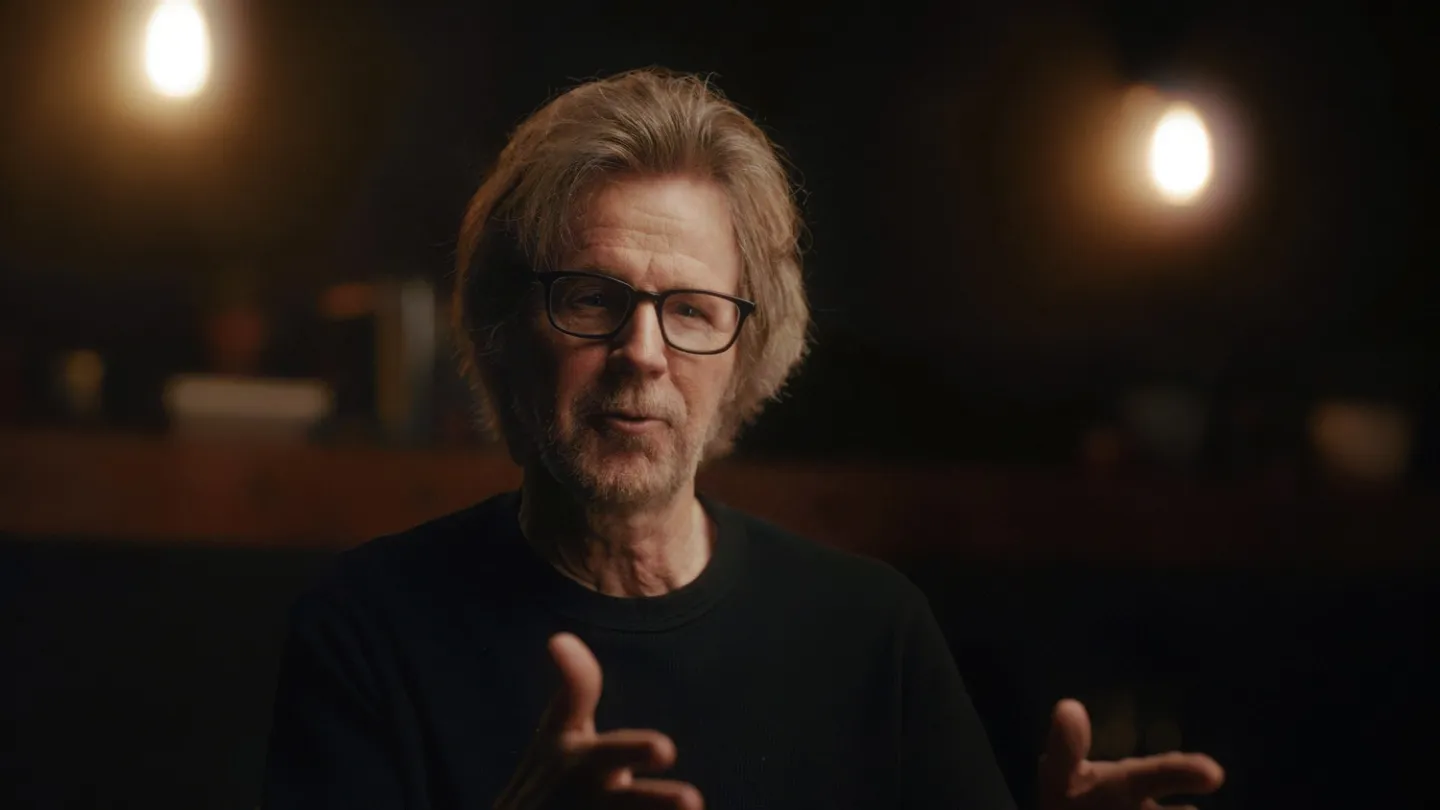
It’s been nearly two months since Morgan Neville’s amusing and thoroughly superficial Lorne, in which the Oscar-winning documentarian tried and failed to get the Saturday Night Live creator to let down his guard. So I guess we were overdue for a new Saturday Night Live-based documentary.
Josh Greenbaum’s Playing POTUS isn’t exactly a Saturday Night Live-based documentary — not in the way the various SNL50 docs or films focusing on high-profile SNL alums like Chevy Chase and Eddie Murphy were Saturday Night Live-based documentaries. But for all of its ostensible focus on a wide variety of comic impressions and impersonations of presidents, I’d estimate that at least 75 percent of the documentary’s 93-minute running time is dedicated to Saturday Night Live.
Playing POTUS
The Bottom Line
Entertaining, but plagued by gaps.
Venue: Tribeca Festival (Spotlight+)
Director: Josh Greenbaum
1 hour 33 minutes
As Playing POTUS: SNL’s 50 Years of Presidents, this vague adaptation of Peter Funt’s book titled Playing POTUS: The Power of America’s ‘Acting Presidents’ is fine. It’s missing some key interview subjects and dodges or entirely misses some key topics, but when you have talent as clever and enthusiastic as Dana Carvey, Will Ferrell, Kate McKinnon and Darrell Hammond, you’re bound to find some insights and ample entertainment.
However, as Playing POTUS: Not Just SNL, it’s barely functional, to a degree of near pointlessness. The failure to analyze or even acknowledge countless comic interpretations of presidents in contexts that lack Lorne Michaels is so thoroughly bizarre that the entire documentary becomes more head-scratching than enlightening. Though like Neville’s Lorne, it’s at least an entertaining trifle.
The frustrating thing about Playing POTUS is that it starts off reasonably promising, using John F. Kennedy impersonator Vaughn Meader, whose comedy record The First Family is one of the strangest winners of the Grammy for album of the year. It isn’t deep historical context, but it’s absolutely historical context, followed by a swift jog through the Smothers Brothers and…that’s pretty much it for comic presidential impersonations before Saturday Night Live.
The meat of the documentary is the different SNL presidents talking about their individual impressions, their origins and their causally unprovable impacts on the perception of those presidents.
This is the best part of the documentary, whether it’s Chevy Chase cackling at the possibility that he might have contributed to Gerald Ford’s speedy electoral defeat; Dana Carvey talking (for possibly the millionth time) about how he was so stymied by George Bush that he cobbled together a character who often had nothing at all to do with its source; Alec Baldwin reading both negative tweets from Donald Trump and, proudly, his own responses; or Kate McKinnon getting emotional still talking about her version of Hillary Clinton and Hillary’s 2016 defeat.
Greenbaum and his subjects are willing to acknowledge some of the less successful impressions over the years — “Of all the presidents who have ever been on SNL, I think I was my least favorite” Will Forte says of following Will Ferrell as George Bush Junior — as well as the lengthy struggles to find an appropriate Obama or Joe Biden.
With the help of a couple of experts, Playing POTUS does well with explaining how frequently SNL‘s impressions have achieved a level of hyper-reality, in which the heightened Xerox supplants the actual historical figure in the collective consciousness. In that light, though, it’s strange not to dedicate a single second to then-candidate Donald Trump’s appearance hosting Saturday Night Live.
Although the documentary suffers a little from the absence of Tina Fey as part of a lengthy segment on her Sarah Palin impression and its effect on the 2008 election, that probably should have made Greenbaum realize that not only was Palin never elected POTUS (nor was Hillary Clinton, it should be added), she wasn’t elected veep either. Playing POTUS also covers Maya Rudolph’s impression of Kamala Harris, who doesn’t technically align with the title. Perhaps that all could have been 15 minutes redistributed into non-SNL terrain.
Keegan-Michael Key is great discussing the origins of Luther, Obama’s anger translator. Rich Little is present to discuss general impressions. Seth Meyers is part of a decent segment on the history of presidential roasting at the White House Correspondents Dinner.
But if the topic is meant to be broad, it’s head-scratching to ignore The Simpsons, South Park and any movie that took a comic approach to a specifically named president — Dick, W., Vice, etc. In this film’s universe, In Living Color apparently never existed, nor did Trey Parker and Matt Stone’s That’s My Bush!, a multi-cam sitcom about George W. Bush and his family. Mad TV is mentioned only nebulously, though full credit to Will Sasso, the only talking head in the documentary capable of expressing regret at how much and how wrongly Monica Lewinsky was lampooned in conjunction with Bill Clinton.
There’s something astonishingly and instantly dated about how thoroughly Greenbaum misses the way new media has and continues to approach Donald Trump. Sarah Cooper may have been a flash-in-the-pan, but if you can’t find something substantive to say about how a multi-racial woman became a fleeting sensation lip-synching Donald Trump, you’re not trying very hard.
Instead, Greenbaum, who did far better and smarter work with many of the same people in Too Funny to Fail and Will & Harper, wastes time on a voiceover device that’s too cutesy to be worth the effort and a three-act structure that’s more for the benefit of his editors than the audience. It all results in a potentially meaningful documentary that isn’t bad, just lacking.
>
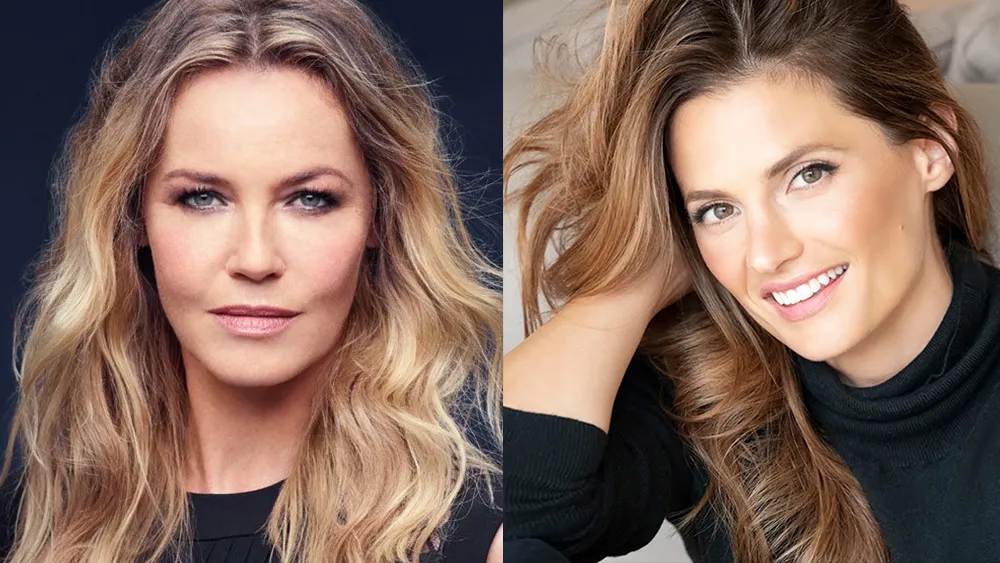
EXCLUSIVE: Legendary’s new Monsterverse series for Apple TV has added Connie Nielsen (Gladiator, Wonder Woman) and Stana Katic (Castle, Absentia) to its expanding cast led by Wyatt Russell, who also executive produces. Character details are under wraps.
Nielsen and Katic also join the previously announced Millie Brady, Pilou Asbaek, Corey Stoll, Ralph Ineson and Nyasha Hatendi.
From showrunner Joby Harold, the series will follow the story of Colonel Lee Shaw (Russell), an American operative who, in 1984, went on a secret mission behind enemy lines in an attempt to stop the Soviets from unleashing a horrific new Titan big enough to destroy the U.S. and turn the tide of the Cold War.
The character of Lee Shaw originated in the series Monarch: Legacy of Monsters, with Russell’s father Kurt Russell playing the older version and Wyatt Russell as the younger version.
Legendary’s Monsterverse is an expansive cross-platform story universe centered around humanity’s battle to survive in a world facing a catastrophic new reality – the monsters of myths and legends are real. Beginning with the Godzilla film in 2014 and continuing through 2017’s Kong: Skull Island, 2019’s Godzilla: King of the Monsters, 2021’s Godzilla vs. Kong, and most recently Godzilla x Kong: The New Empire, along with the eagerly anticipated sequel Godzilla x Kong: Supernova, which is set to release in 2027.
The new series is executive produced by Harold and Tory Tunnell for Safehouse Pictures, alongside Russell, Chris Black, Kyle Bradstreet, Alex Boden, Dillard, Andy Goddard, and James Skotchdopoloe. Hiro Matsuoka and Takemasa Arita executive produce on behalf of Toho Co., Ltd., the owner of the Godzilla character.
Nielson is represented by UTA, Untitled Entertainment, and Lichter, Grossman, Nichols. Katic is repped by The Gersh Agency, Principal Entertainment, and Nelson Davis Law.
>
Following the release of his latest film, All of Us Strangers, Andrew Haigh found himself presented with options like never before. The British director, previously best known for gay cult faves like his breakout feature Weekend and HBO’s Looking, met widespread critical acclaim for the wrenching queer drama starring Andrew Scott, leading to his first BAFTA nominations for best screenplay and directing. It became his highest-grossing movie ever at the box office, pushing past $20 million globally. The opportunity to scale up, beyond the intimate character studies with which he’d made his name, couldn’t be ignored.
“When you have a thing that breaks through a little bit, you have to take advantage of it. It does make you take a lot more meetings afterwards, with lots of people sending you things — which is both good and then slightly exhausting,” Haigh says. “Part of me was like, ‘Should I go bigger? I could now go and do this thing over here that’s big and shiny and might get me more visibility.’ But I don’t necessarily need lots of visibility. The slightly more success you get, the harder it becomes to make those choices.”
And so Haigh looked inward. He did not go bigger. Instead, he turned toward the project he’d been trying to make for nearly 20 years — as tender, nuanced and subtle as anything in his oeuvre. A Long Winter feels, first and foremost, like an Andrew Haigh film.
Now 53, Haigh first read Colm Tóibín’s short story “A Long Winter” right around its 2006 publication, before he’d helmed a single movie. The tale follows 20-something Miquel, who lives with his father in a remote snowy village. His brother has just left on military service and his mother has suddenly walked out on the family. Miquel desperately searches for her in the freezing conditions, plumbing new depths of self-discovery in the process.
“Within that story was everything I wanted to make films about — I remember reading it and thinking, ‘This is the perfect manifestation of what I care about,’” Haigh says. This was roughly two decades ago. Then an aspiring filmmaker, Haigh convinced the prize-winning Irish author to grant him the rights to “A Long Winter.” As he built his career, he tried to make the movie, over and over — initially working off of a script set in Spain, as the original text was. “No one wanted to make it,” Haigh says. “I made it harder because I can’t speak Spanish and yet I was saying, ‘I want to shoot it in Spain.’”
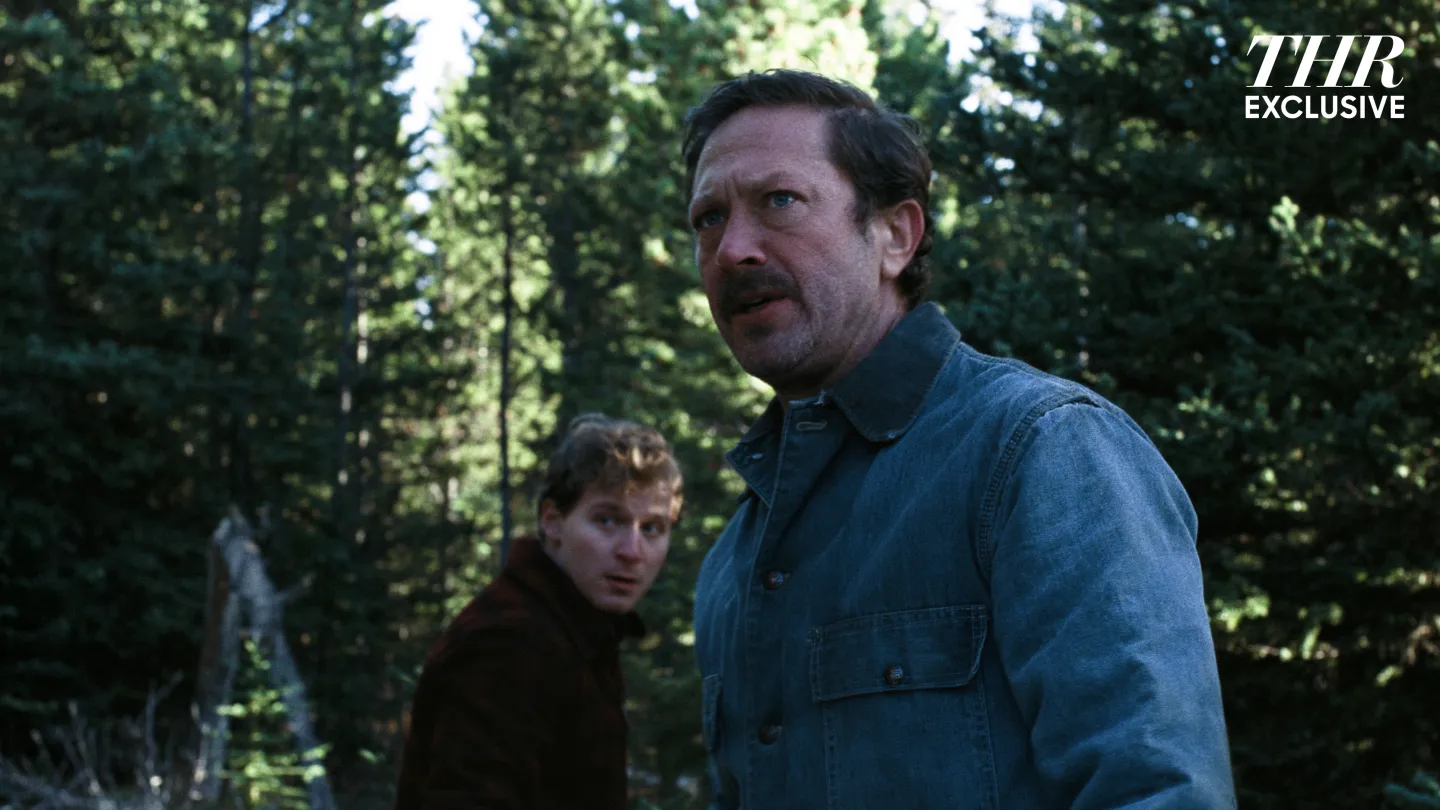
Fred Hechinger in ‘A Long Winter.’
And so the moment finally arrived, in the wake of Strangers’ lauded run and with a revamped adaptation. Haigh’s ultimate film of A Long Winter is slated to screen at the Toronto and New York film festivals before hitting theaters via MUBI later this year. It’s set deep in the Rockies of ‘50s Colorado, with young Mike (Fred Hechinger) navigating a complex relationship with his lonely father, Lester (Ebon Moss-Bachrach), after his brother (Kit Connor) leaves for Korea and his mother (Caitríona Balfe) disappears, running away from a life she’d found unbearably isolating.
“If you look at all of the movies I’ve made, there are these themes bubbling under: longing and trying to deal with loss and trying to understand who you are in the world and how to fit into the world that doesn’t make sense to you,” Haigh says. “Those themes are very inherent in the story, but told in a [similar] way to what I’ve always tried to do with my filmmaking: Excavate the complicated emotions beneath the surface and find a way to get them onto the screen.”
It’s a visually ambitious film for Haigh, the haunting elements of Strangers extending to this rich family portrait. “It’s not a big movie, but we had big ambitions,” the director says. “It’s definitely moving away from the more naturalistic, realistic base that some of my earlier work lived in and finding this more metaphorical place.” As he’s committed to doing lately, Haigh shot on film — “There was no debate about that,” he says — and worked with D.P. André Turpin to execute a more subjective cinematic style.
“The camera follows the awakening of Mike. If you look at the film, it’s a lot more static at the beginning and it starts to breathe,” Haigh says. “The camera starts to open up. It starts to move independently. It starts to move without a character leading it across the frame. To me, the film was about breathing differently. It was about opening your eyes differently.”
A Long Winter shot up in Canada, a little over an hour outside of Calgary — Colorado was “too expensive,” Haigh concedes — and you can feel the intensity of the elements. The family home was an original construction in the woods, overseen by production designer Emmanuel Fréchette, following an extensive location scout. “I can stand in the kitchen window and I can look out and see the mountains — they’re above me, they’re below me,” Haigh says. “It’s still there now six months later, somewhere on the mountainside, surviving the extremes.
“We built that house up on the mountain, inside and out, no studio work, all up in 100-mile-hour winds and the snow,” Haigh continues. “It’s where they shot The Revenant, actually. So this is my version of The Revenant — a slightly more delicate version.”
Caitríona Balfe and Ebon Moss-Bachrach in ‘A Long Winter.’
**
Haigh has been working with his casting director Carmen Cuba for well over a decade, going back to Looking. For the past several years, Cuba has been telling him to cast Hechinger in something. “Since seeing him in The White Lotus’s first season — from that day onward it’s been, ‘You’ve got to work with Fred,’” Haigh says. “She adores him, and I understand why. She sees him as a young, Dustin Hoffman-type of actor.”
Several actors put themselves on tape for the part of Mike, and Hechinger won the lead role. His moving, intricate performance serves as a showcase of what he can do as a lead, following auspicious supporting turns in films like Thelma and Nickel Boys. “If you watch him at the beginning of the film and see him at the end, he even looks like a different person,” Haigh says. “It’s not an easy performance.”
It’s the consistent hallmark of Haigh’s work — the landscape for his characters to grow and change feels immense, even as the script hews to the tighter conventions of real life. Mike begins the film feeling relatively comfortable in the family’s isolated cabin bubble, if only because what lies beyond it feels so alien. His contentment is rocked by his mother’s absence — her yearning for something better. He must now look his devastated father in the eye each morning, seeing all of his pain and resentments and fears. He must consider what led his mother to risk her death to find something different for herself. And he must confront what he himself wants — particularly when a mysterious young man (Reservation Dogs’ D’Pharaoh Woon-A-Tai) begins living with the family to help out around the house.
As in Tóibín’s story, Mike is queer — but Haigh, known for his vividly realistic sex scenes from Weekend through to Strangers, communicates this onscreen with a surprising, impressionistic approach.
“What I love about Mike, and especially how Fred plays him, is he’s this sensitive soul within this world that isn’t sensitive — his sexuality for me is wrapped up in a different way of feeling about the world and seeing the world,” Haigh says. “He needs someone to understand how he sees the world. I’ve put sex in a lot of the films that I’ve done, and I wanted this to be different. Sometimes queerness is framed only within sexual desire and not within something else. But obviously when you are queer, you know that it’s not just about sexual desire itself. It’s more than that.”
Hechinger in ‘A Long Winter.’
In these subtle but intent pushes, Haigh arrived at what felt like the ending of a chapter in his life and career. “I think of this film as a bookend to a lot of things I’ve been exploring over the last 15 years of making films,” he says. “As I’ve grown up and my life has changed — all of these stories that have been me trying to understand my own background, my life, my childhood, absences in my own life and certain losses — I’ve come to terms with a lot. So I feel like this is an endpoint.”
As for what his next chapter might look like? Haigh politely demurs with a laugh: “Well, let’s see what happens.”
Just don’t expect his next era to go the way of tentpoles and blockbusters. Haigh can claim the rare feat of making modestly budgeted, emotionally driven, critically hailed dramas at a steady clip for the entirety of his career — during which time the very future of independent film has been put under existential threat. It has never been easy for Haigh to get his movies made. But this moment, he concedes, feels different — scarier than ever.
“It is a very, very challenging time, and everything is much more expensive. Making a film is so much more expensive than it used to be,” he says. “My first movie, I made it for $65,000. 45 Years was only $1.5 million. You couldn’t make that film now for $1.5 million — it would cost so much more. When I speak to younger filmmakers, it’s a terrible situation for them. It’s even harder for them.”
And yet: “I’m quite happy existing within this budget range. I like to tell these stories. I like to have control of how I tell my stories,” Haigh says. “I can’t be someone else. I can’t make films like other people. I can only make films like I can make them. And so when I tell myself I never want to do this again because it’s too difficult, I remind myself of that. It’s a pretty incredible thing that I’ve been able to do.”
Stay tuned for more exclusive features on this fall’s biggest festival-bound films.
>
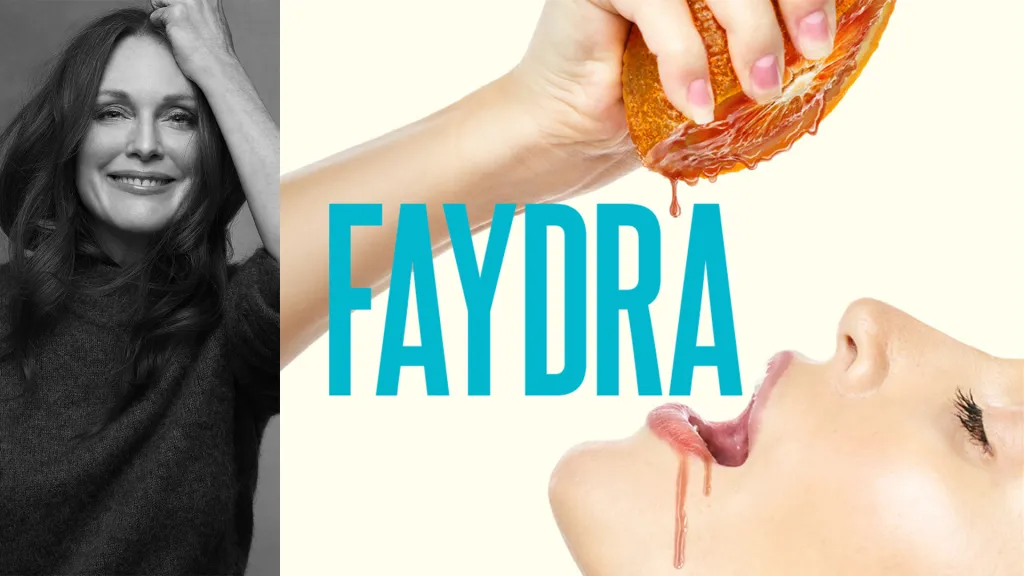
Oscar and Emmy winner Julianne Moore is set to play the title role in Faydra, a lusty new play by In the Next Room Tony nominee Sarah Ruhl that will have its world premiere Off Broadway next year.
Per the logline of the modern take on the Ancient Greek myth of Phaedra: Aphrodite aims her bow at Faydra and lets an arrow of love fly. Nothing is ever the same. Mostly because the object of Faydra’s sudden, all-devouring lust is her soon-to-be stepson. Faydra explores the impossibility of reconciling logic and longing — especially for a woman unwilling to deny desire.
Les Waters directs Faydra, which begins previews on February 2 at the Manhattan Theatre Club ahead of its February 25 opening. Other castings are TBA.
Moore won an Oscar for her lead role in 2014’s Still Alice and has been nominated four other times — twice as Lead Actress for Far from Heaven (2002) and The End of the Affair (1999) and twice for Supporting in The Hours (2002) and Boogie Nights (1997). Her big-screen credits also include The Room Next Door, May December, The Big Lebowski and many others. She won a Primetime Emmy for the 2011 telepic Game Change and a Daytime Emmy for As the World Turns in 1988. She next stars in writer-director Jesse Eisenberg’s The Debut, which will close the London Film Festival in October before hitting theaters December 11 via A24.
Two-time Pulitzer nominee Ruhl and Waters have a long shared history, collaborating on the 2010 Best Play Tony nominee In the Next Room (or the vibrator play) along with Eurydice, For Peter Pan on Her 70th Birthday and others.
“Sarah Ruhl’s bold, funny and devastating reimagining of this classic tale will draw the immensely gifted Julianne Moore back to the stage and mark Les Waters’ return to MTC after three decades,” MTC Artistic Director Nicki Hunter said in a statement.”
>


Search For Canadian TV Actor Stewart McLean Now Homicide Investigation


These ’90s fashion trends are making a comeback in 2017
According to Dior Couture, this taboo fashion accessory is back
Model Jocelyn Chew’s Instagram is the best vacation you’ve ever had
Your comprehensive guide to this fall’s biggest trends
9 Celebrities who have spoken out about being photoshopped
Emily Ratajkowski channels back-to-school style
A photo diary of the nightlife scene from LA To Ibiza