
Sports
Terry Rozier to stay in no contact with Hornets, others while out on bond, awaiting trial


The NBA and Charlotte Hornets told federal prosecutors they prefer veteran NBA guard Terry Rozier to be prohibited from being in contact with current and prior members of the Hornets while he remains out on bond and awaits trial on four federal charges stemming from a federal investigation into NBA gambling and insider information trading.
Last week, a federal judge had asked the league to weigh in as she contemplated whether to remove those bond restrictions at the request of Rozier and his lawyer, who claimed that it prevented Rozier from possibly playing again in the NBA. An attorney for the US Attorney’s Office for the Eastern District of New York told judge LaShann DeArcy Hall in a legal filing Monday that the NBA supported their desire to keep the current terms in place.
Jim Trusty, Rozier’s lawyer, said that would prevent Rozier from resuming his NBA career again because he could not take the court against the Hornets while they remained on the no-contact list federal prosecutors set. That list includes current and former coaches, as well as others. The Miami Heat had also been on that no-contact list but were dropped after they waived him on April 10. The NBA told federal prosecutors that if Rozier were allowed to play in NBA games again, he could “be in a position to interact with potential witnesses in or around the arena, both before and after games,” according to a legal filing by an Eastern District attorney.
Federal prosecutors said that Rozier has already texted one person on the list of people he is not allowed to contact, and they said they have received and are investigating “credible allegations” that “at least one co-defendant, potentially acting on Mr. Rozier’s behalf, has contacted witnesses regarding the case.”
Hall has not said when she would make her ruling.
Rozier was arrested in October and charged for what prosecutors say was his role in a sports gambling scheme that used insider information on NBA games and players to make money. The NBA had put him on leave days after his arrest. He did not play this past season.
The 32-year-old Rozier was charged with two counts this past fall, but prosecutors added two new charges last month in a superseding indictment. They alleged that Rozier agreed to take a $100,000 payment to prematurely take himself out of a March 2023 Hornets game so that a group of gamblers could wager on his prop bets. He is now facing charges of sports bribery and honest services fraud. Rozier has pleaded not guilty. The trial is expected to begin in February 2027. Two men charged alongside him, Marves Fairley and former NBA player Damon Jones, have already pleaded guilty.
“The NBA has literally flagrantly fouled the presumption of innocence,” Trusty said last week outside the federal courthouse in Brooklyn after Rozier was arraigned on the new charges. “They should be ashamed of themselves. As you heard in the hearing today, they’re still trying to find ways to pretend they’re victims and that Terry should be prohibited from playing basketball, at least practically speaking. They are not on the side of angels in this case. They’ve made a decision to completely contradict the presumption of innocence. They never gave it to him.”
Trusty said that the bond conditions have already had consequences for Rozier with the NBA. An arbitrator ruled that Rozier should not be paid the majority of his $26.6 million salary for the 2025-26 season because he could not fulfill his NBA contract as a result of those restrictions. Rozier had been in the last year of a four-year, $96.26 million salary when he was indicted.
>
Sports
The Athletic’s How To Series: we’ll teach you to dribble like Ronaldo and master Iniesta’s Croqueta
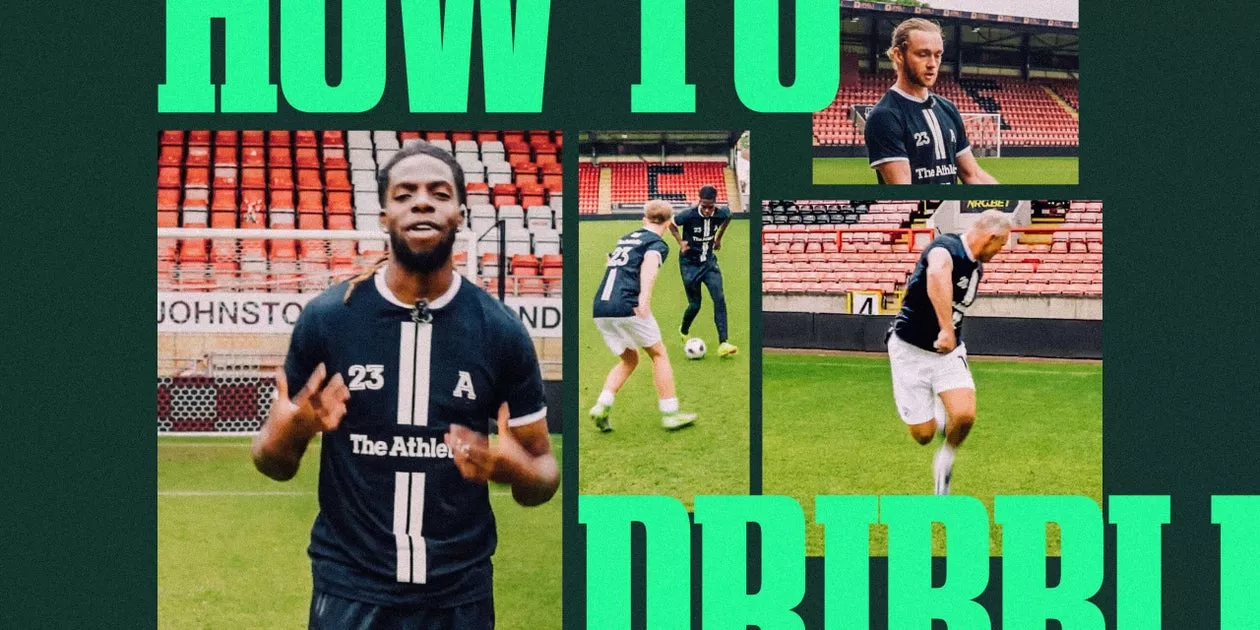
From the Cruyff and Maradona turns to the elastico, rainbow flicks and a piece of skill named after a tapas dish, it’s time for some individual flair.
We are talking about the dribbling moves and the clever turns that enable players to deceive and outwit an opponent, bringing a mixture of freedom and fun to the football pitch, and entertaining team-mates as much as the supporters at times.
There’s the stepover loved by the two Ronaldos (Cristiano and Nazario, the original from Brazil), the two-touch turn that took off on a video game, and the hocus pocus skill that humiliated one Brazil legend and earned another a free meal.
But where and when did these moves first surface, which players are most likely to produce them at this summer’s World Cup and, most importantly, how can you learn to do them?
To walk and talk you through that process as part of The Athletic’s How To Series, we’ve got YouTuber and content creator Eman SV2, the king of the showboat Lee Trundle, former Premier League midfielder Tom Davies, and 14-year-old Liverpool academy player Rafferty Bolshaw…
Stepover
The first thing to say is that Trundle is wearing the perfect boots to demonstrate — the Nike Mercurial R9. Ronaldo — the Brazilian Ronaldo, that is — loved a stepover and would often use it to go past a goalkeeper as well as defenders.
Ronaldo + Stepovers = A Lethal Combination! 🇧🇷😵💫#FIFAWorldCup | @Ronaldo pic.twitter.com/FaVDj98c43
— FIFA World Cup (@FIFAWorldCup) June 27, 2024
The clue is in the name here — you’re stepping over the ball, feinting to go one way and then, with your opponent off balance, taking the ball in the opposite direction with the outside of the other foot. When executed at speed, it’s a hugely effective one-versus-one move and used by players such as Kylian Mbappe and his Real Madrid team-mate Vinicius Junior to beat a defender.
🇧🇷 Outrageous Vinícius Júnior footwork!@realmadriden | #UCL pic.twitter.com/vIkWrGi9Ep
— UEFA Champions League (@ChampionsLeague) October 27, 2021
Pedro Calomino, an Argentine winger who played at the start of the 20th century, is widely credited with inventing the skill. If that’s true, Cristiano Ronaldo has a lot to thank Calomino for, given that the Portugal international has performed more stepovers than anyone else on the planet (that might not be strictly true but his former manager Sir Alex Ferguson once told Ronaldo that he was doing too many of them in a Manchester United shirt).
CR7 stepover 🤤#EURO2024 pic.twitter.com/iaqYyhwyvo
— UEFA EURO (@UEFAEURO) July 18, 2024
The foot that you use to do the stepover needs to stay as low as possible to the ground, but it’s also crucial that you transfer your weight to that side too, so as to dupe the opponent into thinking that you’re taking the ball that way.
Trundle, as with Ronaldo in the clip above, likes to add a sole roll just before the stepover.
Elastico
There’s a bit of showing off going on here — but in a good way. The elastico is a move that draws gasps from the crowd, partly because it’s not seen that often but also because it looks so damn cool and impressive when it comes off. On top of that, the elastico often leads to a nutmeg at the end of it, compounding the embarrassment for the player on the receiving end.
The USMNT player Sergino Dest ticked all of those boxes when he performed the elastico during a Champions League tie for PSV a few years ago on Jakub Kiwior, who was an Arsenal player at the time.
“There were players inside so I thought I had to beat him outside and that’s why the skill looks so clean — I knew what I was doing,” Dest told The Athletic.
The reaction of Dest’s team-mates said it all. Jordan Teze had his hands on his head, while Johan Bakayoko, who was watching from the substitutes’ bench, was left speechless.
Sergino Dest 😮💨#UCL pic.twitter.com/So5MtLnDXC
— Football on TNT Sports (@footballontnt) December 12, 2023
The Brazilian Ronaldo, his former team-mate Ronaldinho, and the Portuguese Ronaldo — pretty much anyone with Ronald in their name — all love the elastico, which is typically performed close to the touchline or byline and preceded by a slow dribble.
Marcus Rashford, playing for Manchester United against Twente, provides a textbook example.
Rashford on repeat 🤤@ManUtd | #UEL pic.twitter.com/VSojwVkShW
— UEFA Europa League (@EuropaLeague) October 31, 2024
Rivellino, the former Brazil winger, popularised the skill in the 1970s, but it’s Sergio Echigo, one of his team-mates at his club side Corinthians, who deserves the accolades. “I first saw him (Echigo) do it during a training session,” Rivellino told FIFA. “He completely fooled a defender who ended up off the pitch. It really intrigued me. I thought, ‘Wow, what has this Japanese guy done?’ I went to him after the session and he taught me.”
The elastico requires perseverance and patience to master, with a key learning point being that the skill, otherwise known as the flip-flap, is performed in one motion. The ball is pushed away with the outside of the foot and brought back in sharply with the inside of the same foot, almost in a chopping or snapping action, and it’s the first part of that move that leaves an opponent open to the nutmeg.
“You can send them to the shops!” says Eman.
Cruyff turn
Timeless and beautiful. A piece of skill that first appeared 52 years ago, courtesy of a true legend of the game, and continues to be taught to children all over the world.
A brief history lesson starts with Johan Cruyff shielding the ball just outside the penalty area in a World Cup match in 1974. With the Swedish full-back Jan Olsson marking him tightly from behind, Cruyff brought back his right leg and shaped to cross the ball with that same foot. As Olsson stuck out his left leg to try to block, Cruyff dragged the ball behind his standing leg. Olsson was left facing one way and Cruyff, a picture of elegance, disappeared in the opposite direction.
“That moment against Cruyff was the proudest moment of my career,” Olsson told David Winner in Brilliant Orange: The Neurotic Genius of Dutch Football. “I was not humiliated. I had no chance. Cruyff was a genius.”
🤯 Minds were blown across the world 🌍
🔙 #OnThisDay in 1974 🇳🇱 @OnsOranje legend @JohanCruyff introduced the masses to the Cruyff Turn ™️
🃏 Don’t worry Jan Olsson, you were one of countless conned by the extraordinary Dutch hypnotist 🧙♂️ pic.twitter.com/952hyfQb2k
— FIFA (@FIFAcom) June 19, 2020
Often used in wide areas but certainly not restricted to that part of the pitch, the Cruyff turn is a brilliant way of deceiving an opponent who is positioned slightly to the side of you.
It’s not a particularly difficult skill to learn, although success or failure against an opponent (opponents in the case of the former Wales international Hal Robson-Kanu) will depend largely on the ability to master the art of disguise by exaggerating the kicking action.
The Hal Robson-Kanu turn and finish 🪄🏴#EURO | #WCQ pic.twitter.com/Lqzhz5TlwF
— UEFA EURO (@UEFAEURO) December 13, 2024
Trundle is on hand to explain.
La Croqueta
Pull up a chair, Andres Iniesta.
“My idols were (Pep) Guardiola and Michael Laudrup,” Iniesta told The Athletic last year, recalling two former Barcelona greats. “Laudrup’s dribble, which he did so wonderfully, inspired me. Then I would try it in training, in a match, and in the end it became part of my game. It was something I felt comfortable with, and I usually did it quite well.”
That’s an understatement. Iniesta did it beautifully, swapping the ball from one foot to the other in one fluid movement, often as an opponent jumped in to make a challenge.
🗣️ Dani Alves: “It’s like he’s dancing the tango. I just love how he plays football so elegantly.”
🇪🇸 Andrés Iniesta: the master of the ball… @andresiniesta8 | @FCBarcelona | #UCL pic.twitter.com/QjIwXrEOfZ
— UEFA Champions League (@ChampionsLeague) November 26, 2021
Messi and Jamal Musiala, the Germany international and Bayern Munich midfielder, regularly use the trick to evade an over-eager defender.
“There’s no risk in it, it’s not flashy or anything, and it’s an easy skill to go by the defender,” Musiala told The Athletic in an interview on the eve of Euro 2024. “You just wait for a defender to step out, and when they do that and stick out a leg, you can just do a one-two (between both feet) and go by them.”
⚽️💫 “La Croqueta”, la spéciale de Jamal Musiala 🤩👌 pic.twitter.com/2IpQh0cPQN
— beIN SPORTS (@beinsports_FR) February 22, 2023
In case you were wondering, Croqueta wasn’t a player. The skill was given that name because it’s similar to the way in which a chef passes the dough from one hand to the other to shape a croqueta, which is a deep-fried roll with a crunchy exterior and… hang on a minute, this isn’t a cooking lesson.
Time to “shimmy and drag” with Eman and Tom Davies.
Rainbow flick
The chances of seeing this skill — some might call it a circus act — being performed at the World Cup this summer increased significantly on the back of Neymar being named in the Brazil squad. From Santos to Barcelona to Paris Saint-Germain, Neymar has taken the rainbow flick with him and never been shy about using it.
Rainbow flick! 😮@neymarjr || #UCL pic.twitter.com/tD2cZfLHtb
— UEFA Champions League (@ChampionsLeague) February 5, 2023
It’s showboating, plain and simple, and the sort of trick that would be guaranteed to get you kicked up in the air in lower-league football. Even at the top end of the game, it can provoke an angry reaction because of the way in which it strays into humiliating or disrespecting an opponent.
Neymar has first-hand experience of that, most notably when he enraged the Athletic Club players by trying a rainbow flick in the closing minutes of the Copa del Rey final back in 2015.
“It was an act with no elegance or sportsmanship,” Andoni Iraola, the Athletic captain at the time and now the Liverpool head coach, said.
Neymar shrugged in response. “It’s a way of dribbling past an opponent like any other. You can’t get angry because it’s my style of play, I’ve been doing that for years.”
Kyle Walker, the former Manchester City defender, saw the funny side when Vinicius Jr tried the trick on him in a Champions League game. “I went to hug him (at the final whistle) because he tried to rainbow flick me,” Walker said. “It was more like, ‘Please don’t try that again because I don’t want to be a meme’.”
“He tried to rainbow flick me! I don’t want to be a meme.” 😅
Kyle Walker has explained why he hugged Vinicius Jr 🤗#BBCFootball pic.twitter.com/uzhjm9XxRB
— BBC Sport (@BBCSport) May 16, 2023
To do the rainbow flick, you need to wedge the ball between both feet. Your dominant foot will be at the back and is going to be used to press the ball against your other foot. As you start to lean forward, the dominant foot is used to roll the ball up the back of your other leg. A little jump follows and the heel of your front foot flicks the ball into the air.
Oh, I guess you want to know where it originated, too: Brazil, unsurprisingly. He may not have been the first but there’s some fantastic black-and-white footage of the Santos winger Kaneco bamboozling an opponent in 1968.
Um dos lances mais bonitos da nossa história. 👏
Há 54 anos, Kaneco aplicava uma carretilha antes do golaço de Toninho Guerreiro. O drible ficou eternizado na goleada por 5×1 sobre o Botafogo-SP, na Vila Belmiro. 💥 pic.twitter.com/CaZAGvXzlM
— Santos FC (@SantosFC) March 9, 2022
Here’s Trundle channelling his inner Kaneco.
Thiago turn
“He can do things with a football that ought to be illegal.”
That was Peter Drury, the UK television commentator, reacting to Thiago Alcantara turning away from James Maddison with his signature move a few seasons back.
Owen Hargreaves, filming a Thiago masterclass for the Premier League, smiled as he showed the footage to the former Liverpool midfielder. “That one is super special because I would 100 per cent think, ‘I’ve got you!’” Hargreaves said.
“It’s one of the tools I will use if I am in an awkward situation,” Thiago replied.
The awkward situation that Thiago is talking about involves receiving the ball with his back to a player who is closing him down at speed from behind. Feinting to take the ball with the inside of his right foot, Thiago would change direction at the last minute, pivoting with the outside of the boot and dribbling off into the distance.
Simply sublime.
Happy birthday, Thiago! 🎈@Thiago6 🪄 #UCL pic.twitter.com/LF4ipfnGoP
— UEFA Champions League (@ChampionsLeague) April 11, 2023
Bolshaw, who is hoping to follow in Thiago’s footsteps at Liverpool, explains in the video below why the hips are key to the disguise element.
Maradona turn
Some call it the ‘roulette’, while others refer to it as the ‘360-degree spin’. But for those of us from a certain generation (traumatised, in this case, by a 1986 World Cup quarter-final between England and Argentina), it will always be ‘the Maradona’.
The Azteca Stadium in Mexico City, on June 22, 1986, was the scene of the greatest World Cup goal of all-time. Cementing his status as the best player in the world, Diego Maradona ran from inside his own half, dribbling past half the England team, as well as the goalkeeper Peter Shilton, to score.
But everything started with Maradona spinning away from two England players just inside the Argentina half with a lovely piece of skill. “Maradona, turns like a little eel, he comes away from trouble,” was how Bryon Butler, the late and great former BBC commentator put it.
Maradona’s mesmerising run! 🇦🇷🤩 pic.twitter.com/ZuHS54x0Wl
— FIFA World Cup (@FIFAWorldCup) May 29, 2024
That turn, or at least a form of it, became synonymous with Maradona. ‘A form of it’ because there are variations (Zinedine Zidane, for example, would often use the side of the foot for the first contact with the ball rather than the sole), and some would argue that a ‘Maradona turn’ in the most complete sense sees the player rotate full circle and use both feet in the process, which Maradona didn’t do against England. He did, however, do that seven years earlier against Scotland.
Happy 40th birthday to British football being introduced to the Maradona Turn pic.twitter.com/MjDWCmVo6P
— Adam Hurrey (@FootballCliches) June 2, 2019
The skill can be used to get you out of a tight space or to go past a player when the ball has been slightly overrun and an opponent is tempted into a challenge. There’s an element of hop, skip and jump about it as you place one foot on top of the ball, and then pirouette away by rolling the ball with the sole of the other foot.
Hocus pocus
Ronaldinho territory and that, typically, was where the magic happened.
The hocus pocus is the sort of skill that comes out on a good day. A very good day. In fact, the sort of day when you feel as though you can take on the world, which is probably how Ronaldinho felt whenever he put his boots on.
Back in 1999, while playing for the Brazilian side Gremio, Ronaldinho produced the hocus pocus against Internacional. That he had the confidence to do that at the age of 19 is one thing. That Dunga, the captain of the 1994 Brazil World Cup-winning team, was his victim is quite another. Many years later, in an interview with the YouTube channel Desimpedidos, Ronaldinho said that the whole episode was premeditated and part of a bet that earned him a free meal. “I said: ‘If I catch him (Dunga) in the corner, I’m going to do that dribble’,” Ronaldinho explained. “My team-mate doubted me.”
Ronaldinho 🆚 Dunga. pic.twitter.com/JGJKiSNucX
— 90s Football (@90sfootball) March 6, 2025
To pull the hocus pocus off, you need to be face-on with your opponent to begin with and place one foot in front of the ball. The side of the other foot then pushes the ball away before the outside of the same foot snaps it back in the other direction. At one point you’ll be standing with your legs crossed. But at least you’ll know what you’re doing with them, unlike poor Dunga.
Eduardo Salvio, the former Argentina winger, was a big fan of a move that Eman describes as “silky and cool”.
McGeady spin
To do this turn, you need to move the stick forward, to 12 o’clock essentially, and then left or right, depending on which direction you want the player to go.
That’s right, the McGeady Spin, named after the former Republic of Ireland player Aiden McGeady, is a skill move on EA Sports’ FIFA video games series — confirmation, if ever you needed it, that you’ve made it as a footballer.
McGeady’s career was not, in the nicest possible way, comparable to Ronaldinho, but the two-touch spin became his trademark and will be familiar to gamers, as well as to Celtic, Spartak Moscow, Everton and Sunderland fans.
One of those gamers was Alex Iwobi, who now plays for Fulham and Nigeria. In an interview with the New York Times a decade ago, Iwobi talked about Ronaldinho’s influence on him via the PlayStation and brought up McGeady’s name in the same breath. “He had one turn that I would go out into the garden and practice,” Iwobi said.
By the looks of things, Raphinha, the Barcelona and Brazil winger, was doing the same thing.
Raphinha with the ‘McGeady Spin’… 🪄🇧🇷#LALIGAHighlights pic.twitter.com/l3d17In4qN
— LALIGA English (@LaLigaEN) February 7, 2025
The good news is that it’s not too tricky. A Cruyff turn comes first, followed by spinning and sweeping the ball away with the outside of the other foot.
Scoop turn/180-degree nutmeg/cow’s tail
Rarely seen but beautiful when it comes off, especially if the scoop includes a nutmeg too.
What a stage to produce it, Ismael Saibari.
In the closing moments of Morocco’s opening game at the 2026 World Cup against Brazil on Saturday, Saibari capped an excellent goalscoring performance with a piece of skill that is known in Spain as ‘la cola de vaca’, which translates as… the cow’s tail.

It was a go-to move for the legendary former Brazil and Barcelona forward Romario, who did it so well that he was asked to demonstrate in a TV studio while wearing his best clothes.
Romario often used the turn in central areas of the pitch, as was the case in a memorable 5-0 win against Real Madrid, when he created the room to shoot and score after totally wrong-footing poor Rafa Alkorta.
⚽ Hay goles que se recordarán siempre, y este es uno de ellos
🔵🔴 25 años de la cola de vaca de @RomarioOnze en el Barça 5-0 Real Madrid
🔝 25 años de una jugada que ya forma parte de la historia del fútbol pic.twitter.com/N3YLd2OyD5— MARCA (@marca) January 8, 2019
As for why it’s called ‘la cola de vaca’, apparently it’s to do with the way that cow’s swish their tails to shoo away flies.
No, that’s not what comes to mind when we watch Romario, either.
Anyway, it’s the scoop, or sweeping action, which is done without the foot leaving the ball, that is key to the turn working or not. You’re pushing the ball away with the inside of the foot and then almost bringing it back on itself. But the contact needs to be smooth to help with the disguise aspect. Christian Eriksen is a master at it.
Happy 34th birthday, Eriksen! 😍 pic.twitter.com/ORVlFpSZwy
— AFC Ajax (@AFCAjax) February 14, 2026
Robin van Persie, Alessandro Del Piero and, of course, Ronaldinho, also used the, er, cow’s tail to go past defenders too, with the latter completing a hat-trick for Brazil in 1999 after performing it superbly.
Ronaldinho vs Saudi Arabia, 1999. pic.twitter.com/ME6O2R8KGo
— 90s Football (@90sfootball) February 11, 2023
It is one of those turns that embarrasses an opponent when it comes off, which goes some way to explaining why Arsenal’s Ben White reacted like he did when Liverpool’s Curtis Jones tried it against him a couple of years ago.
Ben White wasn’t having it ❌#EmiratesFACup pic.twitter.com/PNgnckQWgx
— Emirates FA Cup (@EmiratesFACup) January 7, 2024
Over to Eman to “shift, drag and scoop”.
>

Need help with today’s Connections: Sports Edition puzzle? You’ve come to the right place.
Welcome to Connections: Sports Edition Coach — a spot to gather clues and discuss (and share) scores.
A quick public service announcement before we continue: The bottom of this article includes the answers — and hints — for the four categories. So if you want to solve the board hint-free, we recommend you play before continuing.
You can access today’s game here.
Today’s difficulty
Game No. 631’s difficulty: 2.5 out of 5
Connections: Sports Edition hints for June 16, 2026

Scroll below for one answer in each of the four categories.
.
.
.
.
.
.
.
.
.
.
.
.
.
.
.
.
.
.
.
.
Yellow: HORNET
Green: 42
Blue: SUPERMAX
Purple: FRIED
Connections: Sports Edition answers for June 16, 2026
Scroll below for the full answers to each of the four categories.
.
.
.
.
.
.
.
.
.
.
.
.
.
.
.
.
.
.
.
.
Yellow
A North Carolina athlete: BLUE DEVIL, HORNET, HURRICANE, TAR HEEL
Green
Baseball films: 42, BULL DURHAM, EIGHT MEN OUT, MAJOR LEAGUE
Blue
NBA contract terms: 10-DAY, MIDLEVEL EXCEPTION, SUPERMAX, TWO-WAY
Purple
Max _____: FRIED, SCHERZER, STRUS, VERSTAPPEN
What is Connections: Sports Edition?
Connections: Sports Edition is The Athletic’s first-ever game, a daily puzzle designed for players to find connections between 16 words on the game board.
The game’s objective is to group words or objects into four groups of four based on commonalities within each group as quickly as possible. Find the groups without making four mistakes. Each puzzle has exactly one solution, so watch out for words or items that seem to belong to multiple categories!
Category examples:
Sports ____ : Fan, Car, Bar, Radio
U.S. Summer Olympians: Biles, Phelps, Ledecky, Lyles
Each category group is assigned a color, revealed as you solve, ranging from straightforward (yellow) to medium (green) to challenging (blue) to tricky (purple).
Who creates the puzzles for Connections: Sports Edition?
That’s me! My name is Mark Cooper, and I create Connections: Sports Edition and work as a managing editor for college sports here at The Athletic. I was previously The Athletic’s managing editor for breaking news.
The next puzzle will be available at midnight in your time zone. Thanks for playing — and share your scores in the comments!
>

More than a decade has passed since Cristiano Ronaldo last played a football match in the United States.
But that is set to change on Wednesday afternoon in Houston, Texas, when Portugal get their World Cup campaign underway against DR Congo.
Ronaldo, 41, is arguably the most famous soccer player on the planet and is likely playing in his final World Cup before he retires from football (although the 2030 men’s World Cup is taking place in Spain, Morocco and Portugal so we should never assume anything).
Yet, despite his global appeal and obvious commercial impact, the Portugal international has not played a game on American soil since August 2, 2014 — 4,332 days and counting — with either his national team, Real Madrid, Juventus, Manchester United or his current club, Saudi Pro League side Al Nassr.
Portugal beat the U.S. 2-0 in a friendly at Atlanta’s Mercedes-Benz Stadium in March, but Ronaldo was missing again.
The five-time Ballon d’Or winner was left out of Roberto Martinez’s squad for the U.S. game and a second match against Mexico in Mexico City after Al Nassr head coach Jorge Jesus said he had travelled to Spain to undergo treatment for a hamstring injury.
Ronaldo has visited the U.S. since 2014, most notably when he attended a black-tie dinner at the White House in November, but has rarely been publicly photographed and has never played a match. The Athletic explains Ronaldo’s complicated relationship with the U.S. and why he hasn’t always enjoyed positive headlines in America…
When did Ronaldo last play in the United States?
The International Champions Cup tie on August 2, 2014 saw Ronaldo’s Real Madrid lose 3-1 to his former club, Manchester United.
Ronaldo started on the bench but came on as a second-half substitute.
The game took place in front of a record crowd of 109,318 fans at Michigan Stadium, which remains the largest single-game attendance figure in the U.S..
But he attended an event at the White House recently, didn’t he?
Yes. Ronaldo was alongside U.S. President Donald Trump, Saudi Crown Prince Mohammed Bin Salman (MBS) and Gianni Infantino, the FIFA president, as well as other business leaders at a black-tie dinner in November.
President Trump name-checked Ronaldo during his opening remarks and revealed how he had introduced him to his son, Barron.

Cristiano Ronaldo at a White House dinner in November (Anna Rose Layden/Politico/Bloomberg via Getty Images)
“My son is a big fan of Ronaldo — wherever Ronaldo is here,” Trump said at the event. “And Barron got to meet him, and I think he respects his father a little bit more now, just the fact that I introduced you.”
President Trump then thanked Ronaldo for attending the event.
So where does this story start?
In the summer of 2009 Ronaldo took a trip to Las Vegas — weeks before his transfer from Manchester United to Real Madrid — with his brother-in-law and cousin.
They were staying in a suite at the Palms Place Hotel and, on the evening of June 12, Ronaldo, then aged 24, met a former school teacher called Kathryn Mayorga in a nightclub called Rain.
Mayorga, then 25 and a model, alleged that she and a friend were invited by Ronaldo to come back to his hotel suite, where she then claimed she was raped by him in a bedroom — allegations he has always strenuously denied.
When she first went to the Las Vegas Metropolitan Police Department (LVMPD) to file a complaint the following day, Mayorga decided against naming Ronaldo or the location of the alleged rape.
In January 2010, Mayorga reached an out-of-court settlement with Ronaldo’s lawyers — the footballer was not present at mediation — and received $375,000 in return for agreeing never to go public with the accusations, and for the settlement not to be viewed as an admission of guilt.
What happened next?
In 2017, Mayorga hired a new legal team and the allegation of rape was made public, prompting the Las Vegas Police to reopen the case and issue a warrant for a DNA sample from Ronaldo in January.
Ronaldo’s legal team described this as a “very standard request” and, six months later, it was determined that he would not face charges of sexual assault.
Mayorga and her legal team continued to pursue Ronaldo for damages and Ronaldo continued to deny the allegations made against him.
In October 2018 he posted a statement on Twitter — now X — that read: “I firmly deny the accusations being issued against me.
“Rape is an abominable crime that goes against everything that I am and believe in. Keen as I may be to clear my name, I refuse to feed the media spectacle created by people seeking to promote themselves at my expense.”
What is the latest?
The civil case is no longer active after a U.S. District Court permanently dismissed it in June 2022, with U.S. District Judge Jennifer Dorsey saying Mayorga’s lawyer, Leslie Mark Stovall, had harmed Ronaldo by acting in “bad faith” and by using “purloined” confidential documents.
A federal appeals court dismissed Mayorga’s appeal, and Stovall was ordered to pay Ronaldo more than $330,000 in legal fees.
Anything else I need to know?
Ronaldo is only eligible to play in Portugal’s World Cup opener because FIFA’s disciplinary committee opted to suspend the final two games of his three-match suspension after he was sent off in Portugal’s penultimate World Cup qualifier against the Republic of Ireland.
The forward was sent off on November 13, 2025, for swinging an elbow at defender Dara O’Shea in an off-the-ball incident. He was initially shown a yellow card, but this was upgraded to a red after the video assistant referee (VAR) recommended a pitch-side review, meaning Ronaldo risked missing Portugal’s World Cup opener through suspension.
In a further twist, the FIFA committee decided to extend his automatic one-game ban to three matches but suspend the final two “under a one-year probation period”, meaning he will avoid missing any further fixtures provided he does not commit “another infringement of a similar nature”.
So the scene is set for Ronaldo to play again on U.S. soil at Houston’s NRG Stadium on June 17.
When do Portugal play?
June 17: Portugal vs Congo DR, Houston (1pm ET, 6pm BST)
June 23: Portugal vs Uzbekistan, Houston (1pm ET/6pm BST)
June 27: Colombia vs Portugal, Miami (7.30pm ET/12.30am GMT, June 28)
Portugal has a 96 per cent chance of making it to the round of 32 in the 2026 World Cup, according to The Athletic’s simulator.
If they win the group, they’ll play a third-place team from Groups D, E, I, J or L in their first knockout game in Kansas City on July 3.
If they get second, they’ll play the Group L runner-up in Toronto on July 2.
If they advance as a third-place team, they’ll play the Group L winner in Atlanta.
>

The Athletic’s How To Series: we’ll teach you to dribble like Ronaldo and master Iniesta’s Croqueta

Connections: Sports Edition today: Hints and answers for June 16, 2026, puzzle No. 631

Terry Rozier to stay in no contact with Hornets, others while out on bond, awaiting trial

-

 Fashion9 years ago
These ’90s fashion trends are making a comeback in 2017
-
Fashion9 years ago
According to Dior Couture, this taboo fashion accessory is back
-
Fashion9 years ago
Model Jocelyn Chew’s Instagram is the best vacation you’ve ever had
-
Fashion9 years ago
Your comprehensive guide to this fall’s biggest trends
-
Fashion9 years ago
A photo diary of the nightlife scene from LA To Ibiza
-
Fashion9 years ago
Emily Ratajkowski channels back-to-school style
-
Fashion9 years ago
9 Celebrities who have spoken out about being photoshopped
-
Fashion9 years ago
The tremendous importance of owning a perfect piece of clothing
