
Anime
Demon Slayer: The Hinokami Chronicles 2 Game Gets Switch 2 Edition on October 29 – News

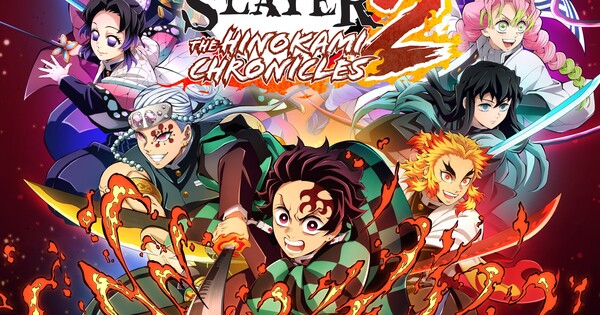
Switch 2 release includes DLC characters, cross-play support between Switch/Switch 2

© Koyoharu Gotoge / SHUEISHA, Aniplex, ufotable ©DEMON SLAYER KIMETSU NO YAIBA THE HINOKAMI CHRONICLES 2 COMMITTEE ©SEGA
Sega announced on Monday that it will release Demon Slayer: Kimetsu no Yaiba– The Hinokami Chronicles 2, the sequel game to the 2021 Demon Slayer: Kimetsu no Yaiba – The Hinokami Chronicles game, for Nintendo Switch 2 in Japan and in the West on October 29.
Players who own the physical or digital Nintendo Switch version can upgrade to the Switch 2 version for free. However, this method will not come with the separately sold “Infinity Castle” Character Pass of seven DLC characters.
Demon Slayer: Kimetsu no Yaiba– The Hinokami Chronicles 2 – Nintendo Switch 2 Edition + “Infinity Castle” Character Pass will include all the released DLC characters. The Switch 2 Edition will also feature 60 fps framerate and higher-quality visuals. There will also be cross-play support between players of the Switch and Switch 2 versions. There are bonuses for having save data from the Switch releases of the Demon Slayer: Kimetsu no Yaiba– The Hinokami Chronicles and Demon Slayer: Kimetsu no Yaiba– Sweep the Board! games.
A paid Character Pass DLC allows players to use characters who appeared in the recently released Demon Slayer: Kimetsu no Yaiba Infinity Castle – Part 1: Akaza Returns film in the game’s VS. Mode, including Doma and Kaigaku, as well as Infinity Castle versions of Tanjiro, Zenitsu, Giyu, Shinobu, and Akaza.
The game added Kaigaku on October 30, Zenitsu’s Infinity Castle Version on December 2, Akaza’s Infinity Castle version on December 19, Tanjiro’s Infinity Castle version on February 13, Giyu’s Infinity Castle version on March 11, Shinobu’s Infinity Castle version on April 17, and Doma on May 28.
A free update added Muzan Kibutsuji in VS. Mode last September.
The game launched in Japan and in English last August for PlayStation 5, PlayStation 4, Xbox Series X|S, Xbox One, Switch, and PC via Steam. English Deluxe Edition owners could play the game up to five days earlier than the official release date.
The sequel game’s story mode continues from the first game, and includes the Entertainment District Arc, Swordsmith Village Arc, and Hashira Training Arc. The VS. Mode features over 40 playable characters, including Muichirō Tokitō and Mitsuri Kanroji, who are also the pre-order bonuses. All characters from the first game also return in the base roster, including the demons that were added in the free post-launch updates and the Entertainment District Arc characters that were originally part of the first game’s paid DLC. The nine Hashira are available in the new game as playable characters.
Cyber Connect 2 developed the game, and Aniplex again released the game.
The first Demon Slayer: Kimetsu no Yaiba – The Hinokami Chronicles (Kimetsu no Yaiba: Hinokami Keppūtan) game shipped in Japan and released in English in Asia in October 2021. The game then launched a day later in North America and Europe for PS5, PS4, Xbox X|S, Xbox One, and PC via Steam. The game’s Switch version launched in Japan and in English in June 2022.
Sources: Press release, 4Gamer
>


© 2026 Q-HAYASHIDA・Shogakukan/Dorohedoro Season2 Project
To say the wait between Dorohedoro‘s first and second seasons was rough on fans would be an understatement. For years, fans worried that MAPPA‘s gloriously gory adaptation of Q Hayashida‘s manga had quietly been buried under the studio’s avalanche of other hit shows. But that long, uneasy silence was broken in the best way when Dorohedoro finally made its grand return. And season two didn’t just come back looking better than ever— it immediately positioned itself as an early contender for anime of the year.
At Anime Central 2026, Anime News Network sat down with animation director Yuichiro Hayashi, creative producer Yusuke Tannawa, and animation producer Koya Okamura to discuss the making of Dorohedoro season two. During our chat, they revealed their favorite moments from the season, their hopes for future adaptations, how they strove to maintain a healthy production schedule, and their stance on AI in animation.
Contrary to fans’ fears that Dorohedoro had been quietly shelved during the six-year gap between its first and second seasons, Hayashi says he always intended to begin work on season two soon after the first wrapped. But MAPPA had already committed to another major anime project that also relied heavily on 3DCG, which pushed its timetable back. That show is Attack on Titan: The Final Season, which the studio accepted after being approached to produce it. In a twist of fate, MAPPA would also inherit Vinland Saga‘s second season from Wit Studio—the same studio that animated the first three seasons of Attack on Titan.
Rather than leave Dorohedoro languishing in the queue, MAPPA chose to begin early development on its character designs and other visual elements for season two in parallel with its work on Attack on Titan‘s final arc— a process Tannawa says unfolded over two years. That overlap also created a convenient behind-the-scenes crossover, allowing animators who had contributed to Attack on Titan to step in to support the core Dorohedoro team, which Okamura notes remained largely unchanged from season one. According to Hayashi, the biggest workflow shift for season two was delegating the bulk of the background scenery—previously handled largely by him—to Studio Easter and MOA Studio.
Although background art plays a major role in Dorohedoro‘s visual glow-up, the change viewers most remarked on over on social media between seasons one and two is the leap in 3DCG quality, as well as the show’s far more prominent use of 2D animation.
“For season one, too, we did a hybrid of that, but it probably doesn’t stand out as much,” Tannawa said. “Usually, the main characters are all done in 3D, but a lot of times, budget-wise and also time schedule-wise, it’s really hard to do everything 3D because it takes a lot more time, effort, and money.”
To get around this limitation, Tannawa explains that season one’s animators hand‑drew the background characters while leaving most of the 3DCG work to the main cast. After wrapping season one, Hayashi says the team regrouped to refine their approach so that season two could improve its animation even further. And while many fans online often assume MAPPA shifted its hybrid balance to favor more 2D this time, Tannawa notes that the actual 2D-to-3D ratio didn’t change meaningfully. What changed was that MAPPA had its limiters removed and more creative freedom to reshape the look and feel of the series by turning up the dial on its violence to levels it could only allude to in season one.
“One of the things about season one was, because it was on TV, there was only so much that we were allowed to show as far as gory details because we were very limited with the guidelines that we had to go by,” Hayashi said. “But with season two, that’s not the case. We knew that we were able to put more deals in that we wanted to have in season one, but had to omit them.”
Not only did the loosened streaming guidelines finally let Dorohedoro look the way the team had hoped back in season one, but now they also pushed the series closer to the “MAPPA style” the studio is known for. And MAPPA wasn’t the only one who felt the impact of this shift. Hayashi recalls Hayashida giving MAPPA feedback, saying those unrestrained details weren’t just embellishments—they’re part of what makes Dorohedoro Dorohedoro.
“Being able to add that to season two, we were able to answer that for [Hayashida],” Hayashi said. “It was kind of like this really beautiful full-circle moment.”
Of course, gory is only one slice of the meat pie that makes Dorohedoro what it is. The series also thrives in the liminal space between dark fantasy and absurdist comedy. That blend created a new quandary for MAPPA in season two: deciding which moments to animate in 2D versus 3D for optimum comedic and horror effect. Hayashida didn’t weigh in on the matter—she had complete confidence that MAPPA would do what MAPPA does best. Still, Tannawa recalls countless meetings with Hayashi during the storyboarding phase where they racked their brains over those choices.
“Even though we got together to have meetings with the storyboard and design team to figure out which scenes would look good in 3D and which would look good in 2D, it kept changing,” Hayashi said. “It was constantly evolving almost until the very end.”
Despite all the back-and-forth, Hayashi says both MAPPA and Hayashida were thrilled with how Dorohedoro season two turned out.
If Tannawa had to single out one sequence that epitomized the sensation that they’d exceeded his expectations with Dorohedoro, it would be the visceral brutality of Ebisu’s “split-scene,” made possible by their greater creative freedom to make the imagery even more gruesome than last season. Hayashi, meanwhile, is especially fond of episodes three and six, particularly the sequence that dives into the chaos inside Caiman. Those episodes stand out to him because they lean hard into his horror-movie inclinations. And as a life-long horror fan, he relished the chance to pay homage to the genre. “I’m so glad that I watched all those horror movies growing up,” Hayashi said, adding that he watches everything. “Anything that comes out in the horror genre, I’m there.”
When asked which horror touchstone influenced him most while directing Dorohedoro season two, Hayashi shouted out Konami‘s iconic psychological‑horror game Silent Hill, a series he loves for both its world and its weapons.
Alongside its blend of horror and humor, another defining trait of Dorohedoro is its psychedelic, post‑industrial‑meets‑pop score and its eclectic opening and ending themes, which is why fans (present company included) were over the moon to learn (K)NoW_NAME would return for season two. After shaping the series’ sonic identity in the first season, their music had become the connective tissue that held its chaotic tones together.
Just as the decision to produce Dorohedoro season two was essentially a given after season one, (K)NoW_NAME’s return was locked in early in development as well. The call ultimately came from TOHO‘s music department, which loved how seamlessly the group’s sound meshed with the anime. Even so, it’s rare for a single musical team to handle both the opening and ending themes and the full original soundtrack. To keep the MAPPA x (K)NoW_NAME synergy just as strong for season two, Hayashi says the studio regularly shared storyboards and visuals with the group throughout production. In turn, Hayashi recalls a similar back‑and‑forth between MAPPA and (K)NoW_NAME, with the band fine‑tuning the emotion and direction of various pieces of Dorohedoro‘s score. The collaboration ultimately produced roughly 50 to 60 tracks over the course of four months.
“When you have an artist you work with, a lot of times, their identity comes off very strong,” Tannawa added. “But with (K)NoW_NAME, because they’re so flexible with all kinds of genres, we felt—when we listened to it—it was really Doroherodo-ish and not (K)NoW_NAME-ish. It was much more of the Dorohedoro world that they came up with. So, look forward to the soundtrack!”
When asked what made Dorohedoro such an appealing project for MAPPA to return to adapt its second season, Hayashi says the answer was simple: it was unmistakably Hayashida.
“With manga, a lot of times, it’s the creator—the manga artist, illustrator, or the author, but then there’s also an assistant. So at the end of the day, it’s not purely one creator making it. However, with Hayashida, it’s completely Hayashida’s point of view,” Hayashi said. “It’s a very pure thing, and very artistic. That is the appealing thing.”
Conversely, the very thing that made Dorohedoro so appealing to MAPPA as an undiluted Hayashida work also made it the most challenging aspect of the adaptation. Because the manga’s world is so distinct from the visuals of its brutal action, whimsical characters, and dense world, translating those elements so intricately linked to Hayashida’s singular sensibilities proved to be one of Hayashi’s toughest tasks.
“In that way, it was a little bit daunting,” Hayashi said. “Definitely a big challenge. But because of that, I find that there’s nothing like Dorohedoro because it’s such a pure project done by Q-san. There’s no one else involved in it. Some of the panel work and everything like that, you will not see anywhere else. It’s very specific to Dorohedoro.”
As the studio that brought Dorohedoro to life for two seasons, it felt only fair to ask whether there was any interest in adapting Hayashida’s other space-faring work, Dai Dark. While all three men love Dai Dark, the team admitted they simply don’t have the energy right now to add it to their slate.
“We don’t have the bandwidth right now,” Hayashi said.
“But, if [Hayshida] does decide she wants something else done, please come to us first. We would be very sad if she didn’t,” Tannawa said, laughing. “We would be very lonely. But as for now, we don’t have any plans. We’re very involved with the Dorohedoro world, so we haven’t even really thought about that.”
On the topic of anime studio bandwidth, Western anime fans have grown increasingly aware of the risks that come with studios juggling multiple high-quality products and the very human cost of unhealthy work environments and animators crunching to meet impossible deadlines so fans can watch their favorite shows. Hayashi ensured that production on Dorohedoro season two came with a clear mandate that workers’ time would be respected and that the show’s quality would never come at the cost of overworking its staff. That priority, he notes, was just as important as the animation itself. One key way to uphold that standard was to expand MAPPA‘s staff.
“Unlike a long time ago, we’ve really become much better about adding staff in. Now that we have a lot more members and a lot more people who are involved and who can help out. If we have a lot of projects, we still feel that we’re able to answer the needs with the staffing,” Tannawa said.
If MAPPA ever feels a project requires extra hands beyond its core animators, Tannawa says the studio would bring in additional staff to support specific parts of the production.
“We are very conscious about making sure that everyone gets rest and everyone feels balanced in their lives,” Tannawa said.
To illustrate how this approach works in practice, Okamura explains that when MAPPA is producing two major titles at once—say, Attack on Titan and Dorohedoro—the studio would assign each animator to a single project. That way, the separation keeps the production pipeline orderly rather than chaotic, with staff scattered across multiple shows.
In tandem with fan concerns about worker crunch, AI has become another ever-present issue threatening to yuck the yum of enjoying anime. Those anxieties have only intensified with the creeping rise of AI-generated imagery in anime. Whenever “AI slop” is spotted by an anime fan, it’s virtually tarred and feathered online. And rightly so. The overall sentiment from fans is that AI only cheapens the artistry of anime, reducing it from something wondrously handcrafted into hollow “content.” Put simply, why should anyone care about content that nobody bothered to make?
When it comes to MAPPA‘s place in the hot-button topic of AI in anime, fans recently got a clear glimpse of the studio’s stance in the end-credits disclaimer for Chainsaw Man – The Movie: Reze Arc: “No part of this work may be used or reproduced for the purpose of training any artificial intelligence technologies or systems.”
While its message was unambiguous, Tannawa expanded on MAPPA‘s outlook on AI in anime production.
“As far as AI, our approach to it is absolutely never with visuals,” Tannawa said. “Anything related to the anime project itself will never be AI—the image, the visuals. However—and we’re not doing this yet because [AI] is still a very new thing for anime studios as well— but as of now, we haven’t used this, but we might be in the future at some point incorporating AI to ease the production line. It wouldn’t in any way affect the art, but it might just help the human side by helping their work.”
Tannawa emphasized that MAPPA hasn’t introduced AI into its workflow, but he acknowledged that the technology may eventually be something the studio looks into as a limited tool for research, not creation.
“It would never have anything to do with visuals and the artwork,” Tannawa said.
>

by ANN Editorial Team,

Welcome to the steamy side of ANN’s Spring Manga Guide. All of these titles are for readers 18 and older, from spicy to something a bit more, and featuring a range of tropes, groupings, and fetishes. Come find your next adult read – there’s plenty to choose from.
June


July
August
>

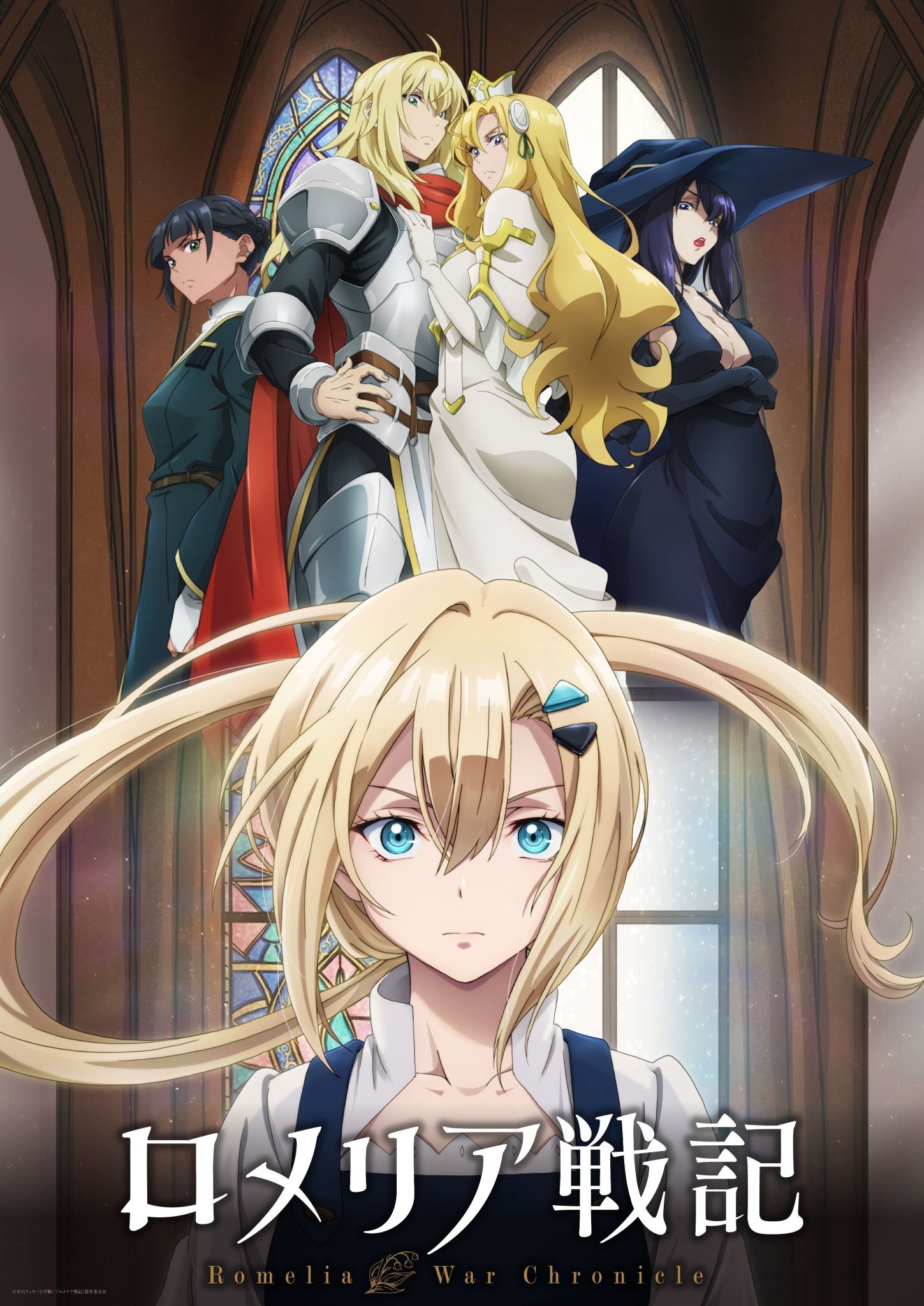 The official website for the television anime adaptation of Ryou Ariyama‘s Romelia Senki (Romelia War Chronicle) light novel revealed additional cast and first promotional video on Friday. The anime series will run for two cours on Tokyo MX, BS11, Sun TV, and KBS Kyoto in October 2026.
Cast
Granbell von Andre: Shouya Chiba (Koori no Jouheki)
Ragnbell von Gyunos: Gakuto Kajiwara (Black Clover)
Otterheim von Berak: Ryuunosuke Watanuki (Mob Psycho 100)
Kyleren von Grenstorm: Shun Horie (Boku no Kokoro no Yabai Yatsu)
Hiroshi Shirai (Dragon Ball Super: Super Hero episode director) is helming the anime at Atra, with Aya Satsuki (Kawaisugi Crisis) handling the series composition and script. Yoshiko Saitou (Towa no Yuugure) and Yuuta Ootaka (Re:Zero kara Hajimeru Isekai Seikatsu 3rd Season animation director) are designing the characters. KOHTA YAMAMOTO (Dark Gathering) is composing the music.
Ariyama originally began penning the action fantasy novel on the Shousetsuka ni Narou website in August 2019. Shogakukan began printing the title under its Gagaga Books label in June 2020, featuring illustrations by Kodama. The sixth volume was published in November 2025.
Ryou Kamito began drawing a manga adaptation on the Manga Doa app in April 2021. Mag Garden released the fifth volume in November 2025.
Seven Seas Entertainment licensed the manga in English in March 2025. The second volume was released on April 28, with the third volume scheduled for an August 11 release.
PV1
Source: Moca News
News submitted by Safuan12616
>

How a Triple-A demotion sparked Royce Lewis into a force at the plate again

Jimmy Fallon Brushes Off Trump’s Leaks and Shortages: ‘Normal for an 80-Year-Old’

Premier League: Why do the world’s best footballers move elsewhere?
-

 movies3 months ago
Search For Canadian TV Actor Stewart McLean Now Homicide Investigation
-

 Fashion9 years ago
These ’90s fashion trends are making a comeback in 2017
-
Fashion9 years ago
According to Dior Couture, this taboo fashion accessory is back
-
Fashion9 years ago
Model Jocelyn Chew’s Instagram is the best vacation you’ve ever had
-
Fashion9 years ago
Your comprehensive guide to this fall’s biggest trends
-
Fashion9 years ago
9 Celebrities who have spoken out about being photoshopped
-
Fashion9 years ago
Emily Ratajkowski channels back-to-school style
-
Fashion9 years ago
A photo diary of the nightlife scene from LA To Ibiza