
Politics
The House | Caroline Lucas: The Greens Have Been “Really Burnt” By Progressive Alliances With Labour


Credit Emma Innocenti
9 min read
Former Green leader Caroline Lucas talks to Matilda Martin about her party’s new direction under Zack Polanski, how it needs to find better ways of handling its differences internally – and why she is wary of a progressive alliance
Caroline Lucas would “love” for Zack Polanski to spend more time talking about the environment. It is not, historically, a criticism that one would have expected to be levelled at a Green Party leader, but the Corbynite-populist turn taken by the newcomer has frustrated some veterans of the party – while also bringing electoral success.
As a former leader of the party herself, Lucas is complimentary of Polanski, saying she considers him a friend, albeit one she doesn’t speak to often, given his busy schedule. “He has taken the Green Party into a whole new space,” she says, noting the party’s ballooning membership and recent wins, most notably in Gorton and Denton.
“Journalists used to say to me very frequently: ‘You’re just a one-issue party,’” she recalls. “Now Zack has broadened the agenda, and the criticism that sometimes gets levelled at Zack is: ‘What’s happened to the environment?’”
Asked whether she disagrees with the criticism, however, she admits: “I would love him to talk about it a little bit more.” She goes on to add: “But I understand entirely why he’s taken the decisions that he has, and even in recent weeks he certainly, from my hearing, is talking about it more.”
While Lucas is careful in her answers to acknowledge that it is Polanski who now runs the show, she is not afraid to intervene when she feels it’s needed – for example, calling for immediate action by the party when several of its candidates in the May local elections faced antisemitism allegations. Lucas “definitely still sees a role for herself” in the Greens, as long-time friend and adviser Cath Miller tells The House. “It’s an intrinsic part of her.”
Asked whether the intervention over antisemitism was a difficult one to make, Lucas says: “I felt that it needed to be said, and that the vast majority of people both inside and outside the party would agree with it. It just felt that I hadn’t seen it being said in quite those terms.”
One of her frustrations as leader, she says, was not being able to get involved in disciplinary issues – though she understands the reasoning behind that set-up, considering it was political interference that contributed to the Equality and Human Rights Commission’s decision to call Labour institutionally antisemitic in 2020.
The Greens also attracted controversy earlier this year when the party looked set to debate a controversial motion titled “Zionism is racism” at its spring conference. While the motion did not end up being debated, it could return in the autumn. What does Lucas make of the row?
She pauses before answering. “I’m not sure it’s a very helpful debate, in the sense that the way in which that motion was worded caused a lot of concern among people across the party.”
There is a vast difference between criticising the Israeli government and using terms about which Jewish Greens and others have raised concerns, she stresses. “Zionism can be interpreted in so many different ways, and there was a concern that some people thought the motion was talking more about individual Jewish people rather than the Israeli government.”
It is up to the party to decide what to discuss, Lucas adds, but she hopes the debate is held in a less “toxic” way next time.
The party has also been criticised by some in recent years for its expulsion of ‘gender-critical’ members who oppose its policy on self-identification. Does Lucas think the zero-tolerance approach that has been taken is the right one?
“As far as I know, people haven’t been expelled simply for being gender-critical and, if they have, that should never happen,” she says. Suspension as a result of someone being accused of transphobic language or actions is one thing, Lucas says, whereas those who are gender-critical but “perfectly respectful – I don’t think we should be hounding those people out of the party”.
It seems inevitable that as the Greens grow, factional infighting will become more common. When asked what her advice would be, Lucas strikes a maternal tone: “There needs to be an awful lot more willingness to hear views that aren’t necessarily your own. We need to find ways of handling difference in our party, and all parties, in a better way.”
She continues: “If there’s transphobia or homophobia or any kind of race hate, that is completely unacceptable. But most of this stuff is much more about differences of views that we ought to be able to find ways to handle better.”
In 1986, when Caroline Lucas first joined the Green Party, “The height of our ambitions was to save our deposit or win a seat on a local council,” she recalls in her 2015 book, Honourable Friends? Parliament and the Fight for Change. Expectations within the party look very different today.
The Green Party had already been doing well in the polls, but the election of London Assembly member and former deputy leader Polanski as leader in September turbocharged its popularity. In the contest last year, Lucas threw her support behind the more environment-focused and traditional pair of co-leader candidates, MPs Ellie Chowns and Adrian Ramsay.
Now, she says her concerns about a Polanski leadership were misplaced: “I mistakenly thought it was going to be a problem, not having the leadership within the parliamentary party.” The reality, she believes, is it has been an advantage, allowing Polanski to be more active in terms of media appearances.
Lucas, now 65, has a long history with the Green Party. After joining it back in 1986, she led the party for a decade in total between 2003 and 2018. She sat as a Green MP in Westminster for 14 years and served as an MEP for more than 10 years before that.
Since leaving the Commons in 2024, Lucas has more time on her hands. The House has travelled to meet her on the sunny campus of the University of Sussex where, in 2025, Lucas was appointed professor of practice in environmental sustainability.
“There was a concern that some people thought the motion was talking more about individual Jewish people rather than the Israeli government”
It is hours after the news has broken that Andy Burnham will return to Westminster. At one point she laughs about how they are talking of him as if he is already prime minister. “Let’s assume he will be pretty soon,” she says.
The possibility of the Greens partly forming the next government is an idea that has gained salience in recent months, particularly so in light of Burnham’s likely ascent to No 10.
Asked which role she would like to play in a hypothetical Labour-Green coalition, Lucas is keen to talk about the party rather than herself. She makes clear that she thinks the Greens should not resign themselves – in light of their recent success – to playing a minor role in such a government.
“We don’t even know which is going to be the most successful progressive party on the left at the next general election. So, let’s not assume that we’re the ones who are going to be the junior partners here. Let’s be ambitious.”
She also warns that history has shown the potential pitfalls awaiting those who enter coalitions. “What that would actually look like… is something that we’ve got to think incredibly carefully about,” she says, adding that the Liberal Democrats “gave an object lesson of how not to do coalition government, and we would certainly want to learn from that”.
Are there Green policies that could be watered down in preparation for a coalition, as reports suggest? “Those kinds of questions are so far ahead of where the debate is at right now, because it assumes the coalition government is the arrangement that most people would support,” she replies. “Let’s not get ahead of ourselves.”
Last month, reports emerged that a progressive alliance council was being formed by centre-left think tank Compass, of which Burnham ally Neal Lawson is director.
Lucas, who co-chairs the organisation, claims she knows little about it. “I imagine first and foremost, it’s about building trust and relationships now, well in advance of any election.”
Surprisingly, Lucas appears wary of going any further by embracing the progressive alliance movement too readily. “It’s true to say the Green Party’s fingers have been really burnt by it,” she says.
The idea has been “interpreted by Labour again and again as Greens being forced to stand down or being bullied into standing down”, Lucas argues. “There was no reciprocity to it at all, and that is not what a progressive alliance is. So, even that term now within the party is treated with understandable suspicion.”
But their recent wins mean the Greens now find themselves in a stronger position, Lucas says:
“There’s absolutely no way that the Greens are going to stand for being treated in that way.”
She insists that the foot is now “on the pedal” for the mayoral contest in Greater Manchester, triggered by Burnham’s new Westminster posting.
“The Greens definitely will be throwing everything at that, and I would absolutely support them in so doing, and will be up there to do what I can to help,” Lucas says.
She is, however, excited by Burnham’s support for electoral reform, saying the pressure is now on to make sure he delivers on that as soon as possible.
It is up to the progressive movement as a whole, Lucas declares, to ensure that Burnham does not campaign left but govern right: “It would be a rash person to sit here and say: ‘He won’t do that,’ given our experience of recent Labour leaders.”
While no longer an MP, Lucas’ dedication to the Greens has not wavered. She points to the new Green think tank Verdant, of which she sits on the board and through which she is keen to help shape policy, as well as her role as co-president of the European Movement, an advocacy group that promotes European integration, which she hopes will allow her “a little bit of influence over the party’s new direction”.
“There’s plenty going on,” she says. “I’m not done yet.”
>
Politics
Politics Home | Lib Dems “Appalled” After Party Lifts Suspension From Peer Under Investigation For Sexual Harassment Claims


4 min read
Exclusive: A senior Liberal Democrat has told PoliticsHome that they and their colleagues are “astonished” and “pissed off” after news emerged that Lord Chris Rennard has had the whip restored while an investigation into claims he sexually harassed female members is still ongoing.
In February, Rennard, the party’s former director of campaigns and elections and chief executive, was suspended by the party after it launched a fresh investigation into allegations that the peer had sexually harassed four women.
He faced allegations of sexual harassment dating back to 2013 from four women.
An investigation at the time concluded the accounts were “broadly credible” but could not be proved beyond reasonable doubt. The inquiry by Alistair Webster QC, published in 2014, found that the evidence suggested that Lord Rennard’s behaviour had “caused distress to a number of women”. An investigation by the Metropolitan Police around the same time found there was “insufficient evidence” to prosecute the peer.
Rennard was suspended from the party in 2014 over comments he made in the media and on social media regarding the party’s handling of the complaints.
This suspension was lifted, but in February, Rennard was suspended from the Liberal Democrats once again, after the party said that it had “received legal advice” that the 2014 inquiry into the allegations “was flawed in several respects”.
Rennard has refuted the allegations, saying that he “never acted inappropriately and would certainly not want to cause anyone any embarrassment.” He went on to say: “If ever I have hurt, embarrassed or upset anyone, then it would never have been my intention and, of course, I regret that they may have felt any hurt, embarrassment or upset.”
Private Eye recently reported that Rennard had had the whip reinstated at the end of May, with a Lib Dem spokesperson telling the magazine: “The party’s independent complaints process took the decision to lift Chris Rennard’s suspension while their investigation is ongoing.”
Commenting on the whip being restored to Rennard, a senior Lib Dem source told PoliticsHome: “We’re all astonished and pretty pissed off that somehow for some unknown reason [Rennard’s] membership has been reinstated before the matter has been resolved. We just don’t understand that. It’s right that the process is independent, but it’s deeply frustrating.
“Other colleagues are annoyed too. It’s nonsensical. If there’s still an investigation, why would you reinstate someone’s membership?“
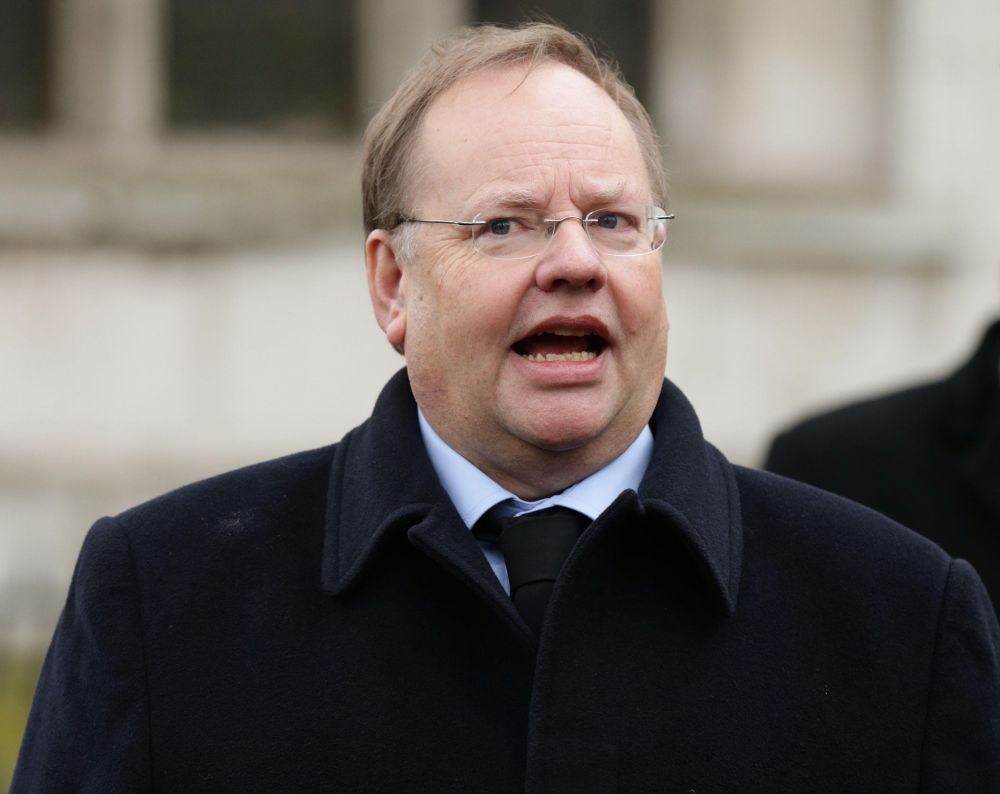
In February of this year, a Lib Dem spokesperson said that the party’s leader Ed Davey believed “Rennard should not be a member of the House of Lords” and “that it should be made easier for peers to be expelled from the Lords for serious misconduct”.
Another Lib Dem source told PoliticsHome that they were “appalled” at the reinstatement of Lord Rennard “before due process was completed”.
The source added: “I am incandescent that we have done this… we are trying to ‘manage the optics’ rather than protect our members.” The source added that if there was a legal reason that Rennard had to be reinstated, then the party should have been open about it.
“This reinstatement has been brushed under the carpet like these accusations were for so many years until our accusations about Peter Mandelson forced us to finally confront them.”
The source added that Rennard would now be allowed to “attend party functions and conferences before the process is complete and risk, if any, is quantified. This is an appalling state of affairs and made worse that the party hoped that no one would notice.”
Earlier this month, Lib Dem MP Cameron Thomas had the party whip suspended after he was arrested on suspicion of assault and controlling and coercive behaviour. Thomas denies all the allegations against him.
A spokesperson for the Liberal Democrats told PoliticsHome: “The party’s independent complaints process took the decision to lift Chris Rennard’s suspension while their investigation is ongoing. We will make further comment when this process has concluded.”
Lord Rennard was contacted for comment.
>
Politics
“Biggest Change Of Our Lifetimes”: Andy Burnham Sets Out Plan To Take Power Out Of Westminster



5 min read
Andy Burnham has said he would “do things differently” and lead a huge transfer of power out of Westminster in a speech setting out his vision for power.
On Monday morning, Burnham gave his first speech since announcing he would stand to become leader of the Labour Party and prime minister after Keir Starmer announced his resignation last week.
Burnham is widely expected to become PM this month, with the former Greater Manchester mayor backed by large numbers of Labour MPs.
Speaking at the People’s History Museum in Manchester, the city where he was mayor for nearly a decade before returning to the House of Commons, Burnham set out his central proposal of “taking power out of the centre” in Whitehall and transferring it to the regions and mayors.
He described a vision to have “good growth in every postcode” through a “bottom-up” approach, replacing a centralised, top-down model.
This would include expanding 10 Downing Street and putting part of it in Manchester.
“No 10 North will be the nerve centre of a rewired Britain,” Burnham said.
“It will be the conduit through which we redistribute power and resources across the UK. It will coordinate all parts of government at a national and local level to agree a long-term economic strategy and help all places set new growth ambitions. It will be given a mission to strive for equivalent living conditions in all parts of Britain, borrowing from the basic law.”
He said No 10 North will support the regions to reform essential utilities, lead on reindustrialisation and deliver the regeneration of places.
“True to the motto of this city, I am going to do things differently to break with the more of the same approach that has got us here,” Burnham said.
“I am going to give Britain the circuit breaker it needs by building a more collaborative politics in Westminster, by taking power out of the centre, and putting it in the hands of the people and places who can use it best, and in so doing creating a new sense of agency, possibility and hope flowing around the country. We will make politics work for you and the place where you live.”
He highlighted what he has learned from his experience as mayor of Greater Manchester, describing how when he started in that role in 2017, he had wanted to build a new approach: “A new politics based on the exact opposite of the Westminster approach, place first, not party first, problem solving, not point scoring, long term, not short term.”
Turning to the state of Westminster politics, Burnham said it was now a more “fragmented, disjointed place” than when he left as MP nearly 10 years ago, and pledged to “change that culture, leading from the front and showing how things can be different”.
He said he would reform the whip system so that it isn’t used to “create fear or close down debate” among Labour MPs, and make sure his government would draw on “the breadth and depth of talent and expertise our party has to offer”.
He also pledged to create a more cooperative culture in Westminster by reaching out to other political parties and building common ground.
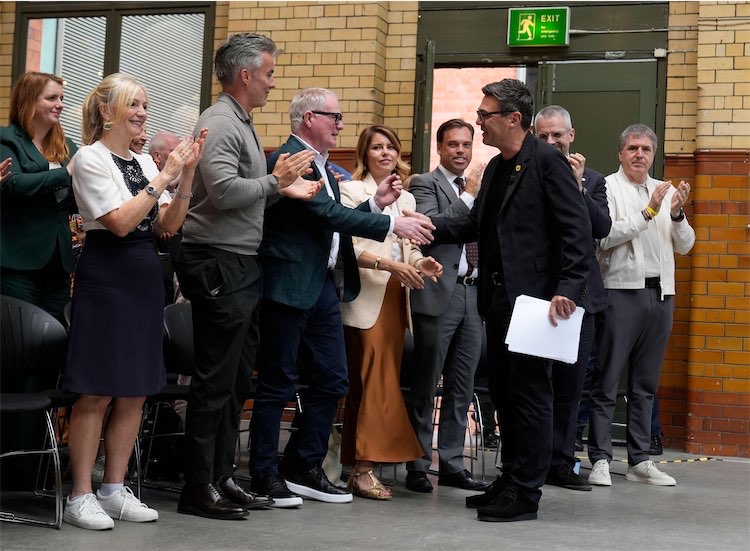
After winning the Makerfield by-election earlier this month and returning to Parliament as an MP, the former mayor is now widely expected to run unchallenged to be leader without a contest, as no other candidate has yet stepped forward to throw their hat in the ring.
Burnham won the Makerfield seat comfortably, despite it being a Reform target area where Nigel Farage’s party had been polling very well in the months preceding the contest. Burnham described the “Makerfield test” of his own by-election victory as being at the heart of decision-making in his future government.
Addressing speculation over who he would appoint to the top jobs in his cabinet, Burnham said he would not announce decisions until the leadership contest process was complete.
“So, until then, feel free to discount the wild speculation in circulation,” he said.
“While the political direction I set is not up for negotiation, I will build an inclusive team at the very highest level, so that all parts of the party and the country can see themselves reflected and represented in it.”
There is currently fevered speculation about who Burnham will choose to be his chancellor, with Energy Secretary Ed Miliband, Home Secretary Shabana Mahmood and former health secretary Wes Streeting all seen as candidates.
However, Burnham insisted he would stick to the government’s fiscal rules and not deviate from Labour’s 2024 election manifesto.
Burnham committed to a 10-year mission to raise living standards across the country through reindustrialisation, housing, infrastructure and reform of essential utilities.
Responding to the influential Alan Milburn report on youth unemployment, Burnham said the country needs a “complete rethink” of how we support the next generation to succeed, starting with the education system.
“A school system configured entirely around the university route will be brought to an end,” he said, adding that he would support calls from mayors for devolution of employment support, which he said would help to reduce the welfare bill.
He also pledged that No 10 would oversee the “biggest council house building program since the postwar period”, using vacant public land to reduce costs.
Burnham promised to reform business rates to support pubs and high street businesses that bring social and community benefits.
“Shouldn’t we make our high streets the new symbol of Britain’s Renaissance?” Burnham asked, to a round of applause in the room.
He added that there should be more devolved powers for London over education and housing, “so that London can do more for itself and remain the world’s greatest capital city”. Burnham will be seeking to reassure Labour colleagues in the capital, after some expressed nervousness over the weekend around his anti-London messaging.
>
Politics
The House | Jacqui Smith: “A Million Young People Not Earning Or Learning Is A Moral Outrage”

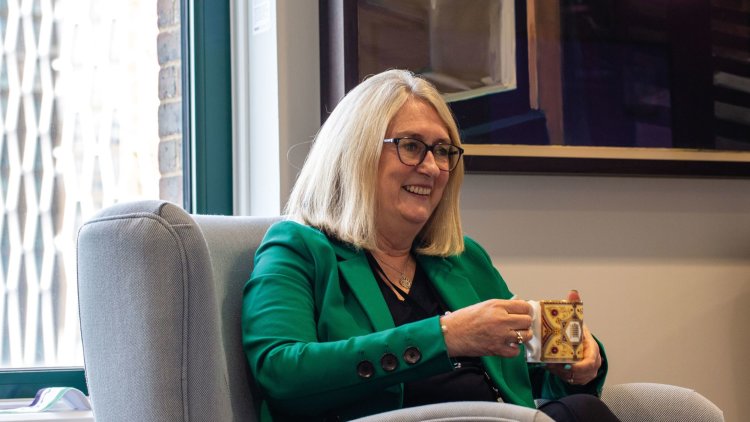
Photography by Louise Haywood-Schiefer
10 min read
Skills minister and Labour veteran Baroness Smith talks to Matilda Martin about her party’s leadership troubles then and now, plus what can be learned from the Milburn review of young people and work
Jacqui Smith was the first serving minister to use the past tense when talking on the record about Keir Starmer’s premiership. “I would have been very happy for him to continue,” she said on that Monday morning before the podium appeared outside No 10. It was the final confirmation, if any were needed, that the Prime Minister would soon be confirming he was on his way out.
This is far from the first time Baroness Smith of Malvern, 63, has borne witness to serious political turbulence. Having first been elected to Parliament in Tony Blair’s 1997 landslide, it fell to her as his chief whip in 2006 to tell the prime minister he had a problem: the party’s demands for a ‘timetable’ were growing.
Sitting down with The House hours before Andy Burnham’s Makerfield victory, the education minister – now forming part of a Labour government from the House of Lords – reflects on this familiar territory.
“I’m now in my 12th year as a minister,” she says, adding up time served under both New Labour and Starmer. “I’ve been around the block a bit, and I have seen turbulence. I understand that governments go through difficult times.
“In those cases, usually the best thing to do is to focus on the change that brought you both into politics and into government, to get on with delivering it, and to spend less time worrying about the personalities involved.”
Perhaps unrealistic but not surprising from a minister described first and foremost as “loyal” by those who have worked with her over the years. She was immediately appointed as Gordon Brown’s home secretary when he took office, for example, despite having been labelled as one of “Blair’s babes”.
Asked what she makes of the recent intervention by her former boss, she shoots back: “Which one of my former bosses?” Tony Blair inspired a summer of essays when in May he published a 5,000-word thesis offering advice to the party he once led.
“Tony’s interventions are always welcome from me. He is, and was, both a phenomenal boss and an era-defining prime minister. But… this is probably a time to buckle down, get on with changing the country and spend less time writing essays.”
Smith left government in 2009 amid the expenses scandal, which included the revelation that she had – in error, she said – claimed back money for two pornographic films bought by her (now former) husband. “I had some high-profile problems in the last government, both personally and politically,” Smith admits at one point, unprompted.
In 2010, she lost her Commons seat to the Conservatives but went on to rebuild her reputation outside the Palace walls, co-hosting a weekly LBC show and – following a path well-trodden by former politicians – competing in Strictly Come Dancing in 2020.
When Smith became skills minister in July 2024, she was returning to the department where her ministerial career first began back in 1999.
She recalls bringing her sons with her, who were tiny at the time, and how the glass-walled offices were a playground of sorts for them. Her boys are now more than six feet tall.
Much has changed over the decades, not least the lives of young people like Smith’s sons. The recently published review of another former New Labour minister, Alan Milburn, exposes the depth of the crisis of Britain’s almost one million young people not in education, employment or training. If these “Neets” were to form a city, he writes, it would be larger than Leeds, Glasgow or Cardiff.
“The fact that we’ve now got a million young people who are not earning or learning is a moral outrage and it’s also an enormous waste of economic talent,” says Smith.
The report observes that the rise of AI is likely to create further pressure at the bottom end of the labour market. What is this government’s plan to protect young people from the harms of the AI revolution?
Smith points to the work of the government’s ‘AI alliance’ and ‘AI champions’ who are looking at entry-level jobs and identifying “where those challenges might be and what more we need to do in order to support young people into them”.
“If you hollow out your entry-level jobs in any area of employment, you’re building up problems for the future, because then you don’t have the pipeline that you need,” she says, adding that this is something employers “get”.
Does it worry her that companies are cutting jobs for young people because of AI? While Smith is careful to point out that there are a range of factors contributing to the changing labour market, she adds: “I know it worries young people, because I talk to them about it…
“That’s why it’s quite important for us to keep saying: whatever the challenge is, your opportunities are likely to be better if you’ve been able to go through high-quality courses, whether higher education, apprenticeships, or other skills routes.”
The Neet generation is also, Milburn highlights, generally unhappy. “Young people lead complicated lives,” Smith says. “There is a lot going on in the world with which they have to put up.”
She takes the opportunity to lay the blame at the door of her predecessors: there is less for young people to do and enjoy, she claims, “partly because of the way that some of the things that we previously put around education got hollowed out by the last government”.
When Labour took power in 2024, it was braced for a host of problems. One of those it did not anticipate, or perhaps want to deal with, was the financial crisis inherited in the university sector.
Universities have often found themselves on the front lines since 2024. The proposal of a levy on international students in the immigration white paper blindsided the sector, although sources stress that the alternatives available were far worse.
The narrative that some universities run courses that offer no benefits to their students is also one that has permeated all major parties. At Labour conference in 2025, Starmer announced that the party’s old ambition for half of young people to go to university was being decisively abandoned – “I don’t think that’s right for our times,” he declared – and the government sought to push apprenticeships and other vocational courses.
“I’ve been around the block a bit, and I have seen turbulence. I understand that governments go through difficult times”
The question of apprenticeships versus universities is one that has played out in many governments, and Smith finds herself jostling with a higher education (HE) sector that often questions whether she even likes them. Smith, of course, would contest this characterisation of her approach.
Whitehall has reportedly considered introducing new national minimum standards, such as a pass in GCSE English, to access student loans – a move that would lock some people out of the opportunity to enrol in higher education. Smith refuses to comment directly on the reports but says she wants those accessing higher education to “genuinely benefit from it”.
She also stands by decisions not to tackle the Plan 2 student loan system, taking the party line that there are other priorities within government that had to take precedent. She insists, however, that she has been “continuing to think about what more we can do to make that system of repayment better and fairer for those who are in it”.
Another high-profile story in the HE sector has been the debate around free speech. In April, the University of Sussex won a case against the regulator Office for Students (OfS) in the High Court, overturning a £585,000 fine handed down last year for failing to uphold free speech. Among other things, the judge found that the OfS decision to issue the fine was biased against Sussex.
Two months later, Smith is adamant that she supports the OfS and its operation. She is also clear universities should not interpret the ruling as a sign all is well on the free speech front: “It’s important that that court case isn’t seen as a suggestion that there is nothing that universities need to be thinking about when it comes to freedom of speech.”
When The House speaks to Smith, Starmer has not yet resigned but Labour MPs are already contemplating life under Andy Burnham’s leadership.
“I sat in the cabinet with Andy Burnham,” the minister says. “I’ve known Andy for a long time. I know what a talented politician he is. He’s been on a journey, and I’m glad he’s coming back to Westminster.” She does not approve of him instigating a leadership change, however.
While numerous names have been thrown around as potential successors to Starmer in recent months, none of those considered frontrunners have been women. Infamously, Labour is yet to elect a female leader. Is Smith, the first female home secretary and currently an equalities minister, embarrassed by that?
“No, I’m not embarrassed,” she claims. “We’ve got an enormously strong team, of which, frankly, quite a lot of the best performers are women.”
Many of her female colleagues in the party are embarrassed, and were furious about the Peter Mandelson revelations, which some said typified a deep-rooted misogyny in Labour. Does she believe Starmer did enough to tackle the so-called ‘boys’ club’ in No 10?
Smith pauses before answering. “I don’t think, while we’ve got the sorts of inequality that we have across society and in politics, anybody’s ever taken enough action. A lot of my political life, and one of the elements of my role now, is about how we tackle that in politics. I’ve been around long enough to see quite a lot of improvements in the way that women are treated in politics, but there’s still more that needs to change.”
Predictably, she is clearer when it comes to Reform UK’s shortcomings on women’s rights. Nigel Farage’s party has explicitly pledged to repeal the Equality Act 2010 on “day one”, which Smith says “scares” her.
“It would be a massively backward step but I’m afraid it sums up the approach of Reform, which is to identify a problem and decide who’s to blame for it, rather than to identify a problem and think about how you solve it.”
Does she think working in politics as a woman has become easier over the last two decades? It’s a question Smith seems keen to reflect on: “There are more women in Parliament, far more than when I was first elected in 1997… There are more women doing a wide range of jobs. Those are all really important developments.
“But what I also note is, I had some high-profile jobs in the last government, [but] both personally and politically, I never faced the level of abuse and intimidation that politicians face now, and in the week when we’re remembering…” she breaks off.
“Sorry,” she says, pausing to gather herself. “When we’re remembering the death of Jo Cox, who was a good friend of mine… that is something that worries me about the environment in which, all politicians actually – but the evidence suggests particularly women and particularly women of colour – now have to try and operate in the public sphere and in elected democracy.
“There are women who think twice about coming into a political career,” Smith continues, “and that’s a terrible loss of their talent – but it’s an undermining of our democracy as well.”
>

Warriors rookie Yaxel Lendeborg can’t avoid the LeBron hype as pro career begins

Why Supergirl Crashed at the Box Office

The House | Caroline Lucas: The Greens Have Been “Really Burnt” By Progressive Alliances With Labour

-

 Fashion9 years ago
These ’90s fashion trends are making a comeback in 2017
-
Fashion9 years ago
According to Dior Couture, this taboo fashion accessory is back
-
Fashion9 years ago
Model Jocelyn Chew’s Instagram is the best vacation you’ve ever had
-
Fashion9 years ago
Your comprehensive guide to this fall’s biggest trends
-
Fashion9 years ago
A photo diary of the nightlife scene from LA To Ibiza
-
Fashion9 years ago
Emily Ratajkowski channels back-to-school style
-
Fashion9 years ago
9 Celebrities who have spoken out about being photoshopped
-
Fashion9 years ago
The tremendous importance of owning a perfect piece of clothing
