
Tech
2026 State of Visual and Physical AI: A Survey of 700+ Practitioners



More Information
The last decade of AI progress was built on text, but the frontier has shifted toward data from the physical world. Video, LiDAR point clouds, sensor streams, and other high-dimensional data now drive systems that perceive, reason, and act in physical space. This report, based on a 2026 survey of more than 700 professionals, documents how teams actually build physical AI today. It finds that data problems cause the majority of model failures, and that curating data matters more than chasing larger architectures. Annotation remains costly and wasteful, because teams often label everything and then discard much of it before production. The findings show why data work, not data collection, separates teams that ship from teams that stall.
More Content from this Sponsor
>

AI notetaking hardware has taken off over the past couple of years, with credit-card-sized devices, pendants, pins, and even transcribing earbuds all promising to capture your meetings and turn them into summaries and action items. Now, a whole wave of wearables — rings especially — are betting people want to capture stray thoughts and ideas the same way.
One of the companies chasing that bet is Sandbar, the startup behind the private voice ring Stream, which has raised $36 million to date, including a $23 million Series A led by Adjacent and Kindred Ventures.
On this episode of TechCrunch’s Equity podcast, Rebecca Bellan talks with Sandbar co-founder and CEO Mina Fahmi about why he thinks so many voice hardware devices before Stream struggled to break through, and why he’s betting that keeping the human firmly in control is what it’ll take to get wearable tech right.
Subscribe to Equity on YouTube, Apple Podcasts, Overcast, Spotify and all the casts. You also can follow Equity on X and Threads, at @EquityPod.
>

For years, Australians have been warned that artificial intelligence is coming for their jobs. So far, the economy-wide wave of AI-driven layoffs hasn’t arrived.
A new Australian government analysis found no evidence that AI has caused broad upheaval across the country’s labour market since ChatGPT arrived in late 2022. But beneath that reassuring headline is a more complicated signal: Australians working in occupations most exposed to AI are seeing slower employment growth.
For Australians entering the workforce, changing careers or wondering which skills will remain valuable, that distinction matters. AI may reshape work long before it produces mass unemployment.
Australia’s AI job apocalypse hasn’t arrived
The Department of Employment and Workplace Relations examined whether occupations more exposed to AI have performed differently since ChatGPT’s launch.
Employment in the occupations most exposed to AI grew 5.6% between November 2022 and February 2026, compared with 9.5% growth in the least-exposed occupations, according to the government’s AI and employment analysis.
The report’s modelling also suggested employment in relatively AI-exposed occupations was about 2% lower by February than it would have been under pre-ChatGPT trends. But there is an important catch: the department repeatedly cautioned that its findings are suggestive, not definitive, because weaker growth in some AI-exposed occupations predates ChatGPT.
In other words, Australia isn’t seeing evidence of mass AI-driven job destruction. But it isn’t seeing nothing, either.
Hiring may be where AI shows up first
Companies don’t necessarily have to fire thousands of people for AI to change the labour market.
Deloitte Access Economics has identified 82 “AI-disrupted” occupations where tasks are considered particularly susceptible to the technology. Employment in those occupations is still growing, but vacancies in some are already falling, suggesting the effects could be appearing in recruitment before redundancies.
Deloitte forecasts average annual employment growth across those occupations could slow to 0.5% over the next five years once the effects of AI are incorporated, compared with a forecast of 1.2% without those effects.
For Australian workers, that creates a much quieter version of AI disruption.
Instead of an employee receiving a pink slip because a chatbot took their job, a company might simply decide it needs fewer new employees as AI handles more of the workload.
That kind of change is harder to spot in unemployment statistics.
What about young Australians?
Entry-level workers have become a particular source of anxiety in the AI debate.
Junior employees often perform tasks such as preparing first drafts, conducting basic research, summarising information and processing routine data, precisely the kind of work generative AI can increasingly assist with.
Yet Australia’s early evidence doesn’t show young workers collapsing under the weight of AI. The government report found employment among people aged 20 to 24 has actually grown slightly faster than employment among workers aged 25 and older since ChatGPT’s release. Graduate outcomes have also remained resilient.
That doesn’t settle the question. The department’s study was designed to monitor current developments rather than forecast what AI will eventually do to employment, and it plans to continue tracking the labour market as adoption grows.
For younger Australians, the question may therefore be less about whether entry-level jobs disappear tomorrow and more about how those jobs evolve over the next several years.
AI could change Australian jobs more than It eliminates them
Deloitte’s research points to another side of the equation.
While dozens of occupations could experience disruption, other jobs may see stronger demand when AI complements distinctly human abilities such as judgment, creativity, and empathy.
That could make AI proficiency increasingly valuable in Australian workplaces without making humans obsolete.
An accountant using AI to process information faster still needs to determine whether the output makes sense. A manager can automate a first draft while remaining responsible for the decision behind it. Professionals may spend less time producing routine material and more time evaluating what machines produce.
How employers translate those efficiencies into staffing and productivity expectations remains uncertain. The government study did not examine changes to individual tasks, productivity, work intensity or firm-level AI adoption, meaning those effects shouldn’t yet be treated as established Australian labour-market trends.
Australians should watch hiring, not just layoffs
The absence of widespread AI-driven unemployment doesn’t mean Australians can stop worrying about the technology’s effect on work. It means they may need to watch different numbers.
Vacancies, graduate recruitment, employment growth in AI-exposed occupations and changing skill requirements could reveal the transformation before national unemployment figures do. Deloitte’s finding that vacancies are already falling in some AI-disrupted occupations makes hiring an especially important indicator.
Australia may therefore be offering an early glimpse of a less cinematic AI revolution.
The machines aren’t sweeping through Australian offices and emptying desks en masse. Instead, early evidence points toward something subtler: slower growth in some exposed occupations, weaker hiring signals and jobs that may increasingly be reorganised around what humans can do alongside AI.
For Australian workers, the biggest AI story may not be who loses their job… it may be which jobs companies decide they no longer need to create.
Also read: For a wider APAC perspective, see how AI hiring in India is surging even as broader IT recruitment declines.
>
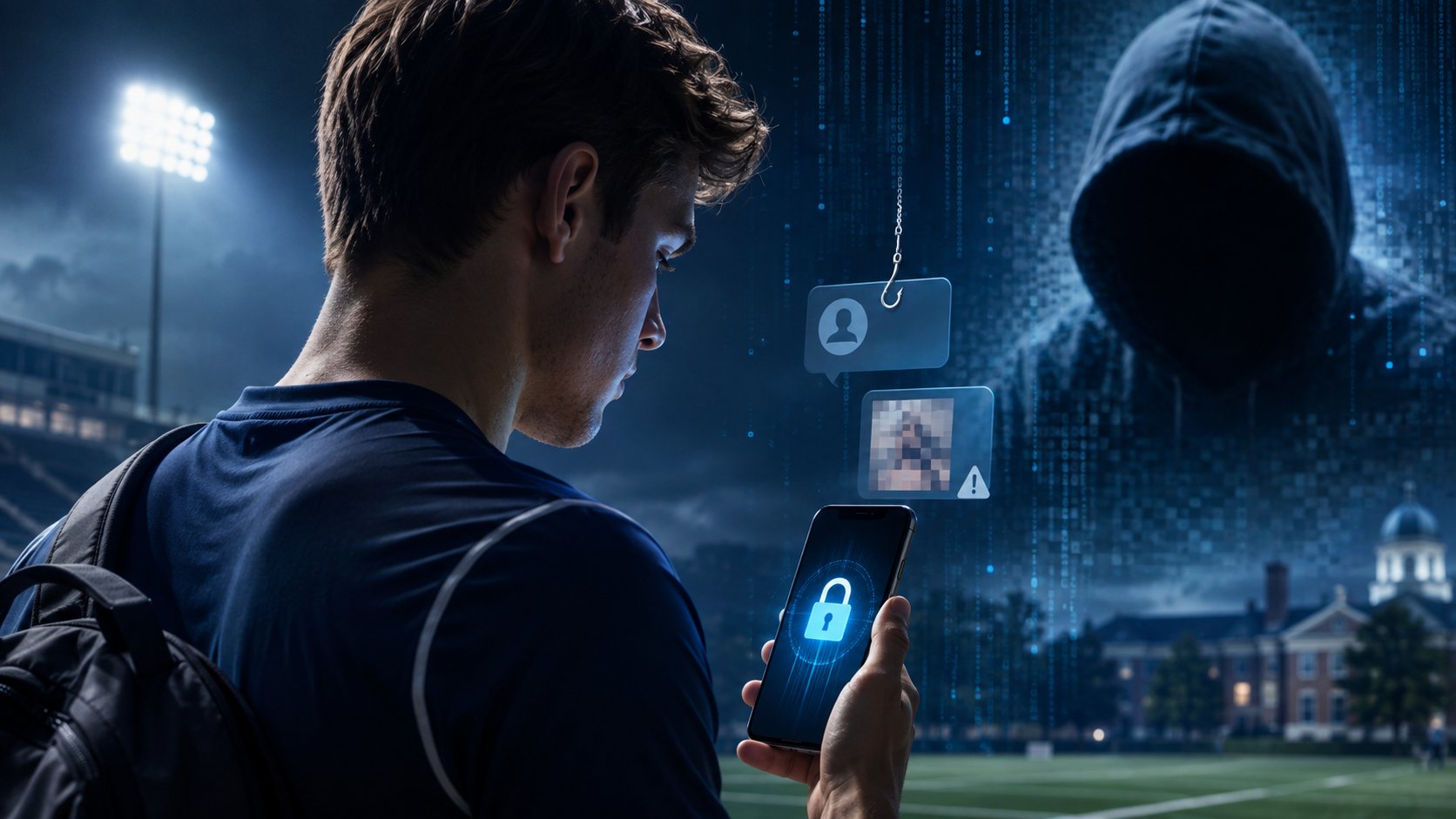
The FBI and NCAA are teaming up to combat cyber-enabled sexual exploitation targeting college athletes as criminals break into online accounts to steal private and intimate photos. Stolen images can be posted or sold online or used for sextortion, harassment, and stalking.
Athletes can be particularly attractive targets because large social-media followings and name, image, and likeness activity increase their public exposure and give criminals more leverage when threatening to release private material. The FBI and NCAA have not disclosed how many athletes have been victimized.
How attackers get into athletes’ accounts
Attackers are using phishing, password and PIN targeting, and fake social-media customer-service requests to gain access. One tactic involves impersonating a platform’s support team and creating urgency around a supposed password reset, a variation of phishing campaigns that impersonate trusted brands to steal credentials.
In March 2025, federal prosecutors indicted former University of Michigan football coach Matthew Weiss on computer-access and identity-theft charges. Prosecutors alleged that Weiss obtained data from athlete databases at more than 100 colleges and universities and used that information and internet research to access the social-media, email, or cloud-storage accounts of thousands of athletes, students, and alumni.
He allegedly downloaded private intimate photographs and videos from compromised accounts. The charges are allegations, and an indictment is not evidence of guilt.
Password reuse can also turn one exposed credential into access to multiple services, a common feature of credential-stuffing attacks involving reused passwords.
How athletes and campus teams can reduce the risk
CISA recommends strong, unique passwords, password managers, multifactor authentication, and heightened awareness of phishing attempts. MFA adds another authentication requirement even when a password has been compromised, while phishing-resistant methods provide stronger protection against attackers trying to capture login credentials.
Athletes should treat unsolicited account-recovery messages with suspicion, verify support requests through a platform’s official app or website, and avoid sharing passwords, PINs, or authentication codes with anyone who contacts them unexpectedly. If an account is compromised, users should change their credentials, review active sessions and recovery settings, and begin the platform’s official account-recovery process.
The FBI advises victims of sextortion or suspicious online approaches to preserve relevant messages, block and report perpetrators, and seek help rather than complying with threats. The bureau also warns that people online may not be who they claim to be and that compromised social-media accounts can be used to impersonate others.
Athletics departments and campus IT teams can incorporate those tactics into security training, particularly for athletes managing high-profile social accounts or NIL activity. A compromised personal account can expose private information while giving an attacker a trusted identity from which to target teammates, staff, or followers.
Victims can report suspected cybercrime or sextortion to the FBI and should preserve evidence before deleting messages or compromised content.
Also read: Our Windows 11 security cheat sheet covers passkeys, BitLocker, Microsoft Defender, and other built-in protections.
>

Formula 1: Cadillac replace team principal Graeme Lowdon with Marcin Budkowski

Why Stream ring-maker Sandbar says the future of AI wearables is voice

X-Men ’97 Ending Explained: What That Credits Scene Means for Season 3
-

 movies3 months ago
Search For Canadian TV Actor Stewart McLean Now Homicide Investigation
-

 Fashion9 years ago
These ’90s fashion trends are making a comeback in 2017
-
Fashion9 years ago
According to Dior Couture, this taboo fashion accessory is back
-
Fashion9 years ago
Model Jocelyn Chew’s Instagram is the best vacation you’ve ever had
-
Fashion9 years ago
Your comprehensive guide to this fall’s biggest trends
-
Fashion9 years ago
9 Celebrities who have spoken out about being photoshopped
-
Fashion9 years ago
Emily Ratajkowski channels back-to-school style
-
Fashion9 years ago
A photo diary of the nightlife scene from LA To Ibiza