
‘Nowhere to Lay My Eyes’
Courtesy of Jeonwonsa Film Co.


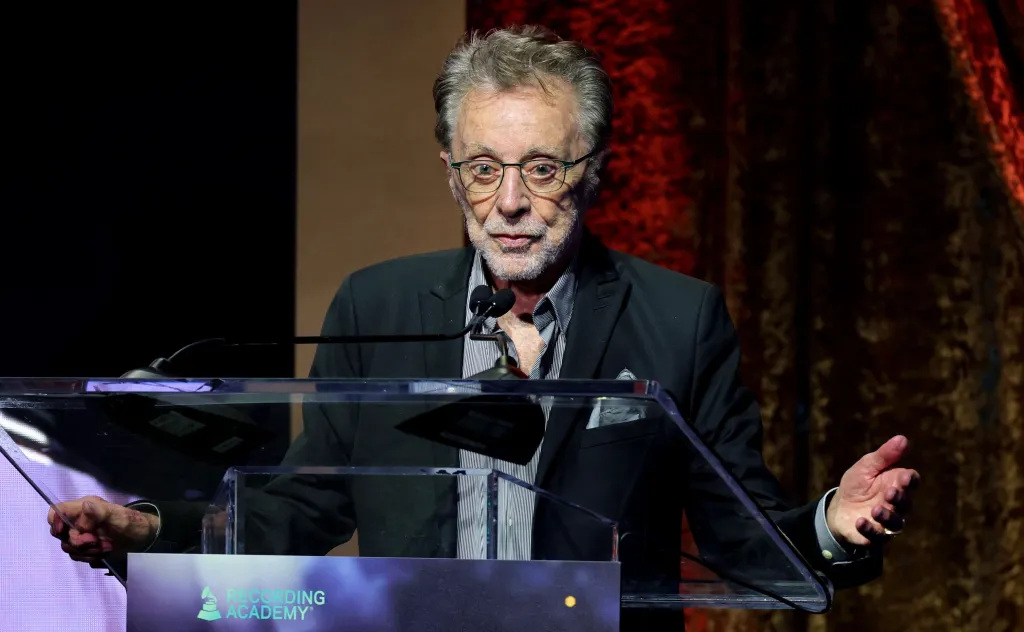
Frankie Valli has a message for anyone predicting his imminent retirement: Not so fast.
After Bobby Valli, the Four Season singer’s brother, recently posted a Facebook message announcing the ailing Frankie’s retirement, the 92-year-old pop icon slapped back. Yesterday, Frankie posted a short and sweet Instagram message: “In spite of what you might have heard, I am not retired. – Frankie.”
The confusion follows Frankie Valli’s decision in May to cancel a 2026 farewell tour due to his ongoing health challenges. He announced at the time, “I’m so sorry to disappoint the folks who have purchased tickets to my shows but I have decided to take the rest of the year off from touring to focus on my health. I’m looking forward to getting healthy and seeing you all again soon. Thank you for all your good wishes.”
Photos of the frail looking singer have since done viral on social media.
Earlier this week, Bobby Valli posted a Facebook message, alongside a 2025 photo of the two brothers, stating, “He has millions of fans who love him dearly. He is now 92 years old. In his illustrious career, he has sold over 100 million records, R&R Hall of Fame. He will now retire. We will always have special memories of Frankie Valli. He has reached a place in his life where his family is there to love, cherish and to be there for him.”
A short time later, Bobby had amended the message, changing “He will now retire” to “In my humble opinion there is the possibility he will stop touring.” The line now reads, “We are all hoping for a speedy recovery and that he can continue to tour and perform his music around the world.”
Yesterday, Bobby posted a message on his now-private Instagram page saying, “I apologize. I was misinformed. I was under the impression my brother Frankie was retiring. Hoping for him to have a speedy recovery to continue his illustrious career!”
All three versions of Bobby’s Facebook messages end with, “He has reached a place in his life where his family is there to love, cherish and to be there for him. We appreciate your love and concern.”
The exact nature of Valli’s health challenges has not been disclosed.
Frankie Valli has been performing for 75 years, reaching his most sustained and widespread success in the 1960s as the lead singer for the hit-making The Four Seasons (“Sherry,” “Walk Like a Man,” “Big Girls Don’t Cry,” among many others songs). The group’s rags to riches story and music was depicted and celebrated in the hit Broadway stage musical Jersey Boys and its subsequent 2014 film adaptation directed by Clint Eastwood.
>
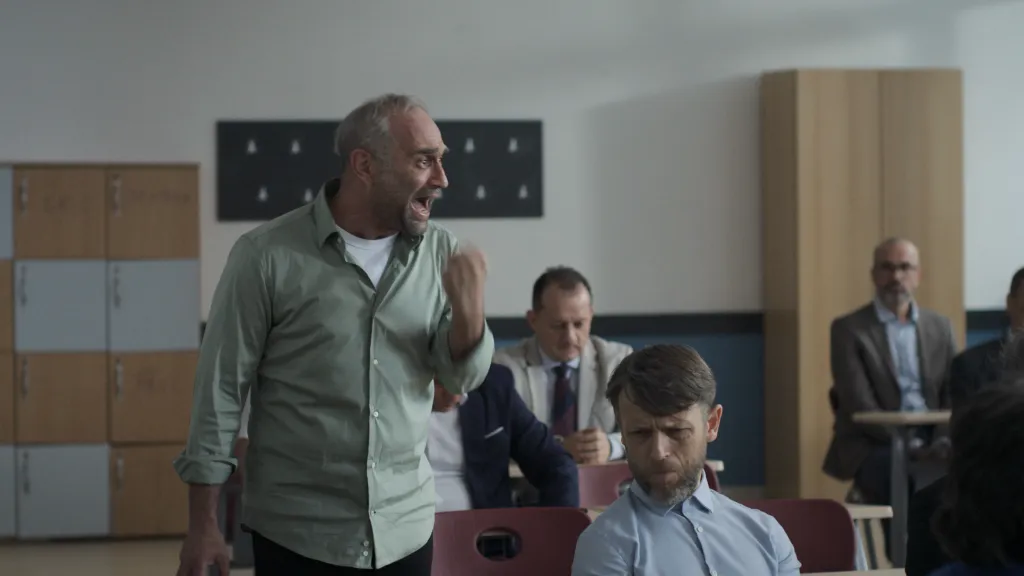
The Pardo d’Oro at the 79th Locarno Film Festival has gone to Florin Șerban’s drama You Don’t Belong Here (Nu E Locul Tau Aici). Scroll down for full list of winners.
The film marks the acclaimed Romanian director’s return to feature filmmaking after eight years. A father-and-son drama, the film was awarded the Pardo d’Oro by the Official Concorso Internazionale Jury “for the strength of its writing, the singularity of its vision, and its exceptional command of cinematic language.”
The movie follows a physician who is crushed when police suspect his teenage son of murdering an old Romani man. He then discovers his son has a secret life vandalizing cars with masked vigilantes.
Meanwhile The Riverbank (A Margem do Rio) by Matheus Farias and Enock Carvalho won the Special Jury Prize, while the Pardo for Best Direction went to Hong Sangsoo for Nowhere to Lay My Eyes (Nun Dul Dega Eomne).
The two Best Performance Awards were given respectively to Kim Minhee for Nowhere to Lay My Eyes and to Monica Bellucci for Ketticè by Giovanni Tortorici. The Pardo d’Oro in the Concorso Cineasti del Presente and the Swatch First Feature Award were both awarded to The Illusion of an Everlasting Summer (La Iusión de un Verano Sin Fin) by Alessandra Sanguinetti.
Giona A. Nazzaro, Artistic Director of the festival, said: “A vital and contemporary slate of awards, in close dialogue with the transformations in the industry and in our world today. Whether in highlighting the Romania of You Don’t Belong Here, or the Brazil of The Riverbank, or the South Korea of Nowhere to Lay My Eyes, the jury upheld the primacy of form and of language, while remaining, in its choices, completely accessible, as the packed and engaged screenings of all competitions demonstrated throughout the festival.”
The closing night in Piazza Grande, on Saturday August 15, will be rounded off with the ceremony for the Prix du Public UBS before the screening of the closing film Ni Vue, Ni Connue (All About Corinne) by Marc Fitoussi with Isabelle Huppert and Sandrine Kiberlain.
This year’s international competition jury was overseen by Belgian filmmaker Fabrice Du Welz.
The 80th Locarno Film Festival has been set to take place from 4 to 14 August 2027.
Full list of Locarno winners (as provided by the festival)
Official Awards
LOCARNO79 OFFICIAL SELECTION
Concorso Internazionale
Concorso Cineasti del Presente
Pardi di Domani
Locarno Kids Screenings
CROSS-SECTION AWARDS
Swatch First Feature Award
Pardo for Change
Independent Juries Awards
Ecumenical Jury Prize
FIPRESCI Prize
Europa Cinemas Label
Junior Jury Awards
Semaine de la Critique Awards
Concorso Internazionale
The official Concorso Internazionale Jury of the 79th Locarno Film Festival composed of:
Jury President
Fabrice Du Welz, Director (Belgium)
Jury Members
Marco Alessi, Producer (Italy)
Lolita Chammah, Actress (France, Italy)
Paulina García, Actress (Chile)
Olivier Père, Executive Director – ARTE France Cinéma and Head of the Cinema Unit – ARTE France (France)
awarded the following prizes:
Pardo d’Oro – Grand Prize of the Festival and City of Locarno
CHF 75,000 to be shared equally between the director and the producer, to:
NU E LOCUL TAU AICI (YOU DON’T BELONG HERE) by Florin Șerban, Romania
Special Jury Prize – Cities of Ascona and Losone
CHF 30,000 to be shared equally between the director and the producer, to:
A MARGEM DO RIO (THE RIVERBANK) by Matheus Farias, Enock Carvalho, Brazil/Germany
Pardo for Best Direction – City and Region of Locarno
CHF 20,000 to the director, to:
Hong Sangsoo for NUN DUL DEGA EOMNE (NOWHERE TO LAY MY EYES), South Korea
Pardo for Best Performance
to Kim Minhee for NUN DUL DEGA EOMNE (NOWHERE TO LAY MY EYES) by Hong Sangsoo, South Korea
Pardo for Best Performance
to Monica Bellucci for KETTICÈ by Giovanni Tortorici, Italy
Special Mention
to Xavier Bergeron for VIOLENCE DU CORPS DE L’AUTRE by Denis Côté, Canada
Special Mention
to Teodor Butănescu for NU E LOCUL TAU AICI (YOU DON’T BELONG HERE) by Florin Șerban, Romania
Concorso
Cineasti del Presente
The official Concorso Cineasti del Presente Jury of the 79th Locarno Film Festival
composed of:
Jury Members
Afef Ben Mahmoud, Actress, director, producer (Tunisia)
Radovan Síbrt, Producer and director (Czech Republic)
Margherita Spampinato, Director, screenwriter, editor (Italy)
awarded the following prizes:
Pardo d’Oro – Concorso Cineasti del Presente
CHF 35,000 to be shared equally between the director and the producer, to:
LA ILUSIÓN DE UN VERANO SIN FIN by Alessandra Sanguinetti, Argentina/USA
Best Emerging Director Award – City and Region of Locarno
CHF 20,000 to the director to:
Beatrice Gibson for AT NIGHT, United Kingdom/France
Special Jury Prize CINE+OCS
A promotional campaign to the value of CHF 25,000 on CINE+OCS channels at the time of its theatrical release in France, to:
REVOLUTIONARIES NEVER DIE by Mohanad Yaqubi, Palestine/Belgium/Qatar
Pardo for Best Performance
to Idrissu Tontie Jr. for EGO REACH WE ALL (OUR TIME WILL COME) by Amartei Armar, Ghana/France/Saudi Arabia
Pardo for Best Performance
to Manal Issa for L’ESTIVE by Naël Khleifi, Lisa Debauche, Belgium/France
Special Mention
to LOS DÍAS LIBRES by Lucila Mariani, Argentina/Brazil/Mexico/France
Special Mention
to HANABI by Ana Vaz, France/Brazil
Pardi di Domani
The official Pardi di Domani Jury of the 79th Locarno Film Festival
composed of:
Jury Members
Mounia Akl, Director (Lebanon)
Steven Markovitz, Producer (South Africa)
Antonio Piazza, Director (Italy)
awarded the following prizes:
Concorso Corti d’Autore
Pardino d’Oro WePresent by WeTransfer for the Best Auteur Short Film
CHF 15,000 to the director, to:
THE BOVINE COMEDY by Ratchapoom Boonbunchachoke, France
Special Mention
to ET SI THUY N’EXISTAIT PAS by Carlo Francisco Manatad, Philippines/France/Indonesia
Concorso Internazionale
Pardino d’Oro Arts3 Foundation for the Best International Short Film
CHF 10,000 to the director, to:
MELK by Filip Anthonissen, Belgium
Pardino d’Argento Arts3 Foundation for the International Competition
CHF 5,000 to the director, to:
KHUFU by Mahmoud Assi, Egypt/France/Sweden/Canada
Pardino for the Best Direction WeShort for the International Competition
CHF 5,000 to the director, to:
MUTRION by Marco Cavazzin, Italy
Locarno Short Film Candidate for the European Film Awards
to MELK by Filip Anthonissen, Belgium
Special Mention
to LAS DAMAS by Camille Zéhenne, France
Concorso Nazionale
Pardino d’Oro SRG SSR for the Best Swiss Short Film
CHF 10,000 to the director, to:
TYPHOON MAMBO by Domenico Singha Pedroli, Switzerland/France/Thailand
Pardino d’Argento SRG SSR for the National Competition
CHF 5,000 to the director, to:
ALLES GUTE by Patricia Strübin, Switzerland
Best Swiss Newcomer Award
which provides equipment and services offered by Downtown Studio (CHF 10,000) and Taurus Studio (CHF 2,000), to:
RESPIRER UNE FOIS SUR TROIS by Charlyne Genoud, Switzerland
Locarno Kids Screenings
The official Locarno Kids Screenings Jury of the 79th Locarno Film Festival composed of:
13 young Jury Members aged between 11 and 15
Carolina Bubba
Maeva Caterino
Leone Cofrancesco
Teresa Faré
Massimo Keller
Elia Longhi
Serena Lydon
Valentina LydoGiacomo Perrone
Mikaela Riaboshtan
Jacopo Rigoni
Viola Rigoni
Anna Zitarelli
awarded the following prizes:
Locarno Kids Award la Mobiliare
CHF 15,000 to the director, to:
PARADEISA by Marleen Valien, Germany
First Feature
The official First Feature Jury of the 79th Locarno Film Festival
composed of:
Jury Members
Matthieu Darras, Film lab director (France)
Sung Moon, Programmer (Republic of Korea)
Klaudia Reynicke, Filmmaker (Switzerland/Peru)
awarded the following prizes:
Swatch First Feature Award
CHF 15,000 to the director, to:
LA ILUSIÓN DE UN VERANO SIN FIN by Alessandra Sanguinetti (Argentina/USA)
Pardo for Change
Founded together with WWF, supported by ARX and Wyss Academy For Nature
The official Pardo for Change Jury of the 79th Locarno Film Festival
composed of:
Jury Members
Gianluca Grossi, Reporter and writer (Switzerland)
Mo Harawe, Filmmaker and screenwriter (Somalia/Austria)
Seta Thakur, Head of Communications and Social Innovation,
Wyss Academy for Nature (Switzerland)
awarded the following prize:
Pardo for Change
CHF 20,000 to the director, to:
EGO REACH WE ALL (OUR TIME WILL COME) by Amartei Armar, Ghana/France/Saudi Arabia
Special Mentions (Feature Film)
to LOS NUEVOS by Rodrigo Plá, Mexico/Spain
Special Mentions (Short Film)
to PRIVATE PROPERTY by Deepak Rauniyar, USA/Nepal/France/Australia
Independent Juries and Awards
Ecumenical Jury Prize
Jury Members
Viera Pirker, Jury President (Germany)
Jean-Luc Gadreau (France)
Juha Rajamäki (Finland)
Sarah Stutte (Switzerland)
The Ecumenical Jury awarded its prize, offered by the Reformed Churches and the Catholic Church of Switzerland, to the value of CHF 10,000 to the director:
Hong Sangsoo for NUN DUL DEGA EOMNE (NOWHERE TO LAY MY EYES), South Korea
FIPRESCI Prize
(International Federation of Film Critics)
Jury Members
Sona Karapoghosyan, Jury President (Armenia)
Mihai Fulger (Romania)
Virat Nehru (Australia)
Georgios Papadimitriou (Greece)
Anne-Sophie Scholl (Switzerland)
The International Federation of Film Critics awarded the International Critics’ Prize (FIPRESCI Prize) to:
LEJOS DE LOS ÁRBOLES (FAR FROM THE TREES) by Meritxell Colell Aparicio, Spain/Peru/Italy
Europa Cinemas Label
Jury Members
Züleyha Azman (The Netherlands)
Erika Borsos (Austria)
Joyce Palmers (Belgium)
Tomasz Poborca (Poland)
The Jury has awarded the Europa Cinemas Label, intended to enhance the circulation of a European film chosen amongst those of the Concorso Internazionale and the Concorso Cineasti del Presente on the screens of the Europa Cinemas network, to:
NU E LOCUL TAU AICI (YOU DON’T BELONG HERE) by Florin Șerban, Romania
Junior Jury Awards
The jury members are selected from the participants in the Cinema & Gioventù initiative, organized by Bellinzona’s Castellinaria Festival del cinema giovane on behalf of the Dipartimento dell’educazione, della cultura e dello sport (DECS) of the Canton Ticino.
The first Junior Jury, composed of Vittorio Di Angelo, Francesco Maria Ippoliti, Virginia Barbacini, Alessia Nunziante, Vittoria Soldaini, Julian Muller, Edoardo Ravina, awarded the following prizes to the three best directors in the Concorso Internazionale:
First Prize (CHF 6,000)
NU E LOCUL TAU AICI (YOU DON’T BELONG HERE) by Florin Șerban, Romania
Second Prize (CHF 4,000)
VIOLENCE DU CORPS DE L’AUTRE (NOBODY’S VIOLENCE) by Denis Côté, Canada
Third Prize (CHF 2,000)
MANHUNT by Wayne Wapeemukwa, Canada
“The Environment is Quality of Life” Prize (CHF 3,000)
offered by the Ticino Department of Internal Affairs:
I RARELY WAKE UP DREAMING by Isabelle Stever, Germany/Ukraine
Special Mention
to D’ICI LÀ by Sarah Leonor, France
The second Junior Jury, composed of Ginevra Gennari, Valentina Verre, Elia Privet, Linda Jam, Maïa Monnet, Clement De Castelberg, Letizia Marrone, assigned a prize of CHF 2,000 to the best film shown in the section Concorso Cineasti del Presente, to:
TEAR GAS by Uta Beria, Georgia/France/Germany
Special Mentions
LA ILUSIÓN DE UN VERANO SIN FIN (THE ILLUSION OF AN EVERLASTING SUMMER) by Alessandra Sanguinetti, Argentina/USA
The third Junior Jury, composed of Ilaria Bosco, Amy Negro, Tania Bignasca, Zoe Thunman, Veselina Tchimova, Beatrice Cereda, awarded the following two prizes, worth CHF 1,500, to the best short films in the Concorso Internazionale and in the Concorso Nazionale of the Pardi di Domani section, one prize to the best short film in the Concorso Corti d’Autore, and the “The environment is quality of life” Prize – worth CHF 2,000 and offered by the Ticino Department of Internal Affairs of the Cantone Ticino – to a short film in the section Open Doors Screenings to:
Pardi di Domani
Concorso Internazionale
HERSHEWE FAZANAWERD (FORGOTTEN SPACEMAN) by Elham Ehsas, United Kingdom/Afghanistan
Concorso Nazionale
RESPIRER UNE FOIS SUR TROIS by Charlyne Genoud, Switzerland
Concorso Corti d’Autore
ÃSHEGHETAM by Filmsaazs, France/Switzerland/Iran
Special Mention – Concorso Internazionale
PREMIER FEU by Blanca Camell Galí, France/Spain
Special Mention – Concorso Corti d’Autore
THE BOVINE COMEDY by Ratchapoom Boonbunchachoke, France
Open Doors Screenings
“The Environment is Quality of Life” Prize
CONCRETE MOVES by Fagamou Fama Ndiaye, Senegal
Semaine de la Critique Awards
Jury Members
Olmo Cerri (Switzerland)
Barbara Miller (Switzerland)
Bettina Oberli (Switzerland)
The Jury has awarded the following prizes:
Grand Prix Semaine de la Critique – Prix SRG SSR
CHF 5,000 to the director and the producer, to:
A TERAZ WIOSNA (BLOSSOMING) by Kamila Serwicka, Poland
Marco Zucchi Award
CHF 2,000 to the formally and most aesthetically innovative documentary, to:
SEUL LE SERPENT SAIT (ONLY THE SERPENT KNOWS) by Olivier Séror, Martin Verdet, France
>
The winners are in, as the 79th edition of the Locarno Film Festival revealed its 2026 awards and special mentions in the Swiss town on Saturday.
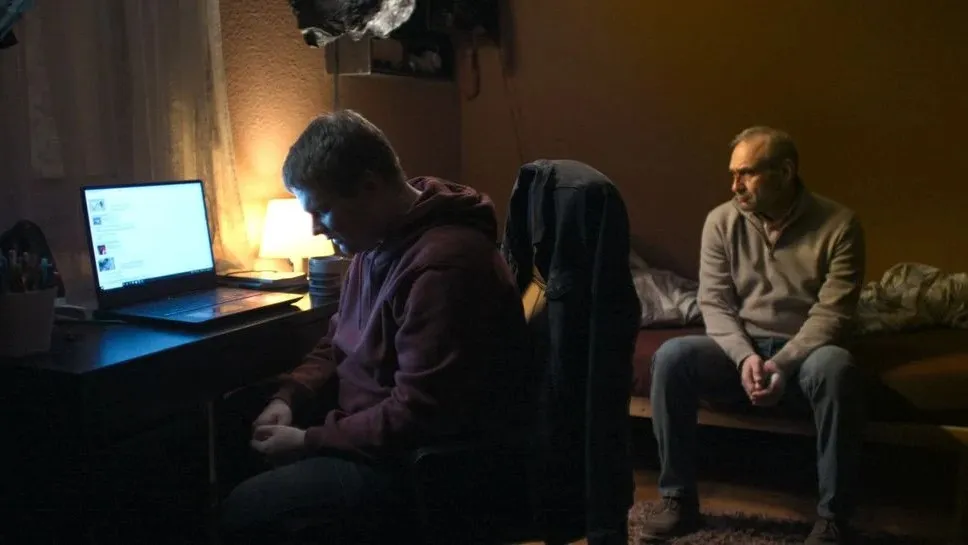
In the international competition, Romanian director Florin Șerban’s Nu E Locul Tau Aici (You Don’t Belong Here) was honored with the Pardo d’Oro, or Golden Leopard.
The father-son drama, set in a small town, revolves around a man raising his teenage son, Ioan, alone after the death of his wife. He doesn’t know that his son gets up at night to cycle through town and vandalize cars with a gang of masked vigilantes. His world is shaken when he learns that the police suspect his son of murder.
The film marks the Romanian director’s return to feature filmmaking after eight years. The jury lauded it “for the strength of its writing, the singularity of its vision, and its exceptional command of cinematic language.”
Meanwhile, the Pardo, or Leopard, for best director was awarded to Hong Sangsoo for Nun Dul Dega Eomne (Nowhere to Lay My Eyes). And among the performance honors, Monica Bellucci received one for her role in Giovanni Tortorici’s Ketticè.
In the Filmmakers of the Present Competition, La Ilusión De Un Verano Sin Fin (The Illusion of an Everlasting Summer) by Alessandra Sanguinetti was honored with the Golden Leopard.
‘Nowhere to Lay My Eyes’
Courtesy of Jeonwonsa Film Co.
Said Locarno artistic director Giona A. Nazzaro: “A vital and contemporary slate of awards, in close dialogue with the transformations in the industry and in our world today. Whether in highlighting the Romania of You Don’t Belong Here, or the Brazil of The Riverbank, or the South Korea of Nowhere to Lay My Eyes, the jury upheld the primacy of form and of language, while remaining, in its choices, completely accessible, as the packed and engaged screenings of all competitions demonstrated throughout the festival.”
Other Locarno 2026 awards were bestowed upon Beatrice Gibson for At Night and Revolutionaries Never Die by Mohanad Yaqubi, among others.
The fest’s closing night will take place in the picturesque Swiss town’s Piazza Grande on Saturday, with Marc Fitoussi’s Ni vue, ni connue (All About Corinne), starring Isabelle Huppert, Sandrine Kiberlain, Anne Marivin, Emmanuelle Bercot and Diane Kruger, as the closing film.
Check out the full list of Locarno 2026 winners below.
Concorso Internazionale (International Competition)
Pardo d’Oro – Grand Prize of the Festival and City of Locarno
CHF 75,000 to be shared equally between the director and the producer
Nu E Locul Tau Aici (You Don’t Belong Here) by Florin Șerban, Romania
Special Jury Prize – Cities of Ascona and Losone
CHF 30,000 to be shared equally between the director and the producer
A Margem do Rio (The Riverbank) by Matheus Farias, Enock Carvalho, Brazil/Germany
Pardo for Best Direction – City and Region of Locarno
CHF 20,000 to the director
Hong Sangsoo for Nun Dul Dega Eomne (Nowhere to Lay My Eyes), South Korea
Pardo for Best Performance
Kim Minhee for Nun Dul Dega Eomne (Nowhere to Lay My Eyes) by Hong Sangsoo, South Korea
Pardo for Best Performance
Monica Bellucci for Ketticè by Giovanni Tortorici, Italy
Special Performance Mentions
Xavier Bergeron for Violence du Corps de L’Autre by Denis Côté, Canada
and
Teodor Butănescu for Nu E Locul Tau Aici (You Don’t Belong Here) by Florin Șerban, Romania
Concorso Cineasti del Presente (Filmmakers of the Present Competition)
Pardo d’Oro – Concorso Cineasti del Presente
CHF 35,000 to be shared equally between the director and the producer
La Ilusión De Un Verano Sin Fin (The Illusion of an Everlasting Summer) by Alessandra Sanguinetti, Argentina/USA
Best Emerging Director Award – City and Region of Locarno
CHF 20,000 to the director
Beatrice Gibson for At Night, United Kingdom/France
Special Jury Prize CINE+OCS
A promotional campaign to the value of CHF 25,000 on CINE+OCS channels at the time of its theatrical release in France
Revolutionaries Never Die by Mohanad Yaqubi, Palestine/Belgium/Qatar
Pardo for Best Performance
Idrissu Tontie Jr. for Ego Reach We All (Our Time Will Come) by Amartei Armar, Ghana/France/Saudi Arabia
Pardo for Best Performance
Manal Issa for L’Estive (Summer Meadow) by Naël Khleifi, Lisa Debauche, Belgium/France
Special Mentions
Los Días Libres (The Days Off) by Lucila Mariani, Argentina/Brazil/Mexico/France
and
Hanabi (Fire Flower) by Ana Vaz, France/Brazil
Pardi di Domani (Leopards of Tomorrow)
Concorso Corti d’Autore Pardino d’Oro WePresent by WeTransfer for the Best Auteur Short Film
CHF 15,000 to the director
The Bovine Comedy by Ratchapoom Boonbunchachoke, France
Special Mention
Et si Thuy n’existait pas (And if Thuy Didn’t Exist) by Carlo Francisco Manatad, Philippines/France/Indonesia
Concorso Internazionale Pardino d’Oro Arts3 Foundation for the Best International Short Film
CHF 10,000 to the director
Melk by Filip Anthonissen, Belgium
Pardino d’Argento Arts3 Foundation for the International Competition
CHF 5,000 to the director
Khufu by Mahmoud Assi, Egypt/France/Sweden/Canada
Pardino for the Best Direction WeShort for the International Competition
CHF 5,000 to the director
Mutrion by Marco Cavazzin, Italy
Locarno Short Film Candidate for the European Film Awards
Melk by Filip Anthonissen, Belgium
Special Mention
Las Damas by Camille Zéhenne, France
Concorso Nazionale Pardino d’Oro SRG SSR for the Best Swiss Short Film
CHF 10,000 to the director
Typhoon Mambo by Domenico Singha Pedroli, Switzerland/France/Thailand
Pardino d’Argento SRG SSR for the National Competition
CHF 5,000 to the director
Alles Gute (Take Care) by Patricia Strübin, Switzerland
Best Swiss Newcomer Award
Equipment and services offered by Downtown Studio (CHF 10,000) and Taurus Studio (CHF 2,000)
Respirer Une Fois Sur Trois by Charlyne Genoud, Switzerland
OTHER AWARDS
Swatch First Feature Award
CHF 15,000 to the director
La Ilusión De Un Verano Sin Fin (The Illusion of an Everlasting Summer) by Alessandra Sanguinetti
Pardo for Change
CHF 20,000 to the director
Ego Reach We All (Our Time Will Come) by Amartei Armar
Special Mentions
Los Nuevos (The Newcomers) by Rodrigo Plá, Mexico/Spain
and
Private Property by Deepak Rauniyar, USA/Nepal/France/Australia
Locarno Kids Award la Mobiliare
CHF 15,000 to the director
Paradeisa by Marleen Valien, Germany
Independent Juries and Awards
Ecumenical Jury Prize
CHF 10,000 to the director
Hong Sangsoo for Nun Dul Dega Eomne (Nowhere to Lay My Eyes), South Korea
FIPRESCI Prize (International Federation of Film Critics)
Lejos de Los Árboles (Far from the Trees) by Meritxell Colell Aparicio, Spain/Peru/Italy
Europa Cinemas Label
Nu E Locul Tau Aici (You Don’t Belong Here) by Florin Șerban, Romania
Semaine de la Critique Awards (Critics’ Week)
Grand Prix Semaine de la Critique – Prix SRG SSR
CHF 5,000 to the director and the producer
A Teraz Wiosna (Blossoming) by Kamila Serwicka, Poland
Marco Zucchi Award
CHF 2,000 to the formally and most aesthetically innovative documentary
Seul Le Serpent Sait (Only the Serpent Knows) by Olivier Séror, Martin Verdet, France
Junior Jury Awards
International Competition
First Prize (CHF 6,000)
Nu E Locul Tau Aici (You Don’t Belong Here) by Florin Șerban, Romania
Second Prize (CHF 4,000)
Violence du Corps de L’Autre by Denis Côté, Canada
Third Prize (CHF 2,000)
Manhunt by Wayne Wapeemukwa, Canada
“The Environment Is Quality of Life” Prize
CHF 3,000 offered by the Ticino Department of Internal Affairs
I Rarely Wake Up Dreaming by Isabelle Stever, Germany/Ukraine
Special Mention
D’Ici Là by Sarah Leonor, France
Pardi di Domani
International Competition
Hershewe Fazanawerd (Forgotten Spaceman) by Elham Ehsas, United Kingdom/Afghanistan
National Competition
Respirer Une Fois Sur Trois by Charlyne Genoud, Switzerland
Auteur Short Films
Ãsheghetam by Filmsaaz, France/Switzerland/Iran
Special Mention – International Competition
Premier Feu (First Fire) by Blanca Camell Galí, France/Spain
Special Mention – Auteur Short Films
The Bovine Comedy by Ratchapoom Boonbunchachoke, France
Open Doors Screenings – “The Environment Is Quality of Life” Prize
Concrete Moves by Fagamou Fama Ndiaye, Senegal
h
>
When Lindsey Ryan showed producers an early draft of her script for Capsized, everyone was in agreement: She must be insane.
“And it’s true,” the American director laughs over Zoom in late July. We’re catching up ahead of the world premiere of her debut feature film at one of Britain’s most prestigious film festivals in Edinburgh. The weight of taking a competition title to the Scottish capital is not lost on her, even if she admits the high-risk (and high-reward) project was quite the feat. “I literally did all the things you’re not supposed to do,” she continues. “It’s almost a cliché to say that. But I had an animal. I had children. I had a boat. I’ve disobeyed the Film God laws.”
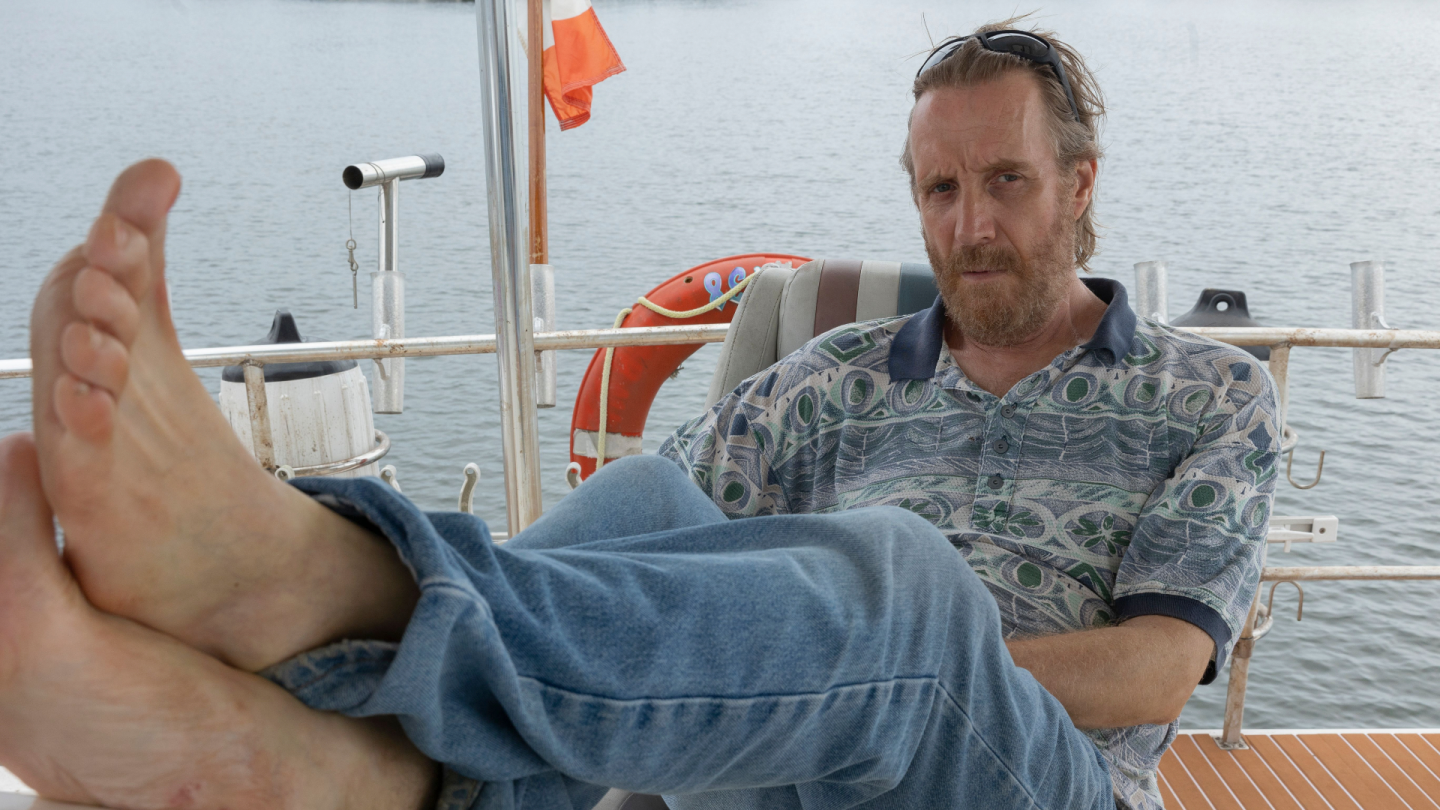
If anything, the Film Gods were totally rooting for Ryan and Capsized. It follows an idyllic houseboat trip thrown into disarray when Diane (Lily Rabe) and her five children (Sarah Catherine Hook of The White Lotus fame, Griffin Gluck, Eli D Goss, Ada Bland and Joan Stein) are rocked by revelations of financial strife kept secret by the at times charming, mostly chaotic family patriarch, Ray (Rhys Ifans). At sea and with a choppy holiday ahead of them, they face a struggle to stay afloat, emotionally and financially — but not before competing in an epic fishing competition.
Shot on a real boat out at sea, with the children contracted for no more than four hours of filming a day and a dangerously small hamster on deck, some filmmakers might have been a little daunted by what Ryan and her crew were attempting to do. (It certainly didn’t help that the Coast Guard was keeping a keen eye on their every move.) But if anyone was to pull it off, Ryan — who grew up in Long Island and could drive a boat before she could drive a car — would have been the safest bet. “I have accidentally become the expert boat filmmaker,” she tells THR, listing Jaws and Gilligan’s Island among some of her maritime inspirations. “The sea theme is very prevalent in my life — I’m just always called to it. I think that the world is so enchanting. It’s totally an obsession.”
Capsized is an American indie humming with humor, heart and nuance — so richly textured you can almost taste the sea salt — and, as it just so happens, fits perfectly with Edinburgh’s reputation for finding fresh, inventive voices. Below, Ryan talks about luring Ifans and Rabe on board, why her antagonist captures such a specific subset of American culture, and how the current state of the U.S. film industry gives way to some bananas, outside-the-box filmmaking: “We want stories that are fresh again… and I think that where there’s a will, there’s a way.”
Your last film, a short called Seasick, is also set on board a boat. Do you have a personal attachment to this setting? Did you grow up on the coast?
Yeah. It’s funny. I have accidentally become the expert boat filmmaker. (Laughs.) Even [in] my early work, when I was experimenting and when I got my first camera, every piece I’ve ever made is on a boat in the middle of the ocean and every single time I do it, it’s insane. Why don’t I just try something on land? (Laughs.) And then somehow I find myself on a boat again.
But I grew up in a big fishing family and where I’m from in Long Island, just outside of the city, it’s called the South Shore of Long Island. So I grew up always being on the sea, always being on a boat. I was a deckhand in one of my earlier jobs. So the sea theme is very prevalent in my life, for sure. I’m working on this other big project that, of course, is seafaring the Atlantic coast. A crazy story. That’s big and exciting, but I love anything with the ocean and maritime themes.
Do you think you’ll keep that as a running theme through your filmography now?
I do. I’m just always called to it. I think that the world is so enchanting. It’s an obsession. It’s totally an obsession. There are ideas for me that are outside of the seafaring, maritime setting, but any time [something on the sea] comes up, it’s always a project that feels so near and dear. But I love movies that have these really unique backdrops and then you get to explore characters. It often ends up being a maritime thing for me, but I also love a desert landscape. Really unique environmental geographies are what I’m drawn to for sure, and water probably being the north star of it all.
The cast of Lindsey Ryan’s ‘Capsized.’
Courtesy of EIFF
When you were honing your craft and working towards becoming a filmmaker, who or what projects were formative for you in this genre?
My most obvious is Jaws. That movie, for me, is perfection. I love Jaws with such a passion. It’s terrifying, and I just remember being so gripped. [I remember] watching that movie young, being terrified of the water from that moment after, and just falling in love with the textures of that too — a seaside community, interesting characters. That’s everything: getting to meet the wacky characters of a place. I’m trying to think of another. [Mutiny on the Bounty] I really loved. Marlon Brando did something so interesting in that movie, and I remember feeling like his performance was a new wave of performance for actors. He brought this contemporary thing to this otherwise very theatrical film. This is gonna be such a crazy answer, but Gilligan’s Island. I continuously go back to the colors of that, the way that it feels campy and nostalgic and trapped on an island. So [I’m] definitely influenced by the major nautical movies and all this early Spielberg stuff for me.
It must pose quite the logistical headache, filming on a boat. Is your job made more practically difficult?
I mean, I learned to drive a boat before I could drive a car. I’m fortunate that people in my life had boats and [I’m] able to tell where I am because I know what buoy I’m off of. I speak the language of the water in such an interesting way, and there’s no doubt that that has been an extreme benefit in shooting out at sea. Because I’m super familiar with what it’s going to take. But it does pose an interesting challenge because then you find yourself the expert amongst your film crew, and you’re trying to direct and have your creative necessities. But then with Capsized, we had a marine coordinator, and they were a good partner, but even still, their experience lacked on the filmmaking front. So there’s this interesting gap that I kept finding myself filling of like, “Oh guys, we can’t run this scene because the water’s shallow right here. So we have two minutes of time before we’re running aground.”
There are just things that you need to know about boats, and I feel like you could apply that logic across any obscure craft or hobby. Like even with a familiarity of boats, the challenges that come within the environment being ever-changing is really difficult — add kids and an ensemble cast to that and it’s next-level challenging.
And in Capsized, this were no effects or anything. You filmed aboard the boat the whole time?
The whole thing was practically shot, which was pretty big for a first-time filmmaker — to be pushing the practical shooting of it all. I had the greatest producing team on this film, Paul Mezey and Sam Scolarici, Dan Janvey and our other producers [too]. But Paul and Sam were the best duo in letting me have the craziest thought and being like, “Okay, well let’s see how close we can get to actually what is in this crazy person’s mind.” And for me, you can’t capture the sea. The way that the sun hits the side of your boat and creates a harsh sunlight, the way that it glimmers on the water… There’s so much about that experience and the textures of that are so important to me.
When did you know this story was going to be your first feature film?
I just was like, “Of course I have to make this movie.” I’ve known people that have these houseboats, and Long Island is such a specific place. The patriarchy is very strong out here in a very interesting way, [and] you can observe it in one of three marriages. It’s like an old piece of society’s fabric that maybe just continues to carry through very strongly in Long Island. I just became obsessed with this idea of these women sustaining these insane behaviors, especially of the fishermen, that rough, gruff type. What really got under my skin was just watching all of these women battle these battles and the feminine perspective on what it is to realize that you don’t have to [put up with] that. The setting of being on a boat and what that does to a family dysfunction story… I liked the idea of not letting them run any further because you’re literally trapped on the last phase of this journey together.
Well, one of my questions is about Rhys’ character and his marriage to Lily’s. He’s completely dismissive of her, but there’s this odd debt of gratitude she feels she owes him. There’s an emotional trapping just as much as a physical one.
Yeah, and the cost of organizing around one person’s gravity. I think that dynamic is transferable across so many things. Friendships have this in an interesting way — maybe there’s that one person in a friendship group [who] can just control everyone in the room because you know you’re avoiding the fight, or you don’t want to deal with that person’s psyche a bit.
Lily Rabe and Rhys Ifans do such an incredible job. They’re both such amazing actors. The way that they respond to each other and the way that Diane slowly has this metamorphosis, by way of her daughter helping her get there… And parenting your parent, that was a big theme for me too. Like, when you become an adult, it’s the first time you see your parent as an adult, and what does that look like? What does it look like when you realize, “Oh, my parent is a flawed person and I never realized it.” How does that shape you?
And Ray is the antagonist of this film, but I suppose the thing with these men is they are also charming and charismatic. By the end, is he a man beyond redemption? Maybe not. How did you want to frame that?
That’s a very keen observation because that’s exactly what I intended. That was a really, really tricky thing to to navigate too because you’re constantly calibrating so many of the characters, and when you have an antagonist, finding that balance of when are we enjoying him and when are we just withstanding him [is difficult]. It was about finding these moments, like when Ray is doing the Ray thing and he found them a way to be at this beautiful yacht club and enjoy this vacation, and then in the same day he blows it all up and they have to go. Ray is his own worst enemy in every situation. And I think that the duality of this movie is it’s not black and white. He’s not all good and he’s not all bad, and I think that like you can feel that thread in every interaction with Ray. You’re just getting to root for him, and then he does the Ray thing, and you’re like, “Jeez, Louise, come on!”
Lindsey Ryan, director of ‘Capsized,’ says she felt “insane” for making the film aboard a real boat.
Publicity
Such a testament to Rhys’ performance too. How did you gather such a wonderful cast, and how can that propel a debut filmmaker?
We were really, really lucky to have an amazing casting director, Susan Shopmaker, and my creative producing partner, Sam. We’re together in life too, so it’s a great balance: Her brain understands my brain so so so deeply. I think we had seen Rhys in a few things. We just felt he had this ability to be so charming, and then turn on a dime. And there was something so alive about everything that he does as an actor. Because Ray could be very one note in the wrong hands, and I think Rhys’s ability to just be so complex is what immediately [made us think] he’s our guy and we were really hopeful that he connected with the script, because not everyone wants to play the bad guy. He made a brave choice in doing that and did truly amazing work. Like, he is Welsh. He does an incredible American accent. He sounds exactly like this part of Long Island.
Lily Rabe, I have been a fan of [hers] for so long. She carries so much pathos in her performances. She can give a look that just says everything, and I was super interested in that because Diane is a character who’s been quieted. Diane is a character who’s been tucked away. She’s tucked away her own needs for everyone else around her, and I think Lily has this ability to just compartmentalize a performance, and then find a strength unlike any other. I just knew Lily was going to be the person who can, again, navigate those different hemispheres of the character, and I thought together they would just be electric with their theater backgrounds. And, surely, they were.
It must have been pretty tricky filming with the kids. A lot of health and safety forms filled out…
It was hard. It’s funny because when we were getting the script in front of people in the early stages, people were like, “Oh, this is actually insane. You’re crazy.” (Laughs.) And it’s true. I literally did all the things you’re not supposed to do, and it’s almost a cliché to say that. But I had an animal. I had children. I had a boat. I’ve disobeyed the Film God laws. What was really challenging is we can only have the kids for four hours a day, and the kids were almost in every single scene. And the boat we shot practically. There’s no removable walls, so it was a real challenge [of] how do we connect the geography of the space when I’m missing half my cast. You have to get inventive.
And then add in the complication of you’re in the middle of the ocean and it takes 40 minutes to get to shore. Like, we can’t be dropping them off. It was very, very, very tricky. And our AD department did such a great job of coordinating… It was puzzle-piece configuring and it was crazy, but I do think it created an interesting rhythm for the movie that made it fun and exciting. That challenge kept everybody on their toes a bit and as crazy as that sounds, I would do it again.
I can’t even fathom how much work went into that. I think that energy does translate, and for all of Ray’s flaws, this is an optimistic film. Were you trying to depict a different side to America?
It’s interesting because Ray’s character is [representative] of such a subculture in America. I think [the film] comments on the financial insecurity and he’s almost a caricature of this type of man in the States. Again, I’ve known so many of these men that’s why he wears the costume for all of them. And in Ray’s optimism is also a big part of the reason why he’s so problematic. So it’s a tough question to answer on that front, just because I feel like American politics right now is such a disaster. I’m an innately optimistic person, and I think that Ray doesn’t necessarily learn the lesson that I think we, as a society, in the States, need to learn — which is [that] money is not necessarily everything. I think that Ray still being on the boat at the end is almost this stubborn ideal.
Edinburgh is such a brilliant vehicle for emerging filmmakers. Have you been before? Are you excited?
I feel so grateful. In a world where we’re all competing for our movies to be seen and made and heard and watched, it is such an immense honor because I’m a huge fan of the kind of movies that get programmed at Edinburgh historically, and I think this year’s lineup looks unbelievably strong — which I’m nervous about — and it’s of course nerve-wracking to premiere a film like this in the U.K. I’m curious about the reception of it because of the way it captures America. It’s a very American indie, in a lot of ways.
Do you feel optimistic about the future of independent film in the States?
I do. It’s very difficult right now because we’re undergoing a massive transformation in independent cinema. I think that’s where the growing pains are coming from. I think everybody’s responding to something that’s changing in real time under our feet, and it’s hard to get ahead of something when nobody knows which direction is up. Nobody knows what’s unfolding right now, and I think that can lead to a lot of pessimism and frustration and confusion, which I definitely feel. There needs to be some significant change in how we get independent films out there and how we can get audiences. Because I think the distribution pipeline is really, really broken, and the festivals give us all the shot to get there. But even that is getting really hard… And how do you, as a society, sift through so many talented voices?
I still feel super optimistic about independent film. What’s going on with Backrooms and Obsession, I know everybody’s pointing to that, and I think it’s just a good case of we want stories that are fresh again. I’m not saying let’s go make a bunch of horrors because I think that’s the obvious next step. (Laughs.) The industry goes straight to trying to do the same thing and falls back into that same trap. But we’re entering what feels like a golden age and although it could be really hard to raise funds and find partners and stakeholders that really believe in you, I think that where there’s a will, there’s a way. People still want to make art and people still want to be a part of something — now more than ever — that can communicate something to society, to people, to audiences. We’re hungry to feel seen again.
This interview has been shortened and edited for clarity. The 2026 Edinburgh International Film Festival runs Aug. 13-19.
>


Search For Canadian TV Actor Stewart McLean Now Homicide Investigation


These ’90s fashion trends are making a comeback in 2017
According to Dior Couture, this taboo fashion accessory is back
Model Jocelyn Chew’s Instagram is the best vacation you’ve ever had
Emily Ratajkowski channels back-to-school style
Your comprehensive guide to this fall’s biggest trends
9 Celebrities who have spoken out about being photoshopped
A photo diary of the nightlife scene from LA To Ibiza