
Sports
Canucks offseason thoughts: Akil Thomas, extending Zeev Buium and budget constraints

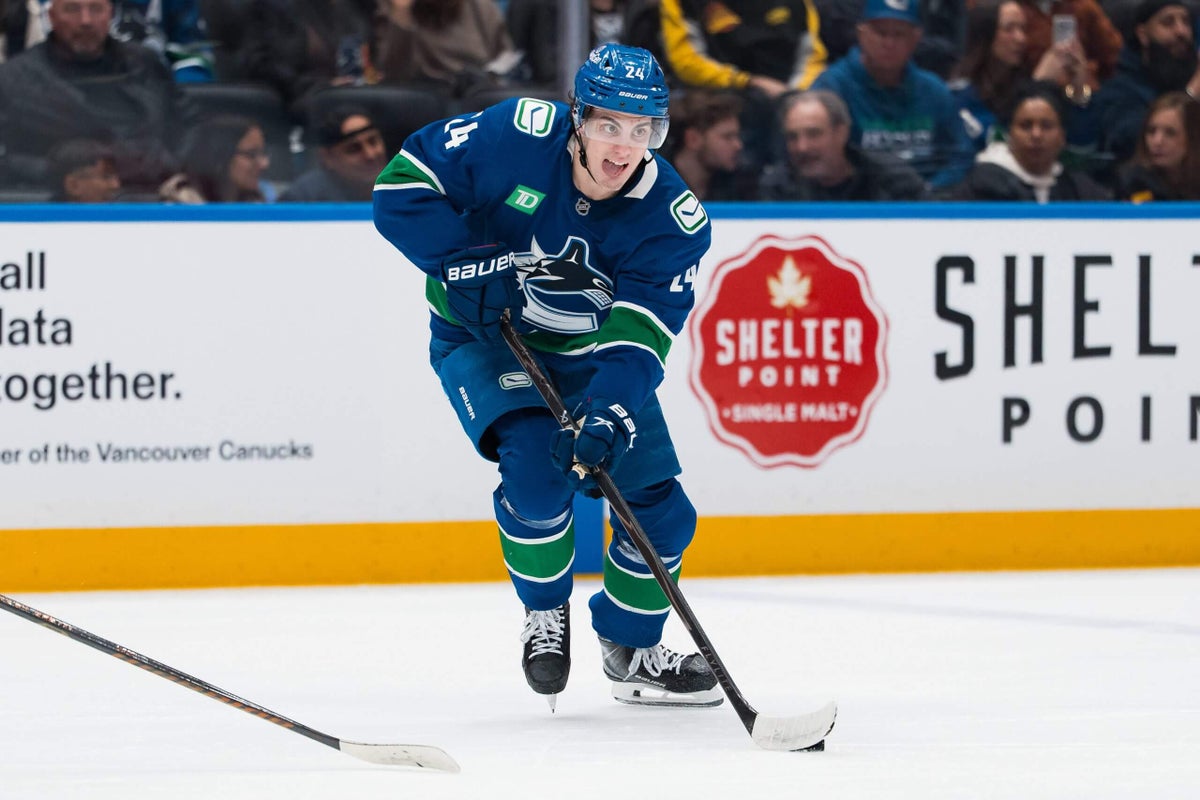
Summer is rushing along, snaking toward the school year and the inevitable return of NHL hockey in late September.
Over the past month, I’ve spent time revisiting some of my favourite places in British Columbia, catching up with family and enjoying a lengthy four-week vacation. That’s given me a lot of time to think about the Vancouver Canucks, about rebuilding in an era of cap growth and about what to expect this season.
We’ll spend the next several weeks getting into all of that (and more) in the lead-up to Canucks training camp, which will open in Penticton on Sept. 17.
To mark my return from vacation, however, I wanted to elaborate on three Canucks items I’ve been dwelling on, catch up on some of the news I missed and unpack some of the under-the-radar moves that are more important than first meets the eye.
1. The sneaky importance of Akil Thomas
Veteran forward Akil Thomas was a bit of an under-the-radar signing on July 1, with the Canucks getting him on a one-year, two-way deal with a $375,000 salary at the AHL level, according to Puckpedia.
Thomas, a former Los Angeles Kings draftee, is very familiar to Abbotsford general manager Richard Seeley from his time managing the Ontario Reign, the Kings’ AHL affiliate. In fact, in an odd quirk, Seeley actually traded Thomas midway through last season, although the motivation behind that deal was largely about doing right by the player.
“He’s a great player, a great kid,” Seeley told The Athletic in early July. “He had the previous year in the NHL, and I’ve watched him as he’s grown up. I’m a big fan of the person and the player. He battled some injuries last season and had some tough breaks, but the previous year he was in the NHL the whole time and then he was back down with us. … In fairness to him, he was looking for an opportunity to get back to the NHL. … So that’s what was behind that transaction.”
Canucks fans should monitor Thomas closely at training camp and in the preseason. The 26-year-old pivot is right-handed, something of a rarity among centres in Vancouver’s lineup, and has the versatility to contribute on the wing. While his AHL production doesn’t hint at a player with sneaky NHL upside in the Phil Di Giuseppe mold, Thomas will probably be a veteran difficult for young Canucks hopefuls like Braeden Cootes or Jonathan Lekkerimäki to beat out for a roster spot.
“He’s a solid player, he’ll provide some NHL depth and I think he can contribute to an NHL level when he’s healthy,” Seeley said. “Little bit of versatility on the wing and at centre, too. I think he’ll be good for our dressing room, as far as the way he works and the person that he is, for our younger guys as well.”
If Thomas can’t crack Vancouver’s lineup to open the year, his importance might be even more magnified in Abbotsford, especially given the projected composition of Abbotsford’s centre group. While Cootes and Ilya Safonov will hope to open the year with Vancouver, if they start the season in the Fraser Valley, Abbotsford will have a very young group of centres, with first-year professional Riley Patterson also warranting mention.
“Yeah, it is a young group, but there’s some versatility there, and that’s where Akil can be handy if he is in Abbotsford,” Seeley said. “To insulate those guys a little bit, and do the heavy lifting if needed. I don’t know that we’ll be adding a centre (over the rest of the summer) — we want to make sure we get the guys we have some reps and opportunities.”

Akil Thomas played 32 games across two seasons with the Los Angeles Kings. (Harry How / Getty Images)
2. Coaching staff and the big summer budget question
There’s no way around this one: In mid-July, the Canucks finished assembling a coaching staff around first-year bench boss Manny Malhotra, and it consists of zero meaningful NHL experience.
Ryan Mougenel is an experienced AHL bench boss who spent the past five years coaching the Providence Bruins. Jordan Smith has been an assistant coach in Abbotsford for the past three seasons but has never coached in the NHL. Jason Krog has never been an assistant coach at the professional level, having spent the past few years as a skills and skating coach in Vancouver.
Malhotra, of course, has been around the NHL his entire adult life. He managed a lengthy career as a journeyman player and served as an assistant coach in Vancouver and Toronto for seven years before taking the head coaching job with Abbotsford in summer 2024. He isn’t going to show up in this job bright-eyed and bushy-tailed, and he certainly has more substantive experience than his predecessor Adam Foote.
Still, it’s a truism in league circles that the NHL isn’t a rookie league. Whether you’re a player, a head coach, an assistant coach or support staff, it’s difficult to have a sense of the rhythms, the obligations and the best way to anticipate issues that inevitably crop up when you haven’t been through a full cycle at the NHL level.
To have a coaching staff composed entirely of first-year NHL coaches is a massive risk, even accounting for Vancouver’s ambitions this upcoming season. It’s a red flag, frankly — one that shines a significant spotlight on the team’s extremely budget-conscious manner in this first rebuilding offseason.
That said, the shape of the coaching staff at least seems intentional and sensible. Mougenel may not have NHL head coaching experience, but he’s been on an AHL bench for the past 12 years, including the previous five as a head coach. He might not bring NHL-level familiarity to the role, but he’s got a reasonably senior profile and seems like a very strong candidate (even if you can poke holes in his player development track record in Providence).
Smith has significant familiarity with Malhotra, and that’s vital. Bringing in an assistant coach who has that built-in rapport and can function as the head coach’s “guy” — a sounding board with whom a coach can close the door to the office and have the sort of frank, problem-solving conversations that are so often required in the job — is absolutely necessary. It was a problem for Foote last season, for example, that he didn’t have a “guy” on the coaching staff.
Finally, Krog is very highly regarded around the league as a sharp hockey mind, and has a profile similar to what Yogi Švejkovský brought to the job during the Rick Tocchet era. Švejkovský is now established as an NHL assistant, and Krog is widely viewed as a solid bet to follow a similar path.
This group could succeed as teachers during a rebuilding season, especially if able to tune out the outside noise and focus on internal, incremental improvements.
It seems like a similar story in Abbotsford. Like Patrick Johnston and Rick Dhaliwal this summer, I’d heard from multiple sources that the Canucks had top CHL candidates — including Memorial Cup winner Jussi Ahokas, who landed with the Colorado Eagles — who withdrew from the Abbotsford process because of the unappealing compensation package on offer for the Abbotsford job.
The Canucks still managed to land a really interesting, up-and-coming coach in Ryan Papaioannou, the longtime head honcho for the Brooks Bandits of the Alberta Junior Hockey League. Papaioannou is very highly thought of in league circles, has a reputation for being an innovative, outside-the-box thinker and a master recruiter, and absolutely smashed his first professional opportunity with the Wheeling Nailers of the ECHL last season. The Nailers accumulated 46 wins in 72 games and advanced to the third round of the Kelly Cup playoffs, before falling to the dynastic Florida Everblades (who went on to win the Kelly Cup for the fourth time in the past five seasons).
From the outside looking in, it feels like this new management team is making high-quality staffing choices on a shoestring budget. With that in mind, one wonders whether the high-quality leaders the organization is assembling — including Henrik and Daniel Sedin, and Ryan Johnson — are being put in the best possible position to succeed.
3. The Koivunen contract should motivate the Canucks to be more aggressive
The current NHL collective bargaining agreement will expire on Sept. 15, in just four weeks.
Once that happens, NHL teams will be unable to sign players to maximum eight-year contracts; the new maximum term will be just seven years. Just as importantly, the rules governing signing bonus amounts and year-over-year variability will be permanently tightened, significantly limiting the Canucks’ ability to structure contracts in a way that enhances their trade value in the future.
This is a dynamic that we’ve unpacked at length regarding Zeev Buium and Liam Öhgren. For a team in Vancouver’s position, this is also an opportunity they can’t afford to miss.
A few weeks ago, the Pittsburgh Penguins made a bet of this variety when they signed 23-year-old forward Ville Koivunen to an eight-year extension with a $4 million annual average value. It was a deal that raised eyebrows around the league — understandably, given Koivunen has scored just two goals in 47 NHL games to this point in his career.
In this moment of continuous cap growth, in which the market forces governing NHL player compensation can be reasonably expected to reset on an annual basis (or whenever a Leo Carlsson type signs an offer sheet), betting big and early is an essential way for teams to capture the types of efficiencies that were routine and a matter of pure discipline during the flat-cap era. The Penguins, amid executing a genuinely impressive on-the-fly rebuilding effort, saw the value in placing precisely that type of bet on Koivunen, and it’ll be fascinating to see if other teams follow suit before the Sept. 15 deadline.
The Canucks, however, should be far more structurally aggressive in pursuing long-term deals for Buium and Öhgren over the next four weeks. In particular, the Penguins effectively used the soon-to-expire contract variability rules to limit the downside risk of extending Koivunen. Essentially, Pittsburgh backloaded the Koivunen deal and stripped it of signing bonuses beyond the first two years. Structurally, they prioritized building an escape hatch into their long-term bet. If Koivunen doesn’t hit, his deal will be very easy to buy out in 2029.
Vancouver, however, should do the opposite in considering how to optimize the exchange value of Buium and Öhgren. The Canucks should be trying to front-load those extensions and load them up with signing bonuses in order to create a moment down the line in which Buium and Öhgren are in their primes and signed to dated, high-value contracts that are heavily cap-over-cash for the teams potentially acquiring them.
If the big-picture question facing the Canucks is how to out-accumulate 31 other teams over a reasonable three-to-four-year timeline, then taking on this sort of risk and placing this type of bet on talented young players of Buium and Öhgren’s ilk should be viewed as effectively necessary.
However, it will require the Canucks to spend in a manner the franchise hasn’t seemed comfortable doing this summer.
>
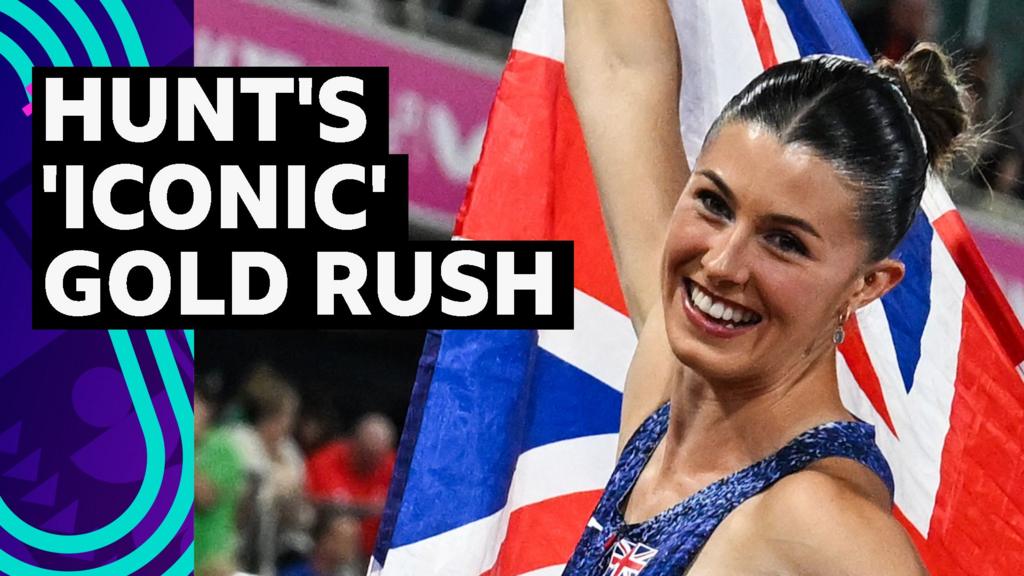
Relive Great Britain’s Amy Hunt’s “iconic” European Championships where the sprinter won four gold medals with victories in the women’s 100m, 200m, 4x100m relay and the mixed 4x100m relay.
READ MORE: ‘Are you not entertained?’
Available to UK users only.
>
Sports
Bruno Fernandes: Manchester United will reject any offer for captain amid Galatasaray interest
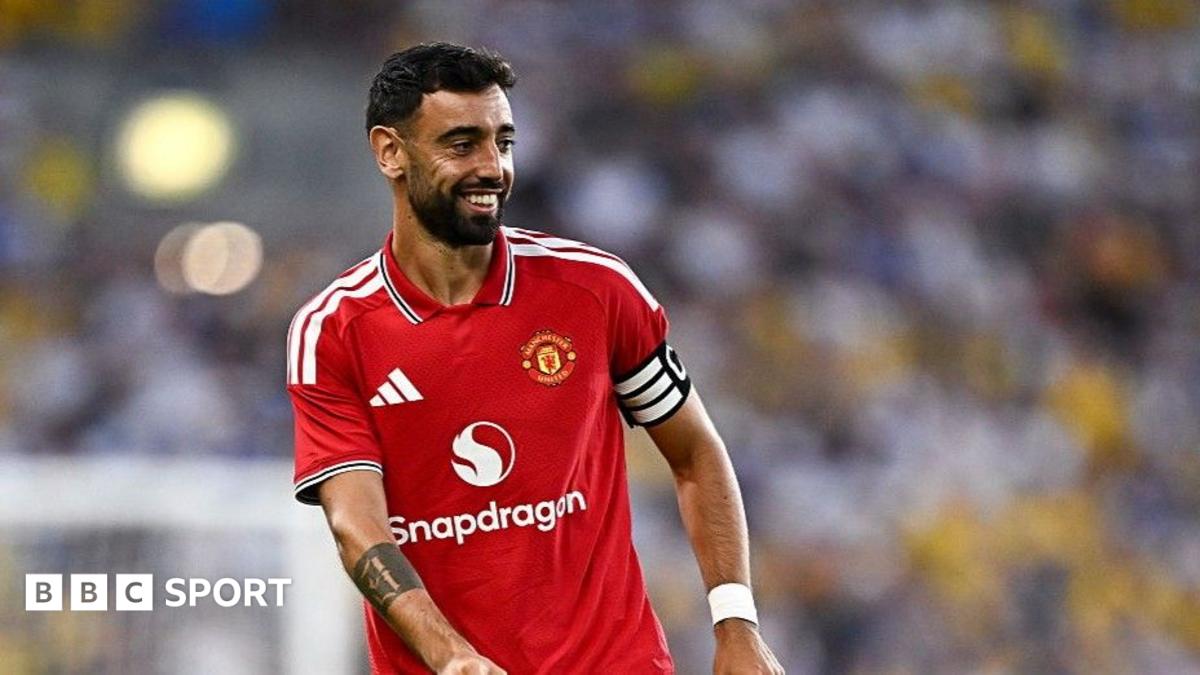
Manchester United intend to reject any offer for Bruno Fernandes before next month’s transfer deadline.
BBC Sport was told last week that Turkish club Galatasaray, plus Italian giants Juventus and AC Milan, were considering whether to test United’s resolve to keep their captain.
It is thought Galatasaray had a deal they were intending to put to United, which would reach a final fee of 50m euros (£42.7m).
However, the message from senior sources at Old Trafford is that Galatasaray would be wasting their time.
Although last summer they told Fernandes it was his call whether to accept the mammoth offer put to him by Saudi Pro-League outfit Al-Hilal, with the Portuguese later admitting he felt “hurt” by that stance, this time around United have made their position clear.
Club sources say, as yet, there have been no bids for the 31-year-old, but add that he is not for sale at any price.
Fernandes has one year left on his current deal, with an option for an additional season. It is known he would prefer to stay.
A £57m release clause in the Portugal international’s contract has now expired.
So far, there has been no agreement over an extension.
While United are in a strong negotiating position, the enthusiastic reception for Fernandes in Dublin for last week’s pre-season encounter with Leeds would have left the club in no doubt supporters would react badly if it was not clear they are doing everything possible to keep their talisman.
Fernandes recorded a Premier League record 21 assists last season and is favourite to be crowned PFA Player of the Year for 2025-26 in Manchester next week.
>
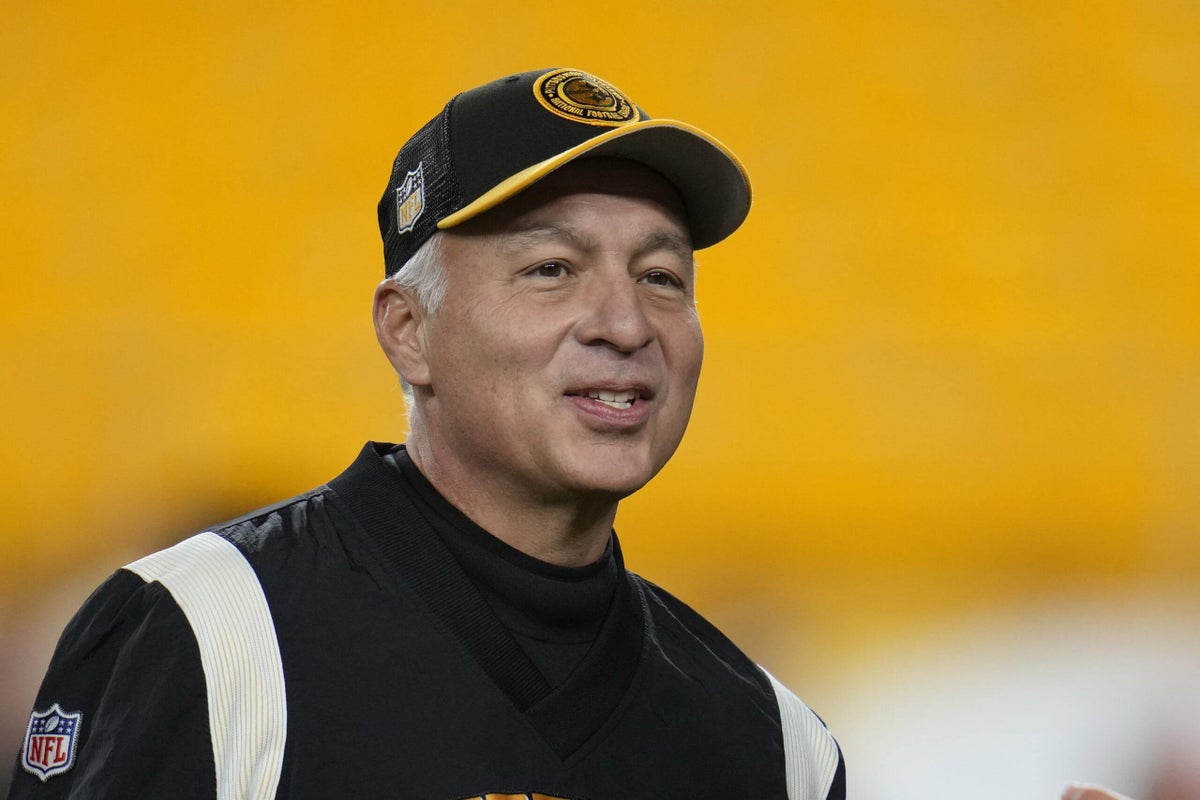
Shortly after Fernando Mendoza finished his first handful of NFL practices, he sat down with Mike Sullivan to discuss everything that transpired within them. Literally everything.
Before breaking for the summer, the Raiders’ new quarterbacks coach and the rookie watched film of every single throw Mendoza made during the Raiders’ OTAs practices. Sullivan had the No. 1 draft pick audit every detail of each pass — from his progression and timing to his footwork and accuracy — and evaluate what he did well and where he fell short. Mendoza handwrote his critique, which helped him digest his common mistakes and provided a physical reference for things to work on.
“Didn’t have the neatest handwriting,” Sullivan joked. “I said, ‘maybe you could type this next time.’”
Mendoza reflected on the “voluminous” exercise, as Sullivan put it, throughout the summer and said it has helped him “kill urges” and “make the right play” during training camp. Sullivan and the Raiders’ coaching staff have lauded the rookie for not repeating mistakes.
“He’s someone that I think a lot of his confidence comes from the preparation and the type of time and effort that he puts in,” Sullivan said. “To really continue to press, to continue to work, to improve, to never be satisfied is a benefit to a quarterback because then they get in situations it doesn’t seem as hard and it doesn’t seem as challenging.”
Sullivan, along with head coach Klint Kubiak and offensive coordinator Andrew Janocko, is in charge of building up the Raiders’ quarterback of the future. It’s the same role Sullivan was in 12 years ago, before he ever knew it.
Raiders QB coach Sullivan merges Carr, Mendoza eras
Sam Warren
Sullivan was out of a job in the spring of 2014. He’d been the Tampa Bay Buccaneers’ offensive coordinator the previous two seasons, but was out of work after Greg Schiano and his entire staff were purged.
David Carr approached Sullivan with an opportunity. Carr was a backup quarterback and Sullivan the QBs coach for the New York Giants’ Super Bowl-winning 2011 team. Now, Carr’s younger brother Derek was preparing to enter the NFL, and David felt that Sullivan was the right coach to prepare him for the 2014 NFL Draft.
“I had some time on my hands,” Sullivan said. “And I thought, ‘What a great way to get back into the game and work with a fine young quarterback.’”
Derek and Sullivan trained for the NFL Combine and Fresno State’s Pro Day in the Carr’s hometown of Bakersfield, Calif. Sullivan’s meticulous approach was the same he used with NFL quarterbacks, and he ensured Carr he would always be “the most prepared guy in the room.”
“His impact on me in just those few months was so great that I’m still using those things today,” Carr said. “I always joke that (former Raiders head coach Jon) Gruden has seen every clip of film ever in football history. I think Sully is another one of those guys for sure.”
Watching film with Sullivan can feel like wringing water from a stone. Carr said that no matter how much of the same tape he watched with the coach, Sullivan always found a way to squeeze out a new teaching point. Carr added that Sullivan’s superpower is taking that information and relaying it in a concise format, ensuring his quarterbacks can use what they’re learning without being overwhelmed.
Carr believes that Sullivan’s emphasis on preparation stems from his Army background. Sullivan graduated from West Point while playing defensive back for the football team. He then attended Army Airborne, Ranger and Assault Schools and served in the 25th Infantry Division before starting his coaching career. Sullivan said he views coaching quarterbacks militaristically, trying to make practice rigorous and thorough so his players feel calm in the chaos of games.
“We try to do everything that we can to enable a quarterback, when he’s called on to perform… he’s not thinking too much. He’s kind of on autopilot,” Sullivan said. “He’s created muscle memory in his footwork, his upper body, his vision. He’s developed that kind of chemistry with his receivers and can anticipate the play call and knows the situation.”
Sullivan and Mendoza’s post-OTAs debriefings are an example of that. Mendoza feels like his diligence formed that necessary muscle memory to quiet his brain, creating more comfort — and success — on the field.
Carr said his training with Sullivan was similarly intensive, even in the shortened timeframe. The coach taught him fine details about studying film, reading defenses and mechanics. Despite similar focal points carried throughout their sessions, Carr said his training with Sullivan never got stale, which allowed for advanced growth in just a few months.
“There has to be a positive approach (to coaching), and you want to have enthusiasm and be creative,” Sullivan said. “Sometimes, you have to change things up a little bit to get it to sink in.”
Sullivan has a deep inventory of drills that teach his same tenets, even if, occasionally, a drill itself can feel completely unnatural. He’s also not afraid to experiment in the meeting room; he says he’ll go off-topic to relate one of his life experiences back to the lesson at hand, and he won’t hesitate to “bust chops” when needed to keep things light. His lessons stuck with Carr beyond their time together, and after the Raiders selected Carr in the second round of the 2014 NFL Draft.
“He was showing me things and teaching me things that I was seeing in games he wasn’t even my coach for,” Carr said. “He was giving me tools that I used throughout my career … little tips he came up on and drills he came up with. I’m still teaching them to kids nowadays.”

Among Sullivan’s coaching stops were with the Giants’ Super Bowl-winning 2011 team, where David Carr (No. 8) was a backup. (Patrick McDermott / Getty Images)
While Carr remained close with Sullivan throughout his 10 NFL seasons, the two never shared a team. Still, Carr credits Sullivan for setting him up for success in silver and black. Carr holds the Raiders’ franchise records for passing yards (35,222), passing touchdowns (217), pass completions (3,201) and pass attempts (4,958), while also leading the team to its last two playoff appearances in 2016 and 2021.
Sullivan might also be able to credit Carr some for his job with the Raiders. Carr was coached by Kubiak and Janocko in 2024 while a member of the New Orleans Saints and formed a relationship with the tandem. When they realized they wanted to add a quarterbacks coach to their staff in Las Vegas, Carr said the Raiders reached out to consult with him about options. Sullivan was a known commodity to both coaches, as he worked with Kubiak in Denver and Janocko in Tampa Bay. But Carr made sure to endorse Sullivan when he was brought up as a candidate.
“I remember they asked me about Sully and I must have went on for about 10 minutes,” Carr said. “I think at that point they were like, ‘Alright man, we get it.’ I always say good things about everybody, but I just had more to say about Sully and I couldn’t stop talking.”
Whether Carr’s cosign was a factor in Sullivan’s hiring or not, the coach is now a key part of the braintrust leading the Raiders’ offense. Kubiak said Sullivan’s coaching and life experience have taught the team’s quarterbacks a lot thus far, and Carr believes pairing Sullivan’s veteran nature with Kubiak and Janocko is a perfect connection.
“From a football aspect, I mean these guys are hard workers,” Carr said. “They’re grinding tape. They’re doing all the things you would want as a player. They’re trying to find that one thing that may cost us a game and so they can show you and then you’re ready for it in a game. We’re all human, we all may miss something, but if three of them are doing it, they’re probably not gonna miss a lot.”
Carr also believes that Sullivan is a strong fit to shape Mendoza based on his own experiences of receiving Sullivan’s coaching as a young player. Carr said as long as Mendoza’s willing to be a “sponge,” Sullivan will ensure Mendoza absorbs all he can. And with the Raiders appearing to take a slow approach with Mendoza’s development, Sullivan will ensure the rookie is fully prepared before he’s deployed.
Sullivan said that not all young quarterbacks can be coached the same. Differing personalities and learning processes can cause him to convey his message differently to different players. But Sullivan’s characterization of Mendoza and Carr is quite similar.
Sullivan on Carr: “He was into every little detail, how much he really wanted to improve. There was nothing that was too small. He didn’t take anything for granted.”
And on Mendoza: “He just wants to get better. He’s gonna do anything and everything, whether it’s in the meeting room or on his own, going through his own walk-throughs that he does… He’s so committed to the process and not concerned whatsoever with anything else.”
Sullivan did not want to compare the two players; he complimented both of their arm strengths and mobility without relating them to each other. Yet he did confirm that their drive is of the same ilk.
“I think the competitive spirit and the desire to improve, grow and get better is something that they both share,” Sullivan said.
How much Mendoza grows will have a determining effect on how much the Raiders can get better. Sullivan will play a key role in his improvement, hoping to foster the same success in his new pupil that only his old one led the franchise to in the last quarter century.
>

Amy Hunt: GB sprinter wins four golds at the European Championships

Bruno Fernandes: Manchester United will reject any offer for captain amid Galatasaray interest

‘It’s Always Sunny in Philadelphia’ Season 18 Review: For the Sickos!
-

 movies3 months ago
Search For Canadian TV Actor Stewart McLean Now Homicide Investigation
-

 Fashion9 years ago
These ’90s fashion trends are making a comeback in 2017
-
Fashion9 years ago
According to Dior Couture, this taboo fashion accessory is back
-
Fashion9 years ago
Model Jocelyn Chew’s Instagram is the best vacation you’ve ever had
-
Fashion9 years ago
Emily Ratajkowski channels back-to-school style
-
Fashion9 years ago
9 Celebrities who have spoken out about being photoshopped
-
Fashion9 years ago
Your comprehensive guide to this fall’s biggest trends
-
Fashion9 years ago
A photo diary of the nightlife scene from LA To Ibiza