
Sports
Harry Brook: England player on batting, Test captaincy and Wellington

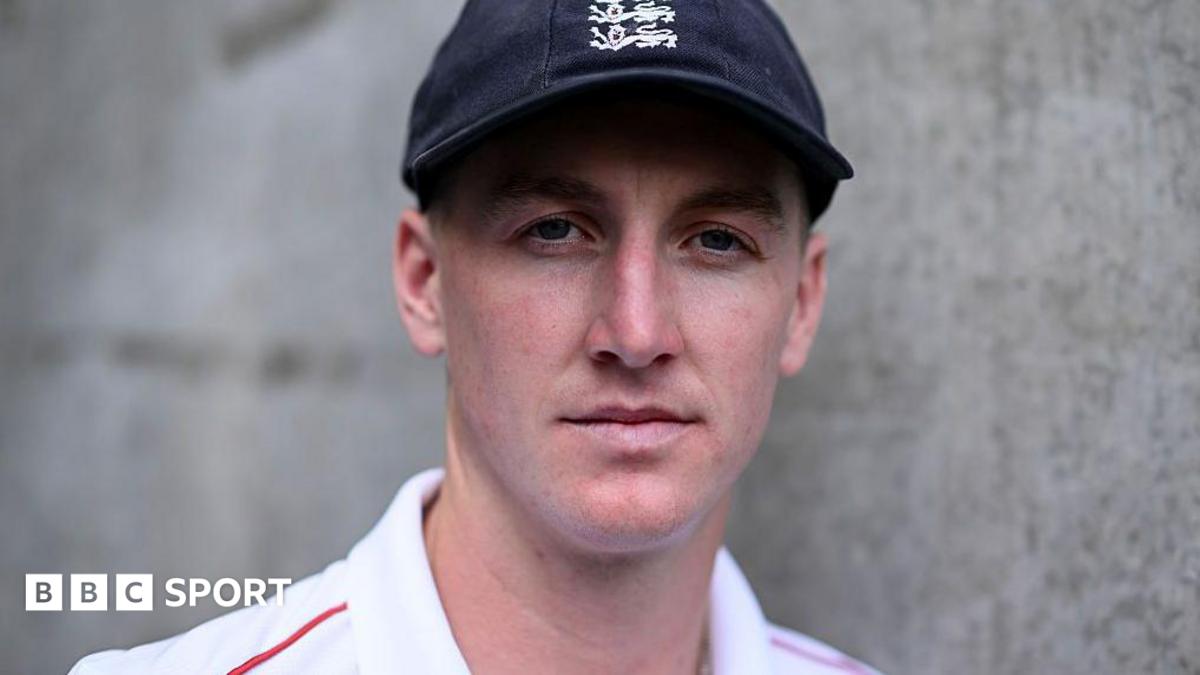
Amid the Wellington fallout, Brook led England to important ODI and T20 series wins in Sri Lanka, as well as the semi-finals of the World Cup that followed. His own form was superb. In the maelstrom, he drew on an experience from three years earlier.
In 2023, his only season in the pressure cooker of the Indian Premier League (IPL), Brook struggled. After his one significant score for Sunrisers Hyderabad – admittedly an unbeaten century – he said he was glad to “shut up” supporters that had been “slagging me off”.
“I got into a little bit of a rabbit hole with scrutiny and social media when I was at the IPL,” says Brook.
“It didn’t help me as a person on the field or off the field. I decided to, not stay away from social media, but also not go out of my way to look at it.
“On the other hand, I actually feel it’s a little bit of a compliment if people are giving me scrutiny and have an opinion about my game.
“I know it’s not a nice thing to see people slagging you off, but it means people care and people think I can put in a better performance than I have done that day.”
There are comparisons that can be drawn between Brook and Stokes. Maverick players from working-class backgrounds, often finding themselves outnumbered by the well-to-do members of the dressing room.
But, like Stokes, Brook is authentic in the way he plays and speaks, even if that can get him into trouble. One example would be Brook’s “who cares” line about batters being caught in the deep after an ODI against Australia two years ago.
“I would say that I’m an extremely honest person,” says Brook. “I’m honest with myself and honest with my game.
“A lot of people say honesty is the best policy. I probably have got into trouble a few times being too honest.”
Authenticity bleeds into Brook’s batting, for better and worse. He is probably the most thrilling batter to wear an England shirt since Kevin Pietersen and no batter with at least 3,000 Test runs has scored more quickly than Brook, whose strike rate is almost 87 runs per 100 balls.
But Brook can delight and frustrate in equal measure, nowhere more so than on an Ashes tour when an average just under 40 was a disservice to his ability.
Costly crimes included his drive at Scott Boland in the calamitous second-innings collapse in the first Test and trying to hit Mitchell Starc for six over extra cover in the first innings of the second Test. “Shocking shots” were how Brook described them in Australia.
“If supporters get frustrated, imagine how frustrated I get,” says Brook.
“It’s something I’ve been really trying to work on, trying to assess conditions quicker, and read the surface better. To go out there knowing what shots are going to be hard and what is going to be easier.
“I practise every single shot and have done since the age of eight. In the nets, I’d do a 360 challenge with my dad. He’d throw balls and I’d have to try to hit it to a certain place: that corner, then that corner.
“I have the ability to hit it everywhere, I just have to figure it out quicker in games.”
>
Sports
Cristiano Ronaldo and Lionel Messi are talking about retirement. What does football look like without them?
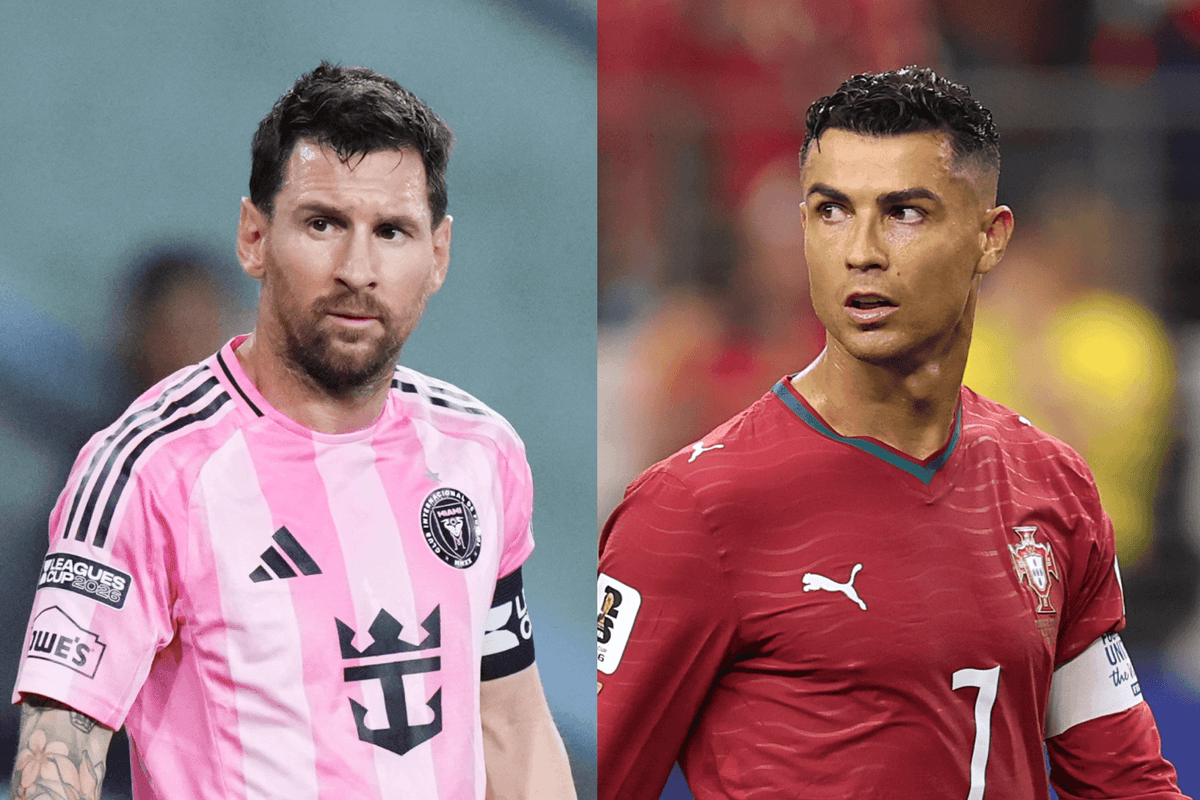
It was assumed this summer’s World Cup was the last time Lionel Messi and Cristiano Ronaldo would both be on the same stage at the same time.
At 39 and 41, it was implausible that they could soldier on through another four-year cycle and re-appear in 2030.
For differing reasons, the tournament cast an element of doubt over both’s finality. Messi’s majesty, with eight goals and four assists, suggested he could do this walking-genius shtick for a while longer. Ronaldo’s on-field tears and post-match comments suggested his inability to accept that Father Time had called.
“I’ve given my best. I’ve won three titles for Portugal. Before Cristiano, we hadn’t won any,” he said, referring to himself in the third-person, after a meek last-16 exit to Spain.
“The biggest title I won with the national team was in 2016 which, for me, has the same value. That’s what I repeat: I leave with a clear conscience.”
He sounded like a man trying, and failing, to convince himself that he was content with his lot. That Messi secured that elusive World Cup triumph in 2022 did not make him feel incomplete. Perhaps the lure of a home World Cup in Portugal would be too much to resist after all.
However, in an interview with Vogue this week, amid talk of his home wedding and lavish diamonds, he revealed that he expects his current contract at Al-Nassr to be his last.
“This is probably my last year of football, and I want to leave a spectacular legacy,” he said.
“I have my future all mapped out. I have so many things to keep me busy that to tell you just one thing is hard. Because football could leave a big hole, you have to fill your time in various ways, not just one.”
Padel was, of course, mentioned. You cannot legally be an ex-professional footballer without a penchant for the racquet sport.
What was so striking, however, was that he sounded like he had finally made peace with the thought of retirement. The admission came in the same week that his great nemesis Messi also hinted at retirement.
Messi’s contract at Inter Miami runs until 2028, but the death of his father Jorge this month has thrown his future into doubt. As the man who had overseen his career since he brokered the trial at Barcelona, he was Messi’s inspiration. Shorn of that connection, the reasons for continuing are harder to find.
“You were by my side from the beginning; there was so little left until the end. Why couldn’t you hold on just a little longer so we could finish it together?” he asked on his social media tribute.
“I don’t know what I’m going to do without you. I don’t know how to carry on. I used to just play football, and now I’m really not sure if I’ll carry on doing it for much longer.”

Messi with his father Jorge at the 2022 World Cup (Robert Michael/picture alliance via Getty Images)
The Messi-Ronaldo duopoly has dominated the sport since 2008 when they first met in the Champions League semi-final.
Across 15 years, they played 36 competitive matches against each other, sharing almost 3,000 minutes on the pitch. They made Spain’s El Clasico a must-watch global event between 2009 and 2018 and challenged each other to break records. La Liga was an annual proxy war for the Ballon d’Or, a title they shared equally for 10 unbroken years — until Messi added another three in the twilight of his career. The latest came in 2023, when Messi was an Inter Miami player.
In the past five years, however, the longevity of Messi’s genius has practically upended the narrative of the previous two decades. By leading Argentina to two Copa America titles and the World Cup in 2022, he ticked off the only remaining boxes in his career. Before then, Ronaldo’s Euro 2016 triumph and league trophies in England, Spain and Italy had afforded weight to the argument he was the more complete, more adaptable force.
These triumphs, underlined by more mesmerising moments at this summer’s World Cup, have reframed the debate.
It is no longer Messi vs Ronaldo. It is Messi and everyone else. To sit at the top of every other player in your era is an incredible achievement, but for so much of Ronaldo’s career they were inextricably linked. The goals, the trophies, the legacy. Messi’s brilliance is surely part of what drove Ronaldo, a less gifted player, to extraordinary heights — in some years, above the Argentine.

Ronaldo celebrates after winning Euro 2016 (VALERY HACHE/AFP via Getty Images)
Legacy is a subjective term that is hard to measure.
Ronaldo has more than 1,000 goals and holds the record for most international games and goals. Messi has won eight Ballons d’Or, scored a record 91 goals in a calendar year and has won the most European Golden Boots.
The list of records is endless, but their choice of final destination, where they would hang up their boots, was a bet on their legacy. There was no romantic return to Barcelona or Newell’s Old Boys for Messi. No full-circle year at Sporting CP or Nacional, where Ronaldo started out on the island of Madeira.
Both players hitched their wagon to emerging markets. Messi went to PSG in 2021, owned by Qatar, and then onto Inter Miami in MLS. Ronaldo kickstarted Saudi Arabia’s attempts to become a football superpower when he moved to Al Nassr.
Ronaldo has to shoulder the criticism of associating with a nation accused of sportswashing its human rights record, but he surely has an interest in the league achieving its ambition of becoming a major player in the sport. If it does, he is the face of the project. If it does not and the investment fades, it will look like he backed the wrong horse.
It is a shame that there was no last dance between the two at the World Cup. Instead, their last meeting was a 2023 friendly between Messi’s PSG and Ronaldo’s Al Nassr in Riyadh. That was their first goodbye to the world stage. Now the final one is coming, perhaps sooner than many wish.
Is football ready for life after the big two?
Kylian Mbappe, Lamine Yamal and Erling Haaland are the three individuals primed to take over the spotlight, but can they fill it in the same way?
Maybe no two players can recreate the same fervent wrestle for GOAT status. There might be more televised matches and more sponsorship deals than ever, but the way fans consume football has changed. It has become more fragmented. Shorter attention spans have created a clips climate in lieu of live match viewing. A more transactional and fickle association to teams, fuelled by social media, means it is often a player rather than a team that millions follow.
Messi and Ronaldo at their peak would have been the perfect prototypes for this era. Walk around London now and you will see Miami and Al Nassr tops sporting the same names on the back.
Those factors would suggest a climate in which individual rivalries would flourish. But perhaps what made Messi and Ronaldo’s era special was that, while they were competing for supremacy, they also had to achieve team supremacy. To be the king, you had to win your team the crown.
All sports rely on cults of personality. Tennis is still grappling with that reality following Roger Federer and Rafael Nadal’s retirement. Football is, of course, a team sport and the World Cup proved that there is no shortage of spell-binding characters. Vinicius Jr, Jude Bellingham and Michael Olise are all highly marketable figures.
The only issue is that, still, no player stirred the imagination the way a 39-year-old Messi was able to. No player’s struggles engendered such attention as Ronaldo’s demise.
They remain dominant, even as faded figures. If they are soon to be ghosts, given how so much of their careers have run parallel, it would be fitting if they exit stage left together. A final piece of narrative symmetry.
>
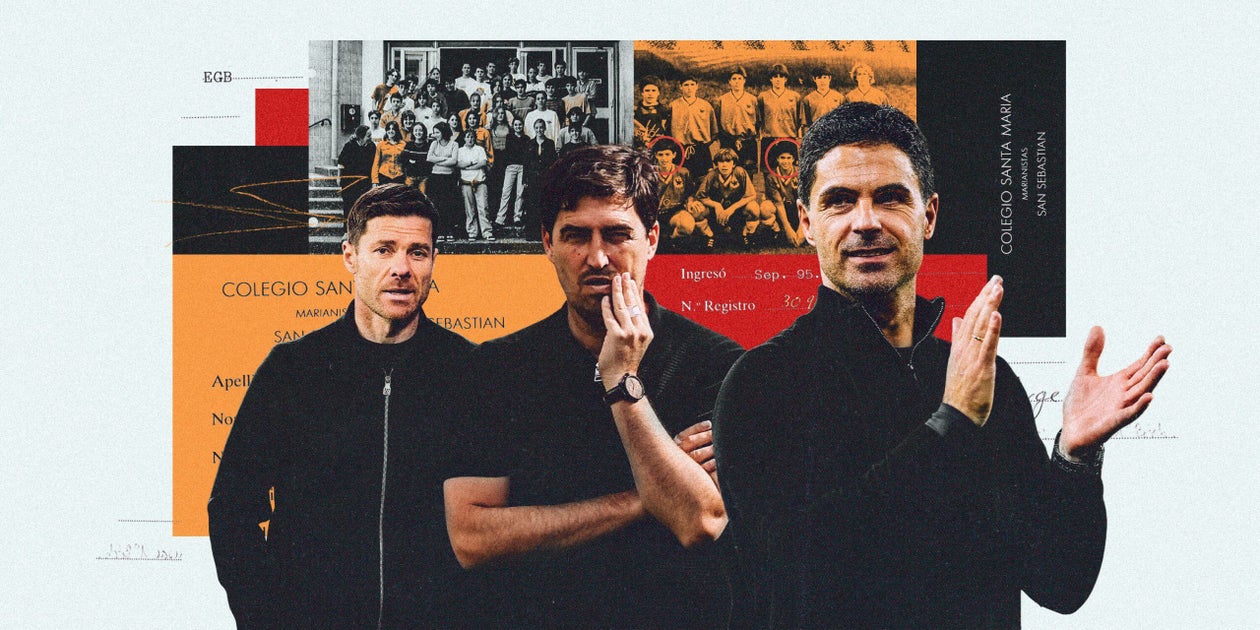
The walk to Plaza Errotatxo takes you past the golden sands and turquoise waters where the three boys at the centre of this story began their football education.
If you are not familiar with this part of San Sebastian in northern Spain, it is easy to miss the entrance to Antiguoko KE’s headquarters, tucked behind a row of moped bays in the shadow of an eight-storey apartment block. The sign above the wooden door confirms this is the right place. And behind that door, who can blame them for showing off a little?
“We now have three Antiguoko coaches in the Premier League,” says Roberto Montiel, one of their long-standing coaches, with a smile to acknowledge how this small area has delivered the managers or head coaches of Arsenal, Liverpool and Chelsea — surely one of the more implausible statistics of modern football or, indeed, any sport.
“At the start of summer, there were only three English coaches in the Premier League,” Montiel adds. “And the three from Antiguoko are at top-tier clubs of the highest level.”
Antiguoko are special: a Basque dream team based a couple of hundred metres from La Concha Bay, with a 40-strong list of alumni who have come through their junior system and gone on to make top-division careers.
It was here that a schoolboy Andoni Iraola set out on the journey that has led to his appointment, 35 years later, as Liverpool head coach.
One of his old No 15 shirts from playing days at neighbouring Bilbao’s Athletic Club is among the many framed on the walls. “Para mis amigos del Antiguoko, que algo me habran ensenada,” reads the message above his signature — For my friends from Antiguoko, they must have taught me something.

Andoni Iraola’s signed shirt at his old club (Daniel Taylor/The Athletic)
Yet that tells only part of the story when it comes to Antiguoko’s influence in England’s top division and why Edorta Salegi, their president, throws out his hands when he is asked how many people attend their youth fixtures. “Two hundred, sometimes,” he says. “Including 50 scouts.”
On the far wall, a pair of Xabi Alonso’s boots are displayed in a glass cabinet — the ones the newly-appointed Chelsea manager wore playing for Liverpool in the iconic 2005 Champions League final against Milan. “They smell of anxiety,” is the joke. Anxious or not, Liverpool fought back from 3-0 down at half-time, won on penalties and Alonso held the trophy to the skies.
A pair of Mikel Arteta’s boots are encased, museum-style, on that same wall, and there are plenty of tales about the Arsenal manager, too. Arteta was the star boy, the special one, the leader, as this pioneering neighbourhood team forged their reputation, travelling to tournaments in Sweden, Italy, the Netherlands, Mexico even, and almost always winning.

Mikel Arteta’s old boots and shirt at Antiguoko (Daniel Taylor/The Athletic)
“I was coaching the under-nines,” says Salegi. “One of the player’s fathers came up to me and said, ‘Hey, there’s a really good player at school, this boy’s a phenomenon’. Lots of parents were saying the same. I said, ‘I’ll go and have a look’. It was Mikel Arteta. And he stood out from everyone. That kid was doing things, at the age of nine, that weren’t normal.”
Around the corner, sitting outside one of the neighbourhood’s pintxo bars, another of Antiguoko’s former players, Alvaro Parra, shares his memories of Arteta. One is that, even as a boyhood Barcelona fan, the young Arteta would always choose to be Arsenal when they were playing the FIFA computer game.
Their school years come to mind. “There was a boy in Mikel’s class with Down’s syndrome,” says Parra. “When they played football, Mikel was so good he would dribble past the whole team to reach the opposition goal. Then he’d stop, pass it to this boy and he’d score.”
Iraola was born in June 1982 — midway through Spain hosting the World Cup — three months and six miles from Arteta’s birth in the March. Alonso was in the next year up at school, with Aritz Aduriz, the future Athletic Club and Spain international striker. All four were often in the same Antiguoko team, which makes it easier to understand why the club have run out of space in their trophy cabinets.
“There’s one particular memory of going to Benidorm for a tournament,” says Parra, then a centre-back. “We all started playing in different positions. For example, Aritz Aduriz was in goal, Xabi Alonso up front, Iraola on the left of midfield.
“We started losing every match, and the organisers gave us a bit of a telling-off, as if to say, ‘Bloody hell, you’ve just won the league, and you’re making a right fool of yourselves’. They put us back in our proper positions, and we ended up winning the final, with a goal from Xabi Alonso from the centre circle.”
Team photographs from the time show the boys lined up in their shiny blue Antiguoko kits, staring back at the camera from beneath mops of dark hair.

A team photo featuring Iraola, bottom left, and Arteta, middle of the front row (Antiguoko KE)
Alonso, everyone agrees, was “very small, very frail” and “not that good”, until he shot up in size at the age of 17.
“In one under-17 final, we left him on the bench,” says Salegi. “We saw more of Mikel Alonso, his brother. But it turns out that Xabi had a growth spurt and took control of midfield.”
As for Iraola, he grew up as an only child in ‘caserio’, to use the Basque term, meaning the countryside around Usurbil, south-west of San Sebastian.
“My first impression was of a very quiet and shy lad,” says Parra, who can joke about being one of the team’s players who did not make it at a professional club. “The real impression came when I saw him play and thought, ‘Wow’. He was slight, not physically strong, but he dribbled very well, and you could immediately see he had a lot of quality.
“He always played as a right-winger for us and, when he joined Athletic, Ernesto Valverde moved him back, dropping him deeper. At first, he was worried, because he didn’t know how to defend. He was thinking they were playing a dirty trick on him. But Valverde told him, ‘You’re going to be the best right-back in Spain’.”
From the age of 13, Iraola was enrolled at the Marianistas school in San Sebastian. It has been knocked down since those days, rebuilt and is now called Summa Aldapeta. But they still have his old registration form and class photographs.

One of Andoni Iraola’s school reports (Summa Aldapeta)

Iraola (circled, back row) at school (Summa Aldapeta)
From here, it is just a short stroll down the hill to the Barandilla de la Concha, the ornate white balustrades for which the city’s seafront is famous. Here, Parra explains, is where Iraoloa’s story was really launched.
“The Antiguoko scouts would always go to the beach. From the promenade, they’d watch and say, ‘Who’s that?’ And that’s where they’d sign them up: La Concha beach. We’d set up portable goals and, instead of playing on real football pitches, we’d play on the sand when the tide was out.”
Locally, they make the point that beach football in northern Spain isn’t always how you might imagine. The sun isn’t always shining in San Sebastian, and the freezing-cold winds whipping in off the Cantabrian Sea can be fierce. Hence the three sculptures at the western end of La Concha Bay known as the Comb of the Wind.
“There were crossbars and posts that we’d set up,” confirms Montiel, who coached Iraola for six years. “You’d mark out the pitch where the beach was driest, and then you’d play your match. Sometimes there were puddles. You had to deal with the puddle, get past the puddle, and any wet patches in the sand.”

The San Sebastian beach where Iraola, Arteta and Alonso learned their trade (Daniel Taylor/The Athletic)
Salegi remembers it, too.
“The beach requires extra physical effort,” the Antiguoko president says, sitting in the clubhouse bar. “That shapes a player’s character. I’ve played on the beach when, as you were about to take a corner, suddenly a wave would come in.”
The stories are wonderful. Another goes back to the time, in the under-14s, when Iraola, Alonso and Arteta used to train on a gravel pitch beside Campo de Futbol Municipal Berio, the pretty little ground where Antiguoko run teams up to under-19s level.
“At that time, we were playing in a league where the other teams were older than us,” says coach Montiel. “We’d win a lot of matches 1-0. So I said to them, ‘Let’s try something. I’m going to kick the ball up to Andoni, he’ll bring it down and three of you, without fouling him, are going to try to take the ball off him. Go at him with everything you’ve got — let’s see how long he can keep possession’.

Roberto Montiel (left) and Edorta Salegi (Daniel Taylor/The Athletic)
“Well, a minute went by, and they didn’t take it off him. Three players were trying to get the ball off him. I said to them, ‘That is what we have to do when there are five minutes remaining. We have to hold onto the ball. And there’s a lad here (Iraola) who’s got God-given quality. What do you have to do? Give the ball to him’.”
Salegi’s association with Antiguoko goes back over four decades. He says there are “no secrets or mysteries” behind their success, just “tremendous passion, character, talent, physical attributes, avoiding injuries, good family environments, many things have to come together”.
Or consider the way Parra sums it up. “Antiguoko is the most famous youth academy in Spain right now — after Barcelona, because they have La Masia, but more so than Real Madrid. And in terms of ratio, probably even more so than Barcelona.”
It is no surprise, therefore, that bigger, professional clubs want to tap into their knowledge, especially when you hear about some of their past victories, scoring five goals against Real Sociedad and putting four past Madrid. Just look at the framed shirts decorating Antiguoko’s walls.
“And we’ve got (midfielder Martin) Zubimendi at Arsenal, as well,” says Salegi, eyes twinkling.

The memorabilia for Xabi Alonso (Daniel Taylor/The Athletic)
Various coaches started here, too. Benat San Jose, for example, who has followed in Iraola’s footsteps in managing Rayo Vallecano, and Lander Garcia, an assistant with Portuguese club Braga.
“The thing is, people don’t listen to me,” says Salegi, laughing. “Once, when I was in Manchester at the house of Txiki Begiristain (Manchester City’s former director of football), he asked me, ‘Who would you sign from Real Madrid now?’ And I replied, ‘Right now, I’d sign Antoine Griezmann for Manchester City — he’s a lad not many people know about, he’s just starting out (at Real Sociedad). Sign Griezmann’.
“Txiki said, ‘I’ll think about it’. And years later, I said to him, ‘Well? What do you think? You don’t listen to me!’”
People should listen. The whole of football should listen, in fact, given Antiguoko’s track record — a story that feels worthy of being turned into a movie.
“It was a local club, a small club, but at the same time it was like a mini national team,” says Parra. “They called it the Dream Team. It was a wonderful time. I was a young lad. You have fun, make friends and, on top of that, you go to tournaments and win everything.”
An hour’s drive away, you will find the sleek, modern San Mames stadium in Bilbao, home of Athletic Club, where the biggest club in the Basque region have a partnership agreement with Antiguoko until 2030.
At the Berio, you can tell the place has benefited financially from its production line. The gravel pitch of old has been replaced with artificial turf. There is a small stand on one side, with the greenery of San Sebastian’s hills as the backdrop. Each dressing room is numbered and painted in the club’s colours.

Facilities have improved as Antiguoko profile has grown (Daniel Taylor/The Athletic)
The old guard here once thought, mistakenly, that Iraola’s family must be involved in the fishing industry because there was one Christmas, Monteil recalls, when “his father gave me a kilo of Glass Eels.”
The boy in question was quiet, studious and ultra-competitive but did not have the natural presence, perhaps, of the team-mate who would lead Arsenal to the 2025-26 Premier League title. “Arteta used to walk home kicking the ball against the wall, playing one-twos with himself,” recalls Parra. “A couple of elderly ladies would pass by and stop to watch him in amazement, saying ‘This boy…’”
Arteta was signed up by Barcelona while Alonso, who would become one of Spain’s 2010 World Cup winners, began his professional career at Real Sociedad, going on to become a serial trophy collector playing for Liverpool, Madrid and Bayern Munich.
Iraola, meanwhile, became a mainstay at Athletic Club and eventually returned from New York City of MLS at the end of his playing career to coach Antiguoko’s youth players.
“He wasn’t the typical passionate coach, like Unai Emery (the Aston Villa manager is another local), Arteta or Pep Guardiola,” says Montiel, his coaching mentor.
“He wanted to stay involved in football and worked as an assistant coach for us. When I tried to renew his contract, I said, ‘Hey, next year you could be the head coach’. But (laughing) he had other offers.”
Iraola still comes back to see his old mates. “He has never been your typical footballer,” says Parra. “He’s never been the sort to drive fancy cars or wear fancy clothes. He’s got his own life, and football is his job. Nothing more.”
A pedant might point out Gary O’Neil’s June appointment at promoted Ipswich Town means there are now four English managers/head coaches in the Premier League. But that will not lessen Antiguoko’s influence on England’s top division in the oncoming season.
The conveyor belt rolls on. And, back where it all began for Alonso, Arteta and Iraola, they will be watching the 2026-27 Premier League with extra interest.
Salebi smiles.
“It just so happened that all three were very quiet, good students with a good head on their shoulders.”
>
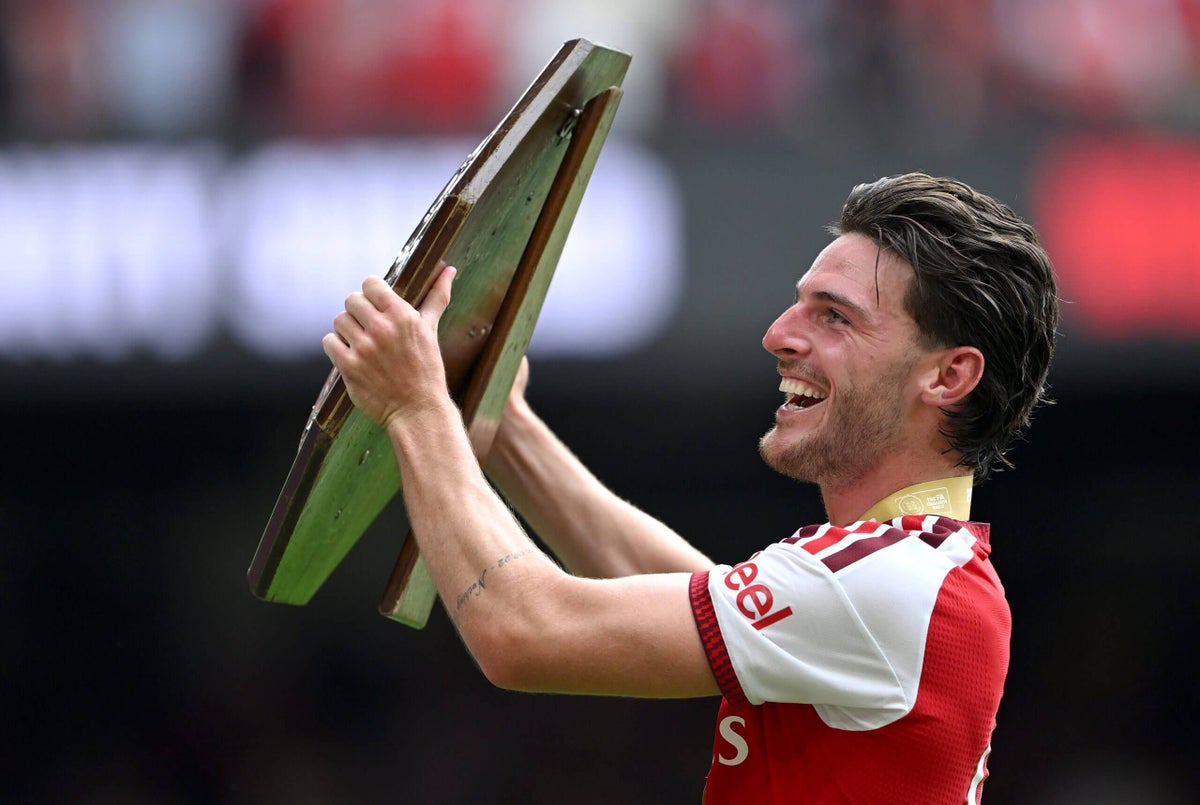
Can anyone stop Arsenal in the Premier League?
It should be too soon to be asking a question like that. We’ve got a whole season ahead of us, 380 Premier League matches in total, starting on Friday under the lights at the Emirates Stadium and finishing in May next year. That’s a lot of football to be played.
It’s also worth remembering that only three managers — Sir Alex Ferguson at Manchester United, Jose Mourinho at Chelsea, and Pep Guardiola at Manchester City – have won Premier League titles back-to-back across the last 34 years.
Rivals, typically, are re-energised, motivated and determined to put right what went wrong the season before. As for the reigning champions, aside from the fact that everyone wants to beat them, the biggest worry is whether it means as much to the players, or even the manager, the following season. To put it another way, is the hunger still there?
Arsenal’s comprehensive 3-0 victory over Manchester City in the Community Shield in Wales on Sunday afternoon provided some possible answers in that respect, and not just because of the goals they scored and the emphatic scoreline.
The clues were there in the off-the-ball actions of the Arsenal players too, in their body language and in the way that every duel seemed to mean so much to them, even in a fixture that still prompts debate among many football fans as to whether winning it actually qualifies as a trophy.

Arteta and his players looked sharp and motivated in Sunday’s game with Manchester City (Shaun Botterill/Getty Images)
Mikel Arteta smiled afterwards when a reporter highlighted to him examples of three Arsenal players (Gabriel, the defender’s international team-mate and new-signing Bruno Guimaraes, and Ben White) revelling in making a challenge or a block on an opponent.
“When you put your soul and your heart into a reaction, that’s what happens,” the Arsenal manager said.
Indeed, the underlying message felt clear at the Principality Stadium: Arsenal supporters might still be basking in the glow of their first league title in 22 years, but Arteta and his players are as driven and ambitious as ever, and that means being hellbent on holding onto the trophy that the club took so long to reclaim.
“Because you want to go through it again,” Arteta explained. “When the desire comes, I want to live that moment again, I want to live all the moments, even bigger than them. We know what it’s going to take, we know the difficulty of the task, that’s why we’ve never done it at this football club (in the Premier League era). So we know that it’s going to demand something special and we are ready for it.”
But are the rest of the Premier League clubs ready? Can a legitimate title challenger emerge from the usual suspects when there has been so much change and churn this summer? City, Liverpool and Chelsea all have new managers, while Michael Carrick is about to embark on his first full season in charge of Manchester United.
The contrast with Arsenal, where Arteta is now the longest-serving manager in English football’s top four divisions, is stark.
Against City, Arsenal looked what they are: a well-oiled machine where all the individual roles are clearly defined, where the movement patterns are familiar (Riccardo Calafiori making runs on the inside on the left, White overlapping on the outside on the right as soon as the wide attacker shifts infield; the two full-backs nearly combined for a goal at one stage), and where a way of consistently winning matches has long been established. And no, that didn’t involve a set-piece goal against City, in case you were wondering.

Myles Lewis-Skelly assisted a goal inside the first 30 seconds of Sunday’s game (Shaun Botterill/Getty Images)
It’s true that the Community Shield is rarely a reliable yardstick for what’s to come — only eight of its 34 winners before Sunday’s game have gone on to claim the Premier League title. This year’s curtain raiser featured a number of players who were making their first club appearance of any description this summer because of the World Cup. It’s a safe bet that Erling Haaland, who was one of those players, won’t be substituted again after 53 minutes this season unless he’s injured.
Equally, some potentially broader issues were impossible to ignore in Cardiff, not least how different Manchester City’s midfield looks without the effervescent Bernardo Silva and the influence of Rodri. Different is one way of putting it; weaker and lacking leadership is another. It’s unthinkable that City allow Rodri to leave this summer without signing a replacement, whether that’s Enzo Fernandez from Chelsea, or someone else.
As for Arsenal, they’ve already strengthened in that department, bringing in Guimaraes from Newcastle for £75million and prompting Mikel Merino to suggest a few days ago that Arsenal now have the best midfield in football. Arteta had a grin on his face when that line was put to him.
As comfortable as Guimaraes already looks in an Arsenal shirt — showing a trademark mix of brains and brawn against City — it was the two players alongside him who played pivotal roles in the goals: Myles Lewis-Skelly, with a lovely disguised pass for the opener after only 24 seconds, and the excellent Martin Odegaard, who had a hand in the second and elegantly scored the third.
“Can we play you every week?” sang the Arsenal supporters after the Norwegian made a fool out of Gianluigi Donnarumma, sitting the City goalkeeper on his backside with a beautiful dummy before slotting into an empty net.
“Are you Tottenham in disguise?” followed moments later.

Phil Foden played in a City midfield shorn of Rodri and Bernardo Silva (Glyn KIRK / AFP via Getty Images)
It was that sort of day for Arsenal, whose fans were greeting passes with “oles” before the hour-mark, taunting City’s new head coach Enzo Maresca about his short-term job prospects, and enjoying the sight of Christos Tzolis, their £34m signing from Club Brugge, mark his competitive debut with two assists. Short of asking the French referee Clement Turpin to play on the left wing, it’s hard to imagine Arsenal could have found a more perfect Leandro Trossard replacement than Tzolis.
All the while, David Raya continued to serve up the occasional reminder with his feet (drilled 40-yard passes into Tzolis) and hands (effortlessly claiming crosses and making an outstanding save to keep out Antoine Semenyo’s late effort) as to why he’s the best goalkeeper in the Premier League.
As the game got away from City (some would argue that was the case inside the first minute) and Arteta started to make widespread changes, there was a reminder of Arsenal’s strength in depth, too.
Bukayo Saka, Declan Rice, Martin Zubimendi, Piero Hincapie, Viktor Gyokeres and Eberechi Eze all came off the bench. Merino, a World Cup winner, was an unused substitute, along with the gifted teenager Max Dowman. As for Gabriel Martinelli, Ethan Nwaneri and Gabriel Jesus, they didn’t make the cut.
Despite all of that, there is still work for Arsenal to do in this transfer window, both in defence — Cristhian Mosquera performed well alongside Gabriel, but Arteta will want a more established centre-back to step into the shoes of the injured William Saliba — and in the forward positions, where an A-list attacker has eluded them so far this summer and will almost certainly be required in order for the club to take the next step in the Champions League.
In terms of the Premier League, though, it’s hard to escape the feeling that Arsenal, once again, will be the team for everyone to beat.
>

Cristiano Ronaldo and Lionel Messi are talking about retirement. What does football look like without them?

Inside the Basque ‘dream team’ that produced Iraola, Arteta and Alonso

Bleach: Thousand-Year Blood War – The Calamity Anime Casts Yūki Kaji – News
-

 movies3 months ago
Search For Canadian TV Actor Stewart McLean Now Homicide Investigation
-

 Fashion9 years ago
These ’90s fashion trends are making a comeback in 2017
-
Fashion9 years ago
According to Dior Couture, this taboo fashion accessory is back
-
Fashion9 years ago
Model Jocelyn Chew’s Instagram is the best vacation you’ve ever had
-
Fashion9 years ago
Emily Ratajkowski channels back-to-school style
-
Fashion9 years ago
9 Celebrities who have spoken out about being photoshopped
-
Fashion9 years ago
Your comprehensive guide to this fall’s biggest trends
-
Fashion9 years ago
A photo diary of the nightlife scene from LA To Ibiza