Connect with us

Sports

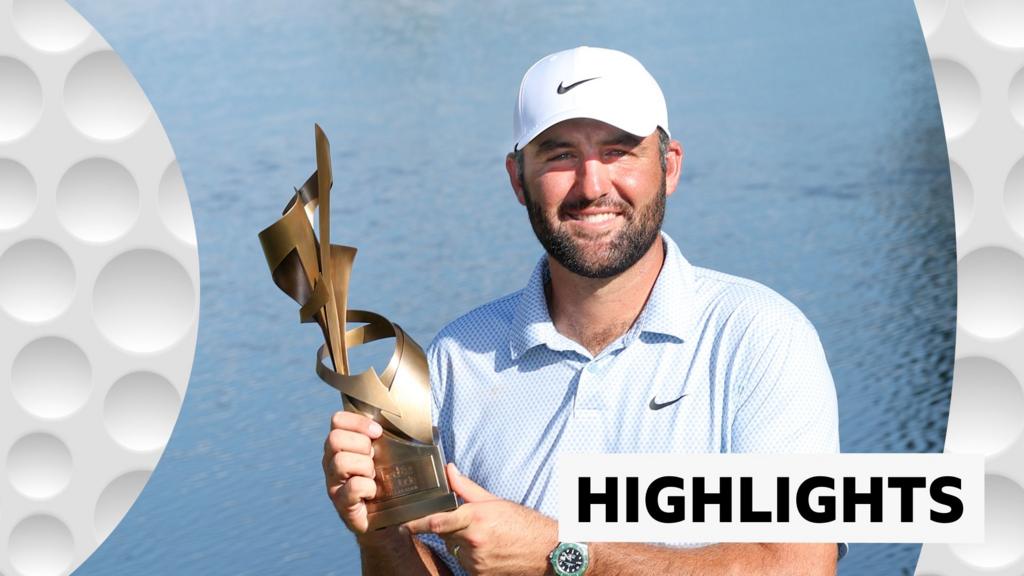
Scheffler cruises to eight-shot win at first FedEx Cup play-off

Published

on

World number one Scottie Scheffler cruises to an eight-shot victory at the first FedEx Cup play-off event at the St Jude Championship at TPC Southwind.

>

Continue Reading

Sports

Why Rafael Jódar’s shoelaces are at the center of a debate over dark arts in tennis

Published

on

Welcome back to the Monday Tennis Briefing, where The Athletic will explain the stories behind the stories from the past week on court.

This week, there was a drama over footwear, a champion hit back at her critics and a sobering message from an all-time great.

If you’d like to follow our fantastic tennis coverage, click here.


Why did broken shoelaces take over a match?

As Rafael Jódar dropped his racket to the ground and pointed to his ears, fans at the Cincinnati Open rose to acclaim a stunning comeback.

Jódar, the 19-year-old Spaniard who has cut a swath through the ATP Tour this year, recovered from 5-1 down in the deciding set of his second-round match against Canada’s Denis Shapovalov to record a thrilling 7-5, 4-6, 7-5 win. He had been cramping. He had appeared physically spent.

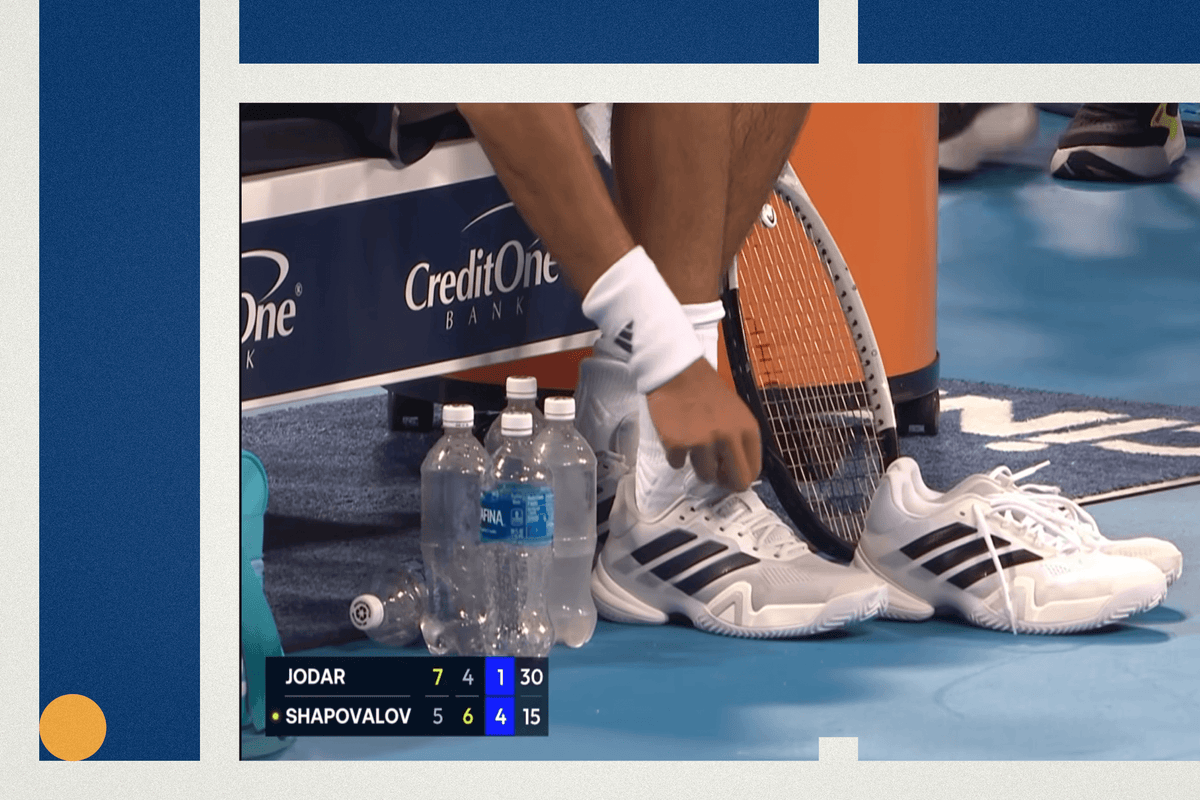
But most controversially, he had changed his shoes — twice.

Jódar’s shoelaces broke when he was 4-1 and 5-3 down in the final set. On the first occasion, Shapovalov was serving. On the second, Jódar was serving. The first stoppage was relatively quick, as Jódar slipped an insole into a fresh shoe and then laced it up, but the second took much longer, to Shapovalov’s chagrin, because of an issue with an insole that Jódar’s father and coach, Rafael Sr., ended up having to insert at the side of the court.

Why do tennis players change their rackets so often?

Tifo Sports

Equipment timeouts are allowed and playing on with a broken shoelace can be dangerous for players. If they slide on hard courts, the design of some shoes — Jódar’s are Adidas Adizero Ubersonics — means that the laces can scrape over the surface and thus wear down and then break. Jódar, who drags the side of his back foot when he slides forward, has a sliding technique that can exacerbate this.

But equipment timeouts also exist in the realm of tennis dark arts, because the sport is so subject to shifts in momentum. Slowing a match down, whether to fix a lace or some other damaged article of clothing or equipment, can be seen as breaking an opponent’s rhythm. Shapovalov was unimpressed not just by Jódar’s second shoelace change, but by the fact that he was towelling his face and drinking water while doing it, which is not permitted.

He then discussed the incidents with Jódar at their handshake — though any shoe-related controversy should not overshadow losing six games in a row against a tiring opponent.

Jódar is also a serial lace breaker, with the same issue happening at the D.C. Open against Taylor Fritz and the Canadian Open against Brandon Nakashima. After the win over Shapovalov, he pledged to have more shoes with fresh laces ready in the future, but it’s unlikely to stop the noise after the next incident.


— James Hansen


How did a champion answer her critics — and a couple of memes?

The eye-test and the numbers say that since 2022, when she is on, Iga Świątek is better at tennis than any woman on earth. Good luck to the rest of the field when she’s spotting her serve and not rushing to try to slam every ball and end every point as quickly as possible.

That was the version of Świątek that showed up at the Canadian Open last week. She took some time off after a tough third-round loss at Wimbledon to Alex Eala, and arrived on the practice court with her coach, Francisco Roig, ready to try to find her best tennis self once more.

“I came back on courts much fresher and much more open to trying new stuff,” Świątek said during a roundtable with journalists at the Cincinnati Open Friday afternoon.

We had like, two weeks I would say and then I came to Toronto and the work that we’ve done there for sure was a key to play better at this tournament and to play a game that is more patient.  I was able to grind more, be more solid, and at the end, that’s what paid off.”

It certainly did. Świątek mostly eased to the title, but when she faced adversity against Marta Kostyuk and Elina Svitolina — two of the form players of 2026 — she found her solidity and let her opponents make mistakes, rather than making them herself by trying to be more aggressive.

Świątek commemorated her title with a number of social media posts, one of which saw her play along with a meme that the WTA Tour and Tennis Channel had deployed on social media last week. The tour and broadcaster used “kinda chic to …”, the online phrase of the summer, to celebrate women’s players, including Coco Gauff’s two Grand Slam titles and Aryna Sabalenka’s world No. 1 ranking.

In the case of six-time Grand Slam champion Świątek, who has more weeks at world No. 1 and more titles than either player, Tennis Channel wrote: “Kinda chic to be a Swiftie”, in relevance to Taylor Swift. The WTA chose to highlight Świątek’s use of “jazda”, the Polish version of “allez”, “vamos” and “let’s go.”

Świątek’s version was a little different:

Świątek, who is one of those players with so many weapons at her disposal and an ability to play so many different ways that she can have hard time figuring out the best way to win, has been trying to bring back the controlled aggressiveness that defined her early domination on the WTA Tour since late 2024, when she hired Wim Fissette as her coach.

They spent their time together trying to get her to play with more spin, shape and patience. Grind a little more, open up the court, and go for the high-margin targets. The strategy peaked last year at Wimbledon. Then, too, Świątek was open to a different approach because she had had so little success on the grass before.

She listened. It worked. But she and Fissette also went through the hardest part of changing style — trying to override ingrained habits and instincts under pressure — and it resulted in some difficult losses. Roig came in early in 2026, and has built on the work between Fissette and Świątek even further.

— Matt Futterman


What makes Ben Shelton a force to be reckoned with in Canada?

Brandon Nakashima earned himself some major brownie points with the Canadian Open crowd in Montreal Thursday, by saying in his runner-up speech that he prefers the French-speaking city to Toronto.

Ben Shelton has no such partiality. As the back-to-back champion, he’s perfectly happy to beat up on his competition in either city.

Shelton said Canada suits his game because as far as hard courts go, they’re fairly slow in both Toronto and Montreal (the cities alternate hosting the men and women’s events of the tournament every year) which makes his lefty serve particularly troublesome way for his opponents. They also give him more time from the baseline, but Shelton said after defeating Nakashima that during his win last year in Toronto, he didn’t feel like he had that time.

This year in Montreal felt much more like a step toward where he wants to be.

“I think last year I definitely won the tournament the hard way. I wasn’t focused the whole time. I had ups and downs throughout the week, throughout different matches. Had my back against the wall a lot of times. I found a way to scrap it out. I was doing a lot of running back at the back fence,” he said in a news conference Thursday.

“This win is a lot more satisfying. Obviously last year, to fight the way I did was pretty crazy to end that tournament with a title. I’m not exactly sure how it ended up that way. But to do it the way I did it this year, without a shadow of a doubt, feels a lot better.”

The cornerstone of Shelton’s game is his cracking serve, but he knows that in order to one day win Grand Slam titles, he has to become a better returner. In Montreal, he returned better than he has all year thanks in part to a more aggressive baseline position and, according to Shelton, better focus.

He won 33 percent of his return games in Montreal according to analytics compiled by Courtside Advantage, a whopping improvement compared to 14 percent over the last 52 weeks (the ATP tour average is 19 percent). He won 41 percent of his return points, up from 35 percent on the rest of the year and 34 percent of return points against his opponents’ first serves, up from 23 percent.

That was in large part because he was taking a bigger cut at his opponents’ serves and hitting more returns deeper into the court than usual. That helped him in another category — he won 51 percent of break points compared to 37 percent on the year, which is also the tour average.

As for his groundstrokes, Shelton did more damage from the back of the court while staying true to his all-court game, winning 56 percent of points where both players were standing on the baseline at the end compared to his 48 percent average for the year.

The field in Montreal was softer than what he’ll face at a Grand Slam — the highest-ranked player Shelton played was then-No. 17 Jakub Menšík — but in a situation where conditions were perfect for Shelton to dominate, he did, and he did so playing exactly the game he wanted.

Shelton hadn’t been able to do that all year, despite the three trophies he’d won before arriving in Canada. That should be a big boost of confidence with the U.S. Open looming.

— Ava Wallace


And how will Novak Djokovic arrive at this year’s U.S. Open?

Novak Djokovic knows opportunities when he sees them.

Carlos Alcaraz hasn’t played since April because of an injured wrist. Jannik Sinner’s knee forced him to pull out of the Cincinnati Open. This could be a wide-open U.S. Open.

So there was Djokovic in southern Ohio last week for the first time in three years. The last time he played Cincinnati, he won it — and also won the U.S. Open — defeating Carlos Alcaraz in a sweat-soaked endurance test for the ages in the former final.

 “As far as my preparation goes for New York, this is great. Being able to participate at least in one tournament — a strong tournament — play one or more matches, hopefully more than one, get myself going,” a tanned and rested Djokovic said in a roundtable Thursday afternoon. 

Well, that didn’t go so well.

Djokovic started strong Saturday, but world No. 50 Thiago Tirante of Agrentina came back and got the better of him, winning 2-6, 6-4, 6-4. Djokovic appeared to vomit twice, with a service hold that took nearly 18 minutes early in the second set sapping much of his energy,

After the match, Djokovic, 39, said that an unspecified “health condition”has been exacerbating the impact of heat stress on his body and on his tennis in recent years.

Now what? It’s doubtful Djokovic will rush into a spot at the ATP 250 Winston-Salem Open in North Carolina next week. He’s scheduled to play mixed doubles with Sabalenka in the U.S. Open competition, which starts on Aug. 25. That might just be the best place to get going.

— Matt Futterman

Shot of the week

The revving forehand that defines Iga Świątek’s best tennis was on full display at the Canadian Open, including during the final against Elena Rybakina. This looping winner caught the world No. 2 by surprise …

But for sheer artistry, Mattia Bellucci’s no-look underarm serve against Jakub Menšík is the winner. The Italian did it with such sprezzatura that his Czech opponent didn’t even move:


🏆 The winners of the week

🎾 ATP: 

🏆 Ben Shelton (5) def. Brandon Nakashima (28) 6-3, 7-6(4) to win the Canadian Open (1,000) in Place. It is Shelton’s fourth title of 2026.

🎾 WTA:

🏆 Iga Świątek (7) def. Elena Rybakina (2) 6-2, 6-3 to win the Canadian Open (1,000) in Place. It is Świątek’s 26th tour title.


📅 Coming up

🎾 ATP 

📍Mason, Ohio: Cincinnati Open (1,000) featuring Alexander Zverev, Félix Auger-Aliassime, Rafael Jódar, Arthur Fils.

📺 UK: Sky Sports; U.S.: Tennis Channel 💻 Tennis TV

🎾 WTA

📍Mason, Ohio: Cincinnati Open (1,000) featuring Aryna Sabalenka, Elena Rybakina, Iga Świątek, Coco Gauff.

📺 UK: Sky Sports; U.S.: Tennis Channel

Tell us what you noticed this week in the comments below as the men’s and women’s tours continue.

>

Continue Reading

Sports

Ipswich set to announce signing of Julio Enciso from Strasbourg in deal worth more than €30m

Published

on

Alexander Hassenstein/Getty Images

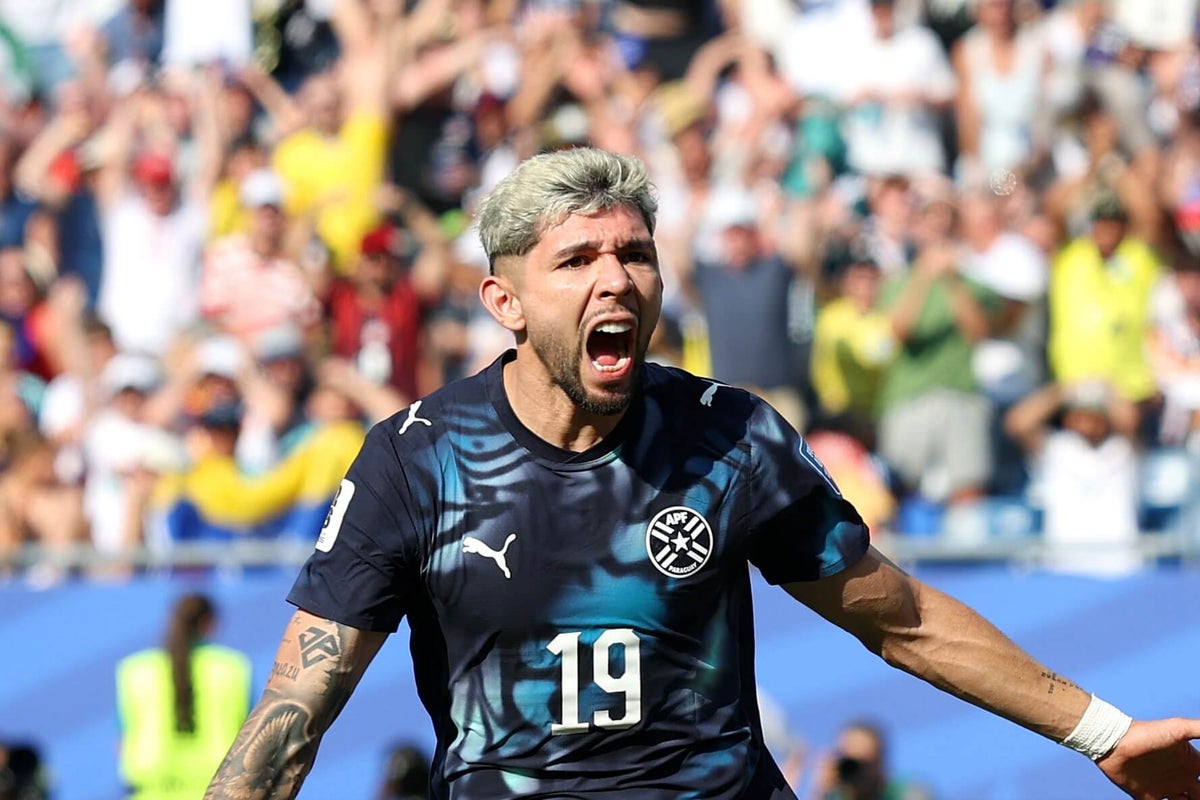
Ipswich Town are set to confirm the permanent signing of Julio Enciso from French club Strasbourg.

The two clubs have agreed a package worth more than €30million including add-ons and a future sell-on clause. The deal will also see 20-year-old midfielder Abdoul Ouattara move in the same direction.

The Athletic reported on August 12 that Ipswich had agreed a deal in principle to sign the Paraguay international.

Enciso, 22, has completed his medical with the promoted side ahead of their return to the Premier League and is set to sign a five-year contract at Portman Road.

This story will be updated.

Connections: Sports Edition Logo

Connections: Sports Edition Logo

Connections: Sports Edition

Spot the pattern. Connect the terms

Find the hidden link between sports terms

>

Continue Reading

Sports

He’s 19 and dominating F1. How does Mercedes keep Kimi Antonelli so grounded?

Published

on

Formula 1 is witnessing the emergence of a generational talent.

At 19 years old and in only his second F1 season, Kimi Antonelli holds a 50-point lead atop the world championship standings. This year, he has become the sport’s second-youngest race winner, its youngest championship leader and youngest pole-sitter. If he wins the 2026, 2027, 2028 or 2029 title, he will become F1’s youngest world champion.

Antonelli is not the first enormously talented athlete to break out at such a young age and tear up the record books. But sport is filled with stories of great prospects struggling in the spotlight or never quite reaching their full potential. Many end up being overhyped.

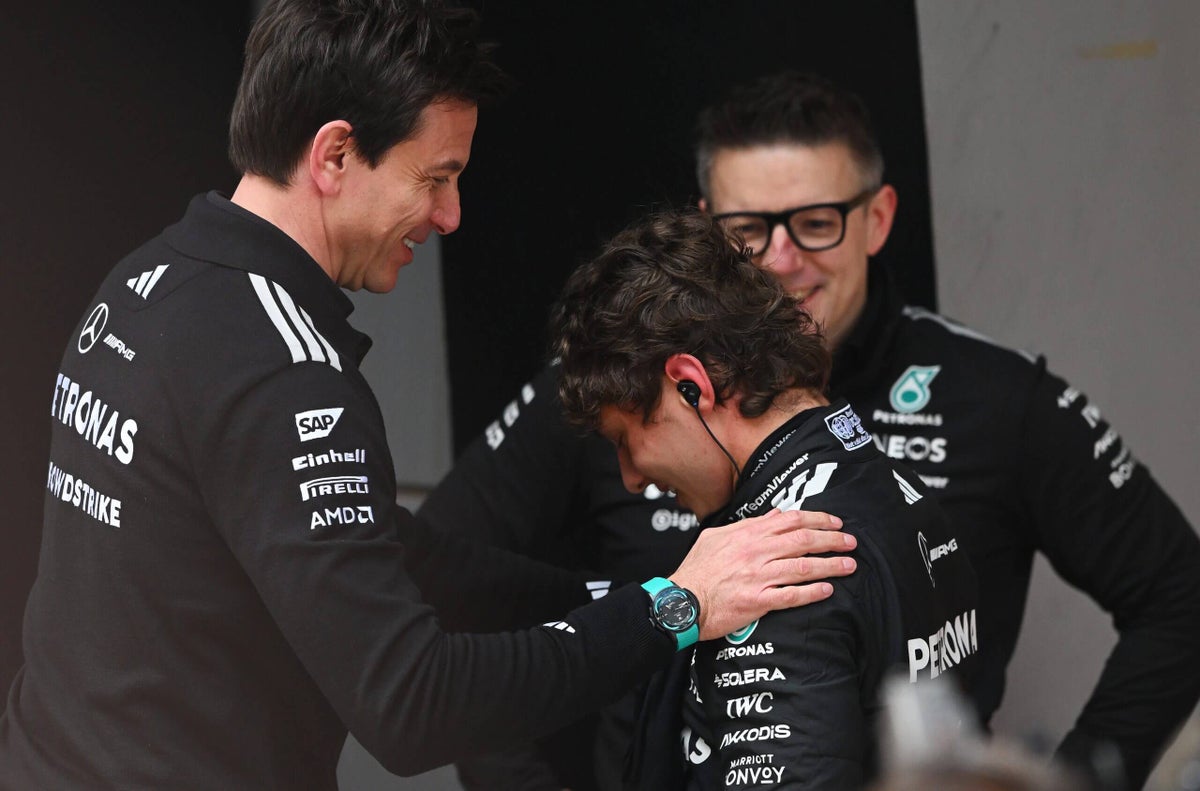
Toto Wolff, the Mercedes team principal, has constantly warned against putting too much pressure on Antonelli. His message is particularly aimed at the Italian press that has understandably latched onto a new home hero. Italy hasn’t had an F1 champion since 1953.

But far from struggling in the spotlight, Antonelli, who turns 20 next week, has taken the newfound fame in his stride. He credits this to the Mercedes support network.

“I have a great team who help me, keep me grounded, and try to steer me in the right direction whenever I’m maybe losing sight of the goal,” Antonelli said.

The creation of that network began very early in Antonelli’s life. He first popped up on Mercedes’ radar in go-karts at age 11, before signing to its academy in early 2018. In go-karting, the traits of the very best drivers will generally begin to shine.

“It’s the way they are developing, the way they are improving their professional approach on every aspect: the technical side, mental side, physical side,” Gwen Lagrue, the long-serving chief of Mercedes’ young driver program, who is joining Red Bull in 2027, told The Athletic in an interview.

By the time a young driver moves from go-karting to single-seater racing, usually starting in Formula 4, Lagrue explained that Mercedes will begin to offer the necessary support to aid their transition.

“When you switch a kid from go-karts to F4, you also need to start to put the people around them,” explained Lagrue. “Who will be the trainer? The mental coach? The guy who will monitor and support on track? Which team will we go to? Which series?”

Lagrue explained that his team at Mercedes had been “much more focused on the human side rather than the technical” aspects of racing with its youngsters. They are trusted to perform as Mercedes tries to place them in the best team at each level of racing, making personal skills the critical ones to foster.

“This is very important,” said Lagrue. “We are not building robots. They are humans, so values are important. Our role is to make sure we’re guiding them the right way.”

Antonelli was supported from his first F4 races in 2021, starting with half a season in the Italian national championship. Lagrue said Mercedes immediately found him a personal trainer, as the 15-year-old Antonelli was “not ready yet for the intensity of F4”.

Mercedes linked Antonelli up with Sergi Ávila, via Aleix Casanovas, who has been George Russell’s trainer since he was a youngster racing in Formula 3. Ávila and Casanovas remain part of Antonelli and Russell’s respective entourages. Stability benefits the drivers as they move up racing levels.

But F4 is the point when drivers start to become more fully integrated into the Mercedes team.

Charles Leclerc, Gwen Lagrue (center) and Fred Vassuer at the 2026 Miami Grand Prix. (Clive Mason/Getty Images)

“They start to have marketing and communication guidance (at that stage),” Lagrue said. “They need to develop and know the culture of the team — what it means to be a Mercedes young driver. They need to realize there are 2,000 people in the team.”

The Mercedes culture bred in Antonelli helped his rapid trajectory toward an F1 seat.

The original plan was for him to spend two years in F2, but Lewis Hamilton left for Ferrari at the end of 2024, forcing Mercedes to change its plans. To Wolff, it was an easy call: He was happy to put in an F1 rookie, something the team had not done since returning to F1 in 2010.

Antonelli spent one season in F2 in 2024, alongside an intense private F1 testing program to ensure he was ready for his 2025 debut alongside Russell.

Regardless of Mercedes’ faith, finding out you’re going to replace F1’s statistical all-time great is a lot for a 17-year-old. But Mercedes felt Antonelli was never overawed.

“The biggest help was the fact he had been with us for six years already (by 2024),” said Lagrue.

“He was part of the family, and he was known by every team member. He was already completely integrated. He was used to having discussions with Toto, with all of us. It was quite an easy transition.”

Lagrue explained that another key part of nurturing talent is appreciating that young drivers are often still teenagers, facing many of the normal challenges of growing up alongside the demands of racing.

The team becomes an important part of their life away from the racetrack too, taking an interest in everything from their personal relationships to schooling.

“Most of the time, we are involved in their worries, even their private stuff,” Lagrue said. “You see them growing up, so we deal with divorce, with the death of a family member, first relationships, the first love failure, fights with friends.”

Lagrue said some juniors struggle with loneliness because their lives are so different from those of typical teenagers, so weekly check-ins are set up with the entire support network.

A big part of that support concerns actual families. Parents want the very best for their children, and Lagrue said Mercedes strives for alignment with the families of its junior drivers on how to handle certain topics, even if there is the occasional challenge.

“You don’t want an ‘us versus them’ (situation),” Lagrue said. “We try to always have the family on board with any decision we are making, especially when they are under 18.”

Marco Antonelli (left) celebrates with his son after F1 qualifying at Spa in July. (Andrej Isakovic / AFP / Getty Images)

Antonelli’s father, Marco, has his own racing team and has been a regular presence at the racetrack throughout his son’s career. He is also close with Wolff.

The strength of this network not only helped Antonelli deal with his sudden transition to F1 racing but also helped him through the mid-year slump of his rookie campaign. His nadir in 2025 came at Spa, where Antonelli was left close to tears facing the media after a bad qualifying session.

He was struggling to click with the Mercedes car and his confidence dipped. A year later, at Spa, he won the race commandingly.

Lifting Antonelli out of the tough time in mid-2025 also required an adjustment from Mercedes, a team used to working with world champions and experienced drivers. But Lagrue was glowing about the work it did to adapt its approach for a rookie, picking out last year’s race in Interlagos, where Antonelli finished second and fended off a charging Max Verstappen, as his first truly strong F1 race.

“We never had any doubt about his speed,” said Lagrue. “It was more all the other parameters — how to deal with an entire race weekend, how to deal with your energy tank, how you are trying to rest and to not have too many distractions, which is very easy to have in F1.

“Sergi did a mega job. The family did a good job. We had some tense moments. When it’s not working, and it’s hard for their son, they will worry as parents. And they were not necessarily happy with what was happening, which is fair enough.

“We had some very tough, but open discussions, and they made a really strong effort to also help the system and help Kimi get through it. It was teamwork.”

It all helped set Antonelli up for his blistering start to 2026, where he rattled off five wins in the first six races to seize control of the championship, with his win at Spa coming four races later.

The foundations for this success were laid not only through his challenges in 2025, but also right back to his early integration within the Mercedes setup.

“You can just see his self-confidence building from weekend to weekend,” said Bradley Lord, Mercedes’ deputy team principal. “(But) not in a way that he’s getting carried away with anything. His feet are very firmly on the ground, and are kept there by his family and inside the team as well.

“But you can just see his self-belief growing and that’s really impressive.”

The F1 driver who can probably best understand what Antonelli is going through is Verstappen, who debuted at 17 and won a race in his second season at 18 with Red Bull. He said he always expected Antonelli to take a big step going into 2026.

“In your first year, there are certain mistakes that you make,” said Verstappen. “We all make them. When you’re driving for a top team, it’s always highlighted a little bit more. There was never a doubt that he would make a jump the year after and be a lot more consistently competitive.

“It’s normal in the progression of a driver. In your rookie season, it can be quite tough. He’s doing an amazing job.”

Kimi Antonelli in action at the 2026 Belgian GP, his most recent F1 win. (John Thys / AFP / Getty Images)

Antonelli does recognize that so much success this soon has come as a surprise to many F1 observers. But there can be no relenting now that F1’s grandest prize is within his sights in just his second season.

“I did not expect to find myself in this position,” Antonelli told reporters before the summer break. “The car has been extremely good, the team has done an incredible job, and, on my side, I try to maximize every opportunity I have.

“There’s still lots of work to do, lots to learn, but it was a good first half of the season. Now I’m looking forward to the second half. We’re just going to keep pushing.”

But in credit to his character — the aspect that struck Lagrue the most when he first met an 11-year-old in go-karts — and the support network around him, Antonelli hasn’t changed with his success.

He’s still playing pranks on his race engineer, Peter Bonnington. He’s still joking with journalists in press sessions. He’s still taking time to wander the paddock with his headphones in and board shorts on between sessions to clear his head.

He has not fallen into the trappings that could come with emerging as F1’s newest superstar. He’s still Kimi.

>

Continue Reading

Trending

Copyright © 2017 Zox News Theme. Theme by MVP Themes, powered by WordPress.