
Sports
Tony Vitello meets with ‘junior college’ Giants after they drop season series to Rockies

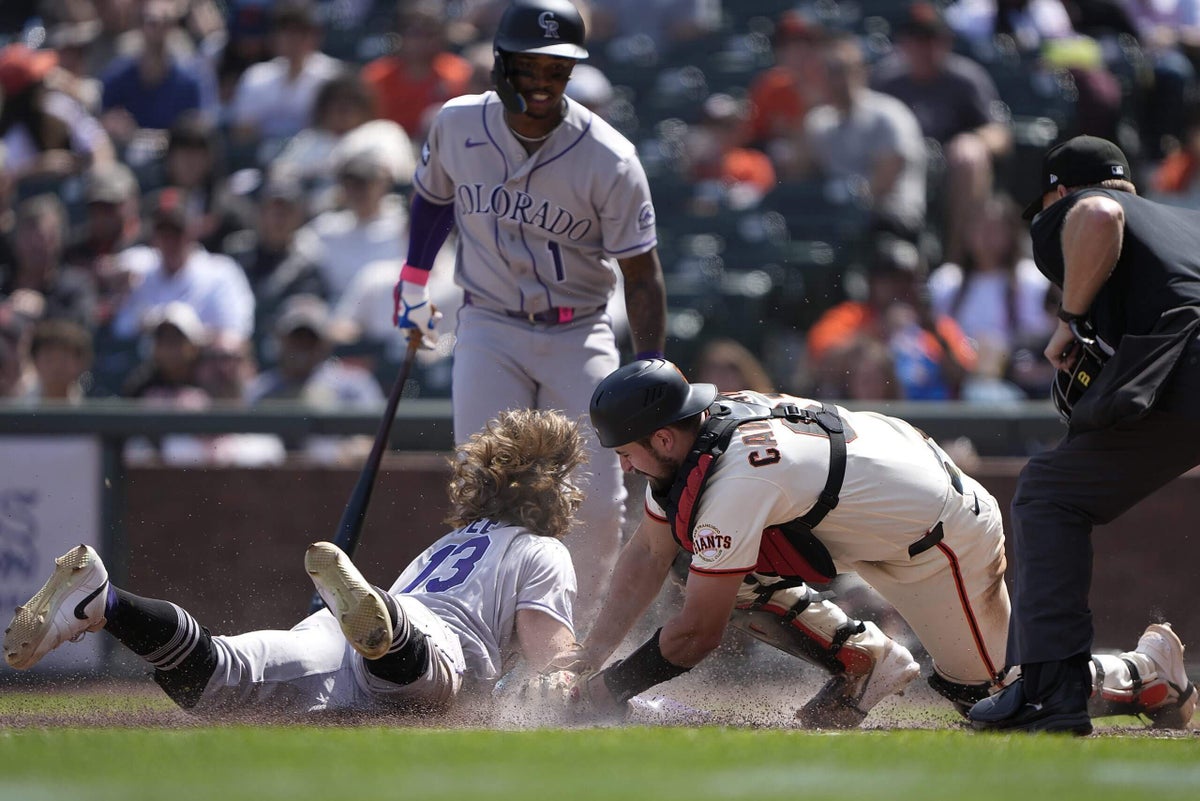
SAN FRANCISCO — After every San Francisco Giants home game, while reporters file into the interview room, a media relations staffer places a sheet of paper on the dais for manager Tony Vitello. Sure enough, minutes after a 13-7 loss to the Colorado Rockies on Sunday, the box score waited for him.
And waited. By the time he picked it up, it was no longer warm from the copier.
Even the most experienced managers sometimes grapple with whether to hold a full-squad meeting after a difficult loss. The season is so long, and the losses will pile up even for the strongest of contenders. So, there’s power in picking your spots. Part of developing an effective voice as a major-league skipper is learning to wield it judiciously. If the manager fails to maintain perspective through the down times, how can anyone else?
Then there are games when the measured approach is not an option — and Sunday’s homestand finale only met the technical definition of a game because it counted in the standings. As a competitive event, it barely qualified. The Giants issued 10 walks. Eight of those base runners scored. JT Brubaker hit a batter with the bases loaded. The Rockies scored a run on a wild pitch that came to rest within a gimme putt of home plate. The Giants didn’t merely lose their fifth consecutive series. They lost a series to the Rockies, their heretofore helpless NL West brethren who, bless them, sometimes forget how to play baseball. They have been especially absent-minded during visits to San Francisco in recent years.
Why are baseball catchers getting hit in the… groin so much more often?
Tifo Sports
The season series results are in: Rockies 7, Giants 6. The Giants hadn’t dropped a season series to the Rockies in a full year since 2018, which was the season that got then-general manager Bobby Evans fired. Entering the weekend, the Giants had won 12 of their last 13 home series against Colorado.
This year, the Giants have become the team that sometimes looks like it has forgotten how to play baseball.
So, the box score waited. The time had come for Vitello to address the team.
“It had more the feel of a lower level, a junior-college game as opposed to a big-league game, with how some of the things transpired,” Vitello said. “And I was a JUCO guy, so I’m not disrespecting junior college.”
Even more pressing for Vitello? That Sunday’s game disrespected Giants fans.
“I mean, people paid money to sit through that,” Vitello said. “And other people … Wash (infield coach Ron Washington) has got to sit through that. And so, might as well sit through a meeting. I don’t know that anything genius was said, and there’s no point in putting on a tirade.
“It’s about today, and it’s not about any one person or any one loss, but it’s more about a theme … of clean baseball.”
The Giants received a stirring game from Rafael Devers, who hit the second splash home run of his career and also created a first-inning run after he hustled a double out of a bloop hit. The hustle out of the box was an encouraging moment for Devers, who on multiple occasions has made the mistake of standing in the box and not realizing that the wind often blows pop-ups back into fair territory at Oracle Park.
It was the kind of game the Giants envisioned last year, when they traded for Devers and took on his massive contract from the Boston Red Sox. Devers was intended to be the finishing piece of a lineup with the depth, experience and potency to carry the team to the postseason. Except Devers is now surrounded by kids and organizational depth pieces. Injuries and the trade deadline have dismantled what was supposed to be a group with remarkable day-to-day continuity.
Even if the lineup were fully assembled and productive, would it matter? It would’ve been impossible to overcome a pitching staff that continues to be so poor at controlling the strike zone. In a year filled with so many unsightly moments, the sixth inning might have been the ugliest yet.
Blade Tidwell appeared to be righting himself after a four-run second inning in which he walked two batters before giving up a home run to light-hitting infielder Adael Amador, and the Giants rallied to take a two-run lead after three innings. But Tidwell was dealing with back soreness, and Vitello said the coaching staff had monitored his drop in velocity. The Giants didn’t go any further with Tidwell after he issued a pair of one-out walks in the fifth.
Left-hander Sam Hentges lost the Giants’ two-run lead in the fifth, when the two runners he inherited from Tidwell scored on a double and a sacrifice fly. The Giants’ bullpen was just getting started. Hentges walked two of the four batters he faced to start the sixth. Then Brubaker entered the game and threw the wild pitch that bounded away by a few feet and escaped the attention of rookie catcher Drew Cavanaugh. Then Brubaker issued two walks and hit a batter. Left-hander Reiver Sanmartin replaced him on the mound and gave up a two-run single to Mickey Moniak.
“(Letdowns) are inevitable,” Vitello said. “Some of the things that pop up in a game go unnoticed when you win, or you get out of the jam, or something like that. But the one thing that’s unavoidable is usually the team that plays catch is the better team that day, and that includes on defense (by) making the average play. And on the mound, you’re playing catch with the catcher.”
On the wild pitch, Vitello called Zac Veen’s decision to sprint home from third base “a Christmas present and we didn’t unwrap it.”
“When you don’t play catch, then … we could stop the presser with that,” Vitello added. “You know, walk in the door and say that and be done.”
In the clubhouse, Vitello had more that needed to be said. Tidwell summed up the message as “have conviction in everything you do.”
“I think he did a good job,” said Tidwell, who played for Vitello at the University of Tennessee. “Everybody was locked in, and the guys were nodding their heads and stuff. So, I think everybody was on board with what he was saying.”
This will continue to be Vitello’s clubhouse. In a story published last week, Giants president Buster Posey told The Athletic’s Brittany Ghiroli that he remained confident in his unorthodox managerial choice. Vitello has two more years on a contract that will pay him $3.5 million per season. There’s vesting option language on a fourth year.
“I look at the job that Tony and his staff are doing, I don’t have any reason not to believe that what they’re doing isn’t gonna get us to a place where we’re playing more consistent, winning baseball,” Posey said.
The Giants are nowhere near meeting those standards now, and given where the roster is, it’s probably more instructive to dissect how they got to this point than to wonder how this pieced-together group will finish over the final six weeks.
Vitello didn’t need to refer to the sheet of paper in front of him as he met with reporters after Sunday’s loss. This wasn’t a game worth revisiting. His predecessor, Bob Melvin, had a ritual after every postgame session. Win or loss, proud or embarrassed, he’d crumple the sheet of paper into a ball and toss it in the wastebasket on his way out of the room.
The unspoken message: This game, for whatever progress or regress it represented, was over. It’s on to the next one.
>
Formula 1 is witnessing the emergence of a generational talent.
At 19 years old and in only his second F1 season, Kimi Antonelli holds a 50-point lead atop the world championship standings. This year, he has become the sport’s second-youngest race winner, its youngest championship leader and youngest pole-sitter. If he wins the 2026, 2027, 2028 or 2029 title, he will become F1’s youngest world champion.
Antonelli is not the first enormously talented athlete to break out at such a young age and tear up the record books. But sport is filled with stories of great prospects struggling in the spotlight or never quite reaching their full potential. Many end up being overhyped.
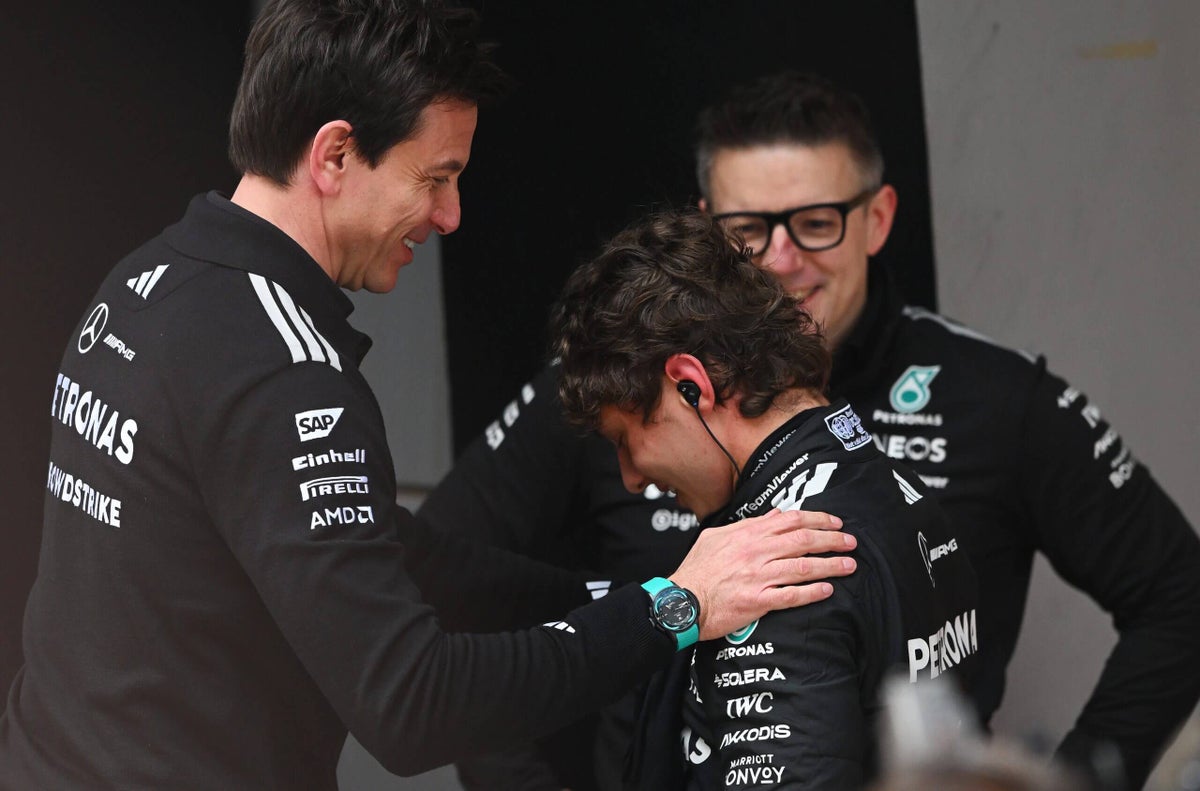
Toto Wolff, the Mercedes team principal, has constantly warned against putting too much pressure on Antonelli. His message is particularly aimed at the Italian press that has understandably latched onto a new home hero. Italy hasn’t had an F1 champion since 1953.
But far from struggling in the spotlight, Antonelli, who turns 20 next week, has taken the newfound fame in his stride. He credits this to the Mercedes support network.
“I have a great team who help me, keep me grounded, and try to steer me in the right direction whenever I’m maybe losing sight of the goal,” Antonelli said.
The creation of that network began very early in Antonelli’s life. He first popped up on Mercedes’ radar in go-karts at age 11, before signing to its academy in early 2018. In go-karting, the traits of the very best drivers will generally begin to shine.
“It’s the way they are developing, the way they are improving their professional approach on every aspect: the technical side, mental side, physical side,” Gwen Lagrue, the long-serving chief of Mercedes’ young driver program, who is joining Red Bull in 2027, told The Athletic in an interview.
By the time a young driver moves from go-karting to single-seater racing, usually starting in Formula 4, Lagrue explained that Mercedes will begin to offer the necessary support to aid their transition.
“When you switch a kid from go-karts to F4, you also need to start to put the people around them,” explained Lagrue. “Who will be the trainer? The mental coach? The guy who will monitor and support on track? Which team will we go to? Which series?”
Lagrue explained that his team at Mercedes had been “much more focused on the human side rather than the technical” aspects of racing with its youngsters. They are trusted to perform as Mercedes tries to place them in the best team at each level of racing, making personal skills the critical ones to foster.
“This is very important,” said Lagrue. “We are not building robots. They are humans, so values are important. Our role is to make sure we’re guiding them the right way.”
Antonelli was supported from his first F4 races in 2021, starting with half a season in the Italian national championship. Lagrue said Mercedes immediately found him a personal trainer, as the 15-year-old Antonelli was “not ready yet for the intensity of F4”.
Mercedes linked Antonelli up with Sergi Ávila, via Aleix Casanovas, who has been George Russell’s trainer since he was a youngster racing in Formula 3. Ávila and Casanovas remain part of Antonelli and Russell’s respective entourages. Stability benefits the drivers as they move up racing levels.
But F4 is the point when drivers start to become more fully integrated into the Mercedes team.

Charles Leclerc, Gwen Lagrue (center) and Fred Vassuer at the 2026 Miami Grand Prix. (Clive Mason/Getty Images)
“They start to have marketing and communication guidance (at that stage),” Lagrue said. “They need to develop and know the culture of the team — what it means to be a Mercedes young driver. They need to realize there are 2,000 people in the team.”
The Mercedes culture bred in Antonelli helped his rapid trajectory toward an F1 seat.
The original plan was for him to spend two years in F2, but Lewis Hamilton left for Ferrari at the end of 2024, forcing Mercedes to change its plans. To Wolff, it was an easy call: He was happy to put in an F1 rookie, something the team had not done since returning to F1 in 2010.
Antonelli spent one season in F2 in 2024, alongside an intense private F1 testing program to ensure he was ready for his 2025 debut alongside Russell.
Regardless of Mercedes’ faith, finding out you’re going to replace F1’s statistical all-time great is a lot for a 17-year-old. But Mercedes felt Antonelli was never overawed.
“The biggest help was the fact he had been with us for six years already (by 2024),” said Lagrue.
“He was part of the family, and he was known by every team member. He was already completely integrated. He was used to having discussions with Toto, with all of us. It was quite an easy transition.”
Lagrue explained that another key part of nurturing talent is appreciating that young drivers are often still teenagers, facing many of the normal challenges of growing up alongside the demands of racing.
The team becomes an important part of their life away from the racetrack too, taking an interest in everything from their personal relationships to schooling.
“Most of the time, we are involved in their worries, even their private stuff,” Lagrue said. “You see them growing up, so we deal with divorce, with the death of a family member, first relationships, the first love failure, fights with friends.”
Lagrue said some juniors struggle with loneliness because their lives are so different from those of typical teenagers, so weekly check-ins are set up with the entire support network.
A big part of that support concerns actual families. Parents want the very best for their children, and Lagrue said Mercedes strives for alignment with the families of its junior drivers on how to handle certain topics, even if there is the occasional challenge.
“You don’t want an ‘us versus them’ (situation),” Lagrue said. “We try to always have the family on board with any decision we are making, especially when they are under 18.”

Marco Antonelli (left) celebrates with his son after F1 qualifying at Spa in July. (Andrej Isakovic / AFP / Getty Images)
Antonelli’s father, Marco, has his own racing team and has been a regular presence at the racetrack throughout his son’s career. He is also close with Wolff.
The strength of this network not only helped Antonelli deal with his sudden transition to F1 racing but also helped him through the mid-year slump of his rookie campaign. His nadir in 2025 came at Spa, where Antonelli was left close to tears facing the media after a bad qualifying session.
He was struggling to click with the Mercedes car and his confidence dipped. A year later, at Spa, he won the race commandingly.
Lifting Antonelli out of the tough time in mid-2025 also required an adjustment from Mercedes, a team used to working with world champions and experienced drivers. But Lagrue was glowing about the work it did to adapt its approach for a rookie, picking out last year’s race in Interlagos, where Antonelli finished second and fended off a charging Max Verstappen, as his first truly strong F1 race.
“We never had any doubt about his speed,” said Lagrue. “It was more all the other parameters — how to deal with an entire race weekend, how to deal with your energy tank, how you are trying to rest and to not have too many distractions, which is very easy to have in F1.
“Sergi did a mega job. The family did a good job. We had some tense moments. When it’s not working, and it’s hard for their son, they will worry as parents. And they were not necessarily happy with what was happening, which is fair enough.
“We had some very tough, but open discussions, and they made a really strong effort to also help the system and help Kimi get through it. It was teamwork.”
It all helped set Antonelli up for his blistering start to 2026, where he rattled off five wins in the first six races to seize control of the championship, with his win at Spa coming four races later.
The foundations for this success were laid not only through his challenges in 2025, but also right back to his early integration within the Mercedes setup.
“You can just see his self-confidence building from weekend to weekend,” said Bradley Lord, Mercedes’ deputy team principal. “(But) not in a way that he’s getting carried away with anything. His feet are very firmly on the ground, and are kept there by his family and inside the team as well.
“But you can just see his self-belief growing and that’s really impressive.”
The F1 driver who can probably best understand what Antonelli is going through is Verstappen, who debuted at 17 and won a race in his second season at 18 with Red Bull. He said he always expected Antonelli to take a big step going into 2026.
“In your first year, there are certain mistakes that you make,” said Verstappen. “We all make them. When you’re driving for a top team, it’s always highlighted a little bit more. There was never a doubt that he would make a jump the year after and be a lot more consistently competitive.
“It’s normal in the progression of a driver. In your rookie season, it can be quite tough. He’s doing an amazing job.”

Kimi Antonelli in action at the 2026 Belgian GP, his most recent F1 win. (John Thys / AFP / Getty Images)
Antonelli does recognize that so much success this soon has come as a surprise to many F1 observers. But there can be no relenting now that F1’s grandest prize is within his sights in just his second season.
“I did not expect to find myself in this position,” Antonelli told reporters before the summer break. “The car has been extremely good, the team has done an incredible job, and, on my side, I try to maximize every opportunity I have.
“There’s still lots of work to do, lots to learn, but it was a good first half of the season. Now I’m looking forward to the second half. We’re just going to keep pushing.”
But in credit to his character — the aspect that struck Lagrue the most when he first met an 11-year-old in go-karts — and the support network around him, Antonelli hasn’t changed with his success.
He’s still playing pranks on his race engineer, Peter Bonnington. He’s still joking with journalists in press sessions. He’s still taking time to wander the paddock with his headphones in and board shorts on between sessions to clear his head.
He has not fallen into the trappings that could come with emerging as F1’s newest superstar. He’s still Kimi.
>
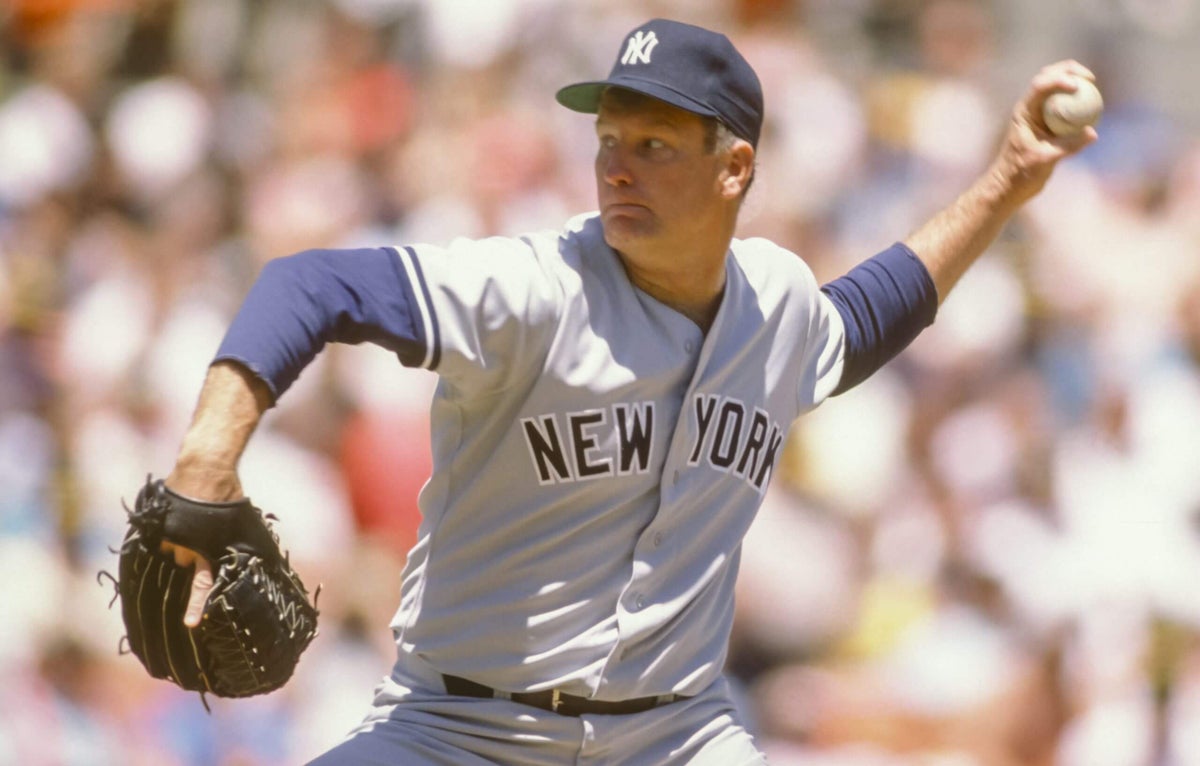
Tommy John was on the phone to deliver the kind of heat at age 72 that he did not throw decades earlier from the mound. This was October 2015, after agent Scott Boras had tried and failed to compel the New York Mets to limit their ace, Matt Harvey, to 180 innings that year.
On the eve of Harvey’s Game 3 start against the Los Angeles Dodgers in the Division Series, I asked the left-hander with 288 big-league victories over 26 years what he thought Harvey, a graduate of Tommy John surgery, should have done when Boras prioritized his client’s right elbow over the Mets’ championship aims.
“I would have called Scott and said, ‘Sit down and shut your f—ing mouth. You work for me, and I’ll tell you what to do,’” John shot back before simmering down, temporarily, and conceding that he knew the agent was only trying to protect Harvey’s future earnings and that he, too, would have wanted Boras to represent him in his prime.
“But he can’t see the future …” John continued. “In the 13 years after I had the surgery, I never missed a start. Never had any arm pain. None.”
Over this lengthy conversation with a man I had never covered, a remarkable pitcher who died Saturday at 83, John opened a window on his competitive soul that helped explain how he had claimed 164 of his victories after the landmark 1974 surgery — performed by Dr. Frank Jobe — that quite literally changed the game.
John was a 13-3 starter for the Dodgers in the summer of 1974 when he threw a pitch to Hal Breeden of the Montreal Expos that, he said, left him feeling as if his left arm had detached from his body and gone sailing off into the outfield. John responded to that uniquely painful sensation by actually throwing another pitch before realizing something was terribly wrong.
Jobe famously rebuilt his ulnar collateral ligament with a wrist tendon, and John famously handled the rest. He had made his major-league debut as a 20-year-old with Cleveland in 1963, during the final months of President John F. Kennedy’s life, and yet was still pitching as a New York Yankee in the first months of President George H.W. Bush’s administration in 1989, becoming the oldest winning Opening Day starter ever as he approached his 46th birthday. In the game’s modern era, only Nolan Ryan played more seasons (27) than John did.
But his durability wasn’t defined by Ryan-like velocity or anything remotely close to it. To watch John pitch was to wonder how it was possible he could be so good for so long. He didn’t strike out many hitters, and he didn’t move with the easy athleticism you might expect from a basketball prospect out of the Hoosier state, Indiana, who fielded numerous Division I offers.
The sinkerballer instead beat people with his willpower and guile. He became what the Yankees called Sunday “a bedrock of our rotation” and, despite failing to win a World Series ring, finished his career with a record of 6-3 and an ERA of 2.65 in 14 postseason games.
STATEMENT FROM THE NEW YORK YANKEES:
“The New York Yankees mourn the passing of Tommy John, who was a bedrock of our rotation during his time in pinstripes and a longtime favorite of Yankees fans. While his incredible longevity and post-surgery achievements changed the fortunes… pic.twitter.com/p6ndlBxUTb
— New York Yankees (@Yankees) August 16, 2026
Most impressively, after the surgery cost him all of 1975, John pitched 1,182 innings over the next five seasons, including 207 in ’76. This was why, in our 2015 interview, he said he couldn’t accept Boras’ push for the Harvey limit (the Mets’ ace ultimately pitched a combined 216 regular-season and postseason innings that year before losing much of the following season to surgery for thoracic outlet syndrome) or the Nationals’ choice in 2012 to bench another client returning from Tommy John surgery, Stephen Strasburg, after 159.1 innings logged for a playoff-bound team.
“Dr. Jobe told everyone that the longer you go without any post-op setbacks, the less chance you have of getting injured,” John said. “That doesn’t mean Matt Harvey won’t get hurt; nobody can guarantee that. But I would’ve been so pissed off if I were busting my butt on that Nationals ballclub when Strasburg was shut down.
“If Matt’s not hurting, he needs to pitch as hard as he can for as long as he can. Don’t abuse him, but pitch him. It’s the playoffs. His team hasn’t been to the World Series in 15 years, and this is what he’s been wanting to do his entire life. We’re all actors, and right now he’s on center stage. He’s got all winter to rest his arm. It’s time to perform.”
After Harvey successfully lobbied manager Terry Collins to let him carry a 2-0 lead over Kansas City into the ninth inning of Game 5 of the World Series, the Royals tied it and eventually eliminated the Mets in the 12th. Harvey was never the same ace again.
But this isn’t about whether Tommy John was right or wrong about Harvey and Strasburg or any other pitcher whose career was rescued by the surgery bearing his name. It’s about John’s inner fire. He was a flamethrower without the radar-gun readings to show for it.
He spoke that day about what Harvey should do in his Division Series start if he faced the Dodgers’ Chase Utley, whose dirty Game 2 slide into the Mets’ Ruben Tejada had broken the second baseman’s leg. John said Harvey should publicly threaten “to get that SOB and get him good” to rattle Utley and then to avoid hitting him — to help the Mets’ chances of winning. (Utley didn’t end up playing in Game 3.)
John’s reasoning? In 1968, after the Tigers’ Dick McAuliffe charged the White Sox lefty and separated his shoulder, John went on the record with a promise to seek retribution ASAP.
“And I never threw at him, ever,” John said. “All I wanted to do was put doubt in his mind, to have him thinking, ‘Is he going to get me this at-bat or the next at-bat?’ McAuliffe never did much against me after that.”
In his goodbye letter that the Yankees shared on Aug. 8, Old Timers’ Day, John wrote that on the day he left home to start his career as a pro, his father told him, “Whether you make it in the big leagues or you don’t, you’ll always just be Tommy John from Terre Haute, Indiana.”
But he made it in the biggest markets in the sport — Chicago, Los Angeles, New York — and finished with more victories than any modern pitcher not in the Hall of Fame other than Roger Clemens. John was also tough enough to forever own a career-saving operation that has allowed so many injured baseball stars to continue playing the game at the highest level.
So in his dying days, when Tommy John told his fans, “I will never forget you,” here’s hoping he understood that sentiment works both ways.
>
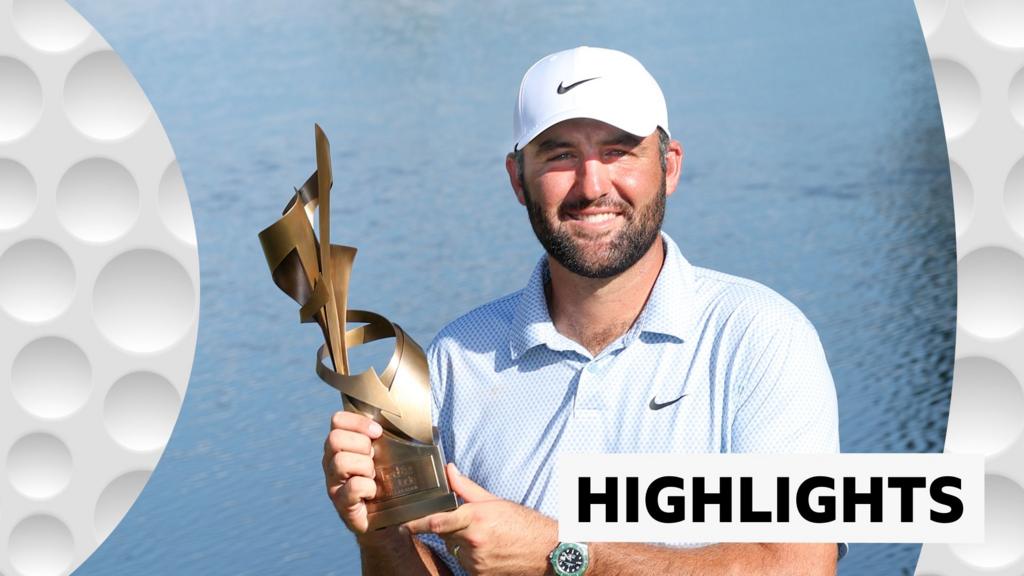
World number one Scottie Scheffler cruises to an eight-shot victory at the first FedEx Cup play-off event at the St Jude Championship at TPC Southwind.
>

He’s 19 and dominating F1. How does Mercedes keep Kimi Antonelli so grounded?

Tommy John was a great flamethrower who didn’t throw smoke

Scheffler cruises to eight-shot win at first FedEx Cup play-off
-

 movies3 months ago
Search For Canadian TV Actor Stewart McLean Now Homicide Investigation
-

 Fashion9 years ago
These ’90s fashion trends are making a comeback in 2017
-
Fashion9 years ago
According to Dior Couture, this taboo fashion accessory is back
-
Fashion9 years ago
Model Jocelyn Chew’s Instagram is the best vacation you’ve ever had
-
Fashion9 years ago
Emily Ratajkowski channels back-to-school style
-
Fashion9 years ago
9 Celebrities who have spoken out about being photoshopped
-
Fashion9 years ago
Your comprehensive guide to this fall’s biggest trends
-
Fashion9 years ago
A photo diary of the nightlife scene from LA To Ibiza