
Sports
Bills observations: Deone Walker flashes potential in Year 2, injury list shuffles

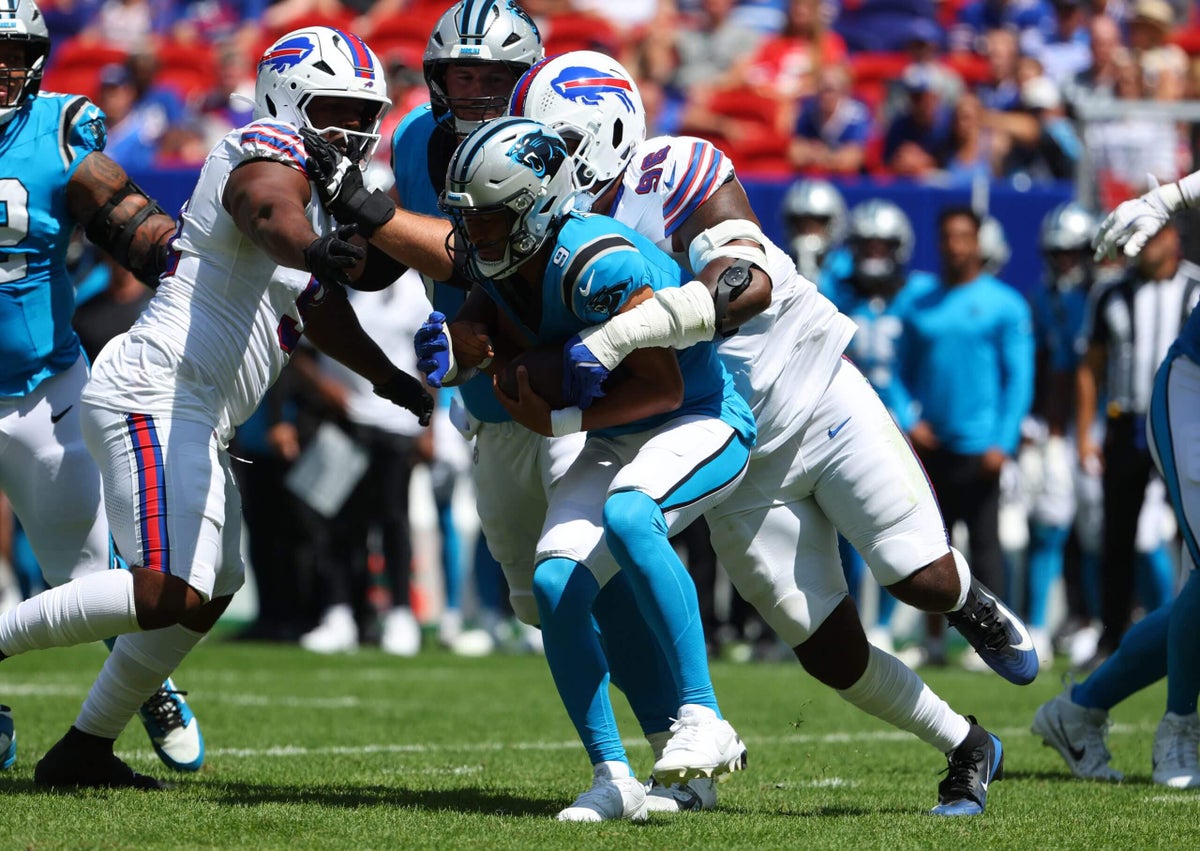
The Buffalo Bills have a busy week ahead of them. Not only did they host another open practice on Tuesday at their brand-new home, Highmark Stadium, but they’re also taking their operations on the road for much of the week.
The team takes part in a joint practice with the Cleveland Browns Thursday afternoon, followed by the teams’ preseason matchup on Saturday. Before heading to Ohio, the Bills saw some of their injured players return during their stadium practice, while adding a bevy of names to the injury list.
On the plus side, the Bills welcomed back starting cornerback Maxwell Hairston and starting safety Cole Bishop to practice participation. Both players had missed about a week of action and did not play in the preseason game against the Panthers, and were full participants Tuesday.
The same goes for reserve offensive lineman Tylan Grable, who did not play against the Panthers after leaving Thursday’s practice early with an injury.
Do Buffalo Bills have the NFL’s best offense?
Robert Mays and Derrik Klassen
But with their returns, the non-participant list grew — most notably at wide receiver. The Bills were without the trio of Khalil Shakir, Keon Coleman and rookie Skyler Bell. There is no injury distinction on Shakir yet, as head coach Joe Brady doesn’t meet with the media until Thursday in Cleveland. However, Coleman wore a walking boot on his right foot, while Bell is dealing with a lower-body injury that has kept him out for over a week.
Another big injury addition is starting defensive lineman Ed Oliver. Oliver took every single first-team snap against the Panthers on Saturday, making his absence from practice on Tuesday slightly surprising. Along with Oliver and the receivers, running back Ty Johnson, center Connor McGovern, safety C.J. Gardner-Johnson and rookie safety Jalon Kilgore also did not practice.
Although the Bills have had some injury woes, the never-ending roster grind continues as Aug. 30 — cutdown day — draws closer. We’re at the part of the summer when we see some real depth chart jostling as we start to see how the Bills’ 53-man roster could take shape.
After going back and watching the film of the Panthers game, combined with what we saw during Tuesday’s practice, here’s what stood out and some of the things the Bills are going to have to decide in the next two weeks.
Walker’s whoa potential
Even though the Bills’ first-team defense had nine snaps total, the massive impact second-year player Deone Walker had on the game was noticeable at first. When you watched it back on coaches’ film, it was even more impressive. Walker was a dominant force against the Panthers on Saturday and really showed some elite growth from his rookie season to this one.
While you don’t want to jump to conclusions over preseason reps, seeing this type of ability on film at least gives you an idea of what is possible with an emerging young player. Whether it’s taking advantage of one-on-ones, being a nuisance in the run game, or setting the table for his teammates, Walker showed that his ceiling could be extremely high in this Bills defense.
The Bills have been consistently searching for game-wrecking defensive linemen that force opponents to gameplan for them. Since general manager Brandon Beane arrived, the closest thing to that has been Ed Oliver. And while Oliver is a very good player who provides splash plays and does a lot of great things that go unnoticed, his consistency in those flashy reps hasn’t been there as much throughout his career. What Walker showed on film in a small sample size is the type of talent they’ve been searching for at that spot for a long time. What Walker showed Saturday and throughout training camp, along with the baseline ability we saw in 2025, makes him becoming the Bills’ defensive focal point squarely in the range of outcomes. Plus, he’s still only 22 years old.
With that said, Walker has a long way to go before he reaches that level. He’s already vastly outplayed his fourth-round pick and has quickly become one of their most important defenders. However, seeing the types of things Walker is capable of, if harnessed and proven to be consistent throughout the season, has to have the Bills feeling extremely hopeful for what he could become, possibly in the not-so-distant future.
Elarms-Orr learning as he goes, but the Bills seem encouraged
In his NFL debut, the Bills gave rookie inside linebacker Kaleb Elarms-Orr all he could handle with a ton of time on the field. He mixed in next to Terrel Bernard with the first-team defense, then played a lot of snaps with the second-team defense, and even got a handful of snaps with the third-team defense. It was pretty obvious that the Bills, who have been extremely pleased with Elarms-Orr so far, were trying to get him a lot of experience before the games actually matter.
“He plays fast, he plays physical,” defensive coordinator Jim Leonhard said. “I mean, the athleticism always pops with him and physicality,” Leonhard said. “He’s gonna be a great player.”

Buffalo Bills rookie linebacker Kaleb Elarms-Orr (52), pictured during minicamp, could be in line to start for Week 1. (Gregory Fisher / Imagn Images)
The physicality piece stood out watching the game back, especially in how he engaged with blockers and held at the point of attack to keep in the play. That’s something the linebacker room was missing in 2025.
However, the rookie’s roughest rep was when he took a pass interference penalty, though Leonhard said it had all to do with Elarms-Orr’s positioning, which allowed a teachable moment for the young linebacker.
“Honestly, it was more pre-snap,” Leonhard said. “He just did a little bit too extra pre-snap with what he was trying to disguise, which put him in a tough spot, and you know, he ended up panicking a little bit down the field.”
However, even with that lesson learned, the Bills aren’t running from the idea that Elarms-Orr could be an early contributor, and possibly even a starter. In Tuesday’s practice, it was Elarms-Orr, not Dorian Williams, getting the first set of first-team reps next to Bernard. Williams mixed in later with a series of his own, too. However, the Bills are giving Elarms-Orr every opportunity to win the starting job outright.
OL decision is getting tougher
One of the biggest things that stood out in the film over the final three quarters was our first real glimpse of how their reserve offensive linemen looked against opponents. What makes it so compelling is that the Bills have a blend of veterans and players they picked over the last three drafts, all vying for roster spots. At this point, both veterans Austin Corbett and Lloyd Cushenberry III appear pretty well insulated, leaving the Bills to potentially make a tough call on cutting or trading players they drafted. Rookie tackle Jude Bowry, a fourth-round pick, is a roster lock due to his draft status.
That leaves the quartet of Sedrick Van Pran-Granger (2024 fifth-round), Tylan Grable (2024 sixth-round), Chase Lundt (2025 sixth-round) and Ar’maj Reed-Adams (2026 seventh-round), all picks of the Bills, competing for one or two spots on the 53-man roster. It’s become a tougher decision because three of those four, Van Pran-Granger, Grable, and Reed-Adams, have shown real growth and promise this summer.
Although Grable didn’t play on Saturday, he’s a super athletic offensive tackle with potential, and those are heavily sought after by teams, and the type the Bills don’t often give up on early. With how well Van Pran-Granger and Reed-Adams performed against the Panthers, it complicates things. If they have to cut one or two in that young trio, the chances they sneak past waivers and get to their practice squad in an offensive line-starved NFL likely reduce.
After Tuesday’s practice, starting center Connor McGovern remarked that this summer has been the best camp he’s seen from Van Pran-Granger, as he’s learned how to utilize his positioning against defenders better.
However, the real recent surprise has been Reed-Adams, who had an excellent game on Saturday, to the point that his stock is rising. Reed-Adams only plays guard, which hurts his case, but his strength and long arms have shown there’s more there than first thought. As McGovern said, if Reed-Adams gets his “big stone hands” on a defender during a rep, “it’s over.”
Without question, it’s a good problem for the Bills to have. However, because of the sheer numbers at the position, they may be forced to move on from someone they would rather see develop internally for another year.
A special teams role that could impact many roster choices
The Bills’ punt return role was unsettled in 2025, and with most of training camp over, it’s safe to say they’re in a similar spot in 2026.
The team has tried many options in practice, but only two have been consistently present and have a realistic shot at making the team. The first is wide receiver Mecole Hardman, who held the role for a time last season but plays minimal offensive snaps. The other is running back Ray Davis, a roster lock but short on experience doing the job. Although this may not seem like a big deal because it’s just a handful of snaps each game, if the Bills give the job to Hardman, it could take away a valuable spot the Bills may want to use to keep a promising young player elsewhere.
Davis solved that same conundrum as the primary kickoff returner, but catching kickoffs and punts is a different skill set entirely, as the ball comes in differently. Plus, to catch a punt, you have to be aware of your surroundings, both where you are on the field and how close defenders are to you, and then secure the catch on top of it. Davis has struggled with some bobbles while trying to catch punts, even though he is so fluid at catching them on the go on kickoffs. It brings up the question of how confident they would be in him when the games actually matter.
If they aren’t, then they likely have to keep Hardman at a potential onesie position. That’s why Davis’ acclimation to the role is so important to watch during the remaining practices and games.
>
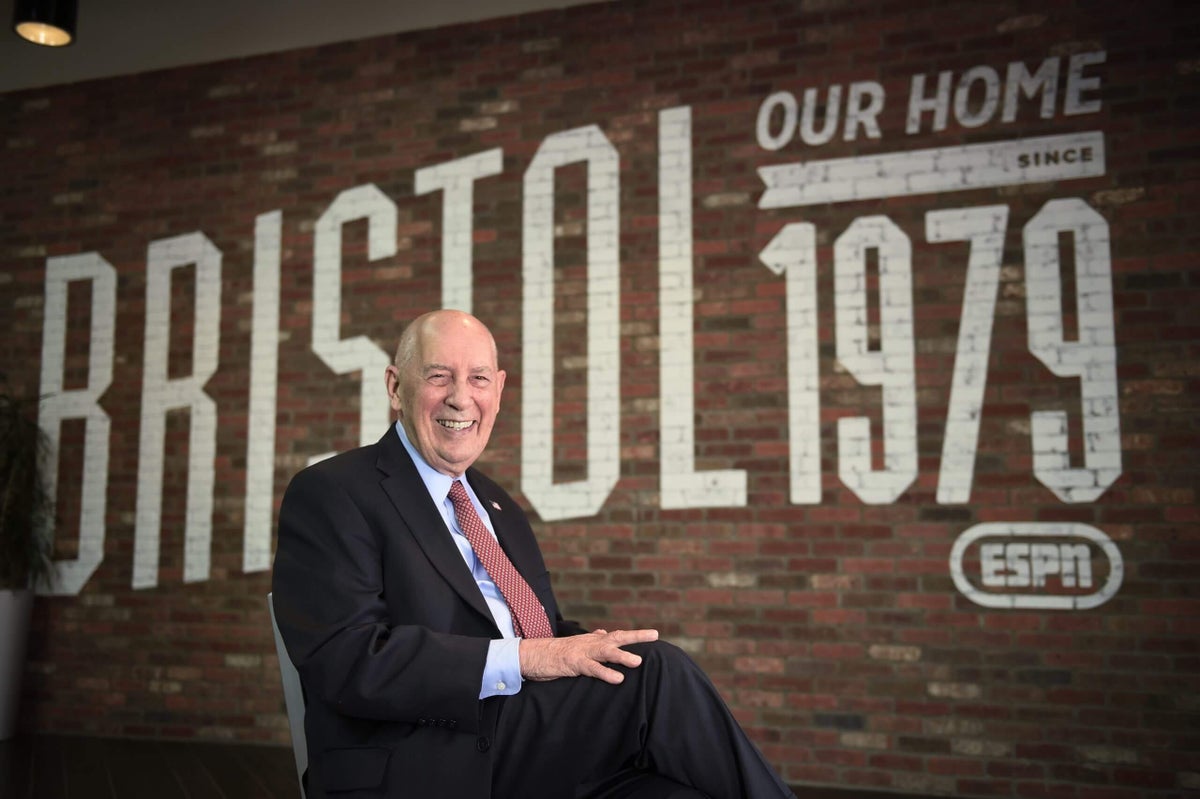
Bill Rasmussen, the co-founder of ESPN and innovator of around-the-clock sports television, died Tuesday at the age of 93, the network announced. The media company said he died from the effects of Parkinson’s disease.
Along with his son Scott, Rasmussen’s vision of a 24-hour sports TV network was a wildly innovative idea in the late 1970s and initially was met with skepticism. A few years later, however, ESPN was a media fixture.
Rasmussen left the company in 1980 but reconnected with the network in 1999 ahead of its 20th anniversary.
“Bill was a remarkable man — a visionary and an innovator who conceived the idea of a network entirely devoted to sports,” ESPN Chairman Jimmy Pitaro said. “Quite simply, none of us would be here today if it wasn’t for Bill’s passion and all the hard work and entrepreneurial spirit he put into building ESPN in the late 1970s — key aspects of our company culture that still carry on to this day.”
Rasmussen, who was inducted into the Sports Broadcasting Hall of Fame in 2025, was born in Chicago in 1932 and later served in the United States Air Force. His media career began in the 1960s at radio stations in Massachusetts before he joined the New England Whalers as communications director in 1974.

Rasmussen, who reconnected with ESPN in the late ’90s, standing on the “SportsCenter” set in 2005.
After being fired by the Whalers in 1978, he pursued the idea of a television channel dedicated solely to sports.
“I thought, why not a channel that’s on all the time?” Rasmussen told Cronkite News decades later. “Sports don’t stop at 6 o’clock.”
At 7 p.m. on Sept. 7, 1979, ESPN launched with the first broadcast of its new show, “SportsCenter,” from its headquarters in Bristol, Conn.
“It’s not to say that there wouldn’t have been a 24-7 sports operation at some point, but it certainly wouldn’t have been in remote Connecticut,” James Andrew Miller, co-author of “Those Guys Have All The Fun,” the definitive oral history of ESPN, told The Athletic. “And the fact that it was in remote Connecticut allowed them to take chances and to do things differently than the three broadcast networks in New York City. And that became part of the foundation of their success.
“So: No Bill, no ESPN.”
Six months before that TV debut, Rasmussen and the founding team had sold 85 percent of the fledgling company to Getty Oil. This controlling stake ultimately led to Rasmussen’s loss of power and, a year after that first edition of “SportsCenter,” his ouster from the company he helped create.
In that first year, ESPN’s live-sports strategy was built on an early deal with the NCAA, which gave them access to around 50 college football games, a couple dozen soccer games and, in what would be a signature element of ESPN’s early years, college basketball.
The rest of the early rights lineup included tennis, pro bowling and hockey exhibition games featuring the U.S. Olympic men’s team, as it prepared for the 1980 Olympics. An eclectic mix of programming rarely seen on national TV rounded things out, including American Legion baseball, lacrosse, full-contact karate, rugby and the Slo-Pitch Softball World Series, between the Milwaukee Schlitzes and the Kentucky Bourbons.
The relationship between founder and company remained strained for 19 years, until outreach from ESPN’s then-president George Bodenheimer ahead of the network’s 20th anniversary brought Rasmussen back into a venerated place. In the spring of 2026, ESPN released a documentary and accompanying book, “Sports Heaven: The Birth of ESPN,” about the network’s founding with Rasmussen’s experience front and center.
“Bill was the eternal optimist who brought his energy to the crazy idea of 24-hour-a-day sports,” ESPN historian Mike Soltys, who was hired by Rasmussen in 1980 as his first intern, told The Athletic. “He rebounded from being fired by the Whalers to change the future of sports television.
“My career, and thousands of others, came about because of Bill’s passion and belief in his idea. His warm approach and quick wit endeared him to everyone he met. It has been a joy to be his friend and celebrate ESPN’s success with him for 46 years.”
>
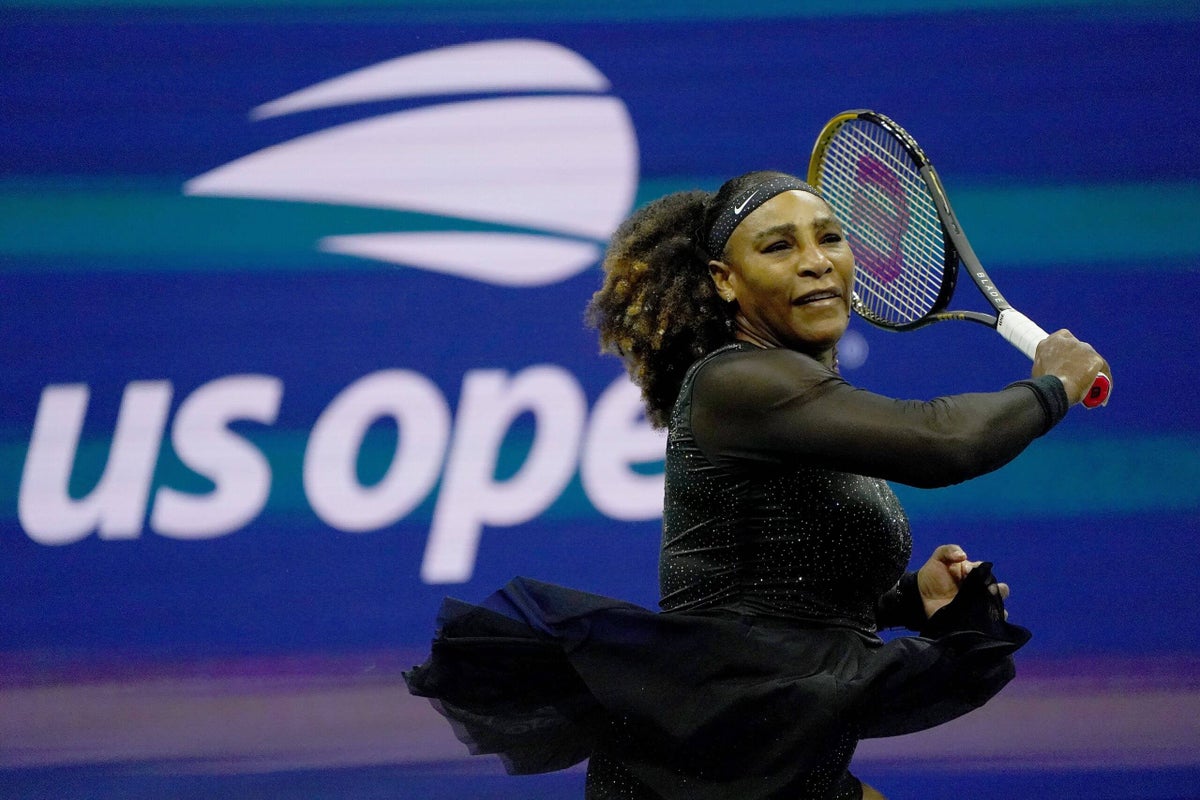
Wild cards at Grand Slams can be fraught at the best of times. There are reciprocal arrangements between the nations that host them, crowd favorites looking for one last hurrah and rising talents vying for a chance to perform on the biggest stages in tennis.
At the Australian, French and U.S. Opens and at Wimbledon, the vast majority of them go to players from the host nation, already home to the wealthiest tennis federations with the most money to support their players with development programs.
Everyone else spends the year trying to get a high enough ranking to earn a spot into the main draw. Wild cards haven’t yet achieved that goal, which is why they need one to get in — and to pick up the $100,000 or so that comes with participating in the first round.
At this year’s U.S. Open, all of that is in play — before the small matter of one of the greatest players of all time possibly returning to the tournament at which she had appeared to say goodbye to the sport that she dominated.
Serena Williams does not yet have a wild card into the 2026 women’s singles, but one remains unallocated and the 23-time Grand Slam champion is at the front of the queue.
Williams, 44, last played in New York in 2022, winning two matches before falling to Australia’s Ajla Tomljanović in a farewell that shook Arthur Ashe Stadium and the wider foundations of the sport all at once. If she has recovered from a knee injury she sustained playing her first match in four years at Wimbledon and wants the last wild card, it’s hers for the taking.
Why Serena Williams chose Wimbledon to return to playing singles
Ava Wallace
Venus Williams, 46, has received one, despite a 0-13 record in singles since she won the first match of her return to tennis at the 2025 D.C. Open. She is joined by the 2017 U.S. Open champion, Sloane Stephens, who is 33 and trying to come back from a debilitating foot injury. Stephens has been a mainstay of Grand Slam commentary in the past year, but has impressed at the Cincinnati Open as she returns to the court.
Carol Young Suh Lee, 24, the American who accumulated the most points since Wimbledon among players who did not qualify by ranking; Reese Brantmeier, the NCAA singles champion and the winner of the American collegiate player wild-card playoff, and Thea Frodin, the girls’ under-18s national champion who played a young Venus Williams in the Oscar-winning biographical film “King Richard”, round out the field.
Venus and Serena played doubles together Monday night at the Cincinnati Open, losing a match tiebreak to Peyton Stearns of the U.S. and Marta Kostyuk of Ukraine. They could appear together in women’s doubles in New York, but would also require a wild card entry.
On the men’s side, college tennis superstar Michael Zheng receives a wild card after qualifying for the Australian and French Opens while still at Columbia University. Zheng, 22, also qualified for Wimbledon after graduation. He also won the NCAA title his junior and senior years.
He is joined by Martin Damm, a 22-year-old lefty from Florida who has been recording some good wins on the ATP Tour this year after recovering from an arm injury that set him back in the 2024 season. Damm is currently the world No. 94. Joining him are J.J. Wolf, 27, who accumulated the most summer hard court points by an American who did not meet the ranking qualifications; Sebastian Gorzny, 22, who won the men’s collegiate playoff and Jack Kennedy, the boys’ under-18s national champion.
Gaël Monfils, 39, one of the sport’s most beloved players, received the French wild card through the FFT. He is retiring after this season. Alexei Popyrin, 27, received the Australian wild card.
The USTA is also holding one men’s wild card back, waiting to see how a few players perform this week.

2017 U.S. Open champion Sloane Stephens has impressed at the Cincinnati Open ahead of the tournament. (Dylan Buell / Getty Images)
There are also some notable wild cards for the qualifying tournament, which gets underway next week and which fans can attend for free. Keep an eye out for Jordan Lee, who won the Wimbledon boys’ title last month, and Michael Antonius, who was a finalist in the French Open competition. The 36-year-old Kei Nishikori of Japan, the 2014 U.S. Open finalist, will also be playing his final U.S. Open after announcing that he is retiring this year.
On the women’s side, there are two former world No. 1 juniors to keep an eye on: Julieta Pareja, who is 17, and Kristina Penickova, 16. Don’t be confused if there’s another player who looks a lot like Penickova in the same tournament. That’s her identical twin sister, Annika, 16, who also received a wild card.
The U.S. Open has also added a qualifying challenge, played on the first Monday of the week before the main draws start. Four men and four women will play semifinals and then a final, with the winner earning a place in the qualifying draw.
The tournament earlier announced some of its wild cards for the star-studded mixed doubles event, which also takes place the week before the singles events start. The main-draw action gets under way Aug. 30, with Jannik Sinner and Aryna Sabalenka the defending singles champions.
‘If you believe in wild cards’
It’s impossible to analyze the women’s wild-card field without quickly pivoting into a meditation on Serena Williams. Four years after “evolving away” from the sport, she remains one of its biggest stars, inhaling the oxygen of any tennis room or tournament she enters.
She did nothing Monday night in Cincinnati, where she teamed up with her sister to play doubles, to suggest that she isn’t prepared to participate. If she does, she immediately becomes one of the dangerous “floaters” in the draw, in part because of the power of the packed Arthur Ashe Stadium crowd (and it will be Arthur Ashe Stadium) that will greet any match she plays if she does take up a wild card.
Williams still has one of the great serves. The question is whether she can move well enough at 44 to play the all-court game that most elite women’s tennis demands these days, and she showed at Wimbledon that four years away hadn’t done too much damage to the quality she is capable of delivering.
Watch out for Brantmeier, who is a tough-as-nails competitor. Venus Williams appears to be in a valedictory phase, at least in singles, while Stephens will also be a difficult draw for some players who have played much more tennis than her of late.
On the men’s side, Zheng’s outstanding graduation season has more than earned him his wild card, while crowd-favorite Monfils was always a banker for a wild card into his final U.S. Open.
When it comes to the one that remains unallocated, there’s Jack Draper, the former world No. 4, to consider. He is coming through a chronic arm injury and needs match time, but going into five-set matches off two sobering performances at the Canadian and Cincinnati Opens may not be the path that will bring him longterm success.
Other candidates? There’s no question that Stan Wawrinka desperately wants it. Wawrinka, like Monfils, is retiring this year. He’s 41. He’s the world No. 125. He won the U.S. Open in 2016, beating Novak Djokovic in four sets.
If you believe in wild cards, that’s a pretty good case to make.
Wawrinka’s biggest strike against him is that he’s not American. And Switzerland does not host a Grand Slam, so he is not eligible for a reciprocal agreement wild card. He’s playing a Challenger Tour event in Cancun, Mexico, to show that he can win some more matches, but that seems random and absurd. Wawrinka is a three-time Grand Slam champion. Monfils has never won a Grand Slam. He never made a final. But he’s French, so there was an obvious route to giving him one that didn’t take another player’s spot.
Americans have plenty of bites at the wild-card apple. As long as these things exist and former champions often get them, give one to Wawrinka. He’s still going.
U.S. Open men’s singles wild cards
- Martin Damm
- Michael Zheng
- J.J. Wolf
- Sebastian Gorzny
- Jack Kennedy
- Gaël Monfils
- Alexei Popyrin
- TBD
U.S. Open women’s singles wild cards
- Venus Williams
- Sloane Stephens
- Carol Young Suh Lee
- Reese Brantmeier
- Thea Frodin
- Léolia Jeanjean
- Taylah Preston
- TBD
U.S. Open men’s singles qualifying wild cards
- Jordan Lee
- Trevor Svajda
- Kei Nishikori
- Andre Ilagan
- Spencer Johnson
- Michael Antonius
- Andrew Johnson
- Daniel Milavsky
- US Open Qualifying Wild Card Challenge winner
U.S. Open women’s singles qualifying wild cards
- Janae Preston
- Katrina Scott
- Caroline Dolehide
- Ayana Akli
- Annika Penickova
- Kristina Penickova
- Julieta Pareja
- Savannah Broadus
- U.S. Open Qualifying Wild Card Challenge winner
>
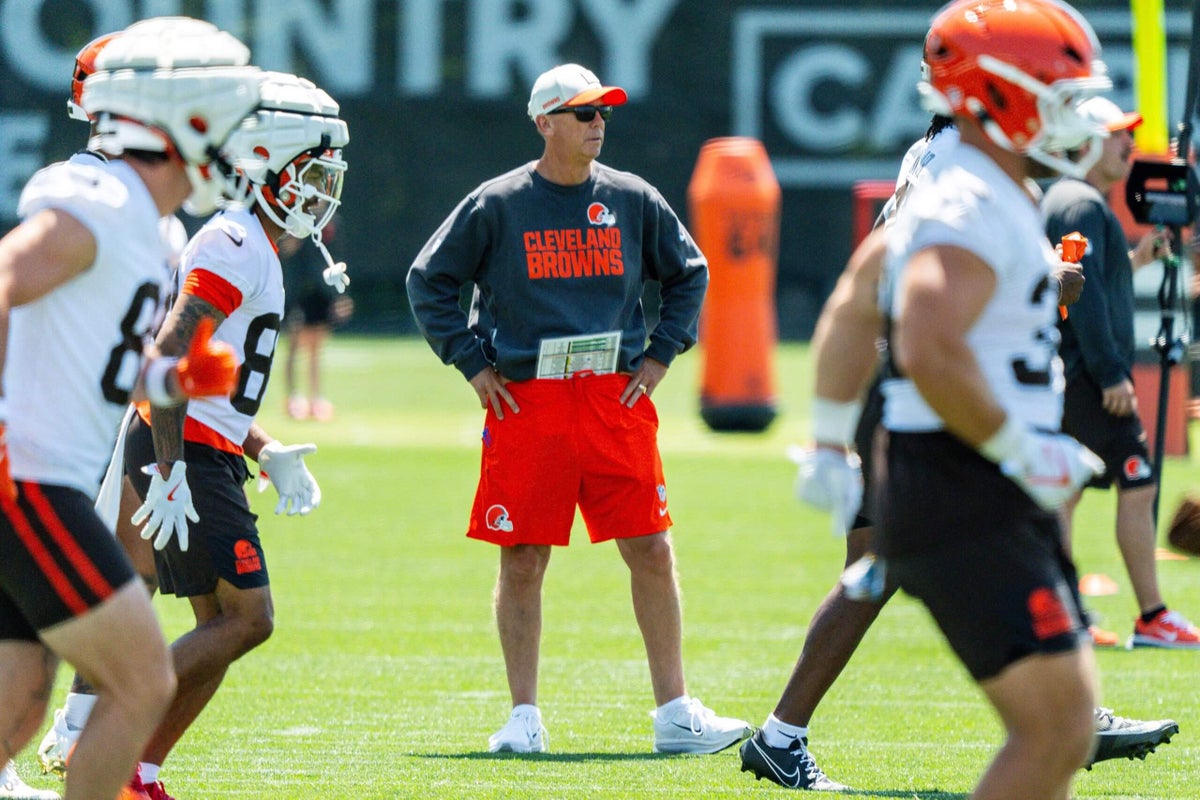
BEREA, Ohio — We explore some areas of concern and of note, and how both relate to the Cleveland Browns’ itinerary for the rest of this week — the final true week of training camp under first-year head coach Todd Monken.
Offensive line injuries
Last week, Monken said the team had zeroed in on its starting offensive line. But center Elgton Jenkins wasn’t on the field Tuesday, and neither of the players who’ve been with the No. 1 offense at right guard finished practice.
Teven Jenkins had pretty much claimed the right guard spot, but he sat out the last two drills of Tuesday’s practice with an undisclosed injury. KT Leveston, who played guard when Teven Jenkins missed a week early in camp with a back injury, left the field late in Tuesday’s practice with a member of the medical staff. Leveston had played right tackle the last two days as the team gave rookie Austin Barber his first snaps at right guard.
Now, Barber might have to play guard with the starters in Thursday’s joint practice with the Buffalo Bills or in Saturday’s preseason game if Teven Jenkins or Leveston has to miss time. Monken told reporters before Tuesday’s practice that Leveston looked better in his tackle reps Monday than he previously had at guard.
Cleveland Browns Camp: QB competition, Boston impressing and more
Robert Mays
Barber had played only tackle before Monday. The Browns waived guard Jack Conley on Tuesday for the second time this month, but he might need to return. Monken has said the team feels none of its current injuries are long term and said Elgton Jenkins just has some “nagging” issues, but the plan was always to play Elgton Jenkins or rookie Parker Brailsford at center. Brailsford hasn’t practiced since the first week of camp due to what’s believed to be a thumb injury on his right (snapping) hand.
Luke Wypler has been at center with the No. 1 offense this week. Dawand Jones was the No. 1 right tackle Tuesday as Tytus Howard wasn’t practicing. It’s believed that Howard was just taking a maintenance day, but the Browns could end up being short at all three line spots for the rest of the week. What Monken basically called an experiment with Barber moving inside could end up becoming a part of a plan that’s obviously fluid right now.
Something to note
Practice was cut short Tuesday. Monken screamed at defensive tackle Adin Huntington after he put a big hit on running back Quinshon Judkins. It appeared Monken was yelling at the defensive coaching staff after he sent Huntington to the sideline.
Shortly after, Monken ended practice and called the team to a group huddle. There were still more than 10 minutes left on the scoreboard clock in the ongoing full-team drill, and a situational period for the No. 1 offense was still scheduled to end practice. But Monken ended things early, and certainly didn’t appear happy about it.
Maybe Monken didn’t want to risk further injury given that defensive end Isaiah McGuire and fullback Carsen Ryan left the field with the medical staff at various points of practice. Maybe Monken was enraged by Huntington’s hit and an accidental collision between defensive end Benton Whitley and quarterback Shedeur Sanders a little earlier. Sanders was not hurt, but defensive players are instructed not to get near the quarterbacks.
Maybe Monken had simply seen enough mediocre play from the quarterbacks and the offense, which was generally dominated by the defense. Monken only addresses the media before practice, so we don’t know for sure.
In the fourth week of full camp, players are tired, the defense seems to know what’s coming from the offense and everybody’s a little restless. So what happened isn’t a big deal as long as the extracurriculars don’t result in injury, but the team’s overall injury situation is a concern. So is the shorthanded defensive line basically camping out in the offensive backfield during competitive drills.
For most of the spring and summer, the prevailing thought was that the upcoming joint practice would be the most important evaluation day of camp for a completely remade offensive line — and perhaps the last major chapter in the ongoing quarterback competition.
But the view from here is that Deshaun Watson has a lead on Sanders, even though neither has been remarkable. The team’s overall lack of depth has made the rest of the week just as much about survival as about really learning where things stand.
Monken has said the plan is for the Browns’ available starters to practice on Thursday against Buffalo’s starters, then for both teams to play mostly backups in Saturday’s game. There could be exceptions, but it looks like Sanders will play the first half Saturday behind a makeshift offensive line. Rookie wide receivers KC Concepcion and Denzel Boston continue to have outstanding camps and have solidified starting jobs, so they likely won’t play much — if at all — on Saturday.
All through camp, Monken has smartly managed and limited reps for Judkins and tight end Harold Fannin Jr.
The Browns have a large group of young players competing for roles, and many of them will have a runway to make a real impression over two days versus the Bills. But it also appears that what might have been the Browns’ best chance to evaluate their top offensive group versus another team’s starters this summer could be limited.
Monken has said Watson and Sanders will split No. 1 reps during that joint practice.
Something else to note
Though Monken has long sort of slated the day (or days) after this preseason game against Buffalo for making his quarterback decision, he’s not fully committing to that. The Browns only practice twice next week before closing the preseason on Aug. 27 versus New England, and Monken hopes to use that game as a dress rehearsal for whoever is named the starter and the first offensive line.
But depending on what happens the rest of this week at quarterback and what personnel changes need to be made along the line, there could be another detour.
Starting defensive end Alex Wright has missed the last two practices, so McGuire’s early departure Tuesday left the group thinner there. Defensive tackle Mike Hall Jr. was back to practice for the first time in two weeks Tuesday. But the Browns remain thin at cornerback, with four undrafted rookies logging heavy practice snaps, and at tight end.
Ryan, who’s played both fullback and tight end, has mostly been playing fullback because veteran Michael Burton has been out for two weeks with an injury. The tight end group took another hit in the preseason opener when blocking tight end Brenden Bates suffered an injury and was waived-injured on Monday.
One of the bright spots amid the shuffle at cornerback has been undrafted rookie Michael Coats Jr., who had an interception in the preseason opener and followed that with a strong practice Monday despite leaving the game Saturday with an ankle injury. In three weeks, Coats has gone from the bottom of the depth chart to being in the mix for a roster spot when Cleveland has to cut to the regular-season size of 53 on Aug. 30.
“Coats, that guy just shows up every day and makes plays,” Monken said. “That’s probably the one that stood out with the other guys beat up at corner.”
>

Jujutsu Kaisen, The Summer Hikaru Died Rank on NYT August Bestseller List – News

ESPN co-founder Bill Rasmussen, innovator of 24-hour sports coverage, dies at 93

U.S. Open wild cards: Serena Williams keeps fans waiting on first appearance in four years
-

 movies3 months ago
Search For Canadian TV Actor Stewart McLean Now Homicide Investigation
-

 Fashion9 years ago
These ’90s fashion trends are making a comeback in 2017
-
Fashion9 years ago
According to Dior Couture, this taboo fashion accessory is back
-
Fashion9 years ago
Model Jocelyn Chew’s Instagram is the best vacation you’ve ever had
-
Fashion9 years ago
Emily Ratajkowski channels back-to-school style
-
Fashion9 years ago
9 Celebrities who have spoken out about being photoshopped
-
Fashion9 years ago
Your comprehensive guide to this fall’s biggest trends
-
Fashion9 years ago
A photo diary of the nightlife scene from LA To Ibiza