
Sports
How Packers newcomer Zaire Franklin is bringing a different edge to practice

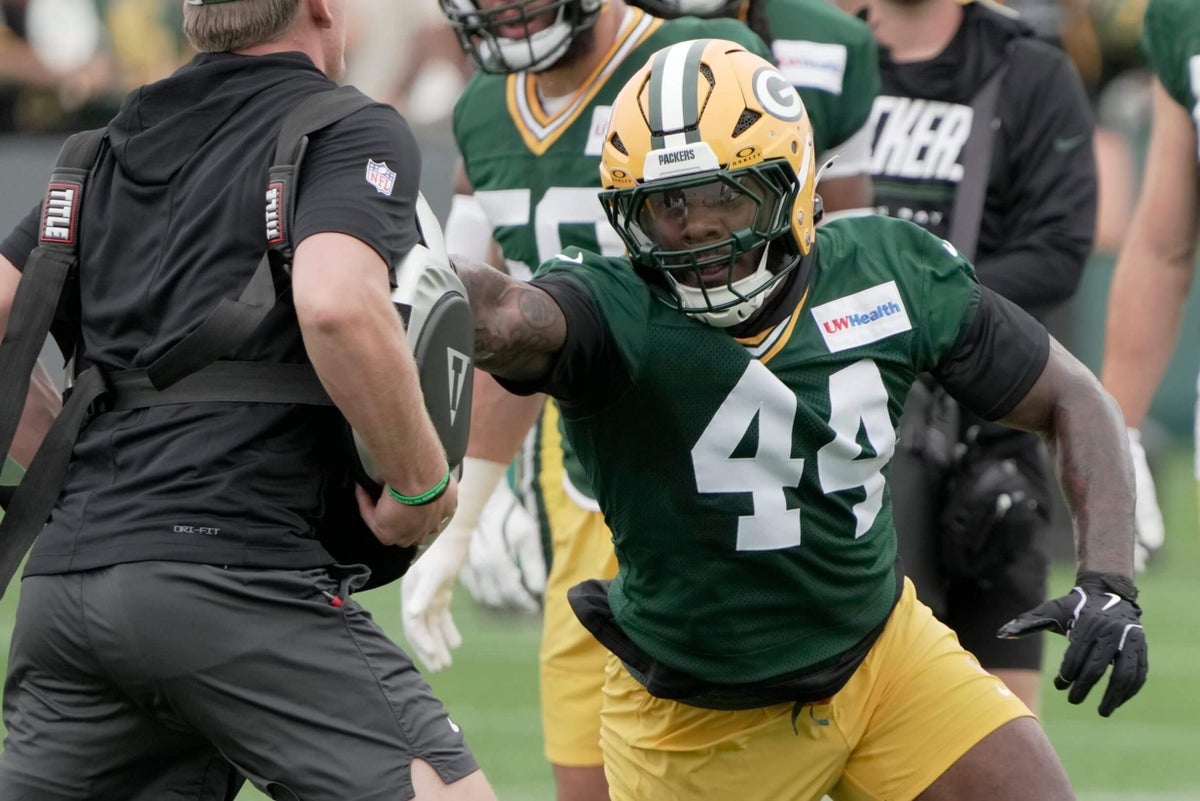
GREEN BAY, Wis. — Zaire Franklin wants his new teammates to know it’s not personal.
The Green Bay Packers linebacker, whom the team acquired in a trade with the Indianapolis Colts earlier this year for defensive tackle Colby Wooden, seems to bring a different edge to practice.
On one play during Tuesday’s session, tight end Tucker Kraft caught a pass in the flat and lowered his shoulder into Franklin on the perimeter, knocking him back. Franklin had some words for Kraft as he left the field, and No. 85 responded. Running back Josh Jacobs and wide receiver Jayden Reed hyped Kraft up once he returned to the sideline.
Is Green Bay Packers offensive line ‘good enough’ going into 2026 NFL season?
Robert Mays and Derrik Klassen
Later in practice, Kraft caught a short pass from quarterback Jordan Love over the middle and was immediately stopped by linebacker Edgerrin Cooper. Franklin, in a move that might draw a flag in a real game, laid what looked like a cheap shot on Kraft and knocked him to the ground after the play. Franklin also played a part in what could be considered the first scuffle of camp on Sunday, when he pinned running back Chris Brooks to the ground away from the play after Cooper stuffed a MarShawn Lloyd run.
“I’m going to press everybody’s buttons, from Coach LaFleur all the way down to Chris Brooks,” Franklin said. “Everybody’s going to get it. It doesn’t matter.”
All this comes after Kraft and Franklin got into it last summer during Packers-Colts joint practice in Indiana. Franklin didn’t recall that scuffle when reminded about it after Tuesday’s practice, but he emphasized that there’s no bad blood between two guys who will likely wear a “C” on their chest this season.
“He’s a dog,” Franklin said of Kraft after practice. “That’s how it’s supposed to be … with Tuck being out there, I told him, ‘I feel like that’s what the team was missing.’ He brings that same energy, that same competitiveness, that same a–hole mentality that I feel like I bring on the defense. That’s what Tuck can do for the offense, so it was great to have him out there, great to compete. We laugh about it. It’s one of the things, I think me and Tuck eat breakfast together every morning. I think we could just decide that we gonna fight that day and then we still gonna eat breakfast together the next morning.”
As for his desire to seemingly always thud someone, Franklin said slyly that he’s just making sure his pads work. Spend time around Franklin off the field, though, and you wouldn’t know it’s the same person under that helmet wearing No. 44.
“When I’m on the field, I’m a completely different person,” Franklin said. “My mentality in between the white lines is ultra-competitor, ultimate alpha. I want to challenge the best, the biggest. I don’t want no little guy. I want to go against the baddest motherf—-r out there. That’s how I feel. I feel like I’m the baddest motherf—-r on the planet when I’m on the field. That’s just my mentality.
“It’s tough when you building relationships. You trying to let ‘em know, ‘This ain’t a personal thing. It’s just how I get ready to play.’ But I’m trying to slowly but surely let ‘em know who I am on the field while also confirming who I am off the field.”
Here’s everything else notable we learned from Tuesday’s practice and interviews in Green Bay.
1. The connection between Love and second-year wide receiver Matthew Golden thrived at Tuesday’s practice. Golden repeatedly got open and caught everything that came his way, with some receptions going for big gains. That’s a promising sign for the 2025 first-round pick whose rookie year didn’t quite go as planned in terms of health and usage.
“Just how fast he’s playing right now, it all comes with reps,” Love said of Golden. “I think last year, as a rookie, it’s tough. He did a lot of good things, but I think there was some times where he figured out and went back and watched the film of ways he can win on routes versus different looks and some of the things he can try, and I think now he’s going out there and putting it all together right now, so it looks great. I’m excited to see him when we get to the season, but he’s making plays.”
Is a breakout season on the horizon for Matthew Golden?
Derrik Klassen
2. Lukas Van Ness is probably the defensive MVP of camp so far. After missing Sunday’s practice with a shoulder injury, he returned Tuesday and picked up right where he left off after an opening-drive sack in last Thursday’s preseason opener. He wrecked right tackle Anthony Belton for a tackle for loss on running back Pierre Strong Jr., beat left guard Jager Burton for a sack, beat Belton again for a sack and breezed by right tackle Zach Bako-Bewele with a swim move to pressure Love during a two-minute drill. Speaking of Belton, the 2025 second-rounder’s stock might be falling more than anyone in camp, with last year’s starting right guard now working more at backup right tackle behind Bako-Bewele.
“We were recently talking about what it feels like to get in the zone when everything just kind of goes dark,” Van Ness said. “You feel like you’re one man in the cockpit just doing your thing and I felt a little of that today … some of the guys were saying ‘fresh legs,’ but I felt good today … there’s some plays to work on and improve on, but I felt like I was humming today.”
3. Rookie second-rounder Brandon Cisse was the one constant at starting outside cornerback. Keisean Nixon, Carrington Valentine, Benjamin St-Juste and Domani Jackson each worked with both the starters and backups at some point. It appears that there really is a competition among the cornerbacks, and Cisse might just be leading the way.
4. Jackson, the rookie sixth-round cornerback from Alabama, made his debut in 11-on-11s Tuesday after offseason core muscle surgery. So too did veteran defensive tackle Javon Hargrave (knee), who started camp on the PUP list. Left guard Aaron Banks (knee) returned to 11-on-11s and got work with the first team, though rookie fifth-rounder Jager Burton was first up at left guard. Jacobs returned to practice after missing almost two weeks with a groin injury, while rookie edge Dani Dennis-Sutton (illness) and defensive back Javon Bullard (foot) remained sidelined and undrafted rookie edge Nyjalik Kelly (knee) was a new DNP after a strong showing Sunday. Bako-Bewele is still seemingly on a pitch count since Belton is sometimes sparing him at first-team right tackle.
5. The starting offense worked its way into the red zone from the minus-35-yard line during a two-minute drill, but Cooper deflected a short pass over the middle intended for wide receiver Christian Watson and Franklin came down with the interception. Rookie kicker Trey Smack still attempted a 43-yarder and made it. During the backups’ two-minute drill, wide receiver Savion Williams made an incredible catch down the left sideline between safety Murvin Kenion III and cornerback Jaylin Simpson for 29 yards on the first play, but the Tyrod Taylor-led offense stalled out and Smack appeared to miss a 47-yarder wide right (head coach Matt LaFleur took away referees on field goals between he doesn’t want everyone overreacting to one make or miss and it’s hard for us to see if balls go in from the sidelines).
6. I counted another five catches on five targets for Kraft on Tuesday. That would give him 10 catches on 10 targets over his first two days of 11-on-11s. On Tuesday, he made an incredible one-handed, juggling grab down the right side with Nixon and safety Evan Williams in coverage. Kraft continued to the end zone and celebrated, and given his prowess after the catch, it just might’ve been a long catch-and-run touchdown in a real game. That is, if edge Barryn Sorrell’s decisive win against Belton didn’t result in a sack of Love.
“That was crazy,” Love said of Kraft’s catch. “As I threw it, I seen Keisean kind of falling off. I was like, ‘Oh, I think I overthrew this one.’ That’s just a crazy, crazy catch by him, making a one-handed play. But that’s just some of the magic he brings to the field.”
7. For all the talk about Nixon with the twos, he actually had a couple of nice plays on Tuesday. He blew up a Savion Williams end around (fans love that play), broke up a pass from Love to Golden deep over the middle and blew up another perimeter run by Lloyd.
8. Wide receiver and special teams ace Bo Melton left practice early and didn’t return after suffering, according to him, a stinger. He landed awkwardly while contesting a deep ball from Love that safety Xavier McKinney broke up. Melton said after practice that he was about to see trainers but guessed his absence for the rest of practice was precautionary.
9. This doesn’t count as an official scuffle, but defensive tackle Jonathan Ford (6 feet, 5 inches and 338 pounds) literally threw running back Jaden Nixon (5 feet, 10 inches and 199 pounds) to the ground on one play and left tackle Jordan Morgan took offense and two-hand shoved Ford.
10. According to the NFL transaction wire, the Packers claimed rookie edge Arden Walker from the Minnesota Vikings. Walker is undrafted out of Colorado and takes the roster spot of quarterback Kyron Drones, whom the Packers released last week.
>
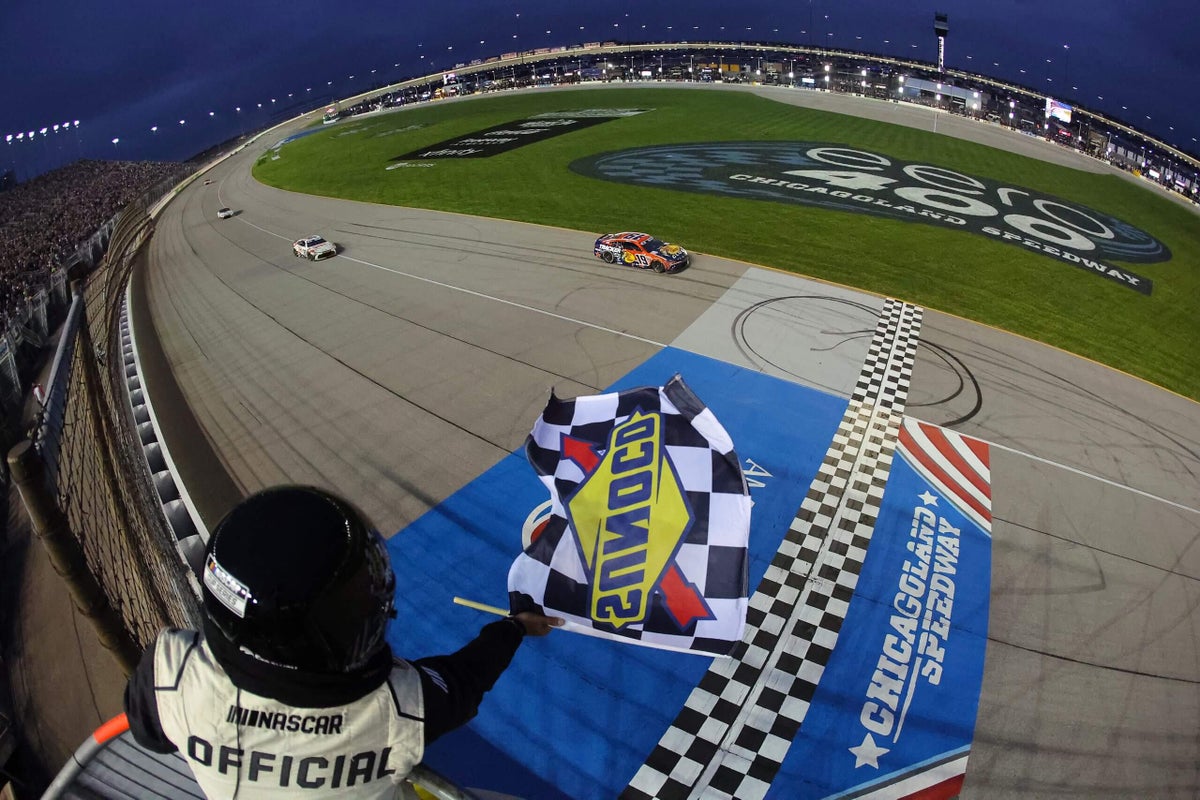
NASCAR will return to Chicagoland Speedway in 2027 and will not race on a street circuit in downtown Chicago next year, sources familiar with the development have told The Athletic.
The league could make an announcement as soon as Tuesday.
The decision follows protracted negotiations between NASCAR, the city of Chicago and the state of Illinois, with all parties seeking to bring back a premier Cup Series race on a street course constructed along Grant Park, as NASCAR did from 2023-2025. When that three-year contract ended, the parties were unable to agree to an extension for the 2026 season, then turned their attention to bringing the race back in 2027.
Joey Logano battles Chase Briscoe, takes the checkered flag at Richmond
NASCAR officials have expressed optimism that the league would again race in the heart of the third-largest city in the United States. Earlier this year, there was increasing confidence that the parties were close to finalizing a deal.
Talks, though, hit an impasse over the costs, including how much the state would contribute, according to sources briefed on the negotiations who were granted anonymity to speak about the evolving plans.
Determining where in the Chicago area it would race has also held up NASCAR from finalizing its 2027 schedule. This also factored into the decision, sources said, as league officials wanted to finish the schedule and instead focus efforts on racing in downtown Chicago in 2028.
With the Chicago Street Race not a viable option, NASCAR is turning again to Chicagoland, located in nearby Joliet, Ill. Throughout the negotiations, the 1.5-mile oval owned by NASCAR was viewed as the de facto backup plan should a return to the downtown circuit not materialize. Chicagoland hosted races for NASCAR’s three national series from 2001-2019, before the league shifted the race weekend elsewhere. The track then went largely dormant.
But in part motivated by how well the current Cup car performs on 1.5-mile ovals, NASCAR decided to return to the track this season. It spent $5 million on improvements to the facility, according to industry sources, then added a race there to its 2026 schedule. That race, held last month, unfolded before a capacity crowd and was greeted with much enthusiasm from drivers who praised how the track raced, particularly its worn surface.
“I thought that was about as good a race as you could get,” said Cup Series driver Chase Briscoe, the race winner. “The cat-and-mouse game, and we were slipping and sliding around — hopefully, you could see it on TV. So excited to be back in Chicagoland. Hopefully we can be back.”
NASCAR has already announced most of its 2027 schedule, and the Chicagoland decision will allow the league to fill in the remaining slots. Many of the unannounced dates are in June and early July, the time when either Chicago race would take place. Because some weekends worked for one but not the other Chicago location, other tracks’ race dates were subject to change depending on the direction NASCAR chose.
On Tuesday, NASCAR announced the 2027 championship would be held at Homestead-Miami Speedway. The remainder of the schedule is expected to be announced in the coming weeks.
NASCAR still could have one purpose-built street course on the 2027 schedule. As The Athletic reported last month, a return trip to Naval Base Coronado, outside of San Diego, remains likely.
>
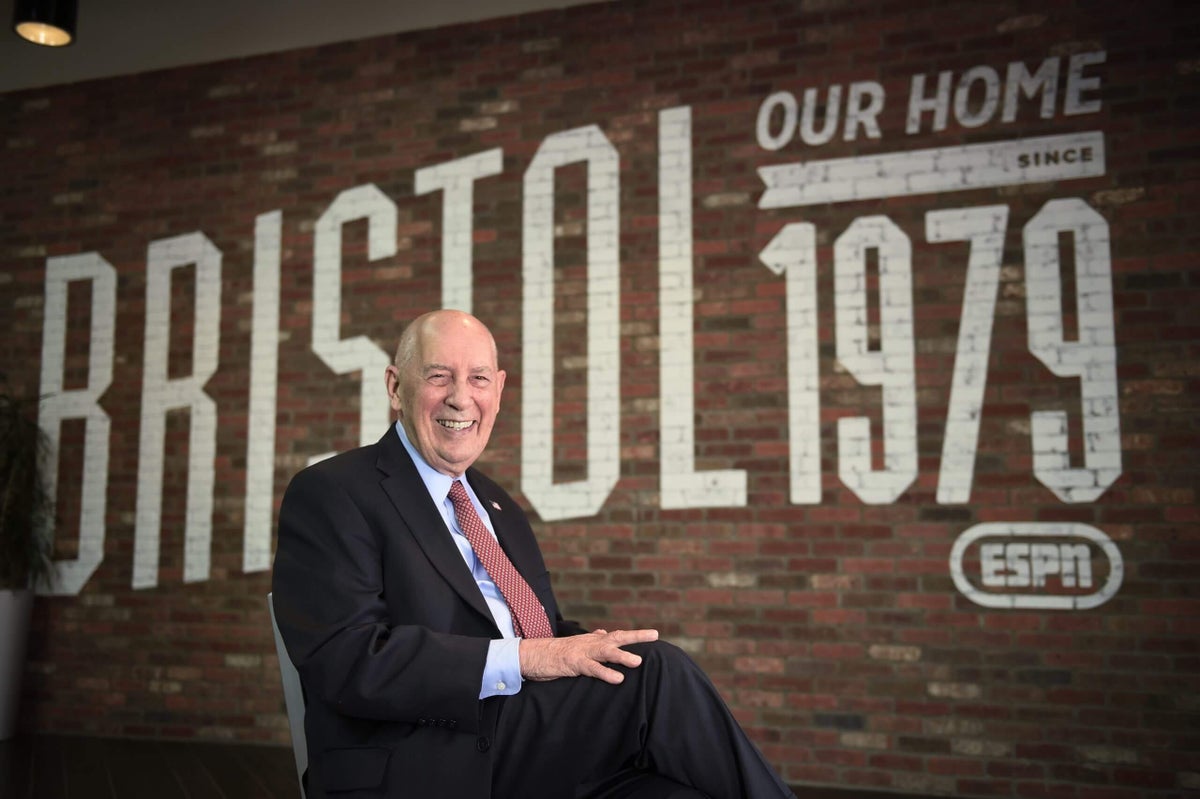
Bill Rasmussen, the co-founder of ESPN and innovator of around-the-clock sports television, died Tuesday at the age of 93, the network announced. The media company said he died from the effects of Parkinson’s disease.
Along with his son Scott, Rasmussen’s vision of a 24-hour sports TV network was a wildly innovative idea in the late 1970s and initially was met with skepticism. A few years later, however, ESPN was a media fixture.
Rasmussen left the company in 1980 but reconnected with the network in 1999 ahead of its 20th anniversary.
“Bill was a remarkable man — a visionary and an innovator who conceived the idea of a network entirely devoted to sports,” ESPN Chairman Jimmy Pitaro said. “Quite simply, none of us would be here today if it wasn’t for Bill’s passion and all the hard work and entrepreneurial spirit he put into building ESPN in the late 1970s — key aspects of our company culture that still carry on to this day.”
Rasmussen, who was inducted into the Sports Broadcasting Hall of Fame in 2025, was born in Chicago in 1932 and later served in the United States Air Force. His media career began in the 1960s at radio stations in Massachusetts before he joined the New England Whalers as communications director in 1974.

Rasmussen, who reconnected with ESPN in the late ’90s, standing on the “SportsCenter” set in 2005.
After being fired by the Whalers in 1978, he pursued the idea of a television channel dedicated solely to sports.
“I thought, why not a channel that’s on all the time?” Rasmussen told Cronkite News decades later. “Sports don’t stop at 6 o’clock.”
At 7 p.m. on Sept. 7, 1979, ESPN launched with the first broadcast of its new show, “SportsCenter,” from its headquarters in Bristol, Conn.
“It’s not to say that there wouldn’t have been a 24-7 sports operation at some point, but it certainly wouldn’t have been in remote Connecticut,” James Andrew Miller, co-author of “Those Guys Have All The Fun,” the definitive oral history of ESPN, told The Athletic. “And the fact that it was in remote Connecticut allowed them to take chances and to do things differently than the three broadcast networks in New York City. And that became part of the foundation of their success.
“So: No Bill, no ESPN.”
Six months before that TV debut, Rasmussen and the founding team had sold 85 percent of the fledgling company to Getty Oil. This controlling stake ultimately led to Rasmussen’s loss of power and, a year after that first edition of “SportsCenter,” his ouster from the company he helped create.
In that first year, ESPN’s live-sports strategy was built on an early deal with the NCAA, which gave them access to around 50 college football games, a couple dozen soccer games and, in what would be a signature element of ESPN’s early years, college basketball.
The rest of the early rights lineup included tennis, pro bowling and hockey exhibition games featuring the U.S. Olympic men’s team, as it prepared for the 1980 Olympics. An eclectic mix of programming rarely seen on national TV rounded things out, including American Legion baseball, lacrosse, full-contact karate, rugby and the Slo-Pitch Softball World Series, between the Milwaukee Schlitzes and the Kentucky Bourbons.
The relationship between founder and company remained strained for 19 years, until outreach from ESPN’s then-president George Bodenheimer ahead of the network’s 20th anniversary brought Rasmussen back into a venerated place. In the spring of 2026, ESPN released a documentary and accompanying book, “Sports Heaven: The Birth of ESPN,” about the network’s founding with Rasmussen’s experience front and center.
“Bill was the eternal optimist who brought his energy to the crazy idea of 24-hour-a-day sports,” ESPN historian Mike Soltys, who was hired by Rasmussen in 1980 as his first intern, told The Athletic. “He rebounded from being fired by the Whalers to change the future of sports television.
“My career, and thousands of others, came about because of Bill’s passion and belief in his idea. His warm approach and quick wit endeared him to everyone he met. It has been a joy to be his friend and celebrate ESPN’s success with him for 46 years.”
>
Wild cards at Grand Slams can be fraught at the best of times. There are reciprocal arrangements between the nations that host them, crowd favorites looking for one last hurrah and rising talents vying for a chance to perform on the biggest stages in tennis.
At the Australian, French and U.S. Opens and at Wimbledon, the vast majority of them go to players from the host nation, already home to the wealthiest tennis federations with the most money to support their players with development programs.
Everyone else spends the year trying to get a high enough ranking to earn a spot into the main draw. Wild cards haven’t yet achieved that goal, which is why they need one to get in — and to pick up the $100,000 or so that comes with participating in the first round.
At this year’s U.S. Open, all of that is in play — before the small matter of one of the greatest players of all time possibly returning to the tournament at which she had appeared to say goodbye to the sport that she dominated.
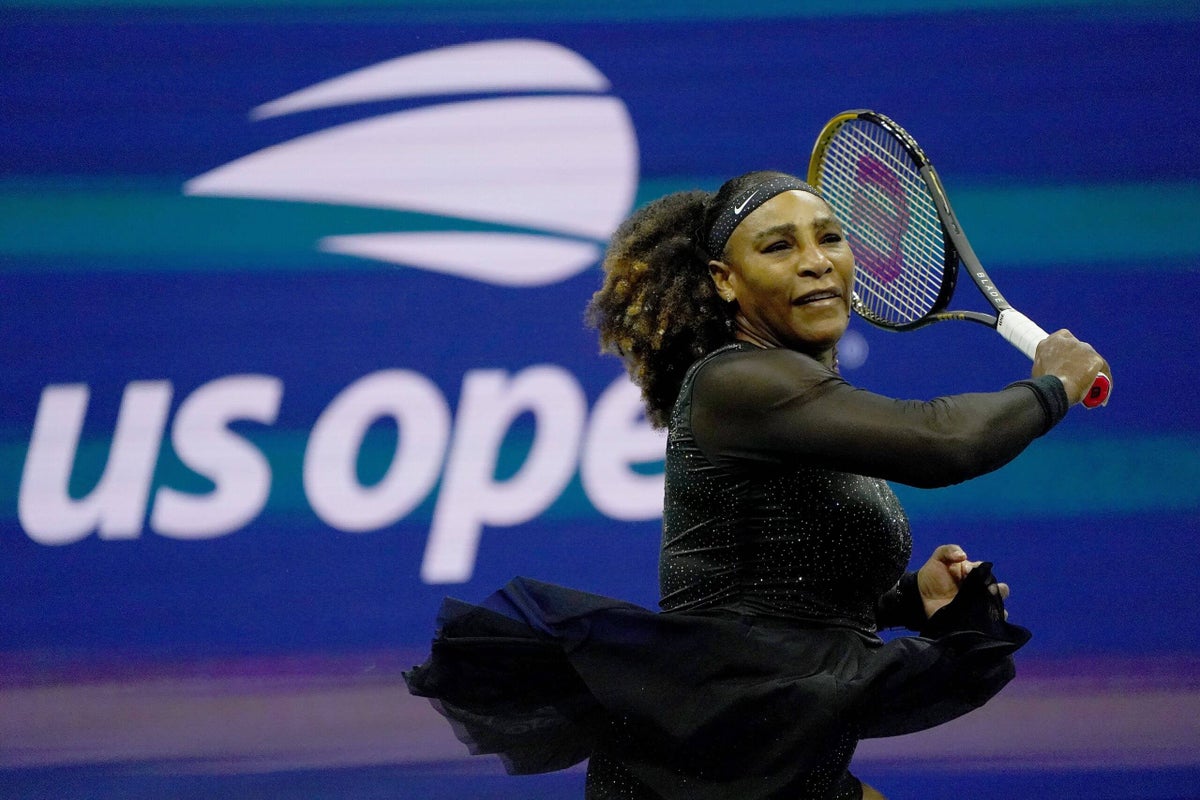
Serena Williams does not yet have a wild card into the 2026 women’s singles, but one remains unallocated and the 23-time Grand Slam champion is at the front of the queue.
Williams, 44, last played in New York in 2022, winning two matches before falling to Australia’s Ajla Tomljanović in a farewell that shook Arthur Ashe Stadium and the wider foundations of the sport all at once. If she has recovered from a knee injury she sustained playing her first match in four years at Wimbledon and wants the last wild card, it’s hers for the taking.
Why Serena Williams chose Wimbledon to return to playing singles
Ava Wallace
Venus Williams, 46, has received one, despite a 0-13 record in singles since she won the first match of her return to tennis at the 2025 D.C. Open. She is joined by the 2017 U.S. Open champion, Sloane Stephens, who is 33 and trying to come back from a debilitating foot injury. Stephens has been a mainstay of Grand Slam commentary in the past year, but has impressed at the Cincinnati Open as she returns to the court.
Carol Young Suh Lee, 24, the American who accumulated the most points since Wimbledon among players who did not qualify by ranking; Reese Brantmeier, the NCAA singles champion and the winner of the American collegiate player wild-card playoff, and Thea Frodin, the girls’ under-18s national champion who played a young Venus Williams in the Oscar-winning biographical film “King Richard”, round out the field.
Venus and Serena played doubles together Monday night at the Cincinnati Open, losing a match tiebreak to Peyton Stearns of the U.S. and Marta Kostyuk of Ukraine. They could appear together in women’s doubles in New York, but would also require a wild card entry.
On the men’s side, college tennis superstar Michael Zheng receives a wild card after qualifying for the Australian and French Opens while still at Columbia University. Zheng, 22, also qualified for Wimbledon after graduation. He also won the NCAA title his junior and senior years.
He is joined by Martin Damm, a 22-year-old lefty from Florida who has been recording some good wins on the ATP Tour this year after recovering from an arm injury that set him back in the 2024 season. Damm is currently the world No. 94. Joining him are J.J. Wolf, 27, who accumulated the most summer hard court points by an American who did not meet the ranking qualifications; Sebastian Gorzny, 22, who won the men’s collegiate playoff and Jack Kennedy, the boys’ under-18s national champion.
Gaël Monfils, 39, one of the sport’s most beloved players, received the French wild card through the FFT. He is retiring after this season. Alexei Popyrin, 27, received the Australian wild card.
The USTA is also holding one men’s wild card back, waiting to see how a few players perform this week.

2017 U.S. Open champion Sloane Stephens has impressed at the Cincinnati Open ahead of the tournament. (Dylan Buell / Getty Images)
There are also some notable wild cards for the qualifying tournament, which gets underway next week and which fans can attend for free. Keep an eye out for Jordan Lee, who won the Wimbledon boys’ title last month, and Michael Antonius, who was a finalist in the French Open competition. The 36-year-old Kei Nishikori of Japan, the 2014 U.S. Open finalist, will also be playing his final U.S. Open after announcing that he is retiring this year.
On the women’s side, there are two former world No. 1 juniors to keep an eye on: Julieta Pareja, who is 17, and Kristina Penickova, 16. Don’t be confused if there’s another player who looks a lot like Penickova in the same tournament. That’s her identical twin sister, Annika, 16, who also received a wild card.
The U.S. Open has also added a qualifying challenge, played on the first Monday of the week before the main draws start. Four men and four women will play semifinals and then a final, with the winner earning a place in the qualifying draw.
The tournament earlier announced some of its wild cards for the star-studded mixed doubles event, which also takes place the week before the singles events start. The main-draw action gets under way Aug. 30, with Jannik Sinner and Aryna Sabalenka the defending singles champions.
‘If you believe in wild cards’
It’s impossible to analyze the women’s wild-card field without quickly pivoting into a meditation on Serena Williams. Four years after “evolving away” from the sport, she remains one of its biggest stars, inhaling the oxygen of any tennis room or tournament she enters.
She did nothing Monday night in Cincinnati, where she teamed up with her sister to play doubles, to suggest that she isn’t prepared to participate. If she does, she immediately becomes one of the dangerous “floaters” in the draw, in part because of the power of the packed Arthur Ashe Stadium crowd (and it will be Arthur Ashe Stadium) that will greet any match she plays if she does take up a wild card.
Williams still has one of the great serves. The question is whether she can move well enough at 44 to play the all-court game that most elite women’s tennis demands these days, and she showed at Wimbledon that four years away hadn’t done too much damage to the quality she is capable of delivering.
Watch out for Brantmeier, who is a tough-as-nails competitor. Venus Williams appears to be in a valedictory phase, at least in singles, while Stephens will also be a difficult draw for some players who have played much more tennis than her of late.
On the men’s side, Zheng’s outstanding graduation season has more than earned him his wild card, while crowd-favorite Monfils was always a banker for a wild card into his final U.S. Open.
When it comes to the one that remains unallocated, there’s Jack Draper, the former world No. 4, to consider. He is coming through a chronic arm injury and needs match time, but going into five-set matches off two sobering performances at the Canadian and Cincinnati Opens may not be the path that will bring him longterm success.
Other candidates? There’s no question that Stan Wawrinka desperately wants it. Wawrinka, like Monfils, is retiring this year. He’s 41. He’s the world No. 125. He won the U.S. Open in 2016, beating Novak Djokovic in four sets.
If you believe in wild cards, that’s a pretty good case to make.
Wawrinka’s biggest strike against him is that he’s not American. And Switzerland does not host a Grand Slam, so he is not eligible for a reciprocal agreement wild card. He’s playing a Challenger Tour event in Cancun, Mexico, to show that he can win some more matches, but that seems random and absurd. Wawrinka is a three-time Grand Slam champion. Monfils has never won a Grand Slam. He never made a final. But he’s French, so there was an obvious route to giving him one that didn’t take another player’s spot.
Americans have plenty of bites at the wild-card apple. As long as these things exist and former champions often get them, give one to Wawrinka. He’s still going.
U.S. Open men’s singles wild cards
- Martin Damm
- Michael Zheng
- J.J. Wolf
- Sebastian Gorzny
- Jack Kennedy
- Gaël Monfils
- Alexei Popyrin
- TBD
U.S. Open women’s singles wild cards
- Venus Williams
- Sloane Stephens
- Carol Young Suh Lee
- Reese Brantmeier
- Thea Frodin
- Léolia Jeanjean
- Taylah Preston
- TBD
U.S. Open men’s singles qualifying wild cards
- Jordan Lee
- Trevor Svajda
- Kei Nishikori
- Andre Ilagan
- Spencer Johnson
- Michael Antonius
- Andrew Johnson
- Daniel Milavsky
- US Open Qualifying Wild Card Challenge winner
U.S. Open women’s singles qualifying wild cards
- Janae Preston
- Katrina Scott
- Caroline Dolehide
- Ayana Akli
- Annika Penickova
- Kristina Penickova
- Julieta Pareja
- Savannah Broadus
- U.S. Open Qualifying Wild Card Challenge winner
>

Neve Campbell, ‘Scream’ Cast Pay Tribute to Hayden Panettiere

Comico Manga Service in Japan Shuts Down in January 2027 After 13 Years – News

NASCAR returning to Chicagoland Speedway, not downtown Chicago, in 2027: Sources
-

 movies3 months ago
Search For Canadian TV Actor Stewart McLean Now Homicide Investigation
-

 Fashion9 years ago
These ’90s fashion trends are making a comeback in 2017
-
Fashion9 years ago
According to Dior Couture, this taboo fashion accessory is back
-
Fashion9 years ago
Model Jocelyn Chew’s Instagram is the best vacation you’ve ever had
-
Fashion9 years ago
Emily Ratajkowski channels back-to-school style
-
Fashion9 years ago
9 Celebrities who have spoken out about being photoshopped
-
Fashion9 years ago
Your comprehensive guide to this fall’s biggest trends
-
Fashion9 years ago
A photo diary of the nightlife scene from LA To Ibiza