
Entertainment
Eric Trump Skewers ‘Trash’ CNN Interview with Natalie Harp’s Brother

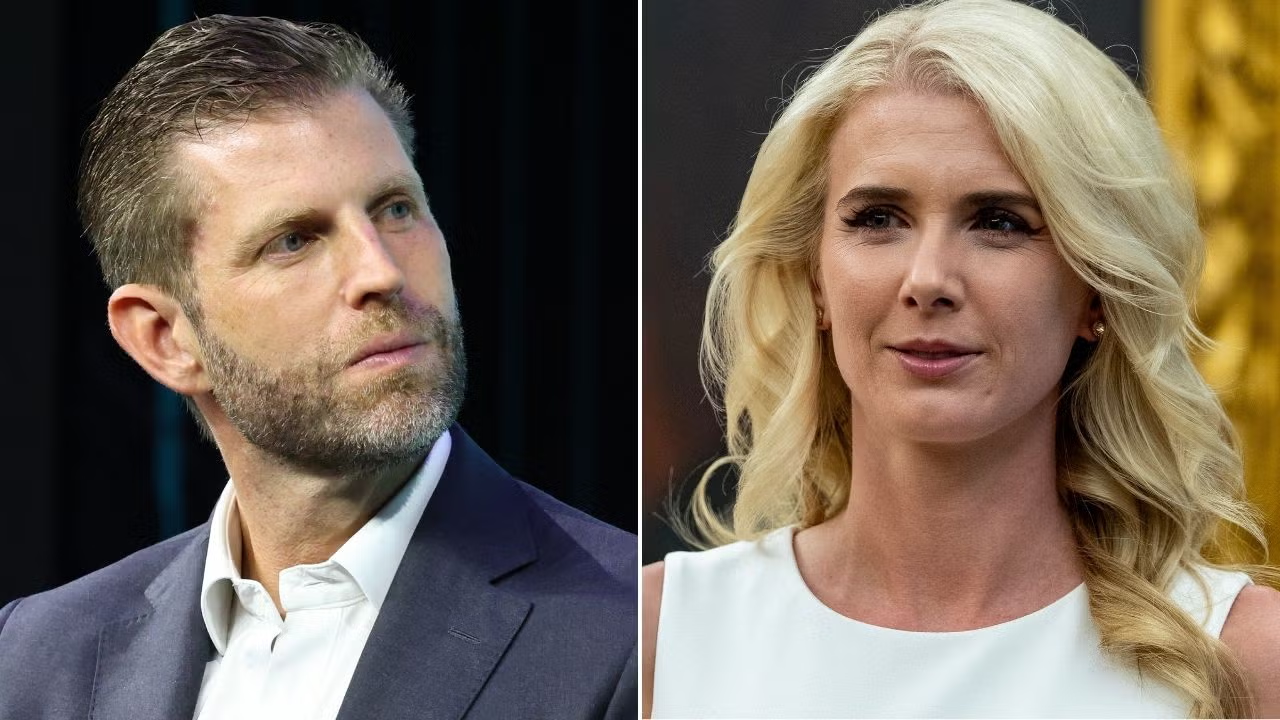
Eric Trump slammed a CNN interview with Preston Harp, the estranged brother of Natalie Harp, labeling it “absolute trash” Wednesday.
CNN’s Erin Burnett spoke Tuesday night with Harp about his sister, who has served as an executive assistant to President Trump since 2025. During their conversation, Burnett asked Harp for his opinion on reports that his sister leapt into the trunk of a motorcade in 2023 in order to accompany Trump to a court appearance in lower Manhattan, despite being told that there was not enough room for her. Harp laughed in response.
“That’s really funny. I didn’t even know about that,” Harp said. When questioned further by Burnett, he added, “It’s actually kind of sad. That’s obsession. That’s, like, an unhealthy obsession with someone, if you’re going to jump into the trunk of their car.”

A clip of the interview went viral Tuesday, prompting a response from Eric Trump, who praised his father’s close White House aide and slammed both CNN and Harp’s brother over the interview.
“What absolute trash,” Eric Trump wrote Wednesday morning on X. “Natalie is an incredible young woman — a cancer survivor, a genuinely good person and arguably one of the hardest-working people in the White House. She’s deeply committed to my father, to her job, and to this country.”
“From the looks of it, she got all the family genetics,” Eric Trump added, remarking, “CNN continues to be a joke.”
What absolute trash.
Natalie is an incredible young woman — a cancer survivor, a genuinely good person, and arguably one of the hardest-working people in the White House. She’s deeply committed to my father, to her job, and to this country.
From the looks of it, she got all the… https://t.co/ByhOFZvggo
— Eric Trump (@EricTrump) August 19, 2026
Harp has been thrust into the center of controversy after Georgia Democratic Senator Jon Ossoff name-checked her at a Sunday rally, accusing Trump of being more interested in playing golf and traveling with Harp than actually serving as president. It has also been revealed that Harp was one of the few White House officials chosen to go with Trump when he covertly switched planes to avoid an Iranian assassination threat after a NATO summit in Turkey last month.
“He golfs and trades stocks. See, he doesn’t want to do the job; he wants to build his ballroom and travel with Natalie to their apparently defenseless flying palace gifted by the Emir of Qatar,” Ossoff said.
The Georgia senator has received pushback from prominent voices on both the Left and Right, but his comments seemingly prompted CNN’s interest in speaking with Harp’s brother. During his interview with Burnett, Harp said his sister’s “infatuation” with Trump is the result of their mother raising them to believe in American Exceptionalism.
“Trump is like everything that my mom taught us to respect,” Harp said. “I think that’s where her infatuation for Trump comes from, honestly, because I don’t think it’s a physical attraction.”
In the same interview, he said Harp is Trump’s “biggest fan” and implied that her loyalty and her “good-lucking” appearance may be why the president likes her.

>
We live in a world where pretty much anything can be rendered photorealistically, from animals to aliens to Avatars. That puts pressure on documentary filmmakers, especially those who focus on the natural world, to craft imagery that does more than look glossy or large-scale enough for a screensaver. Great nature docs use dynamic, idiosyncratic imagery to make us feel like we’re in nature rather than absorbing content.
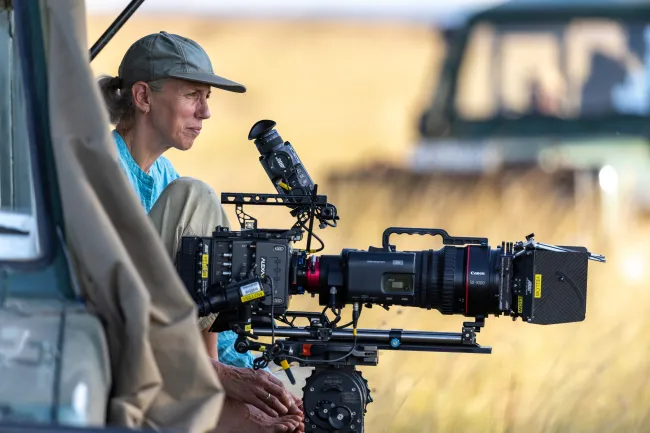
Sophie Darlington has been filming big African cats since the ‘90s and is still perfecting new ways to tell visually authentic stories of the Animal Kingdom. The director of photography’s latest series, “Lion,” is a four-part show from the BBC and National Geographic. Made with the imprimatur of live-action “Lion King” director Jon Favreau and a dusting of the iconic Hans Zimmer score for good measure, it follows a single lion, Kio, as he grows from cub to king of a pride in Kenya — and all the trials and tribulations in between.


According to Darlington, capturing imperfections and improvisations is key to creating a sense of the camera on the ground, as lions are the ultimate opportunists and can, as she told IndieWire, “go from Garfield to Muhammad Ali in about three seconds.”
Plus, the cinematographers all needed to stay far enough away to avoid influencing the lions’ behavior while still capturing immediate, close-up imagery of their subjects. What Ian McKellen identified as true for actors is equally true for Kio the lion: the portal to emotion on film is through the eyes.
“By getting into their eyeline, we’re getting into their world. So we had low mounts that we used, where you’d sit on the side of the car as kind of a bolt-on. And we had a little modesty curtain so we didn’t scare the lions, because, believe it or not, lions are much more scared of us than we are of them,” Darlington said.

Then the challenge was to be on the spot for anything and everything their subjects might do — like lying flat in a car bed, every day, often for 16 hours or longer. “I had a Ronford-Baker Atlas 50, which is Roger Deakins’ head of choice. I copied him because, well, he’s kinda cool,” Darlington joked about their gear package. “ It gives you the absolute weight and the smoothness and the torque that you need when you’re filming a lion. You need to be able to follow very smoothly with ultra-long lenses.”
Everything from the camera heads to the long lenses to the 2:1 aspect ratio, which Darlington credits with making the imagery feel more cinematic than a docudrama-like 16:9, helps create a sense of immersion. But while Darlington and her team kept improving their approach, especially with the drone work on “Lion,” they never let shiny new tools distract them from the storytelling.
“ It was all about long takes and the lion’s eyeline. Immerse yourself in that lion’s world. Immerse yourself in the beauty of the Masai Mara. Let that character, that place? Let them sing, and make it as organic and as natural from the grade through to the movements. Hopefully nothing makes you go, ‘Oh, I wonder what camera they used there?’” Darlington said.

The grading process was one of the places where Darlington and colorist Daniel Gill really wanted the image to look grounded and authentic, not polished and Instagram-filtered. The true color of a lion is, according to Darlington, about the same as digestive biscuits, depending on whether you’re buying the cookies in the UK or the U.S. In fact, the team had a full biscuit guide to ensure the lions always looked just right—never supernatural or oversaturated.
“I sat there and went, ‘Right, Dan, here’s the deal: digestives, Hobnobs, maybe a Rich Tea. Never Ginger Nut. There’s one category where there is this incredible yellow light at dawn and dusk, maybe then we can go Ginger Nut. But any other hint of Ginger Nut that gets in, I’m upset. We’d kill ourselves laughing about heading into Ginger Nut territory,” Darlington said. “But in all seriousness, it was about keeping [the lions] authentic and real.”

That authenticity is crucial, both to Darlington’s work as a whole and to “Lion” in particular. Almost no documentaries follow the lives of young male lions because they leave their mothers’ pride and tend to go into hiding as juveniles, scavenging and moving at night, along with ranging across the border from Kenya into Tanzania.
“As the story was beginning to unfold, I was like, ‘Oh my God. You stayed around! Not only did you stay around but you’ve moved in with the pride that we filmed on previous productions and know really, really well,” Darlington said. “[Kio] was actually 10 minutes from our camp at the very end. It was like, ‘Yay, you read the script.’”
When something kind of miraculous or serendipitous happens, however, the goal is to make sure it doesn’t feel scripted. “ In this time of lack of authenticity, to be in a story that’s real, that’s authentic, that has taken years to craft and isn’t perfect…. There are moments where I want things to be different, but actually they’re real, and that makes them kind of amazing,” Darlington said.
“Lion” is airing on National Geographic and will stream on Disney+.
>
If French writer-director Martin Provost were the head of a fashion brand, it would be the kind of house that turns out exceptionally well-made, classically designed upper-mid-market gear for an older clientele who know what they like and don’t want any silly logos or bizarre color combinations. It’s chic, if just a touch safe, outfits that maybe nod cursorily toward contemporary silhouettes and trends but won’t look dated in five years’ time.
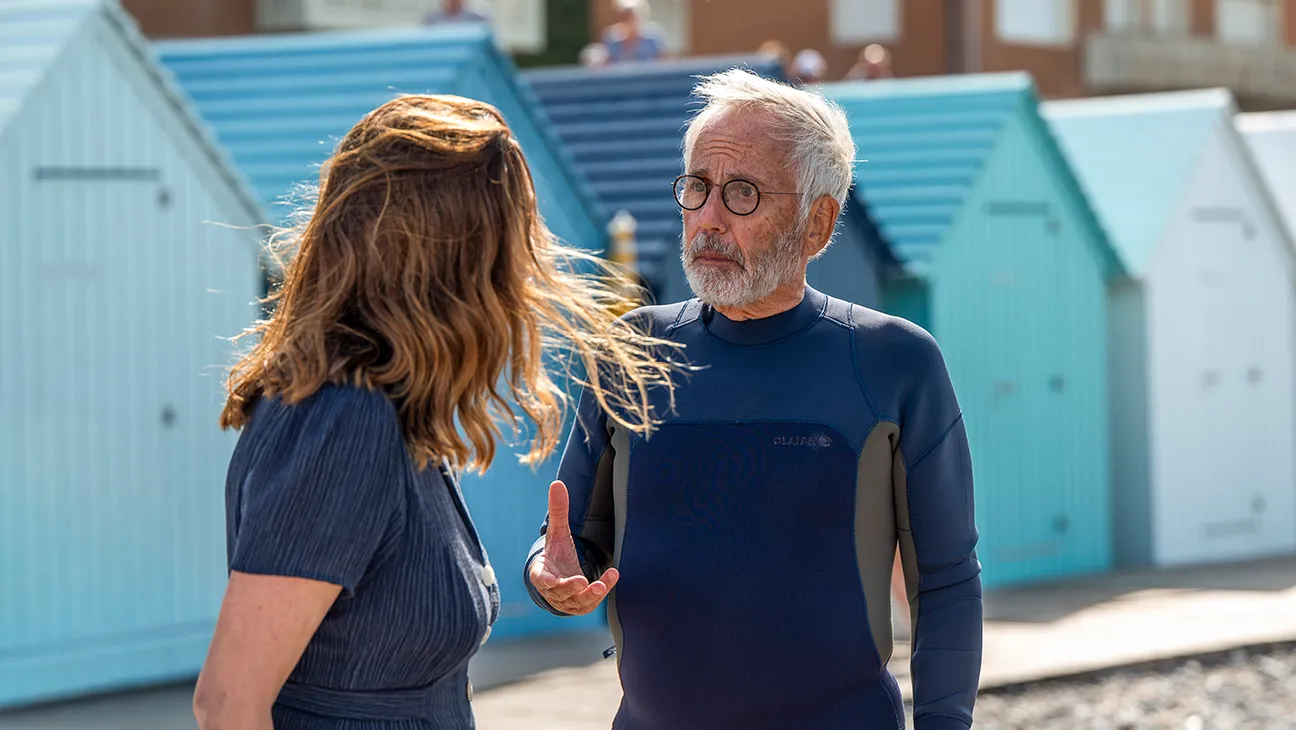
Indeed, his latest, Love Lessons, is like a cinematic look book for Soeur or Sézane, the major-name female cast (including Emmanuelle Devos, Chiara Mastroianni and Carole Bouquet) dressed in elegant linen frocks and jaunty, faintly maritime separates that suit the seaside vibe of Dieppe, in Normandy, where the story takes place. If it were a perfume, it would smell of ozone, salt and rosemary. What the story is actually about almost doesn’t matter — just enjoy the quiet luxury of it all, with the ever-endearing Fabrice Luchini in the lead doing yet another bumbling, bourgeois gentleman of a certain age.
Love Lessons
The Bottom Line
So tasteful you’ll forget what it’s about.
Venue: Locarno Film Festival
Cast: Fabrice Luchini, Emmanuelle Devos, Chiara Mastroianni, Carole Bouquet, Helene Alexandridis, Evelyne Istria, Klara Csordas
Director: Martin Provost
Screenwriter: Martin Provost, in collaboration with Marc Abdelnour
1 hour 54 minutes
If you really must know what the plot is, then suffice to say it’s a dating movie with senior citizens, a sex comedy for the post-menopausal set but one where we never see any actual sex. Also, there’s no mention of needing Viagra or lubricant. But who needs such fripperies when you have the aphrodisiacs of beautiful property, elegant clothes and a steady stream of amorous literary quotations in such abundance?
Luchini plays Emile, a beloved high-school French teacher whom we first meet giving his very last class. His retirement starts the moment the school bell rings. Naturally, his lesson on Jean de La Fontaine’s fable about “Love and Folly” will be prescient of events to follow. When Emile gets home, he finds a letter from his wife of many years, Barbara (whom we never meet), who has left him for some guy with a camper van.
Emile is unsurprisingly upset, but not exactly crushed. The last question a student asked him was whether he still loves his wife, but Emile never answered as the bell went off. His sister Perrine (Helene Alexandridis), who looks after their aged mother (Evelyne Istria) in a beautiful cliffside house that may or may not be in danger of falling into the sea (metaphor alert), is not surprised Barbara skedaddled. She and Emile had little in common, and he really never got over his first love as a teen, Lala.
Speaking of Lala, it just so happens she has finally returned to Dieppe after years away working as a flight attendant, and although she’s in her 60s she’s played by Devos (star of Provost’s 2013 hit Violette) so she’s still a knockout. Provost playfully choreographs the action so that she and Emile keep missing each other by mere meters as they circumambulate around Dieppe. Lala is there winding down the affairs of her late father, while Emile is checking out whether he likes bathing in the sea with a gaggle of locals the same age, for example, or having a fun fling with animal-rights activist Nadege (Bouquet, rocking a head of tidy cornrows that somehow neither looks daft nor too culturally inappropriate for a white lady).
Because of the rule of threes, there’s one more potential love object in the mix for Emile to consider: Audrey (Mastroianni), a woman who just found out her husband has been having an affair. Distraught, she’s left him and her two teenage sons to be alone in Dieppe, but she accidentally runs into Emile while he’s putting books in the free book box on the road. His recommendation that she read Iris Murdoch’s The Sea, The Sea (good choice) helps her to discover a love of literature (less convincing) and then she takes a job working as a housekeeper at his mother’s place. Soon, she and Emile find themselves attracted to each other, but then he meets Lala again and that passion flares up once more.
Viewers well versed in the ways of romantic fiction won’t be that surprised by how this little pas de quatre works out as Emile dithers and deliberates over each woman’s charms. Meanwhile, they work out their own assessments of what they want in life and the whole thing comes to a satisfying, reassuringly muted conclusion. Throughout, the film will cut to one of Emile’s former students as they recite a poem or a chunk of prose straight to camera, works by Gustave Flaubert, Marguerite Yourcenar or Arthur Rimbaud, among others. Presumably the display is meant to reassure viewers that the good literary taste of their generation will survive into the next, but it feels a bit more like a recital put on for the grandparents by kids bribed by the elders. But like so much else here, it’s all about posing and pretend, not actual substance.
>

When it comes to AI, director James Gray doesn’t mince words. The auteur called the current push for AI-driven filmmaking “obscene,” but he told IndieWire in a recent interview he has increasingly come to believe that it is a movement that will ultimately fail.
“I have a strange optimism about it because I think we will begin to recognize pretty quickly, if we don’t already, that AI is not going to be able to get at all of the infinite layers of the soul,” said Gray on an upcoming episode of the Filmmaker Toolkit podcast. “It’ll be able to hopefully help us speed up medical clinical trials for people that need it, but who we are, really, our souls are the only true infinite. You’re trying to reach for in movies, and any creative endeavor, really, to represent the never-ending mystery, the unending layers that exist. And so what does that mean? It means imperfection is part of the equation.”


It was a theme that ran throughout Gray’s entire interview about his new crime drama “Paper Tiger.” The filmmaker finds artistic beauty and humanity in images that are “flawed.”
“What I have found is that when you get technically great, what you start to miss is the imperfections in the medium that force a kind of magic,” said Gray. “When we say ‘the magic of the silver screen,’ what we’re actually talking about are things that in isolation you may never do: slightly soft [focus] on the actor, the image is grainy, you don’t see their face completely, you’re withholding some aspect of them physically.”
Gray equated going to a museum to see Van Gogh’s brushstrokes on a painting to watching something on celluloid: “It’s magical, and that’s what we’re trying to get at with the grain in the film, we’re trying to get at a humanity.”

Gray has gone back on what he told IndieWire in 2022, to say he now regrets shooting his last film, “Armageddon Time,” digitally. That choice was his — believing he needed the freedom digital provided to do longer, continuous, repeated takes because the film relied on its young cast’s performances — but he now sees it as a mistake. Gray is immensely proud of “Armageddon Time,” and gushes over Darius Khondji’s cinematography, but he did feel something was missing while making it.
Explained Gray, “I found myself on the digital fighting and fighting and fighting to get the imperfection, to get the grain, to get the kind of elusiveness of the image, the irretrievability of the image.”
The essence of that “irretrievability” is something Gray has been thinking about against the backdrop of what he fears technology is doing to his art form. He went on to remark how “disposable” digital imagery has become: “We take more photographs than ever; people are constantly photographing, but we don’t really look at them. Do you ever see a teenager [scroll their] Instagram feed?”
Gray continued, “There is an inherent melancholy attached to the photograph. It is a moment frozen in time that you will never get back. Now, people don’t consciously think that, but unconsciously they know it, ‘This is a moment I was really happy. It’s gone.’ So in cinema, one of the things that’s so beautiful is that melancholic pull, the irretrievability of that image is somehow turned into something beautiful. The immediacy of digital, the thing that offends our eye, is that it feels present. It’s why if a movie looked like you were watching an NFL game, it would offend you. It would look terrible because it feels so live. It doesn’t have that beauty of the past.”
On his new film “Paper Tiger,” Gray and cinematographer Joaquín Baca-Asay not only returned to shooting on celluloid, but also embraced vintage lenses and equipment, particularly tungsten lights, which he said was another way to incorporate greater “humanity” into his images. Gray doesn’t believe he is alone in this view, suggesting cinema and cinephiles, at this AI moment, are going through something akin to the return of 12-inch records in the music industry.

“We’re trying to get at a humanity. My kids know it, and young people know it; it’s why vinyl has made a comeback,” said Gray. “We went all digital in the ’80s and early ’90s, and all of a sudden people heard a vinyl record and went, ‘Wait a minute, that sounds better,’ because it’s a continuous signal. The needle goes into the record, and the signal is continuous, and digital, of course, breaks it up into zeros and ones. That imperfection, the warmth, is what reminds us of who we are.”
“Paper Tiger” has been selected as the opening night film at this year’s New York Film Festival, and NEON will release the film theatrically on November 13, 2026.
To hear Gray’s full interview, airing in November, subscribe to the Filmmaker Toolkit podcast on Apple, Spotify, or your favorite podcast platform.
>

England vs Pakistan: Joe Root era given ideal start by Ollie Robinson and Josh Tongue

Google launches new study tools for students across Search and Gemini

Nat Geo’s ‘Lion’ Cinematography Interview with Sophie Darlington
-

 movies3 months ago
Search For Canadian TV Actor Stewart McLean Now Homicide Investigation
-

 Fashion9 years ago
These ’90s fashion trends are making a comeback in 2017
-
Fashion9 years ago
According to Dior Couture, this taboo fashion accessory is back
-
Fashion9 years ago
Model Jocelyn Chew’s Instagram is the best vacation you’ve ever had
-
Fashion9 years ago
Emily Ratajkowski channels back-to-school style
-
Fashion9 years ago
9 Celebrities who have spoken out about being photoshopped
-
Fashion9 years ago
Your comprehensive guide to this fall’s biggest trends
-
Fashion9 years ago
A photo diary of the nightlife scene from LA To Ibiza