
Tech
Google launches new study tools for students across Search and Gemini


Google on Wednesday announced a slew of new study tools across Search and Gemini, including AI-generated interactive visuals, 3D simulations, a decided student hub, customized practice quizzes, and more.
The launch of the new study features marks Google’s latest effort to make Gemini the AI assistant that students turn to when learning and studying, as it competes with companies like OpenAI and education startups such as Knowt and Gauth, which are also offering their own learning and practice tools.
On Search, students can now generate custom tools and simulations to help them understand complex topics. For example, if a student is learning about pH levels, they can search for “pH scale” and get an interactive visual in an AI Overview that makes the basics easier to understand.
To go even further, they can ask a follow-up question for something more specialized, like plotting citrus fruits on the pH scale, and AI Mode in Search will then create an interactive experience tailored to the question.

Users can now get customized practice quizzes directly in Search on any subject, including science, math, humanities, foreign languages, and more. For example, users can enter a prompt like, “Create a quiz with the most commonly tested vocabulary words to help me prep for the SAT,” and Search will then generate an interactive quiz.
In the coming weeks, Lens in Search will roll out a new interactive learning experience that will help students work through problems. They can tap the “Lens” camera icon in the Google app and then upload a photo of what they’re working on to get AI to explain the concept, identify potential mistakes, and provide guidance if they’re stuck.
Additionally, students can now ask Search to create study documents based on their uploaded files, including PDFs, docs, slides and more. For example, they can upload a photo of their handwritten notes along with lecture slides to get a one-pager that outlines key concepts.

As for the new Gemini features, Google is launching a feature that lets students launch multi-step research reports in Gemini Live and then discuss the findings conversationally.
Users can ask Gemini to research a topic and then close the chat or do other things while it works in the background. They’ll get a notification when the report is ready and can then can discuss the findings or ask follow up questions using their voice.
The tech giant also announced that Gemini can now generate functional 3D simulations to help users better understand topics, as responses will now include tables, grids, and simulations made specially for the prompt. For example, if you enter a prompt like, “show me how DNA works in 3D,” you’ll be able to interactively rotate and zoom into a 3D DNA structure.
Google is also launching a dedicated hub in the Gemini app that brings its learning tools together in one place. Users will be able to start a study notebook, create flashcards, take practice quizzes, and more within the hub.
When you purchase through links in our articles, we may earn a small commission. This doesn’t affect our editorial independence.
>
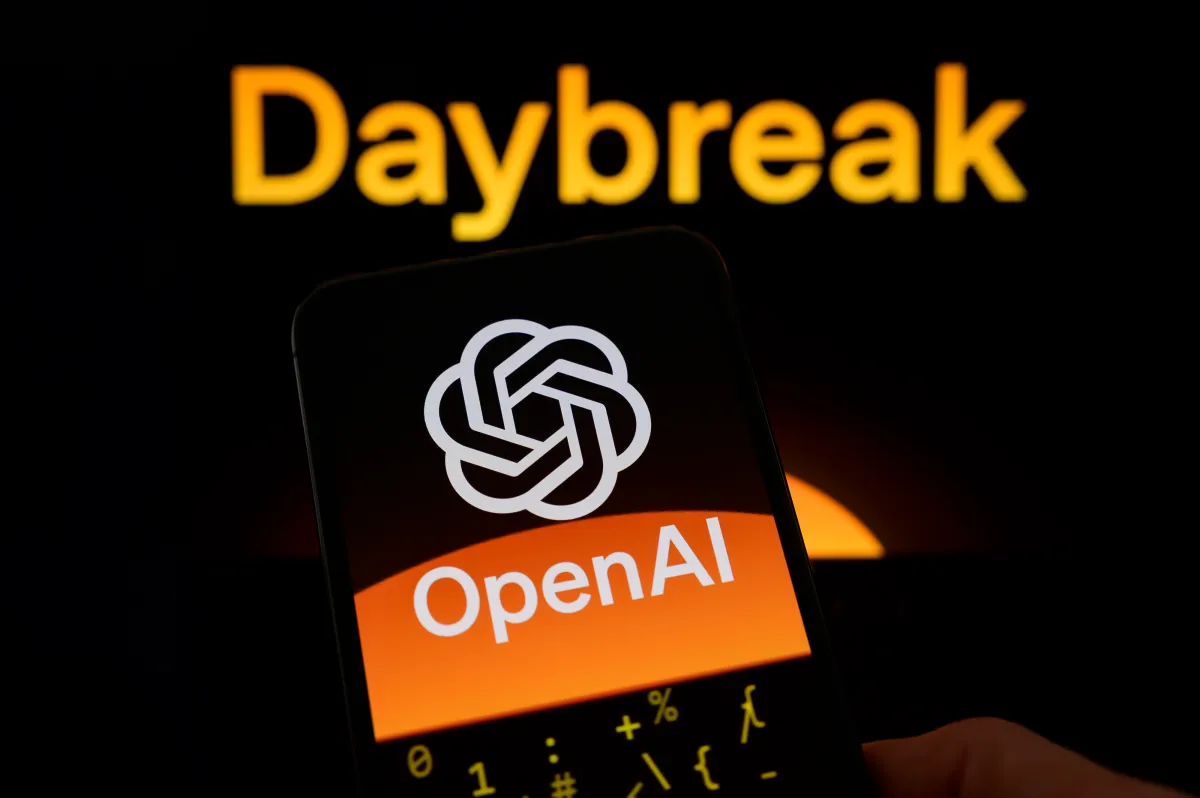
Several security researchers say OpenAI suddenly revoked their access to a limited-access program that removes some restrictions on using its AI tools for cybersecurity research, likely because of an error by the company.
On Wednesday, multiple researchers on OpenAI’s official support forums and on X reported having their access to the Trusted Access for Cyber (TAC) program revoked. The people said that when they opened ChatGPT’s Cyber page, a message appeared saying their identity could not be verified or that their account “is ineligible at this time.”
TAC is a special program through which OpenAI offers vetted researchers access to the company’s most advanced AI models with fewer cybersecurity guardrails than the models that regular users can access. Anthropic offers a similar program called the Cyber Verification Program, or CVP.
The idea behind TAC and CVP is to give trusted defenders better models so they can report bugs and vulnerabilities to companies, with the aim of getting flaws patched faster. The goal is also to prevent cybercriminals and malicious hackers from accessing those models and use them to find bugs and develop exploits to hack companies.
To get access to TAC, cybersecurity researchers have to submit an ID and be vetted by OpenAI.
At this point, it’s not entirely clear why these researchers are getting their access to TAC revoked, nor how many people have had this issue.
TechCrunch spoke to five researchers who said they have had this problem. One researcher said OpenAI sent an email saying that their access to Daybreak Blue, the latest vetted tier of TAC, was revoked “due to a technical issue affecting a limited number of users.”
“This was an issue on our end, and not the user experience we want to deliver,” read the message, which the researcher shared with TechCrunch.
In a thread on OpenAI’s forums, a researcher wrote that after they reached out to the official support, the company also cited a “recent technical issue” that caused some users to lose access to Daybreak Blue.
In both messages, OpenAI asked the researchers to reapply and complete the verification process.
All the researchers TechCrunch spoke to said they live outside of the U.S. and Europe, suggesting the revocations may be limited to certain regions.
OpenAI did not immediately comment on the account issues when contacted by TechCrunch.
Daybreak Blue is the latest tier for individual researchers that grants access to “frontier general-purpose models, including GPT‑5.6 Sol, with safeguards tailored to authorized defensive security work,” according to OpenAI, which launched it on August 10. “It is the recommended starting point for most defenders, supporting vulnerability discovery, secure code review, malware analysis, incident response, and patch validation.”
At the same time, the company also introduced a higher tier called Daybreak Red that gives access to models made specifically for cybersecurity research, which allow vetted users to do “authorized vulnerability research, exploit validation, and security testing.”
In recent months, both defensive and offensive security researchers have complained about the guardrails imposed by Anthropic and OpenAI, arguing that the guardrails prevent them from doing legitimate work.
When you purchase through links in our articles, we may earn a small commission. This doesn’t affect our editorial independence.
>


This article is part of our exclusive career advice series in partnership with the IEEE Technology and Engineering Management Society.
Imagine this: You have a strong idea for a new product for your company. Your coworkers encourage you to move forward because they believe it could be the organization’s next big success. The idea clearly falls outside your department’s responsibilities, however, and you have no role in the product line.
What should you do? Sit and wait for “the right group” to pick it up, or push the idea forward without knowing how or what it might mean for your current position?
Such situations occur frequently. Many end up as missed opportunities, even though they could have significantly advanced the company’s technological or market position.
Some organizations actively support such initiatives, allocating specific periods during the workday for employees to focus on developing their own ideas.
Companies known for that include Google and 3M. They allow employees to pursue projects with a portion of their time, such as one day per week. Research that I conducted indicates it pays off for employee performance.
Bootlegging and skunkworks
At some companies, managers know such projects exist, but they deliberately turn a blind eye, allowing them to continue.
Some employees persist through bootlegging or skunkworks projects.
Bootlegging projects have not been approved by a manager or funded by the company.
Skunkworks projects involve a small team within the company that has been given authority and funding to secretly research and develop potentially groundbreaking innovations during their off-hours. The term comes from Lockheed’s Skunk Works division, set up in 1943 in a rented circus tent to build the P-80 fighter jet in secret. It took just 143 days.
The 3M Post-it Note came out of the company’s “15 percent culture,” described as a permitted bootlegging policy. It gives employees paid time off to pursue their own ideas.
The company traces the philosophy to its longtime president and later chairman William L. McKnight. Company scientist Arthur Fry used the policy in 1974 to turn a colleague’s dormant adhesive into the first Post-it prototypes, after his own bookmarks kept falling out of his hymnal.
There are several examples of high-visibility skunkworks projects. At Apple, Steve Jobs pulled roughly 20 people—pirates, as he called them—out of the company to build the original Macintosh computer in a building nicknamed Texaco Towers. In Walter Isaacson’s biography Steve Jobs, he frames the idea as modeled on the skunkworks approach.
Google’s Gmail system is frequently—and incorrectly—cited as a product of the company’s “20% time” policy. In a 2014 interview with Time magazine, the system’s creator, Paul Buchheit, said Gmail was in fact an official assignment. What the Gmail incubation did share with classic skunkworks projects was secrecy: For much of its three years in development, it was kept hidden from most people inside the company.
If you want to drive change in your organization, build a promoter triad around your idea.
At Alphabet, Google X—now known simply as X—operated as a secretive “moonshot” lab, kept hidden from most Google employees, according to a 2011 article in The New York Times. Google’s self-driving car project graduated from X to become Waymo, and Google Glass was likewise incubated there. The X team is now developing the second edition of Glass Enterprise, a successor aimed at industrial rather than consumer use.
Amazon runs a comparable model through Lab126, which, according to an article in Fast Company, evolved from a small skunkworks Amazon subsidiary into a hardware maker with nearly 3,000 employees. Lab126 delivered the Kindle in 2007 and the Echo in 2015.
Then there are so-called submarine projects, which employees work on without permission and despite explicit disapproval. They can lead to disciplinary action and termination.
Innovation management
Innovation management theory offers a more structured and robust approach. It argues that successful organizational change requires support at several levels, according to “Teamwork for Innovation: The ‘Troika’ of Promoters,” published in R&D Management. The promoter theory, developed around 25 years ago, consistently shows that change projects are far more likely to succeed when they are supported on multiple organizational levels. A good idea alone is not enough; you need a network of technology, process, and power promoters to turn a concept into a fully implemented, scalable solution.
First, you need a technology promoter: the person who has the idea, such as a new product, and possesses technical expertise and specific knowledge about the field or industry. Art Fry at 3M would be such an individual.
How can you put that into practice as an individual? Start by clearly formulating your idea into a concise concept paper or one-page summary including benefits, technical feasibility, and potential business impact.
Identify potential technology promoters (experts who can validate and refine your idea), and approach them early to strengthen the technical foundation.
In parallel, map the relevant stakeholders and decision-makers, and identify process promoters who understand how decisions are made in your company. They could be colleagues in innovation, R&D, or business development who understand your idea and how it can benefit the company.
The second is a process promoter: someone who might not know all the technical details but understands the organization’s formal and informal networks and knows how to navigate its processes, committees, and decision-making paths. This person can ensure the idea reaches the right stakeholders at the right time.
In the 3M case, it would be a person from the organizational management department, often called an innovation manager. The key role here is to connect inventors such as Fry with people from other departments needed for further project development, such as manufacturing, quality control, and sales.
Lastly, there’s the power promoter: a person in a leadership position who might not know the technical details but can allocate resources, eliminate obstacles, and maneuver through the company’s political dynamics. This individual has hierarchical power and acts as a sponsor of the idea or project. In the case of Fry, the person could be, say, the chief technology officer, but it also could be a middle manager who has the power for an individual field of action.
The three-level promoter structure applies regardless of whether the change concerns a new product, new service, or internal process innovation.
Engage potential power promoters by presenting a low-risk, small-scale pilot and a clear value proposition. Leaders are more likely to support ideas that are well prepared, vetted for potential risks, and backed by a small coalition.
Building the promoter triad
In short, don’t work in isolation. Systematically build alliances across expertise, networks, and hierarchical levels to create lasting change. If you want to drive change in your organization, build a promoter triad around your idea.
The tech experts and leadership promoters are easier to identify. Process promoters are often found in corporate innovation management, R&D management, or strategy functions, but they also can emerge in line units with strong internal networks.
Innovation management, as the promoter model describes it, looks nothing like the management structure most engineers are trained to expect. Traditional technical management runs on a single reporting line. With the promoter model, influence is spread across three people—technology, process, and power promoters—who may be in different departments, at different levels of seniority, and who might never share a reporting line.
What holds the trio together isn’t a formal structure; it’s the idea itself, for as long as it takes to move the idea forward.
That makes innovation management closer to networked, matrix-style leadership than to the pyramid most engineers picture when they hear the word management. It’s worth understanding both models before you decide which kind of impact you’re actually optimizing for.
The Institute has covered the tension from the individual’s side in “Tips for How to Think Like an Entrepreneur,” “Management Versus Technical Track,” both published in partnership with the IEEE Technology and Engineering Management Society, and “What to Consider Before You Accept a Management Role” from the IEEE Spectrum Career Alert newsletter. All are worth a look if you’re weighing a formal management track against staying close to the technology itself.
Remember: You don’t have to build your promoter network alone or only inside your own company. IEEE societies, sections and chapters, and technical committees, as well as the networking platform IEEE Collabratec, function as a ready-made cross-company network. They are practical places to find technology promoters with deep expertise in a field you don’t fully own yet, or to meet process and power promoters at other organizations who have built a promoter coalition around a similar idea.
For more tips on how to advance your career, check out our Career Advice for Engineers, From Engineers collection.
From Your Site Articles
Related Articles Around the Web
>

Australia has spent decades importing much of the technology that runs its digital economy. AI could make that dependence considerably more expensive.
The Albanese government is increasingly arguing that Australia cannot afford to become merely a customer of overseas AI companies. Assistant Minister for Science, Technology and the Digital Economy Andrew Charlton has warned that the country risks becoming a permanent “renter of intelligence” if more of the economic value generated by AI flows offshore.
In a May speech outlining Australia’s AI ambitions, Charlton framed the choice as building a domestic AI industry or becoming increasingly dependent on foreign platforms.
For Australian CIOs, the debate is more practical than patriotic. As AI becomes embedded in workplace software, cloud infrastructure and business processes, organisations will need to decide how much control they are comfortable handing to overseas model providers and where local alternatives are actually viable.
Australia’s AI bill could keep climbing
The economics are beginning to sharpen the argument.
Recent Australian reporting puts current national spending on AI at roughly $5 billion to $8 billion annually, much of it going to overseas providers. That figure could eventually reach $40 billion a year within a decade if Australia remains heavily dependent on imported AI services, according to comments from Charlton reported by News.com.au. The forecast has intensified the government’s push for more Australian-owned models and AI companies.
The concern mirrors a broader technology sovereignty debate already reaching Australian enterprises. As TechRepublic has previously examined, governments around the world are reconsidering who controls critical digital infrastructure and data.
AI raises the stakes because organisations are no longer talking only about where data is stored. They must also consider who provides the models that interpret that data, the compute that runs them, and the platforms that increasingly make automated decisions.
Sovereign AI does not mean building an Australian ChatGPT
Australia is unlikely to challenge the spending power of the US or China by attempting to build frontier foundation models from scratch.
Charlton has instead argued that Australia should choose where it competes across the AI “stack,” which includes energy, chips, data centres, foundation models, software and services. In a speech to the Australian Business Economists Conference, he pointed to opportunities for Australia across areas including energy, data centre infrastructure, software and applied AI.
That distinction matters for Australian technology leaders.
An Australian enterprise may have little reason to reject a leading overseas foundation model simply because it was developed abroad. But it may choose to run an open-weight model locally, keep sensitive workloads inside Australian infrastructure or buy specialised AI from a domestic provider with expertise in areas such as healthcare, mining or financial services.
That option is becoming more realistic as capable open-weight models proliferate. TechRepublic recently examined how open-weight AI could give Australian enterprises more control over models and sensitive data.
More Australia coverage
Australia already has some pieces of the AI stack
Australia is not starting from zero.
Charlton has said the country has more than 1,500 AI companies, while government policy is increasingly targeting the infrastructure and investment needed to grow the domestic ecosystem. His February speech on building an Australian AI stack highlighted local AI businesses, research capabilities and data centre operators as potential foundations for that growth.
Infrastructure is receiving particular attention. In March, the government introduced expectations for data centre and AI infrastructure developers covering energy, water, jobs, research capability and national resilience. Those expectations are now feeding into broader Australian AI standards. The government says its proposed framework will require large data centres to underwrite new power supply and pay their share of connection costs.
Foreign investment is also part of the strategy rather than something Canberra is trying to eliminate. In April, the government signed an AI collaboration agreement with Anthropic focused on areas including Australian researchers, workers, startups, skills and the broader AI ecosystem.
Later that month, Canberra signed a separate agreement with Microsoft, alongside the company’s announced $25 billion investment in Australian digital infrastructure, workforce training and cybersecurity. That makes Australia’s emerging version of AI sovereignty less about shutting the door on foreign technology and more about capturing more of the investment, capability, and economic value it creates.
It also builds on an infrastructure trend already visible locally. TechRepublic has previously explored how Australian data centres are positioning themselves for increasingly sovereign AI workloads.
What Australian CIOs should watch
For Australian IT leaders, sovereignty is likely to become another dimension of AI procurement alongside price, performance and security.
Teams evaluating AI platforms may increasingly need to ask where models run, where organisational data travels, whether workloads can move between providers and what happens if pricing or access to an overseas model changes.
That does not mean every workload needs an Australian model or an Australian-owned cloud. It does mean vendor concentration deserves to be treated as an architectural risk rather than simply a procurement convenience.
Australia’s AI challenge, then, is not to recreate Silicon Valley on the shores of Sydney Harbour. It is to decide which parts of the AI economy are important enough to own.
If AI becomes as fundamental to business as cloud computing did over the previous decade, that decision could determine whether Australian companies merely consume the next generation of technology or capture a meaningful share of the value it creates.
Also read: See how AI is already reshaping Australia’s job market, from slower hiring in AI-exposed occupations to changing skill demands for Australian workers.
>

England vs Pakistan: Joe Root era given ideal start by Ollie Robinson and Josh Tongue

Google launches new study tools for students across Search and Gemini

Nat Geo’s ‘Lion’ Cinematography Interview with Sophie Darlington
-

 movies3 months ago
Search For Canadian TV Actor Stewart McLean Now Homicide Investigation
-

 Fashion9 years ago
These ’90s fashion trends are making a comeback in 2017
-
Fashion9 years ago
According to Dior Couture, this taboo fashion accessory is back
-
Fashion9 years ago
Model Jocelyn Chew’s Instagram is the best vacation you’ve ever had
-
Fashion9 years ago
Emily Ratajkowski channels back-to-school style
-
Fashion9 years ago
9 Celebrities who have spoken out about being photoshopped
-
Fashion9 years ago
Your comprehensive guide to this fall’s biggest trends
-
Fashion9 years ago
A photo diary of the nightlife scene from LA To Ibiza