
Entertainment
Lucky Showrunner Unpacks Finale Shootout and Betrayal


Note: This story contains spoilers from “Lucky” Episode 7.
Welcome to the rest of your life, Lucky.
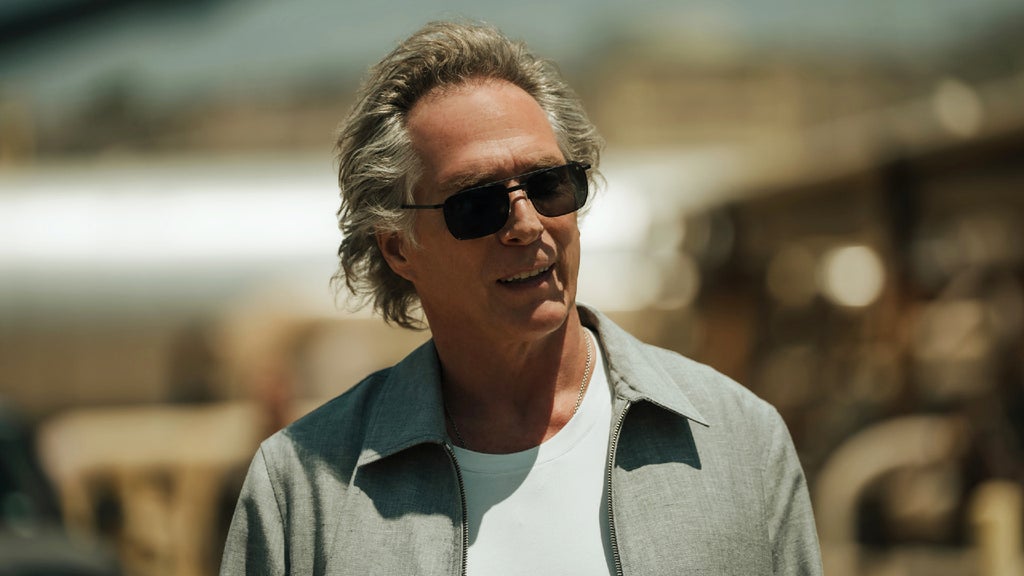
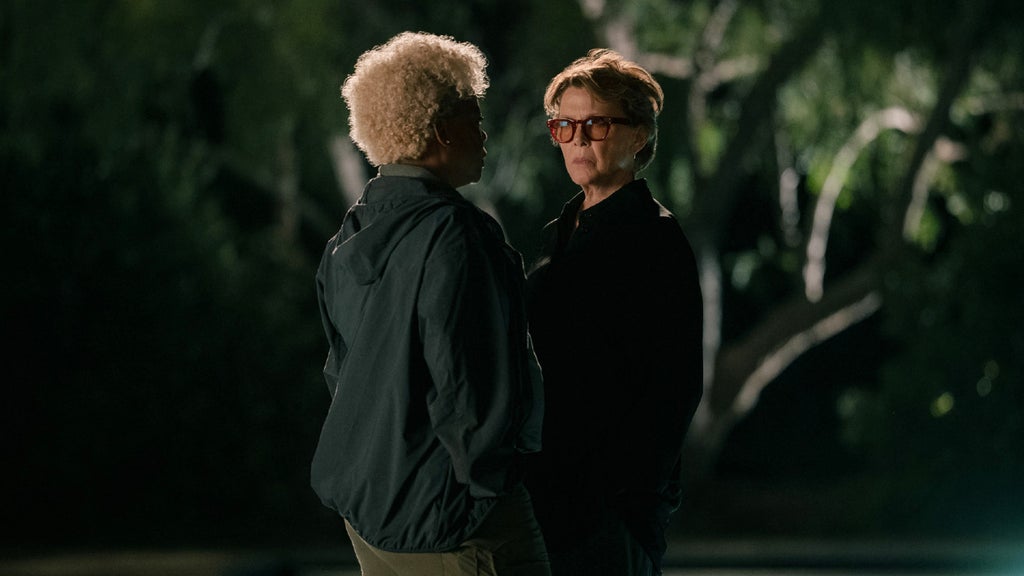
Luciana Armstrong (Anya Taylor-Joy) goes through it in the “Lucky” finale, narrowly surviving a shootout between Priscilla Masterson (Annette Bening), enforcer Dutch (Clifton Collins Jr.), mob boss Wayne Whittacker (William Fichtner) and his crew of henchmen. Lucky and her father John (Timothy Olyphant) are spared by Priscilla after the latter takes a stand and finally kills Wayne, while FBI Agent Billie Rand (Aunjanue Ellis-Taylor) survives a deadly double-cross encounter with FBI colleague Peter Kershaw (Eric Lange), who is revealed by Lucky to have been an informant for Wayne all along.
The coast is not all clear for Lucky, though. During dinner together later that night, John starts angling for the money he stole, which only Lucky has the seed phrase to unlock. In the morning, she wakes to find John gone along with the stuffed teddy bear her late husband Cary (Drew Starkey) hid the seed phrase in. John learns too late, however, that Lucky saw his betrayal coming. He finds the bear’s seed phrase recording overwritten by a farewell message from Lucky, who is revealed to have turned the money in to Rand.

“Lucky” subsequently ends on a moment of peace, as Taylor-Joy’s clever survivor stands alone on the beach, breathing in the ocean air. According to “Lucky” co-showrunner Cassie Pappas, that was not the final image she and the show’s other writers always had in mind for the Apple crime thriller.
“The opening image of the show is her flicking her dad’s lighter. It’s her thinking, ‘What would my dad do in this situation?’ He’s so in her head,” Pappas told TheWrap, revealing, “In the early days in the writers’ room, we were like, ‘When she gives the money back, should the lighter be with it? Just as a symbolic image?’ But then, in production and the shooting of it all, we lost the lighter at the end of Episode 3 [laughs]. Like, ‘Where’d the lighter go? Oh. OK. Never mind!’”
The image “Lucky” ultimately ends on may be different from what Pappas and co. originally had in mind, but the meaning is the same. In the series’ final moments, Lucky frees herself not just from the criminal lifestyle she was born into but also from her toxic relationship with her father. In doing so, she claims the dream they once shared for herself.
“Something we talked about a lot in the writers’ room was, ‘What is the shared dream that John always dangled as a carrot in front of young Lucky?’ ” Pappas said. “I imagined that, if they were living life con-to-con, motel-to-motel and she was a kid, he had to have dangled some kind of a carrot, so he promised, ‘We’re not going to live this life forever. One of these days, we’re going to run out of land and we’re going to be standing at the ocean and we’re never going to do this again, and we’ll be out.’ It’s a shared dream that she has always held onto, like, ‘One day…‘”
“What she has to go through in the finale is realize that’s never going to happen. Her dad is always going to be who he is. Her dad wants to take the money and run and she wants to give the money back and be free,” Pappas explained. “The only way she’s going to see the ocean and have her feet in the sand, have this shared dream, is if she gives it to herself.”
Below, Pappas dives further into the “Lucky” finale, including its climactic needle drop and why the series was always, in the end, about a father and daughter. This conversation has been edited for length and clarity.
TheWrap: How much does Lucky know going into her confrontation with Whittaker? When does she figure out Kershaw is his mole? Does she have an idea of what will happen when she reveals that?
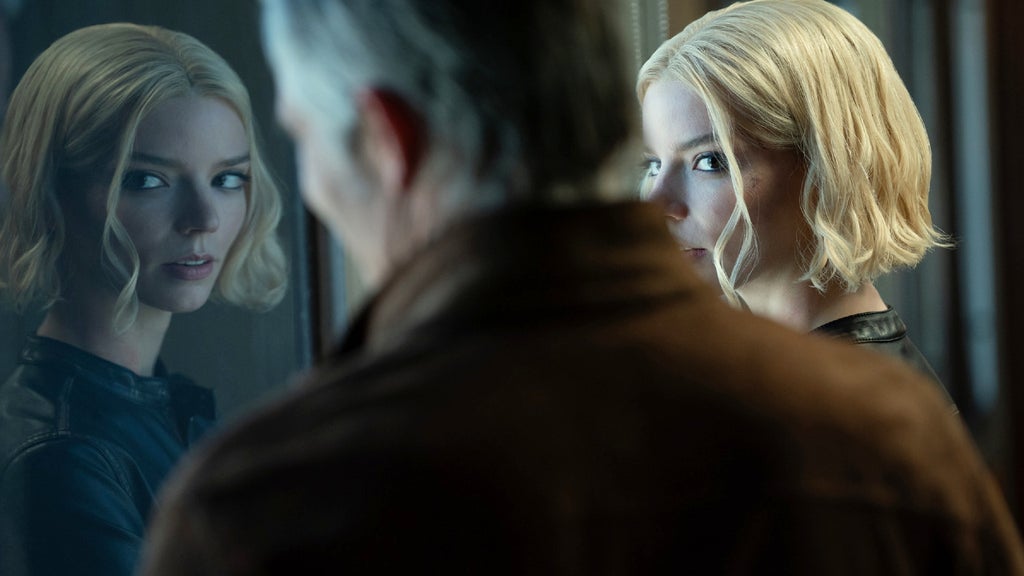
Cassie Pappas: From the moment the finale begins, she’s got the Kershaw bomb in her back pocket. She doesn’t know if it’s going to work. It’s what she says to John later. “It was either going to work or it was one hell of a bluff.” She slowly starts to put it together in Episode 6. Specifically, there’s a moment where Lucky and Priscilla have a scene in the stable, and as Lucky is about to leave, she stops, turns around, looks at Priscilla and says, “How did you guys find Cary in La Jolla?”
She starts to realize that the only way they would have found him is if Wayne Whittaker had somebody on the inside, so that’s the moment she’s like, “Huh…” But we purposely hide the ball and don’t really let the audience in on that until she decides to drop the bomb.

The last viewers see Priscilla, she is standing alone in her mansion after Rand has made it very clear she is not going to give up on taking her down. Why did that feel like the right way to leave her?
Pappas: That scene was originally much longer. They really went back and forth, and we shot it that way. It was in the edit that we cut it down. The scene worked great. It’s not that it didn’t work, but when you get to a series finale, you don’t want it to feel like you have four endings. We already knew we were going to have two climaxes: our action set piece that ends at the gas terminal and then the emotional father-daughter moment that is our real ending. So knowing that and not wanting to lose pace, we had to trim that scene.
What I love about that confrontation is Priscilla essentially ascends the throne. She kills Wayne. But she is now left alone in this empty house. Her son is dead. So she ascended but at what cost? This is what happens when you live this life that Lucky has escaped. We always spoke about those two characters like, “If Lucky doesn’t make the right decisions, in 25 years she will become Priscilla.”
I think that’s what Priscilla likes about Lucky. She’s like, “I see a lot of me in you, so let me take you under my wing. Stop being such a little pain in the ass. Let me just mentor you.” There’s a cool duality there, because Lucky has a very short window of time to get out. If she doesn’t, this life is going to solidify around her and it’s going to be her life. That’s what I like most about that final image of Priscilla. She’s in her mansion alone, having lost the things that matter most in life but having won the game.
John and Lucky’s relationship really becomes the focal point of the show in its final three episodes. Was that always the plan?
Pappas: For [co-showrunner] Jonathan [Tropper] and I, what drew both of us to this project was the father-daughter dysfunctional relationship. On a character level, that’s already fascinating. But then, when you put it in this world of criminality, you get a fresh take on a trope you’ve seen a bunch, whether it’s in “Catch Me If You Can” or “Heat.” It’s a cat-and-mouse game.
But what I really liked here is that underneath this cat-and-mouse game is a young woman who has a very codependent and dysfunctional relationship with her father. She’s trying to get out of the thing that she was born into, the thing that she didn’t choose. What I really honed in on when we were writing it was, “It’s interesting if the thing Lucky is trying to outrun is actually inside her. It’s in her genetics. It’s in her blood. It’s her dad.” She’s her father’s daughter. He made her in his likeness and image, so the physical running she does becomes an interesting juxtaposition.

Why does Lucky give the money to Rand at the end?
Pappas: We talked a lot about that in the writers’ room. It was just the only way for her to truly be free and to be clean. We wanted her clean and free. We wanted her to be able to step into a life where she’s not having to look over her shoulder. So giving the money back was her way of feeding the beast, giving Rand what Rand wanted and going, “Stop looking for me. I’m giving you what you want.”
It’s an emotional cord-cutting of her father as well, because he stole that money. If she had kept that money in any way, even if it was just to buy a flight out, we just didn’t feel right about it. We wanted her to just give it back, cleanly get out and then go start to figure out who she really is.
The show concludes with a cover of Phil Collins’ “Take Me Home.” Why that song?
Pappas: Oh, man. We went round and round on that. Our music supervisor, Jen Malone, is fantastic, and we tried so many different needle drops there. That one, it was less about the lyrics. It was more about the feeling we wanted: a sort of upward, rising action. We wanted it to feel like she’s taking the first breath of her new life, and then we cut away before she even exhales because we wanted to end on that swell of rising emotion.
“Lucky” is streaming now on Apple TV.

>
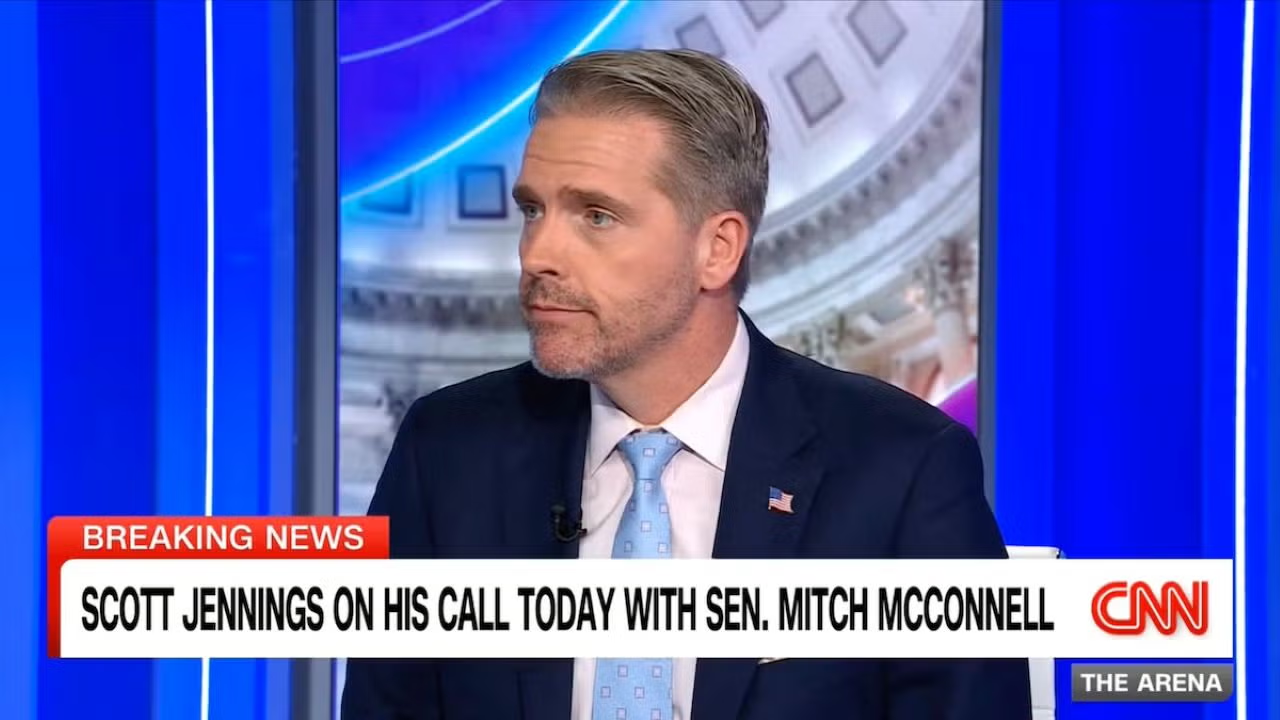
Scott Jennings is being eyed to replace Karoline Leavitt as White House press secretary.
White House chief of staff Susie Wiles recently met with Jennings at Mastro’s Steakhouse in Washington, D.C., at the Trump administration’s request, CNN reported Thursday, citing two sources familiar with the meeting. Multiple staffers believe Jennings has Wiles’ backing, though the search remains in its early stages.
“He’s competent and good on TV,” one senior White House official told CNN.
The report follows Politico’s reporting that Jennings was making a push for the position and had privately met with senior administration officials. Jennings reportedly sought the meeting after clips of him defending Trump aide Natalie Harp circulated within the White House, including some he sent to senior staffers himself.

President Donald Trump has told his team that Jennings “looks the part” and performs well on television, according to CNN. Some administration officials, however, have questioned whether the longtime Republican strategist could handle the extensive behind-the-scenes responsibilities that helped make Leavitt an influential figure inside the White House.
Jennings declined to say Wednesday whether he was interviewing for the position or had discussed the opening with White House officials.
“I don’t have any comment about that,” Jennings told Abby Phillip on “CNN NewsNight.”
Jennings then appeared to outline his view of the position, saying every president deserves someone who can publicly defend the administration and explain its actions to the American people. He described the press secretary as an important conduit for transparency, both in front of the camera and behind the scenes.

Jennings has served as a CNN contributor since 2017 and has become one of the network’s most prominent conservative voices, frequently drawing attention for his combative defenses of Trump and often intense clashes with fellow commentators on “CNN NewsNight.” He previously worked in the George W. Bush administration and has been a longtime adviser to Kentucky Sen. Mitch McConnell.
Leavitt is scheduled to leave the White House at the end of August to spend more time with her family. Wiles is expected to meet with several other potential candidates before a decision is made, while Trump has indicated that he is not rushing the process.
Representatives for Jennings and the White House did not immediately respond to TheWrap’s requests for comment.

>

When actor and rapper Daveed Diggs was cast as superhero preacher Oh Father for the fifth and final season of Prime Video series “The Boys,” he didn’t think his musical skills would be called on for the gig. But the show’s composer, Christopher Lennertz, had other ideas.
“When they announced that he was going to be in the show, I immediately texted our showrunner, Eric (Kripke), and said, ‘We need to have him do a musical number.’” Lennertz said. “And he was like, ‘I don’t know. That wasn’t part of the plan. Let me think about it.’”
Kripke thought about it for a few months before bringing it up to Diggs. “He very apologetically approached me and was like, ‘You can say no, but we do these musical numbers sometimes. Would you be interested in doing one?’” said Diggs, who won a Tony and a Grammy for his performance in “Hamilton.” “I really don’t do stuff like that post-‘Hamilton,’ but I just loved the way it fit into the show, so I said, ‘OK, but I have to be involved in the writing.’”
After a false start on a contemporary hip-hop song, Diggs and Lennertz collaborated on what turned into the Emmy-nominated “Raise Him Up,” a roaring funk-gospel number sung by Oh Father as he struts across a glitzy altar surrounded by scantily clad dancers dressed as angels. The style is pure church but the message is not, with Oh Father proclaiming that the psychopathic superhero leader Homelander (Antony Starr) is, in fact, God: “Now the world’s too dark for a Jew in robes and sandals/I’ll take a god who lasers vandals,” run the opening lines.
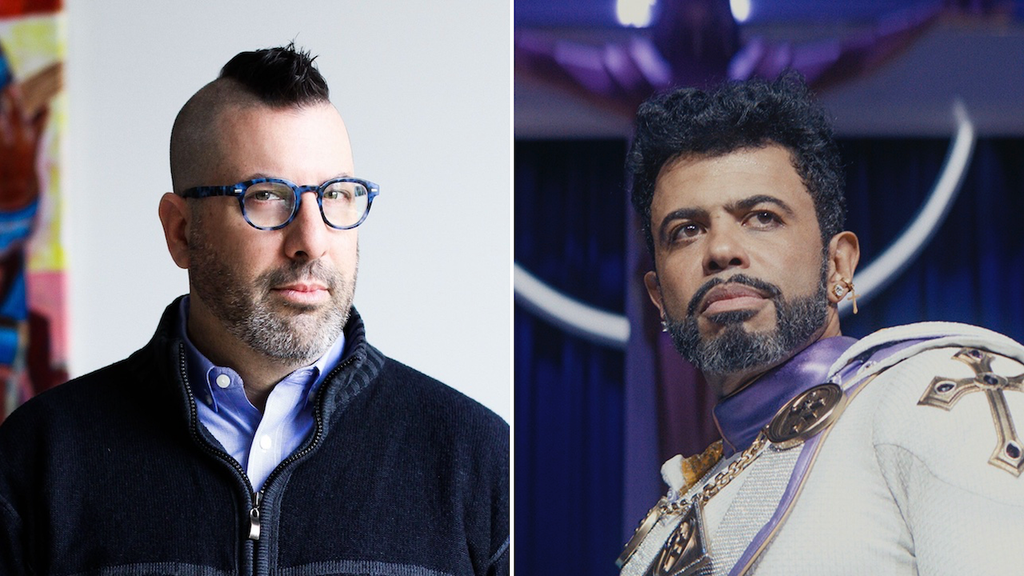
“Once we got going, it just got down to the business of ‘How far can we take it?’” Lennertz said. “And Eric’s notes are usually of the variety that’s like, ‘Great, can you make it even crazier?’”
It wasn’t hard for the songwriters to find inspiration. “Eric told me about stuff they were reading in the writers’ room about the trajectory of the religious right,” Diggs added, “about the very intentional co-opting of religion in the United States, and places of worship being turned into places of politics. It’s gotten so ubiquitous at this point that we don’t even notice it most of the time. It just feels normal.”
“What I like about the song is that you really have to think about it to realize that ‘We’ve got a God who’s strong and just an American like us’ is an insane thing to say.”

He laughed. “If it weren’t so specifically about American politics, it would’ve felt like a shark jump. But it never does, because the more they push it over time, the closer our political system has come to what they’re talking about. It’s not really a funhouse mirror. It’s just a mirror.”
Lennertz agreed. “It was probably written a full year before the (2024) election and filmed half a year before the election,” he said. “So we didn’t know that there was going to be a meme with a politician pretending to heal a sick person with glowing lights. We certainly didn’t know that there was going to be a giant life-sized golden statue on the lawn of a resort when we made a giant golden Homelander statue that looks just like it.”
“You’re like, ‘Wait, how did you know?’ But we didn’t know. We just were guessing, partly because that’s the way it always works with people who are corrupt and trying to pull a fast one.”

“That’s the point of the song, but it’s also the point of the series. The whole concept of ‘The Boys’ from Episode 1 was, you think you’re seeing what you know and love about superheroes, and then slowly you’re going to realize that this is not Captain America or Wonder Woman. This has all been corrupted by power and greed and money and corporations, just the way everything else gets corrupted like that.”
“So this song is absolutely not making fun of a religion or a deity or a belief system. This song is making fun of corruption and greed and power-hungry people who don’t have anything good or holy or noble in mind.”
This story first appeared in the Down to the Wire: Drama issue of TheWrap’s awards magazine. Read more from the issue here.


>
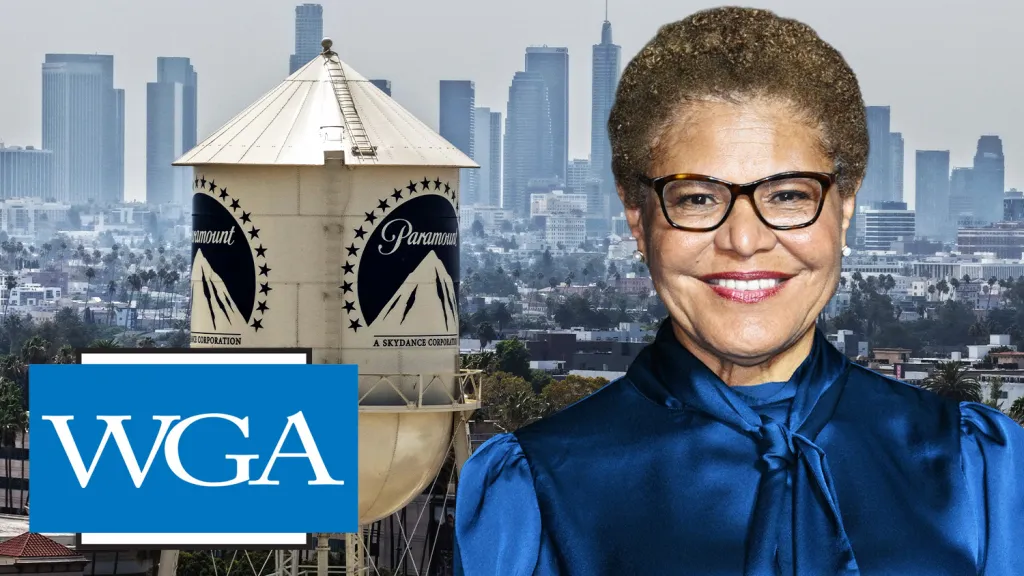
The Writers Guild of America has fired back at Los Angeles Mayor Karen Bass after she expressed strong support for a settlement in the waylaid Paramount-Warner Bros. Discovery merger.
Bass joined other state and local Democratic officials, including Gov. Gavin Newsom, in expressing support for a settlement of the antitrust lawsuit filed against the $110 billion deal. California Attorney General Rob Bonta, who is leading the action taken by 12 states as well as the WGA, has indicated no willingness to engage in settlement talks. That’s not surprising given the series of legal wins he has notched in the case over the past several weeks, including the setting of the trial date for next March.
“We are disappointed that Mayor Bass has chosen to join Paramount’s pressure campaign on public enforcers, to push through a merger that is being rightfully challenged as illegal and will lead to job losses in the entertainment industry,” the WGA asserted. “Her statement comes on the heels of a county report estimating thousands of jobs will be lost if the merger proceeds.”
Bass made the comments earlier Thursday during a press conference. Appearing with members of her administration, she said, “While there are varying perspectives on the proposed transaction, today we are united around one clear message: It is time for all parties to come to the table. The continued uncertainty is not good for workers, it’s not good for production, and it’s not good for the future of this industry. Too many productions in L.A. are now at a standstill, which means Angelenos are out of a job and they’re not getting paid. As mayor, I cannot stand by and watch as the job security of thousands of hard-working union members is put at risk.”
Paramount CEO David Ellison and other members of his management team have been actively looking at options to move the company out of its longtime home in L.A. Bass spoke up the day after participating in a mayoral debate which lacked any significant discussion of the entertainment business or the pending Paramount-WBD transaction. Also on Wednesday, a report submitted to the L.A. County Board of Supervisors projected that the merger would result in the loss of thousands of jobs. Paramount has promised investors it will deliver $6 billion in cost savings related to the merger, but executives have insisted that layoffs will not be a key method of reaching that target.
“Industry workers deserve a mayor who believes in upholding the law and protecting the working people of Los Angeles, not serving the interests of powerful corporations,” the WGA statement continued. “Paramount has created a false choice for entertainment industry workers: The company argues that enforcing antitrust law hurts us by creating uncertainty, which is of their own making as the company attempts to dominate the industry. We reject the claim that beleaguered industry workers must choose the possibility of a job today, in exchange for the certainty of job losses tomorrow.”
Bass, reading from prepared comments, insisted her statement is “not about taking sides – this is about fighting for Los Angeles, standing up for our union workers, keeping Paramount here and protecting the future of this industry.”
A settlement, Bass added, must include “meaningful and enforceable commitments” to keep Paramount and Warner Bros. Discovery in L.A. as well as maintaining jobs, productions and investments in L.A. and in California.”
>

Sources: Austin FC set to hire Minnesota United’s Khaled El-Ahmad as chief soccer officer

CNN’s Scott Jennings Is Early Favorite for Press Secretary: Reports

NFL preseason live updates: Latest news ahead of Raiders vs. Texans and 49ers vs. Chargers
-

 movies3 months ago
Search For Canadian TV Actor Stewart McLean Now Homicide Investigation
-

 Fashion9 years ago
These ’90s fashion trends are making a comeback in 2017
-
Fashion9 years ago
According to Dior Couture, this taboo fashion accessory is back
-
Fashion9 years ago
Model Jocelyn Chew’s Instagram is the best vacation you’ve ever had
-
Fashion9 years ago
Emily Ratajkowski channels back-to-school style
-
Fashion9 years ago
9 Celebrities who have spoken out about being photoshopped
-
Fashion9 years ago
Your comprehensive guide to this fall’s biggest trends
-
Fashion9 years ago
A photo diary of the nightlife scene from LA To Ibiza