
Tech
Tesla recalls 3 million cars as part of China-wide push to stop hidden door handles


Tesla is recalling just shy of 3 million vehicles in China as part of a nationwide effort to alert vehicle owners to hidden emergency door releases, which can trap occupants in the event of a crash or a fire.
Reuters reported on Friday that 11 carmakers in China are issuing recalls related to the problem. Nine manufacturers, including Tesla, will install warning labels on their vehicles that help occupants identify the emergency door releases. Xiaomi, Xpeng, and Geely brands Zeekr and Lynk & Co. are also recalling EVs. All 11 companies will also push software updates as part of the recall.
Manual door releases have become a problem in recent years as automakers like Tesla made electronic door latches the standard way of getting in and out of a car.
Electronic latches make it easier for owners to use their smartphone or an NFC tap card to open doors. But they can fail in the event of a collision. Automakers that use electronic latches typically install a manual handle that can be used in the event of an emergency, but these are often tucked away in unexpected places or hidden behind door panels.
Following a two-year review, China in February said it would ban hidden, electronically-actuated exterior door handles from 2027.
Late last year, the U.S.’s top automotive safety regulator opened an investigation into Tesla’s door-latching system after Bloomberg reporting put a spotlight on the issue. The agency is also looking at creating a new rule that could change the safety requirements for such systems. One lawmaker has even proposed legislation that would require manual releases to be “intuitive to use and readily accessible for the occupant.”
Tesla is not the only company that has leaned on hard-to-locate manual releases as a backup to electronic door latches. Rivian’s customers and employees raised concerns last year about the company’s own manual release on its R1 vehicles, which requires passengers to remove a panel and pull a cord. The company subsequently said it would move that release to a more accessible spot on the newer, cheaper R2, which launched this year.
In 2025, Ford briefly stopped sales of the Mustang Mach-E and issued a recall to reduce the chances of its electronic door latches malfunctioning if the vehicles lost power.
Tesla, which popularized the use of these flush exterior handles and electronic latches, has said it is working on redesigning its door handles moving forward.
When you purchase through links in our articles, we may earn a small commission. This doesn’t affect our editorial independence.
>
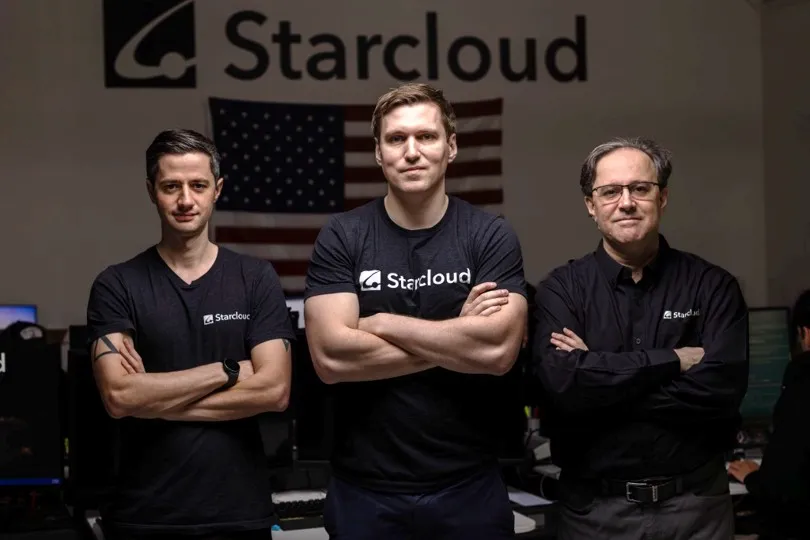
Starcloud, a startup developing satellites that can perform AI inference in orbit, told TechCrunch that it has added a $250 million extension to its March $170 million Series A funding round. The extension values the company at $2.3 billion.
The additional capital will allow the company to open a larger manufacturing facility and advance its largest orbital data center spacecraft, Starcloud-3, which is intended to fly on SpaceX’s forthcoming Starship rocket. CEO Philip Johnston is also amassing capital to ensure that he can launch his satellites as the market for rocket transportation tightens up.
“We can see what’s coming—we’re going to need to book an enormous amount of launch,” Johnston told TechCrunch. Starcloud has already requested permission from the FCC to operate 88,000 spacecraft.
“As soon as we can, we want to get under contract with things like Starship,” Johnston said. “One of the biggest costs is now on securing your launch capacity….launch is pretty constrained right now because [SpaceX’s] Falcon 9 program is scheduled to end in 2028.”
Launch costs were already one of the biggest challenges for orbital data center startups, to the point that one startup has decided to build its own rockets.
SpaceX is now planning to phase out its workhorse vehicle and bring the much larger, but still unproven, Starship rocket online, making planning more difficult for satellite operators. That’s especially true while competing rockets, like Blue Origin’s New Glenn and ULA’s Vulcan, are not flying regularly, and new vehicles like Rocket Lab’s Neutron are not yet on the pad.
For now, Starcloud is focused on launching two of the company’s new generation of 8 kw compute satellites (dubbed Starcloud-2) on rideshare flights in 2027. These will perform orbital inference tasks for customers including US government agencies. Starcloud is considering buying a dedicated Falcon 9 launch to launch more spacecraft and signing contracts with other providers, as well, to support future missions.
Still, Starcloud is ultimately built around the potential of SpaceX’s Starship to drive down launch costs enough to build out an orbital inference layer that can compete with terrestrial data centers. Johnston says he remains confident in SpaceX’s ability to demonstrate that the world’s most powerful rocket can be reused quickly and often.
This week, SpaceX CEO Elon Musk said his company will delay an attempt to catch a returning Starship rocket for a few months, and will attempt to re-fly the vehicle for the first time at the end of the year or early 2027.
“Obviously if we can’t book any SpaceX launch capacity in 2029, that will be that will be challenging for us,” Johnston said.
Starcloud’s funding extension was led by Manhattan West Ventures and included participation from Nvidia and Cisco; a person familiar with the deal said Nvidia ponied up $25 million to back Starcloud. Other participants included Benchmark, EQT, Soma, NFX, 776, Cedar Capital, Goanna Capital, and Standard Capital.
Johnston points to the Nvidia investment as a key signal of Starcloud’s advantages in the nascent space compute sector. Starcloud is the only company (that we know of) currently operating a Nvidia H100 terrestrial data center GPU in orbit, and the first to train a model using it; most other space GPUs are designed for edge processing. Starcloud is sharing those learnings with Nvidia as the chipmaker develops its first purpose-built GPU for space, the Vera Rubin Space-1 chip.
“The reason they’ve chosen to do this investment now is because of all of this data that we got from Starcloud One,” he told TechCrunch. “They, more than any other VC, did way more technical duty on this than anybody else.”
The space-ready chip hasn’t even been built yet, but Starcloud hopes to fly it into orbit sometime in late 2028. Johnston says his engineers are tracking a few key design choices: the relationship between the running temperature of the chip and the size of the radiators that dispel that heat, the placement of radiation shielding, and the ruggedizing required for the chips to survive the violence of a rocket launch.
The company, currently 25 employees strong and growing, is developing production lines at a 100,000 square foot facility in Woodinville, Washington, near where SpaceX and Amazon build satellites for their communications networks.
When you purchase through links in our articles, we may earn a small commission. This doesn’t affect our editorial independence.
>

Private equity giant Apollo Global Management has confirmed a data breach in which hackers stole reams of personal information from the company’s cloud systems.
The breach comes a month after security researchers sounded the alarm on a new hacking campaign targeting financial and private equity giants.
The financial giant confirmed the incident in a letter filed with California’s attorney general. Apollo’s human resources chief Matthew Breitfelder said that hackers used a social engineering attack to gain access to the company’s cloud environment between July 6 and July 10. The hackers took names, birth dates, contact information, including home addresses, and Social Security numbers.
The letter does not specifically say who had their personal information stolen, such as Apollo employees or individuals at companies it owns. Apollo is one of the world’s largest private equity firms with $938 billion in assets under its management.
When reached by TechCrunch, Apollo spokesperson Giovanna Falbo did not immediately provide comment or answer questions about the incident, including whether the company paid the hackers a ransom.
Apollo has around 5,000 employees as of February 2026, according to the company’s public regulatory filings.
The now-confirmed hack comes weeks after security researchers at Google warned that hackers were targeting private equity companies and financial giants as part of a widespread extortion campaign. Reuters reported that Apollo was one of the companies that hackers targeted, alongside Blackstone, Bridgewater, Bain Capital, and others, but that it was unclear if any of the companies had been successfully breached.
Google says the hackers, who go by various names — Falcon, Helix, Pink, and Redact — rely largely on social engineering attacks that involve calling employees and pretending to be IT helpdesks or support. The goal is to trick the employees into entering their passwords and multi-factor authentication codes in spoofed login portals, which allow the hackers to gain access to corporate networks.
After stealing data, the hackers then extort the companies into paying a ransom or threaten to publish the data on their leak site.
Some of the attacks netted the hackers ransoms as much as $750,000, according to Google.
Until 2025, TechCrunch was a subsidiary of Yahoo, an advertising tech company owned by Apollo.
When you purchase through links in our articles, we may earn a small commission. This doesn’t affect our editorial independence.
>

Democratic senator Ron Wyden is asking the U.S. government to review how federal law enforcement agencies use hacking tools and spyware against Americans, citing a lack of transparency into how often or for what reasons these tools are deployed.
On Friday, Wyden sent a letter to the U.S. Government Accountability Office (GAO), which audits the federal government, requesting it to launch a comprehensive inquiry into how the FBI, the Drug Enforcement Administration, ICE’s Homeland Security Investigations, and the Secret Service employ hacking and spyware in their investigations.
In the letter, shared with TechCrunch, Wyden wrote that while these tools have been used for more than two decades, “there exists little public information regarding its scope, frequency, or operational safeguards.”
Wyden said that, unlike wiretaps and pen registers, which allow authorities to see when a call is placed and to whom, the government “does not publish annual reports for hacking operations.” For that reason, Wyden requested GAO to publish an unclassified report with its findings and recommendations.
Federal agents have used hacking tools and spyware several times over the years, but as Wyden noted in the letter, the U.S. Department of Justice and the FBI “have repeatedly ignored congressional requests for greater transparency across multiple administrations.”
Wyden is making several requests to the GAO:
- Investigate whether agents abused hacking tools and spyware for unauthorized or personal purposes, and to check what technical and oversight measures are in place to control and prevent misuse;
- Review how agencies “acquire, store, and secure” these tools to avoid dangerous leaks, as well as whether they submit them to a program designed to determine if the U.S. government should report security flaws to help tech companies fix them;
- And, assess how the feds inform courts when requesting warrants for the use of these tools, and whether they disclose the risk of affecting unknown or innocent targets.
To highlight the risks around the acquisition of hacking tools, Wyden specifically mentioned the case of Peter Williams, a former executive at the defense contractor L3Harris, who stole and sold advanced hacking tools to a Russian broker. The tools ended up being used by Russian spies against Ukraine, and Chinese cybercriminals against cryptocurrency owners.
The earliest documented case of the FBI using spyware goes back to 1999. During an investigation for illegal gambling and loan sharking, federal agents discovered that Philadelphia mobster Nicodemo S. Scarfo used the program Pretty Good Privacy (PGP) to encrypt a file on his computer, which they believed contained key evidence.
To access it, the FBI installed a rudimentary malware designed to record the keystrokes on Scarfo’s computer, which allowed them to decrypt the file.
When you purchase through links in our articles, we may earn a small commission. This doesn’t affect our editorial independence.
>

Terrence Terrell, Sachin Bhatt Cast In ‘The Summer They Came’

England v Pakistan First Test: Josh Tongue gets three wickets in six balls

Prince Harry, Elton John to Pay Daily Mail Publisher $13 Million in Legal Fees
-

 movies3 months ago
Search For Canadian TV Actor Stewart McLean Now Homicide Investigation
-

 Fashion9 years ago
These ’90s fashion trends are making a comeback in 2017
-
Fashion9 years ago
According to Dior Couture, this taboo fashion accessory is back
-
Fashion9 years ago
Model Jocelyn Chew’s Instagram is the best vacation you’ve ever had
-
Fashion9 years ago
Emily Ratajkowski channels back-to-school style
-
Fashion9 years ago
9 Celebrities who have spoken out about being photoshopped
-
Fashion9 years ago
Your comprehensive guide to this fall’s biggest trends
-
Fashion9 years ago
A photo diary of the nightlife scene from LA To Ibiza