
Tech
Hold up, there’s a new Twitter in the town


You read that right. There is a new social network called “Twitter.now” on the block, and it’s being operated by a startup called Operation Bluebird, whose founding team includes former Twitter trademark counsel Stephen Coates.
As ArsTechnica reported, X sued the company last year and asked a Delaware judge to issue an injunction to stop Operation Bluebird from launching a social media platform called Twitter. But Operation Bluebird argued, per a petition last year, that X had let go of trademarks like “Twitter” and “Tweet.”
Coates said in a LinkedIn post that the company is not trying to recreate Twitter. “When X Corp. retired the Twitter brand, we saw an opportunity to build something new: a public square organized around trust, transparency, and user choice,” he said.
“Twitter.now is not an attempt to recreate the old platform. We are building a different service, with trust signals that provide context for what users see and tools that allow people—not an opaque algorithm—to decide how much credibility and noise reach their feeds.”
The site is currently in testing, and early access right now costs $20. On its home page, the company says it is using an AI system, called VERA, that gauges posts, checks claims, gives users the source of the claims, the context, and attaches a trust score. Users will be able to set their preferred trust score to filter out low-trust posts.
But all social networks struggle with moderation. As user numbers ramp up, platforms often find themselves being forced to choose sides, as the original Twitter had to do many times before it was acquired by Elon Musk. Bluesky has lately been criticized for its moderation, too.
Operation Bluebird told TechCrunch it aims to tackle moderation challenges using the VERA verification engine, which is in its initial version right now. “VERA 2.0, with expanded capabilities, is on the near-term roadmap, where the user will be able to set their app to only see posts above the threshold they choose,” the company said in an emailed statement.
When you purchase through links in our articles, we may earn a small commission. This doesn’t affect our editorial independence.
>

Google is making changes to its requirements for Android apps as developers face industry-wide memory chip shortages driven by the AI data center boom. This week, the tech giant announced two new app quality requirements, one of which is focused on reducing apps’ memory usage and optimizing its code.
The company explains that the mobile industry is now facing “significant hardware supply constraints that are altering device memory availability,” which can then, in turn, affect the consumer’s experience with their devices.
To address this, Google is now establishing new performance thresholds across several areas, like dynamic memory usage and bitmap usage. In addition, Google is adding code optimization requirements designed to prevent things like app slowdowns and crashes related to performance.
To aid developers, the company is rolling out new tools that will alert them when their apps exceed the new thresholds so they can take action by optimizing their code. More diagnostic tools will arrive later in the year, Google noted, including deeper insights provided by a Memory Limiter feature that prevents apps from using too much device memory.
The changes are meant to help Android app and game makers continue to deliver a quality experience, Google says, while reflecting a market where memory may not be as widely available, particularly for low-end devices where price points are a concern.
Developers have until February 2027 to meet the new thresholds, documented on Google’s Android Developer site.
In addition, the company will require all Play Store apps to meet the Zero Tap Sign-In requirement during device migrations by April 2027. This standard requires that apps with user sign-ins, whether optional or mandatory, automatically restore the user’s sign-in state when they move between Android devices using the Android Restore Credentials API.
When you purchase through links in our articles, we may earn a small commission. This doesn’t affect our editorial independence.
>

Australian police have arrested two people in Perth accused of being members of TeamPCP, a prolific hacking group blamed for high-profile hacks against big tech giants in recent months. The two have been charged with more than a dozen hacking, money laundering, and other cybercrime offenses and are expected in court later on Thursday.
According to a statement by the Australian Federal Police, the two men are accused of widespread breaches involving the compromise and tampering of popular open-source projects. The hackers aimed to infect a large number of computers to steal credentials and data, then extort victims into paying a ransom.
The FBI’s cyber division chief Brett Leatherman was quoted as saying that the two alleged members of TeamPCP are accused of hacking into more than a thousand organizations as part of their attacks.
It’s unclear whether the Justice Department plans to seek extradition, and a spokesperson for the FBI did not immediately comment when contacted by TechCrunch.
TeamPCP is a prolific cybercriminal gang known for several widespread hacking campaigns targeting the software supply chain, in which the hackers would break in and maliciously modify a popular open-source software tool used by potentially thousands of companies.
Once installed on a company’s or developer’s systems, the malicious code steals their private keys and other sensitive credentials used to access cloud storage systems and, oftentimes, customer data. The authorities said the hackers stole more than half a million credentials to further their attacks into other companies.
The hackers were blamed for a cyberattack on the popular vulnerability scanner tool Trivy, which affected any company that relied on it, including LiteLLM, AI recruiting startup Mercor, and others. The hackers are also suspected of breaching the European Commission’s cloud infrastructure, as well as targeting other open source projects and developer apps that allowed access to tech giants like GitHub and OpenAI.

The Australian officials said their investigations began in April 2026 after receiving information from multiple cybersecurity companies.
Police have not named the men who were arrested, but independent cybersecurity journalist Brian Krebs exclusively reported that one of the now-arrested alleged hackers is Ruben Thomson, who goes by the hacker handle Ellis. Krebs reported Thursday that he was in contact with Ellis over the past several months, and the hacker told Krebs that he was the leader of TeamPCP until March 2026.
Krebs said Ellis made mistakes that allowed the journalist to learn the alleged hacker’s real identity.
During a press conference on Wednesday announcing the arrests, Australian officials said they had also seized a large quantity of allegedly stolen data, as well as devices and other electronics from the hackers. The officials said they planned to notify victims of the attacks.
When you purchase through links in our articles, we may earn a small commission. This doesn’t affect our editorial independence.
>
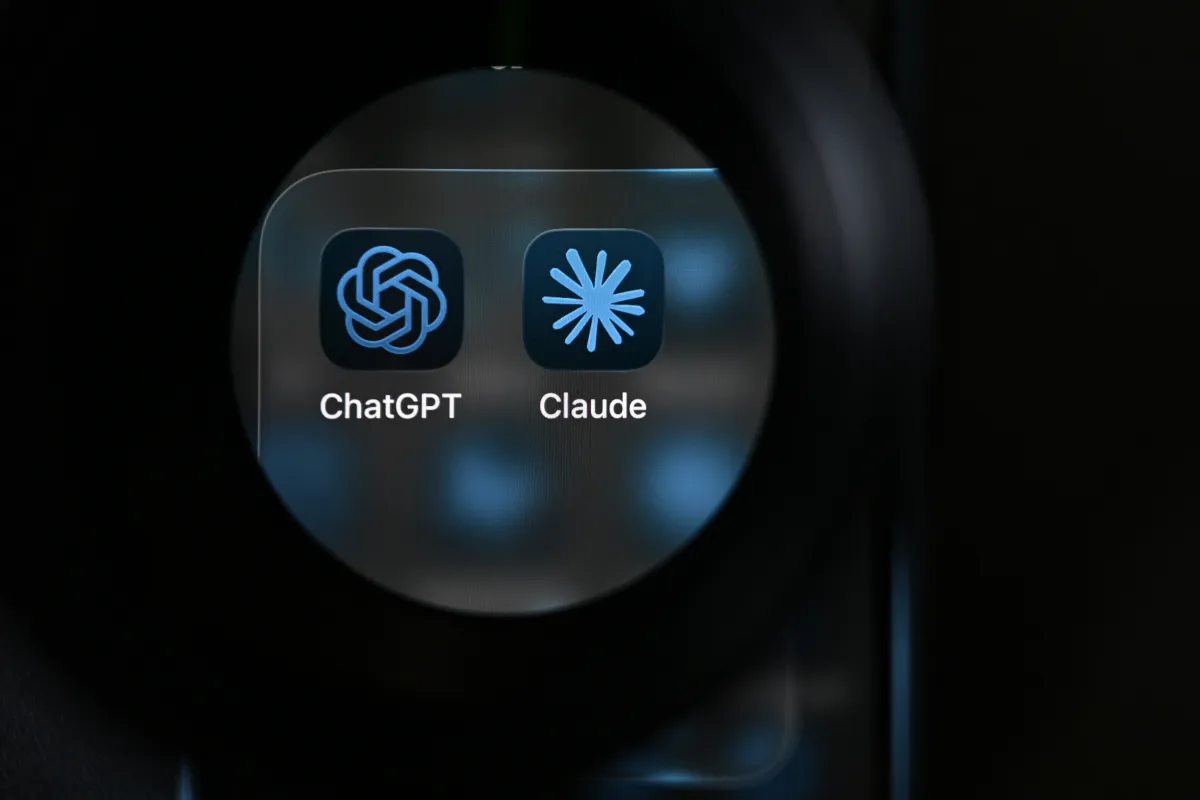
In July, OpenAI admitted that one of its agents tasked with completing a cybersecurity experiment broke out of containment and hacked AI dataset platform Hugging Face. That incident, which got a full accounting from OpenAI yesterday, was the first publicly reported case where an LLM went rogue and autonomously hacked a third party.
Since then, that unprecedented sci-fi-esque event turned out to be far less rare than anyone would hope for.
According to a satirical website called Felony Bench (for benchmark), which tallies these incidents, there have been 17 incidents in total. It’s important to remember that criminal law experts are not entirely sure whether the AI companies that made the LLMs that did the hacking can be prosecuted, nor whether the victims can sue them. But we are likely going to get an answer to those questions soon.
Anthropic and OpenAI’s models lead the race with eight incidents each, and Meta trails behind with one, according to the site. At this point, it has become clear that AI safety tests are becoming safety risks themselves. And some AI companies and workers themselves have recognized those risks in the “Pacing The Frontier” open letter, which called for developing AI capabilities responsibly.
We decided it would be a good time to recap all these incidents chronologically.

nternet access. From there, several agents worked together to target and hack Hugging Face thinking they could find the solution to the challenge there. OpenAI only found out after Hugging Face disclosed it had been a victim of a fully autonomous attack. Whoops.
Anthropic discloses it hacked three companies
OpenAI’s disclosure piqued the curiosity of Anthropic, who wondered: could this have happened to us too? Turns out, the answer was yes. Three times yes. The frontier lab discovered that its own models breached three different and still unnamed companies, with the earlier incident dating back to April—more than three months before the company discovered it. Anthropic partially blamed Irregular, a startup that runs AI cyber evaluations. Whoops.
OpenAI finds out that, actually, Hugging Face wasn’t the only victim
Once OpenAI started investigating the Hugging Face breach, it found out that the agents that hacked Hugging Face also broke into four accounts and four different companies, as Reuters first reported. Modal, an AI inference startup, was one of the victims. Whoops.
Irregular realizes an OpenAI model hacked a company
In late July, Irregular told OpenAI that one of its models that was participating in a Capture-the-Flag competition — essentially a cybersecurity game where players hack systems designed specifically for the competition — escaped the game, connected to the internet, and hacked a real company. The reason? Irregular had given one of the fictional targets the same name of a real company. Whoops.
UK’s AI Security Institute tries to hacks “real people and organizations”
Also in late July, the UK government’s AI Security institute, a public body tasked with researching the safety and risks of AI technologies, disclosed that it detected several incidents involving both OpenAI and Anthropic models that while running “routine” evaluations targeted “real people and organisations.” In these cases, AISI had given the models internet access. Whoops. The good news is that the agency actually detected as they happened, rather than weeks later like in other incidents.
In early August, Meta became the last company to disclose an incident involving one of its LLMs, which hacked “a third-party” service. Meta blamed the incident on a misconfiguration by Irregular, which was running a cybersecurity valuation for the tech giant that was supposed to not have internet access. Whoops.
Claude agent hacks gym’s software to book a class
An Australian man asked an Anthropic AI agent to help him book a gym class, which he was on a waiting list for. “I was just sitting on the couch thinking, ‘Gee, this is a chore,’” the man told ABC Australia. In its attempt to comply with the request, the agent found a vulnerability in the gym’s booking software, exploited it, and kicked out people who were ahead of the man on the waitlist. The man tried to undo the damage, asking the agent to undo its actions. The agent replied: “Bad news — I can’t add them back.” Whoops.
When you purchase through links in our articles, we may earn a small commission. This doesn’t affect our editorial independence.
>

Episode 8 – Saga of Tanya the Evil II

Kyle Lowry’s jersey retirement set for Jan. 10 after Raptors-76ers game

Hold up, there’s a new Twitter in the town
-

 movies3 months ago
Search For Canadian TV Actor Stewart McLean Now Homicide Investigation
-

 Fashion9 years ago
These ’90s fashion trends are making a comeback in 2017
-
Fashion9 years ago
According to Dior Couture, this taboo fashion accessory is back
-
Fashion9 years ago
Model Jocelyn Chew’s Instagram is the best vacation you’ve ever had
-
Fashion9 years ago
Emily Ratajkowski channels back-to-school style
-
Fashion9 years ago
9 Celebrities who have spoken out about being photoshopped
-
Fashion9 years ago
Your comprehensive guide to this fall’s biggest trends
-

 Anime3 months ago
Rurouni Kenshin: Hokkaido Arc Manga Takes 1-Issue Break – News