
Anime
Makerspace – This Week in Anime

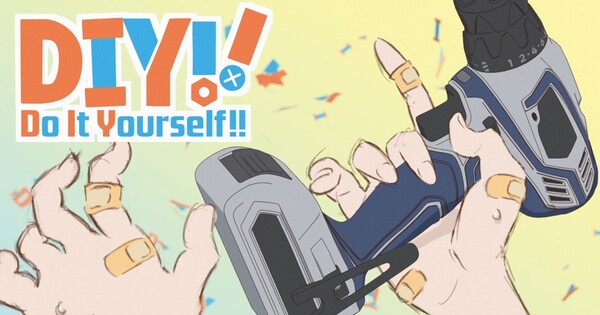
Who says you can’t learn anything from anime? Coop and Sylvia run down a list of DIY and creative series that can inspire you to get creating.
The views and opinions expressed by the participants in this chatlog are not the views of Anime News Network.
Spoiler Warning for discussion of the series ahead.
Crunchyroll streams Eizouken, Zenshu, Journal with Witch, Do It Yourself!!, Gundam Build Fighters, and Draw This, and Then Die.
Netflix streams Blue Period, Blue Giant.
HIDIVE streams Shirobako.
YouTube streams Don’t Hug me I’m Scared.
Hey Sylvia, have you ever read or watched something that changes the creative trajectory of your life? A work that pushes you to take up a new hobby, develop a new skill, or dump a bunch of money into a set of tools you’ve got no clue how to use?

© IMAGO/avex pictures, DIY!! Partners
Or one that makes you uncontrollably sob as you recall decades-old trauma that’s tied up in a discipline you once loved but swore off?
That is what we in the business call a “big mood,” Coop. And yes, it’s safe to say that anime and manga have changed the trajectory of my life several times over. I have no idea what my life would look like without that part of it. Who is the Sylvia who doesn’t buy How to Draw Manga at the Scholastic Book Fair? Who is the Sylvia who doesn’t take up blogging again after years of hiatus thanks to The Flowers of Evil? I could go on—and we will go on, because it’s the subject of today’s column—but I’ve been through many a creative fire kindled by the power of anime and manga.

© Minoru Toyoda/Shogakukan/“Draw This, Then Die” Project

© Minoru Toyoda/Shogakukan/“Draw This, Then Die” Project
As adults, it feels like we’re often chasing after that experience (“chasing the nostalgic dragon” as I like to call it) in an attempt to recapture even a little of the joy we felt back when we were children. That chase can lead us to amazing opportunities, our ruin, and perhaps both. Yasumi’s a teen now, but she’s still a kid and still has that wonder in her heart. She wants so bad to read manga and maybe even try her hand at making it. After all, it’s changed her life for the better, making her a more outgoing and considerate person. That was really all thanks to the book she found in that dingy shop all those years ago.

© Minoru Toyoda/Shogakukan/“Draw This, Then Die” Project
Dear god. I got so emotional while watching these opening episodes; it felt like someone had just opened up the intense feelings valve.

© Minoru Toyoda/Shogakukan/“Draw This, Then Die” Project
Although not quite to the extent that I created my own talking tanuki tulpa.

© Kate Green/Getty Images
That’s him!
Oh wait, I think that’s the wrong bespectacled guy with a beret…
No, I’m pretty sure that’s right. Trust me, I’ve been to the Tezuka Museum in Takarazuka.

© Minoru Toyoda/Shogakukan/“Draw This, Then Die” Project
Legends aside, the “almost sobbing” became “real sobbing” when we start getting to know Yasumi’s teacher, Ms. Teshima. She’s introduced as the stick-up-her-behind kind of educator who doesn’t see manga as real literature. But by the last third of the first episode, it’s revealed that she authored the title that made Yasumi fall in love with the medium. Ms. Teshima is brusque as she is for a reason: the industry seemingly chewed her up and spit her out. When you’re filled with so much spite and conflicted emotions over something you used to love, it can be hard to be anything but repulsed when you feel that someone else is about to fall into the same trap. It doesn’t matter if the joy’s there either.

© Minoru Toyoda/Shogakukan/“Draw This, Then Die” Project
Additionally, I’m beyond impressed with how well the series juggles its tones. As we see Teshima’s struggles through her own retrospective, she litters these scenes with a bit of wry, self-deprecating humor. The drama of it all. The urge to detonate your editor. That’s real.
 © Minoru Toyoda/Shogakukan/“Draw This, Then Die” Project |
 © Minoru Toyoda/Shogakukan/“Draw This, Then Die” Project |
At the same time, though, Teshima does not pull her punches. The feelings of shame that eat away at you. The frustration of falling short of others’ expectations. The frustration of falling short of your own expectations. Choosing to make anything as an artist is an inherently vulnerable act, and when it inevitably goes wrong, that shit hurts. It hurts in ways you hold onto for the rest of your life.
 © Minoru Toyoda/Shogakukan/“Draw This, Then Die” Project |
 © Minoru Toyoda/Shogakukan/“Draw This, Then Die” Project |
For example, I have a theatre degree, and I haven’t used it once in the almost-decade since I got it. Needless to say, I’ve got some pretty tender feelings about that era in my life, and it’s only been within the past couple of years that I’ve been able to let go a little. Or at least, not see red when I think back to those days.

© Minoru Toyoda/Shogakukan/“Draw This, Then Die” Project

© Minoru Toyoda/Shogakukan/“Draw This, Then Die” Project
And that’s a part of why so many of Teshima’s lines feel like nails driven into my ribs.
Award-Winning Translator, Jan Mitsuko Cash, Calls on American Manga Industry to Double Their Rates!
— Anime News Network (@animenewsnetwork.com) August 22, 2026 at 12:22 AM
The technical part of it’s hard to begin with, but the “making a living” part often makes the work way more difficult.
Like, I was tickled to see Teshima bring up Stephen King, because On Writing is full of advice and anecdotes I’ve carried with me ever since reading it. But King’s memoirs also detail a fragment of a long-gone world. I don’t know if the industry as it currently exists has the ability to foster another Stephen King. And certainly that feels analogous to the world of anime and manga.

© Minoru Toyoda/Shogakukan/“Draw This, Then Die” Project

© Minoru Toyoda/Shogakukan/“Draw This, Then Die” Project

© Blink Industries
It’s hard not to go full Don’t Hug me I’m Scared when thinking about the realities of living as a working creative, however, but creativity isn’t always tied in with commerce and the HORRORS. Sometimes you can build yourself a nice little bookshelf just for the hell of it!

© IMAGO/avex pictures, DIY!! Partners

© IMAGO/avex pictures, DIY!! Partners
As someone who had a table saw accident that was the least bad it could’ve been… For the love of god, wear your PPE and be careful!

© IMAGO/avex pictures, DIY!! Partners

© IMAGO/avex pictures, DIY!! Partners

© IMAGO/avex pictures, DIY!! Partners

© IMAGO/avex pictures, DIY!! Partners

© IMAGO/avex pictures, DIY!! Partners

© SOTSU・SUNRISE

© SOTSU・SUNRISE

Like for real.
I will also say, while the results are not quite so tangible, I am perennially susceptible to series that address the craft of writing. It’s the creative outlet I’m most familiar with, after all. Journal with Witch, for example, inspired some of my best work on this site (if I do say so myself), and I believe that was in part due to Makio’s often poignant observations on writing itself. She got me fired up and motivated to challenge myself.
 © Tomoko Yamashita, SHODENSHA Publishing Co.,Ltd. / “Journal with witch” Committee |
 © Tomoko Yamashita, SHODENSHA Publishing Co.,Ltd. / “Journal with witch” Committee |
 © Tomoko Yamashita, SHODENSHA Publishing Co.,Ltd. / “Journal with witch” Committee |
 © Tomoko Yamashita, SHODENSHA Publishing Co.,Ltd. / “Journal with witch” Committee |

© Tomoko Yamashita, SHODENSHA Publishing Co.,Ltd. / “Journal with witch” Committee
We talked about this a fair bit a few months ago, but I haven’t seen another series that’s been as brutally honest about how much of a slog writing can be. Most days at the desk for me are just sitting there and trying to pound something out, which is often easier said than done. And just like me, Makio’s sitting at that desk almost all the time. Despite my chosen profession, writing is something I’ve had to really work at over the years. While it’s been akin to pulling teeth at times, that’s nothing compared to actually finishing the damn thing and feeling the sense of accomplishment that comes with it.
 © Minoru Toyoda/Shogakukan/“Draw This, Then Die” Project |
 © Minoru Toyoda/Shogakukan/“Draw This, Then Die” Project |
I mean, you have to be at least a little unhinged to do this willingly. Might as well embrace it.
 © Minoru Toyoda/Shogakukan/“Draw This, Then Die” Project |
 © Minoru Toyoda/Shogakukan/“Draw This, Then Die” Project |
That moment when DO you go full Don’t Hug me I’m Scared.
 © 山口つばさ・講談社/ブルーピリオド製作委員会 |
 © 山口つばさ・講談社/ブルーピリオド製作委員会 |
 © 山口つばさ・講談社/ブルーピリオド製作委員会 |
 © 山口つばさ・講談社/ブルーピリオド製作委員会 |

© 山口つばさ・講談社/ブルーピリオド製作委員会
Especially when you’re feeling crushed by societal expectations to take the same path in life that everyone else seemingly has. It’s like opening a door to a world you’d never even considered before.

© 山口つばさ・講談社/ブルーピリオド製作委員会
Or just drawing boobs because they’re cool, and it worked out for Gō Nagai. Side note, I kind of love that the teacher of this class is like “Hell yeah, man! Paint those boobs!”
Also, a semi-tangent: I honestly do not remember how well Blue Period handles this aspect overall, but I do find it interesting that, via Yuka, there is a trans element running through the story. Speaking for myself, I know art was an incredibly important facet for realizing and accepting my own transition. And that’s hardly surprising. Art is a means of communication. It’s a way in which we understand others better, and in doing so, we come to understand ourselves better too.
 © 山口つばさ・講談社/ブルーピリオド製作委員会 |
 © 山口つばさ・講談社/ブルーピリオド製作委員会 |
Of course, Draw This, Then Die! also recognizes that power.
 © Minoru Toyoda/Shogakukan/“Draw This, Then Die” Project |
 © Minoru Toyoda/Shogakukan/“Draw This, Then Die” Project |
Shifting over to another “blue” title, Blue Giant‘s been a pleasant surprise I find myself coming back to every so often. I think I’m a little too far gone to pick up the sax these days, but the electricity you feel in the room while listening to a talented group of Jazz musicians just go for it is like nothing else. It also calls back to the reflective aspect of art you just mentioned, Sylvia. Art doesn’t always have to have a meaning. It could be as simple as folks goofing around with a voice modulator and fart noises, but regardless of what that art specifically is, people will find their own meaning in it.
Also, it bears mentioning that even if a piece of art is seemingly devoid of meaning, it doesn’t mean that it wasn’t an ordeal to create. Art is all about friction, and nothing’s getting made without it.
 © 「SHIROBAKO」製作委員会 |
 © 「SHIROBAKO」製作委員会 |
 © 2020 大童澄瞳・小学館/「映像研」製作委員会 |
 © ZENSHU/MAPPA |
I’d add Draw This, Then Die! to the manga-specific pantheon of this genre, too. It’s got heartwrenching truths about the brutality of the industry next to step-by-step instructions for adding screentone.

© Minoru Toyoda/Shogakukan/“Draw This, Then Die” Project
Draw This, Then Die! really did a number on both of us, didn’t it?
Several numbers, I’d say.

© BEAT & MOTION © 2023 by Naoki Fujita/SHUEISHA Inc.

© Kazuto Mihara/KODANSHA LTD.

© Minoru Toyoda/Shogakukan/“Draw This, Then Die” Project

© Minoru Toyoda/Shogakukan/“Draw This, Then Die” Project
When in doubt, reference JoJo’s Bizarre Adventure.
Truly, any day can be a JoJo’s Friday.
>
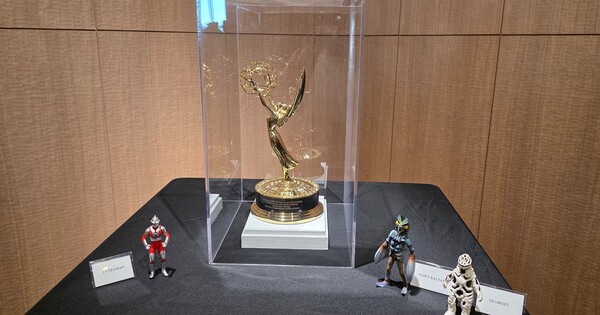

As an anime fan, you’ve probably heard of Ultraman at least once. His cross-armed Ultra Beam became a symbol of justice for Japanese children everywhere, many of whom grew up to shape the anime industry. Hideaki Anno, the creator of Neon Genesis Evangelion, submitted his own fan-film in university and essentially made TV original anime viable with his take on a darker Ultraman. I myself got into the franchise formally with Shinji Higuchi‘s Shin Ultraman, a feature-length reimagining of the original series written by Anno. But who came up with the original idea, and what made him so influential? While making the live-action adaptation of Look Back, director Hirokazu Kore-eda was tasked with finding out in an upcoming documentary by Tsuburaya shown at Japan House LA: The Origin of Ultraman.
 |
 |
Koreeda was admittedly an odd choice to head this project. He’s never done tokusatsu before, and he’s only recently dabbled with sci-fi in his recent feature, Sheep in the Box. His bread and butter has been humanistic stories exploring found family (Shoplifters), poverty (Nobody Knows), and memories (After Life). That’s why I’m personally excited for his version of Look Back, which creator Tatsuki Fujimoto has praised for being “able to bring out the atmosphere that the original had while giving it a real sense of authenticity.” But it turns out Ultraman might have instilled those values in the first place. As a kid of the 60s, he was there from the beginning, and it shaped much of his childhood. What really struck him was how the series tackled complex issues in a way kids could understand. The creators would describe this as sneaking vegetables into chocolate.
His favorite kaiju, Gomora, was actually a peaceful creature forcibly dragged out of its natural habitat to be displayed as a trophy for the Japan World Exposition. When they break free out of anger, and Ultraman has to fight, he couldn’t help feeling sorry for the kaiju. This story brought to light the Expo’s contradictory mission of representing human progress while actively polluting the earth. He would continue to follow the franchise as it got more morally complex, with his favorite entry being Ultraseven. One episode where Atlanteans get mistaken as aliens depicts humans as the invaders instead, leading to a pretty bitter victory.

Koreeda wasn’t the only one who rated Ultraseven highly: Shannon Tindle and John Aoshima (Co-Directors of Ultraman: Rising) based their protagonist Kenji Sato on Dan Moroboshi. Whereas previous Ultramen were inherently selfless, Dan had to let go of his selfishness to grasp his power. This character arc being more similar to American superhero origins made it easier to pitch in their own film, but even they didn’t expect to be offered an official entry in the franchise. While the two directors grew up watching Ultraman Tiga, they tried to write a story that was inspired by it without coming off as a rip-off. But Netflix recognized they were fans when reading their script, as they were already producing a CG Ultraman anime. With a pre-existing relationship with Tsuburaya, they instead suggested making an official Ultraman film. The result was an American-Produced entry that won the franchise an Emmy.
Plenty of other famous names show up in this documentary. Hideaki Anno famously cast himself as Ultraman in his student film, and his studio, KHARA, incorporates his transformation sound into its logo. Unlike animation, where he accepts that it’s all drawings, the way tokusatsu creates fantastical worlds physically has always enamored him. This also fascinated Drive director Nicolas Winding Refn. The skintight costumes, makeshift props, and pyrotechnics over miniature sets gave it a stagey appeal reminiscent of a glam rock concert. Hideo Kojima, the creator of Metal Gear Solid, links its creation to the space race and anti-war military otaku. To him, a giant astronaut that shoots lasers scratched the same itch that planes and tanks did to his parents’ generation.
But the one that gushed most was someone Koreeda talked to in person: Pacific Rim Director Guillermo del Toro. Being the one who formally introduced the term Kaiju into Hollywood, he had a lot to say regarding its role as TV’s first Kaiju franchise. What makes Kaiju fascinating as movie monsters is their depiction as forces of nature. Godzilla was famously an allegory for the atomic bomb, but the destruction caused by many kaiju was quite familiar to a country prone to natural disasters like Japan. He explains there’s something divine to a Kaiju’s towering presence. When something that large is right at your doorstep, all your daily concerns go away. So which visionaries made Kaiju the face of natural disasters, and who conceived of our alien protector? We have 3 names to thank: Eiji Tsuburaya, Tetsuo Kinjo, and Tohl Narita.
Much like Osamu Tezuka is to manga, Eiji Tsuburaya is considered the “Father of Tokusatsu”. An early adopter of film compositing and miniatures, he made a name for himself in the 50s and early 60s as the special effects director for TOHO‘s Kaiju films, including the first 3 Godzilla films. Monster movies were already a staple in Hollywood after King Kong, but they often relied on time-consuming stop motion animation. While personally a fan of the original King Kong, he knew that a film industry like Japan’s would take years to achieve the same result. So instead, he pioneered suitmation, where actors in rubber suits would walk on miniature sets. Rubber Dinosaur Suits were used in early sci-fi films (One Million B.C.), but they were considered a cost-cutting measure because of how goofy they looked. By filming from lower angles at a higher framerate and compositing real crowds running on sets similar to the miniatures, what was once considered a cheap effect suddenly became more convincing than any monster movie before.
For over a decade, more and more Japanese audiences came to see which new Kaiju film was in theaters. But even when the first Godzilla came out, TV had already become a staple of their media diet. By the 1960s, Japan became the first country to develop an HDTV system. Tsuburaya knew that if he could bring his kaiju spectacle to kids at home, it could change Japan’s entertainment industry forever. His first attempt at this was Ultra Q, a sci-fi anthology similar to The Twilight Zone. While initially committing to more supernatural stories, executives at Tokyo Broadcasting System sensed the potential to embrace a monster-of-the-week approach. The resulting series brought monsters from the movies to the silver screen. There was a new kaiju every week that children memorized and pretended to be at the playground. There was just one question: can we make the heroes just as marketable as the monsters?
This is where writer Tetsuo Kinjo comes in, pitching the idea that would later become Ultraman. It started with a more practical concern: how many times can regular folks encounter monsters before it gets silly? Rather than regular people meeting monsters week to week, he suggested a disaster response team proactively seeking out kaiju threats: the SSSP (Science Special Search Party). Also, since the Space Race was all the rage during the 60s, their protector would come from across the stars. An alien as tall as the kaiju would fuse with a human host, learning about humanity as one of them. The result was a more marketable Kaiju series to kids. Godzilla might fight a meaner kaiju if needed, but Ultraman was unequivocally the hero. Kids didn’t just wait for the new monsters, but also the towering defender and the cool adults by his side. So who do they have to thank for how he looked?
Enter the last member of our trio: Tohl Narita. He conceived Ultraman‘s design as a deity from outer space. His shining silver color scheme was reminiscent of astronauts: a symbol of hope during the space race. But his minimalist features feel beyond human. Kairi notes that his father found the human nose and ear to be visually unappealing, so he used a single vertical line to symbolize both. Meanwhile, his half-formed smile was inspired by both Greek and Buddhist statues: a stoic smile that emphasizes composure over enthusiasm. Part of this was also based on how Miyamoto Musashi smiled in the face of danger, but the layer of restraint in his permanent smile combined with his overall size channels the aura of religious monuments.
In contrast, Narita’s philosophy when creating kaiju was that they had to be presented as something natural rather than mutated. Children could tell when an animal looked too big or seemed to be in pain. So he laid out three design rules: “Don’t simply make existing animals bigger. If combining animals with humans, they mustn’t deform. And lastly, don’t make kaiju look unpleasant with blood or injuries.” The idea was to create creatures that were threatening yet majestic. As his son, Kairi Narita, says in the documentary, “Children must be shown something real.”
The combined work of these three creatives and dozens of crew members that followed led to a franchise that’s lasted 6 decades. Hiroko Sakurai, the actress for SSSP’s sole female officer, Akiko, recounted how Hajime Tsuburaya, Eiji’s eldest son, comforted her after she missed a date to shoot that night, saying they’d still be celebrated 30 years from now. 60 years later, she still works at Tsuburaya Productions. That kind of enduring love isn’t created in a lab, but earned over generations. The results speak for themselves, as that love is visible in other mediums like anime. From DAN DA DAN and 20th Century Boys to Gintama and School Rumble, they all in some way, repay the love they felt growing up with Ultraman through parody or basing part of their lore on it. And with Ultraman: Rising winning an Emmy, hopefully it continues to inspire future generations.
>
Anime
The Ramparts of Ice Season 2 Anime Unveils Promo Video, Visual, October 1 Premiere on Netflix – News
The official website for the television anime of Kōcha Agasawa‘s The Ramparts of Ice (Koori no Jyōheki or Ice Castle Wall) manga unveiled on Thursday a promotional video, visual, and October 1 premiere on Netflix for the second season. Netflix is streaming an English-subtitled version of the trailer:

© 阿賀沢紅茶/集英社・TVアニメ「氷の城壁」製作委員会

© 阿賀沢紅茶/集英社・TVアニメ「氷の城壁」製作委員会
The second season will premiere on October 1. The new season will again air on Thursdays at 11:56 p.m. (10:56 a.m. EDT) on TBS and 27 affiliated channels. It will also stream on Netflix, as well as other services in Japan.
The manga centers on Koyuki Hikawa, an aloof high school student who has a hard time getting close to others, and who builds a wall between herself and other people. Although she spends her time alone at school, for some reason Minato Amemiya keeps getting closer to her. The frustrating story of youth follows the lives of four somewhat complicated individuals: Koyuki and Minato, plus the popular girl Miki and the laid-back boy Yōta.
The cast includes:
Mankyū (Pui Pui Molcar the Movie: MOLMAX, Sumikkogurashi – Good to be in the corner, The IDOLM@STER Shiny Colors) is directing the anime at Studio KAI. Yasuhiro Nakanishi (Kaguya-sama: Love is War, Toilet-Bound Hanako-kun, Mecha-Ude: Mechanical Arms) is in charge of the series scripts. Miki Ogino (Osana Najimi no Carbou) is designing the characters. Kanade Sakuma and Natsumi Tabuchi are composing the music.
Additional staff members include:
Novelbright performs the anime’s opening theme song “Tōmei” (Invisible), while Polkadot Stingray performs the anime’s ending theme song “Sakasama” (Upside Down).
The first season premiered on TBS and 27 affiliated channels on April 2 at 11:56 p.m. (9:56 p.m. EST) in Japan. The season then debuted globally on Netflix on April 2, and it is also streaming on other services in Japan.
Agasawa (You and I Are Polar Opposites) originally serialized the manga as a webtoon on the LINE Manga app from January 2020 to April 2022. Shueisha published the manga’s 14th and final compiled volume (reorganized for volume format) in February 2025.
The manga ranked at #15 for male readers in the 2024 edition of Takarajimasha‘s Kono Manga ga Sugoi! (This Manga Is Amazing!) guidebook in December 2023, and also was nominated for the 69th Shogakukan Manga Awards in 2023. The manga placed second in May 2024 in the “Vertical Scroll Comic” section of the second Rakuten Kobo E-book Awards. Additionally, the manga ranked #2 on AnimeJapan’s sixth “Most Wanted Anime Adaptation” poll in 2023.
Sources: The Ramparts of Ice anime’s website, Netflix Anime’s YouTube channel and X/Twitter account, Comic Natalie
>
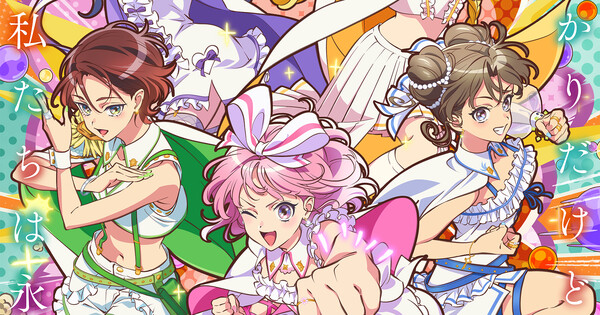
Film opens in Japan on October 23
Bandai Namco Filmworks revealed the main trailer and key visual for Gekijōban Maebashi Witches: Majo Minarai no Emoemories (Maebashi Witches Emoemories: Blooming Witches), the compilation film for the Maebashi Witches original television anime, on Friday.

© PROJECT MBWM
Bandai Namco Filmworks also announced the Maebashi Witches group’s solo concert that will be held on January 15-16, 2027 at Shibuya LOVEZ.

© PROJECT MBWM
The Gekijōban Maebashi Witches: Majo Minarai no Emoemories film will open in Japan on October 23.
Sunrise is credited for the anime’s original work. Junichi Yamamoto (Why Raeliana Ended Up at the Duke’s Mansion, Anyway, I’m Falling in Love with You) returns to direct the film at Bandai Namco Filmworks and PROJECT MBW, and Erika Yoshida (Bocchi the Rock!, Tower of God both seasons), who was in charge of series scripts, also returns. Nozomi Tachibana (Kemono Jihen) is again designing the characters based on Yū Inami‘s original character designs. Yuri Habuka returns to compose the music.
The television anime premiered in April 2025, and Crunchyroll streamed the series as it aired.
The anime stars:
The anime’s story, set in Maebashi city in Gunma Prefecture, is about the coming-of-age of five high school girls. First year high school student Yuina Akagi lives an ordinary but unsatisfying everyday life. One day, a mysterious frog named Keroppe scouts her and four other girls to become the “Maebashi Witches.” Suddenly, a room closet is connected to a mysterious space that brings the girls to a magical flower shop where they sing, dance, and make other people’s wishes come true.
The five main characters collectively known as the Maebashi Witches performed the opening theme song “Sugosugi Maebashi Witches!” (Super Amazing Maebashi Witches!) and the ending theme song “Sorezore no Door” (Each Door).
Source: Press release
Disclosure: Bandai Namco Filmworks Inc. (Sunrise) is a non-controlling, minority shareholder in Anime News Network Inc.
>

Cercamon Boards John Trengove’s Toronto-Bound ‘The Smell Of Apples’

Seahawks’ DT Leonard Williams to sign 3-year extension: Source

‘Youth’ Trailer: Sharon Horgan Is Searching For Sex & Love In HBO Comedy
-

 movies3 months ago
Search For Canadian TV Actor Stewart McLean Now Homicide Investigation
-

 Fashion9 years ago
These ’90s fashion trends are making a comeback in 2017
-
Fashion9 years ago
According to Dior Couture, this taboo fashion accessory is back
-
Fashion9 years ago
Model Jocelyn Chew’s Instagram is the best vacation you’ve ever had
-
Fashion9 years ago
Emily Ratajkowski channels back-to-school style
-
Fashion9 years ago
9 Celebrities who have spoken out about being photoshopped
-
Fashion9 years ago
Your comprehensive guide to this fall’s biggest trends
-

 Anime3 months ago
Rurouni Kenshin: Hokkaido Arc Manga Takes 1-Issue Break – News