
Tech
Sprains, pain, and whiplash: Waymo and Zoox test drivers are getting hurt as robotaxis scale

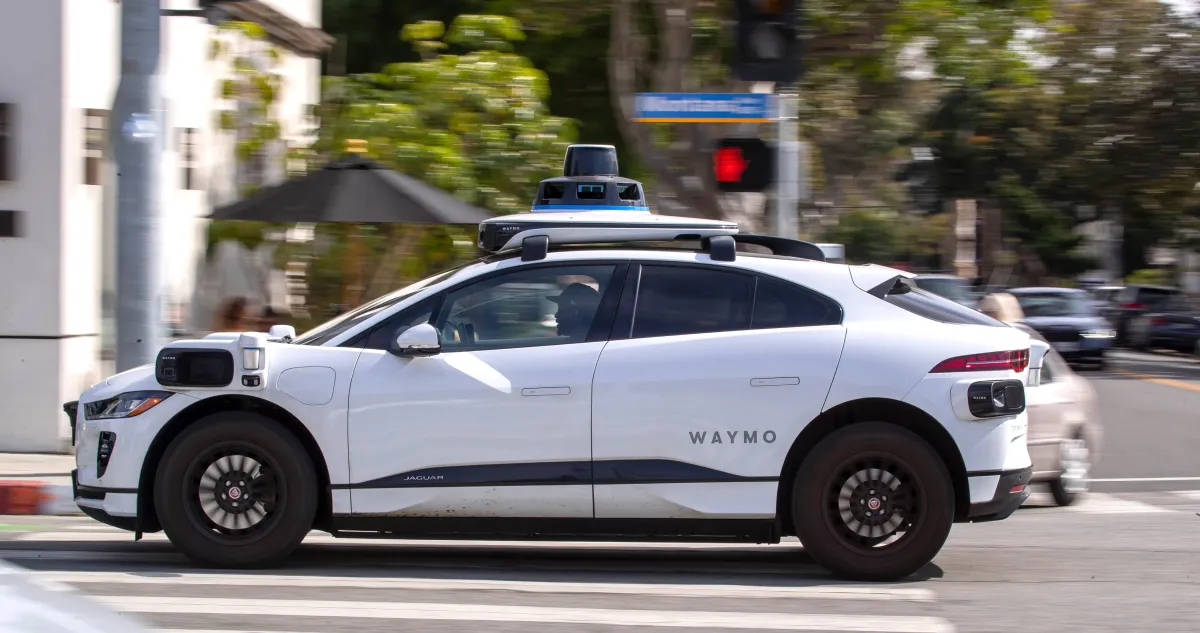
The rapid scaling of robotaxis over the last two years has come with a hidden human cost.
Test drivers for Waymo and Zoox sustained more than two dozen injuries in 2024 and 2025 from hard braking or other sudden movements made by the autonomous vehicles, according to a TechCrunch review of data submitted to the Occupational Safety and Health Administration.
These test drivers, who put autonomous vehicles through their paces on public roads, have suffered sprains, strains, whiplash, and more, according to OSHA data and interviews with former and current workers. Some have been sidelined for weeks or months.
Transdev, which employs and manages Waymo’s test drivers, reported 16 injuries tied to Waymo depot locations in three cities that were caused by the autonomous software braking hard or swerving suddenly. Zoox reported as many as eight worker injuries linked to hard braking.
Other autonomous vehicle companies do not appear in the dataset, though it’s possible they’re exempt. The Zoox and Waymo injuries appear because the companies classify themselves as taxi, limo, or transit services, which OSHA subjects to greater disclosure because they’re “higher-hazard” industries. OSHA also only requires establishments with 100 or more employees in these industries to make this information public, meaning test drivers in newer cities where operations haven’t scaled may have been injured on the job without appearing in this dataset.
TechCrunch was unable to learn whether Waymo or Transdev logged any new injuries in 2026. OSHA does not require companies to submit annual data until the following year as part of the agency’s Injury Tracking Application.
In Zoox’s case, injuries are still happening, according to sources who spoke to TechCrunch on condition of anonymity.
Two current and three former Zoox contractors told TechCrunch that the company’s test fleet vehicles — modified Toyota Highlander SUVs equipped with its self-driving system — were still braking hard and abruptly as recently as July. Three of those contractors said workers are still getting hurt. The workers were granted anonymity to discuss private operations.
Zoox declined to answer specific questions about the injuries it reported last year or the claims contractors made to TechCrunch about the continued hard-braking issues. The company said it follows necessary reporting requirements and takes injuries seriously.
Zoox also said hard-braking incidents are sometimes unavoidable and that the injuries reported last year represent a small percentage of the millions of miles its test fleet traveled.
Waymo also declined to answer questions about the injuries reported to OSHA.
“The safety of our riders, road users, and team is of paramount importance,” Waymo told TechCrunch. “As part of the process of responsibly deploying fully autonomous vehicles, we have driven tens of millions of miles with human operators behind the wheel. This is part of our ongoing validation process and learnings from these trips are integrated into the service.”
Transdev declined to comment.
More miles, more injuries

While Waymo has spent more than a decade developing its self-driving cars, it wasn’t until 2025 that it really started to scale. The company started offering rides in new cities and began mapping and testing in others, growing its commercial fleet to more than 1,500 vehicles by May 2025. Today, that fleet is more than 3,500 vehicles.
Waymo doesn’t break out how many vehicles it uses just for testing. But the amount of autonomous vehicle testing almost certainly increased as the company expanded its service areas and started to familiarize itself with entirely new locations.
Test driver injuries increased, too.
Transdev reported five Waymo test driver injuries in 2024 across San Francisco, Los Angeles, and Phoenix. One was related to hard braking, while the other four were related to erratic vehicle behavior.
In one case, a test driver reported that the car “suddenly backed up” while parking itself and “whipped the steering wheel,” catching his left hand and bending it “to the point he heard a crack in his wrist.” The employee spent more than two months away from work as a result.
The number of injuries jumped to 11 in those three markets in 2025, and hard braking was the cause of nearly all of them. Last September, a test driver in Phoenix wound up having to spend 157 days away from work after their vehicle “made an exaggerated breaking [sic] event without any obstruction.” At least two other injury reports specifically mention that the hard braking happened for no apparent reason.
The only injury report from 2025 that offers a reason for a hard-braking event involved an incident that happened in August in Los Angeles. The employee reported that “some kids were playing in the pathway.” The Waymo robotaxi stopped hard enough that the worker spent 175 days away from their job.
“Software braked harshly”

The Zoox contractors said hard braking — or “brake jabs,” as they are referred to internally — can happen multiple times on a single test drive, sometimes in the same location. They can happen at any speed, though higher-velocity braking incidents typically take a harsher toll on the body, the workers said.
The braking often happens when the autonomous driving system detects — or mistakenly detects — debris of some kind on the road, they said.
The scariest incidents, the contractors said, are when a test vehicle experiences a “nogo” — internal code for an entire system shutdown that often leads to a brake jab.
“You could be going 45 miles per hour and the car will enact a nogo, and suddenly you’re being whipped forward in the middle of the street, in traffic, and you need to be able to take over quickly,” one said.
This behavior shows up repeatedly in the injury reports Zoox submitted to OSHA.
On January 5, 2025, a Zoox test vehicle was driving autonomously in San Francisco when it abruptly slammed on the brakes. The “harsh” stop, as Zoox described it, injured the shoulder and upper arm of a contractor who was inside the SUV, leaving the worker on restricted duty for 16 days.
Later that month, another driver was hurt after a Zoox test vehicle made an “unexpected” stop, injuring their neck and leaving them with a swollen shoulder. It took the contractor eight days to return to work without restrictions.
Most of the Zoox-reported injuries appear to have happened to workers who sit in the driver’s seat of the SUVs. The company also reported an injury to an instructor who trains the test drivers. That injury took place on June 3 in San Francisco, when the test vehicle’s “software braked harshly,” causing the instructor in the back seat to report “sharp pain in lower right ribs and tightness in left shoulder upon returning to base.”
The injured instructor reported additional injuries to the spine and pelvis, though their work restrictions lasted only four days, according to the data.
Seven of the eight entries explicitly mention hard braking, nogos, or brake jabs. The eighth injury involved a worker who was sidelined for the longest amount of time — 46 days — and who reported “extreme back pain” after operating a test vehicle in Las Vegas in May 2025. Zoox wrote that the worker said they “were not sure if it was related to the behavior of the vehicle in autonomy or not but they said it hurts them to drive as well as take deep breaths,” and attributed the injury to a “vehicle maneuver.”
Zoox is dealing with these hard-braking issues as it finally begins offering a true commercial robotaxi service in a bid to compete with Waymo. The Amazon-owned company started charging for rides in its purpose-built robotaxi for the first time this month in Las Vegas. It offers free rides in San Francisco and is testing in Atlanta, Austin, Dallas, Los Angeles, Phoenix, Seattle, and Washington, D.C.
Four of the injuries Zoox reported in 2025 happened after the company issued a recall meant to resolve a year-long federal investigation into the tendency of its autonomous vehicles to brake unexpectedly. Zoox told TechCrunch the recall addressed an extremely narrow braking behavior and said the later incidents — and any resulting injuries — are unrelated to the software fix.
Two of the people who spoke to TechCrunch said that braking can be challenging even when manually driving the Zoox test cars because of the extra weight of the self-driving sensor suite. Test drivers are trained to brake with the extra weight, they said, though they added that minor injuries can be sustained even during that training process.
It’s hard to know if Zoox is experiencing hard-braking incidents with any regularity in its purpose-built vehicles, which do not have traditional controls such as a steering wheel or pedals. They either operate unoccupied or carry passengers who mostly aren’t employees – meaning any injuries wouldn’t be reported to OSHA.
Zoox has reported two robotaxi crashes to the National Highway Traffic Safety Administration in the last eight months in which hard braking for debris resulted in the purpose-built vehicles being rear-ended. The company’s descriptions of the crashes don’t specify what debris was spotted in either case.
When you purchase through links in our articles, we may earn a small commission. This doesn’t affect our editorial independence.
>

You read that right. There is a new social network called “Twitter.now” on the block, and it’s being operated by a startup called Operation Bluebird, whose founding team includes former Twitter trademark counsel Stephen Coates.
As ArsTechnica reported, X sued the company last year and asked a Delaware judge to issue an injunction to stop Operation Bluebird from launching a social media platform called Twitter. But Operation Bluebird argued, per a petition last year, that X had let go of trademarks like “Twitter” and “Tweet.”
Coates said in a LinkedIn post that the company is not trying to recreate Twitter. “When X Corp. retired the Twitter brand, we saw an opportunity to build something new: a public square organized around trust, transparency, and user choice,” he said.
“Twitter.now is not an attempt to recreate the old platform. We are building a different service, with trust signals that provide context for what users see and tools that allow people—not an opaque algorithm—to decide how much credibility and noise reach their feeds.”
The site is currently in testing, and early access right now costs $20. On its home page, the company says it is using an AI system, called VERA, that gauges posts, checks claims, gives users the source of the claims, the context, and attaches a trust score. Users will be able to set their preferred trust score to filter out low-trust posts.
But all social networks struggle with moderation. As user numbers ramp up, platforms often find themselves being forced to choose sides, as the original Twitter had to do many times before it was acquired by Elon Musk. Bluesky has lately been criticized for its moderation, too.
Operation Bluebird told TechCrunch it aims to tackle moderation challenges using the VERA verification engine, which is in its initial version right now. “VERA 2.0, with expanded capabilities, is on the near-term roadmap, where the user will be able to set their app to only see posts above the threshold they choose,” the company said in an emailed statement.
When you purchase through links in our articles, we may earn a small commission. This doesn’t affect our editorial independence.
>
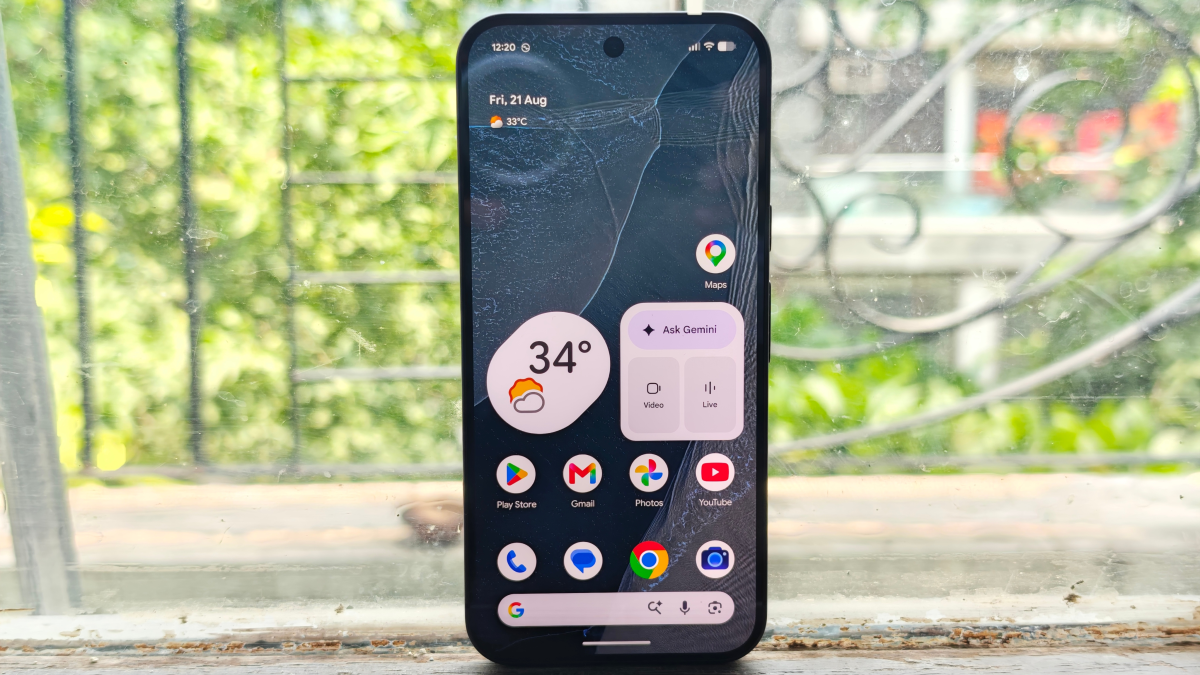
Google is making changes to its requirements for Android apps as developers face industry-wide memory chip shortages driven by the AI data center boom. This week, the tech giant announced two new app quality requirements, one of which is focused on reducing apps’ memory usage and optimizing its code.
The company explains that the mobile industry is now facing “significant hardware supply constraints that are altering device memory availability,” which can then, in turn, affect the consumer’s experience with their devices.
To address this, Google is now establishing new performance thresholds across several areas, like dynamic memory usage and bitmap usage. In addition, Google is adding code optimization requirements designed to prevent things like app slowdowns and crashes related to performance.
To aid developers, the company is rolling out new tools that will alert them when their apps exceed the new thresholds so they can take action by optimizing their code. More diagnostic tools will arrive later in the year, Google noted, including deeper insights provided by a Memory Limiter feature that prevents apps from using too much device memory.
The changes are meant to help Android app and game makers continue to deliver a quality experience, Google says, while reflecting a market where memory may not be as widely available, particularly for low-end devices where price points are a concern.
Developers have until February 2027 to meet the new thresholds, documented on Google’s Android Developer site.
In addition, the company will require all Play Store apps to meet the Zero Tap Sign-In requirement during device migrations by April 2027. This standard requires that apps with user sign-ins, whether optional or mandatory, automatically restore the user’s sign-in state when they move between Android devices using the Android Restore Credentials API.
When you purchase through links in our articles, we may earn a small commission. This doesn’t affect our editorial independence.
>
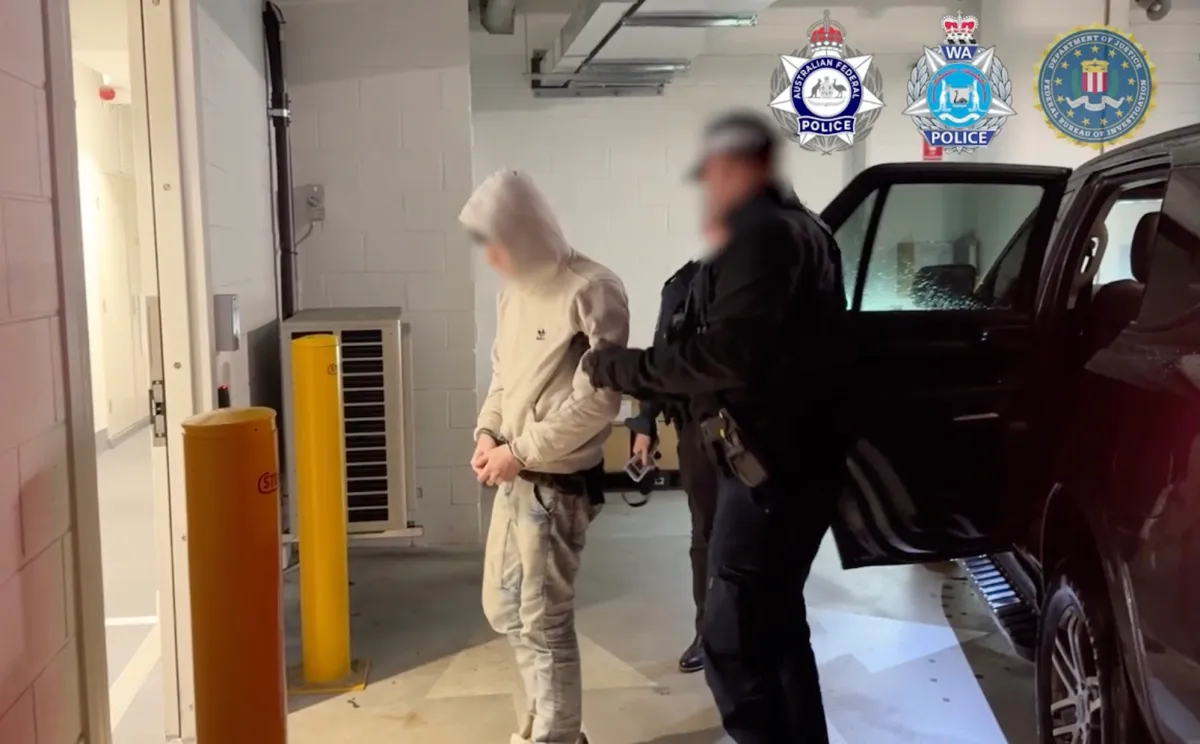
Australian police have arrested two people in Perth accused of being members of TeamPCP, a prolific hacking group blamed for high-profile hacks against big tech giants in recent months. The two have been charged with more than a dozen hacking, money laundering, and other cybercrime offenses and are expected in court later on Thursday.
According to a statement by the Australian Federal Police, the two men are accused of widespread breaches involving the compromise and tampering of popular open-source projects. The hackers aimed to infect a large number of computers to steal credentials and data, then extort victims into paying a ransom.
The FBI’s cyber division chief Brett Leatherman was quoted as saying that the two alleged members of TeamPCP are accused of hacking into more than a thousand organizations as part of their attacks.
It’s unclear whether the Justice Department plans to seek extradition, and a spokesperson for the FBI did not immediately comment when contacted by TechCrunch.
TeamPCP is a prolific cybercriminal gang known for several widespread hacking campaigns targeting the software supply chain, in which the hackers would break in and maliciously modify a popular open-source software tool used by potentially thousands of companies.
Once installed on a company’s or developer’s systems, the malicious code steals their private keys and other sensitive credentials used to access cloud storage systems and, oftentimes, customer data. The authorities said the hackers stole more than half a million credentials to further their attacks into other companies.
The hackers were blamed for a cyberattack on the popular vulnerability scanner tool Trivy, which affected any company that relied on it, including LiteLLM, AI recruiting startup Mercor, and others. The hackers are also suspected of breaching the European Commission’s cloud infrastructure, as well as targeting other open source projects and developer apps that allowed access to tech giants like GitHub and OpenAI.

The Australian officials said their investigations began in April 2026 after receiving information from multiple cybersecurity companies.
Police have not named the men who were arrested, but independent cybersecurity journalist Brian Krebs exclusively reported that one of the now-arrested alleged hackers is Ruben Thomson, who goes by the hacker handle Ellis. Krebs reported Thursday that he was in contact with Ellis over the past several months, and the hacker told Krebs that he was the leader of TeamPCP until March 2026.
Krebs said Ellis made mistakes that allowed the journalist to learn the alleged hacker’s real identity.
During a press conference on Wednesday announcing the arrests, Australian officials said they had also seized a large quantity of allegedly stolen data, as well as devices and other electronics from the hackers. The officials said they planned to notify victims of the attacks.
When you purchase through links in our articles, we may earn a small commission. This doesn’t affect our editorial independence.
>

Gianni Infantino: Uefa pursuing criminal legal proceedings against Fifa president

Sprains, pain, and whiplash: Waymo and Zoox test drivers are getting hurt as robotaxis scale

CNN Hit With 2nd Technical Disruption in 3 Days
-

 movies3 months ago
Search For Canadian TV Actor Stewart McLean Now Homicide Investigation
-

 Fashion9 years ago
These ’90s fashion trends are making a comeback in 2017
-
Fashion9 years ago
According to Dior Couture, this taboo fashion accessory is back
-
Fashion9 years ago
Model Jocelyn Chew’s Instagram is the best vacation you’ve ever had
-
Fashion9 years ago
Emily Ratajkowski channels back-to-school style
-
Fashion9 years ago
9 Celebrities who have spoken out about being photoshopped
-
Fashion9 years ago
Your comprehensive guide to this fall’s biggest trends
-

 Anime3 months ago
Rurouni Kenshin: Hokkaido Arc Manga Takes 1-Issue Break – News