
Anime
Webtoon-Based Live-Action Movie Reawaken Man: The Red Set to Open in South Korea on September 30 – News

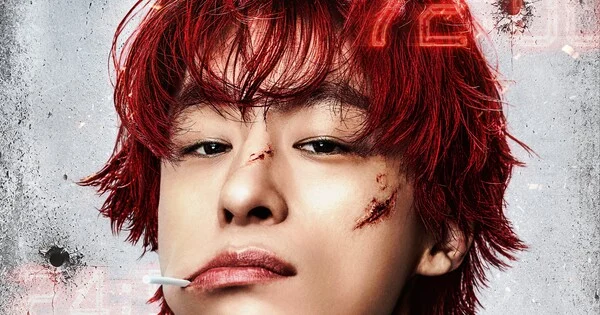
Film follows ordinary job seeker who suddenly gains ability to resurrect after dying

© Lotte Entertainment
The staff of Reawaken Man: The Red, live-action movie based on the webtoon Reawakened Man, revealed on Wednesday the film will premiere in South Korean theaters on September 30.
Directed by Jong-yeol Baek, the film follows Hwan Seok, an ordinary job seeker who suddenly gains the ability to resurrect after dying. Gyo-hwan Koo stars as Hwan Seok, who finds himself caught up in a series of events after gaining his extraordinary ability.
The film also stars Seung-ho Shin as Black, a mysterious figure who discovers Hwan Seok’s ability and begins pursuing him. Ki-young Kang plays Hwan Seok’s close friend Young-ha, while Si-ah Kim portrays his younger sister Ye-rin.
The story of the original webtoon reads:
If there’s one thing Hwan Seok can’t stand, it’s witnessing injustice. But this time, getting involved with a pair of men targeting his next-door neighbor, Yerin, costs him his life. Three days after his murder, Hwan Seok wakes up…. alive! Armed with his newfound ability to be brought back to life after three days, Seok is determined to save Yerin but soon realizes he’s gotten himself entangled in a plot bigger and more sinister than he originally imagined…
Yongtaek Chae wrote the webtoon with art by Jaehan Kim. Reawakened Man was serialized on Naver Webtoon between 2016 and 2019. Fans can read the English version on WEBTOON.
Source: YNA (Won-hee Park)
>
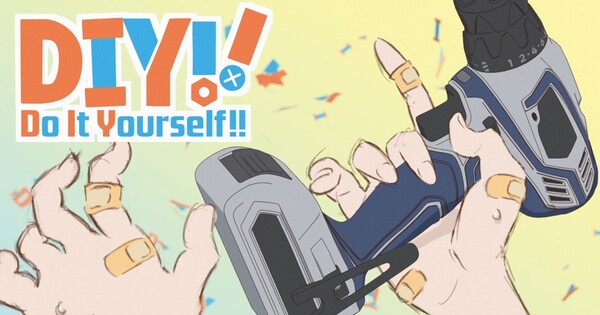
Who says you can’t learn anything from anime? Coop and Sylvia run down a list of DIY and creative series that can inspire you to get creating.
The views and opinions expressed by the participants in this chatlog are not the views of Anime News Network.
Spoiler Warning for discussion of the series ahead.
Crunchyroll streams Eizouken, Zenshu, Journal with Witch, Do It Yourself!!, Gundam Build Fighters, and Draw This, and Then Die.
Netflix streams Blue Period, Blue Giant.
HIDIVE streams Shirobako.
YouTube streams Don’t Hug me I’m Scared.
Hey Sylvia, have you ever read or watched something that changes the creative trajectory of your life? A work that pushes you to take up a new hobby, develop a new skill, or dump a bunch of money into a set of tools you’ve got no clue how to use?

© IMAGO/avex pictures, DIY!! Partners
Or one that makes you uncontrollably sob as you recall decades-old trauma that’s tied up in a discipline you once loved but swore off?
That is what we in the business call a “big mood,” Coop. And yes, it’s safe to say that anime and manga have changed the trajectory of my life several times over. I have no idea what my life would look like without that part of it. Who is the Sylvia who doesn’t buy How to Draw Manga at the Scholastic Book Fair? Who is the Sylvia who doesn’t take up blogging again after years of hiatus thanks to The Flowers of Evil? I could go on—and we will go on, because it’s the subject of today’s column—but I’ve been through many a creative fire kindled by the power of anime and manga.

© Minoru Toyoda/Shogakukan/“Draw This, Then Die” Project

© Minoru Toyoda/Shogakukan/“Draw This, Then Die” Project
As adults, it feels like we’re often chasing after that experience (“chasing the nostalgic dragon” as I like to call it) in an attempt to recapture even a little of the joy we felt back when we were children. That chase can lead us to amazing opportunities, our ruin, and perhaps both. Yasumi’s a teen now, but she’s still a kid and still has that wonder in her heart. She wants so bad to read manga and maybe even try her hand at making it. After all, it’s changed her life for the better, making her a more outgoing and considerate person. That was really all thanks to the book she found in that dingy shop all those years ago.

© Minoru Toyoda/Shogakukan/“Draw This, Then Die” Project
Dear god. I got so emotional while watching these opening episodes; it felt like someone had just opened up the intense feelings valve.

© Minoru Toyoda/Shogakukan/“Draw This, Then Die” Project
Although not quite to the extent that I created my own talking tanuki tulpa.

© Kate Green/Getty Images
That’s him!
Oh wait, I think that’s the wrong bespectacled guy with a beret…
No, I’m pretty sure that’s right. Trust me, I’ve been to the Tezuka Museum in Takarazuka.

© Minoru Toyoda/Shogakukan/“Draw This, Then Die” Project
Legends aside, the “almost sobbing” became “real sobbing” when we start getting to know Yasumi’s teacher, Ms. Teshima. She’s introduced as the stick-up-her-behind kind of educator who doesn’t see manga as real literature. But by the last third of the first episode, it’s revealed that she authored the title that made Yasumi fall in love with the medium. Ms. Teshima is brusque as she is for a reason: the industry seemingly chewed her up and spit her out. When you’re filled with so much spite and conflicted emotions over something you used to love, it can be hard to be anything but repulsed when you feel that someone else is about to fall into the same trap. It doesn’t matter if the joy’s there either.

© Minoru Toyoda/Shogakukan/“Draw This, Then Die” Project
Additionally, I’m beyond impressed with how well the series juggles its tones. As we see Teshima’s struggles through her own retrospective, she litters these scenes with a bit of wry, self-deprecating humor. The drama of it all. The urge to detonate your editor. That’s real.
 © Minoru Toyoda/Shogakukan/“Draw This, Then Die” Project |
 © Minoru Toyoda/Shogakukan/“Draw This, Then Die” Project |
At the same time, though, Teshima does not pull her punches. The feelings of shame that eat away at you. The frustration of falling short of others’ expectations. The frustration of falling short of your own expectations. Choosing to make anything as an artist is an inherently vulnerable act, and when it inevitably goes wrong, that shit hurts. It hurts in ways you hold onto for the rest of your life.
 © Minoru Toyoda/Shogakukan/“Draw This, Then Die” Project |
 © Minoru Toyoda/Shogakukan/“Draw This, Then Die” Project |
For example, I have a theatre degree, and I haven’t used it once in the almost-decade since I got it. Needless to say, I’ve got some pretty tender feelings about that era in my life, and it’s only been within the past couple of years that I’ve been able to let go a little. Or at least, not see red when I think back to those days.

© Minoru Toyoda/Shogakukan/“Draw This, Then Die” Project

© Minoru Toyoda/Shogakukan/“Draw This, Then Die” Project
And that’s a part of why so many of Teshima’s lines feel like nails driven into my ribs.
Award-Winning Translator, Jan Mitsuko Cash, Calls on American Manga Industry to Double Their Rates!
— Anime News Network (@animenewsnetwork.com) August 22, 2026 at 12:22 AM
The technical part of it’s hard to begin with, but the “making a living” part often makes the work way more difficult.
Like, I was tickled to see Teshima bring up Stephen King, because On Writing is full of advice and anecdotes I’ve carried with me ever since reading it. But King’s memoirs also detail a fragment of a long-gone world. I don’t know if the industry as it currently exists has the ability to foster another Stephen King. And certainly that feels analogous to the world of anime and manga.

© Minoru Toyoda/Shogakukan/“Draw This, Then Die” Project

© Minoru Toyoda/Shogakukan/“Draw This, Then Die” Project

© Blink Industries
It’s hard not to go full Don’t Hug me I’m Scared when thinking about the realities of living as a working creative, however, but creativity isn’t always tied in with commerce and the HORRORS. Sometimes you can build yourself a nice little bookshelf just for the hell of it!

© IMAGO/avex pictures, DIY!! Partners

© IMAGO/avex pictures, DIY!! Partners
As someone who had a table saw accident that was the least bad it could’ve been… For the love of god, wear your PPE and be careful!

© IMAGO/avex pictures, DIY!! Partners

© IMAGO/avex pictures, DIY!! Partners

© IMAGO/avex pictures, DIY!! Partners

© IMAGO/avex pictures, DIY!! Partners

© IMAGO/avex pictures, DIY!! Partners

© SOTSU・SUNRISE

© SOTSU・SUNRISE

Like for real.
I will also say, while the results are not quite so tangible, I am perennially susceptible to series that address the craft of writing. It’s the creative outlet I’m most familiar with, after all. Journal with Witch, for example, inspired some of my best work on this site (if I do say so myself), and I believe that was in part due to Makio’s often poignant observations on writing itself. She got me fired up and motivated to challenge myself.
 © Tomoko Yamashita, SHODENSHA Publishing Co.,Ltd. / “Journal with witch” Committee |
 © Tomoko Yamashita, SHODENSHA Publishing Co.,Ltd. / “Journal with witch” Committee |
 © Tomoko Yamashita, SHODENSHA Publishing Co.,Ltd. / “Journal with witch” Committee |
 © Tomoko Yamashita, SHODENSHA Publishing Co.,Ltd. / “Journal with witch” Committee |

© Tomoko Yamashita, SHODENSHA Publishing Co.,Ltd. / “Journal with witch” Committee
We talked about this a fair bit a few months ago, but I haven’t seen another series that’s been as brutally honest about how much of a slog writing can be. Most days at the desk for me are just sitting there and trying to pound something out, which is often easier said than done. And just like me, Makio’s sitting at that desk almost all the time. Despite my chosen profession, writing is something I’ve had to really work at over the years. While it’s been akin to pulling teeth at times, that’s nothing compared to actually finishing the damn thing and feeling the sense of accomplishment that comes with it.
 © Minoru Toyoda/Shogakukan/“Draw This, Then Die” Project |
 © Minoru Toyoda/Shogakukan/“Draw This, Then Die” Project |
I mean, you have to be at least a little unhinged to do this willingly. Might as well embrace it.
 © Minoru Toyoda/Shogakukan/“Draw This, Then Die” Project |
 © Minoru Toyoda/Shogakukan/“Draw This, Then Die” Project |
That moment when DO you go full Don’t Hug me I’m Scared.
 © 山口つばさ・講談社/ブルーピリオド製作委員会 |
 © 山口つばさ・講談社/ブルーピリオド製作委員会 |
 © 山口つばさ・講談社/ブルーピリオド製作委員会 |
 © 山口つばさ・講談社/ブルーピリオド製作委員会 |

© 山口つばさ・講談社/ブルーピリオド製作委員会
Especially when you’re feeling crushed by societal expectations to take the same path in life that everyone else seemingly has. It’s like opening a door to a world you’d never even considered before.

© 山口つばさ・講談社/ブルーピリオド製作委員会
Or just drawing boobs because they’re cool, and it worked out for Gō Nagai. Side note, I kind of love that the teacher of this class is like “Hell yeah, man! Paint those boobs!”
Also, a semi-tangent: I honestly do not remember how well Blue Period handles this aspect overall, but I do find it interesting that, via Yuka, there is a trans element running through the story. Speaking for myself, I know art was an incredibly important facet for realizing and accepting my own transition. And that’s hardly surprising. Art is a means of communication. It’s a way in which we understand others better, and in doing so, we come to understand ourselves better too.
 © 山口つばさ・講談社/ブルーピリオド製作委員会 |
 © 山口つばさ・講談社/ブルーピリオド製作委員会 |
Of course, Draw This, Then Die! also recognizes that power.
 © Minoru Toyoda/Shogakukan/“Draw This, Then Die” Project |
 © Minoru Toyoda/Shogakukan/“Draw This, Then Die” Project |
Shifting over to another “blue” title, Blue Giant‘s been a pleasant surprise I find myself coming back to every so often. I think I’m a little too far gone to pick up the sax these days, but the electricity you feel in the room while listening to a talented group of Jazz musicians just go for it is like nothing else. It also calls back to the reflective aspect of art you just mentioned, Sylvia. Art doesn’t always have to have a meaning. It could be as simple as folks goofing around with a voice modulator and fart noises, but regardless of what that art specifically is, people will find their own meaning in it.
Also, it bears mentioning that even if a piece of art is seemingly devoid of meaning, it doesn’t mean that it wasn’t an ordeal to create. Art is all about friction, and nothing’s getting made without it.
 © 「SHIROBAKO」製作委員会 |
 © 「SHIROBAKO」製作委員会 |
 © 2020 大童澄瞳・小学館/「映像研」製作委員会 |
 © ZENSHU/MAPPA |
I’d add Draw This, Then Die! to the manga-specific pantheon of this genre, too. It’s got heartwrenching truths about the brutality of the industry next to step-by-step instructions for adding screentone.

© Minoru Toyoda/Shogakukan/“Draw This, Then Die” Project
Draw This, Then Die! really did a number on both of us, didn’t it?
Several numbers, I’d say.

© BEAT & MOTION © 2023 by Naoki Fujita/SHUEISHA Inc.

© Kazuto Mihara/KODANSHA LTD.

© Minoru Toyoda/Shogakukan/“Draw This, Then Die” Project

© Minoru Toyoda/Shogakukan/“Draw This, Then Die” Project
When in doubt, reference JoJo’s Bizarre Adventure.
Truly, any day can be a JoJo’s Friday.
>
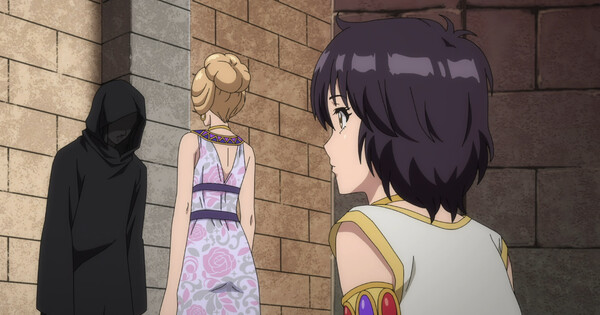
How would you rate episode 8 of
Red River ?
Community score: 3.5

© 篠原千絵/小学館/アニメ「天は赤い河のほとり」製作委員会
The most frustrating aspect of Red River is the way it depicts Yuri. Before I go any further, I do realize that this may be an issue strictly for (or mostly for) those of us coming to the anime having read the manga. And there’s absolutely nothing wrong with being anime-only and enjoying what you’re watching. But that doesn’t make the irritations plaguing manga readers any less.
In the case of Yuri’s depiction, a large part of the problem comes from the lack of nuance in the adaptation. While a 1:1 move from source material to anime wasn’t ever realistic, the choice to focus on action has left Yuri feeling underbaked. The apparent InstaLove she feels for Kail is an issue, but that’s pretty normal in older romance fiction. Instead, it’s the lack of emotional growth after that point that’s the problem. Yuri goes from wanting to go home to wanting to be with Kail in a heartbeat, and when she’s told this week that she can’t go to war with him, she bursts into tears and runs away sobbing. It’s an immature move from a girl who, just last week, was shown to have a cool head and a mature sense of justice. While I could see arguing that she’s very young (fifteen in the manga; possibly older in the anime), without getting all of the emotional events that lead up to her wanting to stay with Kail, it just reads as someone unstable. Emotions are hard for everyone, perhaps doubly so when you’re a teen in the throes of adolescence, but none of Yuri’s reactions feel earned. We don’t know enough about her to care or understand her behavior, and it makes her a weaker character than she ought to be.
She’s also got very little sense of self-preservation, but it’s hard to argue with the results of her sneaking off to eavesdrop on Nakia. Nakia, frustrated that her plans are going awry, is growing increasingly reckless and unsubtle. Her outburst when told that the caravans from Mesopotamia never arrived is obviously strange, making her look even more suspicious than she already does. Discussing her plans in the hallway rather than her chambers is another foolish move, as is speaking aloud the name of the magical artifact she’s waiting for.
That would be the Eye of Illuyanka. In Hattian mythology, Illuyanka is a dragon killed by Teshub, the god of storms, and one version of the myth does specifically mention eyes, albeit Teshub’s, which the dragon takes. That would make Illuyanka’s own eyes incredibly powerful, because this was a beast who nearly defeated a god in combat, and ultimately had to be dispatched by trickery. (And trickery is, as we know, Nakia’s stock in trade.) It’s indicative once again of how much research went into this story, even if some of the other symbolism in this particular episode is more Abrahamic than Hittite. The fact that Kail and Yuri reconciled under an apple tree is immediately symbolic of the Tree of Knowledge from the Adam and Eve story, although fruit itself in art is often held to be representative of female sexuality or power and often associated with Aphrodite/Venus…to whom Ishtar is sometimes compared. It’s these little details that make all the difference.
Speaking of little details, have you noticed that Yuri is wearing more jewelry lately? While she still prefers to dress like a boy in a short tunic, she’s adding bracelets, earrings, and other adornments to her look. (Or maybe Hadi, Ryui, and Shala are doing it.) Symbolically, this is important, as it shows her link to Kail – she’s not going to be mistaken for a boy or a servant if she’s more overtly feminine. It’s indicative of her decision to stay with Kail, although he’s still working on getting the message. But get it he will, if Zannanza has anything to say about it.
Rating:
Red River is currently streaming on
Crunchyroll.
The views and opinions expressed in this article are solely those of the author(s) and do not necessarily represent the views of Anime News Network, its employees, owners, or sponsors.
>
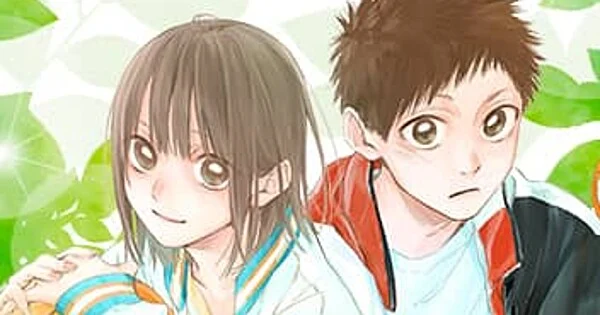
In many ways, anime can be seen as an advertisement for the source material it is based on, whether that be light novels, video games, or manga. There’s a lot of planning and effort that goes into producing an anime for this promotion, but as a result, many of these adaptations are not always able to fully realize the visions of their source materials. Sometimes an anime can’t continue because it is catching up to an ongoing manga; maybe it ends due to a lack of interest, or maybe it ends at a perfect point despite there technically being more story to tell. However, I think one of the most frustrating things to come across is an anime that stops just before things get even better, and I can’t help but wonder what is going on beyond the anime finale. Today, I want to take a moment to sit down with a couple of manga that all had really solid anime adaptations and why you should pick up the manga right where those shows left off.

©Shinichi Fukuda, Square Enix, Square Enix Manga & Books
I think the mark of a good slice-of-life story is that it has a strong romance at its core, but ultimately still feels satisfying when the show ends before that romance makes any real definitive progress. My Dress-Up Darling is a story that wears many different hats. In some ways, it is wish fulfillment; in others, it serves as a good introduction to the world of cosplay; and in others, it is a story about confronting deep-seated insecurities brought about by engaging in unconventional hobbies. The first two seasons of My Dress-Up Darling did a fantastic job of satisfying two of those three narrative beats. While I would argue it pulled off those beats well enough to feel still relatively satisfying, I can’t ignore the glaring fact that the romance between the two leads was ultimately left unresolved. Thankfully, there is more material to cover. While I am patiently waiting for season three, I can happily engage with the source material, where the romance can be the focus.
Gojo has just overcome his fear of engaging in his doll-making hobby and has finally made friends outside of Marin. Marin, who has been aggressively crushing on Gojo throughout most of the show’s run, is now left wondering when the right time would be for them to take another step forward finally. Now is the proper time for the two to really get into the throes of what type of relationship the two want to have outside of engaging with cosplay, but that doesn’t mean that the cosplay element is lessened or abandoned for the sake of this new narrative focus. The manga still focuses on introductory-level cosplay ideas and even throws in other elements that come with being a cosplay influencer online. The way social media and the pursuit of large audiences play into the larger story feels realistic, while new characters are introduced to advance those themes.
But what makes this next arc great is how it ties Marin’s cosplay journey with an actual romantic breakthrough. Seeing Marin stand up for the kind of relationship she wants, and Gojo finally reach a point where he can say he even wants a relationship, is a huge step for him, given where he started. I highly recommend people check out the rest of the manga. I do think it would only take about one more season to fully wrap everything up, but that doesn’t mean you can’t enjoy reading beyond the anime’s rough cliffhanger.
● Read My Dress-Up Darling on BookWalker

©1999 by Yazawa Manga Seisakusho/SHUEISHA Inc.
2) NANA
NANA is a very tricky manga to recommend because I don’t see any reality in which people walk away from it feeling happy. It starts fantastically, with Ai Yazawa writing about young adults as they start a new life and struggle to understand the different types of love. They are masters at writing dialogue that feels real, with the right amount of self-awareness. The relationship between the two Nanas, as well as the relationship they have with the many people that come in and out of their lives, is honestly intoxicating. I use the word “intoxicating” because not all of those relationships are good or healthy, but I still desperately want the characters to find their happy ending, and that’s why I keep coming back for more. The anime ends in an inconclusive state after some major emotional and practical life decisions are made, with Hachi moving in with Takumi, the poster child for a piece of garbage with the strangest moral compass I’ve ever seen.
The relationship between the two Nanas lies at the emotional crux of the entire series. Their friendship and chemistry are what keep the audience’s attention, even when there were constant roadblocks and uncomfortable circumstances. The fact that the anime ends with a definitive catalyst that threatens to tear apart their close bond is devastating, and the manga doesn’t pull any punches about it. There are constant teases that the characters will eventually make the best of the unfortunate circumstances. There’s always a lingering feeling that things could be so much better than they are. It’s funny that there were also a lot of grand gestures teased in the following chapters of the manga, like Ren wanting to propose to NANA, and what that kind of dynamic would do to the major bands involved. But those big gestures aren’t what draws you in; it’s the little moments when characters stare at each other. It’s about waiting for the right opportunity to say how they feel, only to never quite get that moment.
It is very unlikely that the NANA manga will ever truly finish, as it has been on hiatus for almost two decades due to Yazawa’s health issues. If you thought that a continuation from the anime would leave you with a sense of hope and optimism for the future, then I don’t know what series you thought you were getting yourself into. This has always been a character piece, exploring different sides of love, lust, and longing.
● Read NANA on BookWalker

©2021 by Kouji Miura/SHUEISHA Inc.
3) Blue Box
Blue Box is a series that perfectly balances the appeal of a sports series, a slice-of-life series, and a teen drama, all wrapped into one. While the goals of the protagonists, Taiki and Chinatsu, are typical of a sports series, it’s really how the characters balance these elements in their lives that creates its main appeal. In the first season, the anime ended by really leaning into the dramatic tension, whether it’s Taiki dealing with the fallout of a love triangle with his childhood friend or even the doubts creeping up as he prepares to go to nationals. Season one ends with him finally working up the resolve to confess his feelings to Chinatsu. The next major arc of the series focuses on developing Chinatsu as a character, leaning into the goals and aspirations behind her desire to dominate the basketball world.
Personally, I thought Chinatsu was one of the weaker elements of this series, but much of that is because both the anime and manga don’t show her perspective very often. The story is mostly told from Taiki’s perspective, but the following arcs establish Chinatsu as a secondary main character by introducing a rival who both challenges her as a player and spurs her own romantic feelings. This is the next major step in how the characters balance the various elements of their lives, as everyone around them constantly says they need to pick and choose. However, what makes Chinatsu and Taiki so special is that they want to have both. They want the freedom to choose their relationships while also having the resolve to achieve their sports dreams. At the time of this writing, season two is right around the corner, so if you were at all dissatisfied with season one and how it ended, I highly recommend checking out the manga, because I can assure you it only gets better from here.

©Take, Kadokawa
4) Uzaki-chan Wants to Hang Out!
Uzaki-chan is a strong pillar in what I like to call the “teasing genre,” a type of story revolving around an annoying young woman constantly getting on the nerves of her male co-lead, and in some ways, the audience. Uzaki-chan was one of the less egregious examples of this genre, ultimately about a young kouhai who teases her upperclassman, who is more of a loner type. Their banter was OK, but it was clear they enjoyed spending time together despite a lot of bickering. However, the series could obviously only really go in one direction, with season two finally leaning into romantic developments after a lot of meandering. Sakurai finally learns that Uzaki has feelings for him, and he comes to the same conclusion about his own feelings after trying desperately to avoid the issue. The anime ends with that classic cop out where he decides it’s not the right time to confess, but thankfully, that is not where the story ends.
The manga follows through on this plot point, with Uzaki and Sakurai eventually getting together just a few chapters later. In fact, not only do they get together, but I have to commend the series for doubling down on the teasing element of its appeal by making the intimacy of their new relationship a basis for their banter. While the series does get a bit more explicitly adult, it never loses the original charm. Those insecurities that Sakurai has towards the tail end of season two are now made manifest in this relationship. At the same time, Uzaki realizes that there’s a lot more fun to be had with this new dynamic. This is without even getting into how the side characters react to their relationship, which does yield some funny comedic potential. While I do think the era of this genre has passed, there is a lot to enjoy in this manga, and who knows, maybe some of you out there might miss these silly young adults, considering it’s been a while since the anime ended.
● Read Uzaki-chan Wants To Hang Out on BookWalker

©Misaki Takamatsu, Kodansha
Skip and Loafer was an adorable anime that I think really showed the appeal of a typical slice-of-life story. A girl named Iwakura moves to the city to start a new life at a new school, where her more innocent sensibilities clash with the cynicism of many of her classmates, leading to some interesting interactions. I liked the way her friend group formed, and the clear romance she was developing with Shima, a nice boy who has a mountain of his own issues that he doesn’t let show on the surface. However, while a good chunk of the show’s appeal was seeing Iwakura interact with the larger cast, some of the show’s most heart-wrenching moments occurred in Shima’s story and in how he dealt with his personal trauma.
The manga only continues those explorations beyond the anime, especially as Iwakura and Shima start getting closer in a more romantic way. How those insecurities and trauma affect the friendship or eventual romantic relationship between the two actually goes in a surprisingly grounded direction. How will all these teenagers who constantly overthink things contextualize the relationships they want with others? It’s not just Iwakura and Shima, either; the side characters in their friend group are also processing different issues as they navigate love and attachment. The manga avoids overly dramatic tropes like indulgent love triangles. All of this is done without the series ever losing its sense of innocent, youthful charm. If you finish the anime, I highly recommend checking out the original manga to see just how much further the story goes.
● Read Skip and Loafer on BookWalker
The views and opinions expressed in this article are solely those of the author(s) and do not necessarily represent the views of Anime News Network, its employees, owners, or sponsors.
>

Webtoon-Based Live-Action Movie Reawaken Man: The Red Set to Open in South Korea on September 30 – News

Julian Alvarez transfer news: Arsenal only likely exit after Atletico say no to Barcelona

Peter Cullen, Voice of Optimus Prime in ‘Transformers’ Franchise, Dies at 85
-

 movies3 months ago
Search For Canadian TV Actor Stewart McLean Now Homicide Investigation
-

 Fashion9 years ago
These ’90s fashion trends are making a comeback in 2017
-
Fashion9 years ago
According to Dior Couture, this taboo fashion accessory is back
-
Fashion9 years ago
Model Jocelyn Chew’s Instagram is the best vacation you’ve ever had
-
Fashion9 years ago
Emily Ratajkowski channels back-to-school style
-
Fashion9 years ago
9 Celebrities who have spoken out about being photoshopped
-
Fashion9 years ago
Your comprehensive guide to this fall’s biggest trends
-

 Anime3 months ago
Rurouni Kenshin: Hokkaido Arc Manga Takes 1-Issue Break – News