
Sports
Can a doughnut play up front? Ranking the 20 Premier League teams’ summer transfer windows

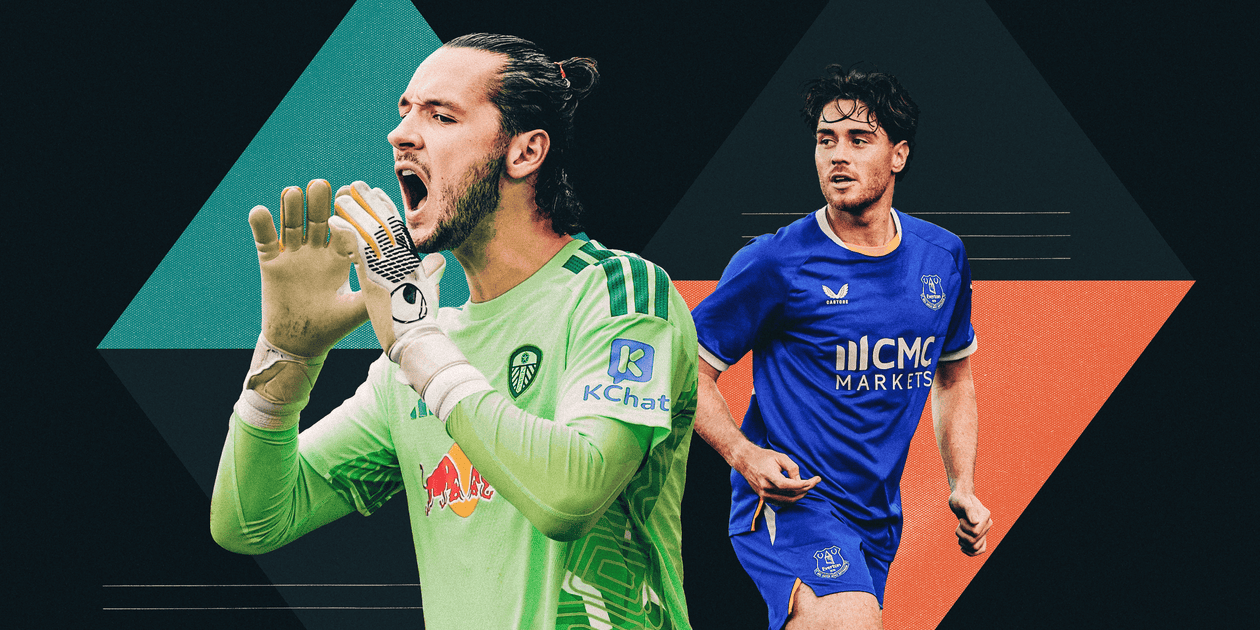
The transfer window has either slammed shut or merely closed, depending on how dramatic you want to be, with the 20 Premier League clubs having spent a combined £3.5bn.
Decide for yourself whether that’s a bold indicator of English football’s superiority over the rest of the world, or a revolting symbol of the bloated and vulgar behemoth that the game has become.
But now the dust has begun to settle on another frantic summer of transfer activity, so it’s time to assess who has done well, who has done badly and who still has to convince.
And there’s not much doubt about the team at the bottom of the pile…
20) Everton
Well, the good news is that Everton won’t have many tricky decisions when it comes to choosing their 25-man Premier League squad.
The bad news is that’s because they now only have 18 senior outfield players.
The collapse of the Folarin Balogun deal — not entirely their fault in isolation, but if you leave things to the last minute of the window, that’s what can happen — and the sale of Beto leaves them with Thierno Barry as their only senior centre-forward. Plus, of course, they sold their best player, Iliman Ndiaye, without really replacing him (unless you consider Brennan Johnson to be a direct replacement… which he isn’t).
They did make a couple of potentially very shrewd signings in Hayden Hackney and Christian Norgaard, but the rest was a mess. Who knows: maybe announcing a doughnut on transfer deadline day wasn’t the smartest thing to do.
One more year… 🎶🍩 pic.twitter.com/fosPSCAyvA
— Everton (@Everton) September 1, 2026
19) Coventry City
Pretty underwhelming.
A couple of loanees from last season were signed up, in Frank Onyeka and Carl Rushworth, while Sidiki Cherif is exciting and Caleb Yirenkyi is adaptable and looked good for Ghana at the World Cup. But if they’re relying on Taiwo Awoniyi to stay fit and lead their attacking line, then they could have some problems.
The return of Gustavo Hamer feels like a sentimental move rather than necessarily a sensible football decision and Loum Tchaouna has changed clubs for the fifth summer in a row, and didn’t particularly convince for Burnley last season.
18) Fulham
One or two alarm bells here.
In Harry Wilson and Raul Jimenez, they have lost 21 of their 47 Premier League goals from last season and the only two men to reach double figures.
A job lot of Real Madrid fringe players have followed Alvaro Arbeloa to Craven Cottage, the sort of thing that can raise concerns, although Gonzalo Garcia is already off the mark.

(Adrian Dennis / AFP via Getty Images)
They do look stronger in midfield, with Shea Charles and Hugo Larsson’s arrivals, and perhaps they felt comfortable not going all-out with new signings because of Josh King’s enormous promise. But losing two key players in addition to Marco Silva could make for a tricky season.
17) Crystal Palace
A late flurry of activity brought a few more bodies through the door, but there are some gambles here.
Promising American winger Zavier Gozo is one of them, as is Dario Osorio from Midtjylland, and then there’s the somewhat ‘unusual’ deal which saw defender Honest Ahanor agree to join Chelsea from next year, but go on loan — technically from Atalanta — to Palace now.

They kept Adam Wharton, Ismaila Sarr, Jean-Philippe Mateta and Dean Henderson, but lost Maxence Lacroix and Daniel Munoz, although history might smile on that deal, given his age, his injury issues and the fact they’ve already replaced him with Anan Khalaili.
It looks like a 6/10 squad overall, and whether they perform at a higher level than that will depend on how Pierre Sage adapts.
16) Hull City
The early signs are pretty good, having won their first two games, but they did adopt a trolley-dash approach to the closing days of the window, making six signings on deadline day to bring their total summer haul to 18 senior incomings.
It was all fun and games watching owner Acun Ilicali provide running updates to their business on social media, but you do rather fear that it’s all been a bit ‘throw stuff at the wall and see what sticks.’ Which they had to do, to an extent, after coming up through the playoffs, and there are some interesting additions among the crowd: Nobel Mendy has started well, big things are expected of Lucas Herrington and left-back Elliot Stroud arrives from Swedish miracle title-winners Mjallby.
A slightly curious move saw Liam Millar, who scored their winner against Coventry in their second game, sold to Birmingham City.
15) Liverpool
A baffling summer at Anfield, in which they became fixated on some areas of the pitch and entirely neglected others.
Bradley Barcola is the headline addition, a deal that could end up costing an astonishing £120m ($162.4m), while Ronald Araujo is a sensible enough stop-gap in defence, taking the heat slightly off the impressive-looking Jeremy Jacquet.

(Liverpool FC/Liverpool FC via Getty Images)
But the entire right side of their team seems to have been ignored: until Conor Bradley returns from injury, they don’t have a single specialist down that flank, with Jeremie Frimpong more of a wing-back than a real defender, and all of their four wingers are more comfortable on the left. And then there’s midfield, which has looked remarkably open so far and could really have benefited from a proper No 6; Andoni Iraola disagrees, so the next few months will be a test to see if he is right.
14) Manchester United
Another side who addressed some areas of their team, but forgot about others.
Manchester United remodelled their midfield, and in theory a pairing of Youri Tielemans and Carlos Baleba behind Bruno Fernandes could be a real winner. And yet, there’s an element of blind faith in the idea that they’re signing the 2024-25 version of Baleba, rather than the 2025-26, plus the conversion of Andrey Santos’s promise into reality.
But the real problem with United’s window is defence: there’s little more complicated to the whole thing than they need a better left-back than Luke Shaw, and they didn’t sign one, while another top-class central defender wouldn’t have hurt either.
13) Chelsea
The most mixed of mixed bags. The front three of Morgan Rogers, Cole Palmer and Joao Pedro already looks terrific, while Maxence Lacroix is an extremely solid defensive addition and Emi Martinez is an upgrade on Robert Sanchez in goal.

(Mike Hewitt/Getty Images)
They also sold very well, getting excellent money for a lot of fringe players like Liam Delap, Nicolas Jackson and Andrey Santos.
However, the farcical Enzo Fernandez situation, when everyone knew he would eventually end up at Manchester City but the deal was left so late they couldn’t sign a replacement, has left them with one top-class, reliable, specialist central midfielder in Moises Caicedo, and he’s currently injured.
That could cost them.
12) Aston Villa
If you have strong, immovable opinions about how Aston Villa’s summer business will serve them, then congratulations, because this could be anything.
Villa have had to replace the spine of their team, with Morgan Rogers, Ollie Watkins, Youri Tielemans, Ezri Konsa and Emi Martinez among the departures, replaced with Johan Manzambi, Nicolas Jackson, Joao Gomes, Taylor Harwood-Bellis and Zion Suzuki.

(Naomi Baker/Getty Images)
All of the incomings have different questions about them, and all have the potential to be big successes or failures. Two or three of those at the same time is manageable, but when it’s half the team…
There is understandable faith in Unai Emery to make it work, but there is huge uncertainty hanging over this squad now.
11) Arsenal
It’s tricky to assess Arsenal’s transfer window.
On the one hand, their already strong defence and midfield was strengthened with the signings of Bruno Guimaraes and Ezri Konsa, so you can’t see them losing too many games.
But at the same time, their attack is now weaker — or at the very least not stronger. They sold three attackers and brought in one, and Christos Tzolis has looked great so far, but they didn’t get the big ‘difference-maker’ that most people seem to think they need.

(Marc Atkins/Getty Images)
Admittedly, players of that calibre are extremely tough to find and even tougher to sign, but after spending a good amount of time chasing Vinicius Jnr and Julian Alvarez, it’s hard not to be slightly underwhelmed.
10) Tottenham Hotspur
For those of us old enough to remember the Daniel Levy era, Tottenham spending north of £300m on 10 players in a single transfer window is quite disorienting.
They have clearly enhanced parts of their squad, with Marcos Senesi and Jan Paul van Hecke surely more reliable than Cristian Romero, Sandro Tonali and Matheus Fernandes obvious upgrades in midfield and the double swoop from Manchester City, Omar Marmoush and Savio, also potentially pretty exciting.
And yet, you’re also left with a nagging sense that despite having spent a quarter of the cost of their stadium, they’re still left without a reliable goalkeeper or centre-forward.
Plus, the signing of Mykhailo Mudryk feels a bit weird, as does selling Kevin Danso and replacing him with Tosin Adarabioyo.

(May JAMES / AFP via Getty Images)
9) Bournemouth
You sort of trust Bournemouth to get things right whatever happens, but it was pretty clearly a positive summer, if only because they kept Alex Scott and Junior Kroupi (the latter admittedly because of injury), and of their key players only Marcos Senesi left, which they have known about for some time anyway.
Their recruits have been classically low-key, but Antonio Silva, effectively Senesi’s replacement in defence, looks like a sound move.
8) Nottingham Forest
Optimistic Nottingham Forest fans will point out that in 2024, the last time they had a low-key, sensible summer as opposed to a frantic trolley-dash with recruits in the double figures, they came seventh under Nuno Espirito Santo.
The pessimists might say that they’re troublingly light in central defensive cover, failed to upgrade in goal despite making some late approaches and haven’t directly replaced Elliot Anderson.
However, Ousmane Diomande seems perfect for Oliver Glasner’s back three, Xaver Schlager on a free could be inspired business, Daniel Munoz is in theory an ideal right wing-back and Liam Delap is exactly the sort of forward that Glasner wants. The caveat with the latter is that £45m is a huge amount of money for a striker with more career yellow cards than goals, but the hope is that he’ll be as much a facilitator as a goalscorer.

(Simon Stacpoole/Offside/Offside via Getty Images)
7) Sunderland
It all felt quite low-key until the final days of August: Thomas Meunier had arrived on a free transfer but, beyond that, the wins were fending off advances from Chelsea for Granit Xhaka and seeming to Jedi-mind-trick the rest of the world into not realising that Nordi Mukiele is really good.
Then it all kicked off as the window started to swing shut: left-back Dayann Methalie came in from Toulouse, Kevin Danso significantly beefed up their central defensive options, and then there was the Malick Fofana saga on deadline day. The poor kid underwent a medical in France without really knowing if it was for Sunderland or Crystal Palace, but eventually Sunderland won out.

(BRUNO FAHY/BELGA MAG/AFP via Getty Images)
If he delivers on his promise, he’ll be a bargain at £30m.
6) Ipswich Town
It ultimately might not do them any good, but you can’t accuse Ipswich of half-measures.
They have spent close to £195m this summer, which feels insane for a club their size, particularly when they shelled out nearly £160m last time they were in the Premier League and still got relegated.
The bigger difference between now and then is how they recruited: last time, they exclusively bought from English clubs, but this time they have looked further afield, and there are some really interesting signings among their 14 recruits.
Sasa Lukic will be a solid presence in midfield, Daizen Maeda had a knack of popping up with key goals for Celtic, Brazilian striker Emersonn already looks pretty lively, Zian Flemming was one of the few bright spots for Burnley last season and Abdul Fatawu could do some damage from the wing.
5) Newcastle United
Newcastle have traded a collection of proven performers for a lot of high-upside, slightly risky young talent.
The policy was clear: Nico Gonzalez, at 25, was the oldest of their signings, with youngsters like Sean Steur, Bazoumana Toure and Matias Fernandez-Pardo changing the profile of their squad significantly.

(Sebastian Frej/MB Media/Getty Images)
Keeping hold of Lewis Hall was a win, and Matthias Jaissle already seems to be getting more of a tune out of Anthony Elanga, but when everything shakes out it will be fascinating to see how they cope with losing Anthony Gordon, Sandro Tonali and Bruno Guimaraes at the same time.
4) Brighton and Hove Albion
As ever, you pause before being critical of Brighton, because nobody likes to look a fool by someone much smarter than them. And Brighton are much smarter than most of us.
The signing of Luka Vuskovic seems like a coup, while Chema Andres comes highly rated from Stuttgart and Pascal Struijk is a dependable signing in defence. If there is a slight concern, it’s up front: Danny Welbeck was ostensibly replaced by the Canadian striker Promise David, but he scored fairly modestly in Belgium last season, and their other options are Stefanos Tzimas, Georgino Rutter (not a natural No 9) and Even Ferguson, whose potential is in danger of turning into disappointment.
Still, they kept Yankuba Minteh and even their big sale, Carlos Baleba, won’t hurt too much given he wasn’t even a regular last season.
3) Manchester City
Change. Lots and lots of change.
As well as their manager of the last decade, Manchester City lost their two most consistent presences in Bernardo Silva and John Stones over the summer, in addition to Rodri.
This necessitated buying an entirely new midfield, spending something like £350m on Elliot Anderson, Enzo Fernandez and the 18-year-old Ayyoub Bouaddi. The good news is that the belated arrival of Fernandez means Bouaddi can be eased in, but that’s still a lot of flux in a crucial area of the team.

Also, while they have upgraded parts of their attack (Iliman Ndiaye for Savio — tick), the sale of Omar Marmoush means there is nobody to directly deputise for Erling Haaland. Admittedly, recruiting a central striker when he’s still around is a tough job, but if the Norwegian is injured at any stage, it will require a change in approach and someone to play out of position.
Still, given the circumstances, they have made some excellent additions.
2) Brentford
Everyone is falling over themselves to praise Brentford for the typically shrewd signing of Mamadou Sangare, and rightly so: he has looked absolutely superb in the heart of their midfield so far, and persuading him to sign for them over the crowd of other clubs interested tells you how good their reputation is.

(Jacques Feeney/Offside/Offside via Getty Images)
El Hadji Malick Diouf is more of a gamble, having been inconsistent for West Ham last season, but Callum Wilson is risk-free backup to Igor Thiago, and if you want a fun fact, new central defender Jannick Schuster’s brother, father and grandfather are all ski jumpers.
Crucially, they haven’t lost anyone of note, aside from Jordan Henderson, and even then he wasn’t an automatic selection last season.
1) Leeds United
Leeds have taken a maverick approach to the window, in that they addressed some key areas of need at relatively sensible prices, and haven’t lost anyone they will particularly miss.
It will never catch on.
James Trafford replacing a combination of Karl Darlow and Lucas Perri in goal is among the biggest single upgrades of any club this summer, Tarek Muharemovic already looks at home while Harry Wilson on a free should fit in nicely and Jean-Matteo Bahoya is a bit of a wild card, but could be pretty exciting.
Their willingness to loan out Willy Gnonto was mildly surprising, and they’re potentially slightly light in terms of central defensive cover if they continue playing three at the back, but otherwise they look in solid shape.
>
Sports
I worked with Mike Dean. He doesn’t need to embellish stories that harm referees’ reputations
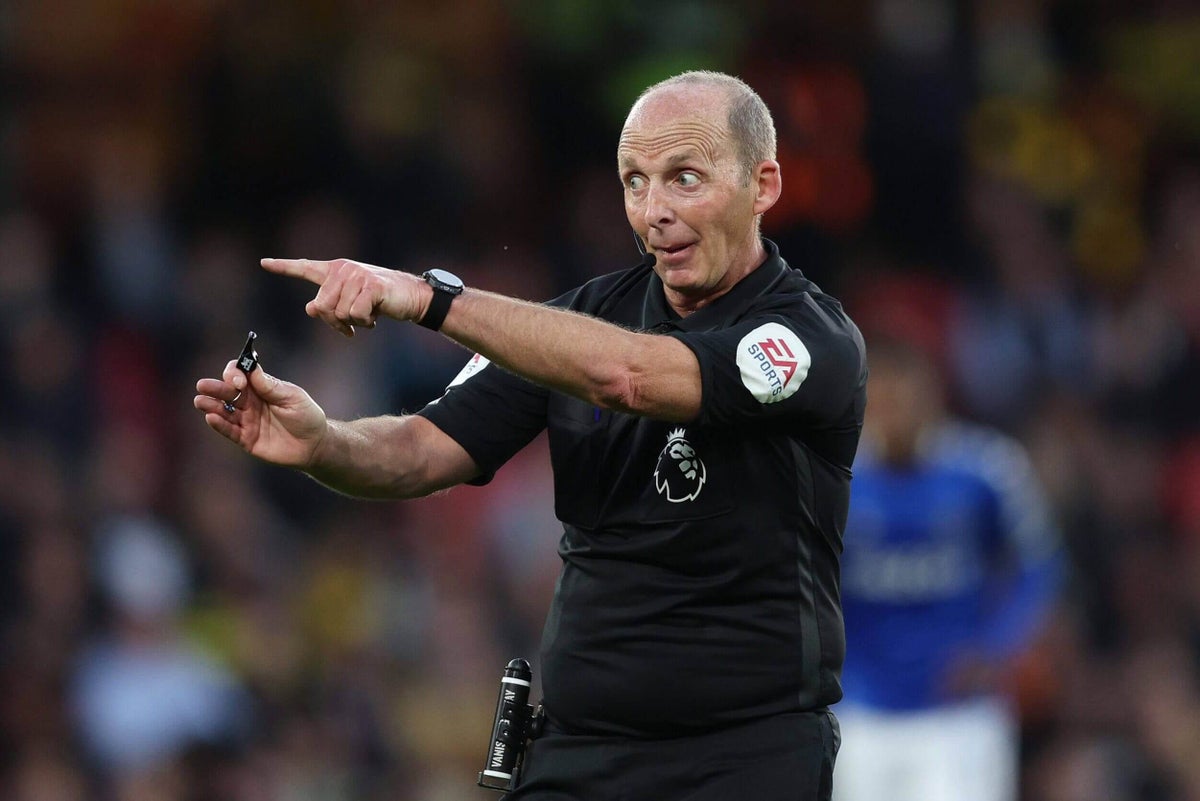
Most people appear to have made up their minds about Mike Dean.
As a referee, he was an arrogant showman who thought himself bigger than the matches he refereed. He wanted to make the game all about him.
This characterisation is understandable and unfair in equal measure, but it is hard to put forward a convincing case that Dean does not covet being the centre of attention when he pursues cheap laughs from footballers without a moment’s thought for the consequences.
In case you missed it, Dean claimed in an interview on a podcast fronted by Jamie Vardy that ‘we’ used to go as long as possible in at the start of a match without giving a free kick and that he would sometimes not leave the centre circle for minutes on end for a laugh. It’s an aside, but the use of ‘we’ grated, even if he was using the royal version as he dragged all the rest of us down with him.
It is impossible to prove a negative, so I cannot be certain that Dean did not do these things at some point during his 553 Premier League matches, but having known him for more than a decade and worked with him around 30 times, I am supremely confident that neither story is true, and that he has embellished both out of all recognition.
All refs have games from time to time that start slowly. Going 15 minutes without a free kick from the start of a match is unusual; 20 minutes is rare, but it happens.
Dean was the kind of ref who might notice and comment to his team about it. He might once have joked in the moment about seeing how long he could extend this anomaly, but there is no chance that he would have set out on this path before kick-off. Maybe he let a ‘soft’ free kick or two pass without whistling, but that would have been the extent of it. Wrong, yes, but let’s not get carried away.

Mike Dean refereed over 500 matches before retiring in 2022 (Adrian Dennis/AFP via Getty Images)
I reckon the centre circle anecdote would have had a similar genesis, as again, all referees occasionally have matches that get stuck in the middle third, meaning we rarely need to stray further afield. It is perfectly plausible that Dean’s irreverence once led him to tell his assistants that the centre circle had become such familiar territory that he would make it his home, and he may well have dallied there momentarily longer than he should. That’s all, folks.
My anger on hearing his interview has since dissipated into sorrow, as I knew the man and enjoyed his company. Our first proper encounter was in 2013, when I was an aspiring Football League referee. Surprisingly, he came across as insecure and shy — nothing like the persona one would expect given his demonstrative on-field style.
The occasion was an FA Cup tie at Southampton. As we gathered a few hours beforehand, he sank low in an armchair in the hotel lobby, sat quietly, and only joined the conversation when asked a direct question, to which there was always a direct answer. His physicality and personality were both much smaller than I had expected.
In public situations — ref meetings, pitches and podcast studios — there was a visual and verbal swagger that was there for all to see and hear. Whether or not this was a coping mechanism is for others with more psychological expertise than me to judge, but anyone watching or listening to him in action would be sure he revelled in the attention.
Fundamentally, Dean is a bright man with a quick wit who would be an entertaining chat-show guest or after-dinner speaker if he told the truth. He does not need to make up stories.
As a referee, he had an innate feel for what was expected in the moment, which worked well for him in the days before video reviews placed more emphasis on precision and consistency.
But for all his common sense on the field, he has shown precious little of it since retiring. Casual comments that harm former colleagues and employers do not disappear when the following day’s newspapers are thrown in the bin, yet hang around forever to cause untold damage to all referees’ reputations.
The clips in which he smirks about not leaving the centre circle or tries to keep a straight face while claiming that he decided to go as long as possible at the start of a match without blowing his whistle will be recycled for years.
There is every chance now that Dean will be remembered more for what he told former Leicester City striker Vardy in less than a minute to get a cheap laugh, than for a career spanning more than two decades during which he broke records, represented English football overseas with distinction, and refereed every major final.
I joined the Premier League list in 2015 and was bewildered by the culture that was permitted and therefore promoted. Plenty were indulged rather than managed, while those of us lower down the food chain were openly told that we had ‘non-speaking parts’ and should count ourselves lucky if we were given a Premier League game.
The refs were professional in some ways, shamelessly amateur in others. Some trained religiously, others occasionally. Mostly, they reffed on their wits and were good enough to get by on their experience, especially as the game was not as relentlessly fast and there was less scrutiny than today.
Thankfully, that culture has gone. Issues remain that a rebrand of PGMO into Pro Ref will not solve, but the direction of travel is better.
Coincidentally, Dean’s career on the pitch was over by the time the current chief refereeing officer, Howard Webb, took over. Webb has been known to overindulge Premier League clubs by being at their beck and call, but he does not indulge his refs. Everyone’s voice is valued, standards have risen on and off the field, and all matches are monitored and recorded in such a way that Dean would not have dared to try to play the class clown.
>
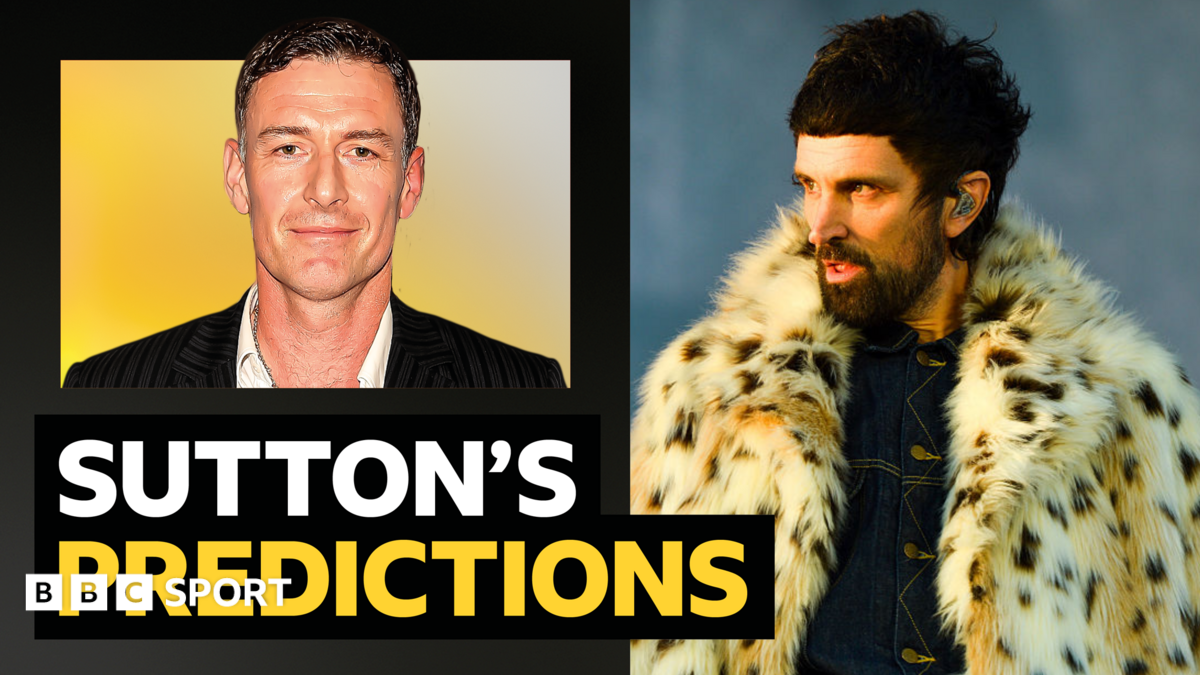
Chris picked up his first win of the season after getting seven correct results – including three exact scores – from the 10 matches in week two.
After a slow start, five of his correct results – and two of his exact scores – came in the five games on Sunday and Monday.
That gave him a total of 160 points, enough to hold off a strong challenge from the BBC readers and AI.
The collective efforts of the readers helped them get six correct results, with two exact scores, for 120 points.
Like Chris, AI managed seven correct results, but with only one exact score, leaving it on 100 points.
Chris’ guest, Royal Blood drummer Ben Thatcher, did not fare so well. He got four correct results with no exact scores, and ended up with 40 points.
“It’s not how you start the weekend, it’s how you finish it,” Sutton said. “I am burying AI at the moment, which is a lovely feeling.”
Everyone was right about three of the fixtures – Manchester City‘s win at Crystal Palace, Manchester United‘s victory over Ipswich and Arsenal‘s success at Aston Villa.
There were only two fixtures where none of our predictors picked the right outcome – Liverpool‘s draw with Nottingham Forest and Hull’s win at Coventry.
From almost 37,000 predictions for the latter, only around 5,000 (15%) of you backed the Tigers to take the three points, and fewer than 1,500 (4%) went for them to win by a 1-0 scoreline.
>
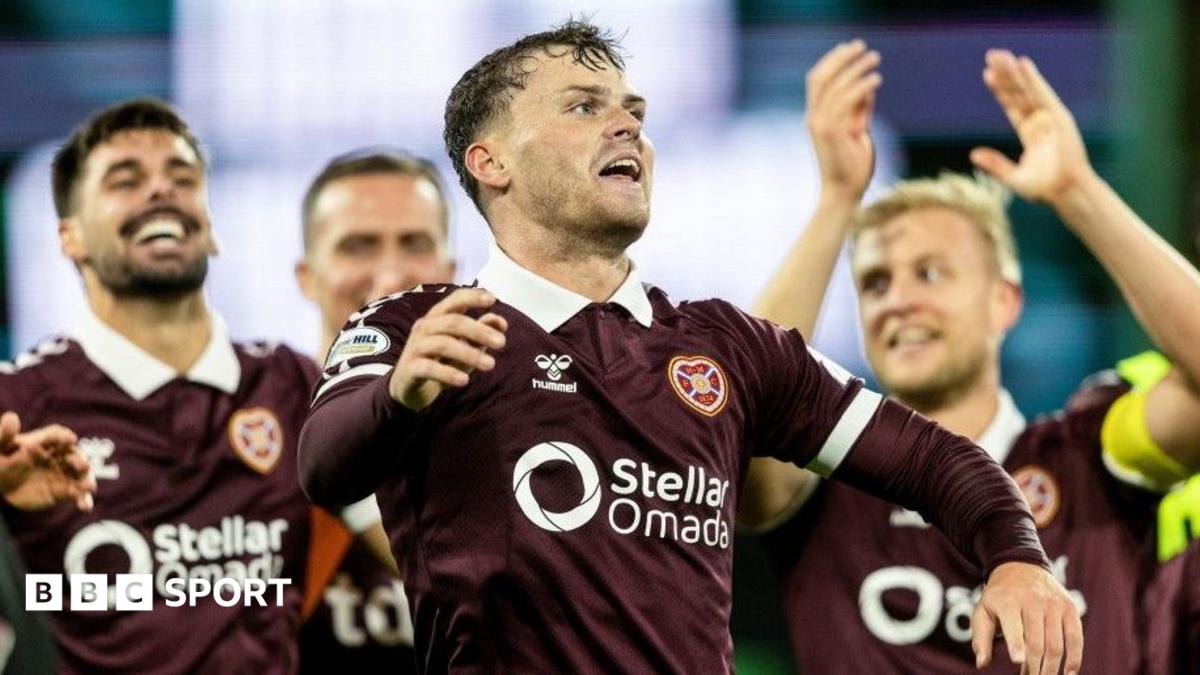
The talk of the toon are the boys in maroon, but the chat in all corners of the country is about McPake. He really is the man of the moment.
In eight games, he has registered two goals and four assists for an increasingly easy-on-the-eye Hearts side, who are emerging as contenders for the campaign’s great entertainers.
In the first 30 minutes at the home of their city rivals, they were magnificent. McPake – along with fellow Scotland hopeful Calvin Miller – was unplayable, hugging the touchline and leaving home full-back Felix Passlack for dust.
He destroyed the former Borussia Dortmund defender before teeing up James Wilson’s opener, with former Hearts striker Ryan Stevenson explaining that was the perfect example of how much of a handful he is.
“It is so hard for defenders when wingers play on the opposite side,” Stevenson said on Sportsound. “They always want to come on the inside, but he is happy to go on the outside and feint and go on his left side.
“One of his biggest attributes is you don’t know which way he will go.”
That was evident again when McPake took a stroll for his superb solo goal, one he was desperate for in his first derby.
“I thought we started the game really, really well,” McPake told BBC Sport Scotland. “Obviously, I got the assist in the first half, but I really, really wanted the goal.”
>

I worked with Mike Dean. He doesn’t need to embellish stories that harm referees’ reputations

Can a doughnut play up front? Ranking the 20 Premier League teams’ summer transfer windows

Premier League predictions: Chris Sutton v Kasabian frontman Serge Pizzorno – & AI
-

 movies3 months ago
Search For Canadian TV Actor Stewart McLean Now Homicide Investigation
-

 Fashion9 years ago
These ’90s fashion trends are making a comeback in 2017
-
Fashion9 years ago
According to Dior Couture, this taboo fashion accessory is back
-
Fashion9 years ago
Model Jocelyn Chew’s Instagram is the best vacation you’ve ever had
-
Fashion9 years ago
Emily Ratajkowski channels back-to-school style
-
Fashion9 years ago
9 Celebrities who have spoken out about being photoshopped
-

 Anime3 months ago
Rurouni Kenshin: Hokkaido Arc Manga Takes 1-Issue Break – News
-
Fashion9 years ago
Your comprehensive guide to this fall’s biggest trends