
Politics
The House Article | How Burnham Plans To Win Cross-Party Agreement On Social Care


9 min read
Andy Burnham says he’s prepared to spend political capital on social care reform. Matilda Martin reveals details of how he plans to go about it
Andy Burnham, say friends, runs towards problems, not away from them. In making social care reform a priority, the new Prime Minister is certainly doing that – he is charging straight at one of the most intractable issues in British politics.
Four previous efforts at reform in the last two decades have foundered. Public understanding of the issue is limited, indeed even experts can’t agree which of the series of interlocking problems is the most urgent. Is the main problem the ruinous consequences for some of having to pay catastrophically high care costs, usually in later life? Or that the creaking sector is a potentially fatal drag on the NHS? What about the huge skill shortages? Or the ever-increasing costs of caring for working-age disabled people now living long lives thanks to improved medicine?
The only point of agreement so far is that cutting this Gordian knot is going to require a very expensive knife. With no appetite for additional taxation, and borrowing levels already nudging the UK into the sights of bond vigilantes, it takes a bold leader to decide that this is the moment for another crack at social care reform.
Wes Streeting didn’t think it was worth an early fight. As health secretary he announced a National Care Service but then set a 10-year timeframe on defining what that meant.
Burnham has picked up the structure of that effort led by Louise Casey but wants to turbocharge the process.
Baroness Casey’s Independent Commission on Adult Social Care will now report a year earlier.
A ‘national conversation’ that seeks to engage voters has been launched, while at Westminster Burnham has initiated a fresh set of cross-party talks.
“There is a massive public job to be done to explain just how ungenerous and how unfair the current system is,” Sebastian Rees, a principal research fellow at the Institute For Public Policy Research, tells The House.
Rees believes this was a key barrier to Theresa May’s ill-fated proposals in 2017, branded as a “dementia tax”, which she was later forced to abandon. While Rees argues that May’s reforms were “relatively generous and relatively well thought through”, they ended up collapsing after her party failed to make the case to the public that the current approach was “disproportionate and unfair”.
“But if people don’t believe that to be true, then advocating for reform is very, very tricky.”
This plays out in the figures. Research by Ipsos published last year revealed that nearly one-third of the public mistakenly believe the NHS provides the majority of social care services for older people, with a similar figure incorrectly believing that social care is free at the point of need.
Labour MP Anna Dixon, who has spent the majority of her career so far working on the issue, agrees that the conversation needs to be approached from a different direction this time around: “This touches on so many people, and that’s the point that we keep failing to get across – that this is not something over there that affects a few people. Caring one way or another impacts us all, either at some point in our lives needing care, or giving care.”
Dixon tells The House that she hopes the groundwork being done now to build cross-party consensus will protect any progress that is made from party politics.
“I hope there will be a Labour government to see this through. But just making sure that there’s enough groundwork being done, enough consensus built, that if there were any change in government, that the progress wouldn’t be reversed and halted or put off as we’ve seen has happened before.”
Two sets of cross-party talks had already taken place with Casey under the Starmer administration. Liberal Democrat spokesperson Helen Morgan tells The House that while they were “broadly helpful”, she is not convinced that they moved the conversation forward, describing them as a “general talking shop”.
The House understands that there will now be quarterly cross-party talks for both health teams and leaders separately. The former will next meet after Parliament returns from conference recess in October, and party leaders will do so the following month. It is understood that Casey will attend the talks with the shadow health team, while Burnham will join the Baroness for the leader talks.
As Conservative health spokesperson at the time, Stuart Andrew attended the first cross-party talks on behalf of leader of the opposition Kemi Badenoch. Speaking to The House before he was shuffled out of his shadow cabinet role, Andrew – who almost lost his seat in 2017 over May’s “dementia tax” proposals – thought that the dual approach being taken would encourage real reflection, allowing leaders to bring key discussion points they have considered with their health teams between the meetings, sharpening the focus.
While the talks are well-intentioned, there will be concerns that leaks and briefings could lead to them quickly breaking down. Andrew insisted the wish of the health teams was that any talks would not be leaked, allowing them to take place without fear that ideas would appear in the headlines the following day.
Andrew argued that “outlandish ideas” can sometimes breed a feasible and workable solution.
But without the confidence to be frank and open in these discussions, he did not believe parties would be able to “really get into the weeds”.
There is a massive public job to be done to explain just how ungenerous and how unfair the current system is
The shadow health secretary was positive about Casey’s ability to manage the talks and move the dial, praising the peer for visiting the constituencies of each health spokesperson to talk about social care in their area. Andrew believed first principles for reform would be discussed once Casey returned to the health teams with more information gathered.
He said Casey was working with a big team, including many individuals she has worked with for years. While the peer has been visiting constituencies, Andrew said her people had been going further afield as part of their work on the commission.
Working closely with government on the talks could be seen as a real opportunity for the Liberal Democrats. But The House understands that there is concern within the party that people don’t see raising taxes as translating into better outcomes. Working in coalition with other parties has not, of course, ended well for the Lib Dems in the past.
Speaking to The House, Morgan says the party is open-minded but makes clear there are red lines. “We wouldn’t sign up to anything that we thought would be damaging in the future,” she says, clarifying that this would apply both to the party and the country.
Morgan says the Lib Dems will be approaching the talks with three tests: reforming the carers’ allowance; a universal safety net, including free personal care; and protection from catastrophic costs, so that people aren’t faced with having to sell their house to meet their care needs.
When the cross-party talks were announced in July, Reform UK was not included, and while the party voiced anger at its exclusion from the talks, arguably such a move by Burnham could suit it well.
While former MP and Tory defector Anne Marie Morris was brought onto Reform’s shadow team to carry out a social care review, she has now left her role. It is unclear how much progress, if any, was made on the area. The role of health spokesperson has also taken a back seat after David Bull took up a role at Talk TV and was made party chairman.
A source close to Reform tells The House that the party would be reluctant to touch the policy area due to the NHS attack line – one of the few levelled at the party that has stuck.
Louis O’Geran, external affairs manager at More in Common, also points to Reform tensions over the economy, an area over which the party’s voter base is split. He argues that the party “has to straddle this really awkward coalition when it comes to the economy, which is why on questions like this you tend to get split right down the middle on issues of taxation”.
Taxation is also a matter of contention for the Tories and one they made clear from the start.
Rees believes that cross-party talks can only take the country so far on the road to reform.
“The biggest barrier is some sort of consensus on the funding model and the approach to funding is ultimately the thing that always brings down social care reform, and it probably calls into question trying to do this through cross-party consensus,” he says.
“My retort, whenever I hear, ‘You need different parties on board for this’, is if you’d taken that approach with the foundation of the NHS, we never would have had an NHS because at some point it requires some political bravery.”
Another sticking point for Burnham is how this all fits with his ambitions for devolution, Rees argues. While the conversation around public services has been very much geared towards moving decision making out of Westminster, the tide when it comes to social care seems to be moving the other way.
“Where we’re going with social care reform looks quite centralising: we think it should be a universal entitlement, we think everyone should be supported more, and there should be some national standards. And it will be difficult to tease out how you negotiate some of those tensions and trade-offs.”
In his first major speech as Prime Minister, Burnham said the failure of past governments to grasp social care reform had been a “major dereliction of public duty”, adding that it was “shameful that politicians have put point-scoring before fixing this issue”.
Time will tell whether Burnham becomes yet another prime minister whose efforts to reform the system are resigned to a footnote in the history books.
>
Politics
Politics Home Article | MPs’ Staff “Struggling To Survive” With “Stagnating” Pay, Union Warns


(Jonathan Goldberg / Alamy)

4 min read
Parliamentary staffers are being squeezed by stagnating wages, damaging their mental health and forcing many to “cut back on essentials”, according to Unite.
A new survey by Unite’s Parliamentary Staff Branch found that 70 per cent of staff respondents reported having to dig into savings or use credit to cover everyday expenses in the last year. A total of 96 per cent said their financial situation was causing them stress and anxiety.
One MP’s staffer told Unite in their April 2026 survey that they “struggle to afford to eat, especially near the end of the month”, while others reported keeping their home heating switched off and taking cold showers to keep their bills down.
The Independent Parliamentary Standards Authority (IPSA), which allocates the budgets through which MPs pay their staff, insisted they “recognise the dedication” of staff and “continue to work closely with and respond positively to recommendations from unions”.
Unite’s survey was circulated to the office of every MP in Parliament, with 346 responses received from staff from every region and nation.
The survey found that staffers aged 18–24 have an estimated average salary of £32,229, compared with £39,676 among those aged 31–35. One staffer told Unite: “There is a complete lack of awareness of how difficult it is for younger people these days… little recognition of how low these salaries are in a time of high inflation and cost-of-living.”
Unite warned that low pay was having a “severe impact on work that staff are able to deliver”, and that there was also a “cost of high turnover to the public purse”, as MP employees seek better paid and less stressful jobs.
“Unpaid overtime is how offices keep going,” another staffer told the union. “We all do it, we do it because we care, but we do it because we have to as well, as so many of us are overwhelmed.”
According to Unite, an automatic pay uplift for MPs’ staff was successfully negotiated in 2021, but since then inflation when measured using RPI “has consistently outstripped the annual pay awards”. Unite claims that on average, MPs’ staff would now require a 10.57 per cent pay increase simply to restore the purchasing power of their salaries to 2021 levels.
Earlier this year, Unite’s Parliamentary Staff Branch overwhelmingly voted to reject a 3.5 per cent pay offer, but Ipsa refused to improve it. Ipsa points out that MPs employ their staff – not Ipsa – and Ipsa therefore does not have the power to set exactly how much they are paid.
Ipsa instead provides an automatic uplift to MPs’ staff pay, unless an MP opts out from it, though MPs can also choose to award higher increases if their staff budget – set by Ipsa – allows.
Staff were angry that MPs were themselves awarded a higher pay increase of five per cent, with one staffer telling Unite: “It is not the MP answering the phone to angry constituents, it’s not the MP sitting in the constituency office all day where people may drop round unannounced and it’s not the MP managing huge levels of casework and correspondence.
“Our pay is no longer reflective of the difficulties and pressures experienced by those of us in public facing roles.”
Fintan McDonnell, vice chair of the Unite Parliamentary Staff Branch, said the union’s survey “should shame Parliament into action”, adding: “Behind every constituency office and parliamentary office are workers who keep our democracy functioning and support constituents through some of the most difficult moments of their lives. Yet many of those workers are now struggling to survive themselves.”
Responding to Unite’s findings, an Ipsa spokesperson told PoliticsHome: “We recognise the dedication of MPs and their staff, and continue to work closely with and respond positively to recommendations from unions, the Wellness Working Group, and other staff representative bodies to ensure we understand how we can best-support the people who work in MPs’ offices.
“We have recently consulted on the framework for setting MPs’ budgets, seeking feedback on the principles which should guide our decisions. The feedback we have received will be considered as we put together MPs’ budgets for the next financial year.”
They added: “We have also received feedback from some offices about the impact of rising and increasingly complex casework, alongside safety and security concerns, on the wellbeing of MPs’ staff. In response we have introduced additional, dedicated funding to support those offices facing particular pressures, alongside a ring-fenced training and wellbeing budget.
“We also have a separate budget which funds workplace adjustments for MPs’ staff in constituencies, as well as for MPs, volunteers, job applicants, or constituents visiting offices or surgeries.
“Ipsa’s role is to balance the resources MPs and their staff need with public confidence in how those resources are used.”
>

Illustrations by Tracy Worrall

17 min read
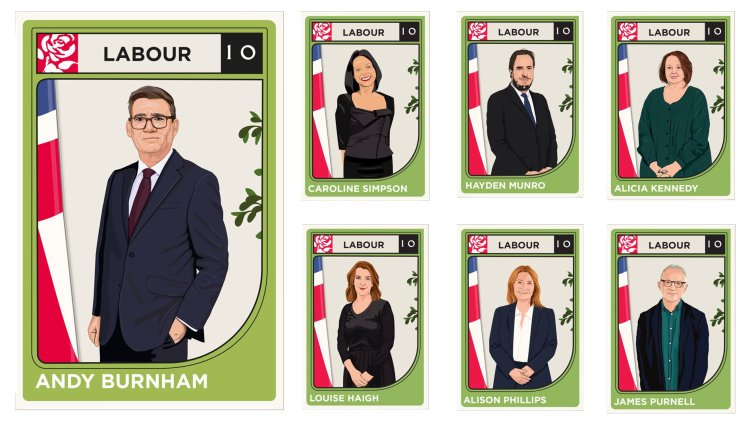
Andy Burnham’s backroom is taking shape. Sienna Rodgers gives a rundown of which movers and shakers in Labour politics have been appointed to the new No 10
It was not just that Sir Keir Starmer was fundamentally unsuited to the role of prime minister, say many senior people behind the scenes in Labour, but that his No 10 did not function properly – and indeed that the centre of government had not been working for some time.
The new Prime Minister thus began his tenure with major machinery of government changes, creating ‘the Office of the Prime Minister and Cabinet’ to assert authority over the Cabinet Office. This was a much-needed reform in the eyes of many including the Institute for Government, though the think tank is concerned it did not go far enough given that the Cabinet Office “lives on, in a hollowed-out form”.
Under Burnham, the top task now for the Cabinet Office is said to be answering the question: how can it be set up so that it has a clear purpose and delivers on the Prime Minister’s priorities? To this end, First Secretary of State Louise Haigh is “reconfiguring” the Cabinet Office and has established task forces on the cost of living; stronger public control of essentials; and communities and place. All three cross-cutting priorities are vitally important to Burnham and the reforms are being sold as a “gamechanger”.
Alongside empowering No 10 in Downing Street, Burnham has – to much fanfare – set up an outpost in Manchester, ‘No 10 North’, which has symbolic value but will also need to deliver clear results for his devolution agenda. A No 10 source says the arrangement has worked better than expected, with Burnham making it clear that No 10 North “can’t be a gimmick” and must genuinely change how the country is run. He has been working there at least one day a week, as promised, and takes every opportunity to emphasise the priority he places on No 10 North, driving through his agenda on putting power in the hands of communities. “He doesn’t want it to be an office where officials and spads are doing what’s always been done before. He wants it to be transformational and different,” says a source.
The fear that No 10 North could duplicate the work of Downing Street has not been borne out, say insiders, because North has a new and different remit, focused on devolution and acting as a front door for local leaders around the country. Whether tensions arise in future between No 10 North and the Ministry of Housing, Communities and Local Government (MHCLG) remains to be seen. For now, No 10 sources stress that their Manchester branch is helping to navigate relationships, taking away the burden of linking up local authorities with the Treasury for example, and that No 10 North makes it easier for MHCLG to focus on its own work.
Over the summer, No 10’s ranks have swelled. One impressed Starmer-era official says the appointments represent “a step change in the calibre and experience of the new people”, though adds: “They need to show some of the retained the door.” The reaction to the hires from within Labour has been overwhelmingly positive. “They’re rewarding experience and skill within specific areas,” says an insider. “These are people with really strong reputations in the fields they’re now leading.”
No 10
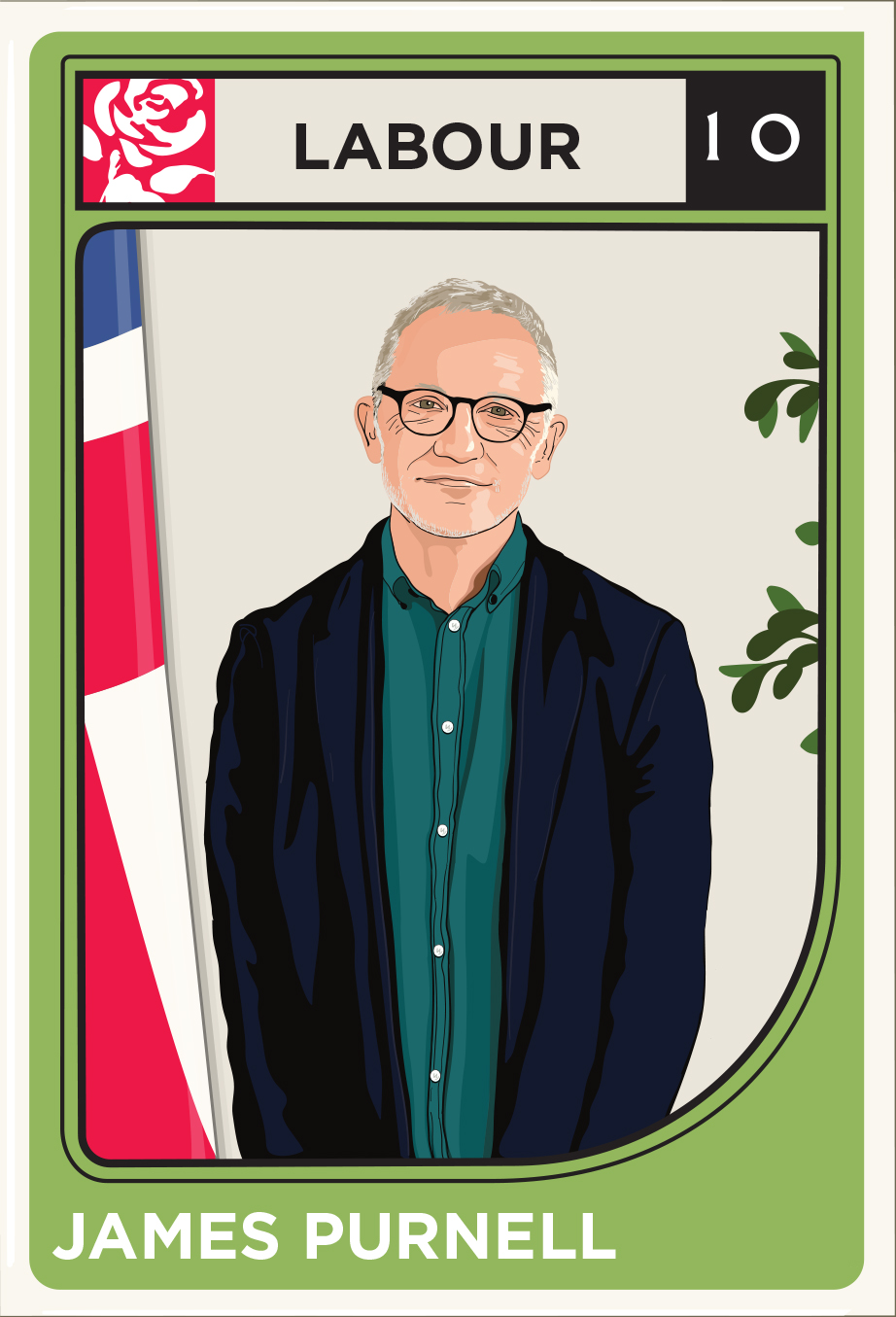
James Purnell – chief of staff
A close friend of Burnham, this 56-year-old former Blairite minister was chosen by the new Prime Minister to head his Downing Street operation. James Purnell is probably best-known for quitting the Cabinet in 2009 as part of a failed bid to overthrow Gordon Brown as PM (an effort in which Burnham refused to partake).
 Purnell has experience of working in No 10, having worked as a spad there from 1997 to 2001.
He was then picked as a parliamentary candidate and became the Labour MP for Stalybridge and Hyde in 2001 – the same intake as Burnham. He went on to be culture and later work and pensions secretary.
As a privately educated southerner, who graduated from Oxford with a first-class PPE degree before serving as an Islington councillor, on paper Purnell may not be the clearest embodiment of Burnham’s agenda. But the two men have a shared history as spads under Tony Blair, flatmates, football teammates (the amateur ‘Demon Eyes’ team in the 90s) and occupants of the same parliamentary office as MPs.
Head North, the part-memoir, part-manifesto Burnham co-wrote with Steve Rotheram, includes an acknowledgement to Purnell – “for believing in me and seeing things others didn’t”. Burnham also recalls how his friend, “one of the clearest political thinkers I have ever met”, was instrumental in persuading him to stand for Parliament the first time.
A former Institute For Public Policy Research (IPPR) think tank chair and director of the BBC, where one of his roles was to argue for the corporation’s continued existence, Purnell is regarded as a strategist with managerial experience who also has the benefit of understanding government from both the perspective of a spad and a secretary of state.
Those more sceptical of his appointment, which include figures on the Labour left, express concern over his more recent work as chief executive of lobbying firm Flint Global. Its clients have included Thames Water, BP, Apple and Amazon. Burnham’s team has said Purnell will have no ongoing financial interest in the company and future conflicts of interest would be managed appropriately.
Critics have also pointed to his closeness to Starmer’s short-lived comms director Tim Allan as evidence the new chief of staff does not represent a clear enough break from the last leadership. Allan attended Guildford Grammar alongside Purnell (as well as Liz Lloyd, now a peer and minister) and was best man at his wedding.
Purnell’s own politics have been described as “Blue meets New”: Blairism combined with the Blue Labour tradition that emphasises communitarianism and civic duty.
Alison Phillips – deputy chief of staff
As transition director during Burnham’s leadership campaign (the PM’s allies insist there was one even if nobody noticed it), Alison Phillips, 56, then took up that same role in No 10 and was picked to be Purnell’s deputy too.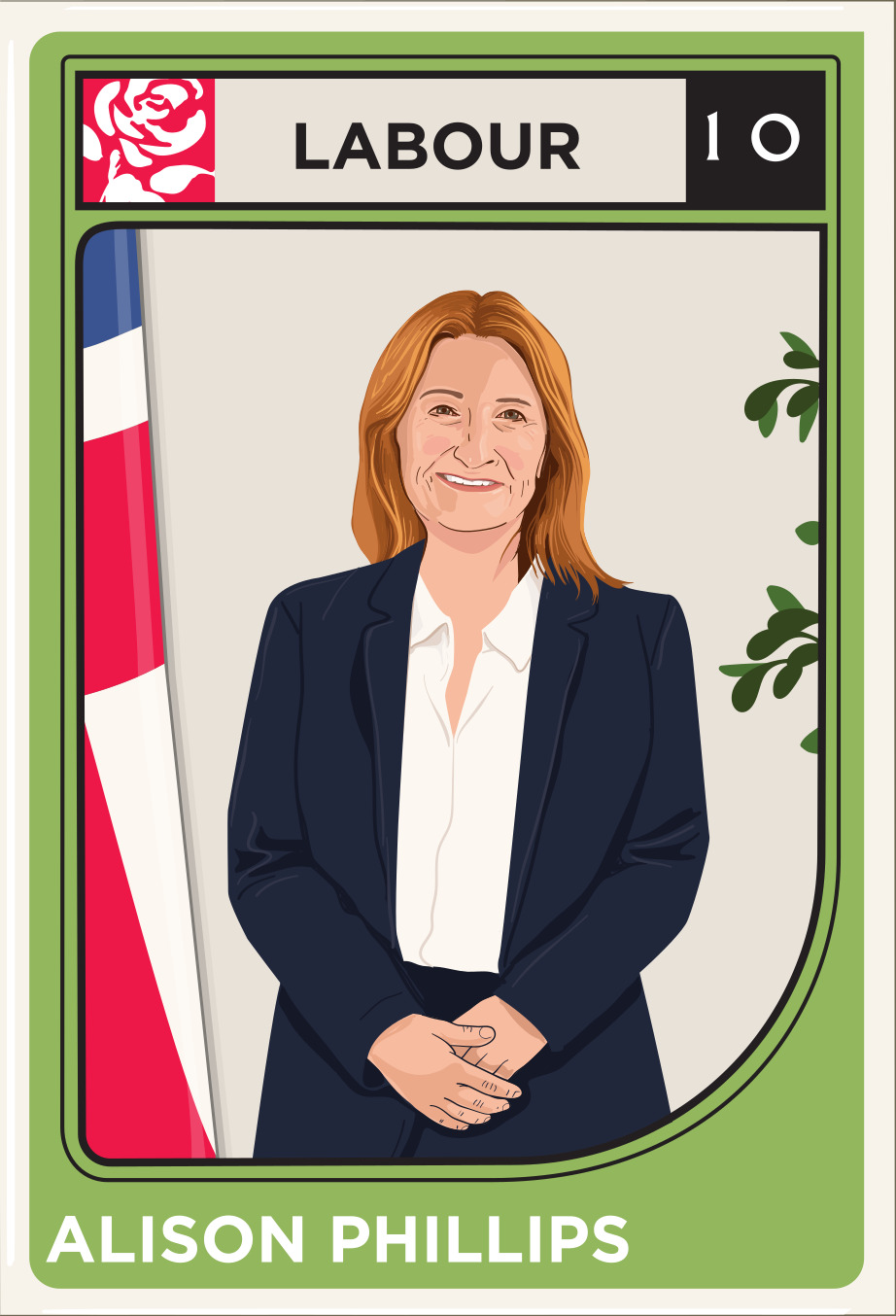
Essex-born Phillips was always a journalist, climbing the ranks from local newspapers to national tabloids, until she stepped down as editor-in-chief of the Daily Mirror in 2024. She soon replaced ex-MP Jonathan Ashworth as chief executive of the Labour Together think tank, which was rebranded as ThinkLabour under her leadership. She steered the organisation through the scandal that revealed Phillips’ predecessor Josh Simons had commissioned PR firm Apco to compile a dossier investigating journalists who had reported on the group’s undeclared donations. It led to Simons resigning as a minister before later quitting as an MP altogether to allow Burnham to stand for Parliament.
When confirming Phillips’ appointment to No 10, a source suggested the way she navigated Labour Together through the tumultuous period and turned it around was seen as a key selling point, saying: “She has led large and complex organisations, delivering results and overseeing cultural change.”
She has been commended already for engaging well with stakeholders and being unflappable amid the sometimes-chaotic start to the new government. The calm demeanour shared by Phillips and Hayden Munro (see next page) is thought to balance out Burnham’s own bouncy energy.
The highly regarded Emma Norris of the Institute for Government took a temporary spad role helping Phillips with the transition and is thought likely to be kept on. Parna Taylor, who was an aide to Purnell back when he was an MP, is also working with Phillips; she is director of leadership and talent, looking at spad appointments across government.
Politics
Matthew McGregor – director of political strategy
In what was taken as an encouraging sign by the left of Burnham’s camp, the chief executive of political activism organisation 38 Degrees was picked to head up political strategy. The not-for-profit, which he led for five years, runs campaigns such as demanding the government “get Palantir out of our NHS” and bring Thames Water into public ownership.
Matthew McGregor, 47, is also a former director of campaigns and communications for Hope Not Hate. The anti-fascism advocacy group is lauded by the left for its work infiltrating and exposing far-right activities, while being criticised by those on the right who argue that its output is itself divisive. (Phillips was also briefly a director, appointed in 2025.)
On entering Downing Street, McGregor has stepped down from his trustee roles at IPPR think tank and human rights charity Reprieve. The Conservatives criticised the latter on the basis Reprieve has opposed citizenship-stripping from people such as Shamima Begum.
McGregor is well-liked in Labour circles. One Labour source outside of Burnham’s team welcomed the hire, taking it as “a signal that things will change”.
The new head of political strategy has worked on elections in Britain and overseas, including Barack Obama’s 2012 campaign.
“I think he will help Labour’s chances at the next election,” the same source adds. “He is analytical but in a very human way. Lots of international political knowledge, not just UK and US. He has strong values and ethics without ever being pious. They drive him. He is kind and decent and very hard-working. And funny.”
Hayden Munro – political director
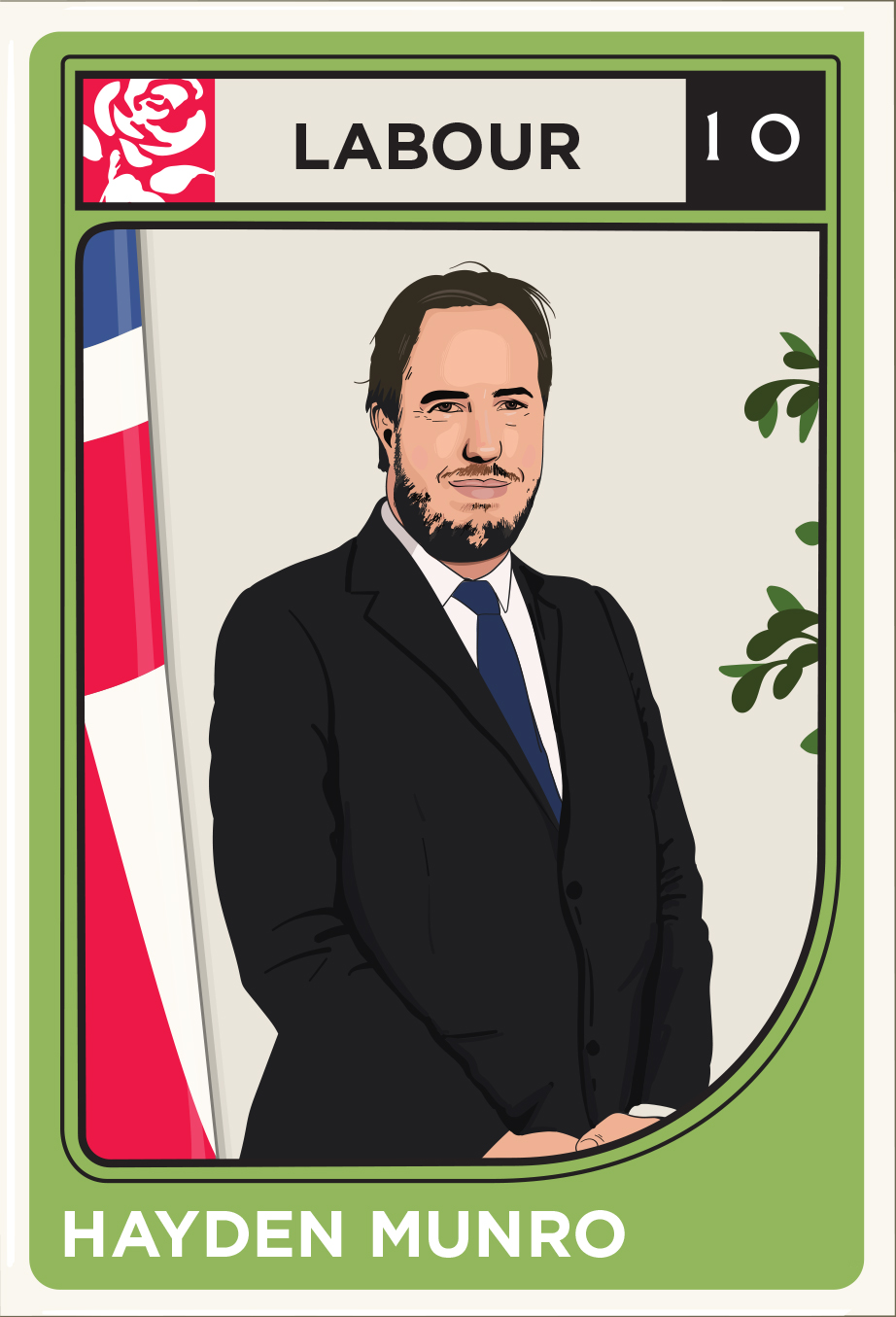 After co-ordinating the Burnham leadership campaign, Hayden Munro, 37, was given the big No 10 job of political director. Like Purnell, he comes directly from a lobbying firm – Arden Strategies, owned by former MP and Scottish Labour leader Jim Murphy.
Before moving to London two years ago, the Kiwi strategist worked as campaign director for New Zealand Labour PM Jacinda Ardern in the 2020 effort that saw her win a landslide victory.
Munro has quickly gained a reputation among Burnham allies for being “strategic, calm and tight-lipped”, as one source put it. A key weakness is that he does not have the depth of knowledge about the UK party usually expected of a political director, which means the team underneath him will need to be able to fill that knowledge gap.
The House hears he has been making diligent efforts to gen up quickly by talking to well-versed Labour insiders, however. He has also made a positive early impression on the unions.
Luke Sullivan – spad to the PM and chief of staff to the chief whip
It was a surprise to many when Starmer’s political director in opposition, Luke Sullivan, was not brought into his government and in 2024 he headed to the private sector instead, working in public affairs at Headland. He has now been brought back into the fold by Burnham, performing a dual role that stretches across both No 10’s political team and the whips’ office, working under new chief whip Anneliese Midgley. Previously a spad to chief whip Nick Brown under Gordon Brown, Sullivan is popular and seen as experienced.
Danny Coyne has joined Burnham’s No 10 as Munro’s deputy in the political team, leading on work related to the Parliamentary Labour Party. A former political adviser to Louise Haigh, he moved to advise Sue (now Baroness) Gray as Starmer’s chief of staff and subsequently spadded for John Healey and Angela Rayner in government.
Harjeet Sahota has become a No 10 spad, after working in the Department for Culture, Media and Sport in spad and chief of staff jobs, following a job managing stakeholders for Starmer in opposition. And Kate Robson, previously of MHCLG under Angela Rayner and Steve Reed, has secured a No 10 job liaising with mayors, taking over from Starmer’s director of local government and devolution Pete Robbins.
Cerys Way – director of trade union engagement
Claire Stewart, who came from Unison and was close to its previous general secretary Christina McAnea, left as No 10’s trade union whisperer earlier this year. Under Burnham, the post has been filled by Cerys Way. She hails from the small Labour-affiliated train drivers’ union Aslef, where she was political adviser, and previously worked as a GMB regional political officer.
Aslef was sorry to lose Way, who has made the jump to government despite having a job for life at the union if she had wanted to stay. She is widely known as an effective operator and is praised by a former colleague as “non-factional” in her dealings with all unions. A different union source reports that she is active in LGBTQ politics, “loathes misogynists” and plays in a rock band.
The unions are hopeful that Way’s appointment signals a major shift in approach from No 10 towards them, after Starmer’s hands-off style. “The vibe has been entirely different since Andy came in,” says a cheerful union official. “We’re not going to get everything we want, but we now have someone in No 10 who will listen to us and might even pick up the phone every so often.” They are delighted with the reset instigated by Munro.
Policy
Graeme Cooke – head of No 10 policy unit
A holdover from Starmer’s No 10, Graeme Cooke has been promoted from policy adviser to leading the policy unit. He is another IPPR alumnus, a former senior staffer at the Joseph Rowntree Foundation and two London councils, and a close friend of Purnell, having advised him back when he was work and pensions secretary. The pair are regarded as intellectual allies.
Cooke is popular with the Blue Labour crowd, and he and Purnell acknowledged Maurice Glasman’s influence on their thinking in a 2010 paper for Demos think tank. Their joint introduction, which invoked RH Tawney, Amartya Sen and father of community organising Saul Alinsky, argued for ‘reciprocism’, including contribution-based welfare. It specifically backed an elected Upper Chamber, public funding for political parties and self-governance in areas such as schools.
Harvey Redgrave, another Blue Labour-linked adviser, has stepped down as head of the policy unit under Starmer to take up a spad role focused on state reform, security, migration and crime.
Nathan Yeowell is the former director of Progressive Britain and founder of the Future Governance Forum, the think tank that recommended machinery of government changes worked on by Purnell and taken up by Burnham. He is working across No 10 North and South, though currently based in Wales, where he is a Labour councillor.
Isabel Abbs, who was a No 10 health spad under Starmer, has been lost to Yvette Cooper’s team where she will work alongside Damian McBride.
The policy team has a fair amount of continuity for now, with Burnham hires slower to get going here. Jonathan Powell has remained in post as national security adviser and Henna Shah has stayed as foreign policy spad assisting him.
Comms
Sarah Brown – director of communications
Moving from City Hall, where for five years she has been directing comms and strategy for Sadiq Khan, Sarah Brown has been hired to lead Burnham’s comms in No 10. Her role has been changed from the equivalent under Starmer: it is now integrated, which means social, digital, press, news, media and strategic comms have all been pulled together under one person, with senior staff leading on each area under Brown.
Before joining Khan, initially in 2016 as deputy mayoral comms director, she was a Labour Party press officer. Brown is responsive and well-liked by colleagues and journalists alike.
Grace Pritchard – director of news and the PM’s spokesperson
Previously a junior spad in Ed Miliband’s Desnz, Grace Pritchard left such a positive impression when she was seconded to work on Burnham’s by-election campaign that she has made a quick rise to become one of the most senior comms people in No 10. She started her career as a journalist before working at anti-Brexit group Best for Britain and then the Labour Party, followed by Yvette Cooper’s office.
Downing Street press secretary John Stevens, formerly of the Mirror and Mail, and head of broadcast Calum Masters have been held over from Starmer’s No 10. Abby Tomlinson of ‘Milifandom’ fame, who has spent recent years working for the party and then No 10, is also in Brown’s team; she has been promoted to deputy director of digital and head of content.
At the time of writing, No 10 is in the process of hiring a head of strategic comms to work under Brown and a briefing spad, and there is no news yet on whether they will be getting in a chief speechwriter (Burnham has mostly been writing his own).
Over in the business team, Varun Chandra has stayed as chief business adviser to the Prime Minister, despite one source describing him as the “least Andy person you’ll meet”.
Elsewhere, Anna Wright has been hired to manage events and visits, looking at how to use Burnham’s time outside of the office and the politics of those engagements. And former Home Office official Joy Johnston, who was Starmer’s spad for faith, communities and civil society, is now director of the Prime Minister’s partnerships unit.
No 10 North
Caroline Simpson – deputy chief of staff
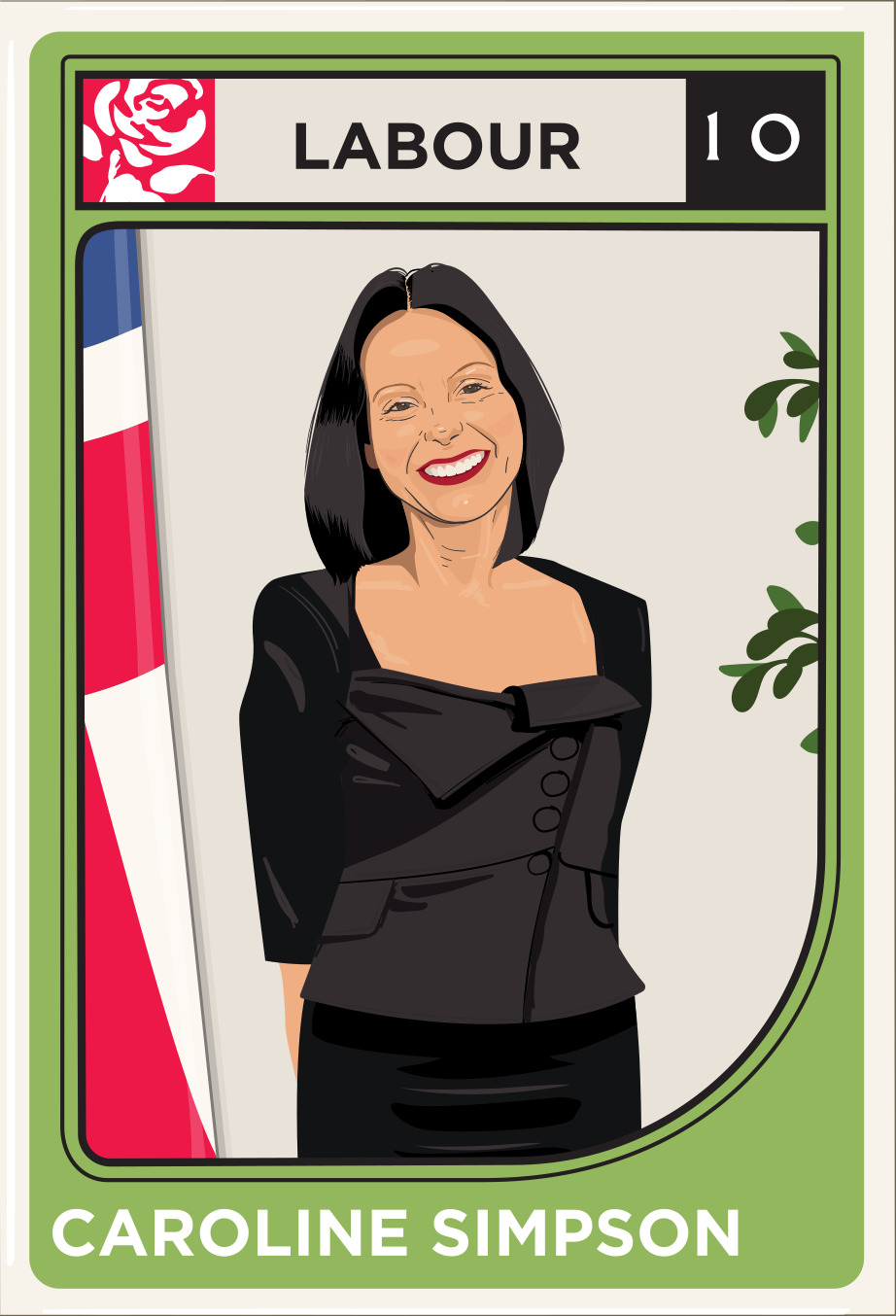 Leaving her role as chief executive of Greater Manchester Combined Authority to head up No 10 North is Caroline Simpson, a career civil servant in local government and Burnham’s “right-hand woman”.
Simpson, 54, has the tricky task of making a success of the No 10 North project. Its work must be co-ordinated with No 10 South, Whitehall departments and mayoral authorities to avoid duplication and function cohesively, all in the pursuit of devolving power in Britain.
A staffer described Simpson to the Times as “smiley and personable and a competent bureaucrat”, though added that “some wonder if she’s good at standing up to [Burnham]”, while Manchester property developer Tim Heatley called her a “tough negotiator”.
Kate Groucutt, the former deputy leader of St Helens council who was active on Burnham’s Makerfield campaign, has secured a No 10 role linking up North and South. She is the wife of Conor McGinn, the ex-MP charged with sexual assault earlier this year who has pleaded not guilty and awaits trial.
Burnham’s longtime friend and mayoral chief of staff Kevin Lee is, naturally, a spad in No 10 North. Tom Whitney, who advised Burnham and Steve Rotheram before going to the Department for Transport, is working as a spad between North and South. JP Spencer, previously leading on devolution at ThinkLabour and subsequently The Productivity Institute at the University of Manchester, also has a spad role across the policy unit and No 10 North.
First Secretary of State, Chancellor of the Duchy of Lancaster and minister for the Cabinet Office Louise Haigh also has a role overseeing No 10’s work. She has quickly put her own team together.
Alicia Kennedy – chief of staff to Louise Haigh
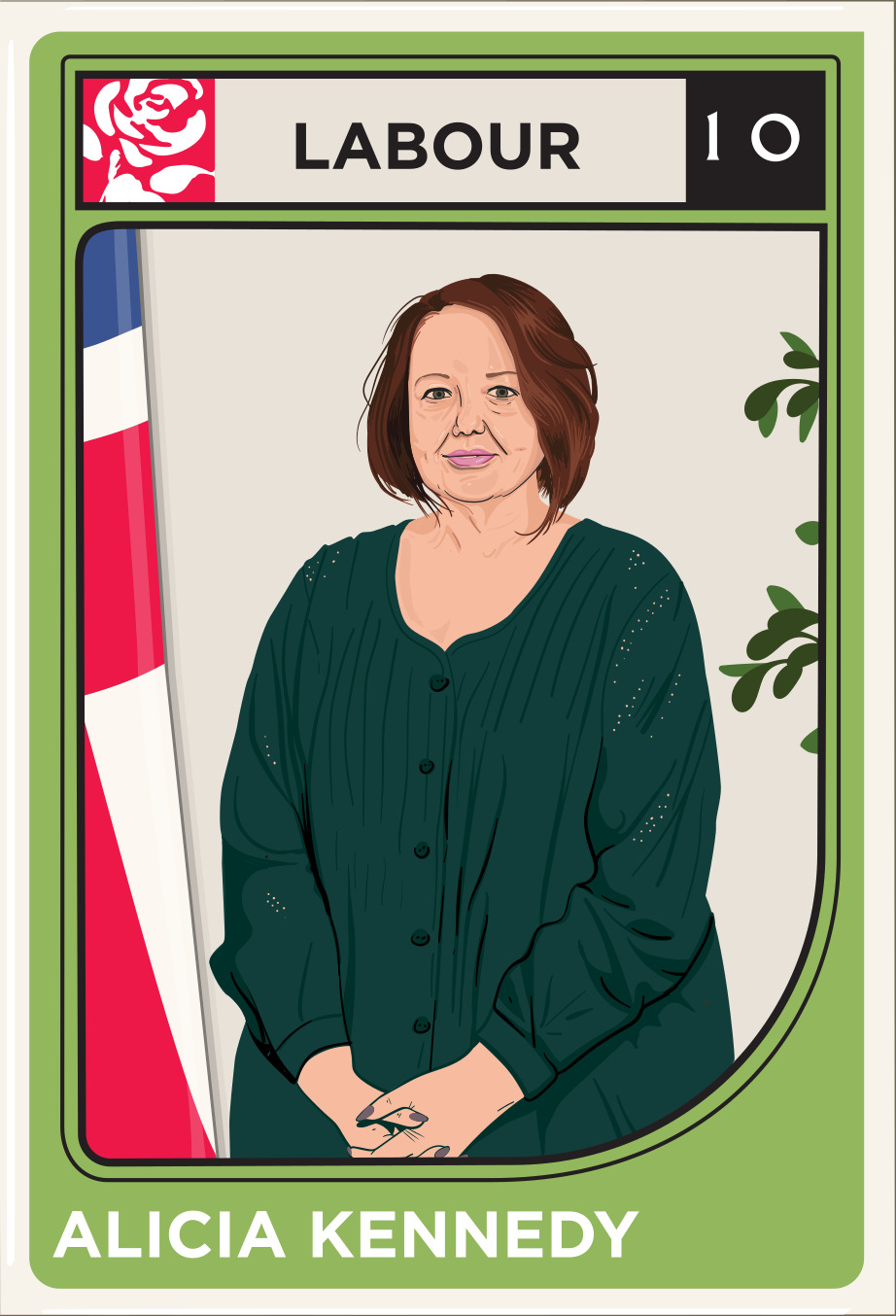 Veteran Labour staffer Alicia Kennedy, a former deputy general secretary and adviser to Ed Miliband, established her status as a renowned ‘fixer’ during her time serving Tom Watson as chief of staff. In 2013 she became Baroness Kennedy and was non-affiliated for a period while working as director of Generation Rent UK. Her husband Roy Kennedy is Labour chief whip in the Lords.
Kennedy and Haigh are “not natural political allies”, one Labour insider notes. But a source close to Haigh insists they work together very well, both being stalwarts of the labour movement, and says Kennedy’s wealth of experience makes her appointment a savvy one. Certainly, the hire of such a well-connected figure has been taken as a sign that the de facto deputy PM is intent on being ultra-effective in government – and ruthless. The dynamic between Haigh and deputy leader Lucy Powell is one to watch.
Returning to the Labour fold is Luke Francis, the former Lisa Nandy adviser and Sadiq Khan mayoral campaign aide who was by Burnham’s side throughout the Makerfield campaign and afterwards. After a stint at comms firms Concilio and Pagefield, he is Haigh’s comms spad.
Former Unite the Union and City Hall official Jenny Killin, who was also integral to the Makerfield by-election, is returning to Haigh’s team, having worked for her at DfT. Other Haigh spads include Maria Herron, who was with Nick Thomas-Symonds at the Cabinet Office, and Neil Foster, the GMB officer who joined Rachel Reeves in the Treasury, and Nick Williams, the former infrastructure spad who left Starmer’s No 10 following a spat with Morgan McSweeney.
>
Politics
The House | Malcolm Offord: Scotland Can’t Afford Free University For Half Of School Leavers

(PA Images/Alamy)
11 min read
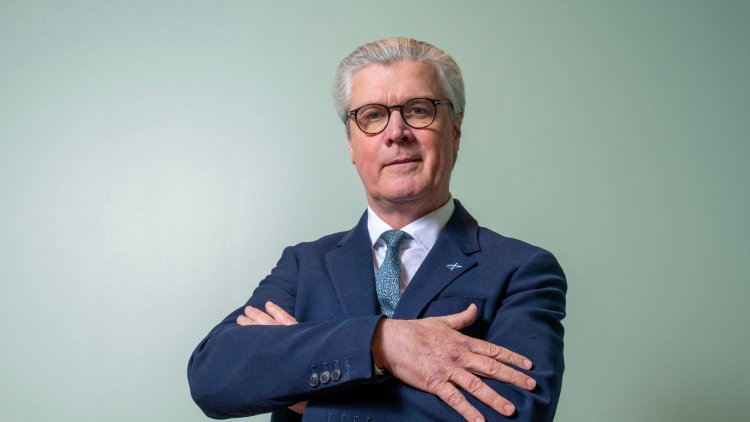
Reform’s Scottish leader, Malcolm Offord, talks to Noah Vickers about his political journey, how to tackle climate change, and why his nation may have to limit free prescriptions and university places
Malcolm Offord has been having a wonderful summer. When he speaks to The House, the multi-millionaire leader of Reform UK Scotland has recently returned from Cowes Week on the Isle of Wight – where he keeps one of his six homes and where he raced one of his six boats, Braveheart.
“We did fine,” says the 62-year-old MSP for West Scotland. “We were up against a very competitive class but, that’s good, that’s what you want.”
Offord enjoyed this “tremendous occasion” – the regatta’s 200th anniversary – while Holyrood is on summer recess.
“I’ve got a bit of a break and obviously beautiful weather. Global warming is good for Scotland,” he cheerfully declares. The House promises to return to that claim, but first asks about his political history.
The former peer is one among several ex-Tories over the last couple of years to have jumped ship to Reform. As a minister under Boris Johnson, Liz Truss and Rishi Sunak, he served first in the Scotland Office and later as minister for exports in the Department for Business and Trade (DBT), as it then was.
Offord, who made his wealth in asset management and private equity, had also donated almost £150,000 to the Conservatives prior to being made a peer by Johnson. Was it difficult leaving a party to which he had devoted so much?
“Of course it was difficult, but I’m not a tribal Tory,” he says. “I’d donated to the party for 15 years before I was ever a member… I only joined the Conservative Party in 2020 and went into the government in 2021.”
Offord remains proud of his time in that government, the record of which has been attacked relentlessly by his new party. He insists that both his departments “did a good job”, as Alister Jack and Kemi Badenoch were “exceptional” secretaries of state.
Under Badenoch’s leadership, DBT was “probably the only department in Whitehall which tried to make a success of Brexit”, he claims. Does Offord still find her an impressive politician?
“Oh, very. I supported her as leader for the Conservative Party,” he says, adding that she and her husband Hamish are “a very strong political couple”.
While Reform leader Nigel Farage has mocked her performance as a politician, Offord praises Badenoch for sticking with her principles.
“Kemi is a visceral conservative,” he says. “If you ask her a question, Kemi will tell you what she thinks, rather than what you want to hear. That’s not the issue. The issue is that no one’s listening to the Conservative Party – nor can they or should they.”
Offord began to lose heart with the Tories after Badenoch appointed him shadow energy minister. In this role, he says he was “shocked” to discover how little parliamentary debate there had been when Theresa May’s administration passed the Climate Change Act, which legally enshrined the UK’s 2050 net-zero target – an “extraordinary act of self harm, where our energy prices are now four times more than America”.
The Scottish Conservatives, he argues, had meanwhile become a one-policy party with little to offer beyond their staunch opposition to Scottish independence.
But the MSP reveals it was East Wiltshire MP Danny Kruger, rather than Farage, who ultimately convinced him to defect in December 2025.
“He’s a philosopher, and we need philosophers in politics. He’s a deep thinker and he is a tribal Tory,” says Offord of Kruger. “The fact he felt cast adrift told me there was something wrong.”
Offord now leads a 17-strong group of Reform MSPs, tied with Labour as the joint-largest opposition to John Swinney’s minority SNP government.
It was an impressive performance in May’s election, but nonetheless followed the trend of Farage’s political outfits – be they Ukip, the Brexit Party or Reform – doing noticeably less well in Scotland than in England or Wales. Does Reform have more work to do in showing Scottish voters it is not just a party of middle and deprived England?
“For sure. That’s absolutely my challenge. I take that head on,” he says. “Over the next five years, I have to demonstrate Reform Scotland has its own voice.”
The Scottish party, he stresses, has “autonomy over our devolved matters” and will take policy decisions on the basis of whether they benefit Scotland specifically.
“We’ve got ourselves in a mess over the last 25 years with so much liberalism, so much progressivism, that we’ve lost our way as a country,” he says of Scotland and the UK more widely.
Yet there are some progressive policies in Scotland about which Reform’s Holyrood manifesto had little to say. One of them is university tuition fees.
Scottish students continue to enjoy free university courses north of the border, subsidised by Holyrood to the tune of roughly £900m per year, while English students take on loans. Would a Scottish Reform government maintain that unequal status quo?
Offord suggests there are advantages to England’s model, as there is more incentive on students to think carefully about whether their course will help them get a well-paid career.
The MSP, who studied law at Edinburgh, says “a lot” of Scottish students nowadays are completing “meaningless degrees” rather than vocational or technical qualifications that would be a better use of their time.
“The difference between England and Scotland is that, in England, it’s the marketplace that is now making this decision for young people, who are now saying, ‘This is not worth the money’.”
In 2024/25, about 42 per cent of Scottish school leavers went on to university, while 26 per cent went into further education and 22 per cent straight into employment.
Offord stresses that his “instinct” is to “hold on to as much free education as possible” in Scotland, but says Holyrood should narrow the number of free university places it funds.
“We can afford maybe to pay for 20 per cent of kids to go to university – maybe – but not 50 per cent. Maybe that’s the way to do it. Maybe we should be saying to people, ‘You should be going to [vocational] colleges and getting better jobs at the end of it’.”
Prescription charges, abolished in Scotland since 2011, are another point of difference with England on which Reform’s manifesto was silent.
Offord faced questions during his Holyrood campaign, however, over a 2025 Centre for Policy
Studies report he edited and co-authored, which called for a “dialogue” with the Scottish public “about the acceptability of user charges for some [healthcare] services up to an annual ceiling, as in Sweden and Germany, and the removal of free prescriptions for certain categories of medication, e.g. over-the-counter pain relief medicines, given the increasing annual cost associated with prescriptions for these medications”.
“It’s our job to reinvigorate Scots… They’re scunnered and fed up”
Asked whether he is still calling for that dialogue, the MSP points out that in England 89 per cent of prescriptions are dispensed free of charge to exempted groups like the elderly.
Regarding Scotland’s policy, he says: “Those who need them most will always be looked after, but perhaps [for] those who don’t need free prescriptions [we] might need to look again, I don’t know.
“To me, it’s something we should talk about with the medical profession, as a complete review of our health system.”
The House soon returns to net-zero, where Offord has been on something of a journey.
“Some say that the UK has a limited role to play in climate change as we account for only one per cent of world emissions,” he said in his 2022 maiden speech to the House of Lords.
“Yet COP 26 proves that our leadership still counts, because we can demonstrate that it is possible simultaneously to grow our economy while cutting our emissions.”
Offord, who in that same speech praised Scotland for combatting the “climate emergency”, now rails against the “madness” and “sheer disaster” of net-zero policies.
But with wildfires destroying homes and record temperatures causing almost 3,000 excess deaths across the UK in May and June, is there not an imperative to work with our international allies to significantly cut carbon emissions, even if – as Offord acknowledged – we make little difference individually?
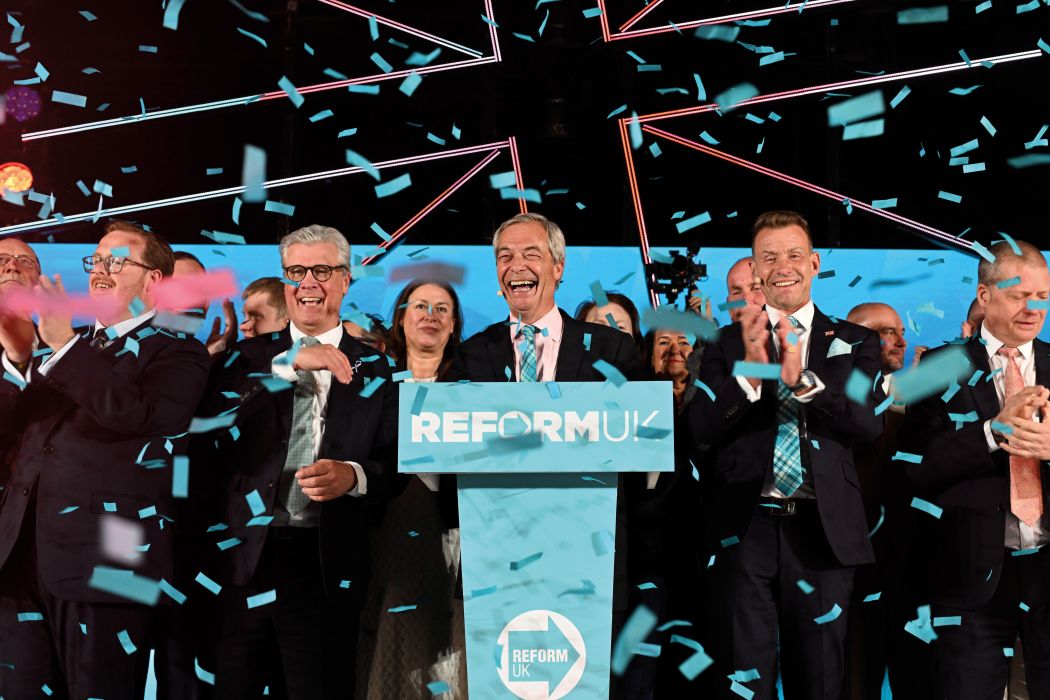
“We’ve got to stop seeing this as a conflict between net-zero and/or oil and gas. I think we just have to grow up a little bit on this conversation,” he replies, arguing that a more “pragmatic” approach is needed to stop Britain “impoverishing” itself with high energy costs while importing most of its gas from elsewhere.
“Why on earth would we import from Norway, when we can create our own?” he asks. “By creating our own, we can create our own domestic gas supply, get our prices right down, and that can actually give us the cheaper energy to make renewables merchant viable.
“The whole of Scotland is covered in turbines – not a single blade is made in Scotland. We can’t manufacture anything, because our energy’s so expensive. These things are interconnected…
“Gas is our transition fuel – let’s be sensible about that – and then we can create a much more environmentally-friendly energy system.”
As UK energy prices are dictated by international markets, experts agree that further drilling in the North Sea would have a negligible impact on that price. Research from the University of Oxford earlier this year showed that if all the UK’s remaining North Sea resources were maximally exploited and the government used the extra tax revenues solely to lower bills, households would save somewhere between £16 and £82 a year.
As to whether there is a climate “emergency”, Offord says: “We need to stop using that word. It’s not an emergency. The planet heats up and cools down, many times and many cycles.
“We do have warming. I’ve been to the Arctic, I’ve seen the ice-flows melting – I’ve seen that with my own eyes. I’m not a climate change denier, but I’m pragmatic about how we deal with it.”
Offord speaks to The House soon after Farage’s victory against Count Binface in Clacton. He confesses to not visiting Essex during the five-week campaign – part of which was occupied by Cowes Week – but says Farage’s “outstanding” result “proved his point that he’s got a true mandate in Clacton”.
Beyond confirming the Reform leader’s popularity with his own constituents, did the by-election prove anything new? The result has no bearing on the investigation being conducted by the parliamentary standards commissioner, Daniel Greenberg, into whether Farage should have declared his £5m donation from crypto billionaire Christopher Harborne.
“That investigation – you have to ask yourself how objective that is,” replies Offord. “And is it politically motivated or not?”
Where is Offord’s evidence that Greenberg is in any way politically motivated?
“It’s the committee members around it. I believe the committee members on that are from other parties, aren’t they?”
Yet Greenberg will be the person writing the memorandum on which the standards committee would deliberate – if he does conclude that Farage has breached the code of conduct and that the breach was serious enough to merit referral to them.
“Yeah, yeah, so again, the question is whether he will be influenced or not – I don’t know. I assume, we hope, we expect, all these people to be independent, don’t we? So we expect an independent result.
“I’ve not been privy to the conversations, but obviously he [Farage] felt that he wasn’t getting a fair hearing. He may or may not be right or wrong, but that’s what he felt.”
Offord, and Reform, still have a long road ahead of them. How confident is he that by 2031 he will be first minister of Scotland, serving alongside prime minister Farage?
“I’m only in it to win it. There’s no point without being committed to winning and I believe we’ve got a roadmap through the council elections [in 2027], then Westminster and then Holyrood. There is a roadmap for us. There is a strong amount of apathy amongst people, especially in Scotland, and it’s our job to reinvigorate Scots who have traditionally always been politically motivated. They’re scunnered and fed up. It’s our job to motivate them and put something in front of them which will appeal to them.”
>

How to watch Mets vs. Marlins: TV channel and streaming options for September 7

Gaza Cinema Academy Launches To Help Gazans Tell Their Own Stories

Dark Machine the Animation Series Reveals 3 New Cast Members, October 13 Debut – News
-

 movies4 months ago
Search For Canadian TV Actor Stewart McLean Now Homicide Investigation
-

 Fashion9 years ago
These ’90s fashion trends are making a comeback in 2017
-
Fashion9 years ago
According to Dior Couture, this taboo fashion accessory is back
-
Fashion9 years ago
Model Jocelyn Chew’s Instagram is the best vacation you’ve ever had
-
Fashion9 years ago
Emily Ratajkowski channels back-to-school style
-
Fashion9 years ago
9 Celebrities who have spoken out about being photoshopped
-

 Anime3 months ago
Rurouni Kenshin: Hokkaido Arc Manga Takes 1-Issue Break – News
-

 Anime2 months ago
HIDIVE to Stream English Dubs for The World Is Dancing, The Forsaken Saintess and Her Foodie Roadtrip in Another World, The Dangers in My Heart: The Movie Anime – News