
Entertainment
‘Godzilla Minus Zero’ Review: Same Problems as Every Sequel in Series

>

After sharing her story in her 2024 memoir Be Ready When The Luck Happens, Ina Garten is reluctant to trust a filmmaker with the adaptation.
The Barefoot Contessa celebrity chef recently explained why she’s “never been willing” to make a biopic about her life, despite being “approached” to adapt Be Ready for the big screen.
“It’s funny, I don’t make long-term plans. I do what I do as well as I can, and things come along, and I say no to most of them,” she told People.

Garten added, “I’ve been approached to do a movie of my memoir, but I know that when a producer or director gets ahold of a story, they want to make it work on film and they’re going to change it. So I’ve never been willing to do that. It’s my story. I get to keep it. And I don’t want people making up things just for dramatic effect. And so I’ve always said no.”
The 2024 memoir came after Garten ended the nearly 20-year run of her Food Network cooking show Barefoot Contessa, which ran from 2002 to 2021.
Since 2022, Garten has hosted her followup Food Network show Be My Guest, inviting friends to her dinner table in her East Hampton, New York home.
>
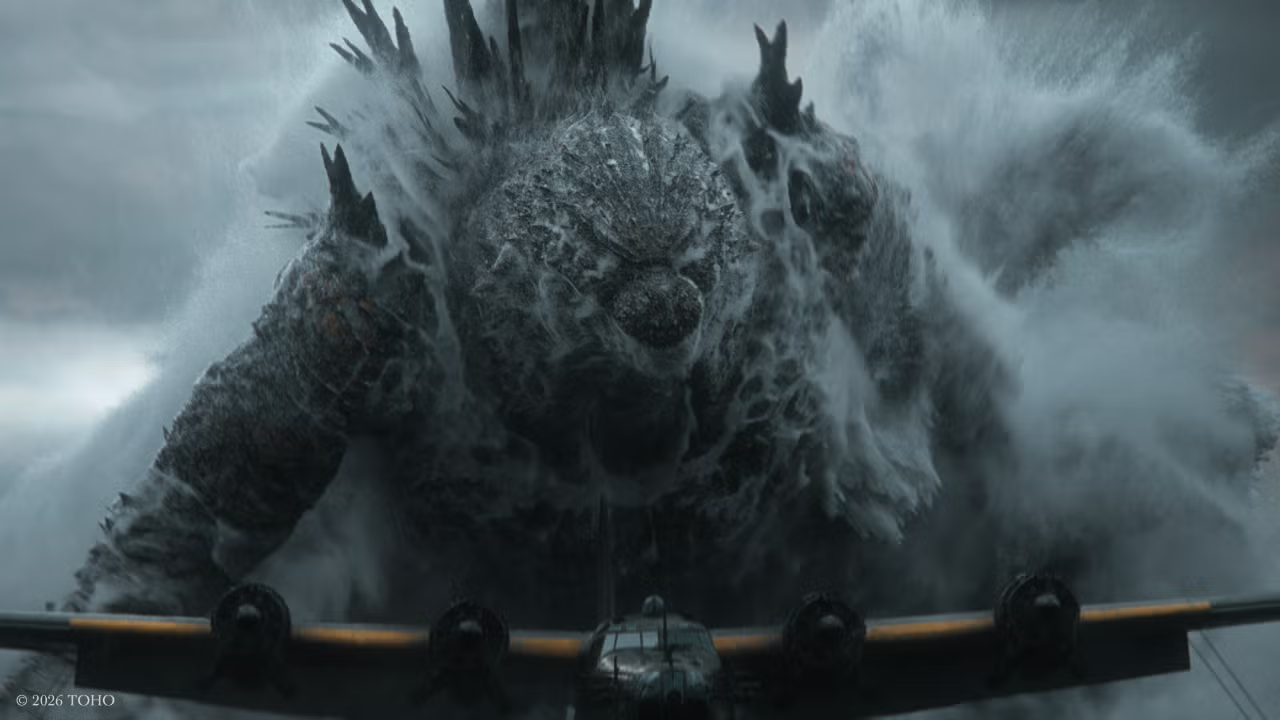
Writer, director and VFX wizard Takashi Yamazaki three years ago reinvigorated Japanese production titan Toho’s seven-decade kaiju franchise with Godzilla Minus One, which delivered amply on monster mayhem with sophisticated (and Oscar-winning) effects, but perhaps more importantly, grounded the creature feature in affecting humanistic drama. By dividing the film’s attention between mass destruction and the raw pain of post-WWII trauma, reconstruction and societal reintegration — not to mention the atomic allegory — Yamazaki boldly reimagined the property while honoring the roots of the series’ 1954 original.
That same meticulously balanced duality is evident in the director’s approach to the scaled-up sequel, Godzilla Minus Zero, an equally thrilling jolt of marauding monster action anchored by tender themes of family, friendship, camaraderie and personal courage. These are characters about whom we come to care deeply, and Yamazaki trusts his audience to know the value of time spent observing human relationships, ennobling the horror with tangible emotional stakes. Following its world premiere at the New York Film Festival, GKIDS will release the film in the U.S. Nov. 6.
Godzilla Minus Zero
The Bottom Line
A radioactive blast.
Venue: New York Film Festival (Spotlight Gala)
Release date: Friday, Nov. 6
Cast: Ryunosuke Kamiki, Minami Hamabe, Yuki Yamada, Kuranosuke Saski, Jun Kunimura, Mio Tanaka, Sakura Ando, Masami Nagasawa, Min Tanaka, Hidetaka Yoshioka
Director-screenwriter: Takashi Yamazaki
Rated R,
2 hours 15 minutes
While the 1949 setting might be expected to make the aftermath of war recede into the past, it’s no less acutely felt here, with resonant moments touching on the complicated perceptions of the Japanese people toward America and the outsize impact on the rest of the world of its military industrial complex. World War II may be over, but its vicious cycle of loss, destruction and power-flexing continues.
At the risk of angering the spoiler police — a cue to stop reading now if you’d rather go in blind — the new film ushers in another legendary kaiju first seen in 1964. Promotional materials for the most part refer evasively to “a new threat,” but fan anticipation and advance media have pretty much let the badass three-headed dragon out of the bag.
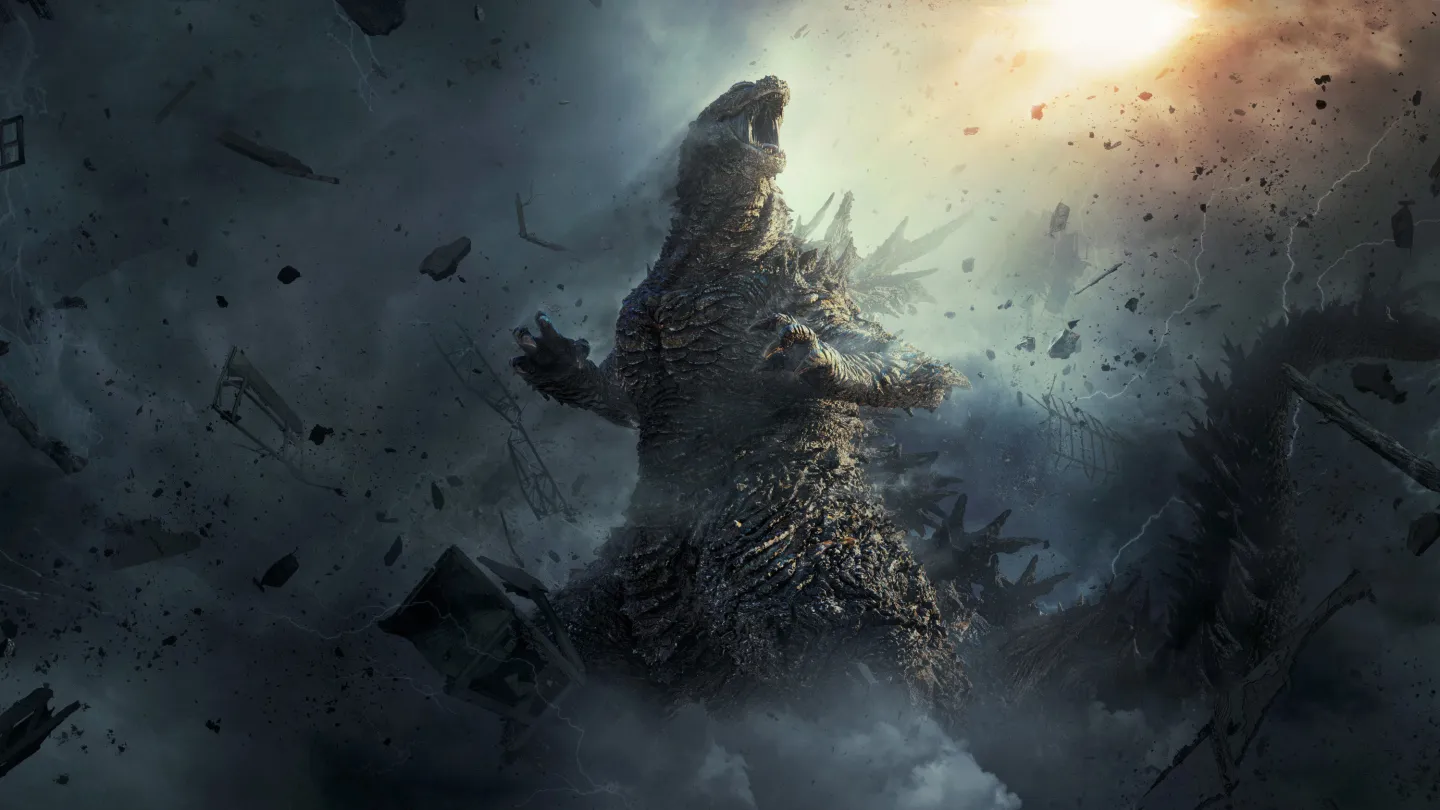
Just as Japanese life appears to be returning to some kind of peacetime normalcy, with Godzilla exiled to the ocean depths and believed to have been killed in the previous movie, King Ghidorah comes swooping in with massive wings generating hurricane-force winds, ripping apart an entire town in the opening action.
There’s a ton of sci-fi mythology in the Godzilla series concerning the origins of Ghidorah the Explorer, a creature at various times under the control of alien invaders and time-traveling human terrorists, which supposedly arrived on Earth inside a meteorite intent on detroying the planet, much as it had destroyed Venus thousands of years earlier. Yamazaki wisely ignores all that geek lore, instead treating the dragon as simply another killer Monsterverse freak with regenerative powers, inevitably destined to fight a death match with Godzilla for alpha status.
Just as Godzilla can charge up his radioactive dorsal plates and shoot nuclear-level heat rays at his targets, Ghidorah has his own neat trick and three gaping fanged mouths with which to deploy it. The creature design is magnificent, with the huge wingspan and writhing tangle of elongated necks and tails cranking up the menace, while the ferociousness of the monster’s faces is enhanced to great effect by growling and roaring that can sound almost like an evil cackle.
The mega-dragon spews out electromagnetic energy in the form of gravity beams; some of the most outstanding sequences involve those lightning-like bolts wrapping antigravitational forcefields around buildings, trains and anything else in Ghidorah’s path, sucked up into the air and then smashed to the ground for maximum wreckage.
The heart of the previous film was former WWII kamikaze pilot Koichi Shikishima (Ryunosuke Kamiki) — stunned by the loss of his parents and crushed by guilt over his conduct in the dying days of the war — daring to dream of a life of domestic contentment only to see that dream repeatedly put in jeopardy.
More or less given no choice, Koichi welcomed a young woman, Noriko (Minami Hamabe), into his home in the rubble of Tokyo, along with Akiko (adorable Sae Nagatani), the orphaned child she had found alone and terrified. Two years on, this found family are inextricably bound together, with flinty neighbor Sumiko (Sakura Ando, so memorable in Hirokazu Koreeda’s transcendent Shoplifters), who also lost her family during the war, serving as “Auntie,” to lend a hand with Akiko.
Once Ghidorah’s rampage spreads fresh terror, Noda (Hidetaka Yoshioka), the former naval weapons engineer now heading up the government’s Disaster Countermeasures Bureau, begins working on defense plans. He signs up his old comrades from the previous film along with a couple of new ones, meteorological forecaster Aoyama (Masami Nagasawa) and Professor Murakami (Min Tanaka), who lost his family in Hiroshima and may have a hidden agenda.
Veteran Jun Kunimura (much better served here than in the Takashi Miike dud Bad Lieutenant: Tokyo) also turns up as a doctor studying the effects of exposure to Godzilla’s cellular tissue on people involved in the attacks of Minus One. This phenomenon impacts Noriko, who miraculously survived the devastating Ginza attack last time around and has shown remarkable resilience, with her wounds healing at an uncanny rate.
Yamazaki infuses tenderness into not just the core family but also the extended group, bound by profound fondness as much as by horrific shared experience. With Ghidorah dictating that the fight will now be airborne, Koichi is eager to get back in the pilot’s seat, compelled by a sense of duty to his country but also by lingering survivor’s guilt.
Nodo wrestles with his own guilt over the countless deaths caused during the war by weapons he designed; he will not hear of Koichi putting his life at risk again and possibly robbing Akiko of a father. Nodo agrees only to bring the pilot on as an advisor, but Koichi is not easily deterred. The same goes for Noriko, whose medical condition may have the potential to be weaponized.
Nodo and his crew set up a command center in Matsumoto City, where Aoyama determines that they can track Ghidorah as the creature responds to the electromagnetic force of a fast-moving storm system.
Around this point Godzilla — fully regenerated and pissed as hell — resurfaces offshore. Given that heavy artillery and bombs have failed to slow down Ghidorah for long, Murakami calls Godzilla’s reappearance “divine providence,” insisting that setting the two monsters against each other is their only hope. Via some ingenious plotting, that entails a plan to lure the beasts into proximity, using a system tested by the professor in a cheeky homage to Hitchcock’s The Birds.
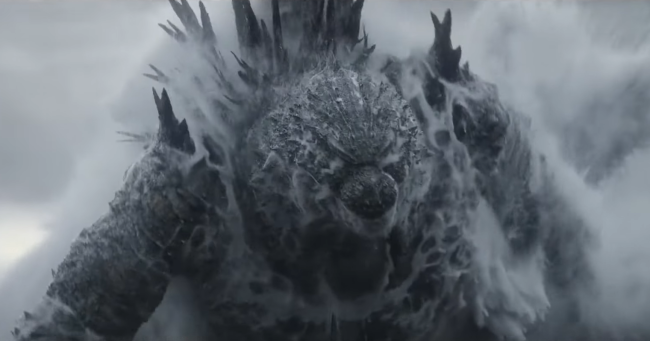
The resulting clash of the legendary kaiju is a rip-roaring smackdown in a movie that keeps awing the audience with exhilarating action and then continually one-upping itself in the dustups that follow. I’m fairly sure I stopped breathing during a tense scene in which Godzilla bears down on a seaplane attempting a hurried liftoff.
While Spider-Man: Brand New Day generated plenty of sparks and Dune 3 and Avengers: Doomsday are still to come, it’s interesting that some of the most pulse-pounding, intense and inventive action sequences on screens this year have been in two East Asian films — Godzilla Minus Zero and Hope. Stand down, Hollywood.
As he demonstrated in Minus One, Yamazaki’s command of big-ass destruction spectacle is breathtaking, this time overseeing a significantly larger VFX team that makes the monsters not only mighty physical presences but also part of an immersive environment in which we experience the full force of their earth-shaking power. This is some of the most impressively seamless integration of major-scale CGI in recent memory.
But the masterstroke of Yamazaki’s direction is the skill with which he ensures that the human drama remains no less compelling than the monster faceoffs. The film also benefits from initially making Godzilla the underdog in the fight, bringing back the creature’s representation in Japanese culture of nuclear trauma, natural disasters and the pervasively heavy anxiety that gripped the nation in the postwar years. Watching the Minus movies, you realize how much the lack of that cultural specificity limits the American Godzilla entries and how much these latest two Japanese films serve as a reclamation.
While the action in those U.S. productions, notably Godzilla vs. Kong, can pack a visceral charge, the human element generally is forgettable and the mythology sketchy. But the characters here are richly developed, especially Koichi and Noriko, played with a mix of determination and vulnerability by Kamiki and Hamabe that fosters genuine emotional investment in them as both individuals and as a makeshift family; and the wonderful Yoshiyoka’s avuncular Noda, who has some of the film’s most affecting moments.
As she was in the previous film, Ando’s hard-edged but soft-hearted Sumiko is a droll scene-stealer, and Nagasawa’s Aoyama is a terrific addition — it’s great to see a woman with authority and sharp intuition on the science team, even if she’s not immune to self-doubt.
The first Japanese feature shot in IMAX, the movie looks stunning, with so much detail and nimble movement packed into returning DP Kozo Shibasaki’s frames. Period production design by Anri Jojo and Wataru Hirai is understated but evocative. And the score by another repeat collaborator, Naoki Sato, is a marvel, ranging from brooding apprehension, with solemn choral elements, to thunderous symphonic bursts for the big clashes. With the plot door open to another sequel, here’s hoping Yamazaki will keep on making new entries in this hugely entertaining series. And while we’re raiding the Toho kaiju vaults, bring back Mothra!
>
Asked to explain the goofy title he gave to his globally successful 2023 kaiju smash “Godzilla Minus One,” writer-director Takashi Yamazaki explained that it was meant to convey two co-equal things: 1.) That the movie took place before Ishirō Honda’s original “Godzilla,” and 2.) That “people rise up from a postwar Japan that is at zero, and then Godzilla arrives, making the situation even worse and more tragic.”
Continuing the story of its Oscar-winning predecessor while also doubling down on everything that made it the most acclaimed film in its franchise since the King of the Monsters first lumbered out of the Pacific Ocean in 1954, Yamazaki’s thunderously loud and frequently spectacular direct sequel has in turn been saddled with an even sillier title: “Godzilla Minus Zero.” To paraphrase the scene from “Sideways” where Paul Giamatti’s character reveals that his novel is called “The Day After Yesterday”: Isn’t that just… “Godzilla?”


Yes and no. Sure, the title is absurd on its face, but — in keeping with Yamazaki’s logic — it also rather eloquently speaks to the premise of a film about a fragile people who are struggling to maintain (and build upon) the new equilibrium they’ve fought so hard to achieve in the years since their country became the epicenter of Earth’s nuclear era. Another mid-century melodrama with very occasional monster sightings, the more thematically coherent and emotionally affecting “Godzilla Minus Zero” expands on the naive grassroots nationalism of its predecessor by reframing that movie’s characters from victims to survivors, an emphasis that forces ex-kamikaze pilot Kōichi Shikishima (Ryunosuke Kamiki) and his friends to confront a series of impossible questions. How do you balance grief with growth? Vengeance with peace? Self-sacrifice with self-preservation?
By way of answering those questions (or at least asking them in a variety of increasingly anguished ways), “Godzilla Minus Zero” also forces Shikishima and co. to confront a flying, IMAX-sized, three-headed asshole they come to know as King Ghidorah. Possibly the single most hateable kaiju who’s ever eaten innocent civilians on screen before, King Ghidorah is a real piece of work even before he earns his crown. He first rears his ugly dragon head in Matsumoto circa 1949, which is two years after the events of “Godzilla Minus One,” and maybe two weeks after this scaly destroyer of worlds crash-landed into the mountains of Japan on the back of a meteorite (an arbitrary point of origin that feels like a missed opportunity to freight Ghidora with more human-facing pathos). Seeing as how Godzilla was obliterated and left to rot at the bottom of the sea at the end of the previous film, Ghidora is free to terrorize the countryside whenever he isn’t taking cute little naps in the Nagano hills.
Lucky for Japan, and for all of the other nations that are still living under the delusion that none of this monster business will ever be their problem, at least one of the key heroes who “defeated” Godzilla in 1947 has been preparing his people for the possibility of another kaiju attack. Government higher-ups are still nowhere to be seen, but Einstein-haired Naval engineer Noda (a sweet and eccentrically professorial Hidetaka Yoshioka) has been appointed to the head of the Large-Scale Disaster Response Bureau, where he’s joined by newcomer Makoto Aoyama (Masami Nagasawa), a preternaturally gifted meteorologist whose ability to predict the weather proves crucial in the fight against Ghidorah, and also embittered biologist Kanji Murakami (“Twilight Samurai” star Min Tanaka), who survived the bombing of Hiroshima, the attack on Ginza in “Godzilla Minus One,” and the assault on Matsumoto that opens this film — a detail that evokes the terribly remarkable story of Tsutomo Yamaguchi.
Thanks to Noda’s hard-earned wisdom, “Godzilla Minus Zero” is able to skip over the part where everyone has to discover that kaiju like Ghidorah are immune to conventional weapons — if not also strengthened by them. That ignorance is reserved for the occupying Americans, who were entirely absent from the previous movie (which nostalgically privileged the self-reliance of Japan’s civilian population at the expense of a more historical view of the post-war struggle). Here, the U.S. Army is represented by a unit of square-jawed, power-hungry jerks who are only interested in helping Japan so far as it helps themselves. They don’t bear the wounds of nuclear devastation, and so they see kaiju as more of an opportunity than a threat.
The opposite is true for our pal Shikishima, who has absolutely no interest in ever climbing back into the cockpit of a fight plane. Now married to the angelic Noriko — Minami Hamabe, who miraculously escaped “Godzilla Minus One” with a new eyepatch and some big secrets — and embracing his role as adoptive father to the devastatingly cute Akiko (returning champion Sae Nagatani), Shikishima just wants to wear his cool brown leather jacket and messenger bag combo in peace.

If only it were that simple. If only Shikishima were convinced, as he tries to convince himself, that staying out of the fight is the best way to protect the women he loves. If only Noda’s plan of electrocuting Ghidorah to death in the skies above Matsumoto were as successful at killing the kaiju as it is at blowing our hair back.
There are only two sustained monster sequences in “Minus Zero,” which adheres to a similar cadence as its predecessor, but they’re both among the most gripping setpieces of their kind in all of moviedom; they match the grandeur — if not the majesty — of those from Gareth Edwards’ “Godzilla,” and eclipse their violent intensity. The ridiculously thrilling aerial sequence above Matsumoto is lifted by the Wagnerian strings of Naoki Satō’s visceral score, kept aloft by special effects that exponentially improve upon the resourceful but weightless CGI from “Minus One,” and seared into your retinas by IMAX razzledazzle of the highest magnitude. And while the final showdown between Ghidorah and Godzilla is slightly weakened by grayscale atmospherics and a few missing beats (one of them very bizarre), it goes without saying that the climatic brawl is one for the ages, as Yamazaki earns the franchise’s first “R” rating with an elegantly choreographed monster mash that rattles with Darwinian force.
Oh yeah, I suppose it also goes without saying that Godzilla is (eventually) in this Godzilla movie. Somehow, the King of the Monsters has returned — if Palpatine had infinitely regenerative flesh, perhaps his resurrection would have been similarly unsurprising. But fans of Honda’s original film, Yamazaki’s previous one, and/or Edwards’ failed 2014 reboot have come to expect and appreciate that Godzilla is most effective when framed as more of a recurring weather phenomenon than a dramatic engine in his own right, and “Godzilla Minus Zero” doesn’t suffer from its title kaiju’s limited screentime.
On the contrary, his absences are crucial to the construction of a florid tear-jerker about a traumatized country trying to move forward in the atomic shadow of a world that will never feel safe again. While a cursed biologist like Murakami might see vengeance as his only path towards peace, a former kamikaze like Shikishima — the guilt he once felt over not killing himself for Japan now bent towards the responsibility he feels towards living for Noriko and their daughter — is left to wrestle over the best way to protect his family: fighting the monsters, or fleeing from them.
“Godzilla Minus Zero” is hardly the most nuanced or effective film to explore its country’s post-war despair (the original “Godzilla” still towers above it in that regard, to say nothing of “Drunken Angel,” “The Human Condition,” “An Inn at Osaka,” or any number of other cornerstones of Japanese cinema), but the anger it assigns to Murakami is provocative on its own terms, and the path that it contrives for Shikishima is considerably more nuanced and well-earned than the one he stumbled through before. While the future is still uncertain by the end of this latest Godzilla movie (which feels very much like the middle chapter of a trilogy), “Minus Zero” makes rewarding sense of why the series’ numbers are starting to add up.
Grade: B+
“Godzilla Minus Zero” premiered at the 2026 New York Film Festival. GKIDS will release it in U.S. theaters on Friday, November 6.
>

Overgeared Anime Gets Same-Day English Dub on September 27 – News
Oregon QB Dante Moore taken to hospital after taking hit to head vs. USC

Ina Garten On Why She “Always Said No” To Biopic
-

 movies4 months ago
Search For Canadian TV Actor Stewart McLean Now Homicide Investigation
-

 Fashion9 years ago
These ’90s fashion trends are making a comeback in 2017
-
Fashion9 years ago
According to Dior Couture, this taboo fashion accessory is back
-
Fashion9 years ago
Model Jocelyn Chew’s Instagram is the best vacation you’ve ever had
-
Fashion9 years ago
Emily Ratajkowski channels back-to-school style
-
Fashion9 years ago
9 Celebrities who have spoken out about being photoshopped
-

 Anime4 months ago
Rurouni Kenshin: Hokkaido Arc Manga Takes 1-Issue Break – News
-

 Anime3 months ago
HIDIVE to Stream English Dubs for The World Is Dancing, The Forsaken Saintess and Her Foodie Roadtrip in Another World, The Dangers in My Heart: The Movie Anime – News