
movies
‘Edward Said: Between Worlds’ Review: A Palestinian Scholar, Revived


In his 1979 book The Question of Palestine, Edward Said, the Palestinian writer and academic, frames the relationship between Palestinians and Zionists as a “contest between an affirmation and a denial.” Making sense of it requires us to “understand what the instruments of this contest were, and how they shaped subsequent history so that this history now appears to confirm the validity of the Zionist claims to Palestine, thereby denigrating the Palestinian claim. In other words, we must understand the struggle between Palestinians and Zionism as a struggle between a presence and an interpretation, the former constantly appearing to be overpowered and eradicated by the latter.”
To criticize the popular interpretation of Zionism, to frame Israel as a settler-colonial project and to recognize the humanity and history of Palestinians was — and, unfortunately in the Western world, often remains — a radical thesis.
Edward Said: Between Worlds
The Bottom Line
A fine intro to an important intellectual.
Venue: Toronto International Film Festival (TIFF Docs), New York Film Festival (Spotlight)
Director: Maiken Baird
1 hour 48 minutes
In the new documentary Edward Said: Between Worlds, Danish filmmaker and producer Maiken Baird explores, among other things, how the publication of this book and Said’s consistent advocacy for Palestinian self-determination made him both a model of intellectual integrity and an enemy of the United States. The doc carries the legacy of other Said film projects, including Mike Dobbs’ Edward Said: The Last Interview, released in 2004, but Between Worlds still offers a useful political education. Through impressive archival footage (interviews and lectures, home videos and family photos), Baird, who executive produced Icarus and Orwell: 2+2=5, revives the voice of a crucial public figure and indicts the U.S. and its mainstream media outlets for the role they have played — and continue to play — in abetting the annihilation of Palestinians. She wraps these major themes in a poignant narrative about how Said, exiled from Palestine and alienated from his Arab identity, eventually found his way back to both.
Between Worlds, still seeking distribution following well-received showings at the Toronto and New York film festivals, opens with an audio compilation of news anchors describing Said. They refer to him as a Palestinian activist, and remark on his eloquence in a subtle nod to the way he defies the expectations of a public taught to dehumanize Arabs. In one early clip, Said says he would “like to be identified as a professor of literature at Columbia University.” A voice off-camera repeats the title, with an interrogative intonation, and Said responds with humorous exasperation: “That’s right. I mean that’s what I do for a living.” This moment captures a tension that Said faced in battling assumptions that deep political engagement somehow foreclosed the possibility of other interests.
The beginning of Between Worlds functions as a kind of prelude, offering a straightforward primer on Said. Using the scholar’s own words, Baird lays out Said’s role in public life and defines one of his principle intellectual projects. “Whenever there is a Palestinian effort to tell a story, to put in a dramatic and realizable way the story of Palestine, it’s been assaulted and stopped,” he says in voiceover. “So we appear as if we are orphans, as if we have no origins, we have no narrative as a people. We are being told in a certain sense that we don’t really exist.”
A violent estrangement from land, history and culture defined Said’s early years. Between Worlds smartly shapes itself around Said’s intellectual ideas without giving up the ease of a chronological timeline. After the intro, Baird introduces Said’s interest in memory and who gets to define history, focusing on the scholar’s early years. Said was born into a middle-class family in Jerusalem, Palestine, in 1935. In 1947, he and his family moved to Cairo, ahead of the 1948 mass expulsion of Palestinians from Israel widely known as the Nakba. Through archival interviews, Said explains how his parents rarely talked about their home country except when vaguely citing what they lost. As a result, Said grew up rather politically disengaged and with no real connection to his identity.
Despite not having the language for it, the young Palestinian understood his position as a marginalized person very early on. In school, he identified with stories of indigenous Americans and Black people in America, and noticed how much of his education was filled with historical elisions of the harm done to them. Said’s teaching style was informed by this keenness, as he encouraged his students to approach their studies with healthy skepticism and to question historical silences.
When he was further into adolescence, Said was sent to the United States for boarding school, where the severance from his Arab identity was reinforced. He went on to study at Princeton and then Harvard before landing a teaching job at Columbia University. It’s at this institution that Said would go on to formulate his most enduring theses about Arab identity in relation to the West (Orientalism, 1978); Palestinian history and self-determination (The Question of Palestine, 1979); and the afterlives of imperialism (Culture and Imperialism, 1993). It’s ironic that today the university that served as Said’s intellectual home is at the forefront of sanctioning students and faculty advocating for Palestinians.
The most emotionally poignant parts of the film focus on how the intellectual rebuilt his relationship to his Palestinian identity. After he married Mariam, a Lebanese writer and activist, Said traveled to Beirut with her, connected with people involved in the liberation of Palestine, and embarked on an intensive study of Arabic. Through this re-engagement, he began to notice how the Western media participated in disseminating anti-Arab propaganda, and these observations would go on to inspire many of his books.
There’s substantial attention paid as well to Said’s intellectual development after his early writings, notably how he became disappointed with and estranged from Palestinian comrades like Yasser Arafat, who he believed harmfully capitulated to American and Israeli demands. While Between Worlds touches on Said’s evolving politics, particularly his later advocacy for a nation where Israelis and Palestinians could live in equality, it leaves the viewer wanting additional context.
One of the most jarring elements of Baird’s documentary — as with most nonfiction projects about Palestinians released in the last few years — is how much of the language featured in the film echoes the contemporary moment. It can feel uncanny to watch Said, interviewed throughout the 80s, 90s and early 2000s, argue the same issues that are being litigated today. And it’s striking to see how being asked repeatedly to defend Palestinian self-determination wears on the scholar, who also had other intellectual interests. He was a talented pianist, a prolific literary critic and a founder of what we now call postcolonial studies, a multidisciplinary field that examines the cultural, economic and political afterlife of imperialism.
I first learned about Said as an undergraduate studying English literature at Princeton, our shared alma mater. His debut book Orientalism offered me, as well as many others, a renewed understanding of the violent legacy of colonization and reinvigorated my understanding of identity as fluid and relational. If there’s one tension in Between Worlds, it’s the constant reminder that there’s so much more to learn about its subject.
>
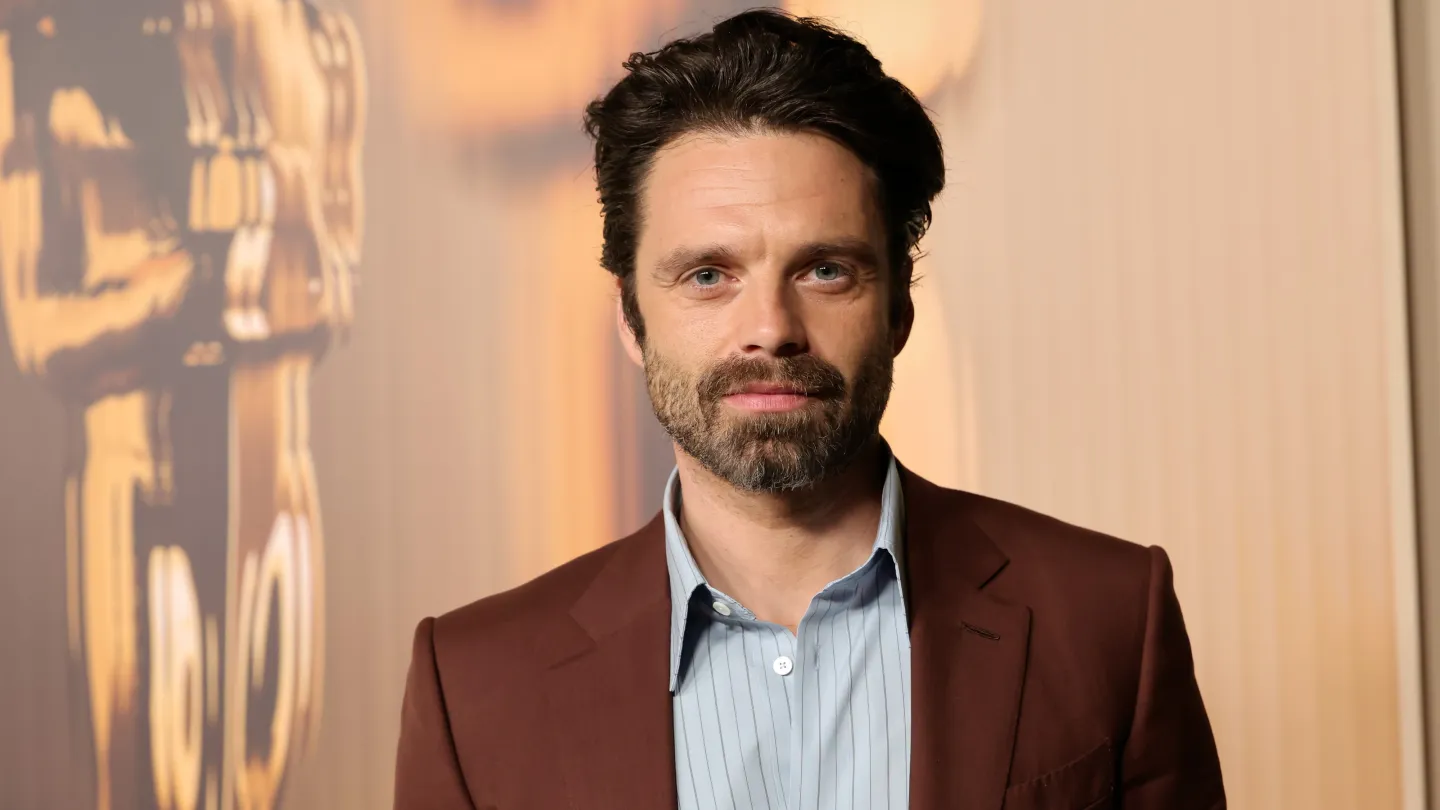
Sebastian Stan is carefully talking about his mysterious role in The Batman: Part II.
“It’s one of the most challenging situations I’ve been involved in,” the Captain America: The Winter Soldier actor told the Happy Sad Confused podcast in an episode published Monday. “I feel like it’s hard to talk about it without it becoming some speculative thing from some corner. I think it’s a very ambitious thing, and I hope it lands right. I have a lot of faith in it, because I just do feel like [director Matt Reeves] is truly a genius of our time, and one of the very few people that I think is so unique and so specific. And he has been at this for three years. I mean, it’s not an accident. He knows what he’s doing. And so I’m just happy to be part of that vision.”
“I just think it’s going to be great,” he added. “This is definitely, for me, feeling like something very different than I’ve gotten to do. And that’s what I love, and I’m excited about.”
Stan has been rumored to play the iconic Gotham City district attorney Harvey Dent (also known as Two-Face) in the film, but that’s not confirmed.
The actor also discussed how he landed the role in the first place, saying he “poked the bear” by nudging DC Studios co-chief James Gunn, and didn’t expect to get the part given his longtime association with the MCU.
“The DC thing was honestly always sort of a kind of like a joke in my mind,” he said. “I was like, ‘there’s no way that I’m ever going to end up [on a DC Studios film]’ … [But] Matt had seen The Apprentice and really liked the film and my work in that. And then that inspired a conversation. Subsequently, around the same time, I was kind of poking the bear a bit over there with James Gunn, going, ‘I think we should figure something out.’”
The comments come as production on The Batman: Part II in London pauses temporarily while director Matt Reeves takes some time to deal with a personal family matter. “Matt has the full support of DC Studios and we look forward to continuing the journey soon,” a studio spokesperson said.
The Batman: Part II stars Robert Pattinson as Bruce Wayne/Batman. In addition to Stan, the production has also added fellow MCU veteran Scarlett Johansson in an undisclosed role. The film currently has a release date of Feb. 18, 2028.
>
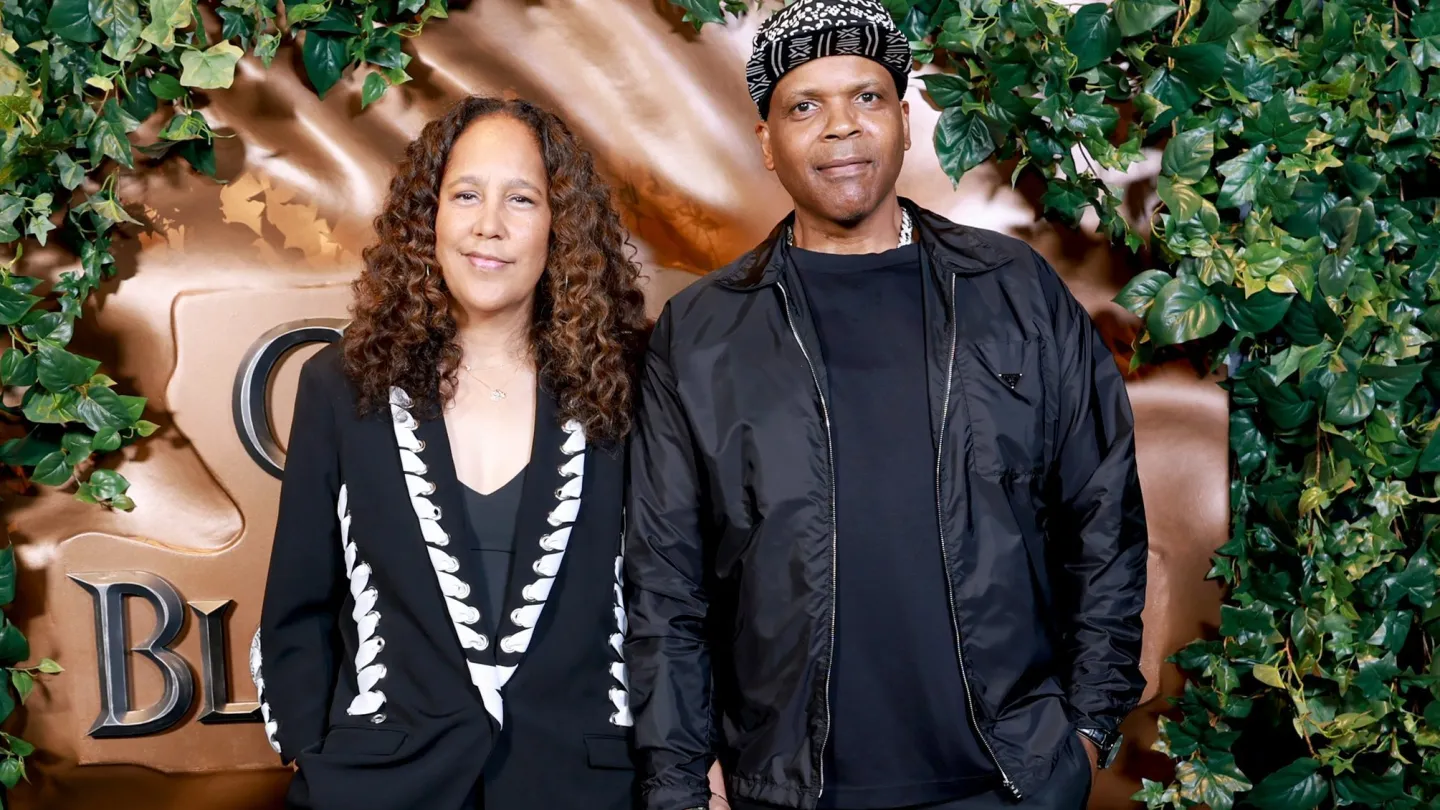
Gina Prince-Bythewood and Reggie Rock Bythewood will serve as ambassadors of the 30th annual Urbanworld Film Festival taking place Oct. 14-18 in New York City.
The post marks a notable return to Urbanworld for the married filmmakers who have a long history with the festival. Prince-Bythewood screened her adaptation of The Secret Life of Bees at Urbanworld in 2008, and the 2014 festival opened with her romance drama Beyond the Lights. Bythewood also brought ESPN’s 30 for 30 episode “One Night in Vegas” to Urbanworld in 2010 and the BET TV movie Gun Hill in 2013. The pair attended the festival in support of NatGeo’s Genius: MLK/X in 2023 as well.
“Urbanworld has been a consistent touchstone for filmmakers to bring our stories, connect with our community and support the next generation, and it has always felt like home for us,” the pair said in a joint statement. “We’re honored to return as festival ambassadors to celebrate 30 years of Urbanworld while sharing what’s next. Art over fear.”
As ambassadors, the Bythewoods will give audiences a unique look into their personal and creative journeys through special programming at The New School, Urbanworld’s Innovation Summit partner. There will also be a spotlight moment highlighting Prince-Bythewood’s upcoming adaptation of Children of Blood and Bone, ahead of its Jan. 15, 2027 release, at Regal Union Square, the festival’s host theater.
“Gina and Reggie represent the caliber of artists and storytellers we want to celebrate at Urbanworld,” said festival director Verona Cesair Jones in a news release. “Their work, leadership and commitment to storytelling have made an undeniable impact on our industry. As I begin my first year leading the festival and Urbanworld celebrates 30 years, we’re proud to honor them as our festival ambassadors and give them their flowers.”
Urbanworld was founded in 1997 by Stacy Spikes as a space to champion established and emerging multicultural storytellers; three decades later, Spikes remains committed to that mission.
“Gina and Reggie have been part of the Urbanworld story for many years, and having them return together as festival ambassadors is a powerful way to celebrate our 30th anniversary,” said Spikes. “Urbanworld has always been about creating a platform for artists to tell their stories, build community, and open doors for those coming behind them. Gina and Reggie embody that spirit, and we’re proud to celebrate them as we look toward Urbanworld’s next 30 years.”
>

Nearly a decade after its formation, American High is expanding in new directions.
This weekend, the production company founded by Jeremy Garelick released Rolling Loud, a comedy starring Matt Rife and Owen Wilson that is loosely inspired by Garelick’s experience losing his 13-year-old son at the eponymous hip-hop festival. One of American High’s biggest productions to date and its largest wide theatrical release, the film raises the question of whether we may see the company move more frequently into theaters after producing the majority of its 20-plus features for Hulu.
American High’s second major October release is Minimum Wage, a short-form, pizzeria-set workplace comedy based on the company’s viral low-budget web series, which landed at Netflix in a highly competitive situation earlier this year. The series marks another expansion beyond Hulu, where American High operates under a first-look output deal, and tests whether IP developed in-house can scale its audience on streaming’s biggest stage. Written, directed by and starring the same group of emerging comedic talents from the web series — including recent SNL hire Grace Reiter — the series premieres its first 14 12.5-minute episodes on Oct. 26, with 14 more to follow.
Run by Garelick and President Will Phelps, American High was founded to fill a gap in the feature market by producing the kinds of teen comedies that are now seldom made elsewhere. Garelick launched the company with initial financial backing from Mickey Liddell’s LD Entertainment after finding success in studio comedy, writing films including The Break-Up and directing titles such as The Wedding Ringer.
In establishing the company’s headquarters, Garelick made an unusual choice that suited his experimental banner: He took over a decommissioned middle school in upstate New York and transformed it into a production facility. From there, American High produced an expansive slate of modestly budgeted features, built a digital sketch operation that has amassed billions of views, and even launched a nonprofit academy for student filmmakers.
More recently, the company has acquired additional real estate in the village of Liverpool, including the pizzeria where Minimum Wage was filmed. With Rolling Loud, American High further expanded its production infrastructure, becoming the first “Resident Creator” at Georgia’s Trilith Studios. The partnership is designed to help the company increase its output while providing access to expanded facilities and virtual production technology.
On Deadline’s Comedy Means Business podcast, Garelick and Phelps chronicle the origins and evolution of American High and discuss what the company’s recent pair of big swings could signal about its future. They also explore the Hulu deal that helped American High weather the pandemic and the dual Hollywood strikes of 2023; the pros and cons of owning a production facility; the company’s relationship with Liverpool locals; its commitment to emerging talent on both sides of the camera; the duo’s early experiences in show business, including Garelick’s time working for filmmaker Joel Schumacher; and what it would take to bring about a resurgence in theatrical comedy.
Check out the full conversation by clicking above.
>

Sebastian Stan Drops Hints About ‘The Batman: Part Two’
MLB playoffs live scores, updates: Division Series predictions, odds and latest from White Sox vs. Guardians

Hollywood Spends More Than Half of Its Film Budgets Outside the U.S., Union Study Shows
-

 movies5 months ago
Search For Canadian TV Actor Stewart McLean Now Homicide Investigation
-

 Fashion9 years ago
These ’90s fashion trends are making a comeback in 2017
-
Fashion9 years ago
According to Dior Couture, this taboo fashion accessory is back
-
Fashion9 years ago
Model Jocelyn Chew’s Instagram is the best vacation you’ve ever had
-
Fashion9 years ago
Emily Ratajkowski channels back-to-school style
-
Fashion9 years ago
9 Celebrities who have spoken out about being photoshopped
-

 Anime4 months ago
Rurouni Kenshin: Hokkaido Arc Manga Takes 1-Issue Break – News
-

 Anime3 months ago
HIDIVE to Stream English Dubs for The World Is Dancing, The Forsaken Saintess and Her Foodie Roadtrip in Another World, The Dangers in My Heart: The Movie Anime – News