
Tech
6 Guidelines for Governing AI


For the first 10 years of my career, I worked in product management and data analytics by myself. I wrote database queries that pulled numbers out of corporate systems, built statistical models to predict what customers would buy, and shipped data pipelines that moved information between business systems.
I built and scaled analytics teams at Best Buy and Target, studying how customers shop and what stores should stock. Today I lead enterprise AI transformation at Lowe’s, the Fortune 100 home improvement retailer.
The goal is not to sell artificial intelligence; it is to use it to deliver useful expertise at the moment a customer needs it. In retail and other customer-facing industries, virtual assistants can help people address everyday questions—such as how to repair a leaky faucet—while guiding them toward relevant products, services, or next steps. As these capabilities become more common, technology roles are changing. The work is no longer limited to building AI systems; it also includes defining how they operate: which decisions they can make autonomously, when they must escalate to a person, and which actions must remain off-limits.
That shift—from building AI systems to governing them—is coming for anyone who is accountable for what such systems produce. Not the casual user typing into a chatbot but the engineers, product managers, analysts, and business operators who sign off on work a machine drafted.
It is the subject of the book I recently coauthored, The Enterprise Brain. I call the change the “governor shift,” from executing tasks yourself to setting the intent, principles, and boundaries within systems that execute them for you.
Business operators might not write code; they will decide which pricing exceptions an agent may approve and which it must escalate.
That is governing.
A 2025 report from MIT Media Lab’s Project NANDA found that, despite an estimated US $30 billion to $40 billion in enterprise generative-AI investment, the vast majority of organizations in its dataset had not yet demonstrated measurable profit-and-loss impact. The report estimated that only about 5 percent of integrated pilots were generating substantial value, underscoring how difficult it remains to move from experimentation to scaled business outcomes.
Researchers named the pattern the GenAI Divide, the term I adopted for the book.
The companies rarely lack technology; they use the same models as the 5 percent that are winners. But they lack people who can direct the systems and stand behind the results.
Guidelines to follow
Here are six guidelines.
- Recognize when you have become “human middleware.” In software, “middleware” is the code that sits between two systems and passes information back and forth. Many of us have become its human version. Take an honest look at your week. How much time is spent pulling data out of one tool, reformatting it, and routing it to another team? I call this the “administrator trap,” which is set by the architecture, not by the people caught in it.
Relaying is what AI agents now do well. But they cannot judge which numbers deserve attention, which risks are real, or which compromises are worth making.
- Trade rules for principles. For many years, workers used rules to manage their work. Refunds for a product over a certain amount needed a signature from upper management, for example. Writing code needed two reviewers. Rules work at human speed. But rules break when a system makes thousands of decisions per hour and meets situations no rulebook anticipated, such as a complaint covered by three different policies. A rule says to do exactly this specific thing; a principle says to achieve the outcome without crossing certain lines.
Governing AI means writing those principles in priority order so the system settles its own conflicts the way a well-led team does when the manager is not available. Never harm the customer. Tell the truth even if the company loses a sale. Protect the economics, and then move quickly. Underneath sits a question of decision rights: the formal authority over who or what may make a given call. Writing down the answers in what I call a “library of principles” is now core leadership work, whether you’re a technologist or a business owner.
- Write your culture into your code. Many companies have turned their values into posters that hang on office walls. But an AI agent cannot read the posters. Instead, write your governance as code. Include your values and policies as machine-readable instructions that the AI agent will follow automatically.
Do so in three layers. The top is the constitution, which states the rules an agent may never break, and never state a fact it cannot support. The second layer is the doctrine: how the business competes and the acceptable trade-offs to get there, such as protecting a long-term relationship over a short-term sale. At the bottom sits the playbook, which has the tactics used for one task.
- Install a trust thermostat, not a trust switch. The question that stalls nearly every company’s AI deployment is some version of: “What if it tells our biggest customer something wrong, or quotes a price we will not honor?” It might. Treating trust as a switch leaves two bad options: an unsupervised system or a human reviewing every transaction—which would cost more than the automation would save.
The alternative is a thermostat. Every decision an agent makes carries a confidence score measured against the principles set. Above an agreed threshold, it proceeds alone; below it, a human decides. That person’s answer is fed back into the learning loop so the next similar case clears the threshold on its own. Every decision stays transparent, auditable, and explainable—which is what I call a glass box.
- Fix context before you govern. You cannot govern a system that cannot see the whole picture. Ask your best employee about a project, and they will pull together the budget, the contract clause, and the customer’s last complaint because they know it all by heart. Most enterprise AI fails that test, because the information sits scattered across applications that store it in incompatible formats. I describe the full loop as Connections, Context, Reasoning, Actions, and Governance (CCRAG).
Connections feed in raw information such as transactions and service records. Context weaves it into a context graph, which is a single connected picture of the business that gives agents something close to memory. Reasoning makes the decisions. Actions carry them back into the business systems. Governance keeps things aligned with the company’s intent.Most organizations obsess over the reasoning in the middle and underinvest in context and governance, which is exactly where humans play a role. Context compounds: Every interaction makes the graph richer and harder to reproduce.
- Learn to lead by exception. The most important change in habit comes last. Most of us have been trained to check every report and every number because we never knew where an error could surface. In a governed system, the machine tells you which cases it could not resolve confidently. Routine workflows go untouched, and your attention goes to the small portion that is ambiguous, unfamiliar, or high stakes.
At first, that might feel like losing control, but it is the opposite. It is what makes a self-scaling enterprise possible, an organization whose output grows without its head count growing in proportion. People were not removed from the loop; they were raised above it.
The identity question
When I talk with people about the shift, their resistance is rarely about technical issues. More often it is about identity: If the AI does the doing, what do I do?
I have watched capable people freeze on that question. I’ve also asked myself the question.
Doing was never really the job, though. Judgment was. Doing was just how we expressed it.
AI has not made judgment less valuable. It has made it the scarcest resource in the organization because, for the first time, one person’s judgment, written down well, can guide thousands of decisions each day.
Judgment has a twin we talk less about: taste. Judgment tells you whether an answer is sound. Taste tells you whether the question was worth asking and which of a hundred defensible options to offer the customer. A machine will happily generate all 100 options, but it cannot tell you which is best.
The AI transition rewards instincts many IEEE members already have: systems thinking, precision about requirements, and honesty about failure modes. The tools have changed, but the discipline has not.
Governing is where taste and judgment stop being soft words and become the work itself.
The people who treat it that way, rather than as a step away from engineering, will define the profession in the age of AI.
From Your Site Articles
Related Articles Around the Web
>

Instinct, the AI agent now valued at $10 billion as of its latest funding round, is expanding into group chats. The startup announced on Monday that users will be able to add the agent to chats with friends, which could be helpful in certain scenarios like travel planning, snagging event tickets, running fantasy leagues, organizing carpools, or managing who’s bringing what to Thanksgiving.
Notably, the group chats with the AI agent will work even if a user’s friends haven’t joined Instinct, the company said.
With the launch, Instinct moves ahead in its battle with top competitors in the space, like Meta’s Muse. The latter doesn’t yet offer the group chat functionality, though Meta’s older app, Meta AI, can be added to group chats on WhatsApp, Messenger, Instagram, and Facebook.
Instinct and Muse have been running neck-and-neck recently, with both of them adding the ability to make phone calls over the past couple of weeks, as their agents try to win more of the consumer AI market. Last week, OpenAI launched ChatGPT Dots, personal AI agents that can also be used in ChatGPT Spaces, collaborative workspaces where the Dots and humans work together.
On X, Instinct founder Noah Shinn explained how Instinct handles users’ privacy and security in group chats. He said a user’s personal Instinct agent will ask permission before connecting with the group’s Instinct agent, and that users can also choose which groups they trust and can remove that trust at any time.
Shinn also said the group Instinct is siloed from the users’ personal accounts, which it cannot access. The personal agent will always ask the user’s permission before sharing information or taking any action.
If new members join the group chat, any pending replies from a user’s personal Instinct agent are held before those are shared with the group, too.
“Making plans with friends usually turns into a frustrating back-and-forth over times and places. With Instinct in the group, you can explore options together, agree on a plan and get it done, all in one thread,” Shinn wrote.
The feature is rolling out initially to Instinct’s early access users but will expand to all users “soon.” To gain access to the new feature (or other recent additions), users can ask their Instinct agent to put them on the list to try it out.
When you purchase through links in our articles, we may earn a small commission. This doesn’t affect our editorial independence.
>

TikTok announced Monday that it’s launching an AI shopping assistant and a new in-app checkout feature that lets users buy directly from brands.
TikTok describes its new Shopping Assistant as a conversational AI agent designed to help users discover and purchase products. The company says the assistant understands context and remembers users’ preferences and needs throughout the conversation. It offers real-time, AI-powered shopping guidance, such as product details, shipping information, sizing, availability, and helping complete a purchase.
As for the new checkout feature, TikTok says users can buy directly from a brand from their For You feed (the app’s main, algorithm-driven video feed) with one click.
The new features could allow TikTok to capture more of users’ shopping journeys, and potentially more transaction value, without sending them elsewhere. By pairing a shopping assistant with direct payments, TikTok is turning its impulse-driven discovery feed into a place where users can get answers to questions about a product and make a purchase on the spot.

By building an AI assistant for shopping directly in its app, TikTok also appears to be hoping that users will stay within its platform when they have questions about a product, rather than turning to outside AI tools like OpenAI’s ChatGPT.
The company says these new features are being built in partnership with commerce platforms and payment providers including Salesforce, Shopify, Shoplazza, and Stripe, among others.
While TikTok Shop, the app’s in-house marketplace, has been the platform’s main engine for the company’s ecommerce ambitions, these new features broaden its approach beyond the existing shopping hub. Rather than relying on TikTok Shop to drive purchases, the social network is now integrating shopping tools more directly into the broader app, including the For You feed.
The expansion comes as TikTok’s influence on shopping continues to grow. According to TikTok’s Economic Impact Report that was released last week, activity on the platform helped generate $81 billion in GDP for U.S. businesses, while 54 million Americans said they had purchased a product after watching a TikTok video.
TikTok Shop launched in the U.S. in September 2023. The market research firm eMarketer estimates it generated about $15.8 billion in U.S. sales in 2025, representing roughly 18% of all U.S. social commerce.
When you purchase through links in our articles, we may earn a small commission. This doesn’t affect our editorial independence.
>
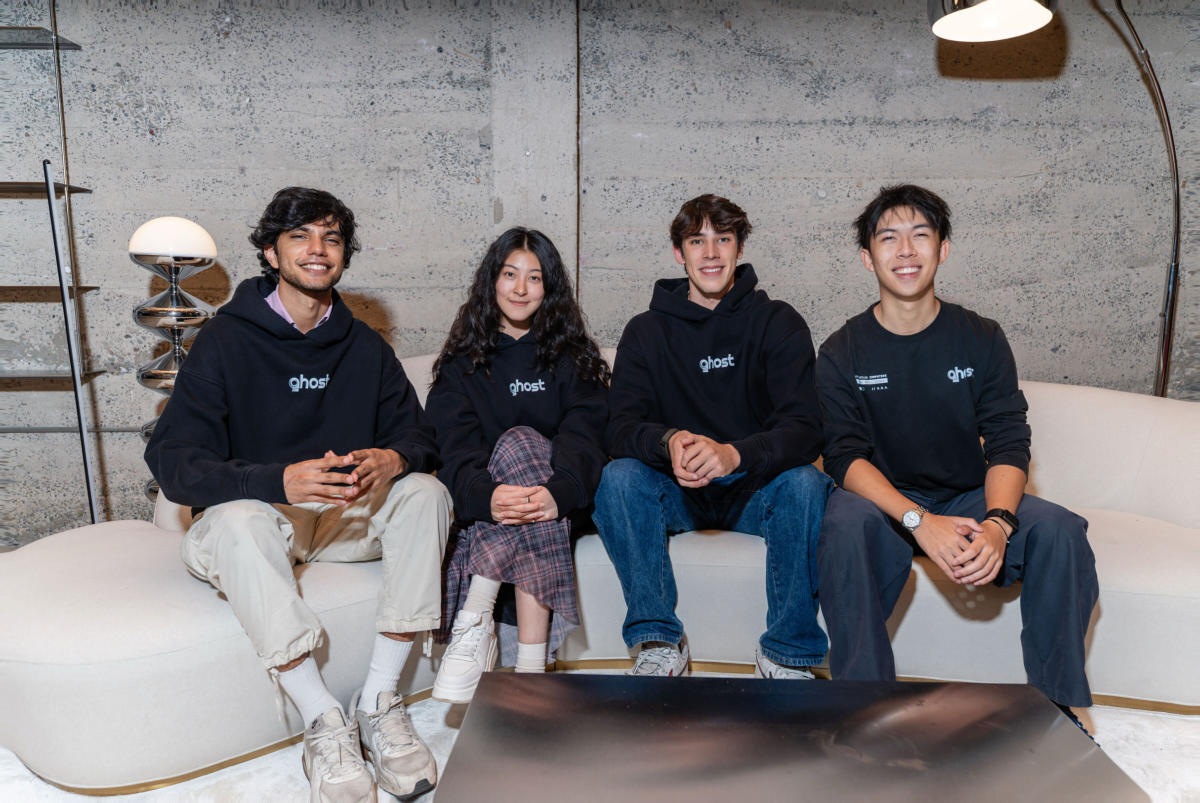
For much of his life, Zain Javaid, 19, wanted to be a quant. And for a while, he was one. But he got bored. Then, in 2022, ChatGPT was released and “I felt fundamentally excited in a way that I never had been before,” he told TechCrunch.
Those feelings only grew as AI technology advanced. He became particularly interested in the future of personal AI, he said. He’s predicting the need for a new class of consumer AI hardware and sees the potential for not just one company, but an entire ecosystem built around personal intelligence.
“Every person on earth would eventually have a single agent that would know everything about and be able to do anything for them,” he said of the future he envisions. This agent would be an extension of ourselves, he said, “where the more it understands our habits, values, and goals, the more useful it will be in our daily lives.”
Physical AI and consumer AI are two of the industry’s hottest categories.
At its intersection, on the hardware side, there’s the Mac Mini, which can act as a personal AI assistant, connecting to files and other apps to perform tasks and organize information. On the software side, there’s OpenAI’s Dot, Meta’s Muse, and the startup Instinct, which, just two months after its launch, announced a $1 billion Series C at a $10 billion valuation.
Now Javaid is throwing his hat into the ring with his company Ghost, which, after a year of building, announced Monday its official emergence from stealth and an $11 million seed round led by Andreessen Horowitz. His founding team includes Nicholas Chua, 19, Yifei Chen, 24, and Guatam Sharda, 23.
Ghost’s first product is Core, a personal computer designed specifically for AI agents. The idea is to centralize a person’s data — from what’s on their desktop to apps to smart home devices — into one piece of hardware designed to continuously run AI agents that can operate as an agentic assistant, perform tasks, and understand a person’s life. “You can run models on existing hardware, but it’s a terrible experience on many levels,” Javaid, the CEO, said.

Core has its own GPU (so customers don’t have to purchase it separately), its own software layer, browser and filing system, and can continuously process information and tasks without constant prompting, Javaid said. The computer will be priced at $3,499, with the first batch available for pre-orders opening Monday and shipping scheduled for the last week of October.
He said to think of it like a brain box without a screen, accessible through a phone or app. Voice mode is also available, but one has to speak through the Core app rather than to the box itself. It runs three models — Qwen-3.8-Next, Qwen-3.8-27B and Gemma-4-31B — though Javaid said users can install other models from Hugging Face or their own model weights. Asked if this is somewhat of a Mac Mini, Javaid said the main difference is that Core’s hardware and software were built specifically around AI agent usage, with models already installed, whereas the Mac Mini is more general-purpose and can be configured for AI.
“As new models or improvements to existing models come out, we can push out over-the-air updates, similar to how Tesla works,” Javaid said of Core, adding that if a new generation of models comes out, then they ask a user if they want ot switch. “Users can also turn on auto-updates so they’re always running the latest generation of a given model.”
He and his team of four currently manufacture the units at their San Francisco facility. The goal, he said, is to sell a fully functioning smart computer that doesn’t require complex setup or configuration. The model and personal memory run locally, and all personal information is encrypted so no cloud providers or third parties, including Ghost, can access the memory in any meaningful way. Users can control how much autonomy they give their Core agents, and if Ghost shuts down, the device is programmed to keep working.
“All of the source code, logic, and model weights live on the device, not the services,” he said. “We build this device to not be dependent on having an outside entity maintaining the service.”
He said the team is also building a firewall around how the agent can use its credentials. The firewall “monitors every outgoing network request on the computer and if it sees the agent performing a sanctioned action or exfiltrating data it shouldn’t, it rejects the request and flags it for user review.”
“The user owns all of it,” he said of the device, memory, and data. “Once you buy the hardware, everything is stored, run, and processed on the device.”
He’s not too worried about the competition in the space. “People sometimes give incumbents credit for having already built the product because they have the ingredients,” he said. He credited Apple with good hardware and disruption, but said much of what Core is aiming to tackle is software: “the model reasons over your life, how it remembers, how it takes action, how it knows when to reach out,” he continued.
“For example, Core proactively sends you a notification that you might be getting sick because it sees your resting heart rate is elevated, sees from computer history that you were up late working on a project, and has seasonal context that it is flu season in San Francisco.”
The company’s main focus is building a product people love. “If we can’t do that. Apple isn’t the reason we failed,” he said. Other investors in the round include Abstract, Audacious Ventures, SV Angel, and Nova.
When you purchase through links in our articles, we may earn a small commission. This doesn’t affect our editorial independence.
>

Sebastian Stan Drops Hints About ‘The Batman: Part Two’
MLB playoffs live scores, updates: Division Series predictions, odds and latest from White Sox vs. Guardians

Hollywood Spends More Than Half of Its Film Budgets Outside the U.S., Union Study Shows
-

 movies5 months ago
Search For Canadian TV Actor Stewart McLean Now Homicide Investigation
-

 Fashion9 years ago
These ’90s fashion trends are making a comeback in 2017
-
Fashion9 years ago
According to Dior Couture, this taboo fashion accessory is back
-
Fashion9 years ago
Model Jocelyn Chew’s Instagram is the best vacation you’ve ever had
-
Fashion9 years ago
Emily Ratajkowski channels back-to-school style
-
Fashion9 years ago
9 Celebrities who have spoken out about being photoshopped
-

 Anime4 months ago
Rurouni Kenshin: Hokkaido Arc Manga Takes 1-Issue Break – News
-

 Anime3 months ago
HIDIVE to Stream English Dubs for The World Is Dancing, The Forsaken Saintess and Her Foodie Roadtrip in Another World, The Dangers in My Heart: The Movie Anime – News